All posts by Tom

I'm the guy who writes the blog...

Link of the week

Valfor Tools

A few years ago, I was given a Groove Center tool which – as you might imagine – helps set your router to cut an accurate centered groove in the edge of a board. It also helps you set up a cut for a lock miter bit… something I didn’t have a lot of success with (Because operator error is always an option)

Well, Sjoerd van Valkenburg, the creator of the Groove Center and very handy two axis depth gauge, has started his own website for his company Valfor Tools. There’s a ton of information on how the tools work, how lock miter bits work and other important topics that can help you get more accuracy in your woodworking. Right now, he’s offering the two tools at his site, but he’s a creative guy, and he’s working on his latest inventions.

The boomerang effect

It’s June. That can mean only three things… The Atlantic Hurricane season begins on the first, summer begins on the 20th and students are graduating.

Some are being promoted from elementary to middle school, while others are being promoted from middle to high school. Those graduating high school and college are contemplating further education while others are prepared to begin their careers and strike off on their own.

In these challenging economic times, though, it’s tougher than ever for recent grads to get their feet under them, and many have to move back home with their parents. Hey, it happens. Those parents who may have said tearful goodbyes four years ago now have to readjust their home situation to cope with a returning adult child.  Sure, it’s temporary, but that wasn’t the plan to begin with.

Why bring this up?  Well, I’ve found that many of the pieces I have built have – uhhh – found their way back home. Yeah, a bunch of projects I have built over the years – specifically for the art contest that’s held ever winter at my office – have failed to launch to new and exciting destinations.

And, to think I was so spoiled the first few years of the competition.  For my sculpted contemplation bench, the judges for the contest were wondering just how much I was going to sell it for. But, that sucker isn’t for sale… it’s the proof I have that I worked with Marc Spagnuolo at a woodworking school all those many years ago! Today, it sits in our back family room in front of my collection of woodworking books.

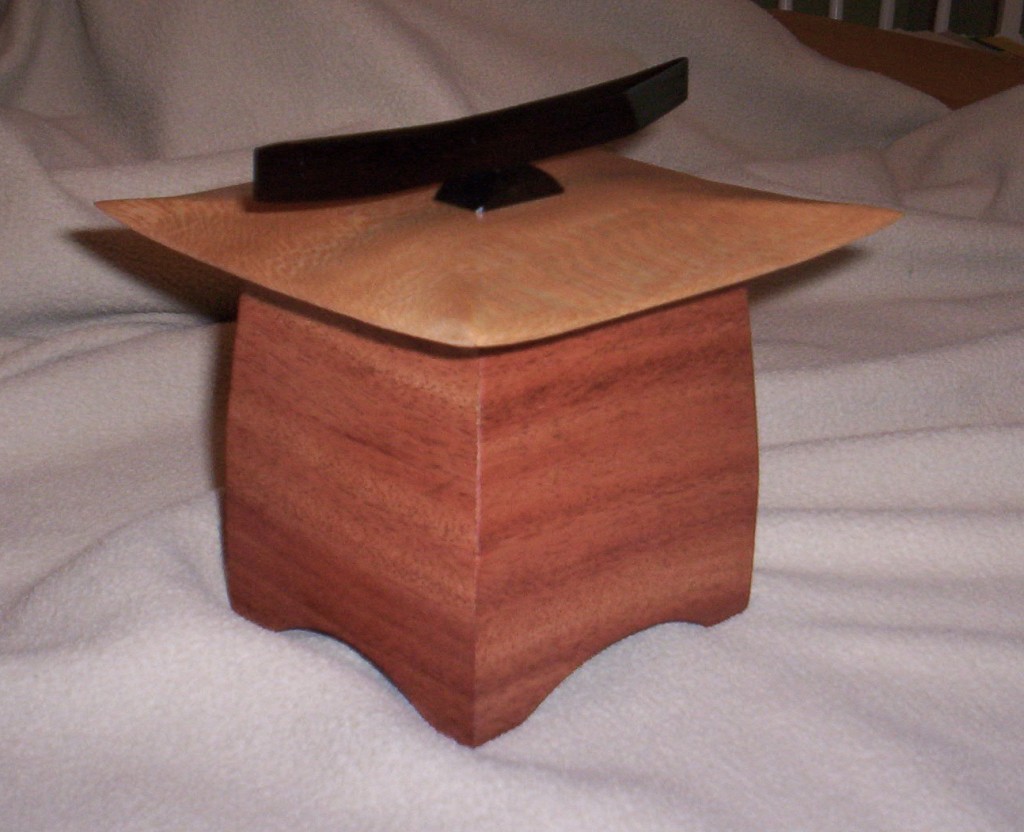
When it came to my pagoda box, I had a buyer lined up for it even before the show was over.

The Fujiwhara Chest?  It now graces the bedroom of my friends’ daughter in a place of high honor.

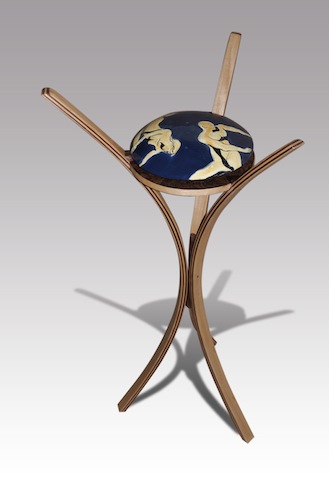
The base for Mars and Venus Rising?  It’s down the street at another friend’s home – right alongside the Nakashima-Inspired bench.

That’s where my luck started to run out. The next year’s offerings had their issues.  The sculpture that rested on the base for Position of Strength fell over and shattered into hundreds of pieces. That left me with the base made of flame birch and walnut. Now, don’t get me wrong, it’s pretty … and one day, I’m going to put a glass table top on it. But, right now, it sits, ignominiously in my shop, slowing being covered in sawdust.

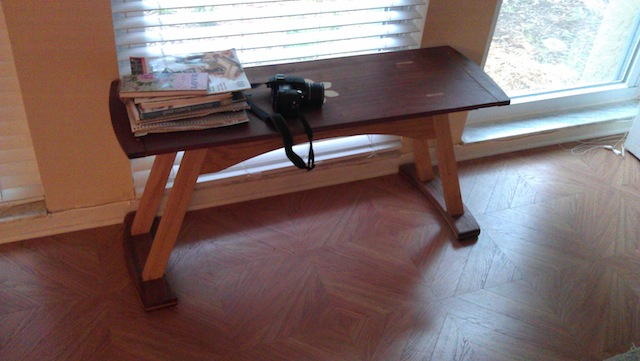
While Position of Strength sits in the garage, Centered found its way back to the house, but in a nicer place. My wife liked it so much – especially the fouled-up colored epoxy inlay – that it now occupies an honored place in front of the front windows in my living room. More often than not it ends up covered in books and papers, but when we spiff the place up for company, it comes out in all of its natural beauty.

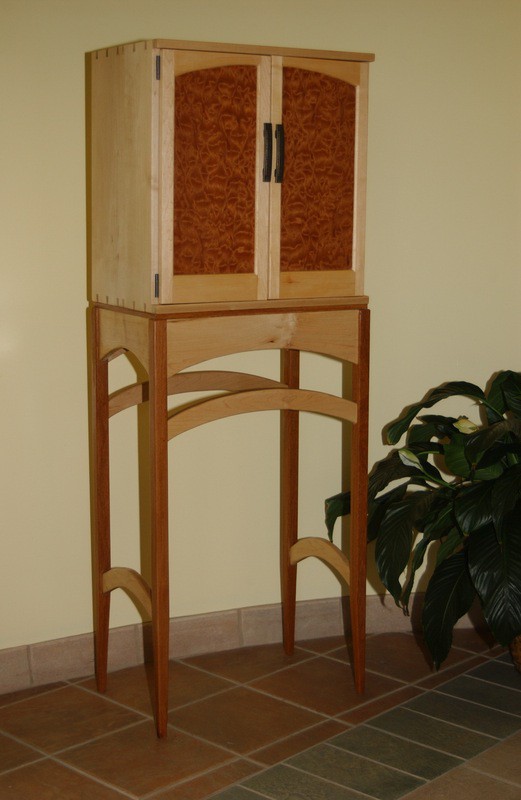
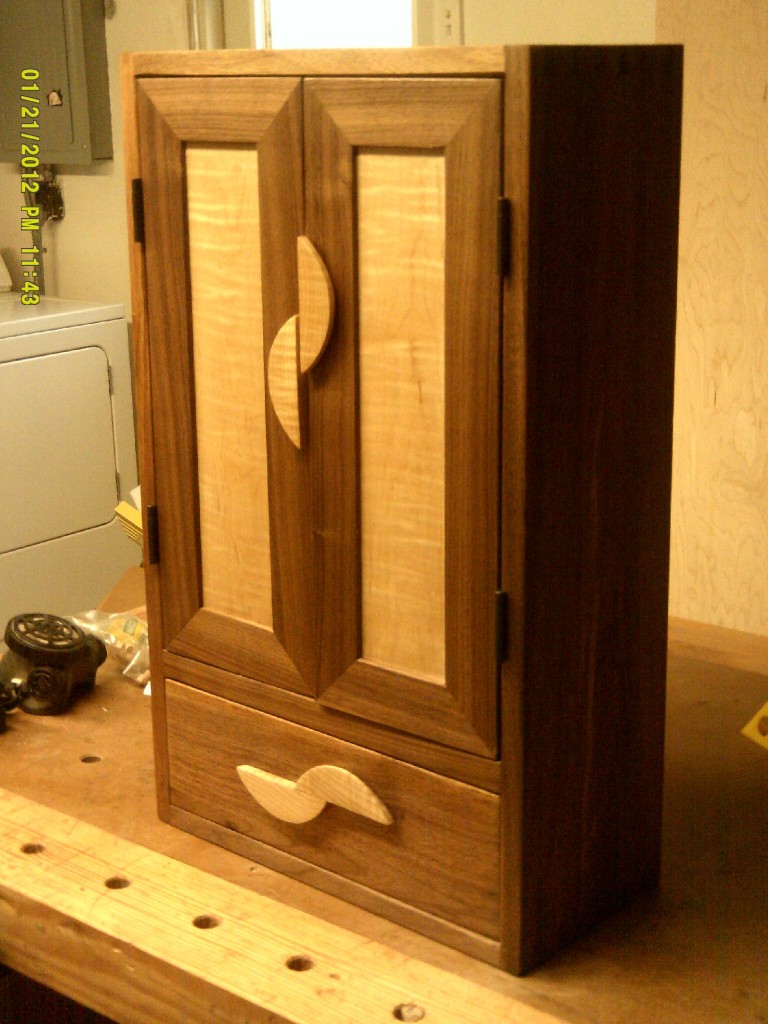
And, my wall-hanging cabinet … it technically didn’t make it back home. It sits on a table in my office reminding me of two very important lessons … from here on out, I’m  going to have to ensure I have a place to put my entries if they fail to launch, and I’m only building SMALL pieces for the contest!


Sub (assembly) warfare

The captain made one last sweep of the horizon before pulling his eye from the periscope’s eyepiece and snapping the handles into their storage position. “Down scope! Weapons officer, flood tubes two and three  and get ready to fire on my command!”  The crew sprang into action in the hot, cramped quarters, adjusting dials and pulling levers to get the warship ready to fire on the unseen but very dangerous opponent. “XO, with our range to target, how long will the fish run until impact?”

“Thirty seconds until the impact, sir,” barked back the boat’s Executive Officer, “But, I don’t have to remind you, Skipper, that those destroyers are very close and we’re going to have to begin evasive maneuvers as soon as we fire.”

“Very good.  Conn, once we fire, make your heading three-two-zero degrees, go to all ahead full, crash dive to 300 feet and rig for depth charge attacks. Fire on my mark…”

When movie directors want to create a film with a tremendous amount of tension, pressure and claustrophobia, they turn time and again to the silent service – the submarine fleets. Run Silent, Run Deep, Das Boot and the Hunt for Red October – while taking place in different eras – each captured the pressure cooker environment in the service below the waves where one misstep can take the boat from the ultimate stealthy killing machine to a helpless hole in the water where submariners await their fates.

While the aim of Hollywood is to create the pressure-filled environment when it comes to sub warfare, woodworkers have their own kind of subs to deal with which can actually reduce stress and make things considerably more easy in their shops.

I’m talking about sub assemblies for larger and more complex projects. The idea is very simple – you break down an involved assembly into manageable parts, tackling each in turn to ensure the joints are tight and everything is square before moving to the next step. Most woodworkers have made the mistake of trying to assemble everything all at once.  Usually, they run out of hands, clamps, open time with the glue they are using and patience, leaving their project gappy, ill fitting and out of square.

I had the chance to go with some sub-assemblies on a step stool I am building for my mom’s house. Sure, it’s your average, run-of-the-mill Shaker style step stool you have probably seen about a thousand times before.  I’m making it out of some nice Santos mahogany, and I want to make sure it’s built strong, so I turned to my Leigh R9 jig and decided to crank out a few dovetails.
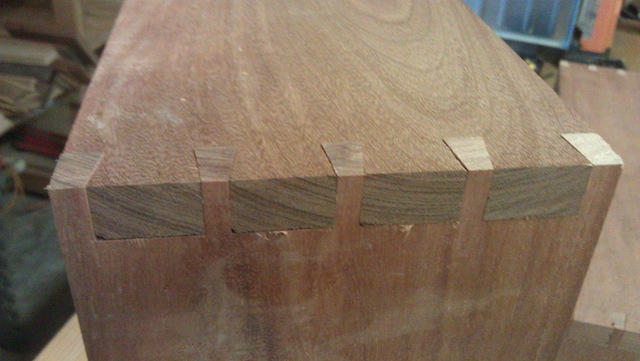
Now, I have made these kinds of stools before, but I have nailed or screwed the top to the sides, but never with dovetails. I had always wondered how you can make a two-step stool with dovetails – I mean, wouldn’t the top step get in the way of dovetailing the bottom?  That’s when it hit me (I know, I am a dope) – I saw that you make two separate one-step step stools – one high and one low – THEN you glue the high and low side pieces together to make both sides of the stool.  Duh…
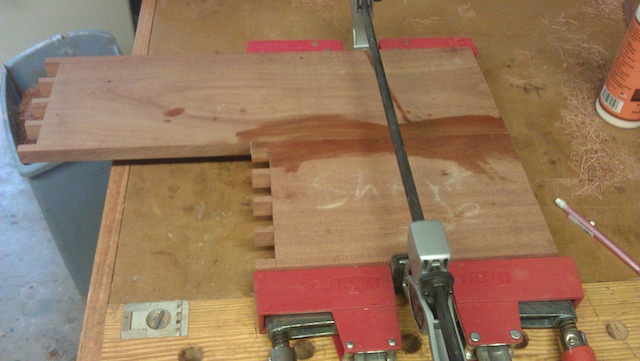
Of course, as you work in sub-assemblies, it’s critical to ensure you have everything oriented properly. Creating two left sides or two right sides of a project may seem like something not too important at first, but the final assembly will involve a lot more cursing and anger if you don’t take that into consideration.

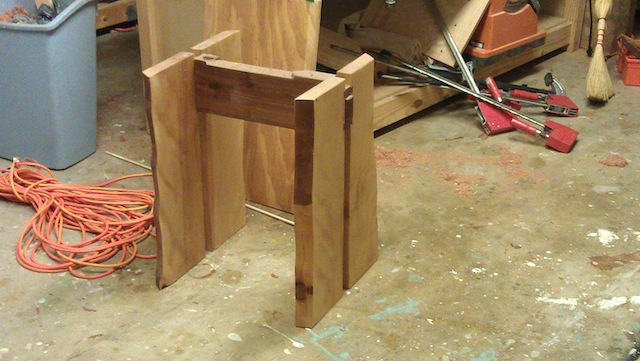
This allowed me to first cut all of the dovetails to make each of the sub-assemblies. Then, I broke everything apart and glued up those side pieces so I could cut a decorative curve into the bottom so the stool would stand on four points before I glued the treads and crossmembers into place for the final assembly.  Heck, since it’s flat on my bench, why not just sand that sucker down inside and out?  I might even do a little pre-finishing on what will become the difficult-to-reach areas once the stool is finally assembled.

Gosh, that wasn’t that tough, was that?

I wonder what kind of woodworking solutions I can come up with after seeing one of those superhero movies?

Quick Poll

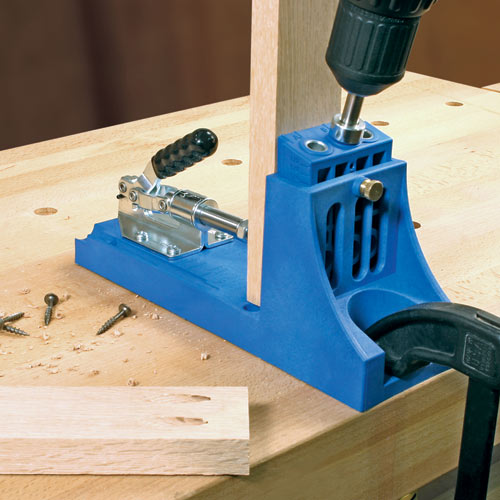
Ever since Craig Sommerfield brought the first practical pocket hole drilling jig to market back in 1990, woodworkers have been turning to these fast and convenient joints for projects. And, if you listen to the marketing folks at Kreg Tools and other jig manufacturers, it would appear that you could build an entire set of kitchen cabinets in mere hours.

While the joints are easy to make and quick to assemble, many woodworkers question just how effective they truly are.  This week, what do you think about pocket screw joints?

Link of the week

Gleman & Sons Fine Woodworking

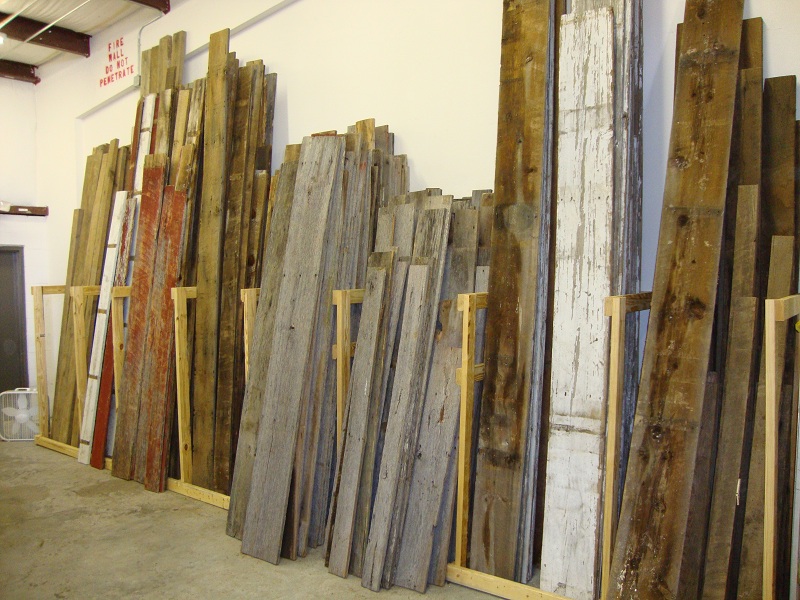
Sure, when you visit this week’s link of the week, it appears to be taking you to a custom furniture shop. But, that’s only seeing the tip of the iceberg. You see, this central Florida operation deals extensively in reclaimed lumber… and, boy, do some of those boards have a story to tell!

Whether harvested from the bottom of lakes and rivers where it sank many years ago, or culled from barns and other old outbuildings located throughout the south, these old growth or second cut boards exhibit tight growth rings and characteristics difficult to find in today’s lumber. Besides, if you ever wanted to try a special project made of difficult to find American chestnut, reclaimed is the only way to go.

A sharp idea

If you saw my link of the week this past Friday, you may have noticed that I am starting to express an interest in carving.

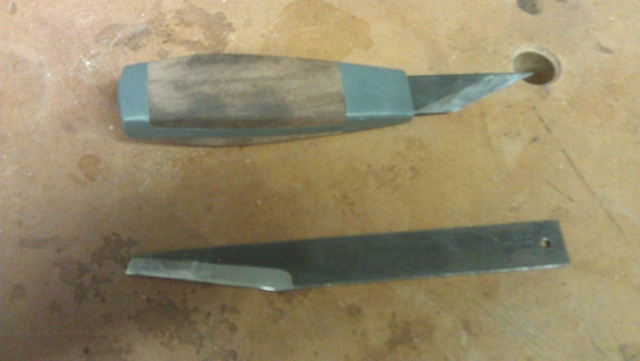
It’s not the first time the thought has crossed my mind. In fact, I have a few tools I bought but never actually used. This mill knife set is the prime offender.  I got interested in it when I saw Norm Abram carve a set of wooden signs on one of his shows. Using just a mill knife, he was able to carve the Serenity sign. Since the knife set didn’t cost too much, I figured, “what the heck?” and ordered it.

When it came in the mail, I took the knife out of its package and tried to carve a basic shape into an old scrap of 2 x 4.    It didn’t work. That’s when I discovered that no matter what kind of carving you would like to do, there’s one thing that you must have – sharp tools! I grabbed the mill knife set, tucked it into my tool chest and swore I would take it out again when I was ready to work with it again.

I think that was in 2007.

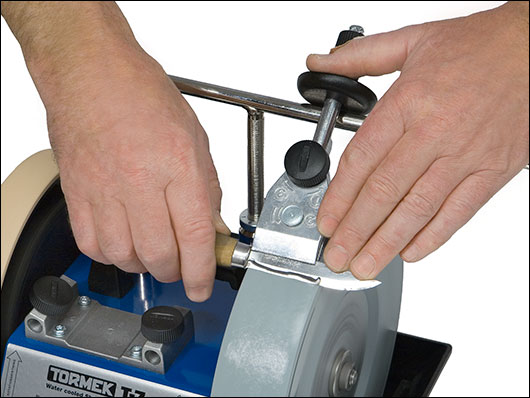
That’s it… time to move. The first thing, of course, is trying to get things nice and sharp. This was a natural for breaking out the Tormek and putting it up on the grinding wheel. The tool itself is rough and tumble, and it has a very tough blade with some coarse grinding marks, so they had to go first on the coarse setting. Once I got the angle down, I did the rough sharpening, then regraded the stone to the fine setting. This put a nice polish on the blade and made it sharp.

But, that’s not where I stopped. I need these suckers to be sharp enough to slice wood with minimal effort. If I have to force the knife, there’s a great chance I’m going to tear the wood fibers.  That’s why I charged the leather strop with some honing compound and ran the blade over that on both sides.

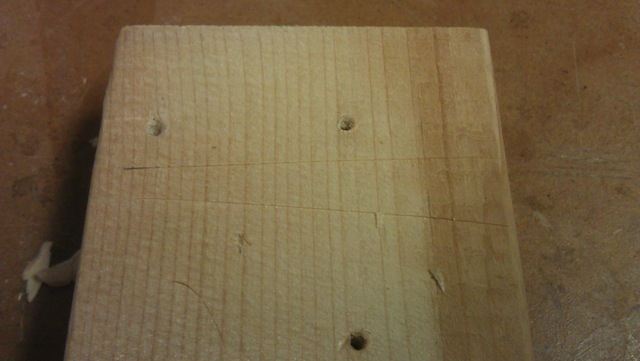
As you can see, the cuts across the grain are as clean as can be … sharp is the only way to go.

Taking a hint from Kari Hultman, rather than use this knife until it was dull as dirt, I kept my honing wheel charged and at the ready for regular stropping during the carving process. After all, it’s easier to maintain the edge rather than redo it from scratch.

The only thing I need now? Skill. But, that will come with time, right?


In memory … and appreciation

Today in the United States, it’s Memorial Day … the day we set aside to remember all of those who have fallen in war since the establishment of our country.

While many see it as the official kick off to the summer season or an excuse to hold a sale at a business, it means much more for the families who have lost loved ones on the battle fields around the world.

In years past, I have linked to plans for flag boxes and other commemorative items to help honor the sacrifice made by these brave service men and women, but this year, I discovered probably one of the most touching woodworking projects I have ever seen.

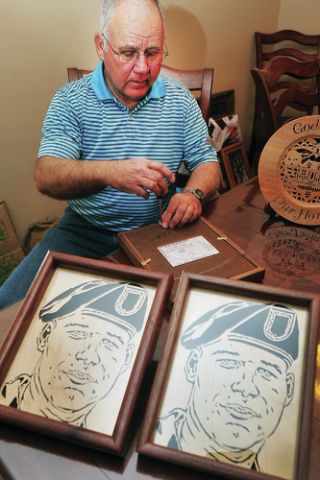
Portrait Freedom is an initiative of more than 400 scroll saw artists to honor every fallen serviceman and women who has fallen during Operation Enduring Freedom – the global war on terror. These scrollers have one goal in mind – to cut a portrait of the fallen to present – free of charge – to the families as a symbol of their support during these difficult times. So far, they have cut more than 1,000 portraits.

Photo: Becky Burch/Bartlesfield Examiner-Enterprise

Families of those who have lost loved ones are encouraged to submit a photo to the website. From there, one of the scroll saw artists who has signed on to the board will take that photo and design a portrait pattern.  Once approved by the board moderators, a volunteer artist will take the pattern and cut it from 1/4″ or 1/8″ oak or birch plywood. Once completed, the portrait is gently sanded and finished with a clear coat. It is then mounted with a black background, framed and shipped to the family.

To ensure that the work is of the highest quality, multiple photos must be taken of the plans and the project and submitted for review.  While the vast majority of attempts are approved, some are rejected, and the artist is asked to submit a newly designed or cut portrait if they wish.

The final step the scrollers take before they ship their work to the family is to download and customize a presentation letter that goes along with the portrait introducing themselves, explaining about the project and expressing their most sincere sorrow for their family’s loss and the appreciation of the sacrifice they have made.

The response from the families who have received these portraits has been overwhelming – not just in appreciation of the artist’s work, but how that image of their loved one means in their own personal healing process.

Thank you so much for the wooden portrait of our son.  We sincerely appreciate the time and talent of Mr. Harry Savage & Mr. James Obenstine.  Please be assured that these portraits will remain treasured memories of our beloved son.  The kindness of so many people has given us strength.  Thank you again for remembering Greg.  
Sincerely,
Maureen and Thomas Pagano, proud parents of CPT Gregory T. Dalessio

Today, take some time out of your backyard cookout and remember what Memorial Day is all about … and, be sure to thank a veteran who may have lost a good friend on a distant battlefield many years ago – or more recently.