Link of the week

Yaffe May’s Process

This one came to me from Linda Rosengarten, the silent partner behind the Ron Hock empire. Thanks, Linda for the link!

When you think about it, woodworking design is part science, part art and pure magic. This site, run by woodworkers Rebecca Yaffe and Laura Mays, details the entire life cycle of a chair. The process runs from the first ideas of a sketch through CAD design, prototyping, wood selection, joinery and the other fine details of construction.

Even if you have no desire to design a piece of furniture on your own, this site is definitely worth a look.  You will come away inspired…

Trust your feeling…

Who could ever forget the climatic scene in Star Wars when the rebel alliance was pressing their attack on the Death Star? Oh, you may not be a Star Wars fan. If not, you might want to check out this awesome site of wood turnings.

But, if you are still with me, you’ll recall that Luke Skywalker was piloting an X-wing fighter into the trench that led to the thermal exhaust port. After his wingman had to pull out, Luke was all alone with the Imperial fighters right behind him. As he was setting up the shot, the voice of Ben Kenobi came to him and told him to turn off his targeting computer and trust his feelings.

OK, I hope I haven’t given away too much of this 35 year old movie, but old Obi-Wan was on to something – especially when  it comes to woodworking. You see, there are plenty of ways to get precise measurements. We turn to all sorts of rulers, gauges and the like, but, for my money, nothing beats the accuracy  of touch.

Think about it. If you want to see if something is flush, you don’t try to eyeball it or use a micrometer. No, you run your fingers over it. Your touch will let you know – immediately – if something is flush, raised or depressed below the surface. That feeling may change as the seasons change. If the wood swells in the warm, humid summer air, the relationship of the inlay may change as it shrinks in the dry winter air.

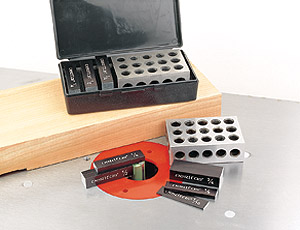
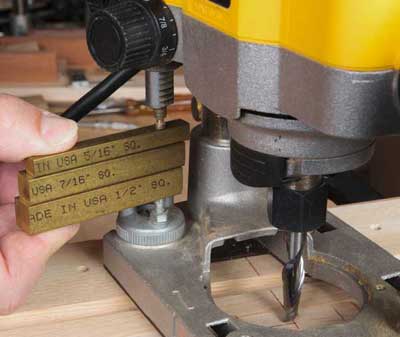
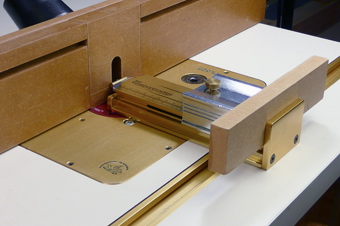
That’s why I rely on these babies… a set of set up blocks I picked up from Veritas. I have found these to be as handy as can be because I can use them to rely on my sense of touch to tell how things are set up with incredible accuracy. For instance, if I need a router bit to be a certain height above the router table, I’ll stack up the requisite number of set up blocks and then adjust the bit, feeling to see its relationship to see when things are on the money.

The set I have comes with bars of 1/16, 1/8, 1/4/ 1/2 and 3/4 of an inch. The set also contains a 1-2-3 block – a piece of aluminum which measures – ironically enough – 1 inch by 2 inches by 3 inches. Incredible!  So, by combining these babies, I can go from 1/16 of an inch to 4 and 11/16 of an inch, feeling for accuracy all the way.

I also rely on these suckers to set the rip fence on my table saw for accurate rips or to set plunge depth for routing. Sure, you can rely on the measuring tape that comes on the tool, but  when you want to make extra sure you nail the measurement, it’s always good to rely on at least two forms of measurement to enure that everything adds up.

The challenge, as you might imagine, is to keep the entire set together. After all, in the heat of battle, these little suckers tend to go flying. That’s why I like that this set comes in an organization case.

Just so they don’t get lost.  Or stolen by the Sith Lord and carted off to some space station fortress that needs to be destroyed.

Just sayin’.


Misdirected by mold

This was a perfect weekend for woodworking. The sun was shining, there wasn’t a lot of rain and there was just enough of a breeze in the balmy late spring Florida air to make things passable … especially in the shade.

That wasn’t what I was doing. Nope. Let’s say that a simple tile repair in our guest bathroom discovered a few ‘issues’. How many?  A bunch. I pried off the soap dish, and it came off way too easily. Of course, the wall was wet. The green water-resistant drywall was soaked and black with mold. The more tiles I pried off, the wider I could see that the mold had spread.  Basically, the drywall was black with mold from the edge of the tub to a point about four feet above. Since my son Dominic is an asthmatic, and he is allergic to mold, it all had to be stripped out. All the way back to the studs.

The tub, installed when the house was built in 1979, was a cheap, crappy contractor model with a severe rust issue. We had a company come in about a decade ago to clad it with an acrylic shell, but it was still the same old rusty model underneath.  So, my friend Chris and I got some two-man bathtub bobsled practice as we removed it and hauled it to the curb. I also had my friend Bob in to remove the old valve and solder in a new modern single handle one.

So, I spent most of my weekend in the bathroom, filling two gigantic residential trash bins to the rim with debris and sanitizing everything I came in contact with.

Oh, and I’m going to be installing the new tub, backerboard and tile.  Eventually.

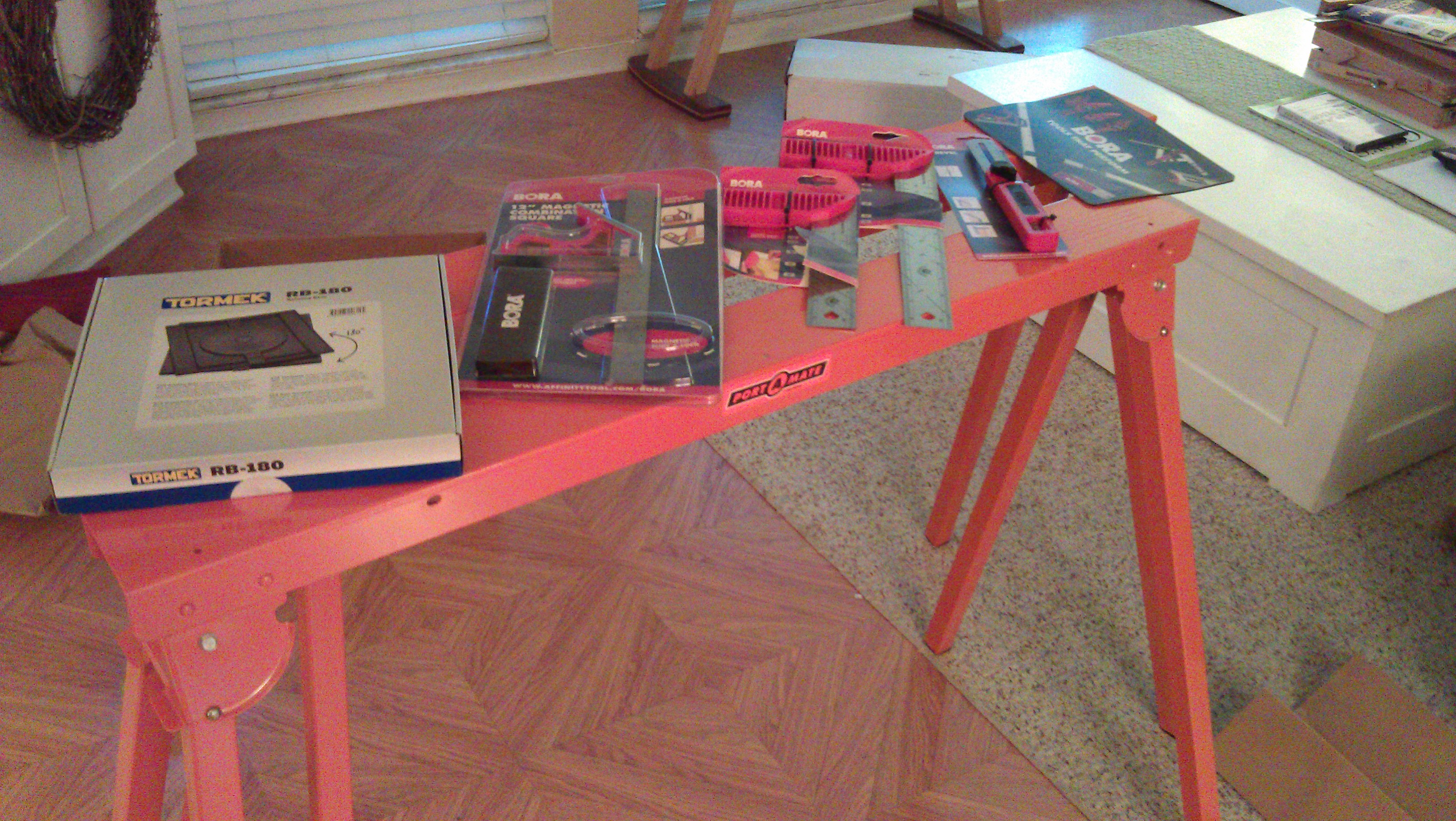
But, I did have a chance to do some woodworking activity this weekend. On Friday, I opened a package from my new sponsors Bora Tools. Some really sweet stuff – a few new tri-squares, T-bevels and a combination square. A nifty attachment for my Tormek sharpening station and some awesome folding saw horses.  I will be sure to post a review of these products…

One of these days.  Until then, does anyone have an good tips on how to make a watertight cement backerboard shower surround?  🙂


Quick Poll

I will be the first person to admit that I have not built everything that I have wanted to. I guess that’s a good thing, otherwise, you might be looking in the classified ads for Tom’s Big Tool Sale.

Some of the project I have yet to build because the time isn’t right ( a pendulum cradle for my grandchildren – with my boys both 14 and 11 – might be a bit premature). Some projects haven’t been built because space is an issue (I would really love to build a 16-person dining room table, but come on…).

And, some projects I haven’t yet tackled because – gosh darnit – I’m just plan intimidated. Yes, I’m afraid that I don’t yet have the necessary skills to build a chair.

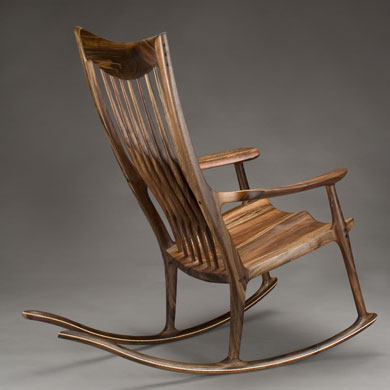
No, I’m not talking about your average do-it-yourself Adirondack chair with some screws and pressure-treated lumber. I’m talking about stuff like rocking chairs. Or dining room chairs. Or an easy chair you can sit in at the end of a hard day, kick your feet up and let your cares just drift away. It’s something about the angles. And the joinery. And getting it to sit stable on the floor.

That’s my block, but I’m sure that most of you have other challenging projects you can only dream of building because they intimidate you.  This week, I have put together a brief list of project types. Be sure to tell us which one you think is the most intimidating to try. And, if we didn’t include your most intimidating project type, tell us what it is in the comments.

Link of the week

Valfor Tools

A few years ago, I was given a Groove Center tool which – as you might imagine – helps set your router to cut an accurate centered groove in the edge of a board. It also helps you set up a cut for a lock miter bit… something I didn’t have a lot of success with (Because operator error is always an option)

Well, Sjoerd van Valkenburg, the creator of the Groove Center and very handy two axis depth gauge, has started his own website for his company Valfor Tools. There’s a ton of information on how the tools work, how lock miter bits work and other important topics that can help you get more accuracy in your woodworking. Right now, he’s offering the two tools at his site, but he’s a creative guy, and he’s working on his latest inventions.

The boomerang effect

It’s June. That can mean only three things… The Atlantic Hurricane season begins on the first, summer begins on the 20th and students are graduating.

Some are being promoted from elementary to middle school, while others are being promoted from middle to high school. Those graduating high school and college are contemplating further education while others are prepared to begin their careers and strike off on their own.

In these challenging economic times, though, it’s tougher than ever for recent grads to get their feet under them, and many have to move back home with their parents. Hey, it happens. Those parents who may have said tearful goodbyes four years ago now have to readjust their home situation to cope with a returning adult child.  Sure, it’s temporary, but that wasn’t the plan to begin with.

Why bring this up?  Well, I’ve found that many of the pieces I have built have – uhhh – found their way back home. Yeah, a bunch of projects I have built over the years – specifically for the art contest that’s held ever winter at my office – have failed to launch to new and exciting destinations.

And, to think I was so spoiled the first few years of the competition.  For my sculpted contemplation bench, the judges for the contest were wondering just how much I was going to sell it for. But, that sucker isn’t for sale… it’s the proof I have that I worked with Marc Spagnuolo at a woodworking school all those many years ago! Today, it sits in our back family room in front of my collection of woodworking books.

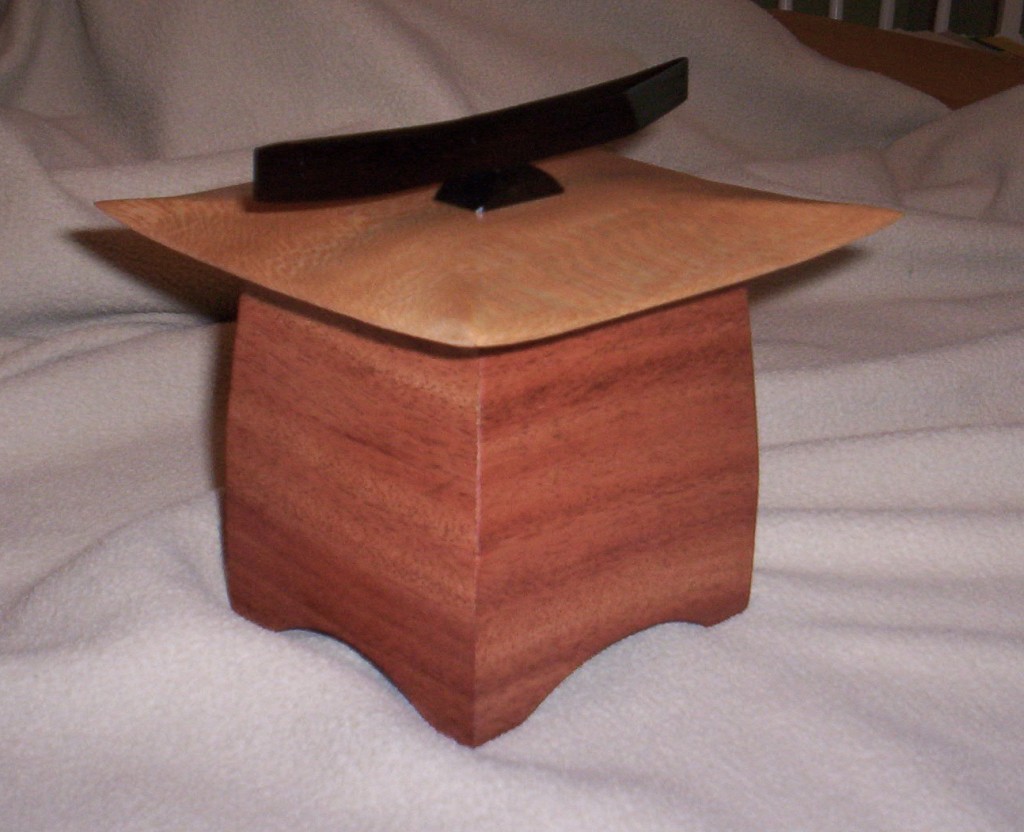
When it came to my pagoda box, I had a buyer lined up for it even before the show was over.

The Fujiwhara Chest?  It now graces the bedroom of my friends’ daughter in a place of high honor.

The base for Mars and Venus Rising?  It’s down the street at another friend’s home – right alongside the Nakashima-Inspired bench.

That’s where my luck started to run out. The next year’s offerings had their issues.  The sculpture that rested on the base for Position of Strength fell over and shattered into hundreds of pieces. That left me with the base made of flame birch and walnut. Now, don’t get me wrong, it’s pretty … and one day, I’m going to put a glass table top on it. But, right now, it sits, ignominiously in my shop, slowing being covered in sawdust.

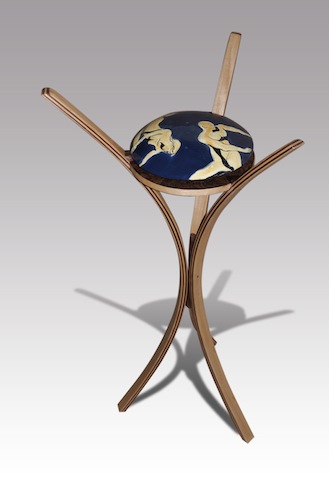
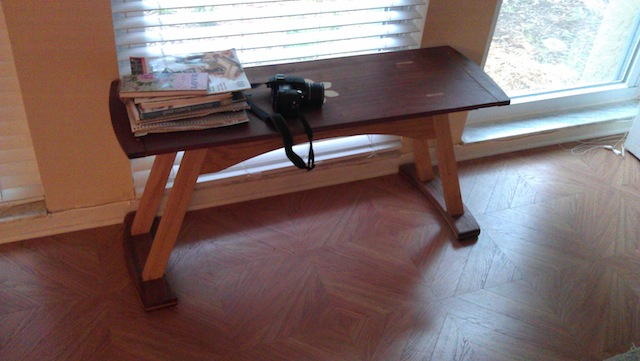
While Position of Strength sits in the garage, Centered found its way back to the house, but in a nicer place. My wife liked it so much – especially the fouled-up colored epoxy inlay – that it now occupies an honored place in front of the front windows in my living room. More often than not it ends up covered in books and papers, but when we spiff the place up for company, it comes out in all of its natural beauty.

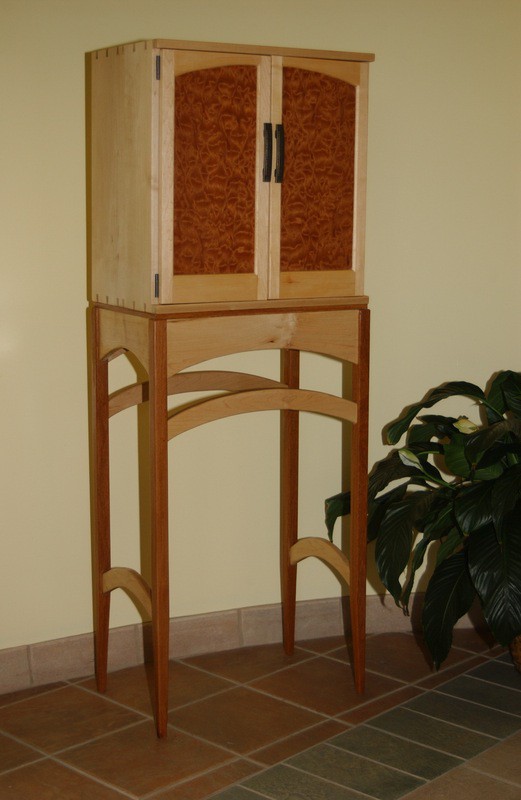
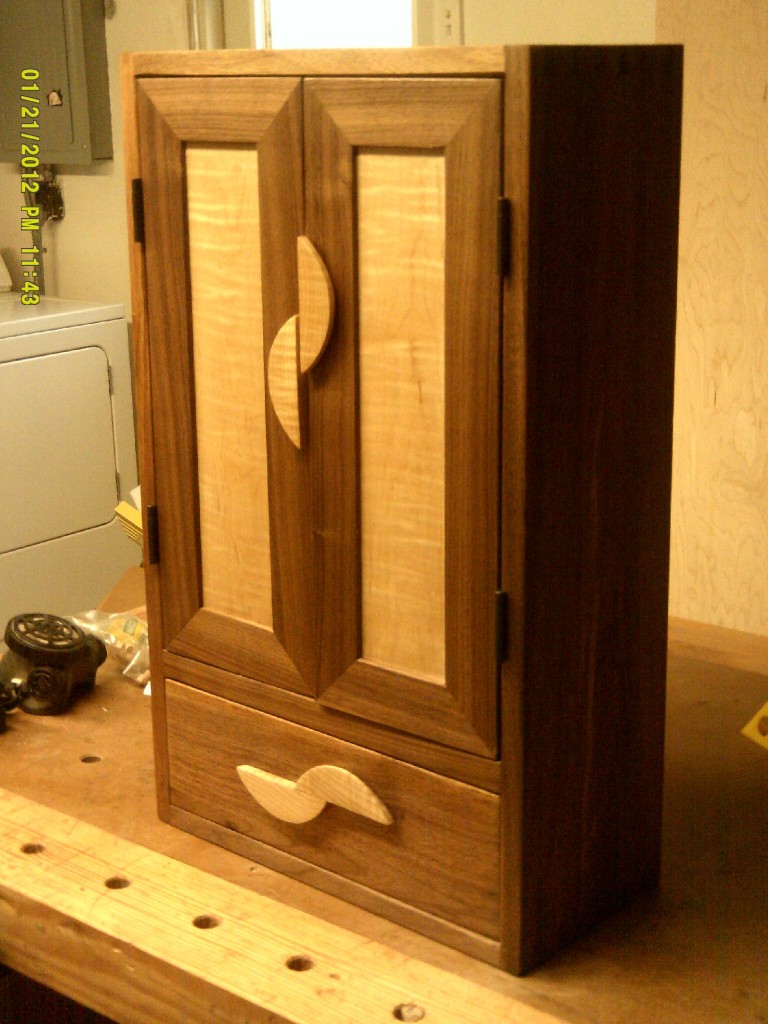
And, my wall-hanging cabinet … it technically didn’t make it back home. It sits on a table in my office reminding me of two very important lessons … from here on out, I’m  going to have to ensure I have a place to put my entries if they fail to launch, and I’m only building SMALL pieces for the contest!


Sub (assembly) warfare

The captain made one last sweep of the horizon before pulling his eye from the periscope’s eyepiece and snapping the handles into their storage position. “Down scope! Weapons officer, flood tubes two and three  and get ready to fire on my command!”  The crew sprang into action in the hot, cramped quarters, adjusting dials and pulling levers to get the warship ready to fire on the unseen but very dangerous opponent. “XO, with our range to target, how long will the fish run until impact?”

“Thirty seconds until the impact, sir,” barked back the boat’s Executive Officer, “But, I don’t have to remind you, Skipper, that those destroyers are very close and we’re going to have to begin evasive maneuvers as soon as we fire.”

“Very good.  Conn, once we fire, make your heading three-two-zero degrees, go to all ahead full, crash dive to 300 feet and rig for depth charge attacks. Fire on my mark…”

When movie directors want to create a film with a tremendous amount of tension, pressure and claustrophobia, they turn time and again to the silent service – the submarine fleets. Run Silent, Run Deep, Das Boot and the Hunt for Red October – while taking place in different eras – each captured the pressure cooker environment in the service below the waves where one misstep can take the boat from the ultimate stealthy killing machine to a helpless hole in the water where submariners await their fates.

While the aim of Hollywood is to create the pressure-filled environment when it comes to sub warfare, woodworkers have their own kind of subs to deal with which can actually reduce stress and make things considerably more easy in their shops.

I’m talking about sub assemblies for larger and more complex projects. The idea is very simple – you break down an involved assembly into manageable parts, tackling each in turn to ensure the joints are tight and everything is square before moving to the next step. Most woodworkers have made the mistake of trying to assemble everything all at once.  Usually, they run out of hands, clamps, open time with the glue they are using and patience, leaving their project gappy, ill fitting and out of square.

I had the chance to go with some sub-assemblies on a step stool I am building for my mom’s house. Sure, it’s your average, run-of-the-mill Shaker style step stool you have probably seen about a thousand times before.  I’m making it out of some nice Santos mahogany, and I want to make sure it’s built strong, so I turned to my Leigh R9 jig and decided to crank out a few dovetails.
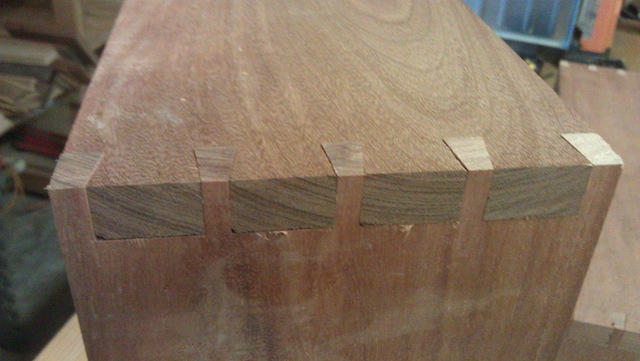
Now, I have made these kinds of stools before, but I have nailed or screwed the top to the sides, but never with dovetails. I had always wondered how you can make a two-step stool with dovetails – I mean, wouldn’t the top step get in the way of dovetailing the bottom?  That’s when it hit me (I know, I am a dope) – I saw that you make two separate one-step step stools – one high and one low – THEN you glue the high and low side pieces together to make both sides of the stool.  Duh…
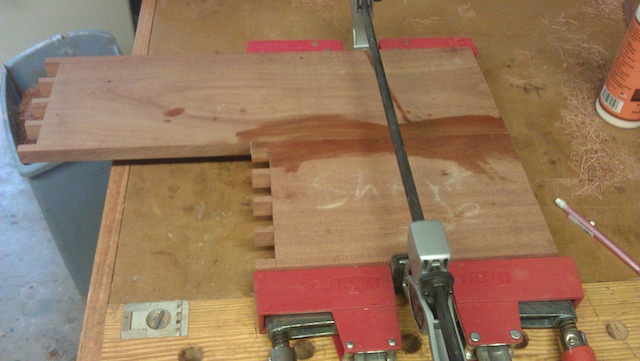
Of course, as you work in sub-assemblies, it’s critical to ensure you have everything oriented properly. Creating two left sides or two right sides of a project may seem like something not too important at first, but the final assembly will involve a lot more cursing and anger if you don’t take that into consideration.

This allowed me to first cut all of the dovetails to make each of the sub-assemblies. Then, I broke everything apart and glued up those side pieces so I could cut a decorative curve into the bottom so the stool would stand on four points before I glued the treads and crossmembers into place for the final assembly.  Heck, since it’s flat on my bench, why not just sand that sucker down inside and out?  I might even do a little pre-finishing on what will become the difficult-to-reach areas once the stool is finally assembled.

Gosh, that wasn’t that tough, was that?

I wonder what kind of woodworking solutions I can come up with after seeing one of those superhero movies?

part of the Wood Talk Online community