Link of the week

The Apollo Lunar Surface Drill

Nearly every time I go into the shop, I reach for my DeWalt 12v cordless drill.  Driving screws into pocket holes, drilling pilot holes and many other grunt work projects are handled by this convenient tool.

Sure, I have electricity in my shop, and I could always plug a corded drill in, but the cordless is always handy and ready to go.

Now, imagine being 385,000 kilometers away from the nearest electrical outlet.  A cordless drill would quickly become an essential tool in your toolbox.

With the events surrounding the 40th Anniversary of the Apollo 11 mission, it’s only fitting we look at the Apollo Lunar Surface Drill, one of the granddaddies of all cordless drills.

Sure, the ALSD wasn’t developed until 1971 for the later Apollo missions.  However, this 430 watt baby really helped astronauts do the geological experiments they weren’t able to tackle on earlier fights.

One of the Apollo Lunar Surface Drills is on display at the Smithsonian Institution’s Air and Space Museum.

A long e-mail chain…

In case you haven’t yet guessed, I love to write.  And, when readers of Tom’s Workbench send me an e-mail, I enjoy the back and forth that takes place.

Some people have called me a know-nothing hack, while others have said I’m pretty decent with a saw.  While those are intersting to read, the ones I really enjoy are those that come in from readers asking for my opinion or assistance because – for some strange reason – they want to use a technique I had described.

This past April, reader named Big Bill McDonald wrote in, asking what appeared to be a simple question about the finishing recipe I had described in my post I’m So Finished.

Little did I realize that for the next four months, Bill and I would be exchanging a series of e-mails back and forth about finishing methods and philosophies.
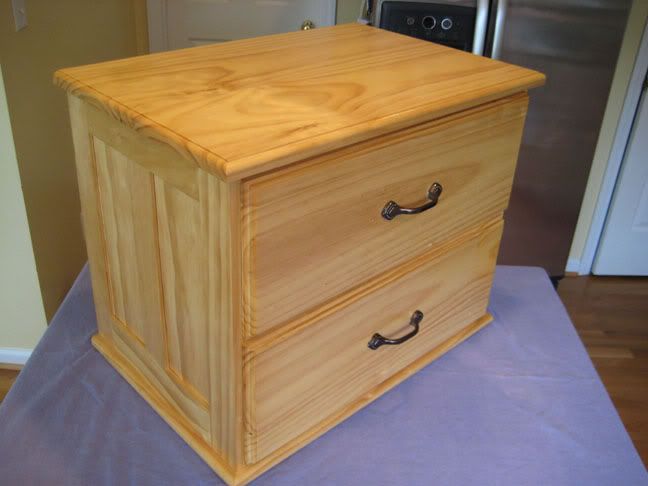
Bill stared out asking about using the Rude and Crude finishing method on a pine toy box he had built.  Concerned about splotching on the piece, we communicated about the shellac seal coat and its purpose and the rest of the finishing regimen.  Judging from the results he got, I’d say this piece came out beautifully, and his son Ben should be one very happy camper to have such a nice piece in his room.
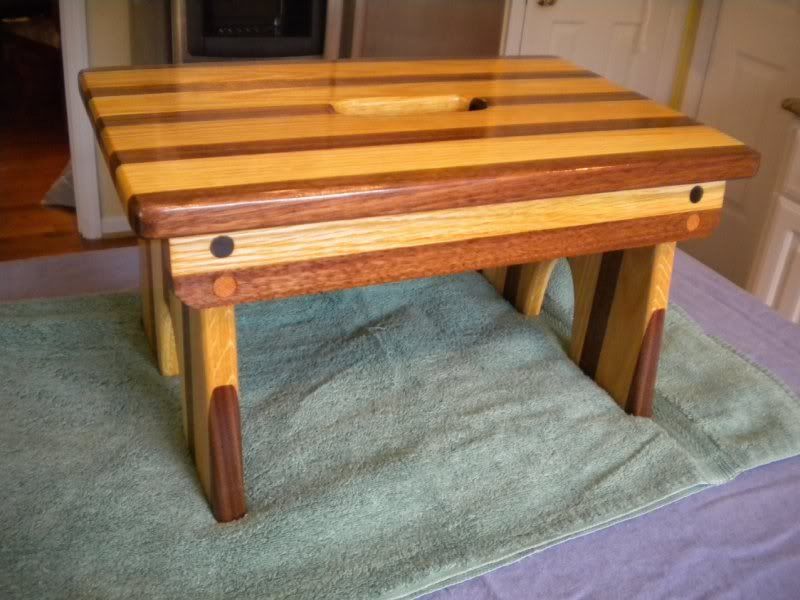
Being that we are both dads, we quickly understood that one project was going to lead to many more. The next one he tackled was a very sweet looking walnut and oak step stool, so his kids would be able to do those important tasks we always hope they will learn to do WITHOUT us having to hound them… (OK, go back into the bathroom, flush AND wash your hands with soap…)

Ben had based his design on a piece he saw on the Internet.  Using strips of walnut and oak to laminate the panels, Bill did a very good job, building a sturdy step stool that will see many years of good use.

Of course, the stool presents its own challenges – it will stepped on by clean and not-so-clean shoes and will undoubtedly see a lot of water.  Bill was concerned that the finish recipe may not be durable enough to survive those rigors.  Once I assured  him that the step stool I built for my sons managed to survive with very few marks, he seemed relieved.

Now, to be fair, Bill did start this last series of e-mails with the line:

Ok – this is my LAST finish question, I promise ! (I say that to myself every time – sigh.  Finishing, I have learned, is it’s own whole world).

However, that’s OK if you keep e-mailing, Bill.  It has been fun discovering this world of finishing with you, and you are teaching me a great deal about your methods along the way.

E-mails like yours are some of the best I get in my inbox and prove, once again, that the online woodworking community is an active and vibrant one.

A link to our roots

Part of what I love most about blogging are my Links of the Week.  I spend a good bit of time surfing the web for the most useful or interesting links I can, and feature one of them each Friday.  Who knows, maybe you will find a fun weekend project you could knock out or read more about a particular woodworkers to see if their style interests you.

But, this past Friday’s Link of the Week brought a reply from the moderator of the Tool Crib power tool blog.  Tool Crib had posted a quick question on several woodworking forums asking who or what were the greatest influences in getting the readers involved in  the craft. The responses were very enlightening, and made for some very interesting reading.

He also told me that it had been two years since the conducted the survey, and that I was more than welcome to conduct it again to get a wider sample.

So, this weekend, I started posting on a few forums asking the readers to name the top three influences in their woodworking adventures.  So far, the response has been very brisk, and there have been some funny, thoughtful and touching responses.

I will leave this survey ‘open’ through August 15 (but, I also reserve the right to end it August 1 if there’s no more input coming in) and then analyzing the responses for a later post.

If you would like to participate in the survey, or you would like to read some of the comments which have already been posted, you can see the question at:

If you are not a forum member and would still like to get involved, you can always use my contact form to send me your input.

This could be a very interesting survey…

Quick Poll

Most woodworking tools do their jobs through the use of very sharp edges.  Woodworkers can spend countless hours grinding and honing their tools to a razor sharp edge.  Manufacturers can get a keen edge on carbide router bit cutters or table saw blades…

And, then there are rasps and files.  These oddballs don’t slice the wood they are cutting – they tear the fibers off and leave a pretty rough surface that needs to be refined with planes, scrapers or sandpaper.

There are times when the only tool that can do the job is a rasp or a file, yet they aren’t normally the first tools a woodworker will purchase.

This week, we want to know what you think about files and rasps…

[poll id=”81″]

Link of the Week

Tool Crib’s 31 Most Influential Woodworkers

Mentoring another generation of woodworkersThis was one of those ideas I wish I would have thought of.  The folks at Tool Crib went to three different woodworking forums and posted a simple question – who are five most influential woodworkers who started you on your path to woodworking?
The readers posted more than 100 different names, and 31 of them received two or more votes.  Using that information, Tool Crib ranked the woodworkers and listed them for all to see.

The top three influences – according to the woodworkers who participated in the polling – are:

  • Norm Abram
  • ‘Dad’
  • David Marks

Follow the link above to read more about this very interesting poll…

Mortising Magic

Step right up, ladies and gentleman.  I, The Great Trained Shop Monkey,will amaze and astound you with the paranormal mortising abilities taught to me by the mystic woodworkers of Exotic Imperial China and the Indian Subcontinent.  Using no more than a common table saw, I will cut a crisp-shouldered through mortise with absolutely no tear out which can accent any piece of work you want to add it to.  That’s right, folks.  No mortising machines.  No fancy chisels. No router jigs.  No new expensive tooling of any kind. Notice… nothing up my sleeve, nothing between my ears…

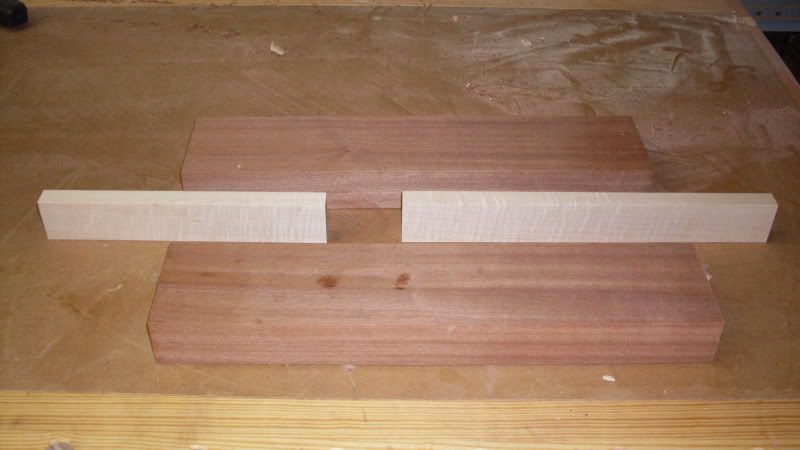
First thing I’m gonna do is cut some pieces of mahogany and maple.  That’s right, the mahogany will serve as the bulk of the leg stand for a bench, and the maple strip will serve as an accent piece to show some interesting contrast.  I also cut a length of tenon stock the exact dimensions I need the mortise to be.

From there, I set up the two side pieces of mahogany on the clamps, giving some room for the maple accent strips to be glued…

Then, I glue up the first maple strip, set it to the magic line of measuring, and clamp it in place, keeping the faces flush.

Without further ado, I wedge the tenon stock in and glue up the second maple strip, insert the tenon stock in the gap and glue the top maple strip into place, again keeping it flush with the faces.

Now, I say the magic works – Abra cadabra, hokus pokus, alakazam –  and blammo – I knock the tenon stock out of the hole leaving a perfect nothingness surrounded by a square-shouldered mortise with absolutely no tear out.  No mirrors, no tricks, no sleights of hand…

Now, all I have to do is work a little magic on shaping the legs of this bench….

One sweet board…

A few weeks ago, I was marveling at the design of some benches built by Japanese woodworking master George Nakashima.  He had a way of blending crisp joinery with the natural raw character of some choice timbers.

Woweee… wouldn’t it be great if I could find some cool looking lumber like that.  Some figure.  Some color.  Two awesome live edges.

I started poking around my lumber suppliers here in Florida, but I was out of luck.  Most of the lumber that comes in here is already at least rough cut on four sides, leaving just a stray bit of wane on the outside of the board.  The timbers were very nice, but they didn’t do it for me.

That’s when I asked Eric Poirier of Bell Forest Products to take a peek around his inventory.  At first, things didn’t look so promising, but he assured me that there was a new batch of wood in the kiln that might have some likely candidates.

Would this count as a likely candidate?

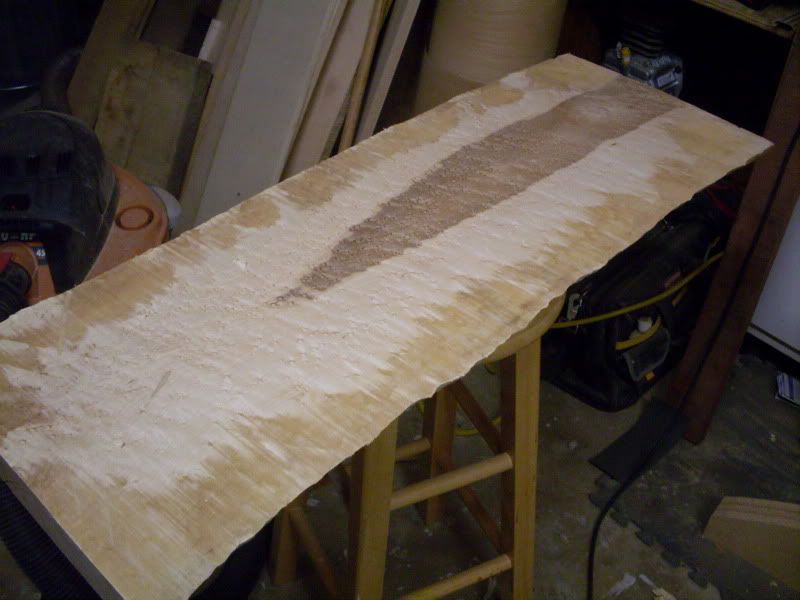
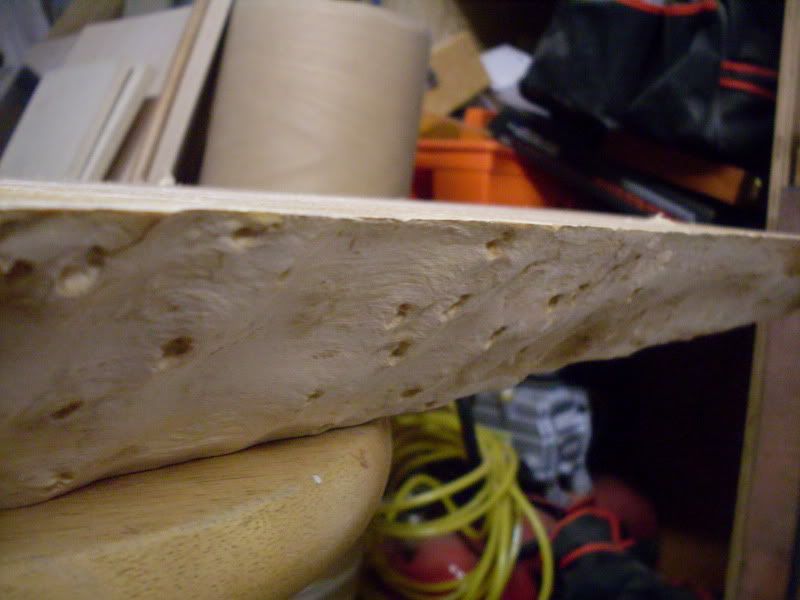
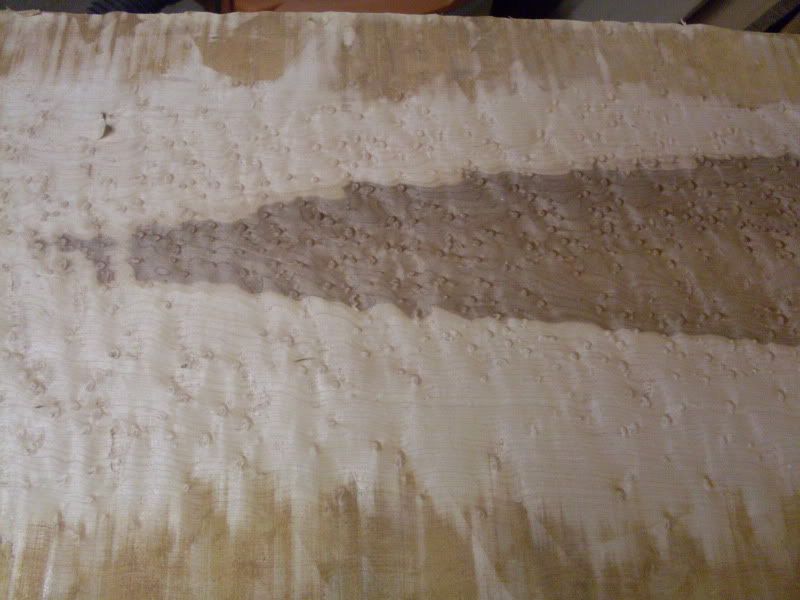
This is a piece of gorgeously figured bird’s eye maple.  It is about 36″ long by 14″ wide by 2″ thick.  The best part of this board is that it has a live edge on both sides… which means this bench will be viewable from both sides… pretty striking.  There is a dark mineral streak running about half the way across the board, giving an interesting contrast across the face of the board.

According to Eric, finding a piece of wood like this is pretty rare for his operation.  “Most of our 8/4 Birdseye gets edged to sell as grade lumber, so finding a live edge board like that is something special! ”

As many of you have discovered, while bird’s eye maple is beautiful to behold, it’s a pain in the rear to work.  Even my sharpest smoothing plane gave me very bad tear out.  So, I have resorted to my belt sander with a coarse grit belt to get the faces of the board ready to work, and I’ll go to finer grits and ultimately a scraper to get the surface ready for use.

I took some time over this past weekend to start working on a simple mahogany base for this bench.  That should provide an interesting contrast for the top.

More to come…

part of the Wood Talk Online community