Stuff I’ve Built: The Bible Box

February 2011

Our church’s youth ministry is planning on sending some of the kids on a trip to see the Pope at World Youth Day in Barcelona, Spain. The organizers are looking to host a dinner dance to help raise funds to make that happen. As part of the program they are looking for donations of food, decorations,  DJ services – the whole shebang.

And, donations of items to enter into a silent auction, with the proceeds going to help the fund grow.

I’m sure they’ll end up with the basics – items to put into themed baskets (A night at the movies, a day at the spa…), golf outings at local courses, services from parishioner’s businesses… the works.  You knew I couldn’t let this opportunity pass…

So, I set to work on building a Bible box for the auction – someplace for the family to put the good book, a set of rosary beads, palms from Palm Sunday and other items. I built the sides from a set of sapele boards I had first laid out and mitered for a project that went terribly wrong. Yes, these boards were supposed to be the twin box to the one that went south.

I cut and planed the box top and bottom from wider sapele pieces and fit them into dadoes to form the lid and the bottom, and then glued the mitered box together.  I then cut the lid of the box free at the table saw. This was a delicate operation – you don’t want to cut all the way through on the passes.  The key is to leave a little ‘web’ of wood at the top of the cut, and once all of  the cuts are made, slice the box lid free with a utility knife. This way, the lid won’t get free and ruin the cut.

As I laid out the cuts with my Kehoe Jig to reinforce the corners, doubts started to enter my mind. How would this box look different than all the others I was building as of late?  They all seemed to have three our four splines in them down the side, no feet, lift off lids … No, I had to do a couple of things to make this box stand out.

I started with  some pieces of bird’s eye maple that had been sitting around for a few months. I planed them down to about 3/8″ thick when I built the last project with them months ago, but I can’t remember why…

I then cut some pieces of the maple into quarters and glued them onto the lid to create the shape of a cross. Once it was glued into place, I brought out the random orbit sander and brought it even with the ‘rim’ of the top. The cross shows up as a ‘negative’ relief … I think it looks cool.

Then, I ripped a section of maple to about three inches wide.  I then bevel ripped the board down the middle at 45 degrees and cut the pieces so they would come together as a mitered assembly.  A quick cut at the band saw left me with ‘outside’ edges that curved up and down to form smaller feet, and I left the tops a little longer than the height of the box body to reference the top. A little bit of liquid hide glue allowed me to rub the joint together and have it hold while drying.  I love that trick.
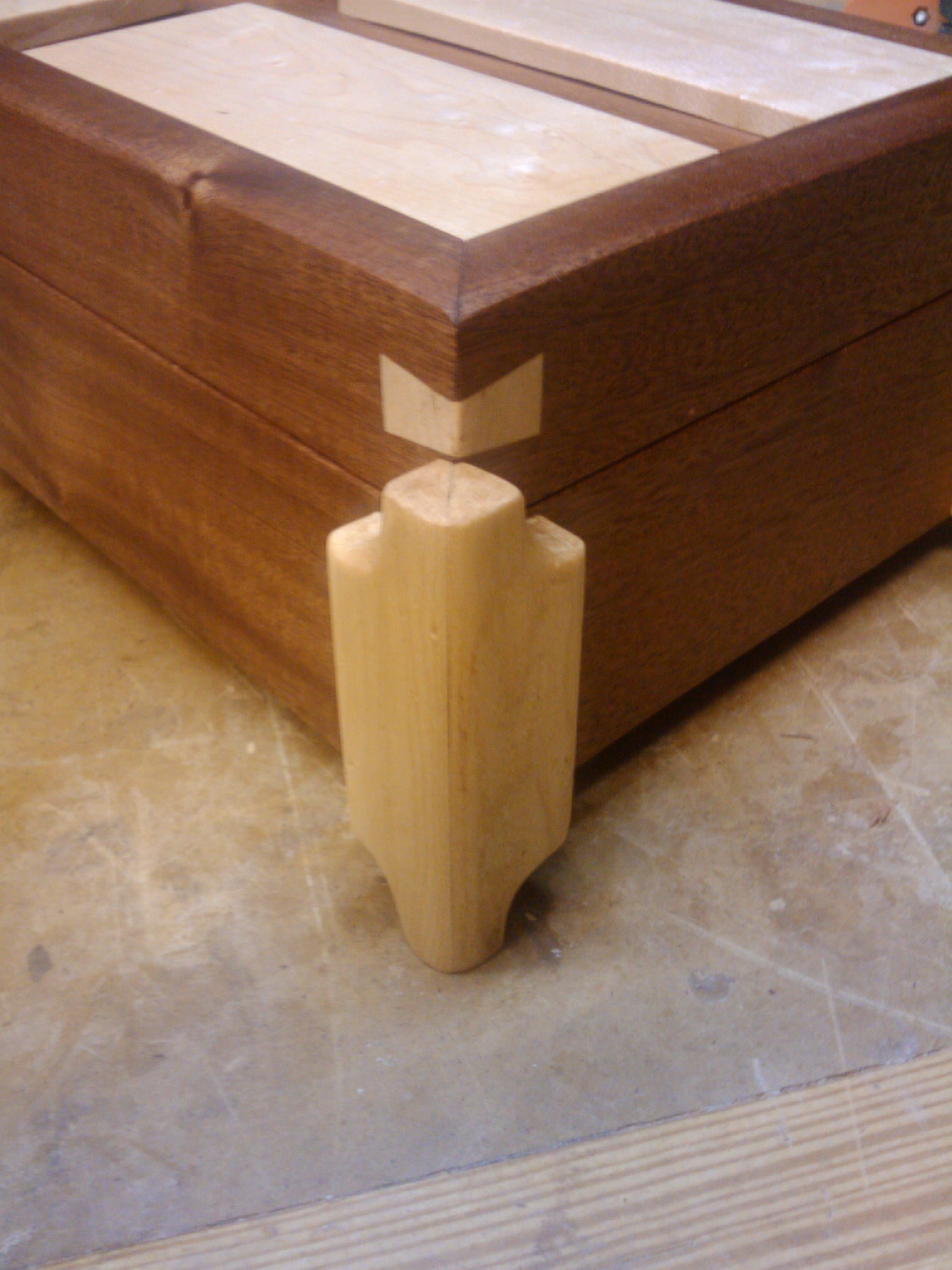
Once the glue dried, I then glued them to the outside of the box and held them in place with a band clamp wrapped around the outside.

Since the lid’s corners weren’t secured, I figured what the heck, and I threw some Kehoe splines into it.  I kept them maple to continue with the contrasting wood theme.

The finish is my typical formula – a 1# cut of dewaxed shellac, followed by a thorough sanding with 320 grit paper and two coats of Watco Danish Oil. Once it was all done, I dropped it off at the church. I went to one of the ladies who was helping with my sons’ religious ed classes and told her it was for the auction. I have this feeling it may not make it to the auction – someone on the staff may buy it!

The most difficult thing about this project happened during construction. A good friend of mine looked at it on the bench and said, “Funny, it looks like the Holy Humidor.”  From that moment on, all I could do was think about lining the box with cedar and putting a few stogies in it!
The sharpness quotient

A sharp looking paint job. A sharp-dressed man. A sharp wit.

We throw out the word “sharp” a lot during our daily routine. And, most of the time that we do so, we aren’t referring back to something that can cut anything but the mustard.

As woodworkers, though, isn’t “sharp” one of our primary concerns? Sharp tools cut wood better than dull ones, are safer to use and lead to much better results. But, what exactly is sharp, and how do you know when you’ve gotten there?

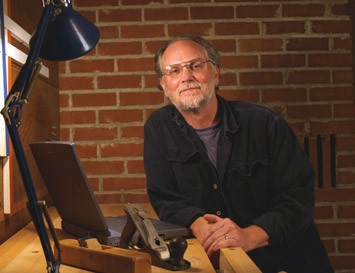
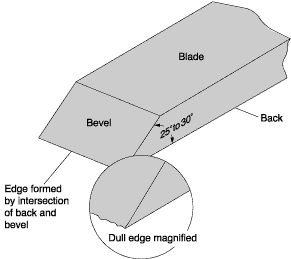
To get to the bottom of this, we return to Ron Hock of Hock Tools. “Sharp is simply a quality you get when two planes intersect at zero radius. The closer to zero radius the intersection is, the sharper the edge will be.”

Seems simple enough, but of course, that’s not the end of the story. Ron began by explaining to me that for something to have sharpness, those edges have got to meet at a 90 degree or more acute angle. “You can get sharp edges on a board you cut to 90 degrees. Take it off the jointer and feel the edge and you’ll learn quickly what a sharp corner feels like. But, if you cut the board at greater than 90 degrees, the edge may be clean and crisp, but it’s less likely to cut you.”

That makes the angle of the edge a critical component. “The rule is that the more acute the angle where the two planes meet, the finer the edge, but the more fragile it will be.” That’s why razor blades shave hair smoothly with their very acute angle edges, but they would stink as wood-cutting chisels.

Interestingly, chisels are a very easy way to get a handle on this matter of sharpness. Paring chisels, used to carefully slice away wood for a joint, are usually ground with a 20 degree bevel. Mortising chisels, on the other hand, need to have their bevels ground at a wider angle – usually about 30 – 35 degrees – to withstand the chopping necessary to cut a mortise. Bevel-edge chisels – used in many cases for both applications – are ground to a 25 degree angle.

For many woodworking tools, sharpening is a relatively easy task. “Both plane irons and chisels are single bevel tools – they have a flat side and a bevel on the other. Since the bevel and the flat have to meet precisely, getting the flat side ground and polished is an essential first step.” When you purchase older chisels or plane irons, it’s a good idea to bring a straight edge along with you to see how far out of true these tools are on the back side. Even with the best tools, a careless owner may have done something to get the flat out of true. Most tools made in modern factories – especially high-end premium tools – are ground adequately flat at the factory.

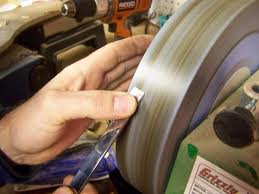
“With a flat back, the next step is to shape the bevel. If the tool is made and maintained properly, regrinding the bevel may be required only if you like to hollow grind on a grinding wheel, if you want to change the angle of the bevel or if there is damage to the edge that you need to grind away.” There are many ways to grind the bevel on a tool – with coarse stones, on a wheel or a platen grinder, with sandpaper, etc. The key to grinding is to keep the bevel consistent as you work, and don’t overheat the tool, which turns the steel blue and draws the temper from the tool, leaving the overheated areas softer.

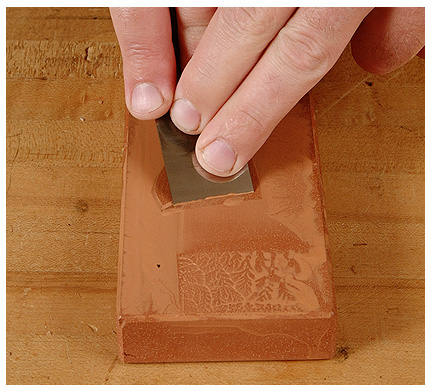
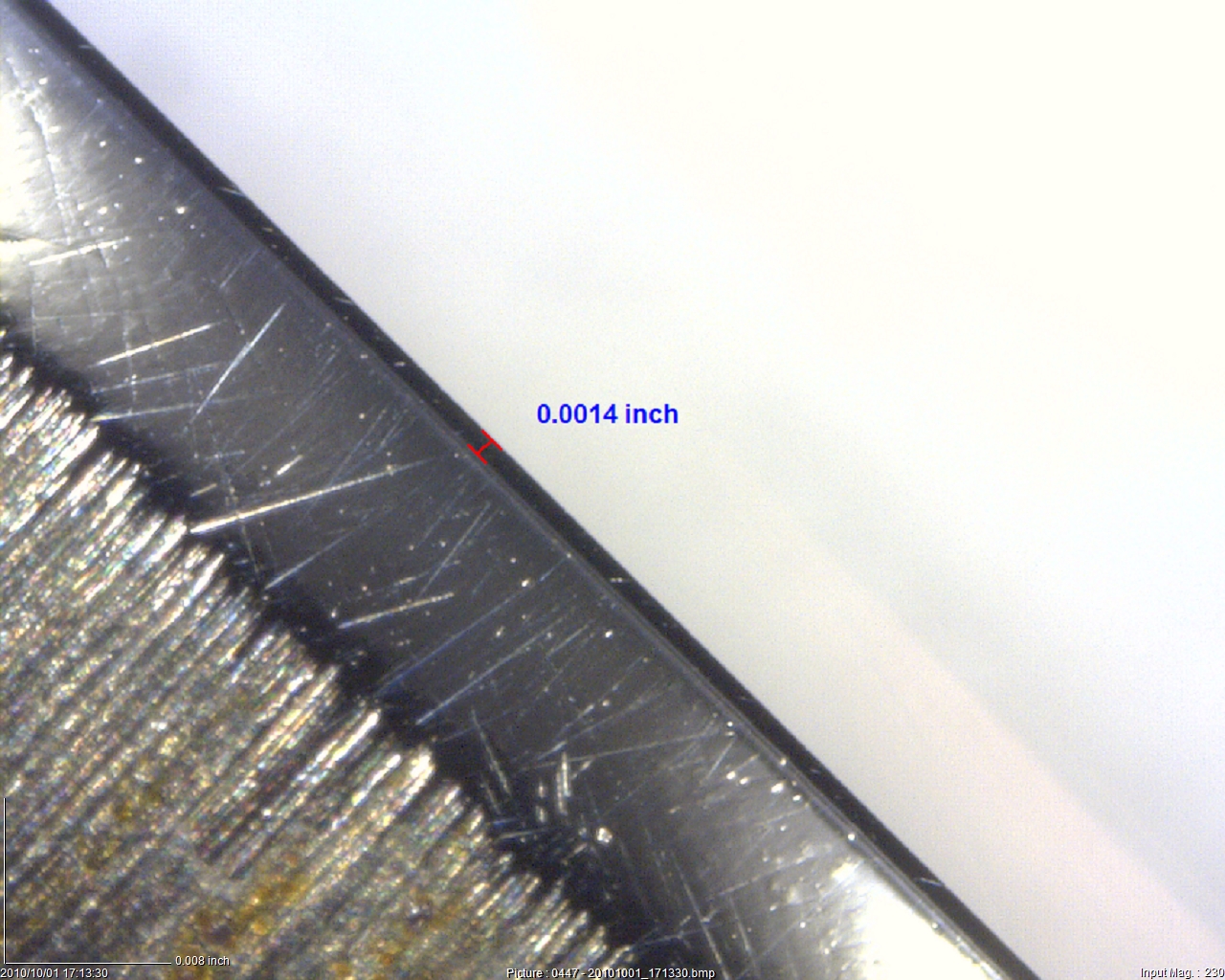
Once the bevels are ground, the next step is to hone the blade. “Again, there are a lot of different ways to hone a blade. Water stones, diamond stones, oil stones, honing film… What you are trying to do is to replace the coarse scratches in the blade with smaller ones as you progress through finer grits. This is going to make that edge where the two planes meet as fine as possible.” This is easy to see when looking at a blade’s edge through a microscope. Deep scratches from a coarse stone appear almost as rough saw teeth, and finer ones help refine the edge.

“For hand-held honing, I recommend a hollow ground bevel so the edge and the heel of the bevel can be used as a tactile honing guide. You can feel when the bevel is set properly on the stone. Some woodworkers also like to put a one or two degree microbevel on the cutting edge. You can save time this way because you’re only honing a thin stripe at the cutting edge. The larger angle of the microbevel strengthens the edge a bit, too. But if you hone hand-held, it’s difficult to maintain the angle of a microbevel.” Should everyone put a microbevel on their tools? “It’s all up to you – and your technique. I hear from both sides, frequently and adamantly. Microbevel or no, sharpening is a basic woodworking skill that requires practice like any other skill.”

Double bevel tools such as knife blades require more care when sharpening. “Remember, you are grinding two bevels that have to meet at a particular edge as evenly as possible. Practice and consistency are keys here.”

But, how far should you sharpen your tool? “Polished edges do last longer but I’ve seen woodworkers obsess about getting to ultra-micro-fine abrasives to get the ‘perfect’ edge on their tools. I think 8000-grit is fine enough for most applications but woodworkers I know and respect insist on 12,000-grit or even finer for their blades (Here is an excellent chart to help you identify different grit sizes across a variety of honing media). Keep a block of wood, pine works well, in a vise nearby. When the tool can cleanly pare through the end grain with little effort, that’s where I’d stop. After all, you want to get back to woodworking as soon as possible, right?”

Link of the week

Etsy

Sort of a cross between eBay, Amazon and a craft gallery, this online site gives artists, crafters and those who supply them an online marketplace to buy and sell their products.

The site also offers users the ability to set up a virtual storefront and sell their items. There is a fee of $.20 to list the item and an exchange fee of 3.5% should the product sell.

If you are looking to dip your toe into the online selling community, this could be an interesting way to begin.

The results are in…

This past Monday, our county’s art program held its award reception at the PCC-TV studios here in downtown Clearwater. I went to the reception, anxious but confident that Centered and Position of Strength had looked their best and were going to wow the judges.

As in the previous four years, the air crackled with excitement – not only because the contest was about to be judged, but this was the first opportunity for the artists to meet and greet. After looking at each other’s work for the past week, it was great to put faces with names and art pieces.

The National Arts Program’s executive director was also on hand for the ceremony, which proved to be a great honor.

Finally, the names were announced. Here are the results for the adult professional category:

Honorable Mention: “Beyond Petroleum” by Josh Lynch

Third Place: “The Chalk Artist” by Robert Waters
Second Place: “Docked” by Constance Myers

First Place: “The Boyfriend” by Kristina Hopper

As you can see, neither of the pieces placed in the competition. At first, I felt a little bit crushed. I thought these were two of the best pieces I had submitted for judging, and I had yet to walk away from one of these contests without a ribbon.

But, then I quickly realized two things– first, after finishing in the money for the first four years, I think I’ve done pretty darned well. It’s great that this year’s judges saw the work and weighed in on what they liked.

Secondly, and I believe most importantly, I think it’s time to step my game up a little bit. It’s been very comfortable for me to enter pieces into the contest here with the county every year, and I’ve felt like the Big Man on Campus among my peers. But, the time has come to start moving in a bigger direction. That’s why I’m speaking with the Florida Craftsmen Gallery about these two pieces and the Fujiwhara Chest I built a few years ago to see about getting my work exhibited there.

In the meantime, I’m going to start thinking about next year’s entry. You might see me running Rocky Balboa style around the neighborhood, whipping myself into shape for my rematch with Apollo Creed. I’ve got to build something next year to knock the proverbial socks off the judges!

Stuff I’ve built: Centered

January, 2011

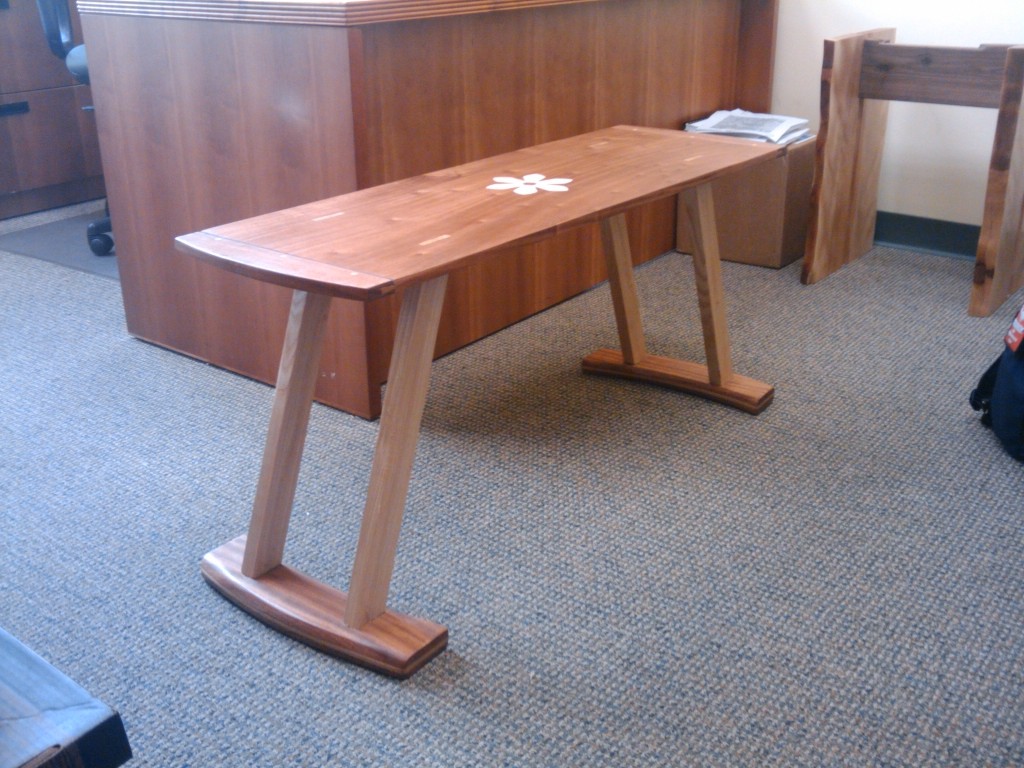
I had to name this piece before I submitted it to our annual art contest. Heck, I had to name it before it was even done. If I had the chance to do it all over again, I would have named it The Cat, because it has used up about seven of its nine lives.

Let me explain. This whole thing started when I found a very wide slab of sapele at my local hardwood supplier’s place a few years ago. I thought, “Gosh, this would make a nice table top one day.” That board sat in my shop for a long time before I had an idea.

That idea was angled tennons. I should have guessed this was a bad idea from the beginning because online searches brought back few results. But, who am I to let a few details get in the way? After all, it was cheap wood!

Back in September, I finally got around to sketching something out. Cutting angled tennons was going to be the easy part, but, how on Earth was I going to make the angled mortises? Drill them? Hand chisel? Phased plasma rifle?

Before I went too sci-fi, I remembered the article I had written about mortising magic. Now, if it worked for mortises perpendicular to the board’s surface, why not at an angle? So, I marked where I wanted the outside of the mortises to land, set the table saw and ripped the sides. Then I measured the width of the mortises I planned to cut, set the rip fence and ripped the ‘fillers’. Once these narrow pieces were cut, I cut sections out of them at 20 degrees, and then carefully glued the entire top slab back together to restore the wood’s grain pattern. BINGO, baby!

I let the top sit for a few weeks, waiting for more inspiration to hit. How to dress up this big top? How about some breadboard edges? Never cut any in my life, but it’s a good time to learn. I cut two sections of Sapele and grooved them to work as ends. How about the main table top? I tried first to hand-cut the tennons that would fit into the edges, but that didn’t work too well. Sapele is very brittle and splinters easily. I totally messed things up. How now?

Eventually, the idea hit me to lean heavily on blue painter’s tape and a backer board as I pushed the top over the dado stack. So, I trimmed the messed up parts off and taped the snot out of the edges. I set up the dado and pushed the board through. WOO HOO! It worked. I drilled for three dowels, elongated the outer two holes in the tongue and assembled them with some glue right in the middle. I tapped the dowels into place, gluing the middle one and just putting a touch of glue at the top of the two outside dowels. This way, the top could expand and contract, and the dowels would stay put. I cut sweeping curves on the outside of the breadboard edges and sanded them very smooth.

I put the piece aside for a while. Worked on the cabinet pull outs. Worked on the Position of Strength base. Discovered I was wasting too much time, and had to move to the next step. The inlay. You remember the one I nearly messed up but saved with the epoxy fill? OK, got that done, and glued the mortises in place through the top. I’m flying now!

Of course, I had totally forgotten about the feet. When I milled the top, I had taken the opportunity to mill some extra ash and sapele and glued those pieces into blanks. They were just sitting on my side bench, taking up space in the shop. How was I going to make those blocky feet look better? While mulling the options over, I cut the mortises to hold the leg tennons with the mortising chisels my wife and kids gave me for my birthday. That was fun.

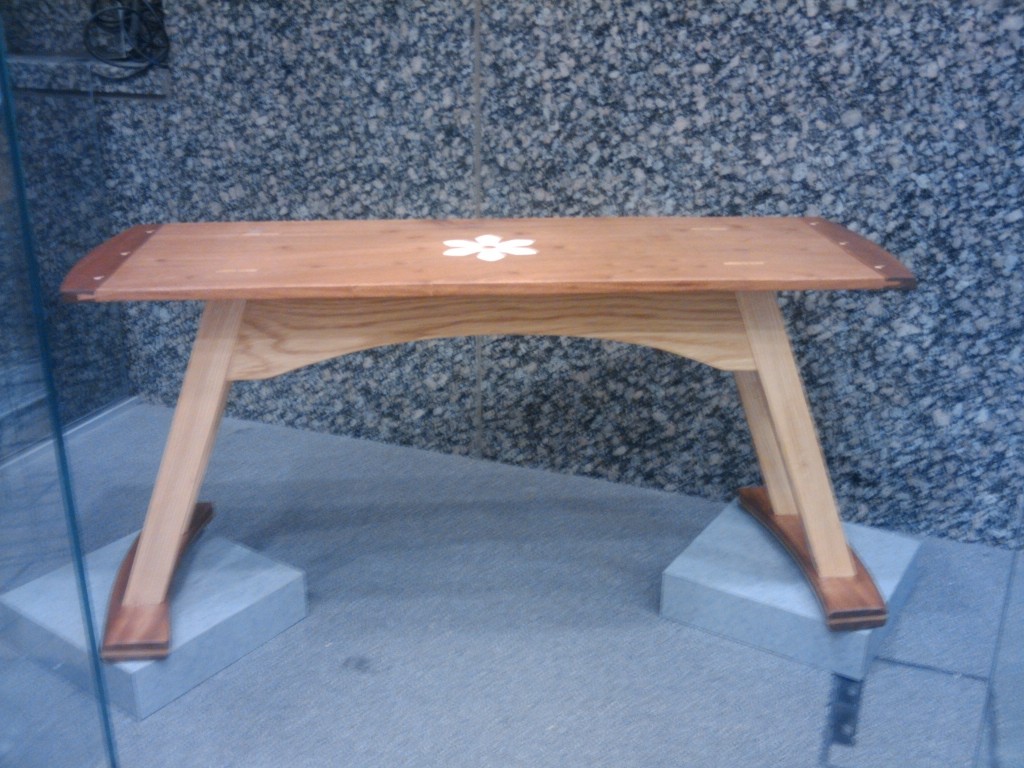
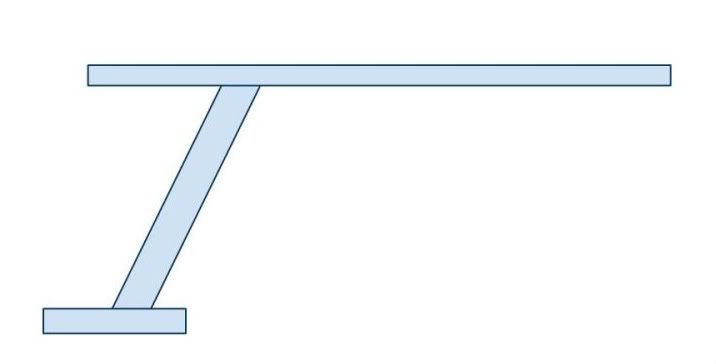
Inspiration hit while I was looking at the breadboard edges. How about curving the outside of the feet? I traced the curve from the top on to the front edge of the legs and used the bandsaw to cut it out. They looked better, but still too blocky. I added a curve on the back side of the feet that mirrored the front curves… better. Then, just messing around, I clamped one of the feet into my vise and started using the spokeshave to bevel the top edge. Soon, I was beveling back both curves at a 20 degree angle to match the legs. Both bevels are parallel, which gives the feet a little more grace and lightness.  Ohh, that was supposed to be the weakest part of the design… looks better now!

I sanded and finished the piece and brought it to work. Hmmm… it didn’t show well. Something didn’t look quite right. The top was just too ‘light’ in comparison to the rest of the piece. It looked like an ironing board. Add to the impression that the first few people who saw it tried to sit on it. Hmm, we had a problem. How to fix it?

I remembered that I had a long rough piece of ash back at home. I opted to put an ash apron under the top. How large should it be? I played around with the proportions and decided that 5 inches would do the trick. I resawed, planed and cut the pieces to size, matching the angles found on the legs. Better, but still too blocky. How about a curve cut out of the bottom? Now it looked better. I glued and pocket screwed the apron into place (my only real option with the piece already glued up), sanded it and finished it to match. The apron added strength to the piece and gave it a more balanced appearance.

I turned the piece in a week ago, and it’s sitting in the locked glass case in the courthouse lobby. The reactions have been pretty positive. I’ve heard it described as ‘whimsical’ – not really something you would expect to see.

At 3:00 today, I’m going to find out how well this and the Position of Strength pieces placed. Hopefully, the judges will decide that my persistence with this piece was worth it. I’ll have an update on Wednesday…

Quick Poll

Woodworking is about accuracy, design and execution. And, when a project is carried out with machine-like precision, well, you have a perfect woodworking project.

In theory, that’s great.  In the reality of our shops, however, sometimes things don’t go according to plan. There could be mistakes in the building or fatal design errors that reveal themselves once the piece is built.   Some of those projects can be fixed, others, well…. some have to go to the great scrap pile.

This week, have you ever had to completely give up on a project?

[poll id=”157″]

part of the Wood Talk Online community