Species Spotlight: Basswood

What makes something strong?  It’s character? It’s bulk? A certain Je ne sais quois?

In the case of basswood, its true strength can be found in its weakness.

“Basswood, also known as linden or lime wood, is some pretty plain looking stuff,” said Eric Poirier of Bell Forest Products. “No real showy grain or figure, a very light color and – well – it’s just beautiful in its simplicity.”

Now, how would such a plain looking board be considered beautiful? “If you are looking for an excellent wood to carve, there are few as good as this one.” For centuries, woodcarvers have been slicing into basswood, creating absolutely crisp detail with minimal tear out. How intricate? Well, this picture is from part of an altar carving made by German artist Tilman Reimenschneider back in the early 1500’s…  Wow…

These and other artistic treasures can still be found all across Europe at cathedrals and palaces. The wood is highly stable, making it less prone to movement and cracking over time.  “Along with its ease of carving, the neutral color of basswood doesn’t detract from what’s being carved into it. It becomes – in effect – a blank canvas for a woodcarver to work on.”

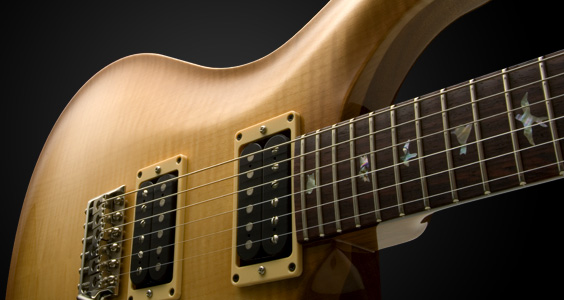
What else is basswood good for beyond carving?  Plenty. Its light weight and tonal properties make it an excellent material for electric guitar bodies and wooden instruments such as recorders and is also used when creating drum shells.

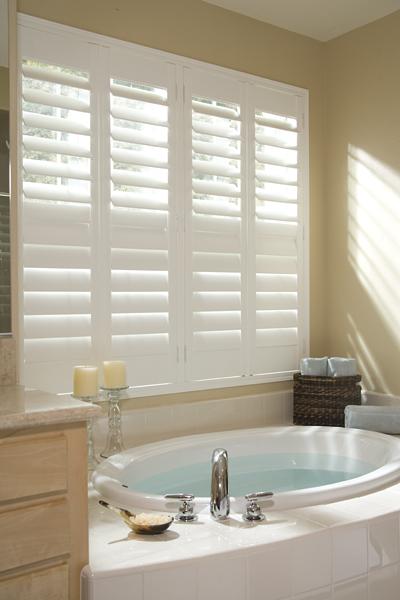
Basswood’s light weight also makes it a natural for wooden blinds and shutters. “Imagine the weight that can be kept off a set of hinges using basswood over other common species. That means less stress on the hinges, significantly improving their lifespan. If you are looking to build a set of plantation shutters for your home, basswood is an excellent option.”

So, while its reputation is as a lightweight, give basswood a chance. You might be surprised just how strongly you will rely on it in your woodworking.

Woodworking Spotlight: Basswood

What makes something strong? It’s character? It’s bulk? A certain Je ne sais quois?

In the case of basswood, its true strength can be found in its weakness.

“Basswood, also known as linden or lime wood, is some pretty plain looking stuff,” said Eric Poirier of Bell Forest Products. “No real showy grain or figure, a very light color and – well – it’s just beautiful in its simplicity.”

Now, how would such a plain looking board be considered beautiful? “If you are looking for an excellent wood to carve, there are few as good as this one.” For centuries, woodcarvers have been slicing into basswood, creating absolutely crisp detail with minimal tear out. How intricate? Well, this picture is from part of an altar carving made by German artist Tilman Reimenschneider back in the early 1500’s… Wow…
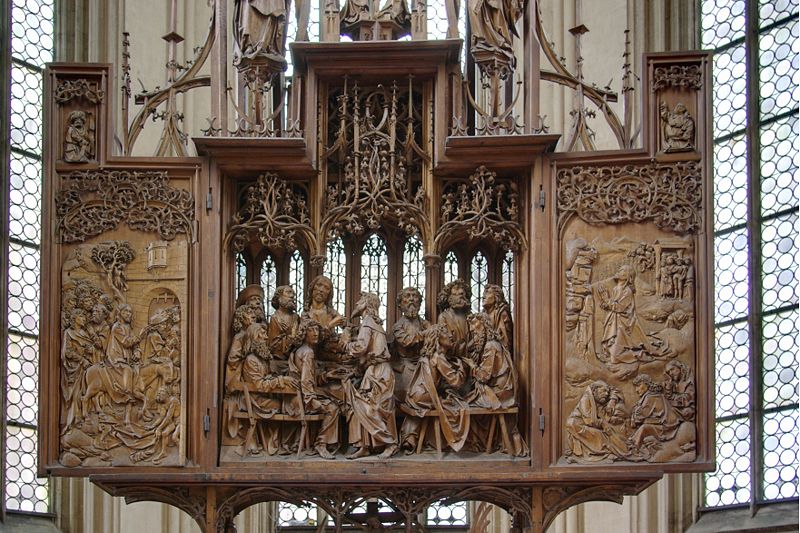
These and other artistic treasures can still be found all across Europe at cathedrals and palaces. The wood is highly stable, making it less prone to movement and cracking over time. “Along with its ease of carving, the neutral color of basswood doesn’t detract from what’s being carved into it. It becomes – in effect – a blank canvas for a woodcarver to work on.”

What else is basswood good for beyond carving? Plenty. Its light weight and tonal properties make it an excellent material for electric guitar bodies and wooden instruments such as recorders and is sometimes used when creating drum shells.

Basswood’s light weight also makes it a natural for wooden blinds and shutters. “Imagine the weight that can be kept off a set of hinges using basswood over other common species. That means less stress on the hinges, significantly improving their lifespan. If you are looking to build a set of plantation shutters for your home, basswood is an excellent option.”
So, while its reputation is as a lightweight, give basswood a chance. You might be surprised just how strongly you will rely on it in your woodworking.

Quick poll

Last week, my wife and I were watching the DIY Network, when the builder during one of those ‘renovations gone wrong’ type shows came in to help the homeowner.

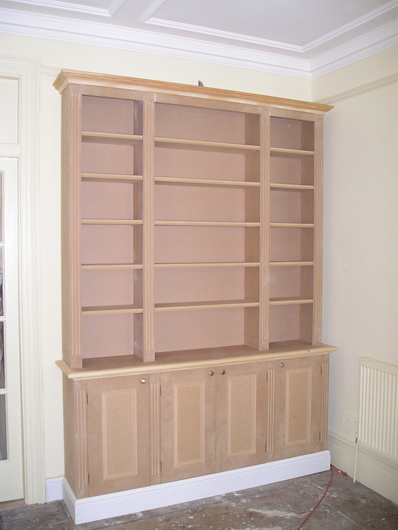
She helped patch the crumbling brick walls in the 120 year old townhouse, laid down a wooden floor – and built a bookshelf system entirely of MDF. Sides, shelves, top, bottom.. the works.

Knowing the properties of MDF, would you ever build an entire bookshelf system for a home solely out of the material?

[poll id=”160″]

Link of the week

Materials Technology Wood

One of the saddest things to see is the reduction of the number of wood shop programs that have been closed in middle and high schools. It’s as if school planners believe that every student can’t be ‘successful’ without going to to a university.

Wouldn’t it be great to see a wood shop curriculum online?  That’s exactly what you’ll find at the Materials Technology Wood site.

Created by Tony Sheridan at the University of Limerick in Ireland, the site  is a resource for teachers of the Irish junior certificate with particular emphasis on practical skills development through the design and manufacture of woodworking projects.

Logically designed, the site offers excellent primers on safety, basic joinery and projects based on skill level.  It’s an interesting site to brush up on some basics, get an idea for projects and to develop a plan to develop the skills of a budding woodworker in your life.

There’s gold in them there ratios…

I have always hesitated to write articles about how to design projects.  Maybe it’s because I’ve built more than a few stinkers and want to forget about them. Or, is it that sometimes I design my projects as I go along… pencil in one hand and crying towel in the other?  I can’t keep the reasons straight anymore.

There is one convention that I have stumbled across while designing a few projects that has helped me out of more than a few jams along the way.  That is the Golden Ratio.

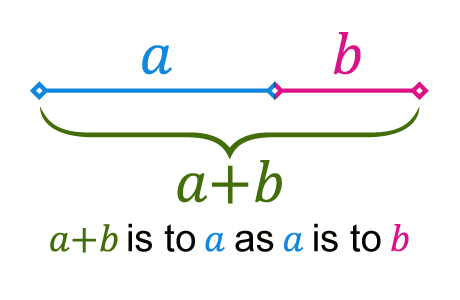
Just what the heck is it?  Well, it’s a classical design concept that has been in play for more than two millennia… Back in the days of ancient Greece, mathematicians such as Pythagoras and Euclid were noticing that in balanced shapes in construction, nature and geometry that there was this relationship between sizes of items that kept recurring. It was described as the extreme and mean ratio.  What does that mean?  Heck, I was an English major back in college… you do the math. However, it can be expressed quite eloquently in the following diagram:

The idea must have taken off, because many classical structures such as the Parthenon were built with this pleasing ratio in mind.

The golden ratio is also expressed as the Greek letter phi (φ) or as a number expressed as 1.618033…. This is known as an irrational number – kinda like my family’s checking balance after we pay all of our bills. “Honey, how did the account get so low? That’s just totally irrational!”

How does this help with woodworking? In many cases, it can be used to create a more balanced looking piece.  You can create the Golden Ratio by doing some complicated math, buy a special phi graded ruler or do what I do – look for a free online golden ratio calculator like this one.

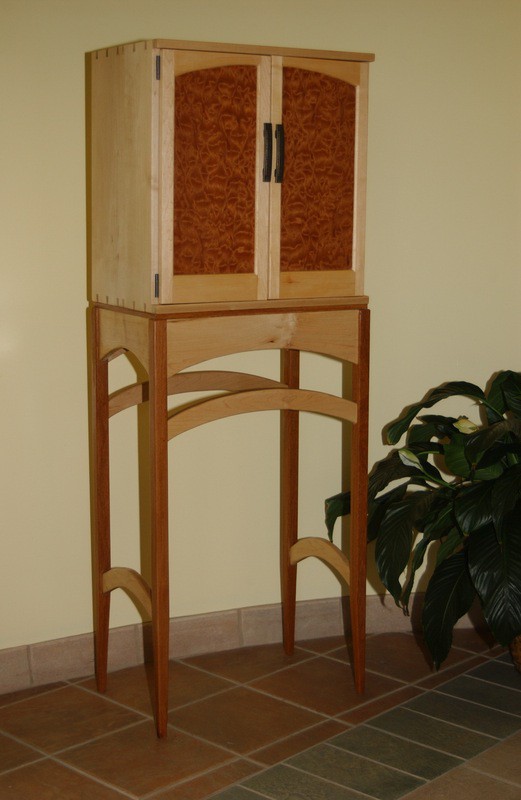
The best example of one of my projects using the golden ratio was the Fujiwhara Chest. I knew I wanted to build a cabinet about five feet (or 60 inches) tall, but how large should the cabinet section be versus the leg height?  I wanted the proportions to be nice to look at and convenient to access. So, I went online and plugged my numbers in.  I saw that the golden ratio of 60 inches is 23 and 37.  That’s when I drew up the plans for a 23 inch tall cabinet and a 37 inch tall base.

I also had to determine how deep to build the piece.  Should I just guess, or try to get it balanced? I plugged in 23 inches (the height of the cabinet) and figured the golden ratio for that – 14 inches deep. So, that’s how deep I built the piece.  The proportions came out pretty spot on, and one of the comments I got from the judges the year the Fujiwhara Chest showed was that it used proportions very well.

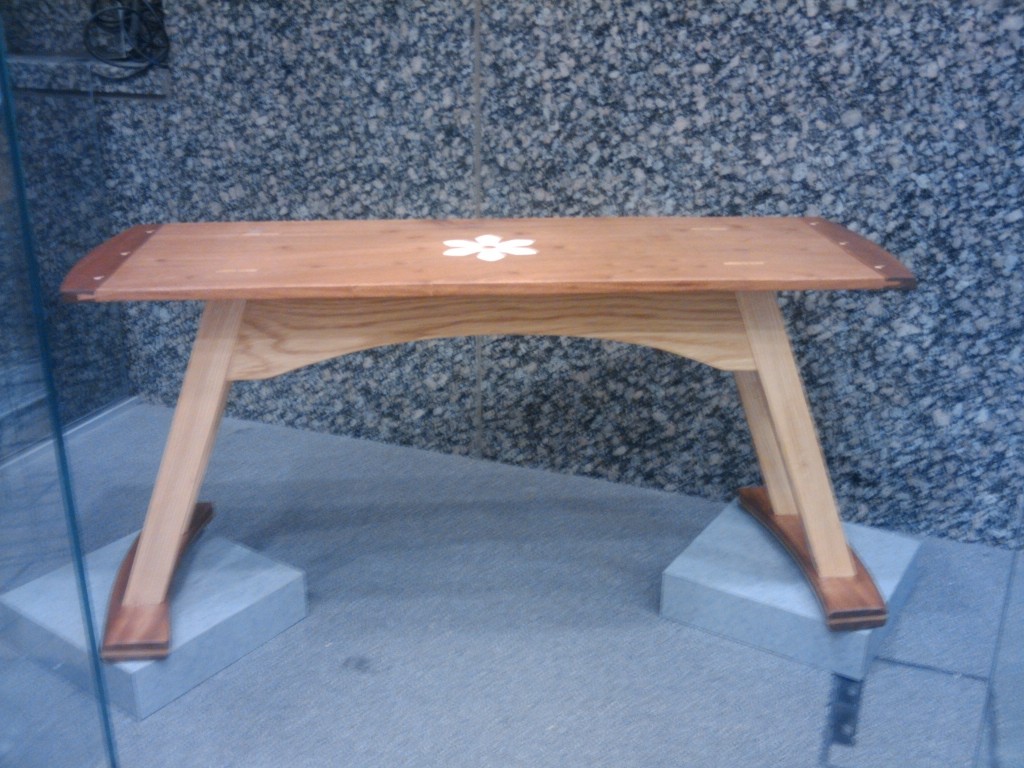
Another project I used the golden ratio on was Centered.  My plan was to come up with a unique looking table featuring a wide sapele board and angled legs. And, that’s exactly what I built.  And, when I showed the piece to some other folks, they all gave the same reaction.  “It looks nice, but something’s not right with it.” The project had no visual weight on the top, making it look too much like an ironing board.

OK, back to the shop it went for me to add some aprons to the piece.  How large should they be?  I plugged the total height of the table from floor to top – 17 inches into the calculator and saw that the numbers were going to be 7 inches and 12 inches.  This presented a few problems… I didn’t have a 7 inch wide ash board to use on the piece, and my band saw didn’t have that kind of resaw depth. Hmmm…

One other thing about the golden ratio is that you can continue to drill down, using the ratio numbers to make smaller dimensions.

So, since there is this relationship between numbers, I entered the  12 inch measurement into the calculator and came out with 5 and 7…   I figured why not try for 5?

Perfect. The apron looked balanced when I cut it to 5 inches tall. To help make it more graceful, I plugged the number 5 into the calculator and came up with 2 and 3.  I marked the center of the board two inches up from the bottom edge, connected a few points by a curve and cut it out to get a nice, graceful look.

Did I explain the golden ratio properly? Probably not. I’m pretty sure someone will weigh in to point out my complete lack of mathematical abilities or why the golden ratio should be avoided… but for a dunderhead like me, using this concept seems to help me in the design phase.

http://en.wikipedia.org/wiki/Parthenon

Stuff I’ve built: The Valentine’s Day box

Oh, do I love my band saw now. All of the stuff I had planned on doing with it… well, I can now!

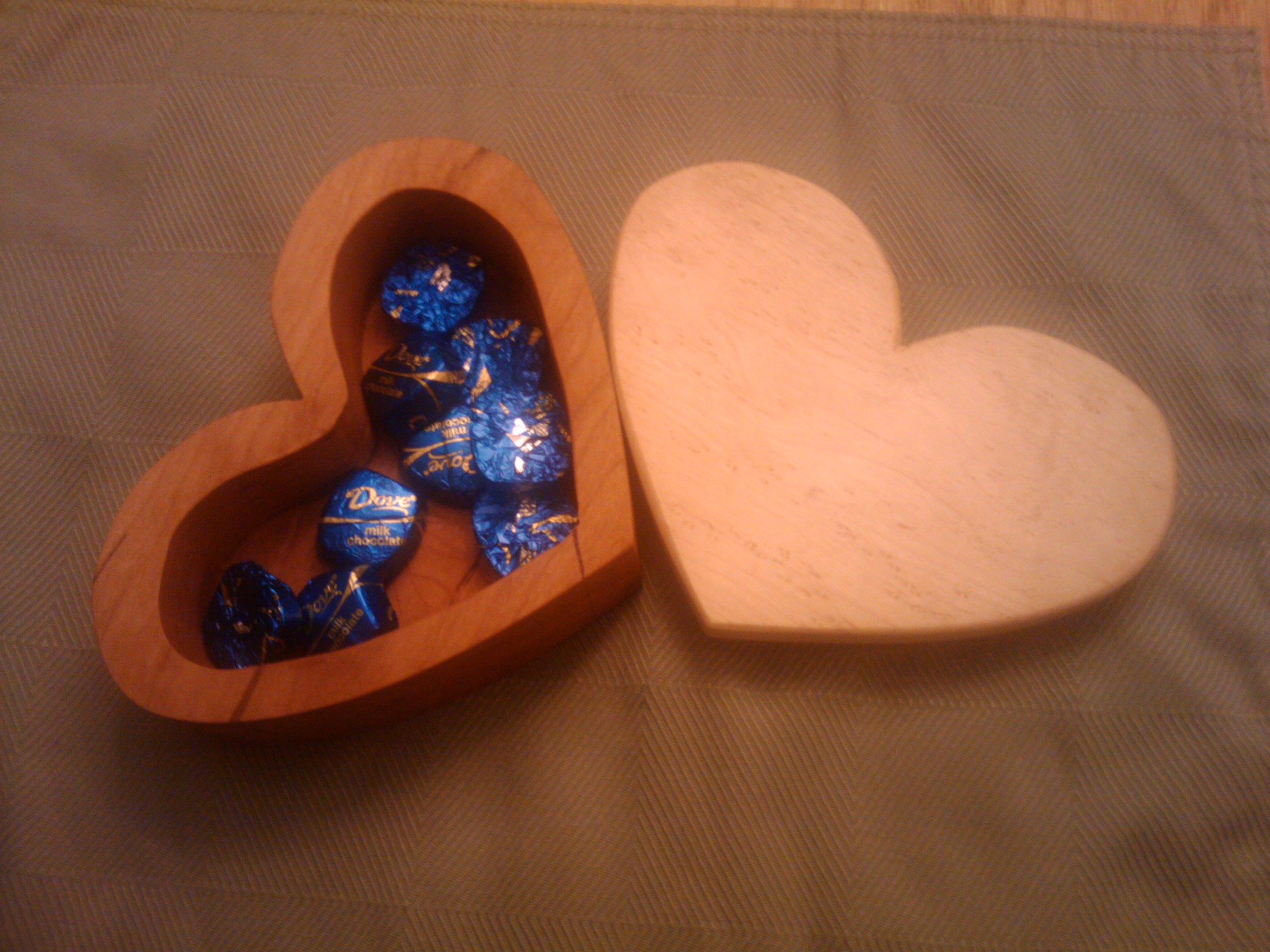
For instance… I wanted to build a little something special for my wife for Valentine’s Day today. The project I wanted to build had to be small so it didn’t stand out like a sore thumb on my bench. It had to use up some of the pretty scraps of wood I had around the shop. And, it had to be something special.

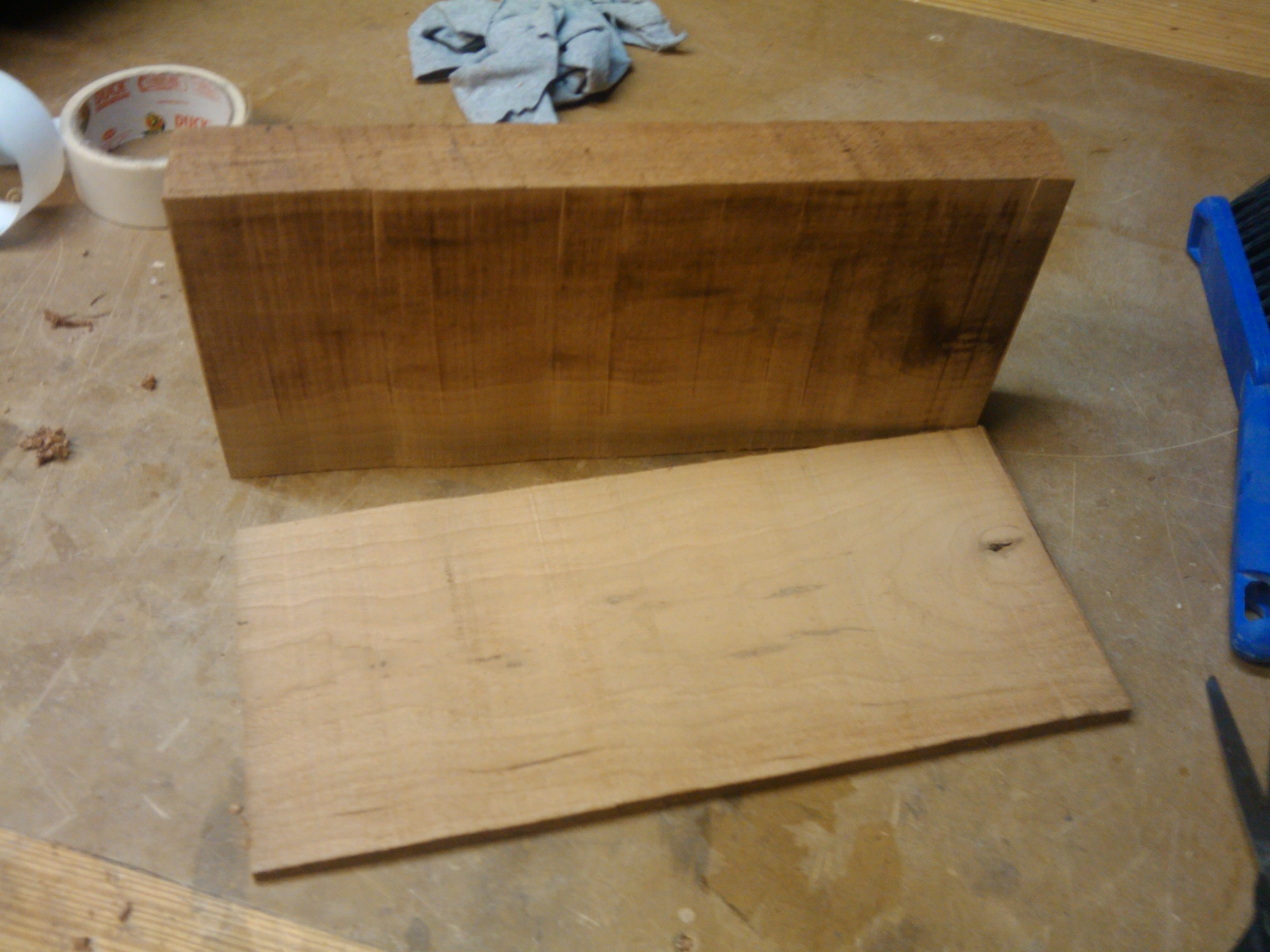
I dug around in my wood stash and found a scrap of 8/4 cherry and some 3/8″ birds eye maple.  Why not a bandsawn box? Not only would it be small, it would be fun.

First things first, I had to resaw off the bottom of the piece of cherry.  Just about 1/2″ thick, thick enough to serve as a solid base for the box. I left it with the bandsawn marks on it… I was going to come back to sand it after I had everything marked and cut out.

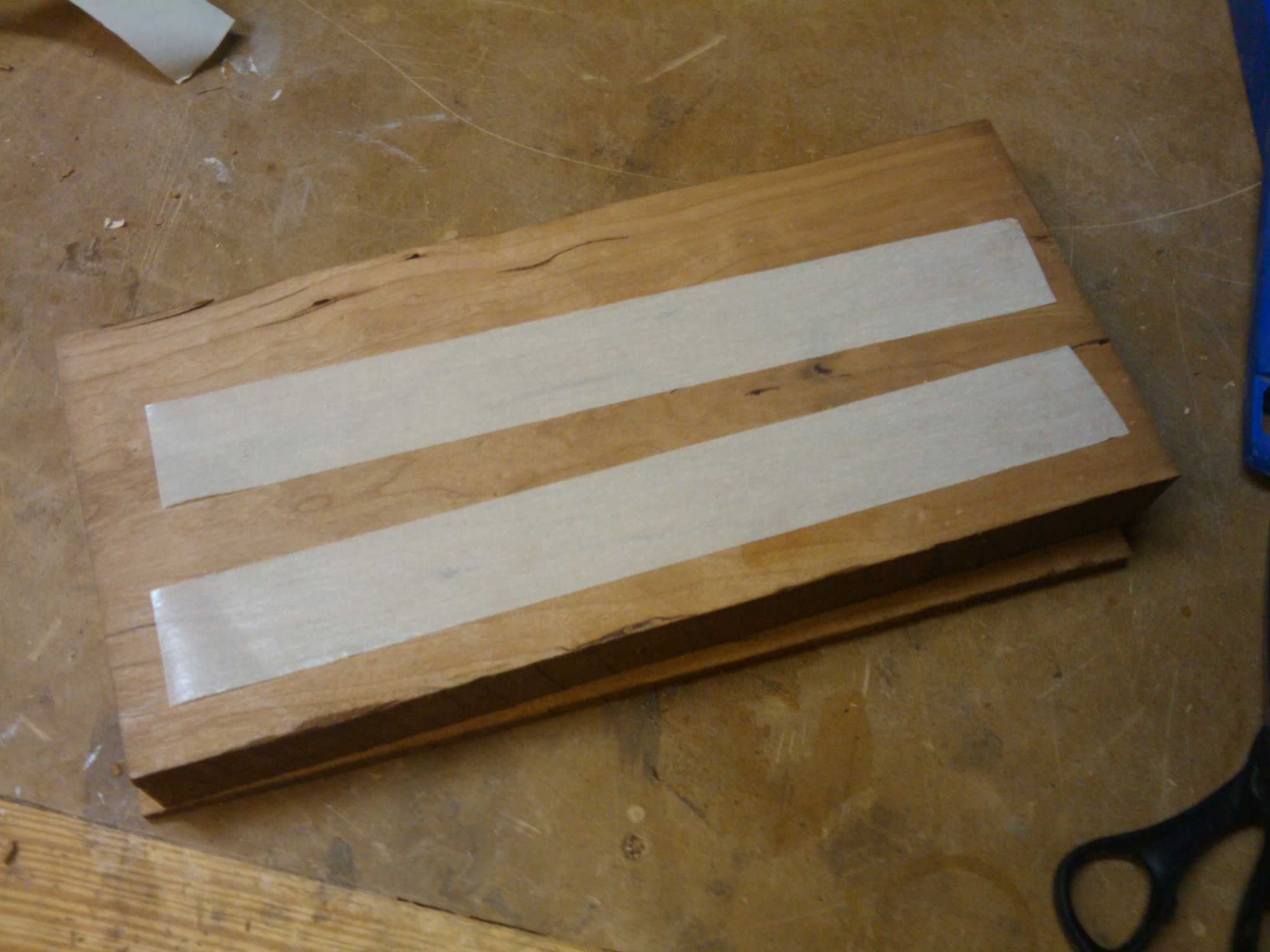
I then used some cloth double stick carpet tape to stack the pieces together before I cut them out on the band saw.This way, they would all come out with the same shape. I was careful to match the grain and stick them together tightly.

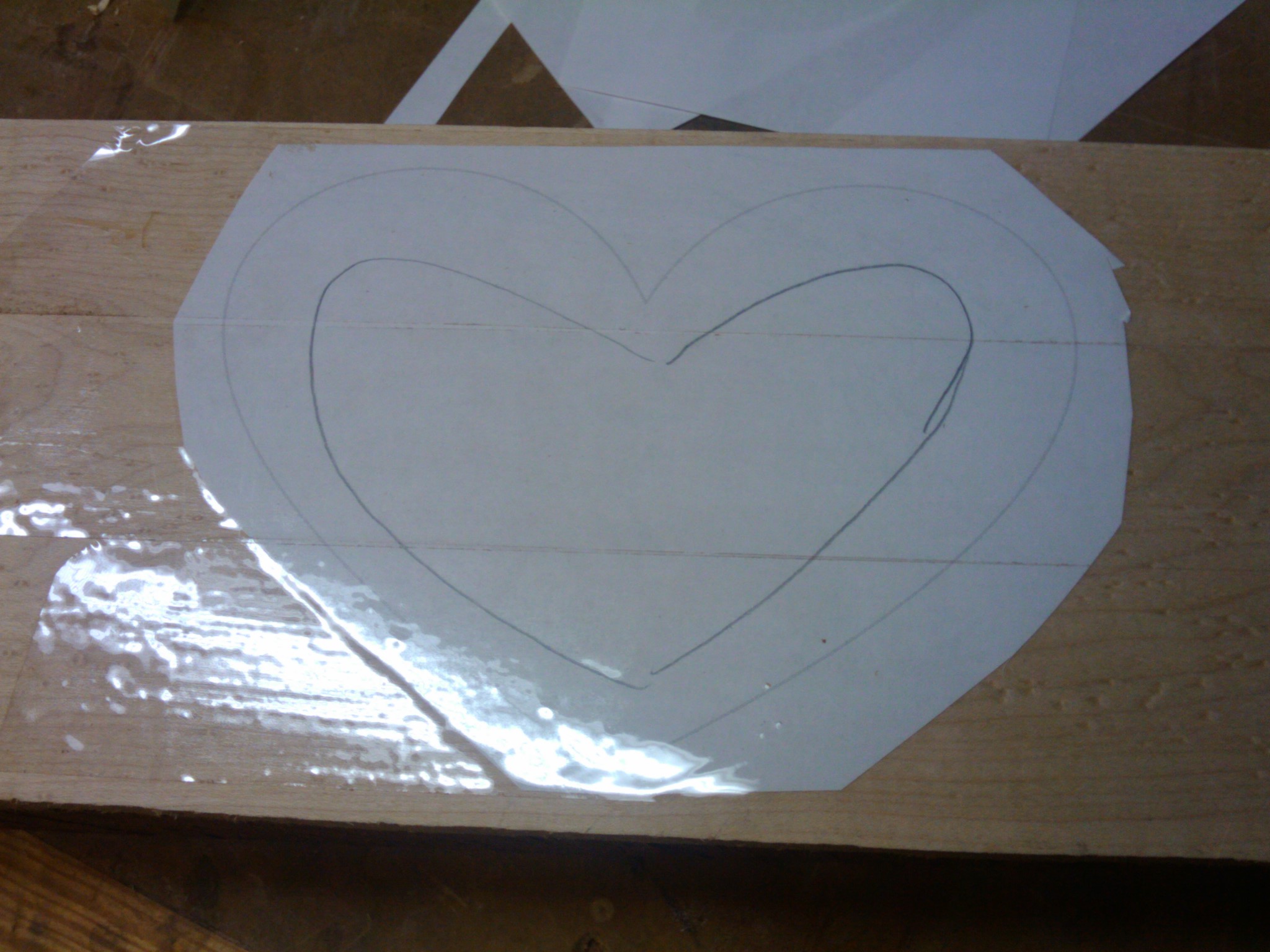
I found a line art drawing of a valentine on line and printed it off on my inkjet printer.  While messing around with the image, I traced what I believed the inside cutout would look like, and I taped the image down to the wood. Now, after I cut the first one, From here,I took it to the saw and with a 1/4″ blade, followed the line.  Not only had I cut the shape in the wood for the box, I had also cut the pattern free from the board… suddenly, I had a perfect pattern if I ever wanted to make another one.

I separated the layers and traced a line about 1/2″ in from the outside of the  edge of the middle piece. I sawed this out from the middle, making the cavity for the box. I had to cut through the outside wall of the box, but I was going to be able to glue that shut when I glued the bottom to the box.

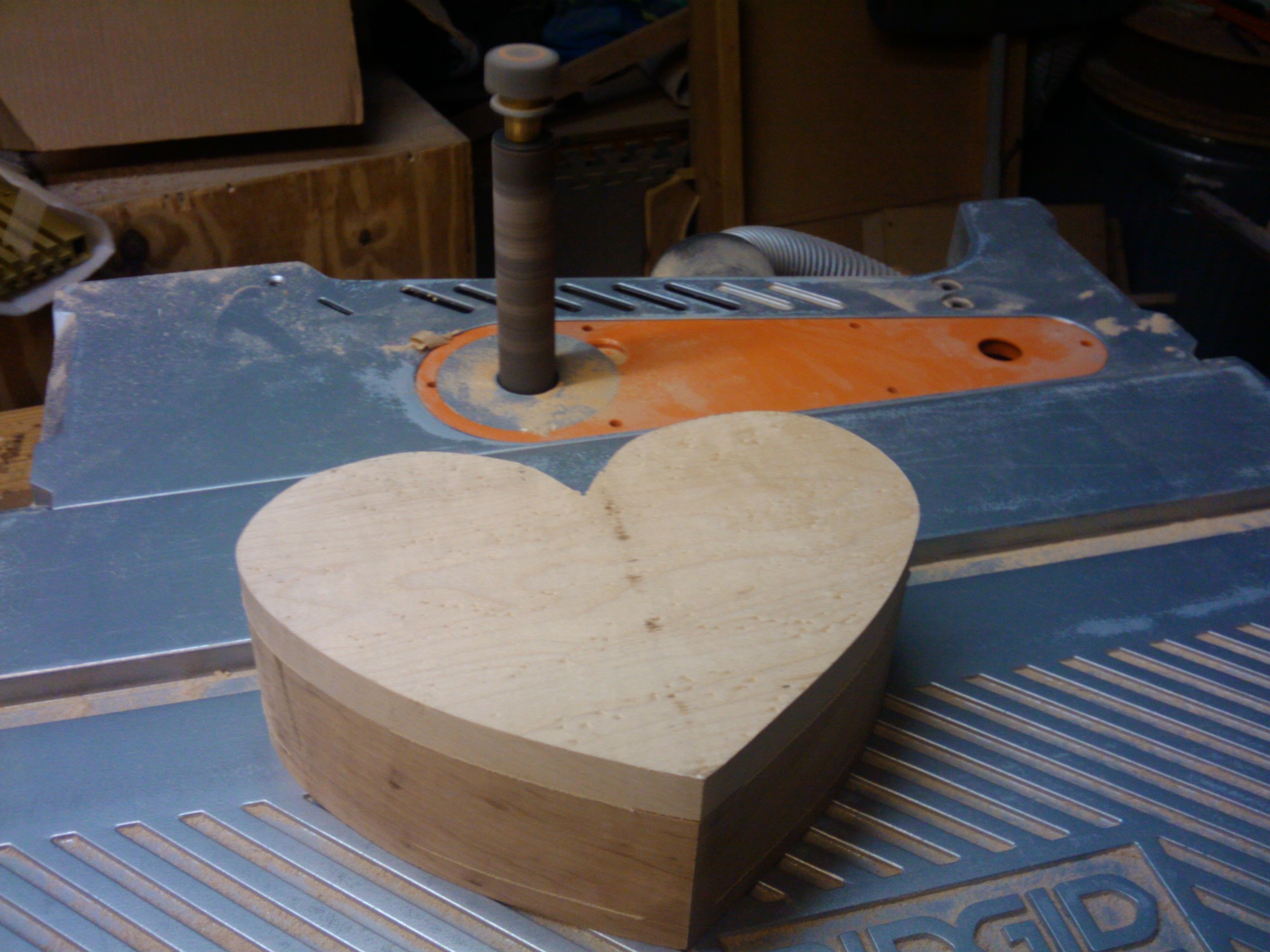
The next -and probably most important – tool I turned to was my Rigid combo spindle and belt sander. This gem of a tool with the spindle allowed me to sand the bandsaw marks out of the inside of the box before I glued everything together. I also sanded the box bottom so when I glued it together, I would be nice and smooth. I then glued the box middle to the box bottom. I then used the belt sander attachment to perfect the sides and lid of the box to make it nice and smooth. I hand sanded the top of the cleft of the heart, because I couldn’t get the spindle or belt sander into there.   Finally, I used the random orbit sander to hit the top and bottom and chamfered the lid and body.  I applied the finish a few weeks ago – I wanted to make sure that the smell was gone when I put some chocolates in it for my wife…

Overall, this was a great project… it checked all of the boxes on my list… and my wife loved it.

Quick Poll

Let’s say theoretically that you have a good friend who – because of age or illness – is nearing the end of his or her life.

One day, he or she asks if you – a woodworker they respect – would use your talent and skill to build them an urn to house their remains for their eternal rest.

Would you do it?

[poll id=”159″]

Link of the week

The Shrinkulator

No, this has nothing to do with  Seinfeld character George Costanza and a famous scene involving swimming in a cold pool.

Instead, wood shrinks and expands as humidity levels change – as was demonstrated in an article I posted a few years ago.

If you have lots of time, you could put a sample of wood out in your shop and measure its dimensions every day for a year to get an idea of seasonal humidity swings and how the affect the wood for your projects. Or, you could plug your numbers into the Shrinkulator and see how much different species of wood will move based on your local humidity conditions.  A very useful utility to help anticipate the impact of seasonal changes and your construction methods.

part of the Wood Talk Online community