My first four

This weekend, the NCAA men’s basketball national championship moves to Houston.  There, four teams who very few people selected to be there, will vie for the national championship.  The University of Connecticut, Butler University, the University of Kentucky and Virginia Commonwealth University will all be represented, and only one team is going to come out on Monday night as the national champion.
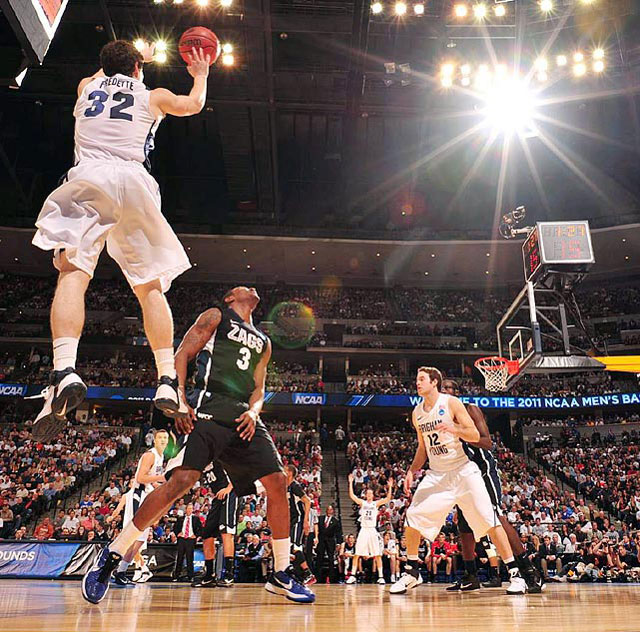
Since 1985, the NCAA has invited a slate of 64 teams to battle it out for the national title, and there have been some memorable tournaments since then. In order to include more teams, the field was expanded to  65 teams, and this year to 68 teams, with four play-in games the two days before the round of 64 tipped off.  Surprisingly, the VCU Rams played in one of those ‘First Four’ games, and are now poised to possibly claim the school’s first title.

This is always my favorite month for sports.  March Madness rules.

While we are now in the Final Four, the match ups got me wondering, if I had to pick my First Four tools – the first four off the bench –  the four essential tools that come out to play for every project, I’m thinking it might look a little like this….
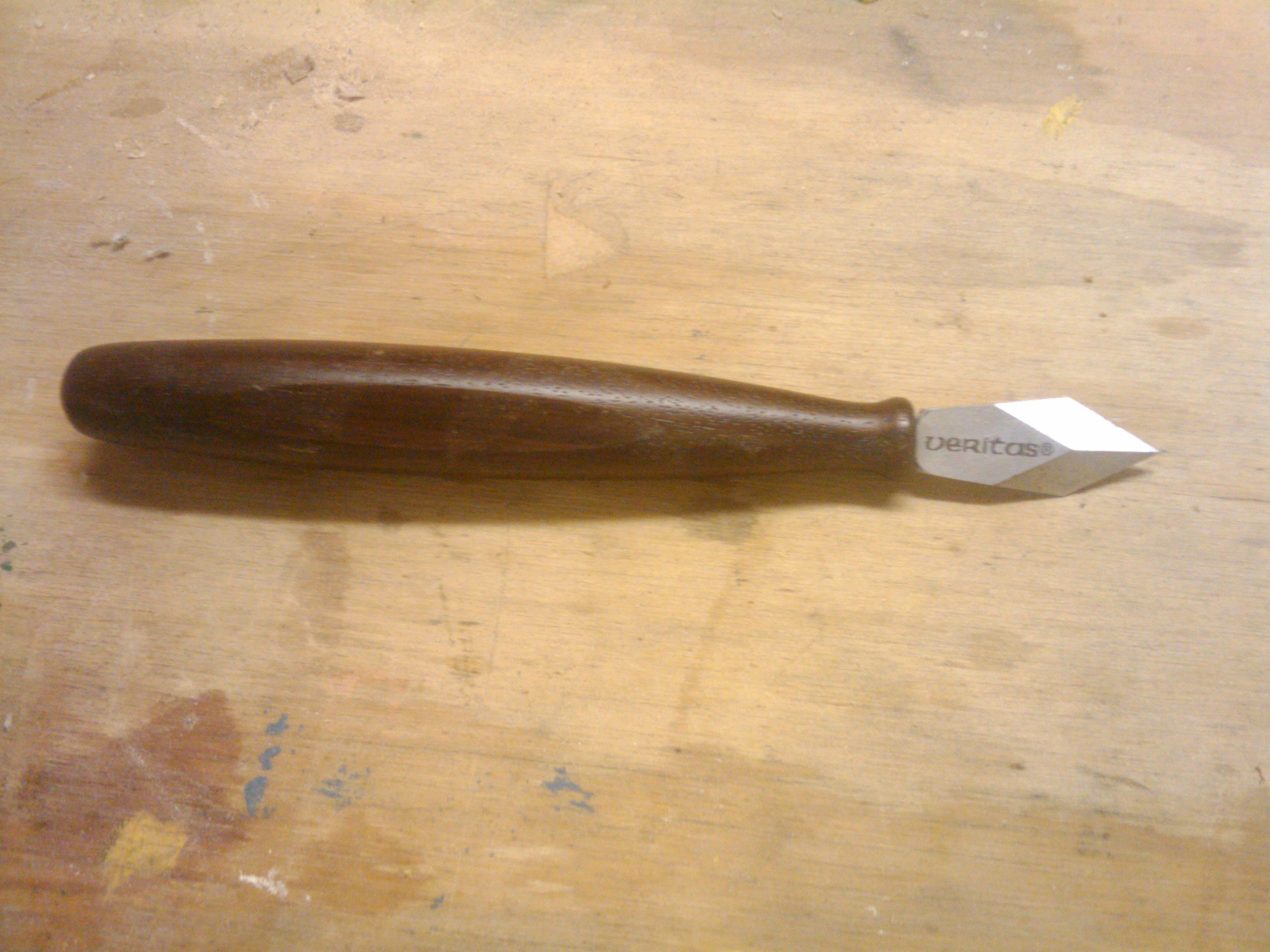
My marking knife.  This buy comes out on every project.  With a double knife bevel on the blade, I can mark from either the left or right side of a straightedge. This tool leaves a very fine line, and slices the top layer of wood fibers, giving me an indicator to get both a fine and clean cut for my projects.
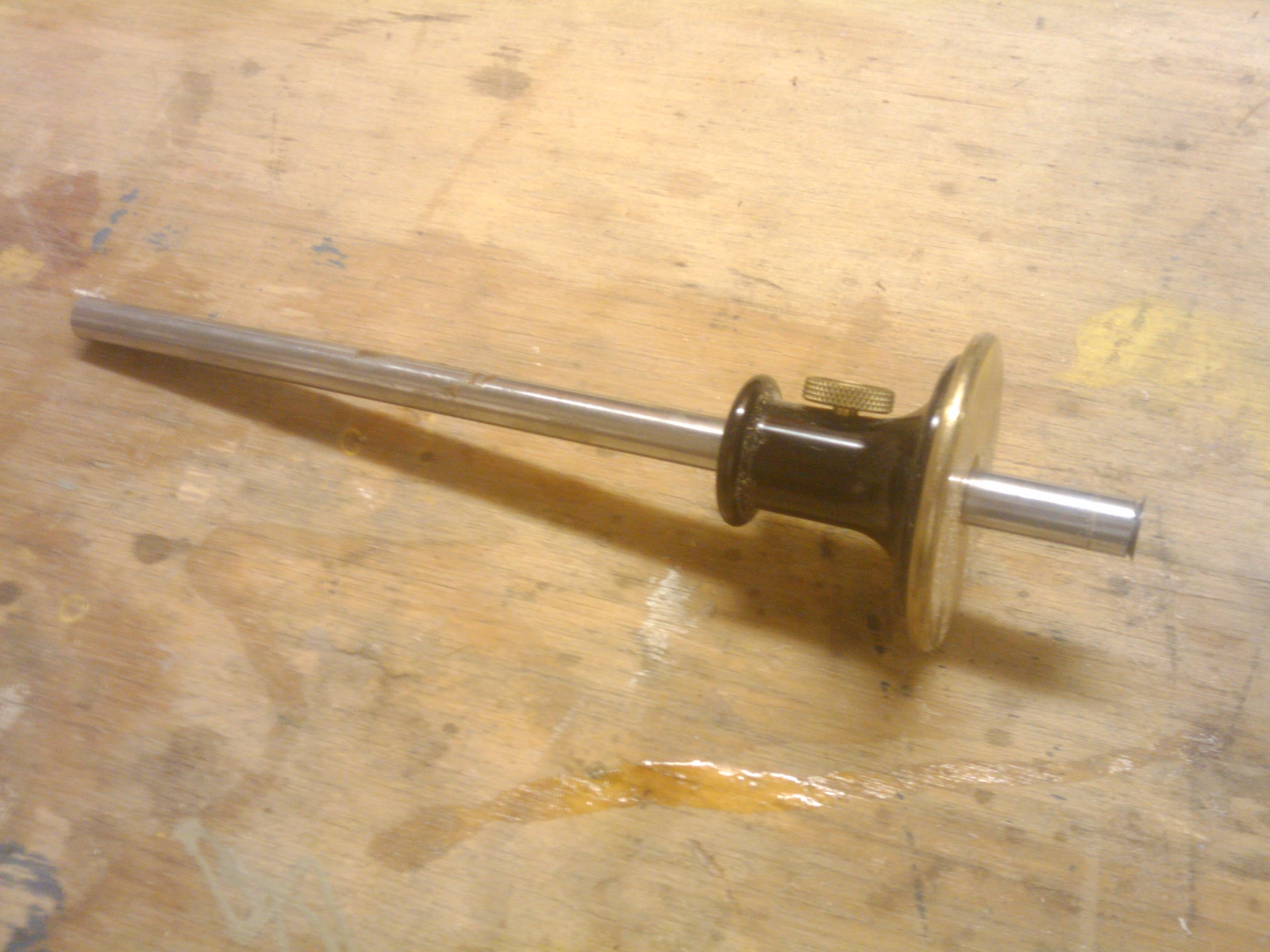
My wheel marking gauge. Yes, this is my second marking tool… but this one is so dang handy. I can set the cutting wheel an exact distance from the round fence on the tool’s stem and mark repetitively on board after board, getting the exact same marking on each.  Again, it also slices the wood fibers, giving me clean cuts.
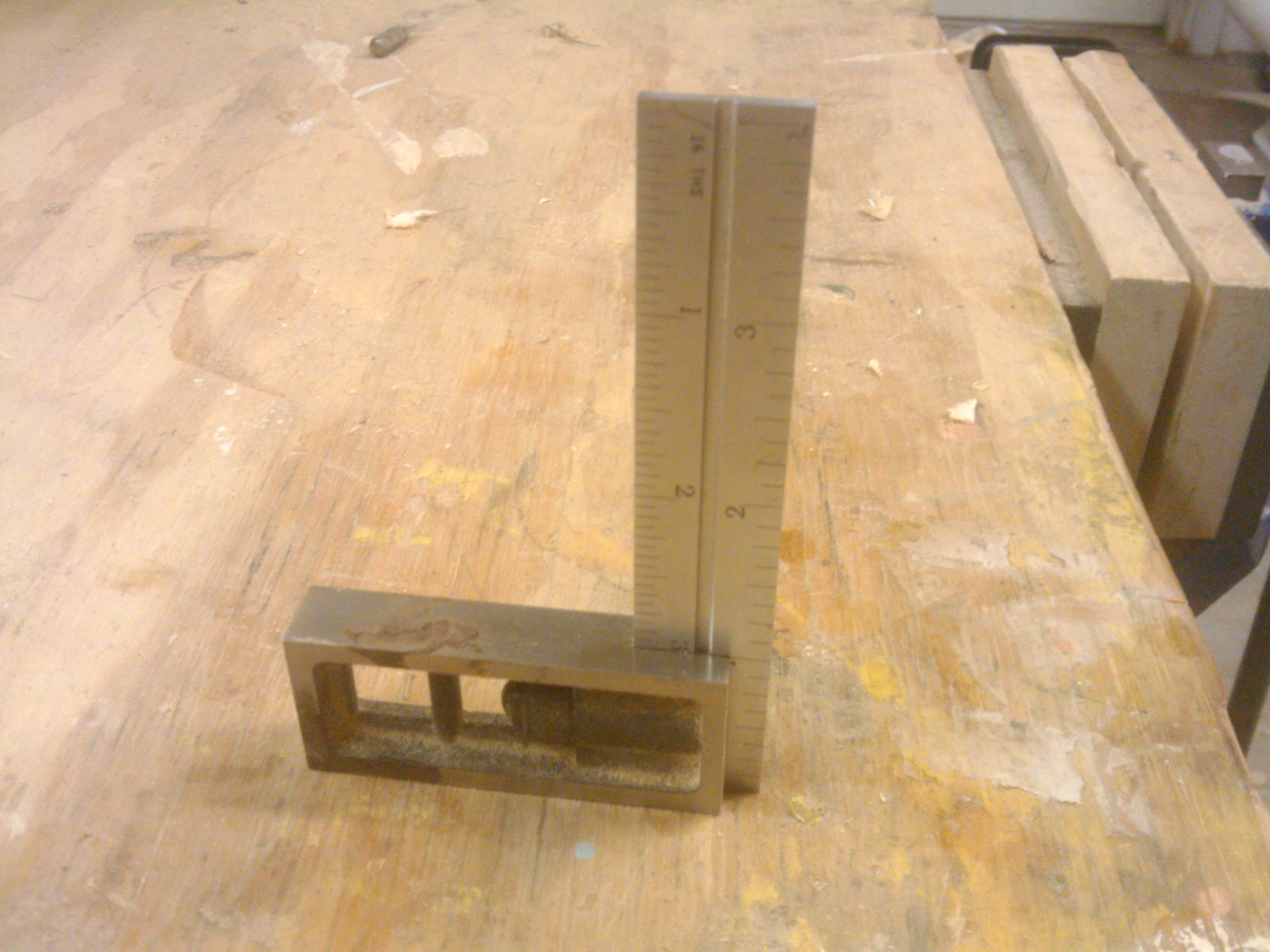
My double square.  Sure, it’s a 4″ model.  And, no, I can’t mark a 45 degree angle with it. But, this baby is so small and sits on the bench so nicely, I can’t not bring it with me. I can use it while I plane to ensure I am getting 90 degree edges, mark bit and blade height, get mortise depth or tenon length… the list just goes on and on.
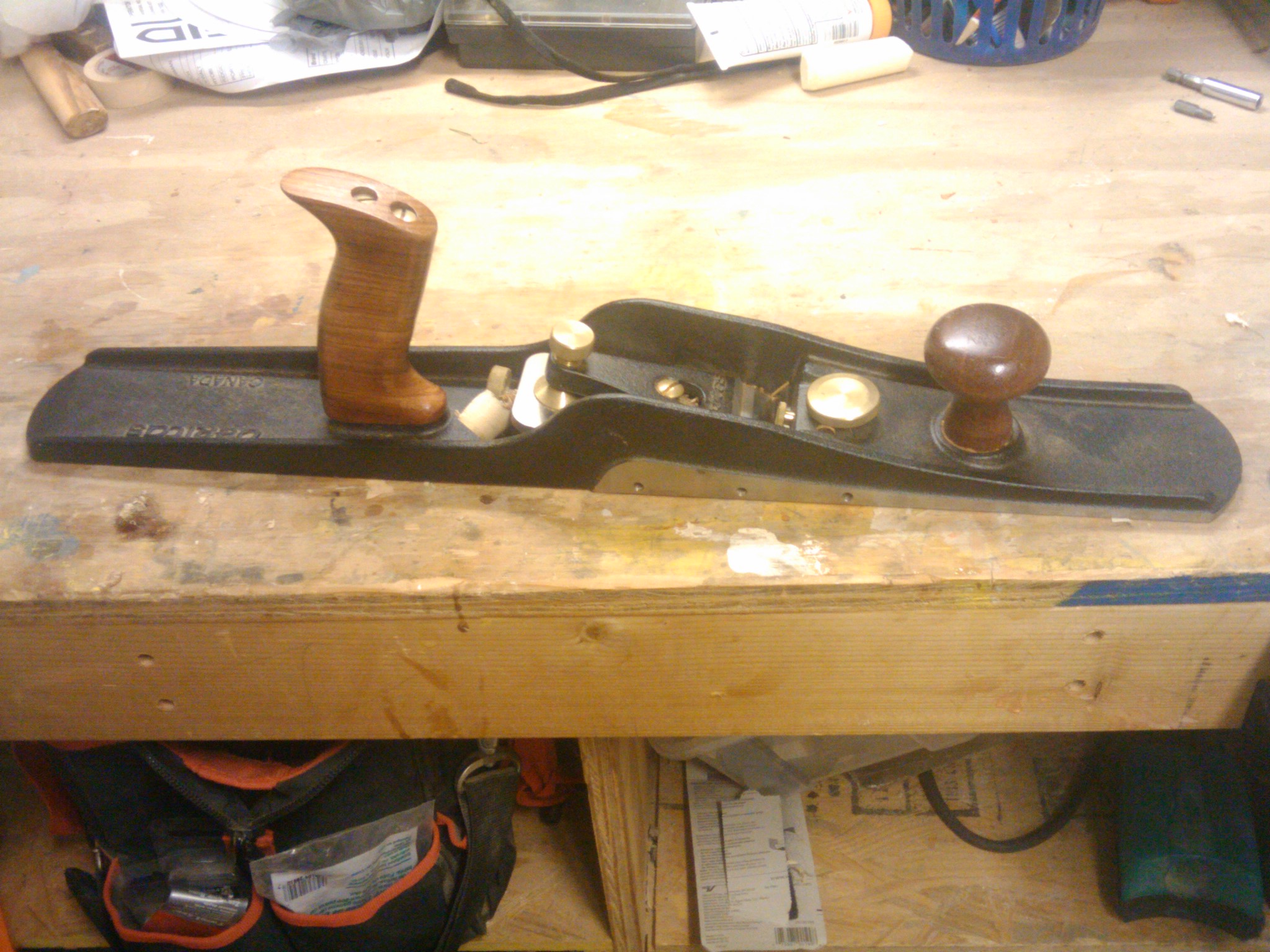
And, my bevel up jointing plane.  Most of the time, I am working with rough stock.  This plane does a great job of smoothing after I attack the surface with the jack plane, and trues up edges for glue ups. Its weight makes it a winner when I trim boards to length on a shooting board… I can’t say enough about it.

Well, that’s my list of the First Four tools I turn to when going to work in the shop.  Your list may look different or have other can’t-do-without tools. Hey, that’s cool. No matter what’s on your list, I’m sure it’s a winner!

 

You spin me right ’round…

I’m definitely a child of the 1980s.

Oh, yeah.  Ron Reagan in the White House. Parachute pants. Mullets. Ahhh…  When I was just a wee lad, another one of my favorite things to do was to go to school dances. The music of the 1980s was just the bomb. Devo. Thomas Dolby. Eddie Grant.  And, one of the classic dance jams of them all – You Spin me Round (Like a record) by the band Dead or Alive.  They were a one-hit wonder, but oh, what a hit that was.  That was back in the day when I had some moves…

What does this have to do with woodworking? Well, I was on the computer this weekend thinking about other things that spin. I found myself thinking about the pen I turned at the Woodworking Show the previous weekend.  Then, the thought hit me…

Why not get a lathe of my own?

Gosh, a great idea.   I’ll probably have to save up a little cash before I move ahead with the purchase.  This gives me an excellent opportunity to look at the different kinds of lathes out there.  That’s when my head started spinning…

As with band saws, table saws, routers or the like, there are a dizzying array of choices when it comes to lathes.  My first choice when looking at the lathes was to look for a small model.  Something that could turn pens, small bowls, drawer knobs, handles for small tools like ice cream scoops… the works.  And, I saw a few options when dealing with that size lathe.

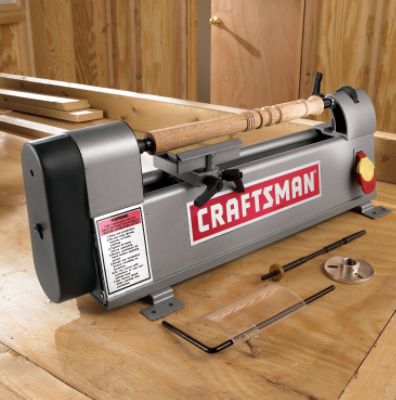
The one that stood out was the Craftsman mini lathe. This little benchtop unit has a decent 12 inch spindle length, and even comes in a package with three pen turning sized tools. Not a bad looking unit, either.

When I showed this to a friend of mine who turns, he couldn’t resist laughing.  “Dude, that’s so cute. But, you won’t be happy with that.  What if you want to turn something bigger?”

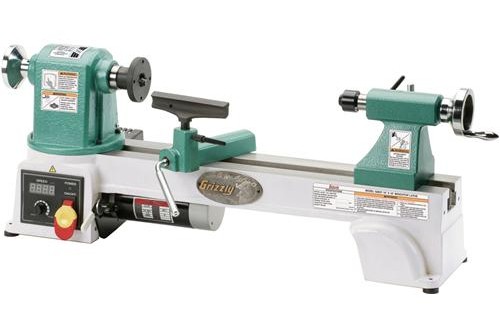
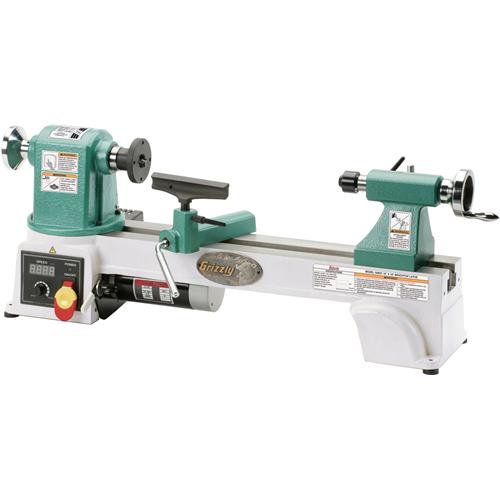
Crap. He might be right.  So, I started looking at the larger midi-sized lathes.  These babies sometimes are benchtop, but also sometimes on a stand.  They have more muscle than the mini ones, but don’t take up nearly as much room as the large ones.  This model at Grizzly tools has an interesting set of specs, and there are many more models in this size range.


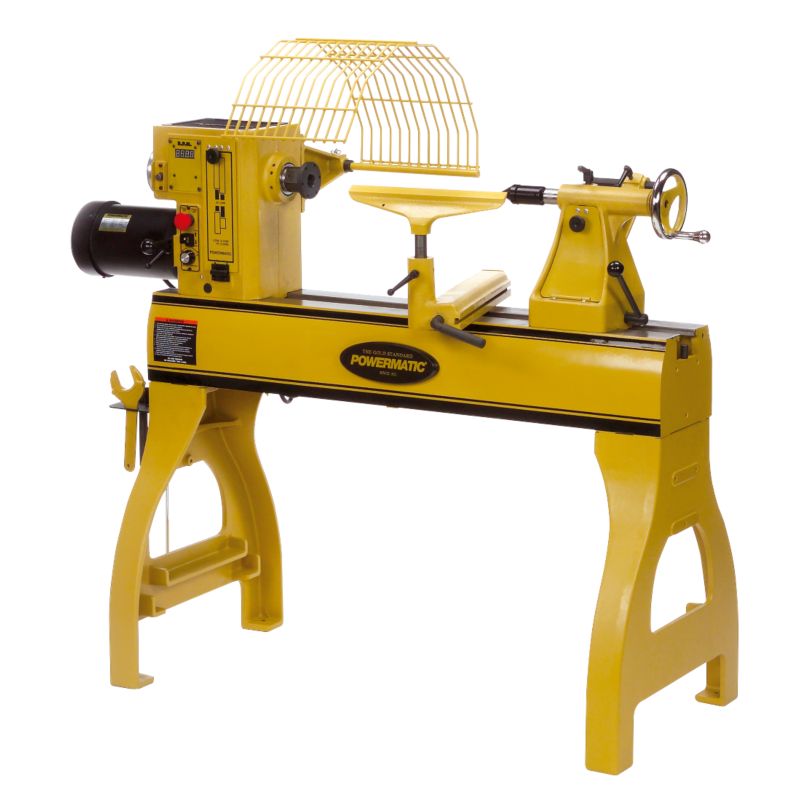
While these lathes are good for most work… they aren’t going to be able to turn big stuff.  Bowls with a 20 inch diameter. Ya know, that kind of work.  From there, I’ve discovered that the full sized lathes are where to go.  But, I’m not sure I can justify going that big. I’m having success with my Ridgid contractor table saw –  I don’t feel the need to upgrade to a big Delta Unisaw. The same thing is probably going to happen with a lathe as well… I can’t see myself (now) needing anything as big as this behemoth from Powermatic.

I know I have a lot of research to do before I make a decision on which lathe to buy… but I know one thing for certain:  The lathe purchase is just the start… There will be turning tools, face plates, chucks, safety gear and a whole plethora of accessories to make turning faster, easier and safer.

Do I still want to spin my way into this one?


Quick Poll

It’s everywhere, and – if you are like me –  it’s probably the first finish other than paint you ever used on a woodworking project.

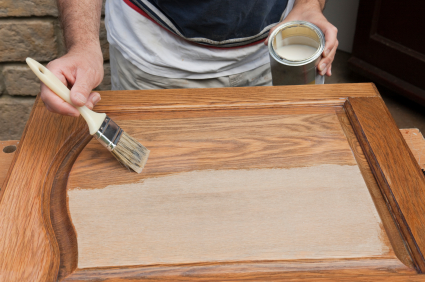
It’s canned brush on polyurethane, and it’s available at every major retailer. Just about all of the major manufacturers sell the stuff, and everyone in your local mega home improvement retailer recommends it for wood finishing.

And, there’s a lot to like. It creates a tough, water and abrasion resistant surface. It also takes a great deal of skill to lay down properly, dries slowly and makes some projects look plastic.

This week, how do you feel about brush on poly as a finish?


Link of the week

The Slaugherhouse Gallery

Nestled at the former Union Provisions butcher shop in Pittsburgh, Pennsylvania (in a neighborhood known as Lawrenceville), woodworkers Garth Jones and Don Reed opened an artists’ gallery and  shop.

One of many galleries in the formerly industrial area, Slaugherhouse has space for the exhibit and sale of such crafts as fine jewelry, paintings, photography and printing. While that’s great to see, the gallery is also the home of Jones Furniture Design… the workshop space of co-founder Garth Jones.

Garth’s work is very cool, and it’s great to hear about the arts and crafts reviving a formerly  economically depressed area.  I wish them all the best!

###


My first pen

OK, I’m gonna come right out and say it… the Kodak Zx3 is a totally rocking video and still camera. But, it’s lack of ability to attach an external microphone is a HUGE problem when you are trying to show how you can turn a pen while standing in the middle of a busy and noisy woodworking show hall.

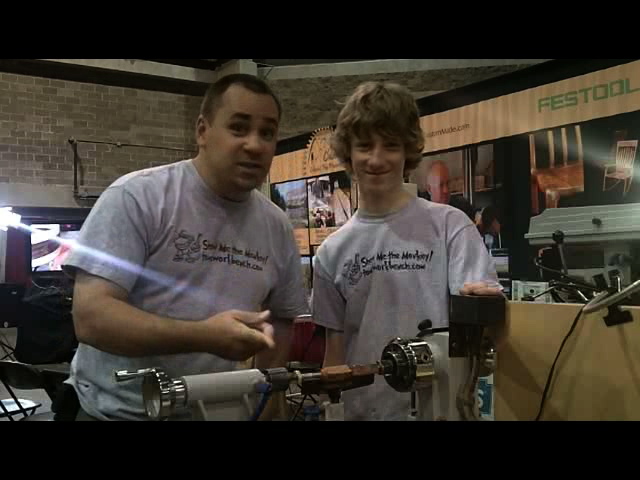
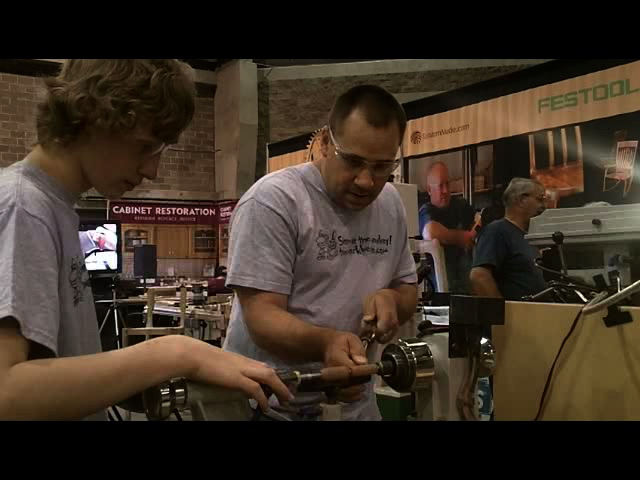
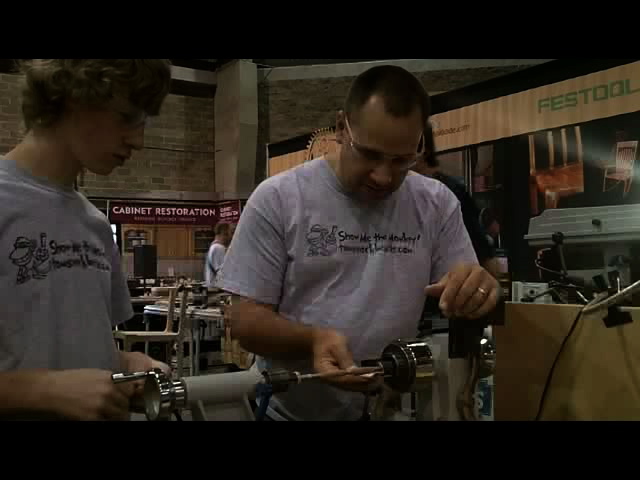
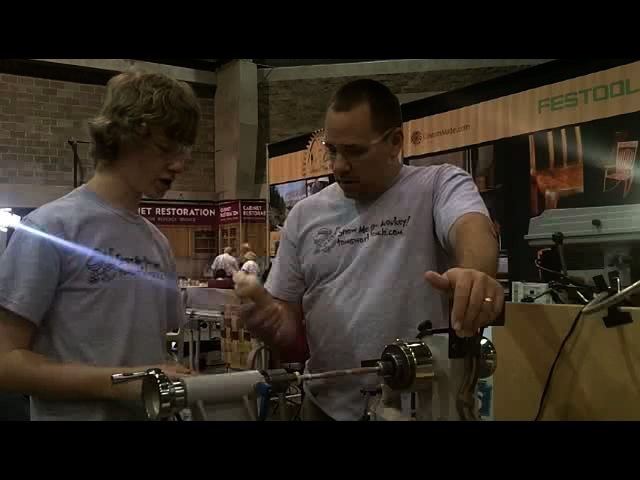
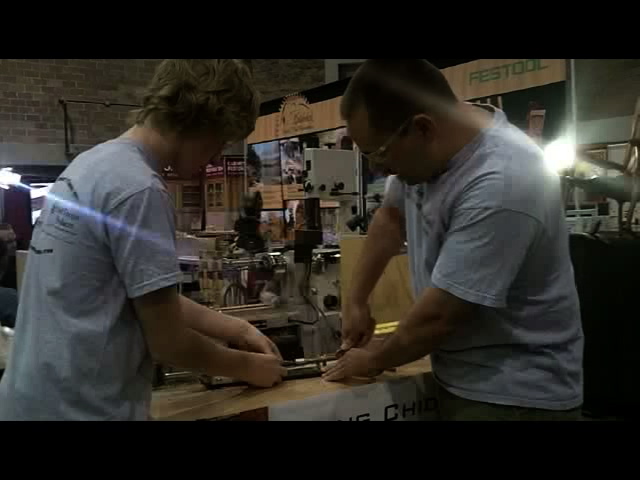
Fortunately – while you can’t hear anything – at least you can see me turn my first pen on a lathe. Rather than make you strain to hear the discussion between me and Tano Chickwick, I’ll grab some stills to show you how it went.

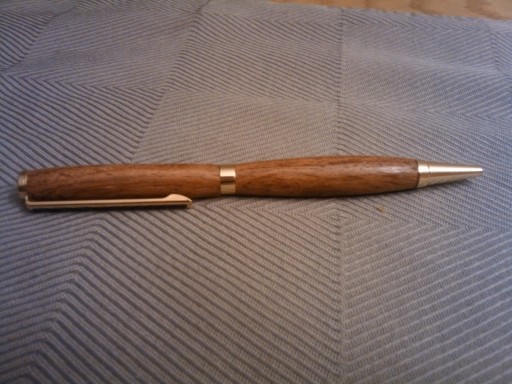
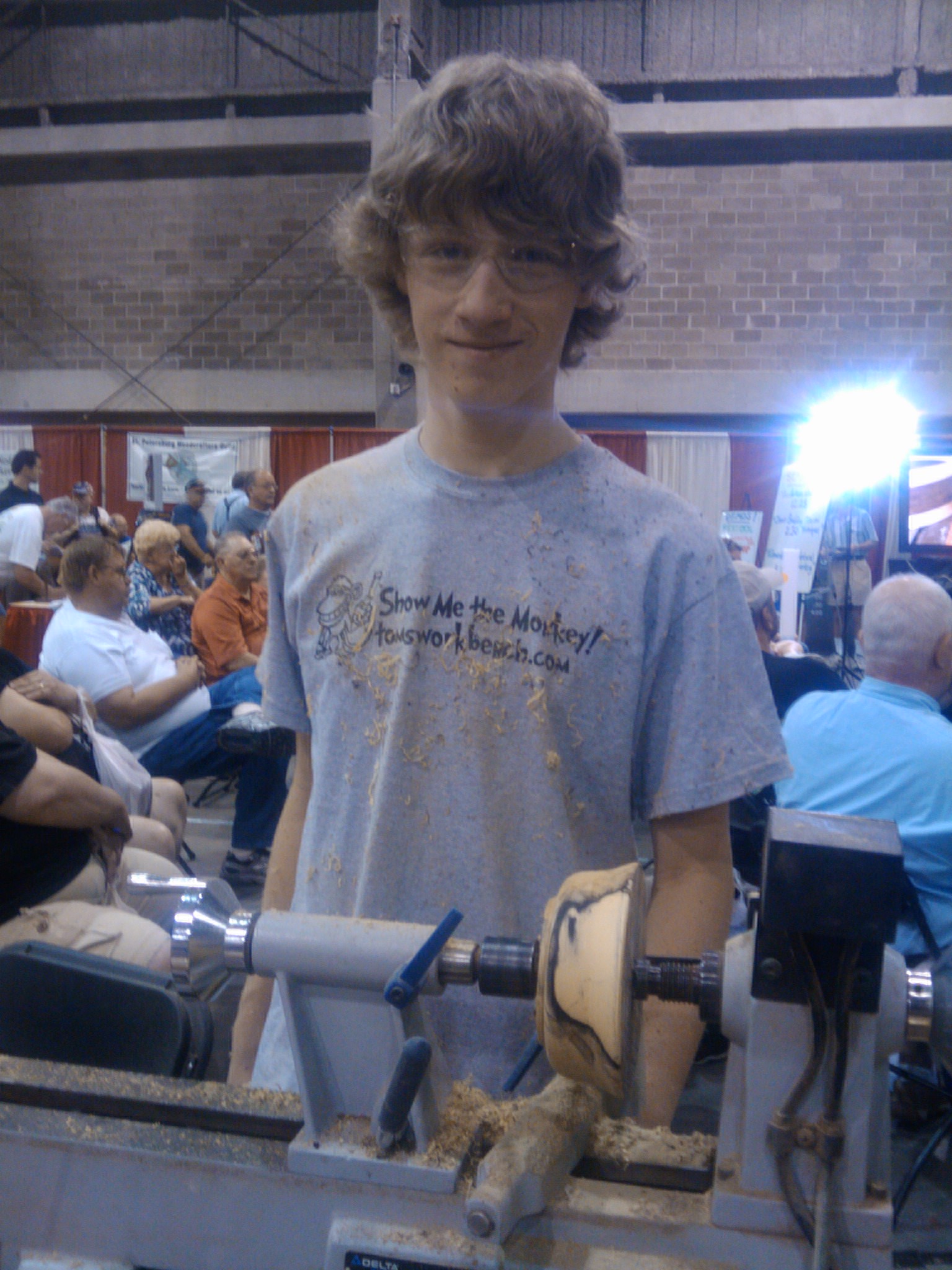
Tano’s setup is pretty cool –  a mini Delta lathe attached to a rolling stand.  We used a bowl gouge, a skew chisel and an assortment of sandpaper grits to get things into shape.  Tano had taken the liberty of drilling the pen body and gluing a tube inside two pieces of bubinga. They were put in the lathe on a threaded mandrel with spacer bushings separating the pieces.

If you are looking for  these pen turning supplies, I know that my friends over at Eagle America have a great selection of mechanisms, turning blanks and tools. And if you are looking for exotic woods for turning a pen with a lot of personality, Bell Forest Products has a wide selection of woods – from African Blackwood to Zircote.

Once things got spinning, Tano put the gouge in my hands and let me go to work. The going was kind of tough at first, since the gouge was working against the sharp square corners of the blank. Before too long, things got a whole lot smoother.  Tano kept reminding me that the critical dimension to hit was the diameter of the spacer bushings.  This way, the wood would blend with the pen’s ring, tip and clasp, making for a very smooth feeling pen.

When things were close, I turned to the skew chisel. The tool was a whole lot tougher to handle than the gouge… I kept wanting to hold the handle too low, afraid the cutting edge would grab and flip the tool out of my hand.  With some patience and a whole lot of coaching, I was able to slice a finer finish on the pen and get everything to the right dimension.

Next up was sanding.  No, this kind of sanding is much easier than sanding a larger project… it’s hard to get a piece of furniture to spin on the lathe and let it rub against the sandpaper!  We started at 100 grit, then did 180, 220, 320, 400 and 600.  Hold a piece of sandpaper against the piece with the lathe running and bingo… sweet sanding.

Once we rolled through the grits, Tano stopped the lathe and hand me sand the  piece from top to bottom. This way, there would be no cross-grain sanding scratches.

From there, we brought out the friction polish. A little squirt on some paper towels, the lathe went back on and I moved the towel from top to bottom while the piece spun. The moment the  polish hit the wood, I got excited. The color on the bubinga was incredible and successive coats just make things look better. A glob of Renaissance Wax was smeared over the pen body and a little more buffing made the piece glow.

After this, we pulled the pen body off the lathe and the pieces off the mandrel. We moved to the front of the bench where we had a pen press waiting.  First, the tip was pressed into the bottom of the pen, then the clasp into the top of the other piece.  The fit on these pieces was very tight and the pen press proved to be an essential tool.  The pen’s transmission went into the top of the tip segment of the body and was pressed home (Of course, I had to ask if it was a manual transmission or an automatic transmission… shesh). From there, an ink barrel was installed, a gold ring went over the transmission and the two pieces were hand pressed together.

Stop the clock. A total of – maybe – 25 minutes from blocky blank to sleek pen. I’m not sure, but with this proper coaching, I think I could be convinced to get into a lathe and try my hand at making some more.  After all, the holidays are only about nine months away… it’s never too early to start thinking gifts!


My day at the Woodworking Show

Hello, everyone. Iggy again, and I wanted to tell you all about the full day I worked this past weekend at the Woodworking Show in Tampa.

First, as is tradition, I had Tom call Jim Heavey and Andy Chidwick to come over to the house on Friday night. I figured that they were on the road in a strange town (Where else would Tom be allowed to work in the shop?) and could use a home cooked meal. Jim showed up first, and it turns out that the entire Chidwick clan was in tow as well! They’ve been going from town to town with the show, demonstrating and making it a great experience for everyone who attended. Me, well, it rarely happens, but I was just starstruck.

After dinner, I left Tom to load the materials for the show, and I went out to party with my guests.  We spent a wild night on the town, and celebrated into the night.  The cops had to come out to the hotel twice to talk to us about the noise, and we were definitely enjoying the banana daiquiris.  After the big night, we crashed late and planned on a rough day at the show.

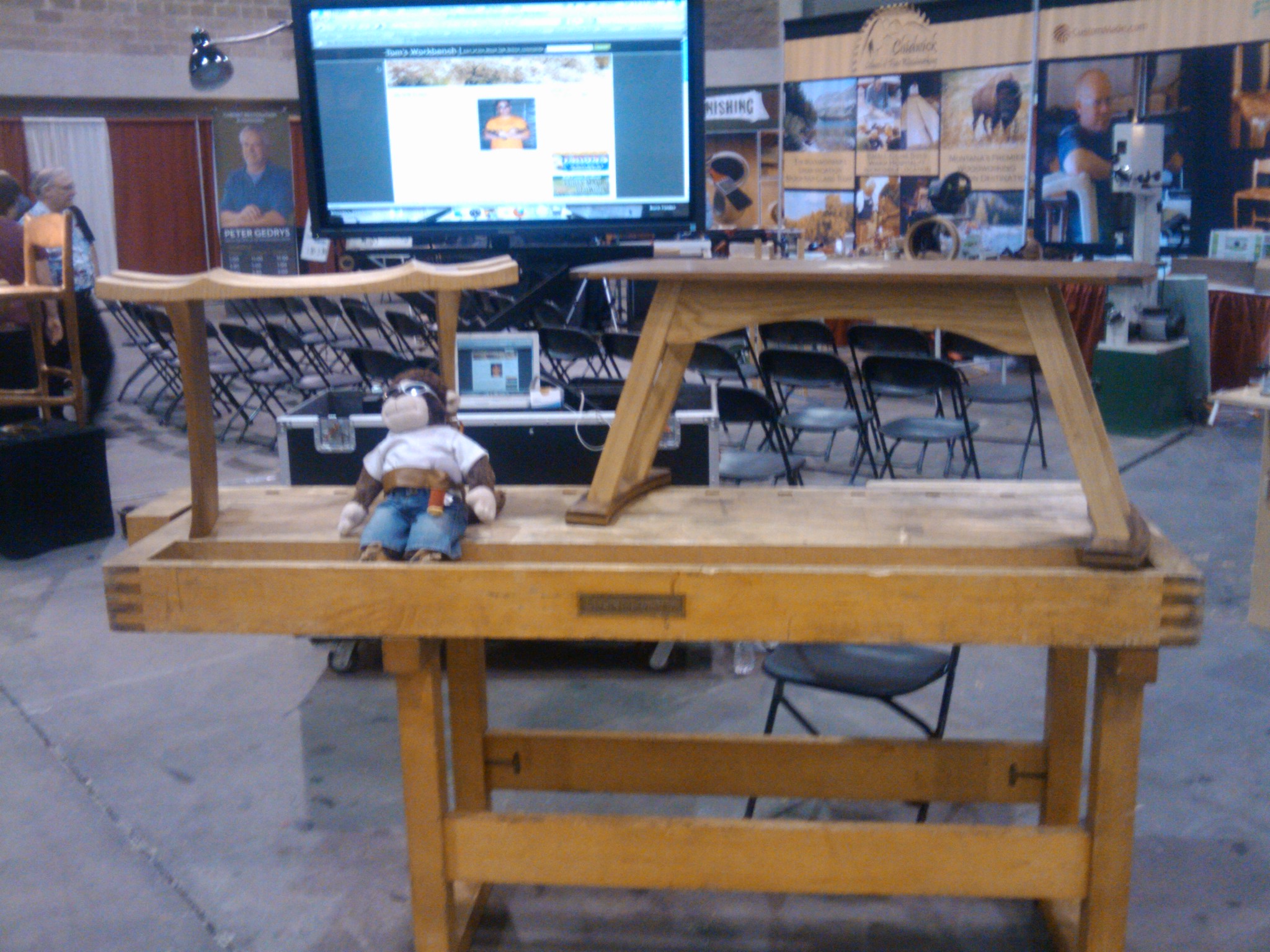
Saturday morning, I was up bright and early – surprisingly chipper after the big night. Tom brought car with the Contemplation bench and Centered, the computer and lots of my business cards. When we got to the show floor, I was surprised to see my booth next to the Chidwick’s that was fit for an accomplished woodworker. I had a Lie-Nielsen bench to set the benches on, a large screen TV and a comfortable place where I could speak with the attendees. It was awesome, and many thanks to the crew who made it all possible!

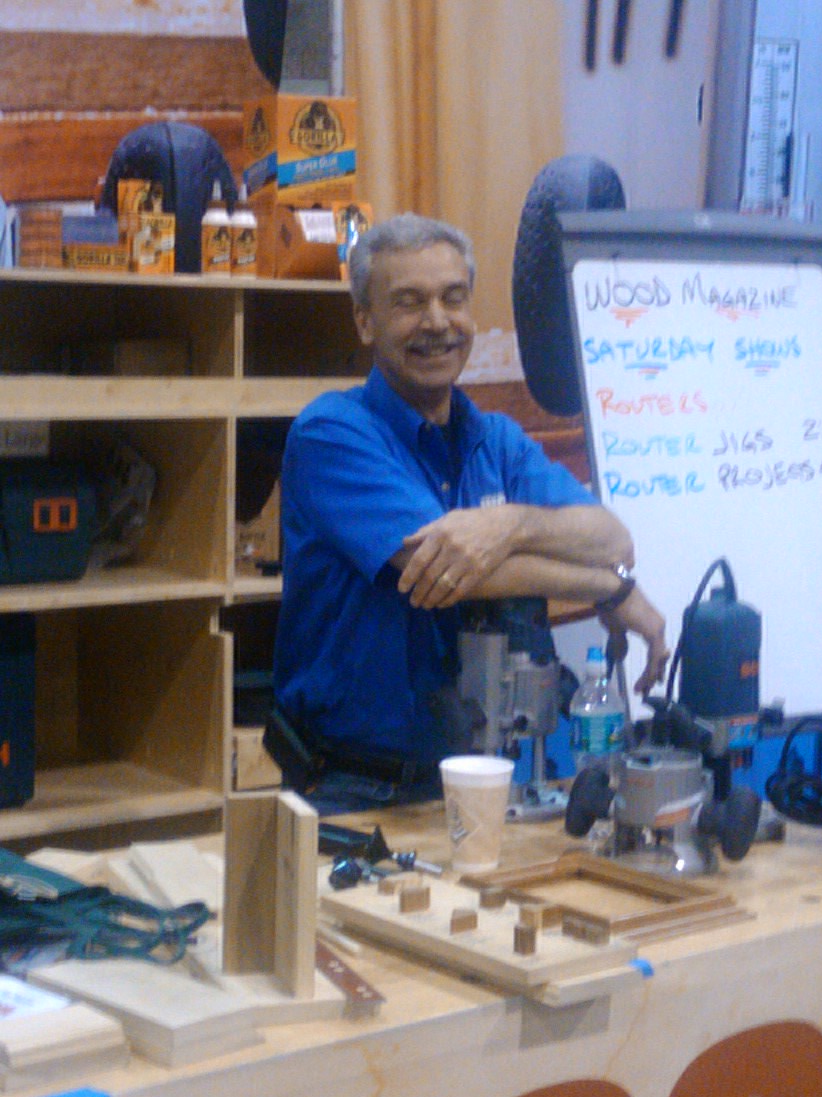
Between speaking with attendees during the day, I took the opportunity to get out and see what was on display. I saw my friend Jim Heavey working hard giving his presentation at the Wood Magazine classrooom.

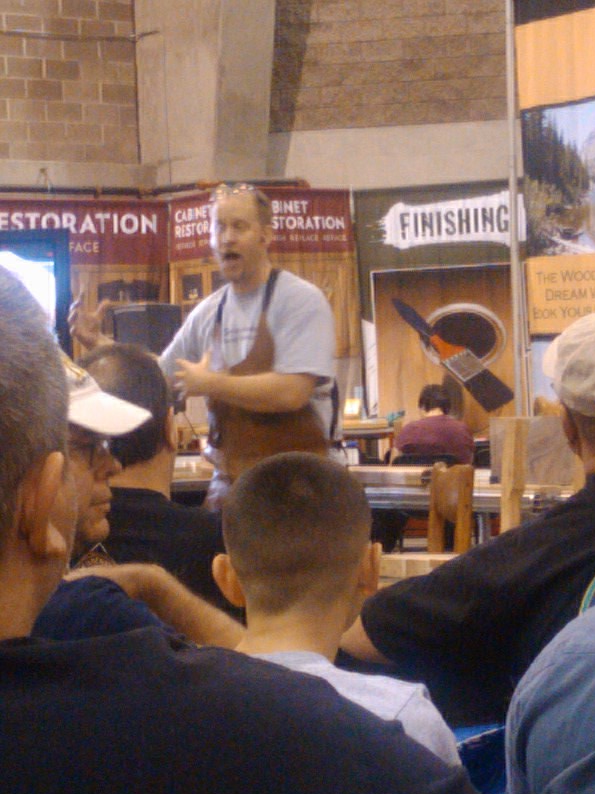
I had a chance to see Happy Andy at his his classroom. This guy can get people excited about woodworking, and his work really stands out. Some really awesome sculpted joinery for chairs. I noticed that Tom was busily taking notes, but I’m not sure the Tailless Wonder is going to be able to make it happen. At least not without my help.


I also swung by the booth Andy had set up for his 14-year-old son Tano. He’s a very interesting kid – he loves woodworking, and I hear he was able to teach Tom how to turn a pen.If that’s true, the kid might be a genius.  I know someone took video – I’m going to see if I can edit it and get it onto the site. By the way – nice shirt!

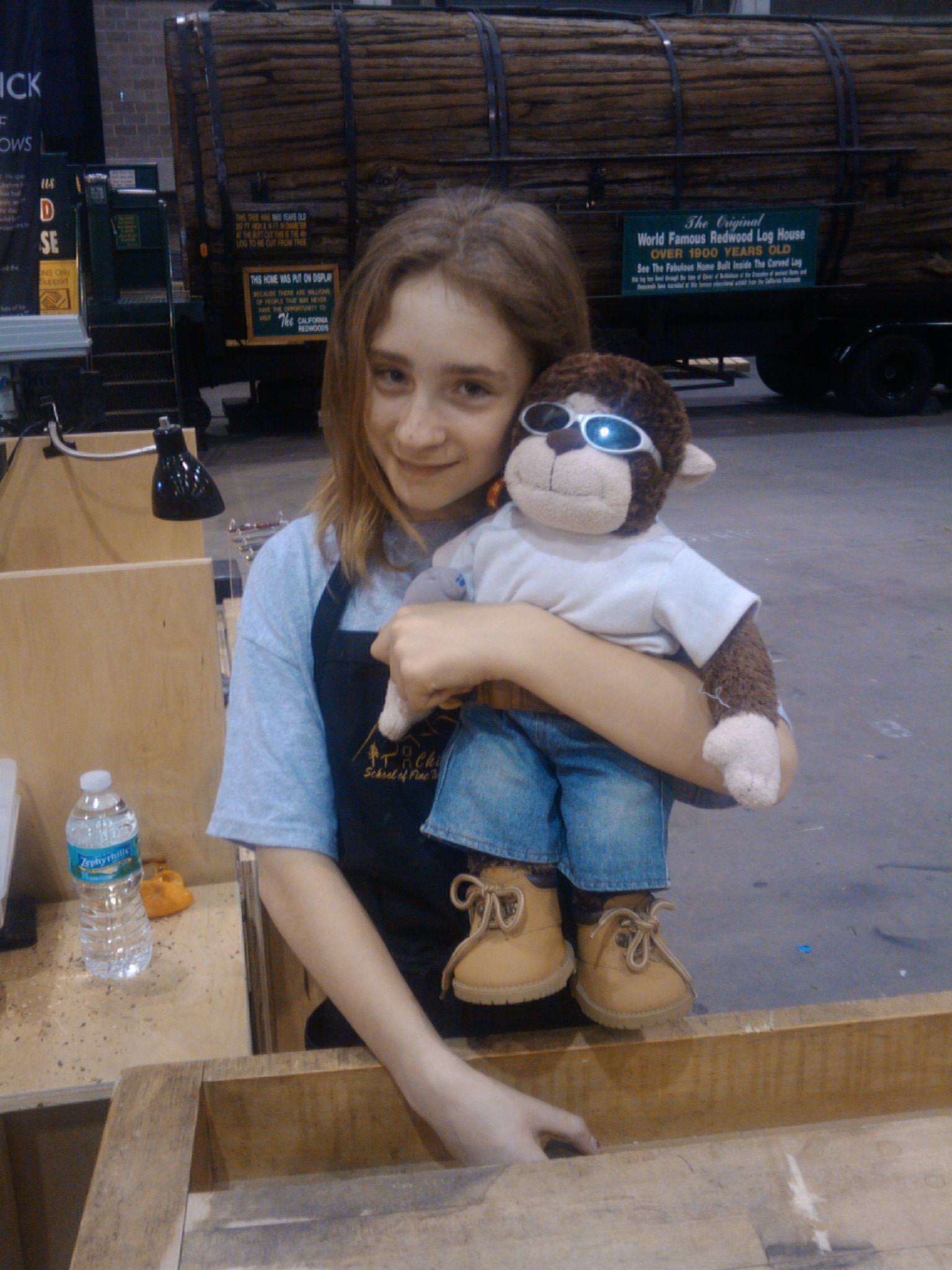
Finally, I have to put a shout out for two more of the Chidwick family – Sherry, the ever patient wife, mom and marketing/publicity maven and my new best friend Ellie. This girl is a dynamo. She runs a lunch delivery business for all of the exhibitors at the show – and business is good.  Plus, with a face like that , you can bet the tips are flowing. She makes a kickin’ ham and cheese sandwich.

For some reason, Sherry asked Tom to come out and speak about blogging and social media. I hear that he did a decent job. Let’s see if he managed to work the video camera properly…

Many thanks also go out to Joe Strong and the rest of the crew with the Woodworking Show. Friendly, accommodating folks who want to bring the best to woodworkers across the country. I have to tip my hat to them.

Definitely more to come as we wrap up the show.


Quick poll

As I’ve stated before – when it comes to woodworking techniques, there are a thousand ways to skin the proverbial cat. Ask any woodworker, and you’ll soon discover how true this is.  While you may complete a task using a table saw, other woodworkers may turn to routers, bandsaws, hand tools or other means to complete the task in their shop.

While some woodworkers may tell you how they would have done the task at their bench, others who are a little bit more pushy (abrasive? know-it-all?) not only offer their recommendations, but tell you you ‘should have’ done it  their way instead.

This week, let us know if you have ever been told by another woodworker that you ‘should have’ done the job the way they would have done it, and what your reaction was.

Have you ever been told you ‘should have’ done a woodworking task the way another woodworker does things?customer surveys


part of the Wood Talk Online community