Category Archives: Tools

I wish I used you more

A few weeks ago, I waxed poetically about the first four tools I reach for when I head out to the shop. But, I got to thinking after I posted that article, “Ya know, there have to be tools that I bought but I never really used as much as I thought I would.”

Sure enough, I headed out to the shop and took a quick scan around the tool storage areas.  Oh, yes, there have been tools I can remember that made my pulse race when I first saw them.  How the glistened and gleamed and called to me! For each of these tools, I have invested money – serious money, in some cases – into that have not served me nearly as well I had wished.

In no particular order, here are the four tools I have identified in my shop that have left me scratching my head as to why I was so crazy to buy them.

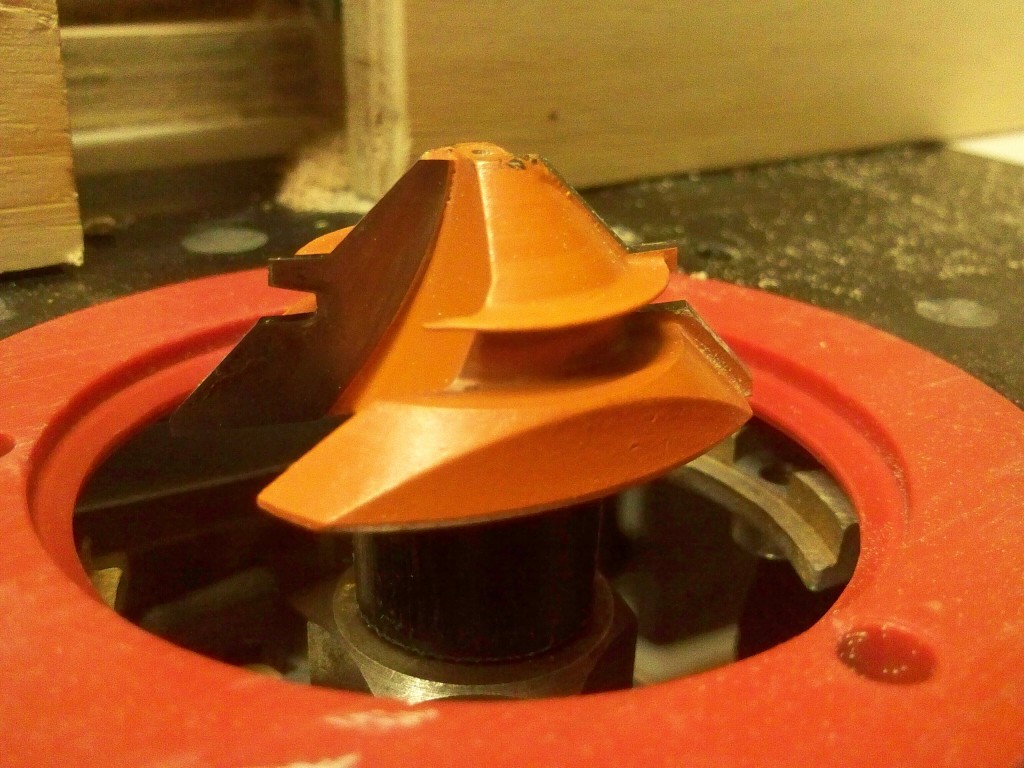
My lock miter router bit.  ‘Nuff said.

My 12″ Ridgid compound miter saw.  The one good thing about this baby was that I got it for a song on one of those Black Friday post-Thanksgiving sales over at Home Depot.  I can’t knock the saw… it’s a great performer. It makes nice sweet cuts. But, I had envisioned so much more.  I have still to get the laser perfectly aligned with the blade. I store it under my workbench, which may be another reason I don’t use it nearly as much as I should. I have used it for some box building chores, and perhaps one day I’ll build a dedicated roll around table for it. It’s just too easy to break out my crosscutting sled and make the cuts on my table saw.

My benchtop drill press.  Again, another ‘MUST HAVE’ tool I had bought because I really, really, REALLY needed it. Well, I have used it in the past, and I have built a roll-around table for it.  The problem is that I built such a great little lower shelf for it, and the drill is a back breaker to drag out.  I will bring it out from time to time to cut plugs or make big holes, but I have found my hand-held drill does such a good job when I need to drill the quick hole.

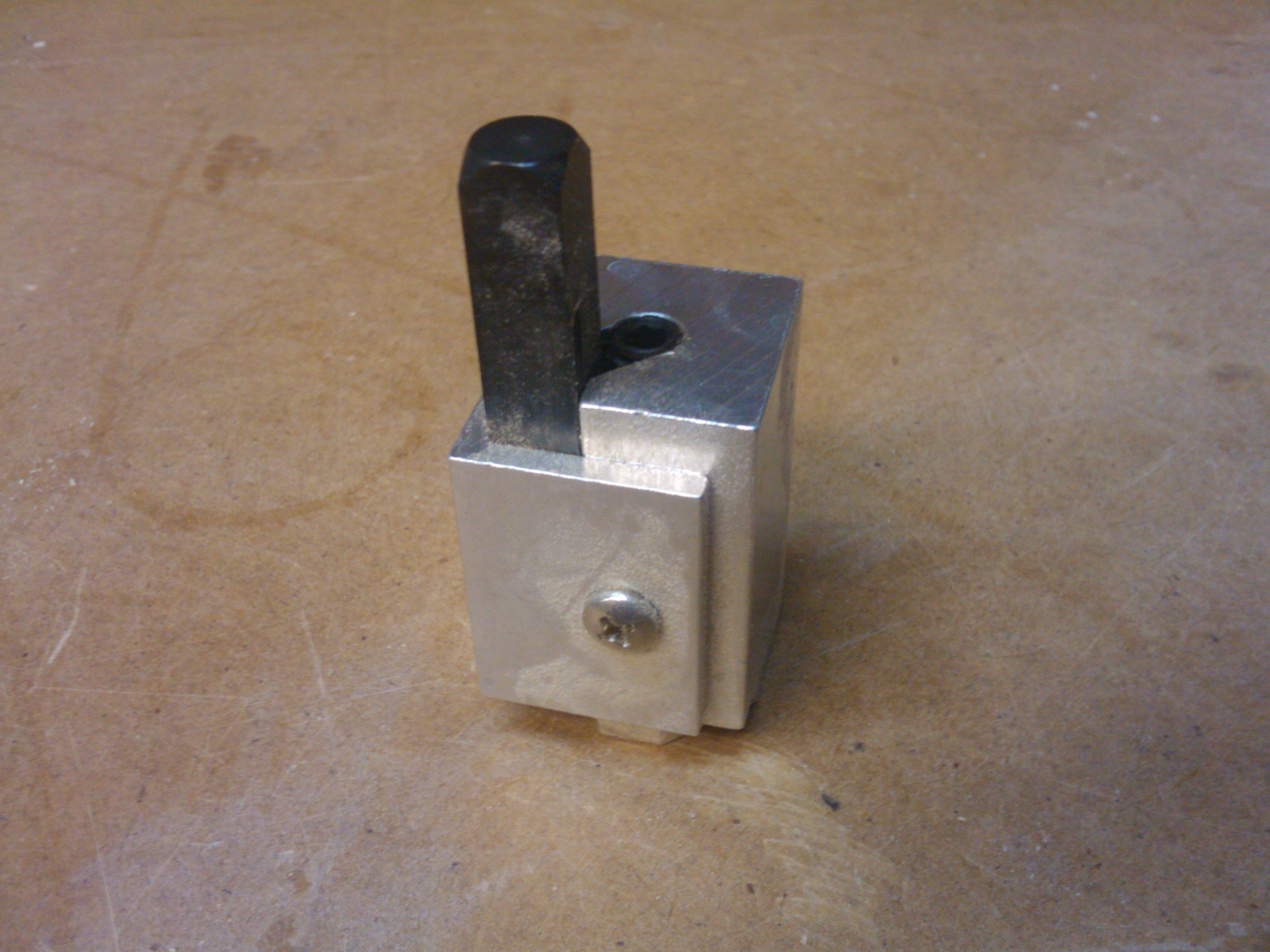
My corner-cutting spring loaded chisel.  I admit, Norm talked me into this one. For a while, he was using one of these babies for nearly every project to square up a rounded corner mortise he had cut with the router.  But, I have discovered that using just a plain old regular bench chisel is a little faster (I don’t have to dig it out of the drawer) and gives results just as good at what I can get with this unitasking gizmo.

Don’t count on sending me an e-mail to see if I want to sell these babies (I may have already thrown out the lock miter bit by the time you read this) – I may just need to sit down and look at my shop organization to see if there’s any way I can turn these zeroes into heroes!


My first four

This weekend, the NCAA men’s basketball national championship moves to Houston.  There, four teams who very few people selected to be there, will vie for the national championship.  The University of Connecticut, Butler University, the University of Kentucky and Virginia Commonwealth University will all be represented, and only one team is going to come out on Monday night as the national champion.

Since 1985, the NCAA has invited a slate of 64 teams to battle it out for the national title, and there have been some memorable tournaments since then. In order to include more teams, the field was expanded to  65 teams, and this year to 68 teams, with four play-in games the two days before the round of 64 tipped off.  Surprisingly, the VCU Rams played in one of those ‘First Four’ games, and are now poised to possibly claim the school’s first title.

This is always my favorite month for sports.  March Madness rules.

While we are now in the Final Four, the match ups got me wondering, if I had to pick my First Four tools – the first four off the bench –  the four essential tools that come out to play for every project, I’m thinking it might look a little like this….

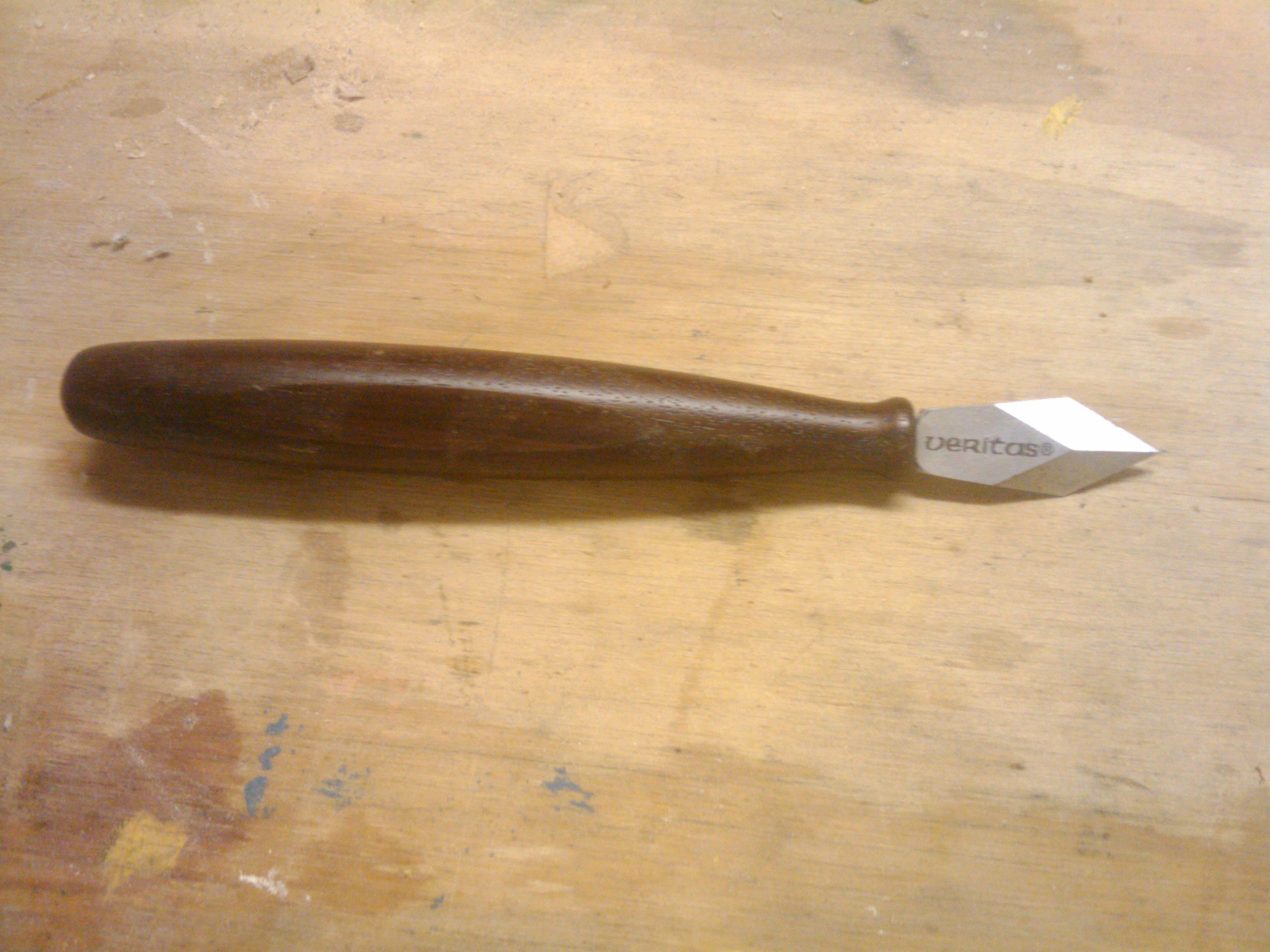
My marking knife.  This buy comes out on every project.  With a double knife bevel on the blade, I can mark from either the left or right side of a straightedge. This tool leaves a very fine line, and slices the top layer of wood fibers, giving me an indicator to get both a fine and clean cut for my projects.

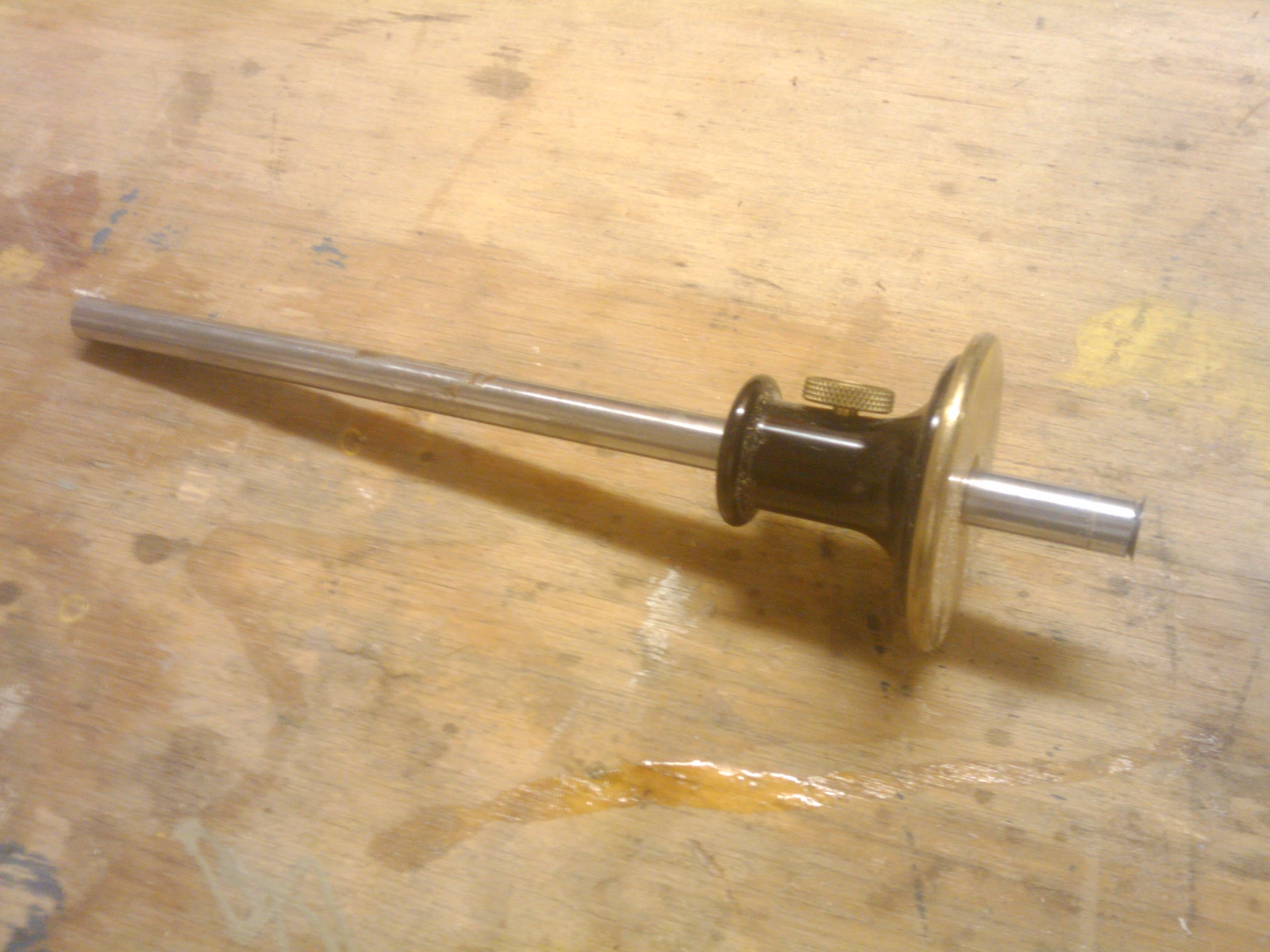
My wheel marking gauge. Yes, this is my second marking tool… but this one is so dang handy. I can set the cutting wheel an exact distance from the round fence on the tool’s stem and mark repetitively on board after board, getting the exact same marking on each.  Again, it also slices the wood fibers, giving me clean cuts.

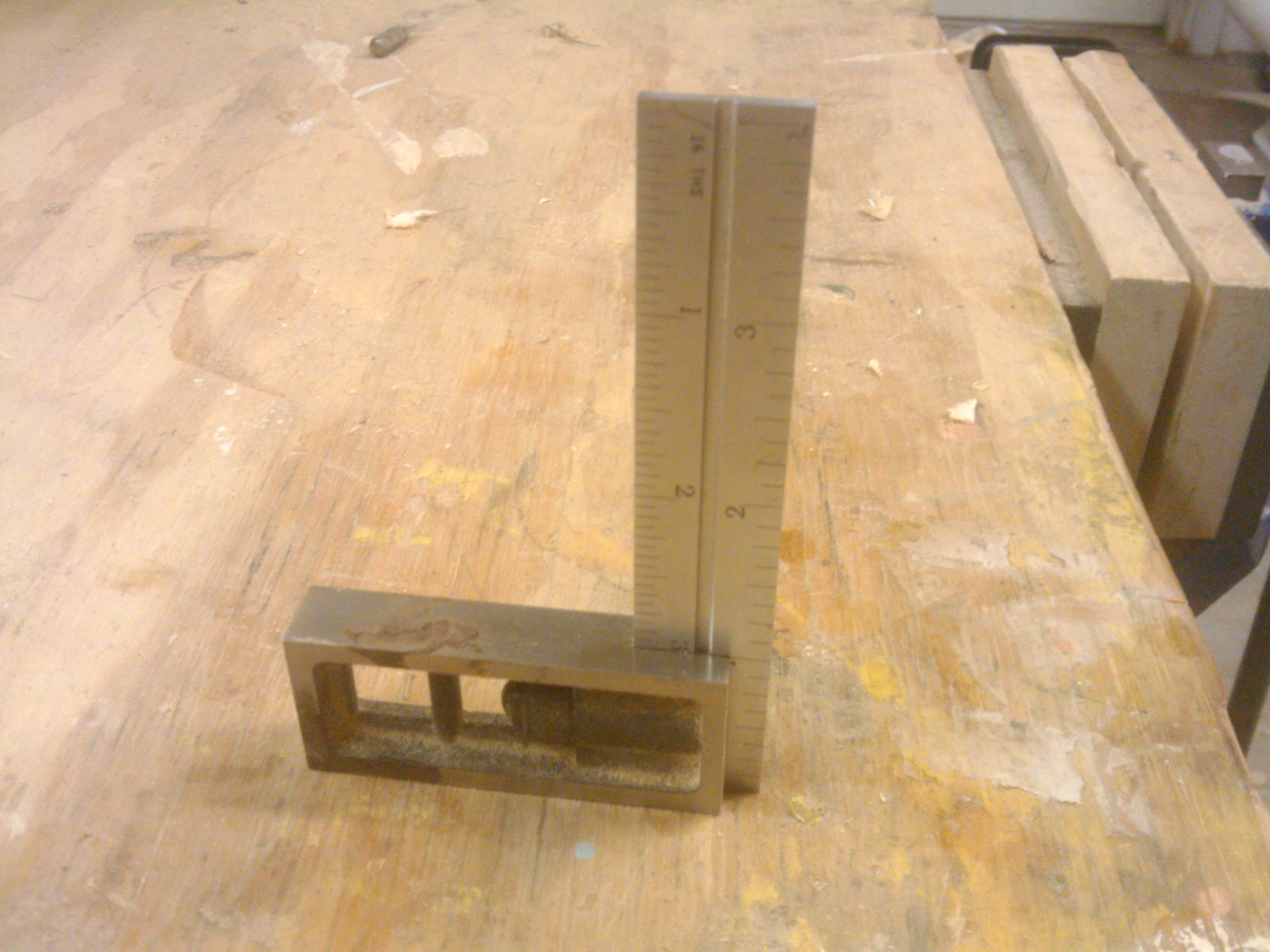
My double square.  Sure, it’s a 4″ model.  And, no, I can’t mark a 45 degree angle with it. But, this baby is so small and sits on the bench so nicely, I can’t not bring it with me. I can use it while I plane to ensure I am getting 90 degree edges, mark bit and blade height, get mortise depth or tenon length… the list just goes on and on.

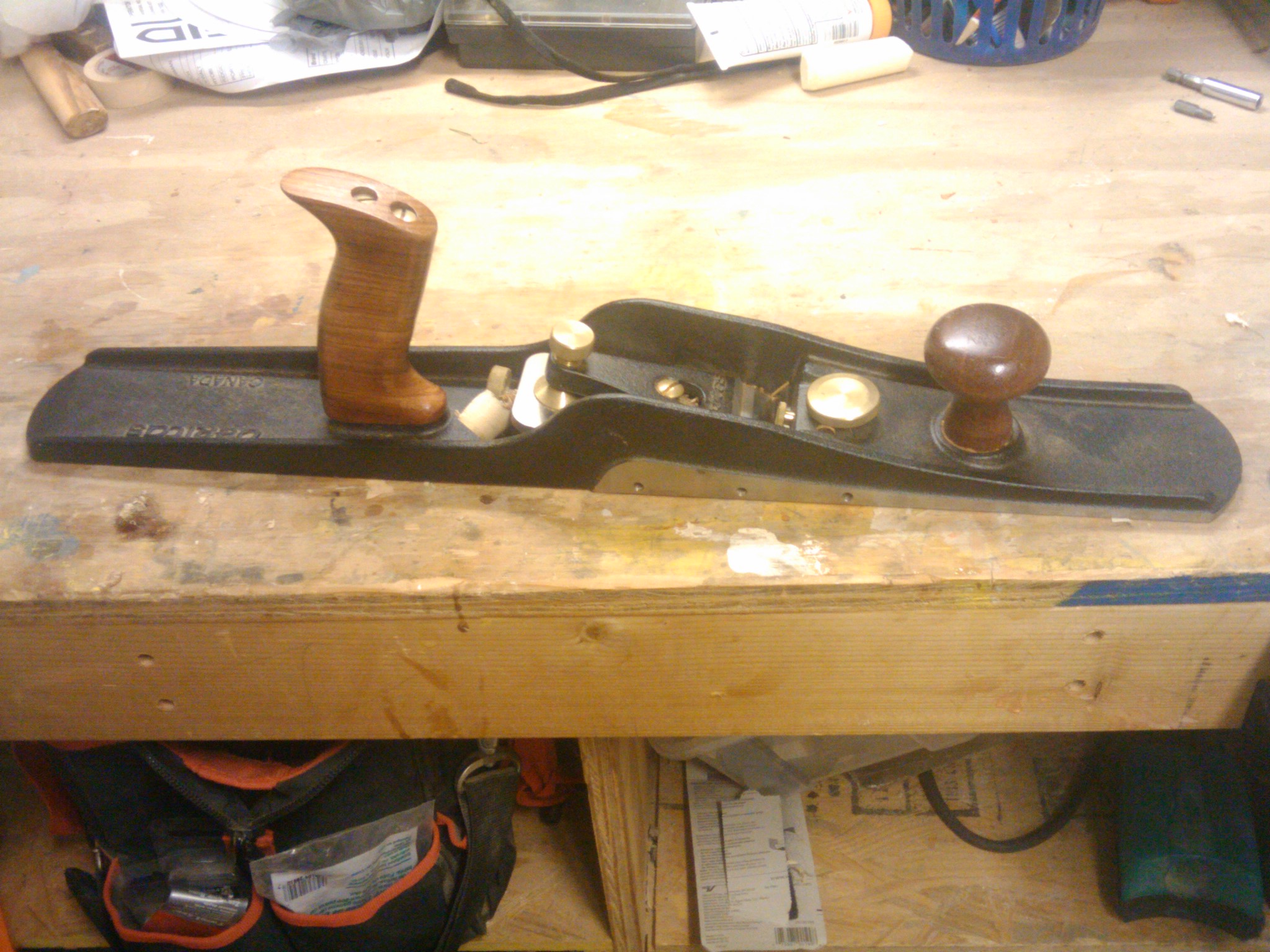
And, my bevel up jointing plane.  Most of the time, I am working with rough stock.  This plane does a great job of smoothing after I attack the surface with the jack plane, and trues up edges for glue ups. Its weight makes it a winner when I trim boards to length on a shooting board… I can’t say enough about it.

Well, that’s my list of the First Four tools I turn to when going to work in the shop.  Your list may look different or have other can’t-do-without tools. Hey, that’s cool. No matter what’s on your list, I’m sure it’s a winner!


You spin me right ’round…

I’m definitely a child of the 1980s.

Oh, yeah.  Ron Reagan in the White House. Parachute pants. Mullets. Ahhh…  When I was just a wee lad, another one of my favorite things to do was to go to school dances. The music of the 1980s was just the bomb. Devo. Thomas Dolby. Eddie Grant.  And, one of the classic dance jams of them all – You Spin me Round (Like a record) by the band Dead or Alive.  They were a one-hit wonder, but oh, what a hit that was.  That was back in the day when I had some moves…

What does this have to do with woodworking? Well, I was on the computer this weekend thinking about other things that spin. I found myself thinking about the pen I turned at the Woodworking Show the previous weekend.  Then, the thought hit me…

Why not get a lathe of my own?

Gosh, a great idea.   I’ll probably have to save up a little cash before I move ahead with the purchase.  This gives me an excellent opportunity to look at the different kinds of lathes out there.  That’s when my head started spinning…

As with band saws, table saws, routers or the like, there are a dizzying array of choices when it comes to lathes.  My first choice when looking at the lathes was to look for a small model.  Something that could turn pens, small bowls, drawer knobs, handles for small tools like ice cream scoops… the works.  And, I saw a few options when dealing with that size lathe.

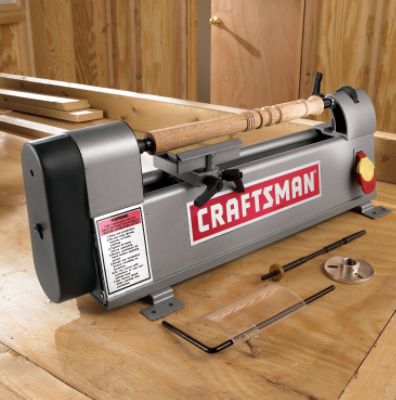
The one that stood out was the Craftsman mini lathe. This little benchtop unit has a decent 12 inch spindle length, and even comes in a package with three pen turning sized tools. Not a bad looking unit, either.

When I showed this to a friend of mine who turns, he couldn’t resist laughing.  “Dude, that’s so cute. But, you won’t be happy with that.  What if you want to turn something bigger?”

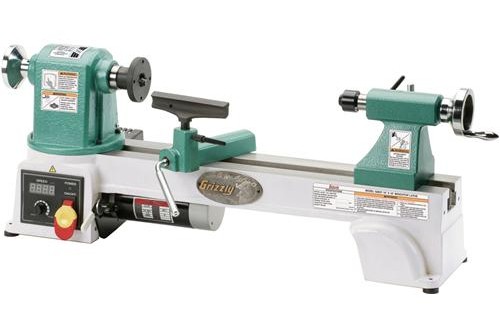
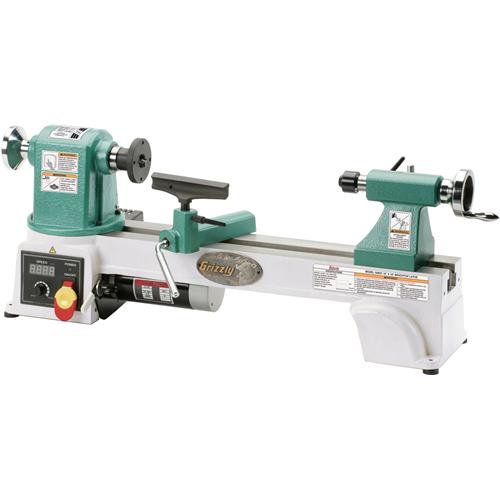
Crap. He might be right.  So, I started looking at the larger midi-sized lathes.  These babies sometimes are benchtop, but also sometimes on a stand.  They have more muscle than the mini ones, but don’t take up nearly as much room as the large ones.  This model at Grizzly tools has an interesting set of specs, and there are many more models in this size range.


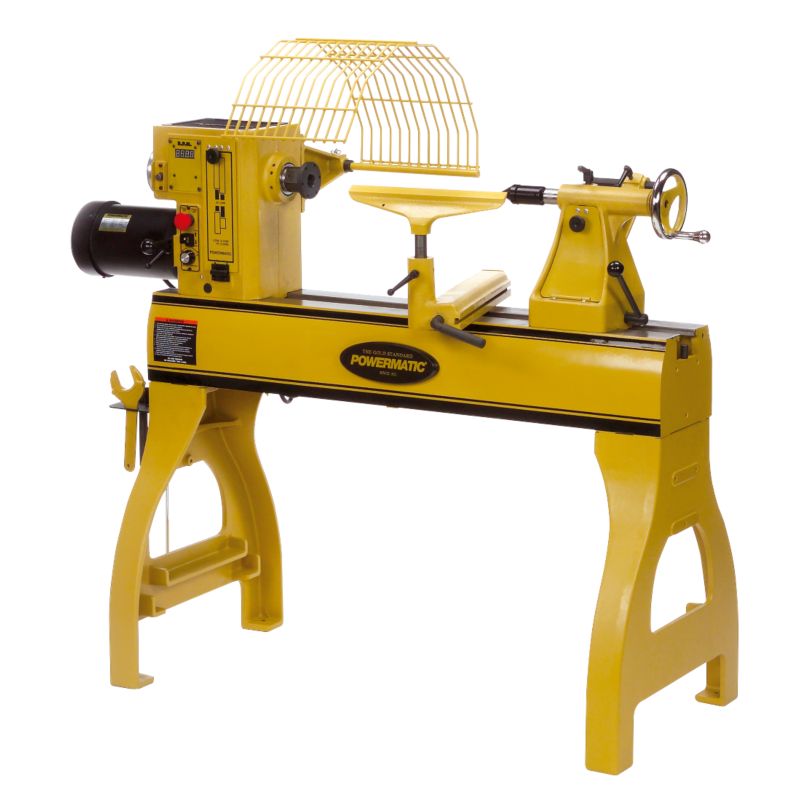
While these lathes are good for most work… they aren’t going to be able to turn big stuff.  Bowls with a 20 inch diameter. Ya know, that kind of work.  From there, I’ve discovered that the full sized lathes are where to go.  But, I’m not sure I can justify going that big. I’m having success with my Ridgid contractor table saw –  I don’t feel the need to upgrade to a big Delta Unisaw. The same thing is probably going to happen with a lathe as well… I can’t see myself (now) needing anything as big as this behemoth from Powermatic.

I know I have a lot of research to do before I make a decision on which lathe to buy… but I know one thing for certain:  The lathe purchase is just the start… There will be turning tools, face plates, chucks, safety gear and a whole plethora of accessories to make turning faster, easier and safer.

Do I still want to spin my way into this one?


Tools I use: My spokeshave

Planes are cool. So are chisels. But,they aren’t always the ideal tools for certain situations.

For instance, when you are trying to plane a curve to make it fair and smooth, bench and block planes are tough to maneuver around the turns.

And, when I try to smooth things out with my chisels, they are tough to control, wanting to follow the grain and slice deeply into the piece.

What I need is a tool that bridges the chasm between the two tools – the maneuverability of chisels with the smooth and refined cutting action of my planes.

That, my friends, is what a spokeshave does for you. These tiny tools have big potential in your shop and deserve their place at the workbench.

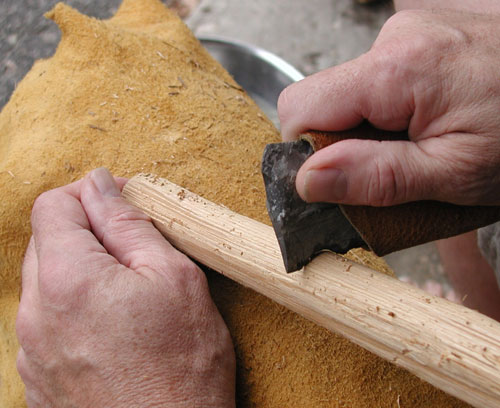
The first spokeshaves were used in prehistoric times. Closely resembling the knapped flint knives, the sharp rounded or lunate edge was kept to the center of the tool with the back edge rounded to ease pulling. Their purposed was simple – to shape arrow shafts so they would fly farther and straighter when launched from a bow.

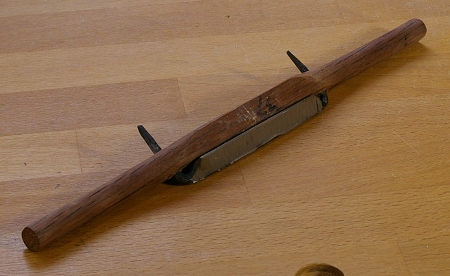
As technology improved, spokeshave blades were cast or forged from metal and were held in a wooden body. The blade was held in place by two tangs that were pushed through holes in the body. While this gives a good hold on the blade, it’s challenging to adjust. That’s why modern wooden body spokeshave irons have threaded tangs that go through the body but adjust with thumbscrews to hold the blade fast.

Metal bodied spokeshaves appeared later, and were popular because of their adjustment mechanisms and that they were easier to sharpen since they didn’t require the tangs in wooden bodied models. Of course, metal spokeshave blades are much smaller than plane irons and present their own challenges when being sharpened…  More on this later.

The one spokeshave I own is an old Stanley 151 with twin adjustment wheels, a blade that looks like a plane iron and an iron body.  I picked it up for about $10 on eBay, and it’s done me very well.  I replaced the iron with a Lee Valley spokeshave O1 model, which takes a keen edge and slices wood beautifully.

The woodworkers who used these more modern versions to shape the wooden spokes on wheels as well as gracefully curved furniture parts – think cabriole legs. Since the spokeshave itself is kind of small,  it doesn’t do too well handling roughing work. For the heavy lifting, tools such as the band saw, bow saw and drawknife do an admirable job. Once I get the shape roughed out for what I’m working on, I often turn to the spokeshave to refine the shape and get the surface ready for finishing. Yes, unlike progressing through the grits on a spindle sander, wood that has been shaped by a spokeshave looks like it has been surfaced by a plane – it’s ready to go.

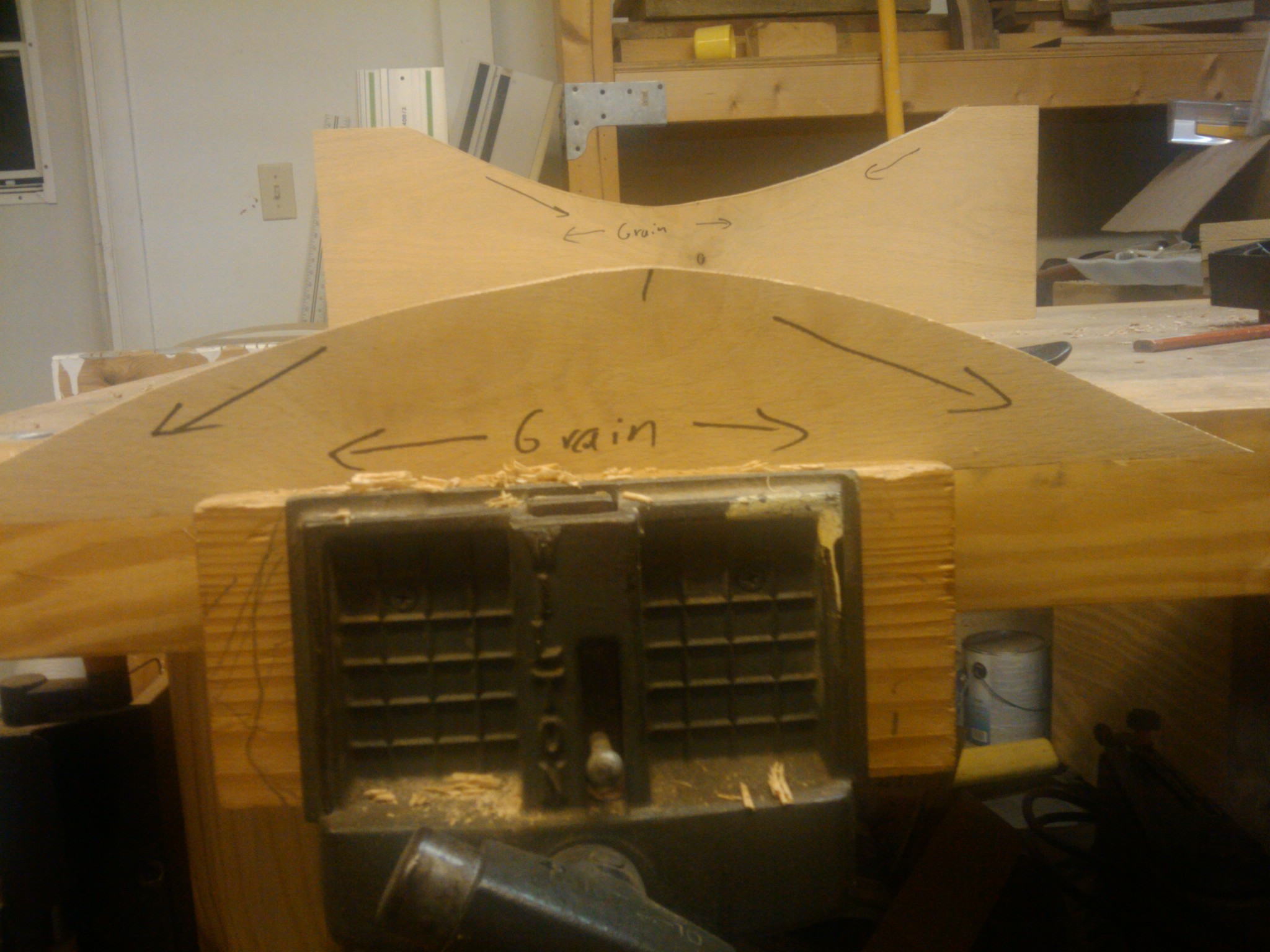
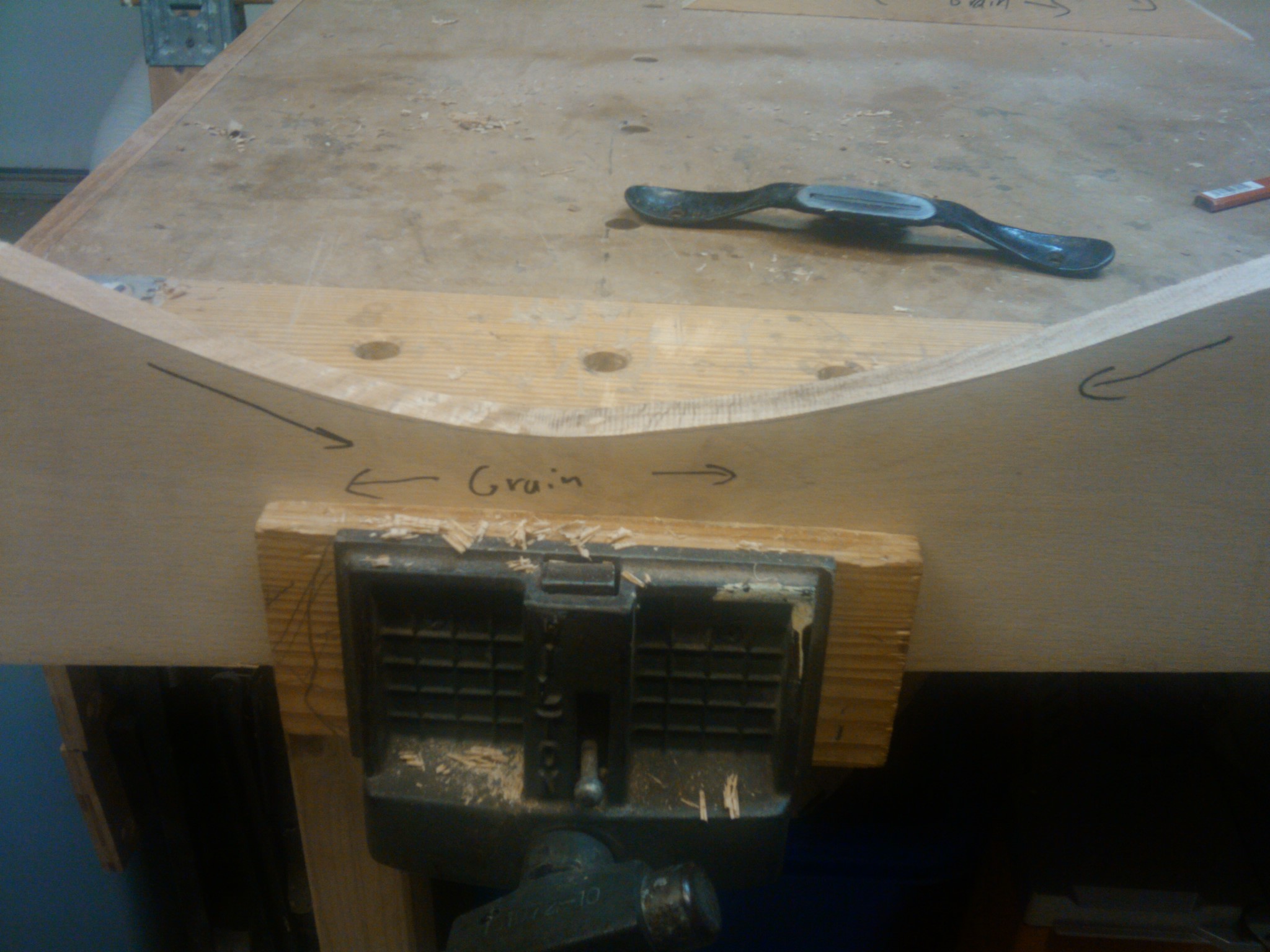
I have noticed that just as with a plane, grain direction is an important consideration. When working a curve, the grain changes direction relative to the blade after you hit the peak of a convex curve or the bottom of a concave curve. You go from slicing smoothly along to chattering and tear out. Blech. The rule of thumb I have found is that you spokeshave downhill on convex curves:

And, downhill again when cutting concave curves:

With just a little practice you’ll quickly go from planing curves fair to using it to shape three dimensional pieces with compound curves… it’s an  excellent sculpting tool. Of course, I also hear there are special rounded sole spokeshaves to get into tighter concave shapes, low-angle spokeshaves that do a better job on different kinds of woods… oh, the wish list grows longer with each passing day…

Now, if the spokeshave’s going to do its magic, it has to have a sharp iron. This is where I hear a lot of folks wonder how to make that happen. The iron is just so short, it doesn’t fit into a jig you might use for chisels or plane irons… hmmm…

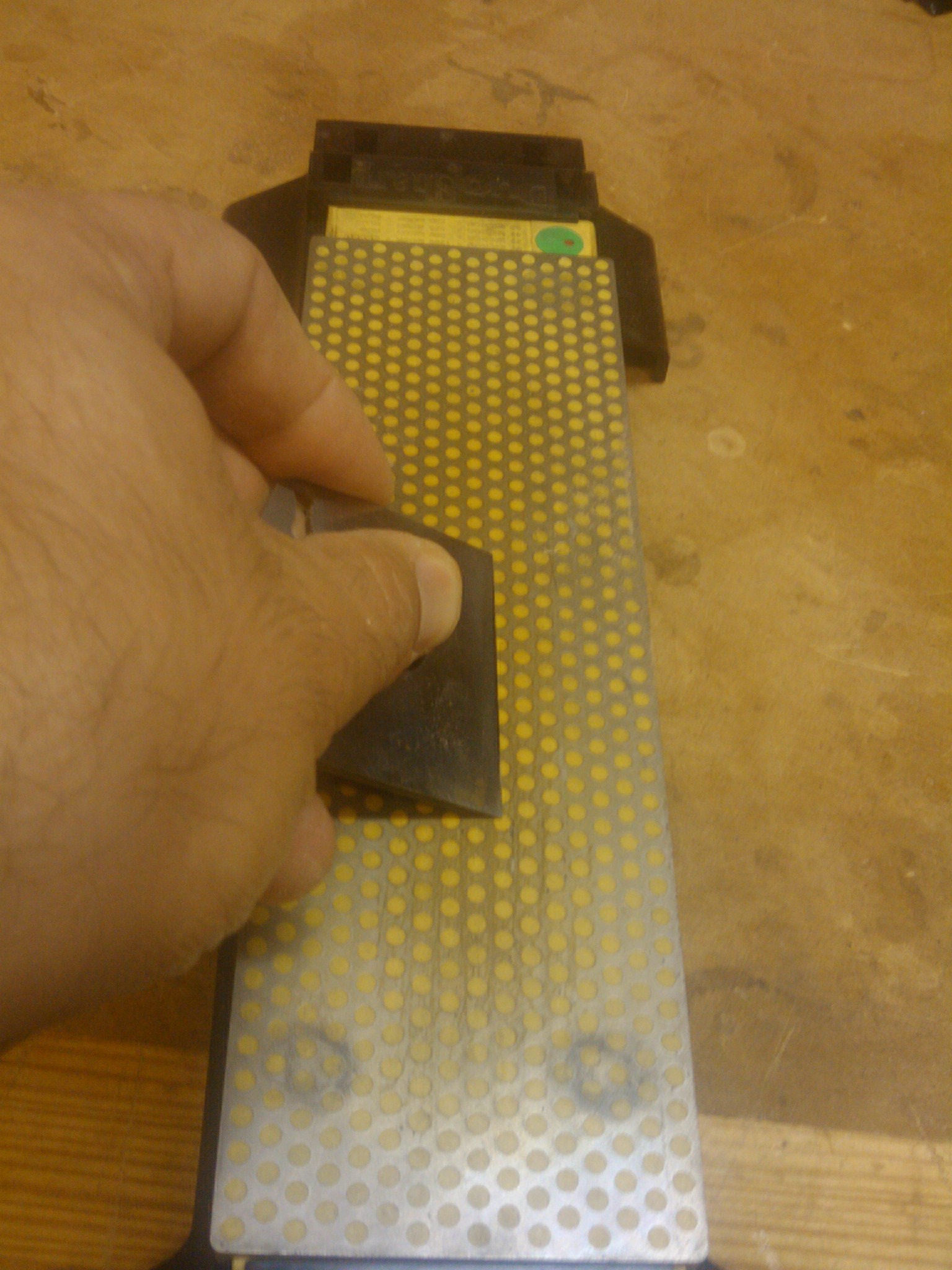
What I’ve found is that by holding the iron in my hand on its bevel and pushing it parallel with the length of your stone, you can keep a consistent bevel angle and consistent pressure against the stone instead of pushing the bevel in a more traditional perpendicular motion. Is it a perfect solution?  I’m sure there are probably jigs out there that tackle this issue elegantly, but I’m becoming more and more comfortable with this method.

While the spokeshave doesn’t come out for every project, the times I have used it have been a blast. I’m going to have to work more curves into my projects… and look at the offerings in catalogs to see if I can’t add some more versatility to my collection!


Tools I use: Woodworking T-shirts

No, you can’t cut a single piece of wood with them.  You can’t route an edge with them. You can’t cut joinery with them.

You could use them to apply a finish, but that will be at the end of their lives.

Some of my favorite ‘tools’ in the shop are the many woodworking t-shirts that I wear as I work – and out in public. Some are funny, some are wacky, but they all reflect my love of woodworking.  This isn’t all of the woodworking shirts I own, but these are the ones that I wanted to feature – because a bunch of them came from other woodworkers. I just wanted to show them a little bit of love.

I want to apologize to you in advance, but if you click on the image above, you can get a closer look at the shirts – and my mug.

Clockwise from top center:

The woodworker’s jackpot from Andy Chidwick. Maple, cherry and walnut, it’s a big time payout as far as I’m concerned.  Andy also offers a number of other designs for sale at his site as well.

The Wood Whisperer by Marc Spagnuolo. What else needs to be said? Marc is da man, and this is da shirt of da site!

American Craftsman Workshop hat by Todd Clippinger. The chapeau is from Todd Clippinger, AKA Todd in Montana. Todd builds some sweet projects in the cold north…  The shirt I’m wearing came from Cafe Press, the woodworking collection. It reads “Measure Twice. Cut Once. Fill Gaps.”

Stop Looking.  This was the first woodworking shirt I had gotten from a fellow woodworker. Gail O’Rourke printed these up – the front reads “Stop Looking,” and the back reads, “You found your new cabinetmaker!” Very clever, but I’m not sure she sells ’em anymore…

Upper Cut Woodworks by Matt Gradwohl. The big fella will knock you out with his woodworking skills… Matt’s also about as funny as they come.  Shirt looks sweet!

What happens in the shop stays in the shop. Another Cafe Press shirt… And it just says it all…

I Roll with Roubo by Jonathan Szczepanski. I think we may have a pretty decent idea about Jonathan’s preference for bench designs…

The Penultimate Workshop by Dyami Plotke. Dyami’s design tells the tale well – the shop he’s in is a work in progress and probably will never be done. But, his shirts are very sweet!

And, in the middle, it’s time to Show me the Monkey! I still have a few shirts from my blog… it may be time for a reprint soon…

The one thing I can say about my shirt collection is that I hope it will continue to grow. As I meet more woodworkers, I look forward to showing the colors and promoting the work of others.

Tools I use: my new shop heater

Call the Chamber of Commerce, the Convention and Visitor’s Bureau and the resort marketing folks along Florida’s Gulf coast. I have just guaranteed that our weather for the rest of the winter will be beautiful, sunny and warm.

That’s because I just bought a shop heater.

Yes, here in Florida.

So far, this December here in the Tampa Bay area is running as one of the ten coldest since records started being kept in 1890. Sure, just like this past January and February, we’re not talking frigid with ice, but the shop is just too cold to work in comfortably. And, if I’m not comfortable, there’s less of a likelihood that I’m going out to the shop to do any work, and when I do, my mind is focused on staying warm rather than ensuring I am using proper safety procedures.
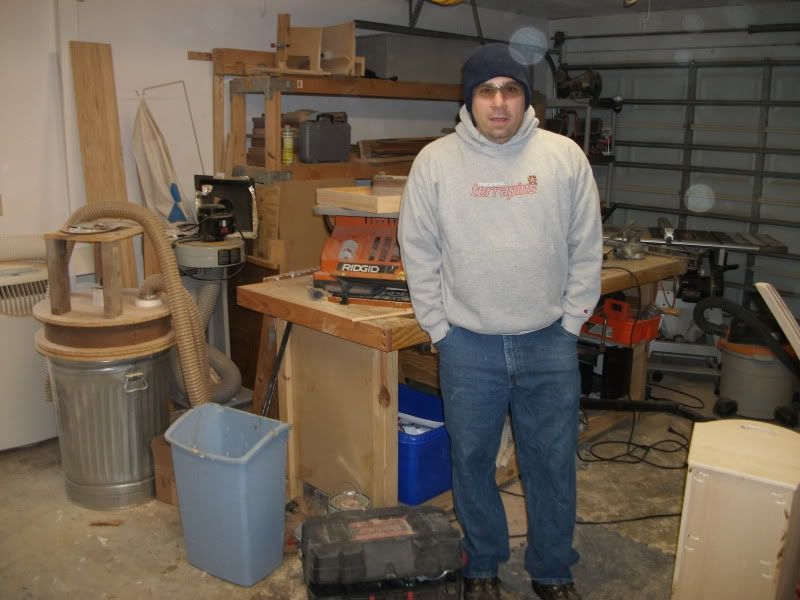
As I had mentioned in an article I wrote this past January, there are several different kinds of heaters out there to choose from. Knowing I just needed a heater to chase the chill for a few months, I opted for something from the portable electric space heater category.

On my first attempt to buy one (when a cold snap hit the area earlier this month which took our daytime temperatures only into the 50s and overnight temperatures below freezing), every single portable heater had been purchased from the shelves of the local Home Depot, Wal Mart, Target, Lowe’s, K-Mart and other mega retail locations. I guess I was a little late to the party…

Knowing it would be tough to find a heater locally, I dropped back to my alternate plan – Amazon.com. Internet shopping is the greatest thing since sliced bread. Since Jiffy Pop. Since Slim Whitman. From the comfort of my living room, I was able to search the offerings online and make a purchase.

Breaking from my decision last January, I opted for a quartz radiant heater. My thought was that if I could get a focused beam of heat on me at the bench, it would heat me up faster than waiting for the whole shop to warm up. I bought a portable floor model and waited – through the coldest days this season – for it to arrive. And, when it did, it looked cool. It had all the safety fixtures, I could pop it up on my front work cabinet and point it at me at the bench. So far, so good….
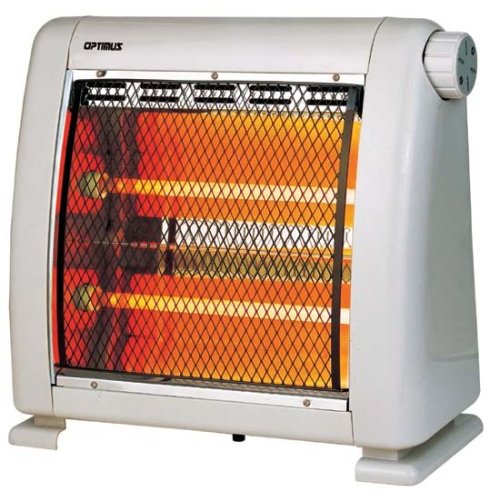
Well, I didn’t get the right model. The radiant heat feature was great in the cool shop – when I was standing right on top of it with my hands less than one foot from the glowing elements. Beyond that… well… there was little relief. The model I bought also had a great safety feature built in – every five minutes, regardless of what the ambient temperature was, the safety heat overload switch would cut the unit off. There was only one way to get it to restart – that was to unplug it, wait ten minutes, then plug it in and start it up again. Since it only shot its heat into the shop to warm whatever it fell on, once it went off, the shop just got cold and miserable. It went back into the box and I started the return process on Amazon – which is incredibly convenient.

This past weekend, with the skies gray and spitting drizzle and a high temperature in the mid 50s, I started my search again. I was willing to try one more time at the local retailers, looking for the model I had originally decided on – an oil-filled electric radiator model.

No at Home Depot. No at Lowe’s. None at K-Mart. None at WalMart. Then, in Target, I saw it. One of the last three portable heaters on the shelf. It’s a Honeywell oil-filled radiator model portable space heater. I hustled it into my cart and didn’t take my eyes off it for fear that someone might snatch it from the cart. A cool $60 later, I had the unit in my car, headed back to the shop.
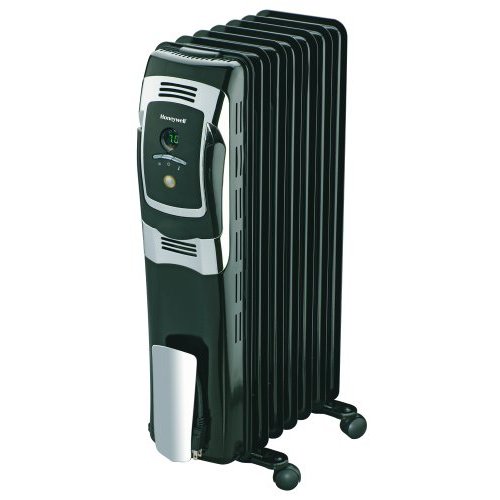
Set up was very easy, involving attaching the unit’s casters so it could be wheeled around and kept off the floor. The control panel is pretty sweet. First and foremost, it had all of the safety features you would want – a tip-over sensor, a thermal overload and a boatload of warning stickers. It has a timer, so I can set how long I want the heater to stay on, a thermostat so I can set a comfortable temperature and a heater ‘force’ setting – full blast or economy mode. I plugged it in and set the temperature to 68 degrees. Why not?

One thing about a heater like this – it does take some time to warm up. The heating element is encased in the radiator body, and it has to warm the mass of the oil inside and the metal of the unit before it can start pumping the heat out. I held my hand over the heater and wondered why it was taking so long.

I started working anyway, figuring I would check the unit in a little bit. I got involved in cutting a breadboard edge for a table I’m working on and let myself get into the woodworking.

Within half an hour, I found myself pushing my sleeves up and thinking, “Man, this must be hard work. I’m nearly breaking a sweat.” That’s when I remembered to check the unit. It was working beautifully! It was hot to the touch, but not enough to burn you. The heat it threw was awesome… it was a gentle heat that filled the space. I was warm by the bench, at the table saw. Everywhere. I also felt a lot more comfortable with the heating elements not being exposed in my dust generating shop. I clicked the heater back to the energy saving mode and spent the rest of the afternoon out there, comfortable and enjoying my shop time as I watched the gentle cold rain fall through my shop window.

Am I some kind of wimpy Florida guy now? Sure. You bet. But, if this heater makes my shop time – my hobby – more enjoyable, well, that was a sound investment of my money and a very welcome addition to my shop.

Product review: the Magswitch

So, a few weeks ago, I got an e-mail from Ralph Bagnall, the Consulting Woodworker, asking if I could review a set of tools. Hey, I’m always up for a challenge, so I said sure.

After a few days, I had forgotten all about the exchange. That’s when my wife called me at work to tell me that I had received a big box, and that I had to move it myself. It was heavy.

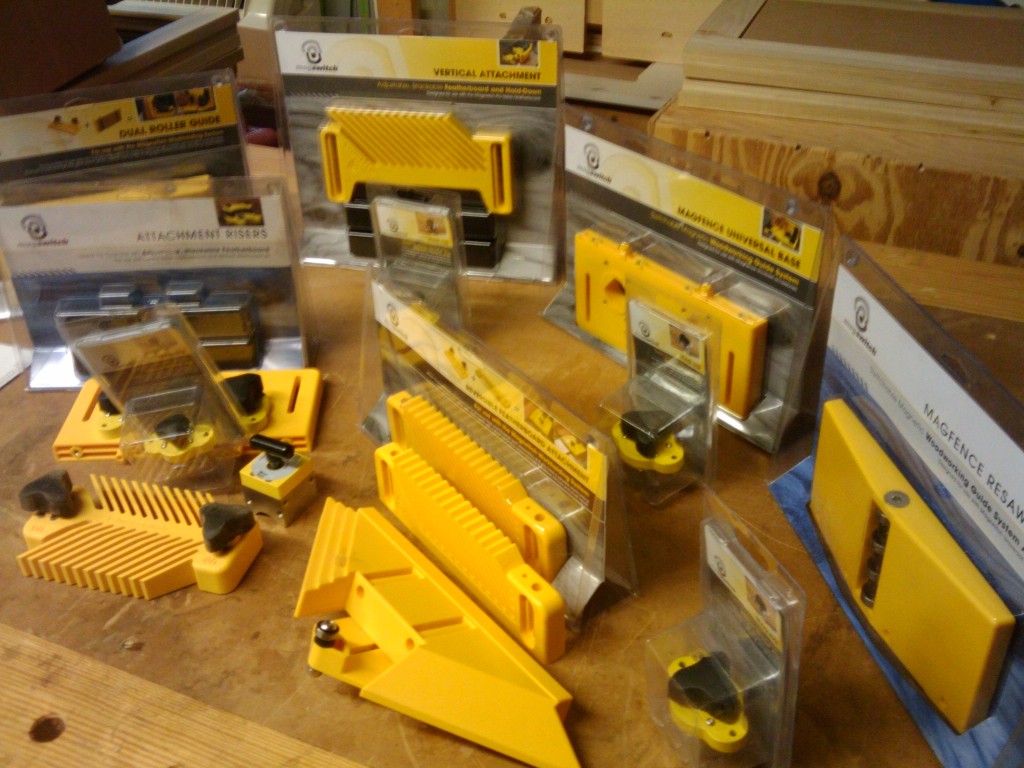
When I opened the box, I was stunned.  I had gotten a master set of the the Magswitch magnetic hold down jigs, and I was amazed at just how much came with it. My first impression was that this was the Swiss Army Knife of woodworking jigs.

The Magswitch system is based around a powerful magnet that you can switch on and off with the turn of a knob. Turn the knob to off, and you can pick the magnet up with little effort.  Turn it to on, and I can drag my table saw (while up on its casters) around the shop.Originally designed for the welding and metal working community, it was only a quick leap to apply the technology for woodworkers who routinely work with cast iron and steel tools.  While the magnets themselves are very useful, it’s the family of jigs that have been built around them that makes this system so flexible.

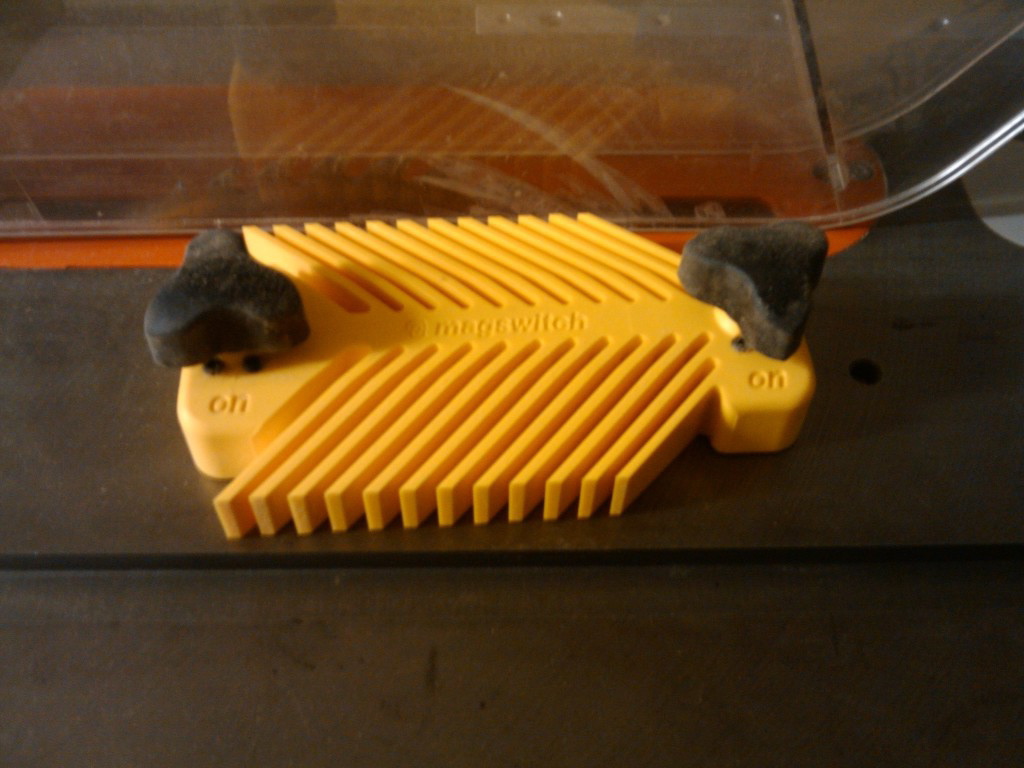
For those getting into the system to begin, you might want to go with the dual feather board. It has the two magnets built in to the fixture, and it can be easily deployed wherever it’s appropriate for your cut. Yes, you are free from being stuck with using the miter slot, so imagine using a feather board to help control a wide piece on your table saw top.

For the rest of the fixtures, you will be using the standard universal base. This plastic yellow device holds the two Magswitch units, and each of the specialized fixtures is then screwed to the base.  And, what a selection of specialized fixtures.  There are feather boards.  And risers that allow you to stack two feather boards on top of each other for controlling tall pieces or for holding work down and in to the fence.  There is a thin strip ripping jig so you can rip consistent thin strips at your table saw on the outside of the blade, not against the rip fence, which could burn the cut pieces or throw them back at you.  There are high roller hold ins. There are resaw fences you can use on your band saw.  It’s very impressive stuff.

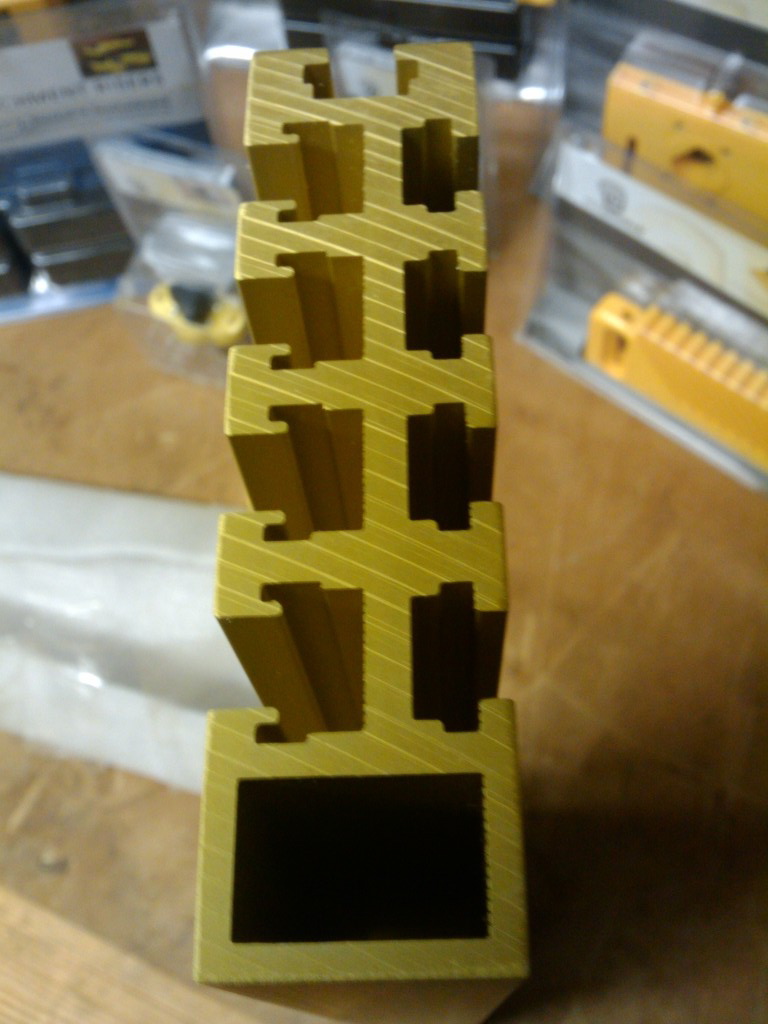
Of course, you may have realized the one weakness of the kit… if you have an aluminum topped table saw or a non-ferrous router table, you are out of luck. As I was thinking this was the case, I got another package… the Universal Track tool.  This heavy duty aluminum fence is lined on both sides with with hardware holding tracks so you can use the attachments in different locations.  Pretty slick. Just use the included hardware, slide the bolt heads into the beefy tracks and blammo – extra use.

The one thing I would strongly recommend is picking up a box to store the system parts in, and maybe invest in a box of gallon-sized freezer bags to store each accessory and its related hardware in when you aren’t using them.  There are a lot of screws, allen wrenches and other goodies you will have to keep track of – this will help keep the parts together. Also, I know no one likes to keep users manuals, but I would definitely hold on to the individual instruction sheets that come with the attachments.  There truly is a bewildering array of uses for these tools, and you’ll want to refresh your memory as to how they work before you put them to use.

It’s a very interesting system for sure, and if it helps me work safer and more accurately, well, that’s a double bonus!

Magswitch jigs can also be found at many woodworking stores.