Category Archives: Experiences

Not what I planned on writing today

No, with today being April 1, I planned on writing a funny post about a woodworker turning the world’s largest banana or a gasoline powered chisel… But, we had a real scare at the house yesterday.

A severe line of thunderstorms plowed through the west coast of Florida, and a huge chunk of ‘energy’ passed right over our neighborhood.  The National Weather Service will determine if what we had was really a tornado, but everyone who was home when this hit (including my wife and youngest son) swear up and down that the inky black sky and ‘freight train’ type sound was close enough for them to call it one.

Thank God that everyone was OK, and the damage, while stunning, didn’t put anyone out of their homes.  I will tell you that the most helpless feeling is having to work in the county’s Emergency Operations Center and not knowing if my loved ones were OK.

My Neighbor's house missing part of the roof


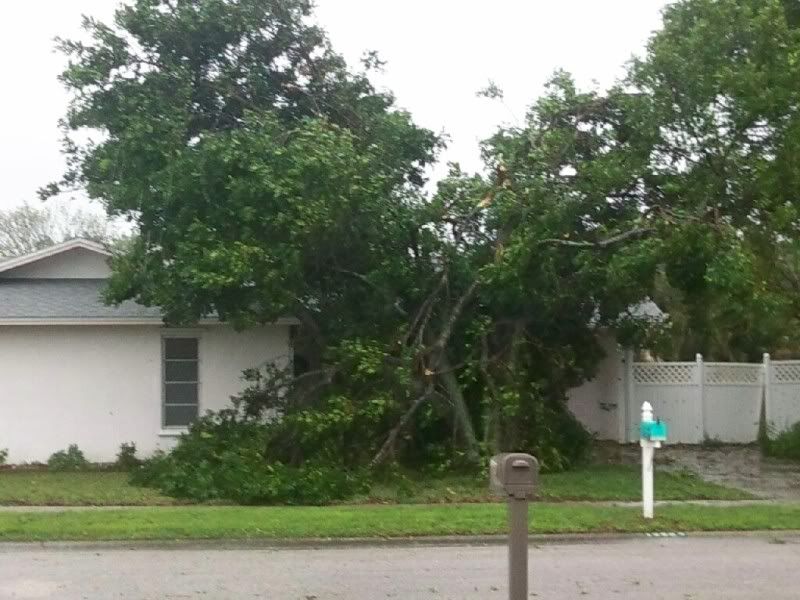
The neighbor across the street from us and her downed tree
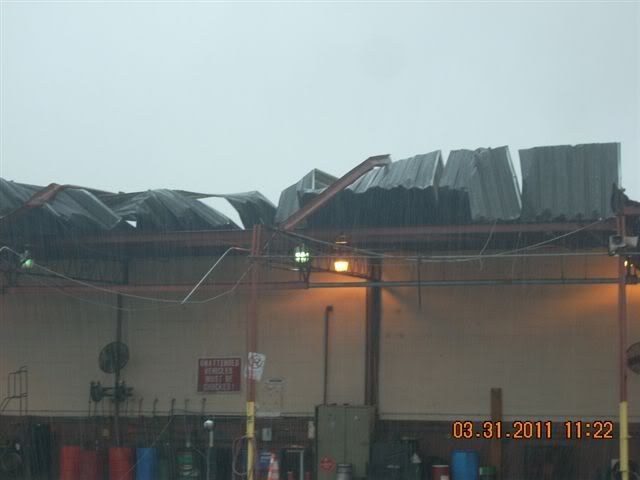
The county's Fleet Management building - about a mile from my house

We’re cleaning up today…  In the meantime, here are some more shots of the event. What a mess…

My day at the Woodworking Show

Hello, everyone. Iggy again, and I wanted to tell you all about the full day I worked this past weekend at the Woodworking Show in Tampa.

First, as is tradition, I had Tom call Jim Heavey and Andy Chidwick to come over to the house on Friday night. I figured that they were on the road in a strange town (Where else would Tom be allowed to work in the shop?) and could use a home cooked meal. Jim showed up first, and it turns out that the entire Chidwick clan was in tow as well! They’ve been going from town to town with the show, demonstrating and making it a great experience for everyone who attended. Me, well, it rarely happens, but I was just starstruck.

After dinner, I left Tom to load the materials for the show, and I went out to party with my guests.  We spent a wild night on the town, and celebrated into the night.  The cops had to come out to the hotel twice to talk to us about the noise, and we were definitely enjoying the banana daiquiris.  After the big night, we crashed late and planned on a rough day at the show.

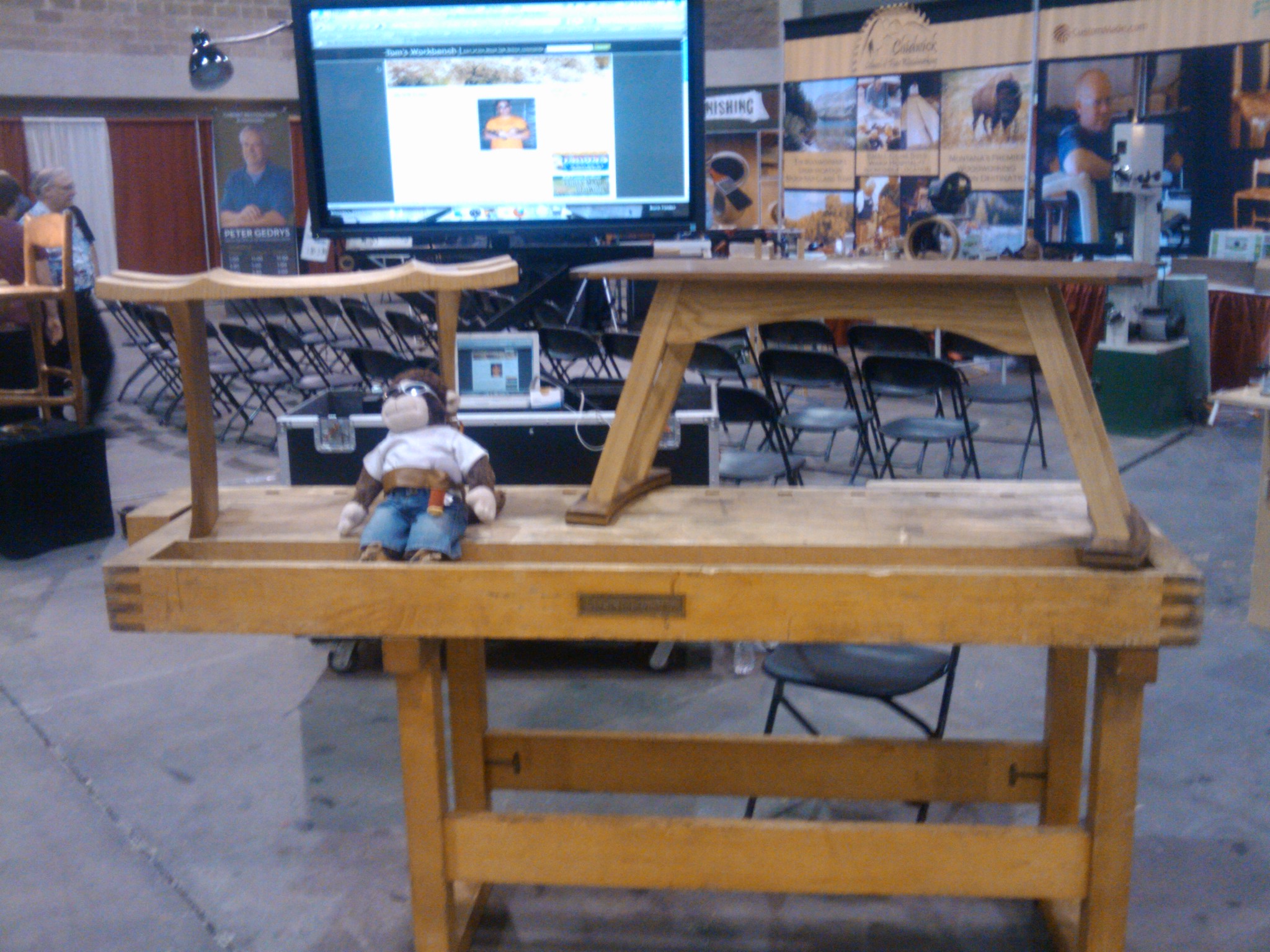
Saturday morning, I was up bright and early – surprisingly chipper after the big night. Tom brought car with the Contemplation bench and Centered, the computer and lots of my business cards. When we got to the show floor, I was surprised to see my booth next to the Chidwick’s that was fit for an accomplished woodworker. I had a Lie-Nielsen bench to set the benches on, a large screen TV and a comfortable place where I could speak with the attendees. It was awesome, and many thanks to the crew who made it all possible!

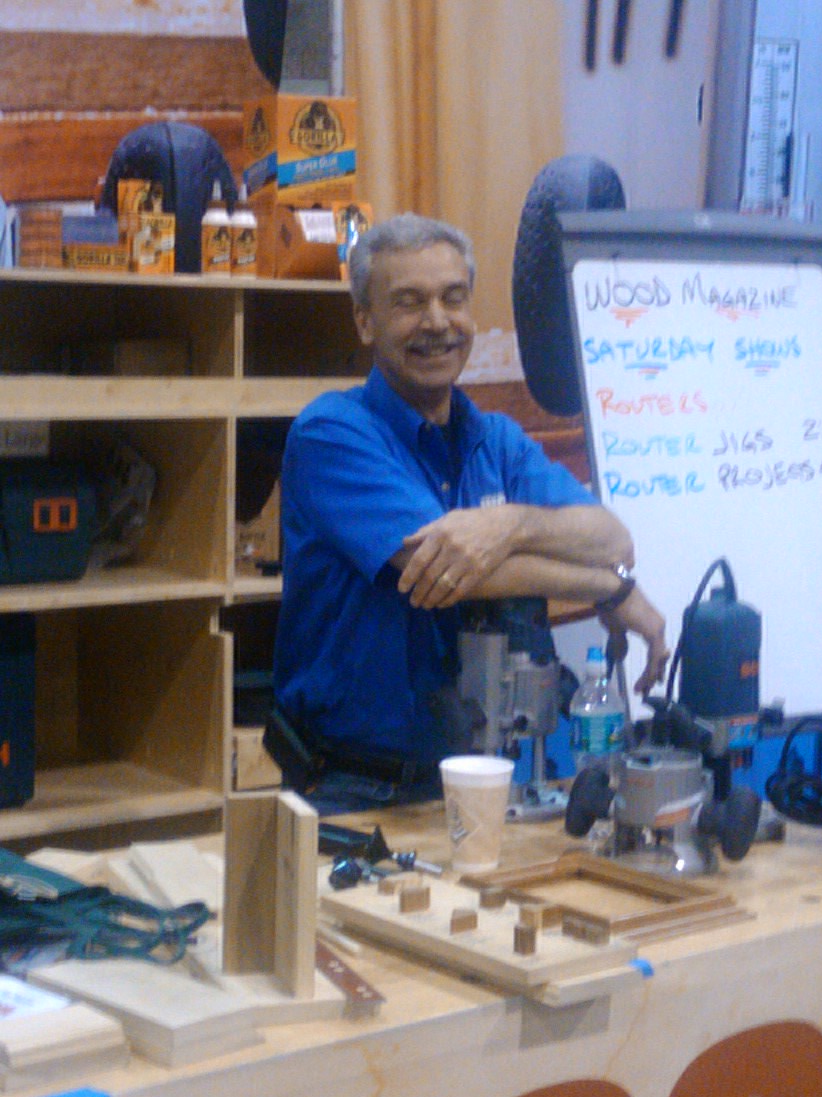
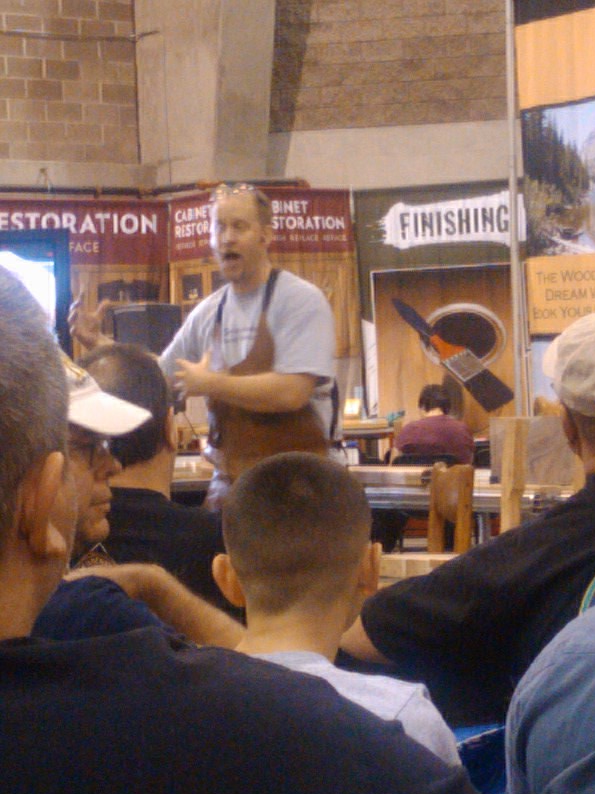
Between speaking with attendees during the day, I took the opportunity to get out and see what was on display. I saw my friend Jim Heavey working hard giving his presentation at the Wood Magazine classrooom.

I had a chance to see Happy Andy at his his classroom. This guy can get people excited about woodworking, and his work really stands out. Some really awesome sculpted joinery for chairs. I noticed that Tom was busily taking notes, but I’m not sure the Tailless Wonder is going to be able to make it happen. At least not without my help.


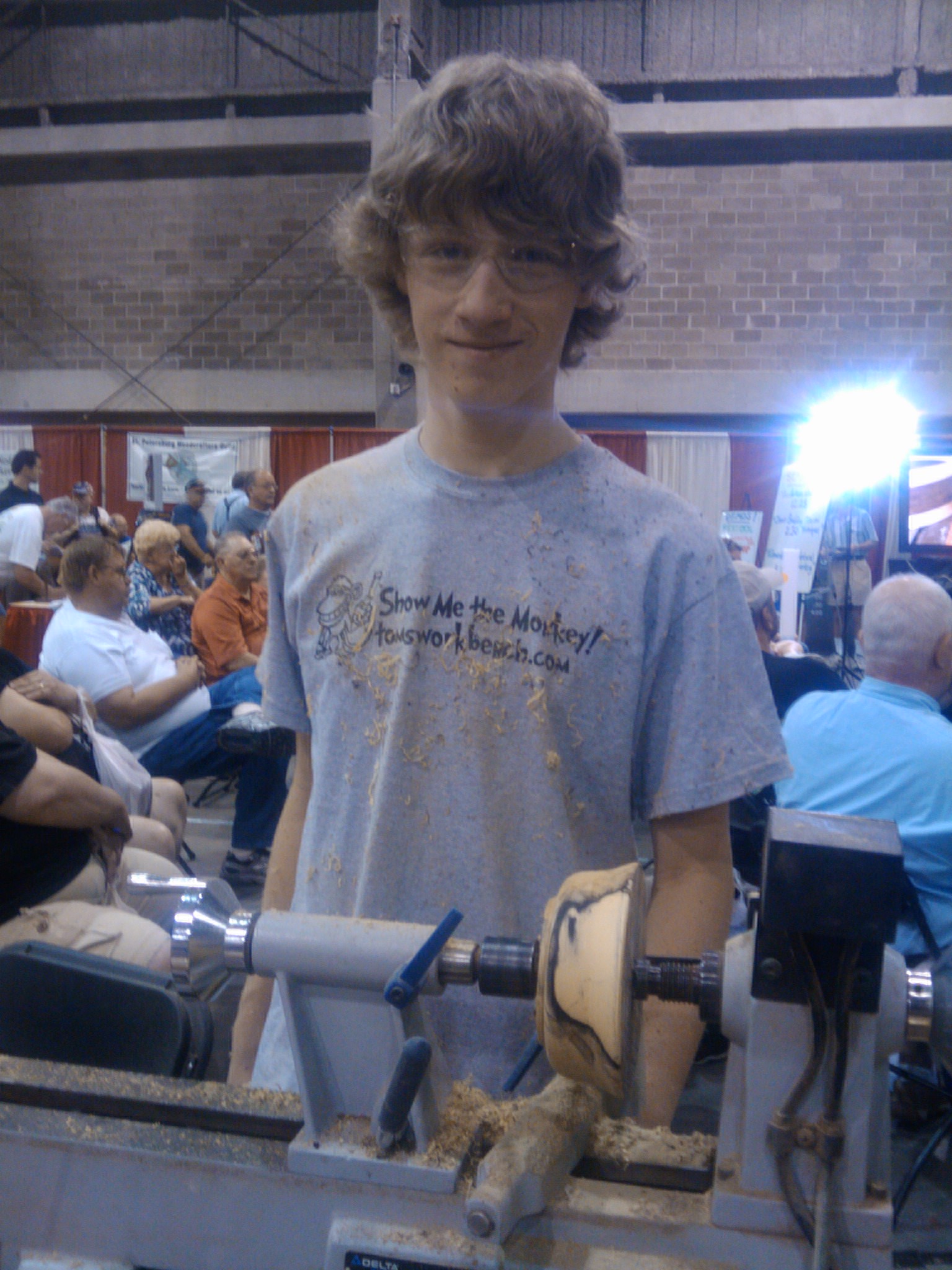
I also swung by the booth Andy had set up for his 14-year-old son Tano. He’s a very interesting kid – he loves woodworking, and I hear he was able to teach Tom how to turn a pen.If that’s true, the kid might be a genius.  I know someone took video – I’m going to see if I can edit it and get it onto the site. By the way – nice shirt!

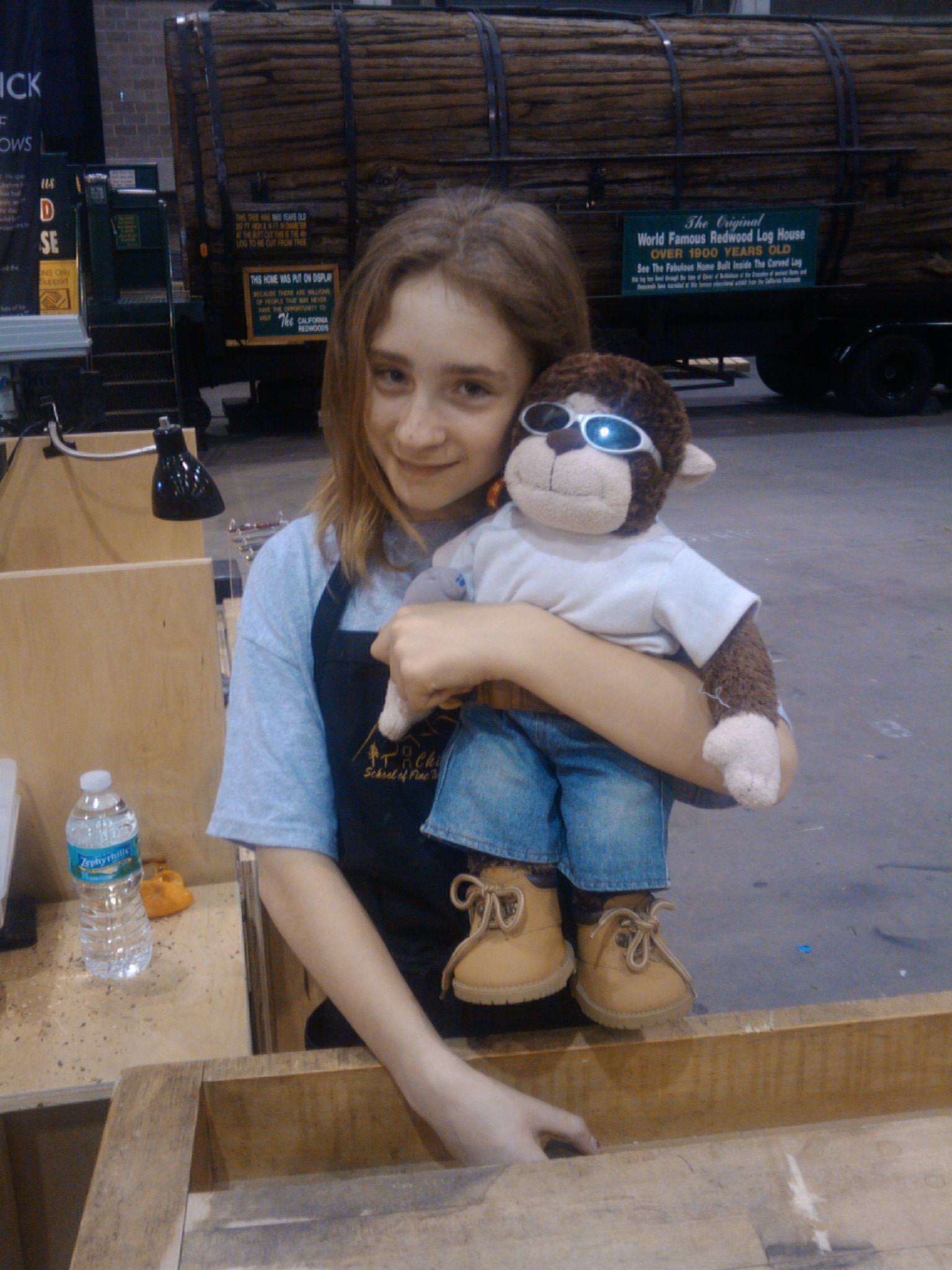
Finally, I have to put a shout out for two more of the Chidwick family – Sherry, the ever patient wife, mom and marketing/publicity maven and my new best friend Ellie. This girl is a dynamo. She runs a lunch delivery business for all of the exhibitors at the show – and business is good.  Plus, with a face like that , you can bet the tips are flowing. She makes a kickin’ ham and cheese sandwich.

For some reason, Sherry asked Tom to come out and speak about blogging and social media. I hear that he did a decent job. Let’s see if he managed to work the video camera properly…

Many thanks also go out to Joe Strong and the rest of the crew with the Woodworking Show. Friendly, accommodating folks who want to bring the best to woodworkers across the country. I have to tip my hat to them.

Definitely more to come as we wrap up the show.


The results are in…

This past Monday, our county’s art program held its award reception at the PCC-TV studios here in downtown Clearwater. I went to the reception, anxious but confident that Centered and Position of Strength had looked their best and were going to wow the judges.

As in the previous four years, the air crackled with excitement – not only because the contest was about to be judged, but this was the first opportunity for the artists to meet and greet. After looking at each other’s work for the past week, it was great to put faces with names and art pieces.

The National Arts Program’s executive director was also on hand for the ceremony, which proved to be a great honor.

Finally, the names were announced. Here are the results for the adult professional category:

Honorable Mention: “Beyond Petroleum” by Josh Lynch

Third Place: “The Chalk Artist” by Robert Waters
Second Place: “Docked” by Constance Myers

First Place: “The Boyfriend” by Kristina Hopper

As you can see, neither of the pieces placed in the competition. At first, I felt a little bit crushed. I thought these were two of the best pieces I had submitted for judging, and I had yet to walk away from one of these contests without a ribbon.

But, then I quickly realized two things– first, after finishing in the money for the first four years, I think I’ve done pretty darned well. It’s great that this year’s judges saw the work and weighed in on what they liked.

Secondly, and I believe most importantly, I think it’s time to step my game up a little bit. It’s been very comfortable for me to enter pieces into the contest here with the county every year, and I’ve felt like the Big Man on Campus among my peers. But, the time has come to start moving in a bigger direction. That’s why I’m speaking with the Florida Craftsmen Gallery about these two pieces and the Fujiwhara Chest I built a few years ago to see about getting my work exhibited there.

In the meantime, I’m going to start thinking about next year’s entry. You might see me running Rocky Balboa style around the neighborhood, whipping myself into shape for my rematch with Apollo Creed. I’ve got to build something next year to knock the proverbial socks off the judges!

Inlay disaster averted

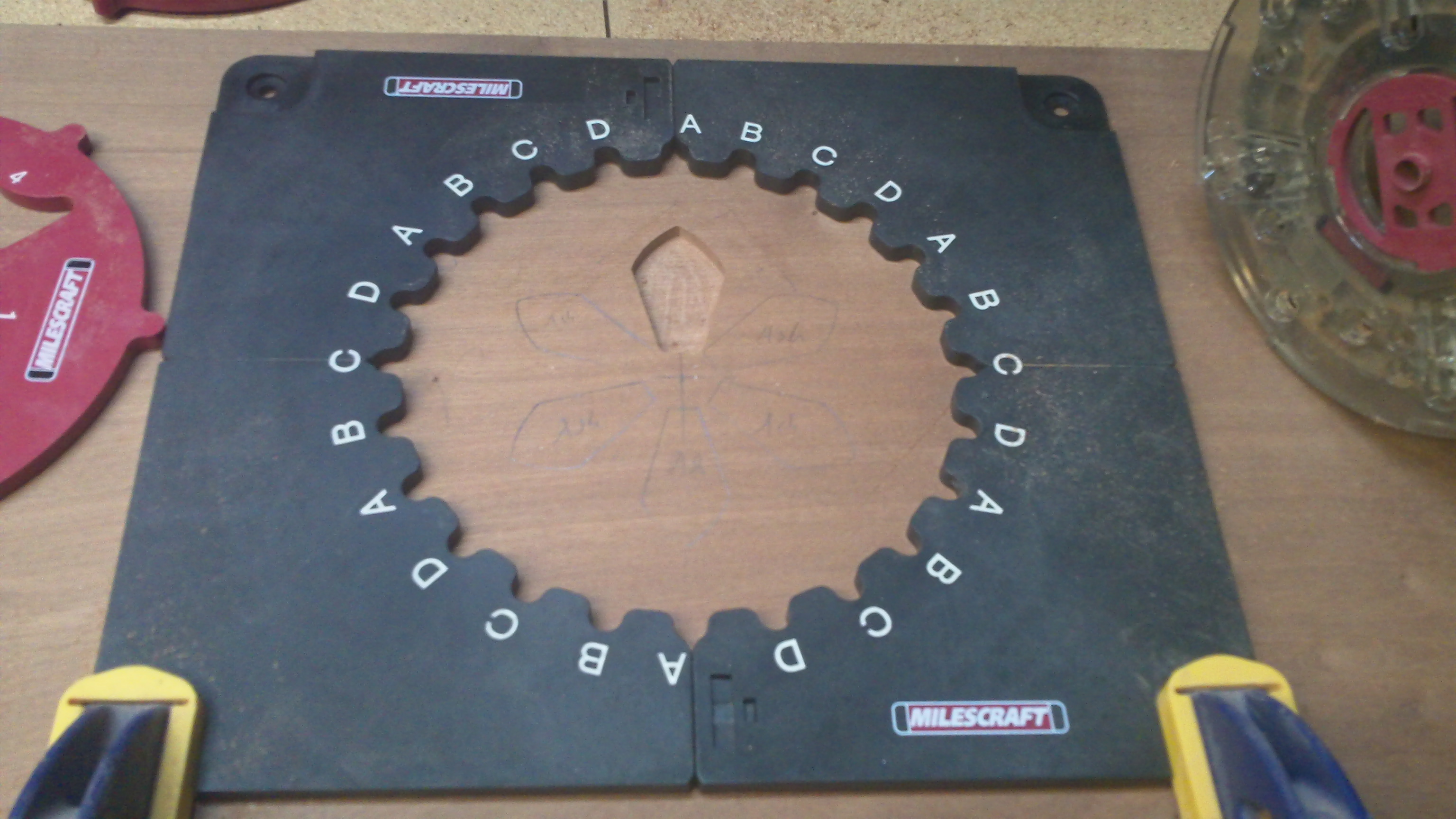
Before I start, I need to issue a full-on apology to the folks at Milescraft. If you don’t know who they are, they make some really nifty router accessories that can add versatility to your setup. Trammel guides, wide bases, rapid-change bushings. Really sweet stuff. You owe it to yourself to check them out.

I was working on a project at the shop when I ran into a situation – I had a project (I’ll show next Monday) that was beautiful, but lacked something special. Maybe an inlay. The only problem is that I have never made one before.

Within a few minutes of tweeting my dilemma, one of the reps from Milescraft offered to send me a copy of their inlay kit for use on the project.
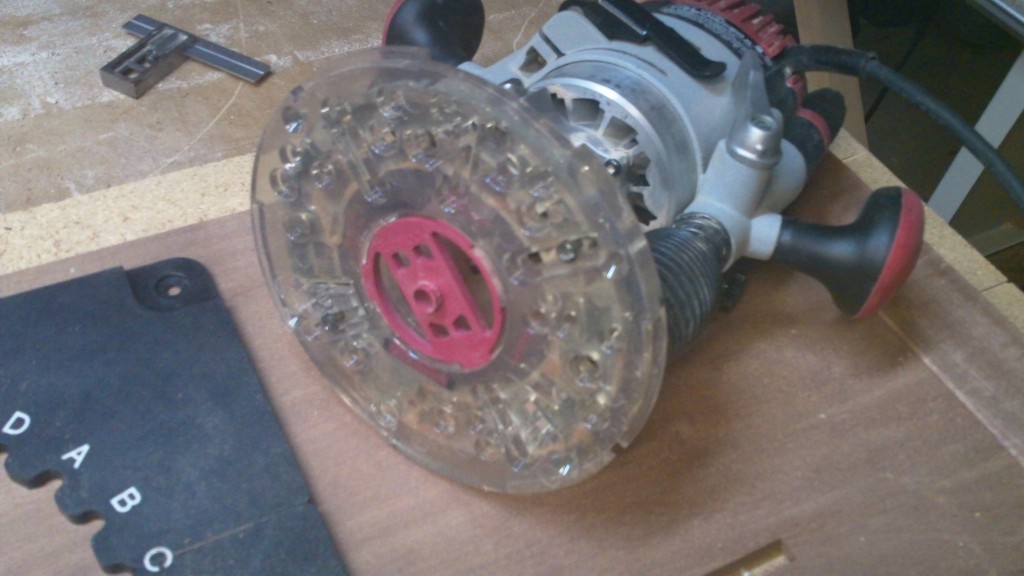
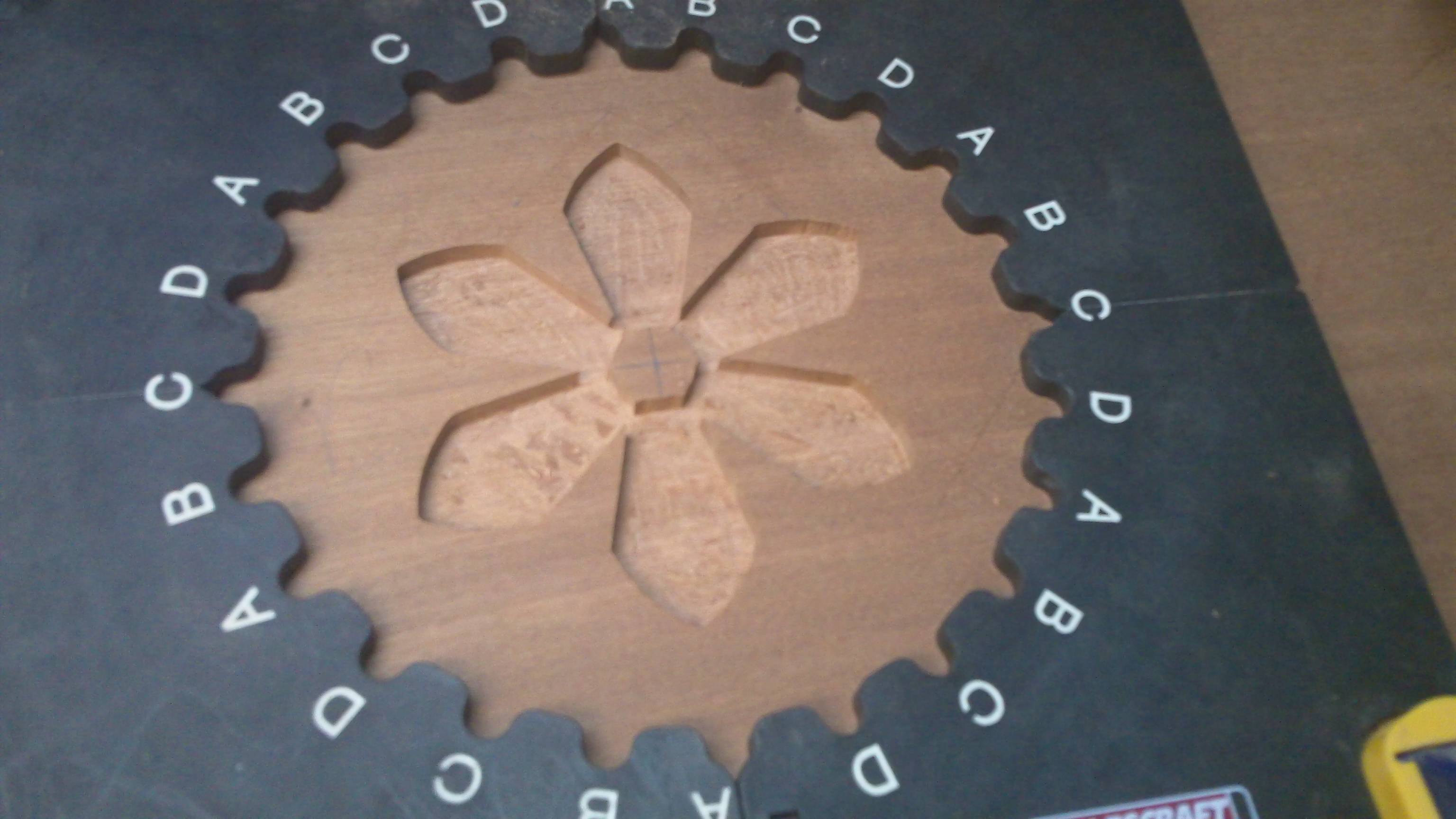
Now, if you have ever made an inlay in a piece using a router and a pattern, it’s a pretty straightforward process. Using a 1/8” router bit and a plunge router, you will cut the recess in your workpiece and then use the same equipment to create the inlay piece from some scrap. The key is to use two different sized bushings on the router – a larger one that pushes the bit further inside the pattern when cutting the recess, and a smaller one that allows the bit further outside. The difference between the two distances is very precise, and it allows the inlay piece to lay inside the recess tightly.

Now, the old expression is that if you practice on scrap, you are practicing on your project. To prevent this, I dutifully found a piece of milled poplar and cut a recess in it. I changed the bushing from large to small, then, I took a piece of scrap and cut the matching inlay into it… they fit very well. So far, so good.

So, I moved to make the cut on my work piece. I set up the pattern jig – an indexible insert that allows for precision placement and rotation for making repetitive cuts. I centered the jig, used the piece I wanted to fill the insert to gauge how deeply to cut, and set to work.
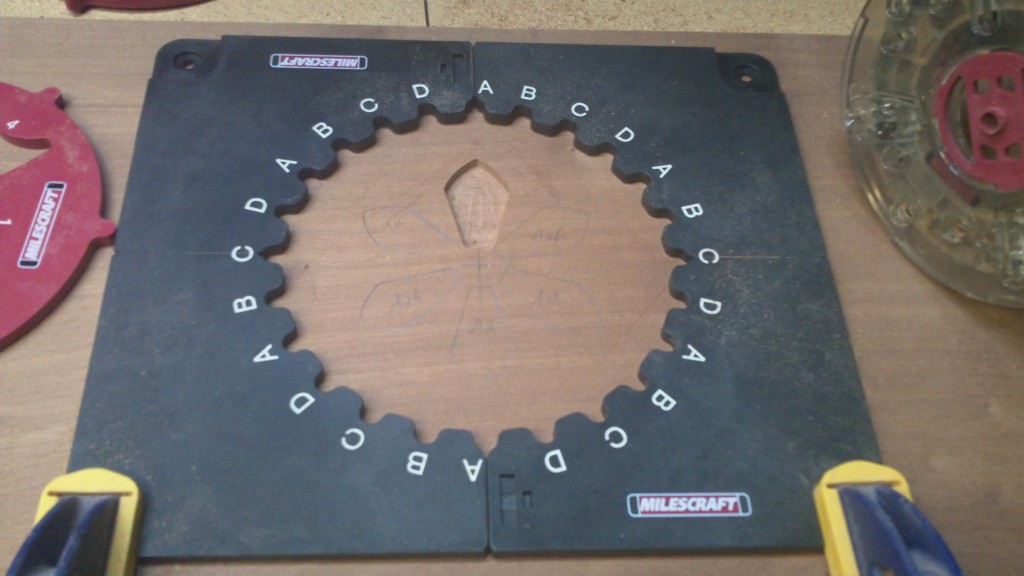
The cutting with a small bit is very smooth, and before long, I had the first cavity routed out. This was going to be a piece of cake.

As I set the router down, a sudden feeling of dread overcame me. Did I remember to change to the large bushing after I cut the sample?

A quick look at the router baseplate told me all I needed to know. Nope.
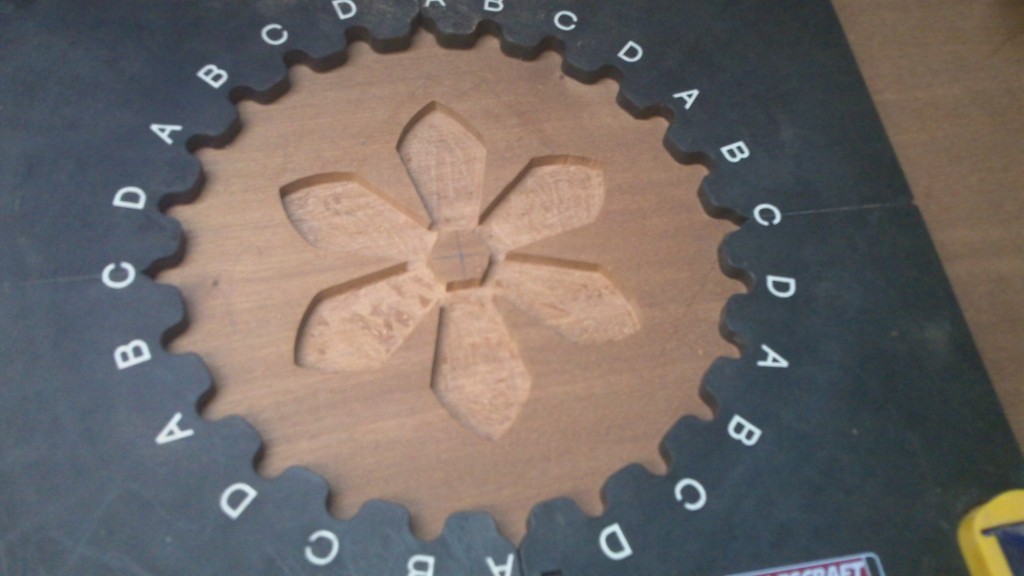
So, now I was stuck with an oversized recess that couldn’t be matched. TOTAL bummer. Thoughts of throwing the entire piece away entered my mind. I had to come up with a solution – and fast!

That’s when I remembered a trick someone had told me years ago – colored epoxy. I grabbed my car keys and headed to the nearest home improvement center.

Epoxy, for those who don’t know, is a two part resin and hardener that glues like nobody’s business. It’s waterproof and has the ability to fill cracks, cavities and other imperfections in wood. In fact, many woodworkers who enjoy working with mesquite swear by it. At the local home improvement center, I found the largest containers of resin and hardener I could find and opted for the 60-minute set version to allow enough time to do what I had to.
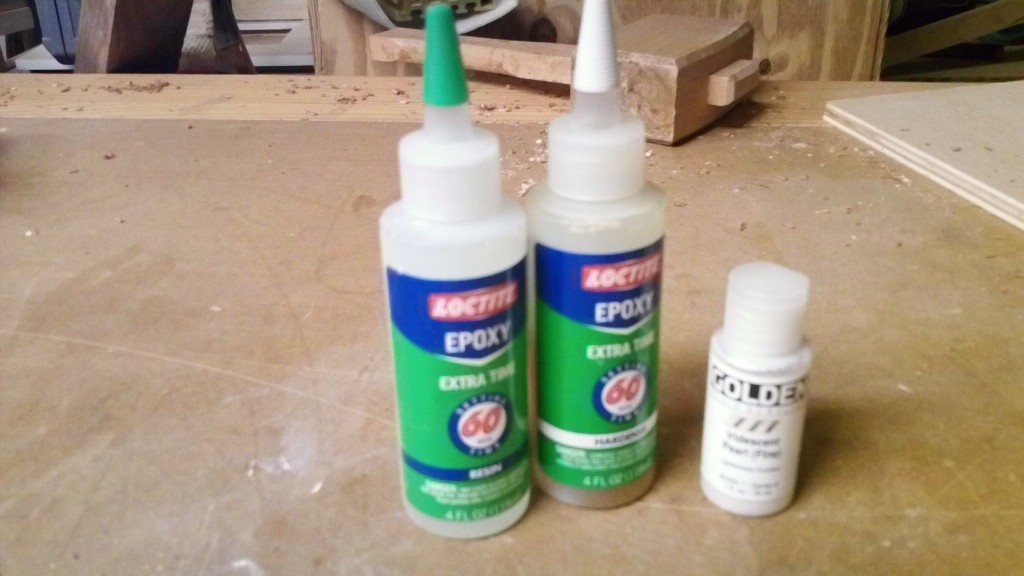
But, how would I color it? Fortunately, my smart phone was able to get reception in the store, and I was able to search for coloring epoxy. Apparently, artist acrylic colors do a decent job. I paid for the epoxy and dashed over to the local Michael’s craft store. There, in the painting section, was a small bottle of pearlescent white paint. Sold.
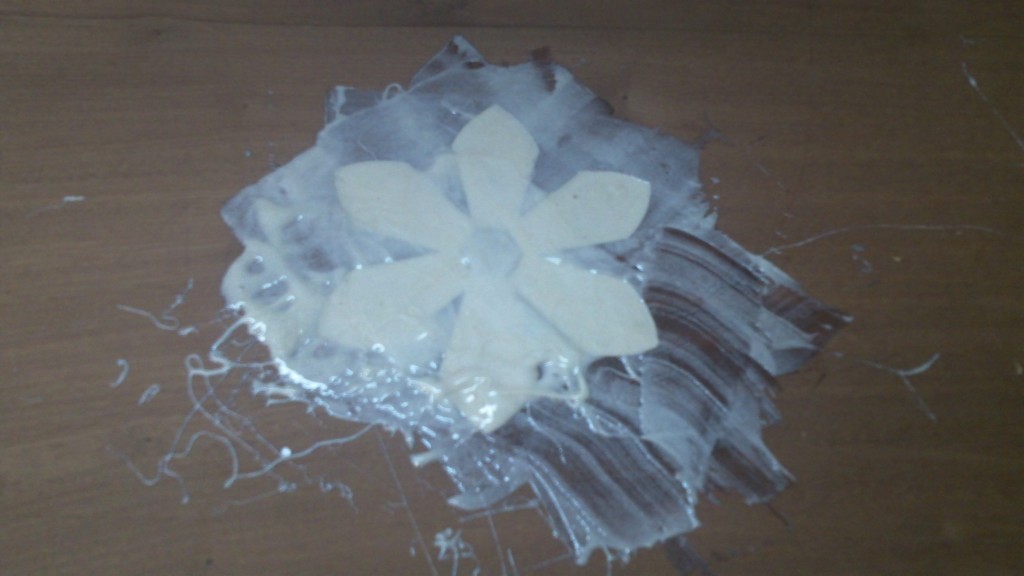
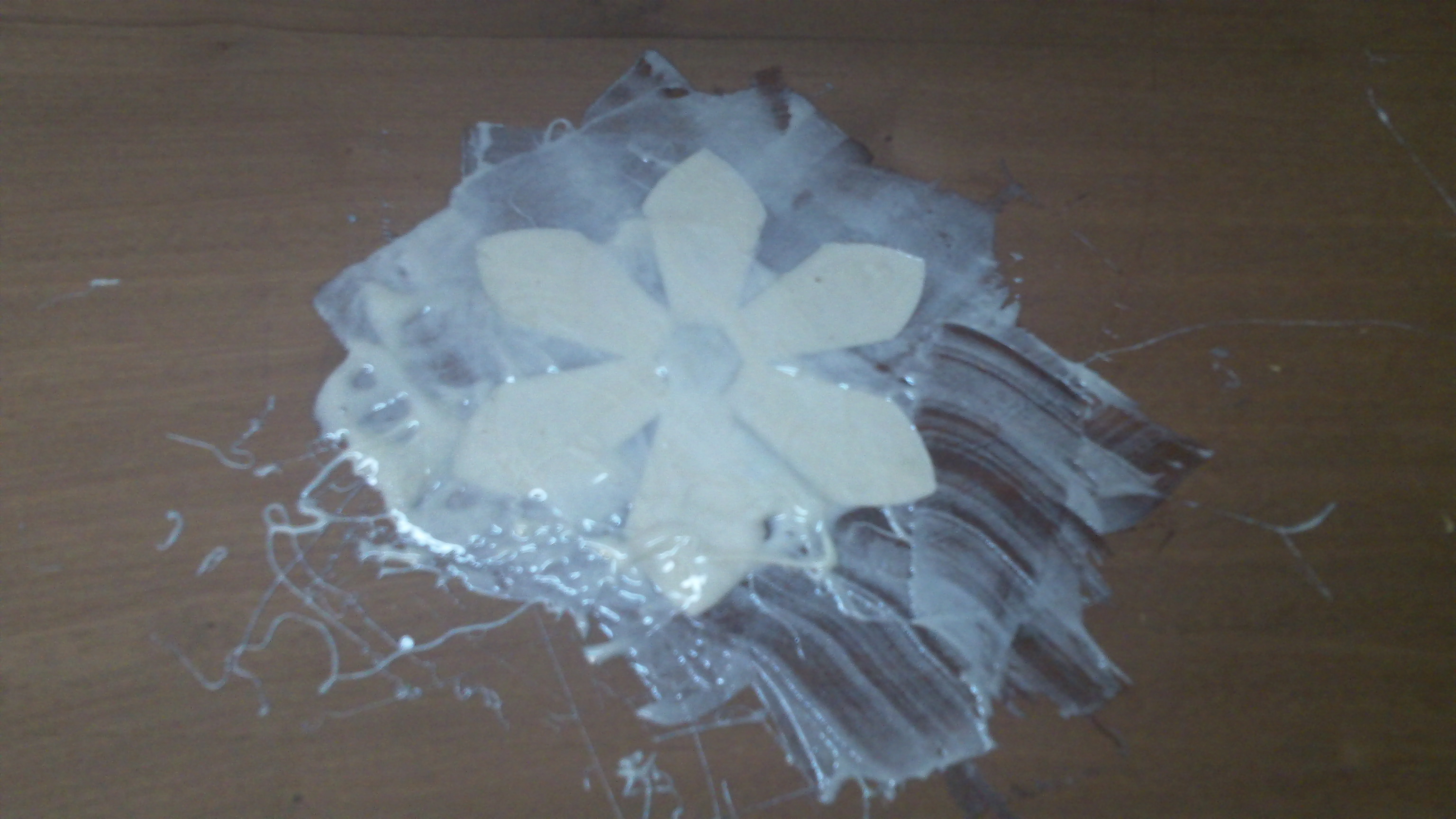
Back at home, I mixed the epoxy per the instructions and added about 10% of the paint to the mix. It immediately took on a richly colored hue. I poured the mix into the recess and smoothed it out with a scrap of wood. Sure, it looked like a hot mess of cake frosting, but my plan was to address this with the next step.

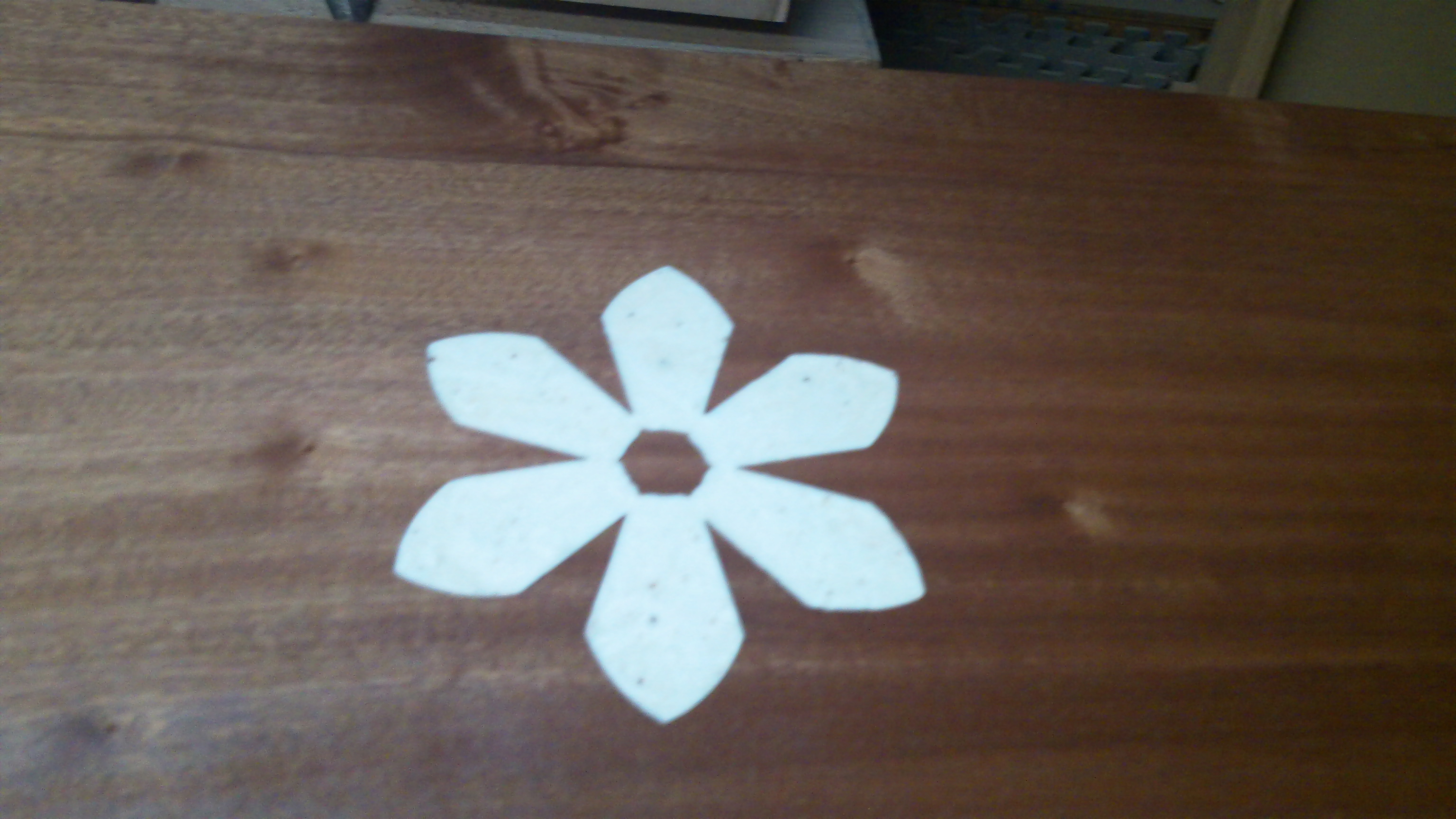
I let it sit overnight so it would harden, then started sanding with 100 grit paper on my random orbit sander. It took a little bit of time, but I could see it was removing the hardened epoxy. Once I began to see the clear outline of the inlay, it was nothing but good. Some more sanding, and soon, I had the piece ground down flush and it started to burnish up nicely. I changed sanding grits to 150 and then 220. The epoxy in the inlay was actually starting to glow with the finer scratch pattern.
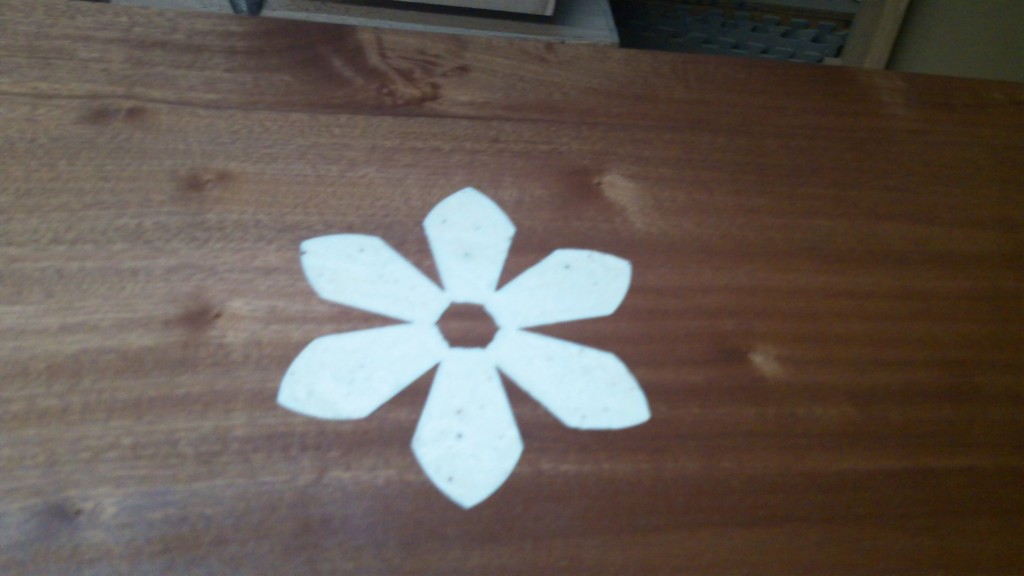
When it came time to finish, I laid on a coat of 1# dewaxed shellac, then sanded it to 320 grit by hand to get the surface smooth. Two coats of Watco Danish oil later, and the project was done.

When you look at the inlay, you can see the color variations showing how the epoxy was poured. It’s not a monolithic looking surface by any stretch of the imagination. In fact, several people have asked if it is some kind of ivory or mother-of-pearl inlay.

You have got to love a trick like this – proving that – at least in my case – creative problem solving is a skill that helps improve woodworking.


Dear Band Saw,

I know this is the time I usually write the Link of the Week, but, after the way I have treated you, I needed to write this letter of apology.

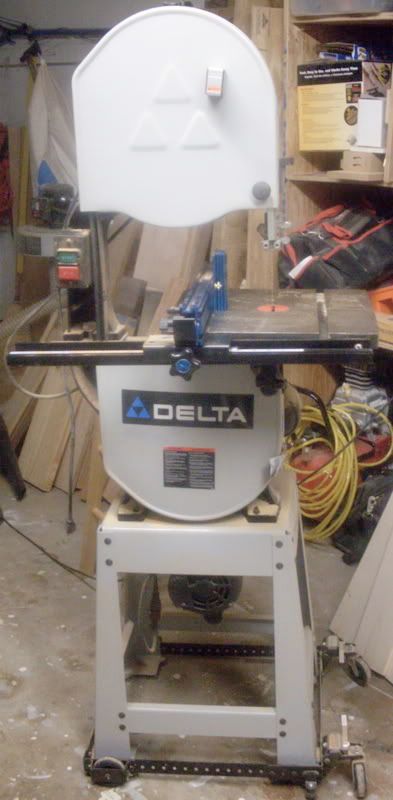
Do you remember the day we first met? It seems like yesterday. I was in that local Lowe’s, money in hand, looking all over the store for someone who could help me pick you up. I had read a lot about you, and thought that you and I would make a great pair. It took me a while, but I eventually got some help, and the sales associate told me to wait where I was.

Oh, how we laughed together when the sales guy brought out the forklift to carry you to our minivan.  It’s a good thing that I remembered to take out the back seat, because you were so big, and you barely fit into back cargo area.

And, when I got you home, and none of the neighbors were around to help me cart you out of the van.  Don’t you remember how I nearly broke my back attempting to haul you from the van to the shop?  How I struggled single handedly to haul your top half on top of your bottom section and bolted you together?

Oh the promise of those early days!  I was going to learn how to resaw, to make band sawn boxes, to cut thin strips for bending around forms…

But, it never felt right. You would struggle.  You would stall. You would drift wildly.

I did everything I could to get you to work better. New highly-recommended blades. Books about how to properly tune you. Cool blocks. A rolling base.A Kreg precision band saw fence.  The sky was the limit as far as I was concerned – you were MY band saw, and nothing was too good for you.

Then it happened. I went on vacation and used another saw. That band saw worked wonderfully. Oh, how it cut! Like the proverbial hot knife through butter.  Everyone asked me when I was going to get my own band saw, and I didn’t have the heart to tell them about you and your pitiful performance.

After that, things were never the same between us. I said bad things about you on this blog and in front of the other power tools in the shop. Do you remember how I would growl at you when I had to resaw even the smallest board?  “Why don’t you work like the other band saws?”

I know it must have hurt your feelings when I showed  you the catalogs with other band saws in them. The Grizzlys. The Lagunas. The Generals. The Rikons. When I told shop visitors that I couldn’t wait to get a ‘real’ band saw that would actually do some work. When I turned to other tools to do the jobs that you should have been able to handle with little or no effort.

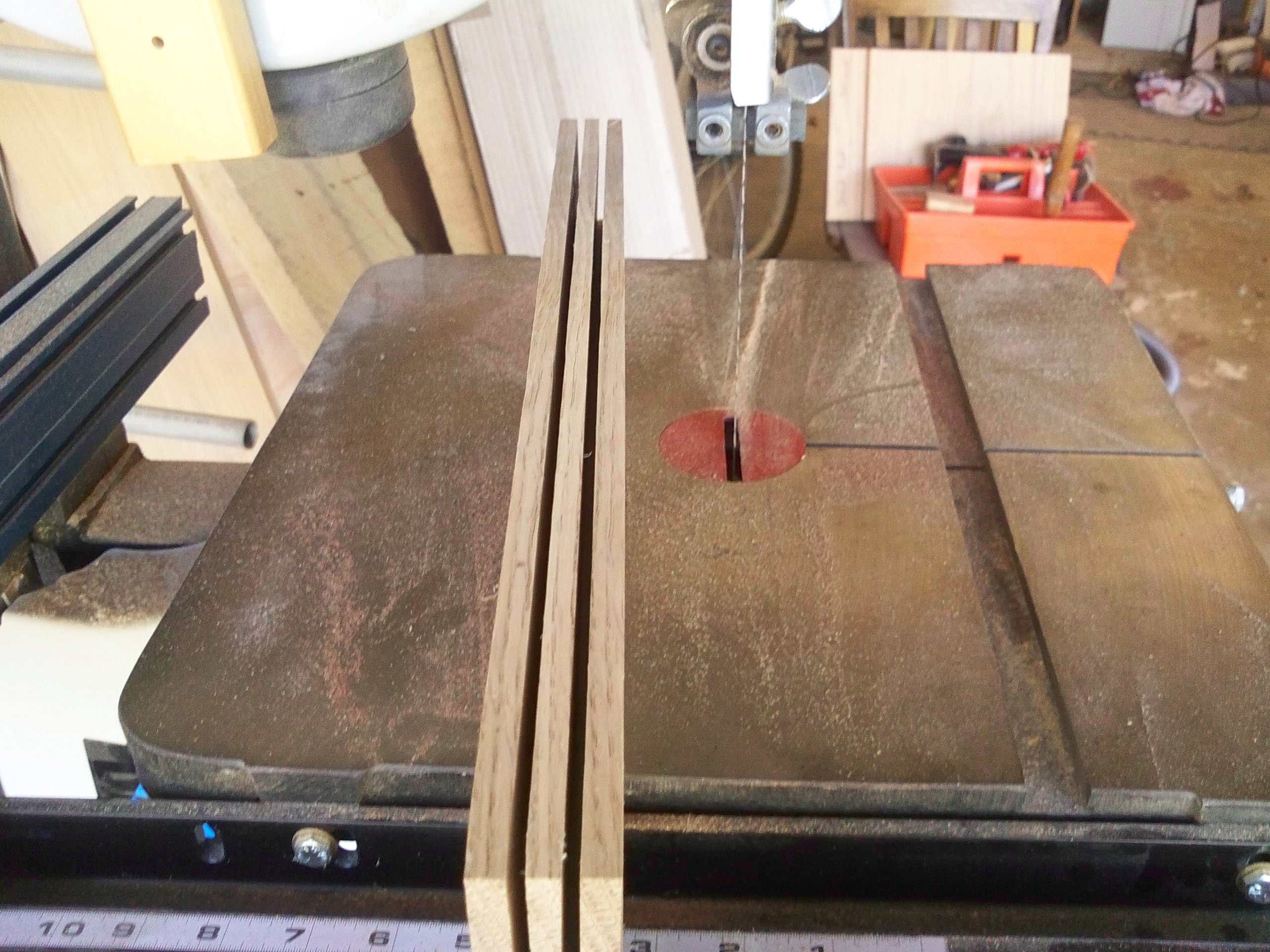
But, after all these years, all of these abuses, all of these libels and slanders, will you ever find it in your heart to forgive me for discovering last night that I never properly tensioned your drive belt the right way when I first set you up, and discovering that three turns of a 1/2″ bolt would have spared us all of this trauma in the first place?

Yours truly,

Tom

P.S. Iggy can’t stop laughing. Seriously. I think he may blow out a lung.

A close shave

No, I didn’t have a near accident in the shop.  And, no, this isn’t technically about sharp tools you find in a workshop.

Today’s post is instead about my personal grooming habits.  Disgusting, isn’t it?

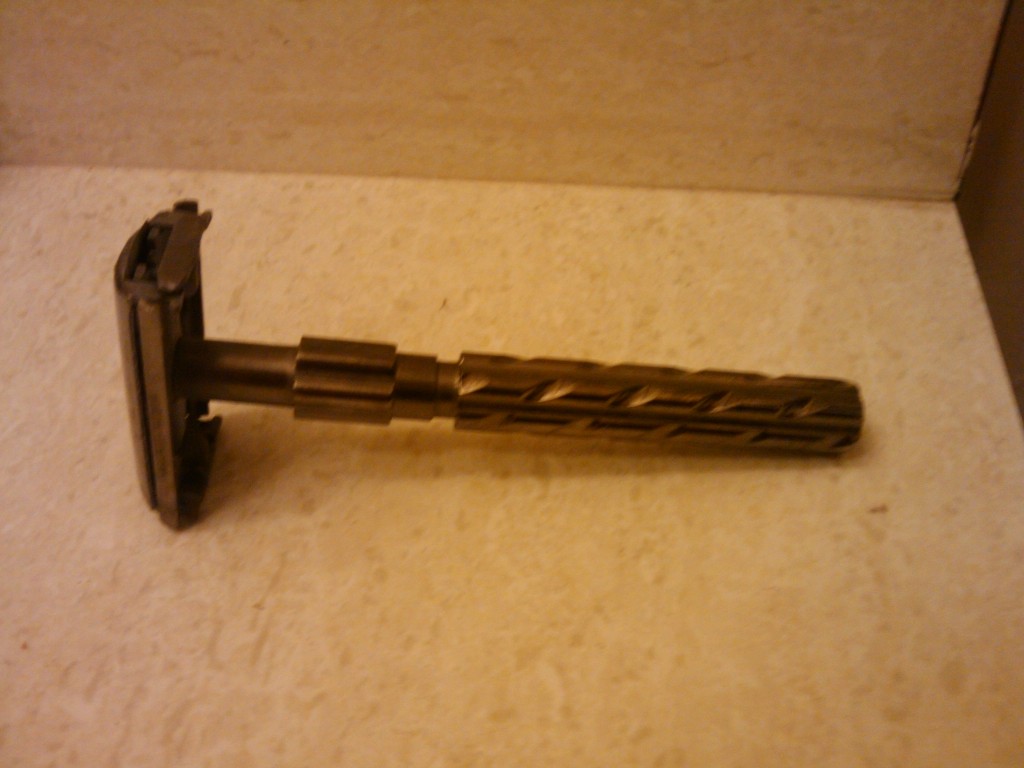
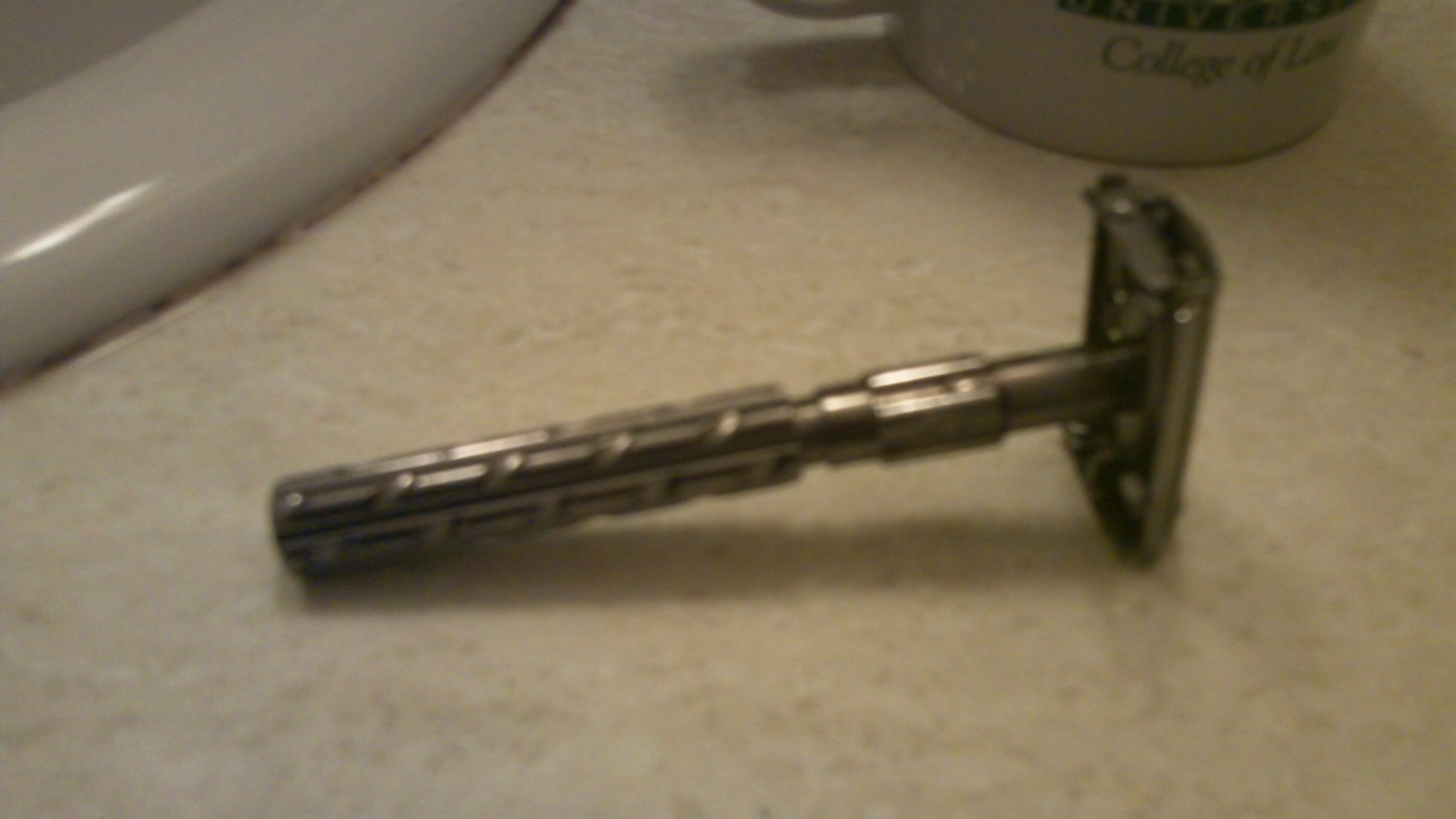
Rather than bore you with my choice of toothbrush, deodorant or foot powder, I’ll tell you about my new razor for shaving. After 26 years of searching for the perfect cartridge shaving ‘system’, I’ve gone back in time to start using a double edged safety razor.  A Parker 22R twist to open model with Wilkinson Sword stainless blades.

Maybe it was my quest for a closer shave with less razor irritation. Maybe it’s a nostalgic bent to use the same kind of razor my grandfather used before he went out to deliver milk from his dairy in Fairview, New Jersey.

Actually, it was because I can get a mountain of high-quality blades for dirt cheap when compared to those 3, 5 or 7 blade cartridges.

Before I took the plunge, I did my research. There are plenty of articles that wax poetically about the advantages of using this kind of razor. There are many how-to sites that tell you the best way to use the razor. And, I discovered a woodworking connection in how razors like this were made in the first place.

Flash back to Paris, France in 1762.  Back in the day, the only way to get a close shave was to use a straight razor.  These consisted of a handle and a pivoting blade of the finest and sharpest ground steel you could get. While capable of giving an unbelievably close shave, they are also quite capable of slicing off a chunk of ear during a moment of distraction.

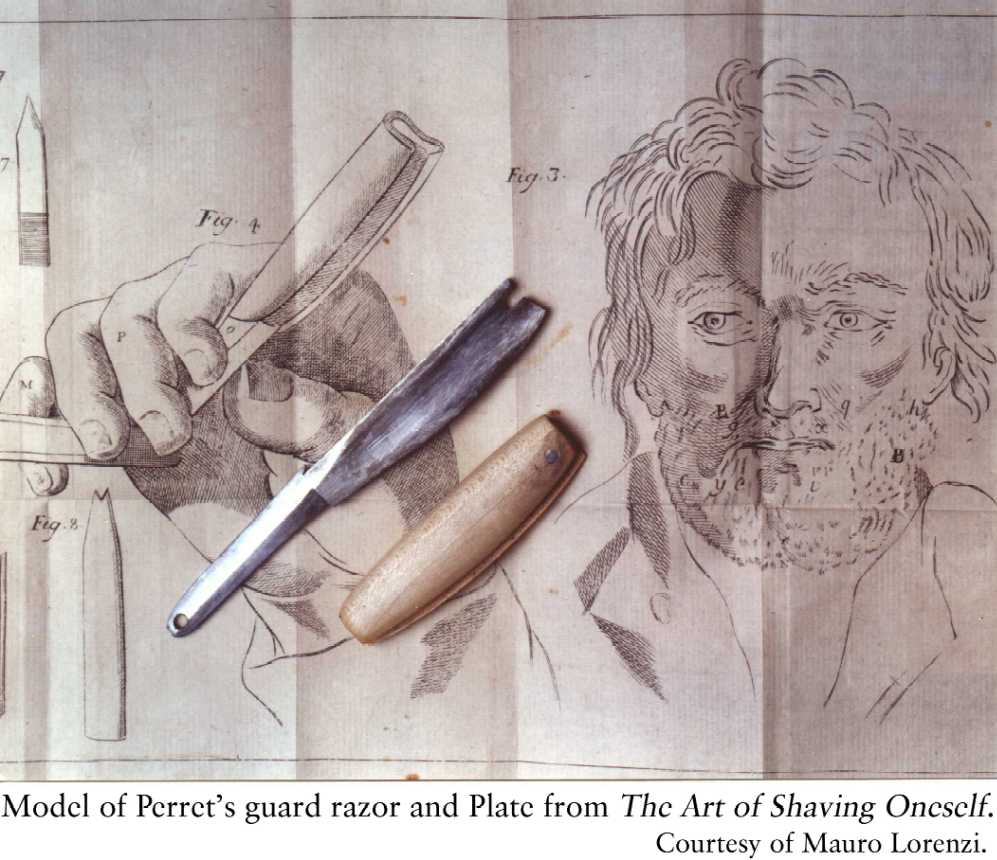
One of the folks making these straight razors was Jean-Jacques Perret, a cutlery maker. While thinking of how he could improve the razor, he had a moment of inspiration after watching the workings of – of all things – a carpenter’s plane. (Interestingly, he was a contemporary of famous carpenter and bench designer André Jacob Roubo.)

In 1769, Perret wrote his book – which sounds like a totally awesome read – Pogonotomy or the Art of Learning to Shave Oneself.  In this riveting master work, Perret described a safety device he had worked on that would work with an existing straight razor. It was a wooden sleeve that wrapped around the blade, exposing only a small amount of surgically sharp edge to the skin, making any slip a little less painful. He called this device a rasoir à rabot, or a plane for the beard.

While Perret’s design didn’t take off, later developments by the Kampfe brothers and – more famously – by King Gillette, brought us disposable blades that didn’t need to be honed or stropped. Gillette, who won the contract to provide razors for soldiers being deployed overseas during World War I, was able to create a market of users when these young men returned from the trenches.

The safety razor reigned supreme until 1965, when Gilette introduced the Techmatic cartridge based razor. With effective promotion and marketing, the race to build the perfect cartridge razor was born. And, I bought into it hook, line and sinker. I had the daily razor irritation – and the lighter wallet – to prove it.

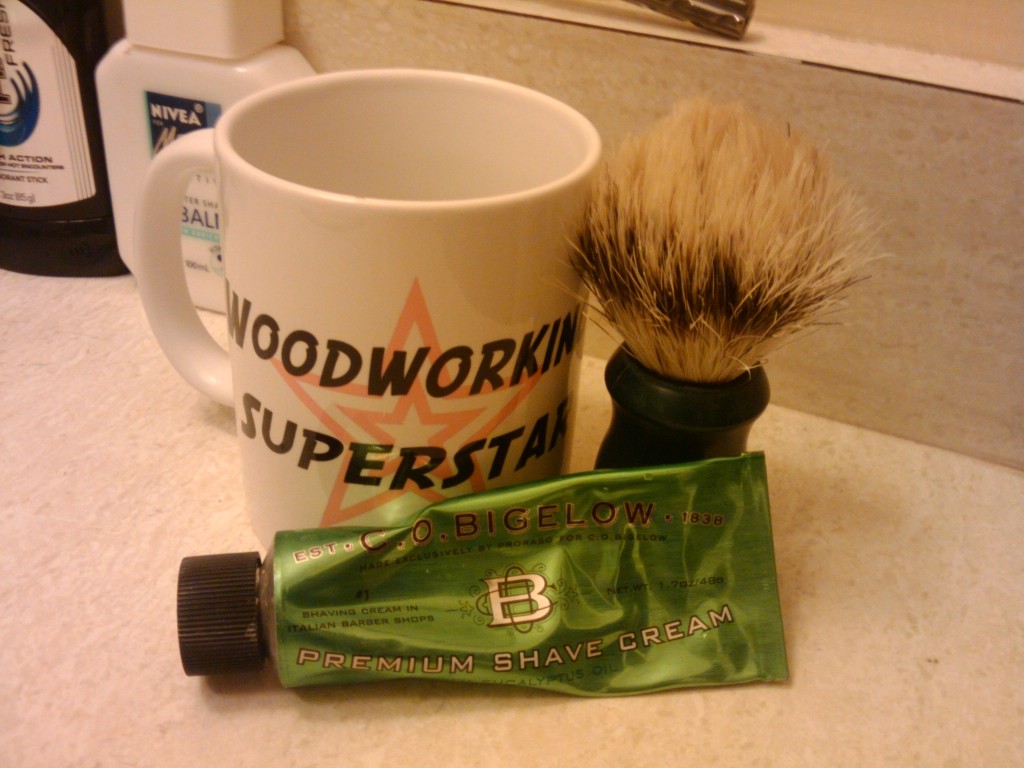
Now, not only have I changed razors, I have also gone to a tube-based shaving cream that I whip into a lather with a shaving brush. The stuff is luxurious, and a $10 tube lasts about a month and a half. It’s also given me an excuse to break out the Woodworking Superstar mug my kids had gotten me for a Father’s Day a few years back.

I have to allow a few more minutes for shaving in the morning, but that is offset by the clean results and the total lack of irritation afterward. Plus, it feels kinda cool to shave the way General Eisenhower did while at his European headquarters or how John Glenn shaved the morning he launched into space on Friendship 7.

In case you are curious about how to shave with a safety razor, here’s a great article from The Today Show about how the process works with some awesome tips.

Urban search and rescue

The Tampa Bay area where I call home is the 19th largest metropolitan statistical area in the United States. Its subtropical environment allows for a wide and diverse population of plant and animal species to call the area home. And, since the last time the area took a direct landfalling hurricane was 1921, the plants – especially the trees –  in the area have had a long time to grow and mature.

And, when it’s time for those old trees to be removed, their usual fate is to be ground up and used as mulch in some flower bed.

But, that’s not always the case. Enter Viable Lumber. This organization, led by local woodworker Pete Richardson, is working to change the way urban trees are looked at and give them a far different fate.

It all started at Pete’s home, when an overhanging limb from a live oak – known half-jokingly as the ‘limb of death’ – had to be taken down.  The size of that limb was impressive, and, when the arborist told Pete that it was going to ultimately end up as mulch, Pete told him to leave it be. With a chainsaw mill, Pete was able to slab that massive limb and put the wood to use.

Today, Pete and a cadre of dedicated volunteers are working as a cooperative locating trees that are being cut down and rescuing the gorgeous wood contained within.

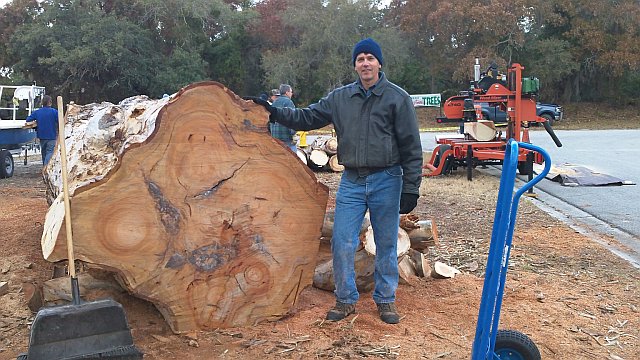
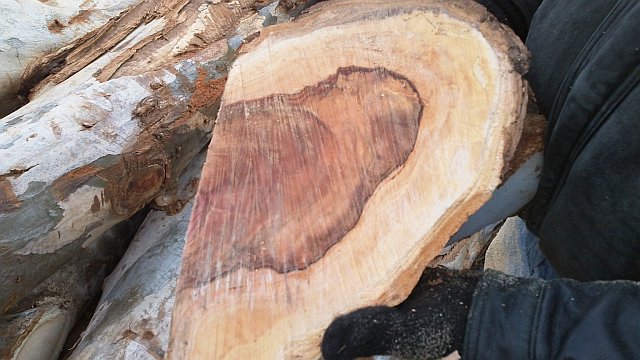
On Monday, he invited me to join the crew at a home in Tarpon Springs as they cut up a huge red eucalyptus growing in the yard.  When I pulled up, the crew was already hard at work with an enormous Wood Mizer band mill slicing the logs into huge chunks. The crew on hand represented a wide cross section of people from the woodworking field. Cabinetmakers, wood turners, and woodworkers of all kinds were represented, and everyone was eagerly waiting to see just how colorful the wood was going to be.

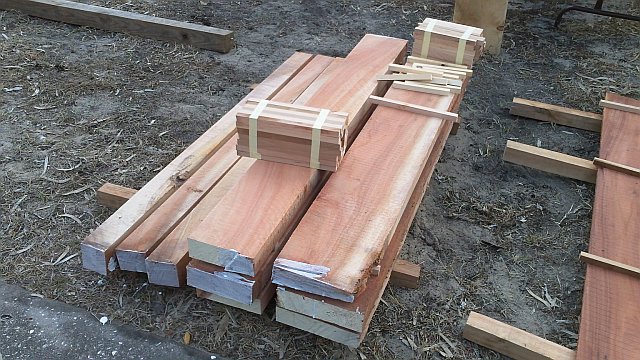
Steve Parker, the owner of the Wood Mizer mill, directed the action. The boards were hustled off to be stacked and their ends sealed with Anchor Seal to prevent checking.  Some of the pieces were being sawn for some specific uses. For instance, one of the volunteers turns special trophy baseball bats out of exotic woods for college and professional baseball players. There was a stack of the wood sawn to the specific dimensions needed for the task.

Sure, when dealing with urban lumber there’s always the chance that the saw will hit a nail, bolt or other metal object inside the board, ruining the blade.  That eventuality is planned for in advance,with the crew figuring they will ruin at least one or two blades per tree. “We have the spares on hand. If we go through the tree and don’t break a blade – that’s a bonus!”

Even the scrap pile wasn’t going to go for waste, as many of the volunteers were coveting the choice pieces for small turnings, platters and other small but special items. “After we cut up a tree, there’s rarely anything left but the sawdust. Most of it is selected for small projects, and what doesn’t draw interest from woodworkers goes into fireplaces. There is little waste.”

Right now, Viable Lumber is testing the – err – viability of the model.  Pete is getting the word out to local arborists, city maintenance crews and the power company to let them know about the service they provide. Most of the trees are hauled to a location where they can be cut at a more leisurely pace, larger trees will need to be slabbed on site. “Another thing we need to think about is our inventory. We’ve held off on marketing for the past few years in order to build an inventory of boards. Obviously, if someone came in and wanted to buy a significant supply of boards to mill flooring, we’d like to give them a few options and have enough to satisfy their order.”

Knowing this isn’t the only urban forestry and lumber operation in the country, Pete has been in touch with similar companies and organizations around the country. “I have people working for me as wood mules… they take some of our stuff to they are visiting, and bring back stuff when they return.” Pete smiled. “That would be another good story for your blog!”

Maybe it will…