All posts by Tom

I'm the guy who writes the blog...

Link of the week

Gardening Know How’s composting sawdust page

Ahh, spring is in the air.  That means it’s time to put the snow shovels away and get outdoors. (Unless, of course, you live in the southern hemisphere).

While we love woodworking, some of us also have a passion for getting into gardens to grow bushels of fruits and veggies or bunches of glorious flowers. If that’s the case, there’s a great way to make your shop waste serve your garden.

Gardening How To offers numerous tips on gardening know-how, and this particular page tells readers about the ins and outs of composting sawdust.  Here, you will find out how much sawdust to add to your cooking compost pile, what kinds of things you have to add to help the compost cook and how to know when it’s ready for use in your garden.

Of course, it goes without saying that you shouldn’t use pressure treated or plywood sawdust in your pile, and walnut has natural plant killers in it.  Other than that, happy gardening.

###


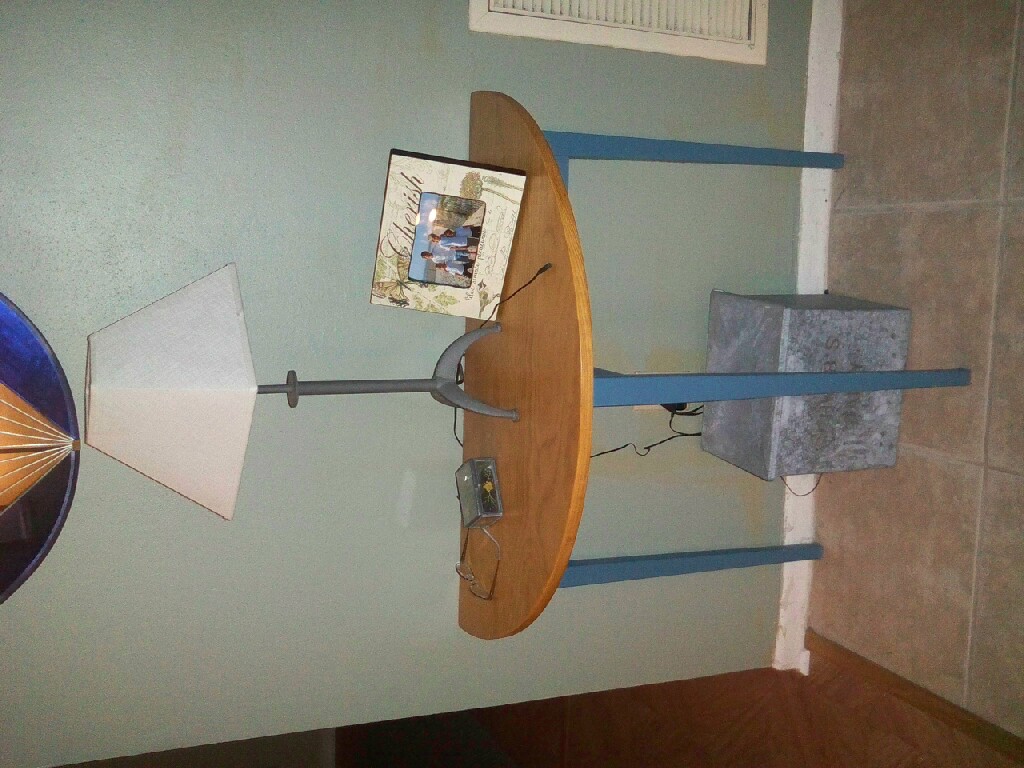
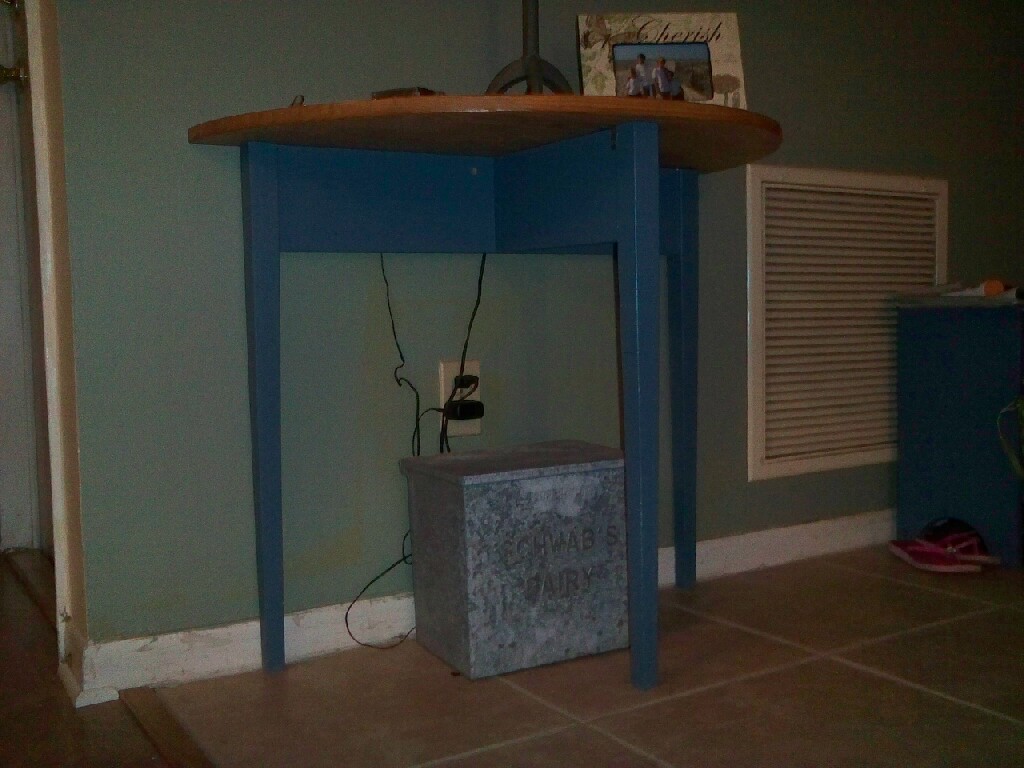
Stuff I’ve built: The half-round entry table

This was a sweet little project I built a long time ago – back in 2001 when I was just a few years into woodworking.

Back then, the only wood I could afford to use was pine, and there was one book at my library that dealt with building pine projects – Bill Hylton’s Country Pine: Furniture You can Build with the Table Saw and Router. It was a great book for a rookie woodworker to get his or her hands on. Hylton offers a great selection of projects to choose from, and many practical shop tips to make your build a success.

One of the projects caught my eye, and would be an excellent way to learn some new techniques. His half-round table would be a great addition to my entryway.

This project is actually pretty sophisticated.  The three legs stand28 inches tall, and are tapered.  The right and left legs are tapered on the side that faces the room and the inside, and the middle leg is tapered on both of the sides… a little more involved.

Rather than a curved front rail, this table has a straight back rail and a mid rail that connects the front leg to the middle of the back rail. While Hylton suggested using mortise and tenon joints to make the connections, I went with sliding dovetail joints to get more mechanical strength.  Knowing now just how strong a mortise and tenon joint is, I may have been able to save myself a little bit of trouble.  But, hey, the joint worked.

The table top is made with a jointed pine board that was cut out using a jigsaw.  I traced a radius from a nail with a string and pencil.  Once I cut it out, I sanded the heck out of the edge to get it smooth.

Hylton’s project had a painted top and a clear finished base, but I decided to flip the script.  The top was sanded down to 220 grit sandpaper, and I put on three coats of brush on poly.  Surprisingly, it was one of the few projects I used that finish on that came out looking good.

The base was primed and painted with an acrylic latex paint in a “Wedgewood blue” type color.

Right now, the table holds a lamp, some pictures and my wife’s cell phone when she charges it.  This way, she has to wake up in the morning and get out of bed to silence her alarm instead of just hitting the snooze button.  It’s also a great place to stash one of the milk boxes that belonged to my grandfather’s dairy.

While I’m using fancier wood now, I still look at that old pine project and think back to the feeling of accomplishment I had when I put the finishing touches on it.


Circling for the game

I work with about two dozen very engaged and friendly folks at my office.  They are great colleagues and friends I can rely on when the chips are down.

So, when one of my friends at work told me that she and her daughters were helping to put on a carnival to raise money to benefit cancer research and that they needed help making a bean bag toss (aka ‘Cornhole’ game), well, I knew I had to lend a hand.

Basically, they needed to cut a few holes in plywood to serve as a game board for players to toss bean bags through.  They want to paint the piece to make it look like a speaker, with a woofer, mid range and tweeter cones. They were able to get the home mega-center to cut a 2 foot by 4 foot piece of ply for the board, but they weren’t about to cut circles in it.

I knew that I had to do this job with a router and a jig to make perfectly smooth circles.  It was a piece of cake.

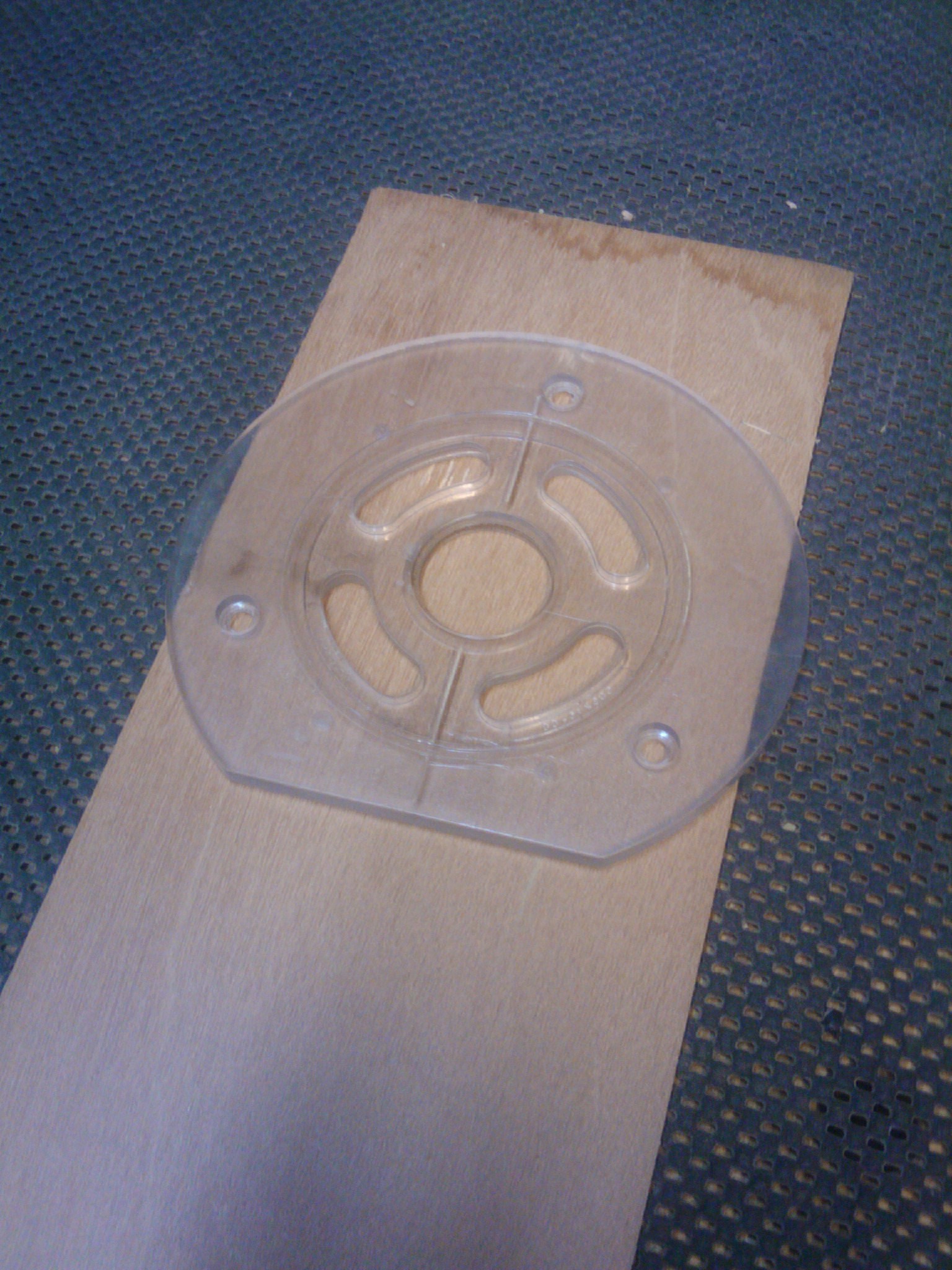
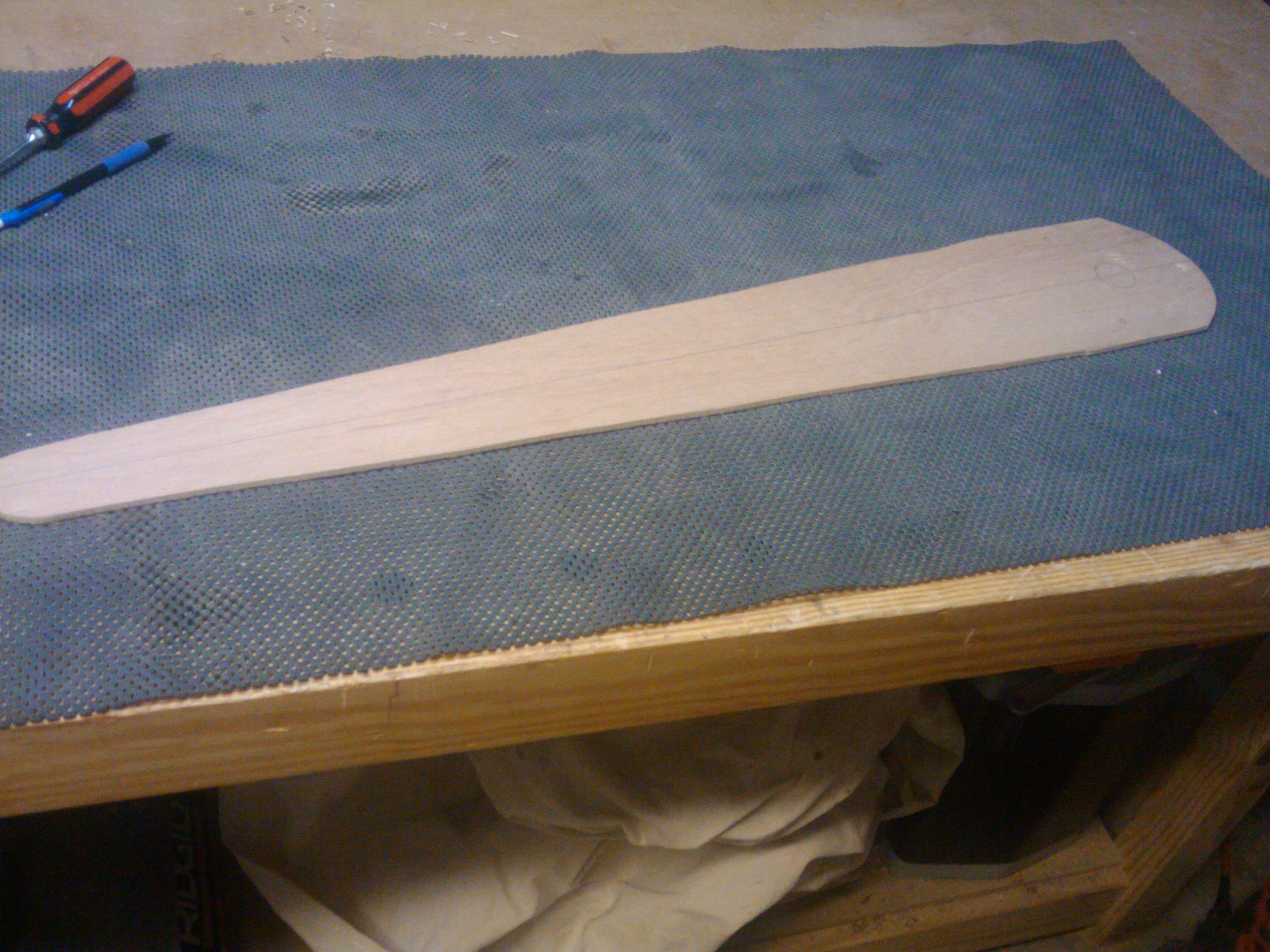
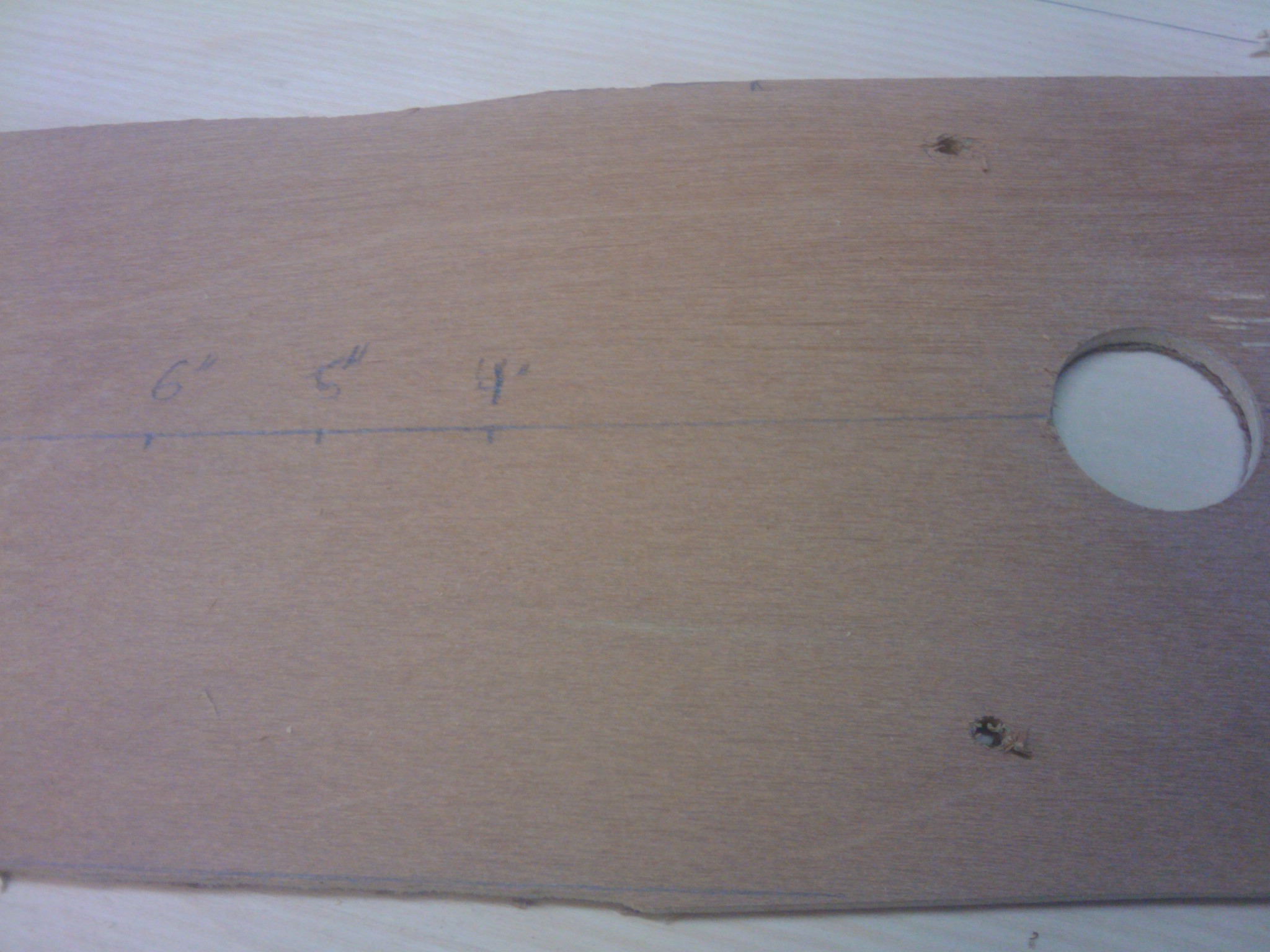
First thing I had to do was dig out a scrap of plywood from my scrap pile.  I found a piece of 1/4″ luan that was about two feet long and six inches wide. I took the baseplate off my DeWalt plunge router and used it as a template to mark out for the screw holes and the bit clearance hole.  I also scribed a line down the middle of the jig, so I could do some measuring later.
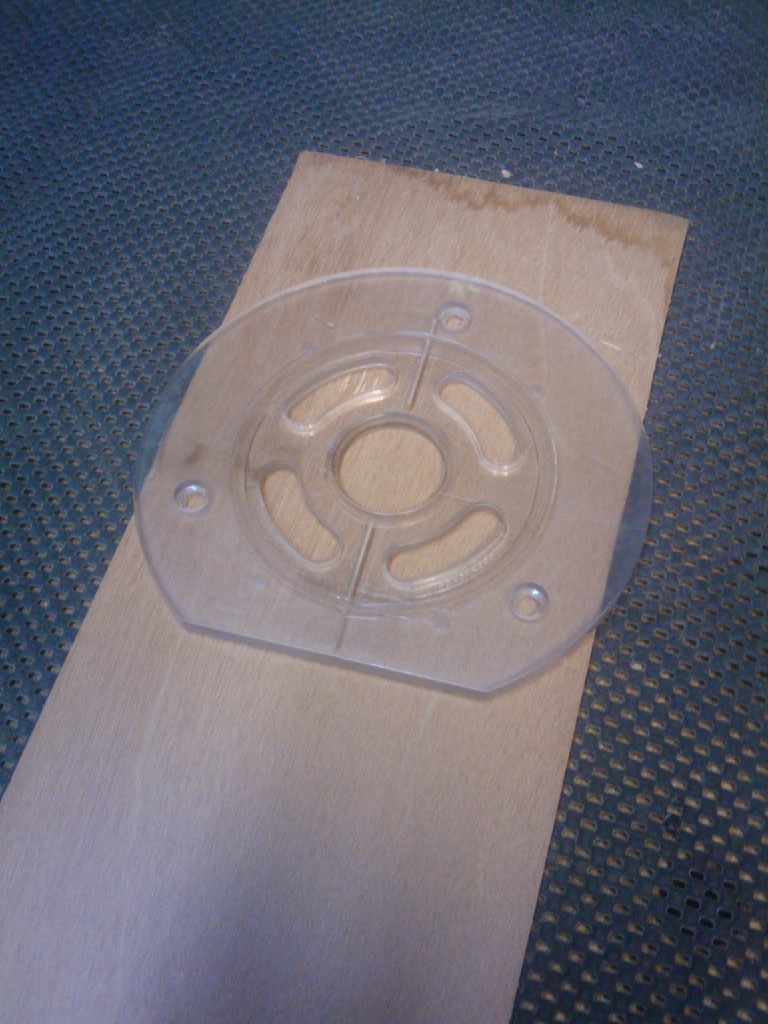
The next step was to cut the jig shape down a little bit to reduce the size. Was this step necessary?  Maybe not. But, it make the jig look really cool. Plus, it clipped the corners, so there was no way I was going to scratch myself.
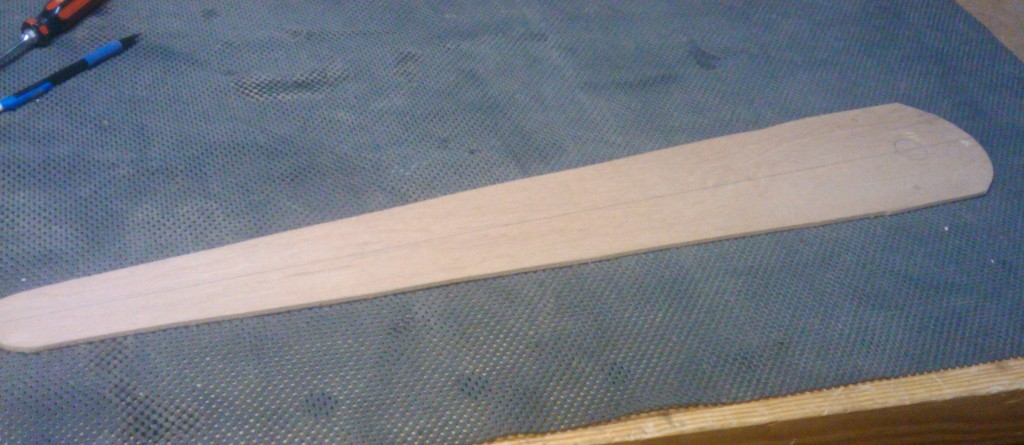
After drilling the holes for the baseplate and attaching it to the router, I started working on the piece of plywood. I had marked a center line along the length of the board and measured out for the diameters.  This is a very easy step… basically, I spaced out the centers for the holes I wanted to cut and measured up the radius on both sides of the center point, giving me a good idea of where everything would land, and that I had enough room to swing all three circles.
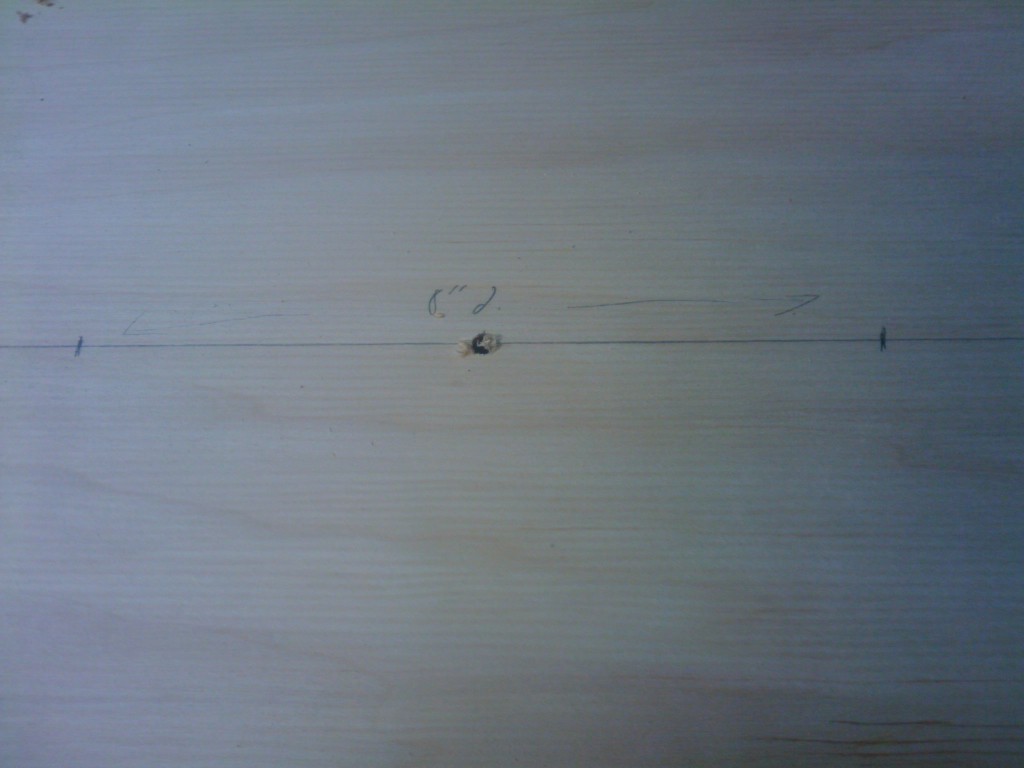
The next step was pretty easy as well.  I drilled the center point for each of the circles with a 1/4″ diameter bit.  I went through the plywood and slightly into the particleboard base I was routing on.  Again, because I was using a regular 1/4″ dowel, and I didn’t want to go into the bench top, I went very slightly into the backer board.  This way, the center wouldn’t shift once it was cut free from the board.
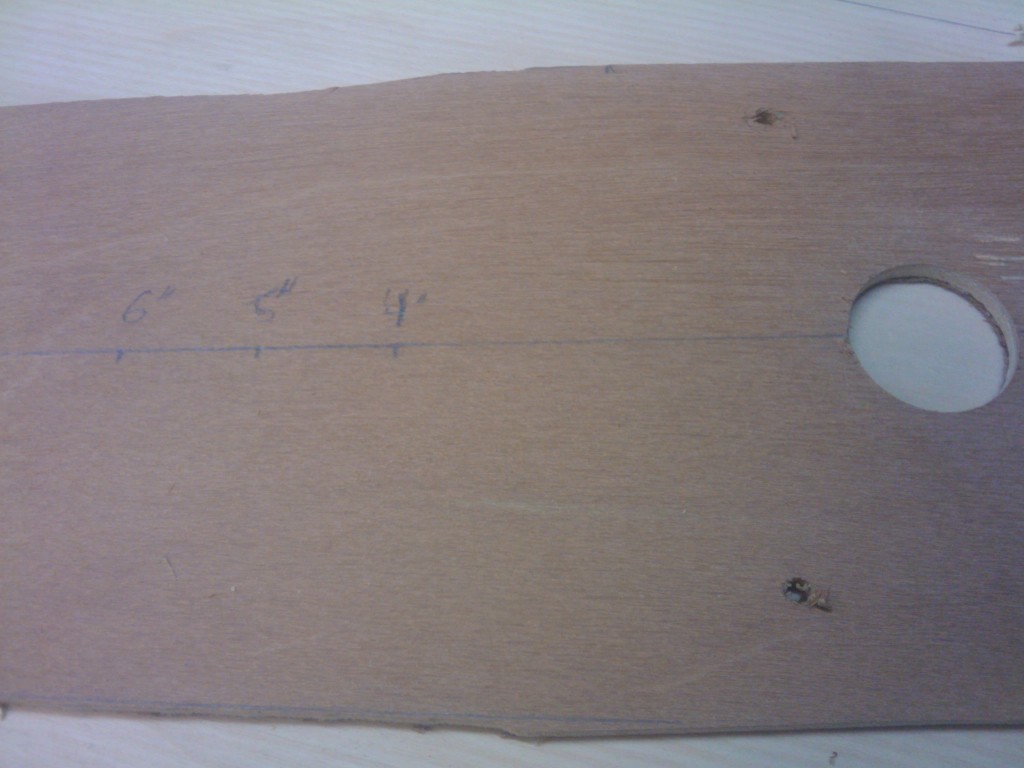
 

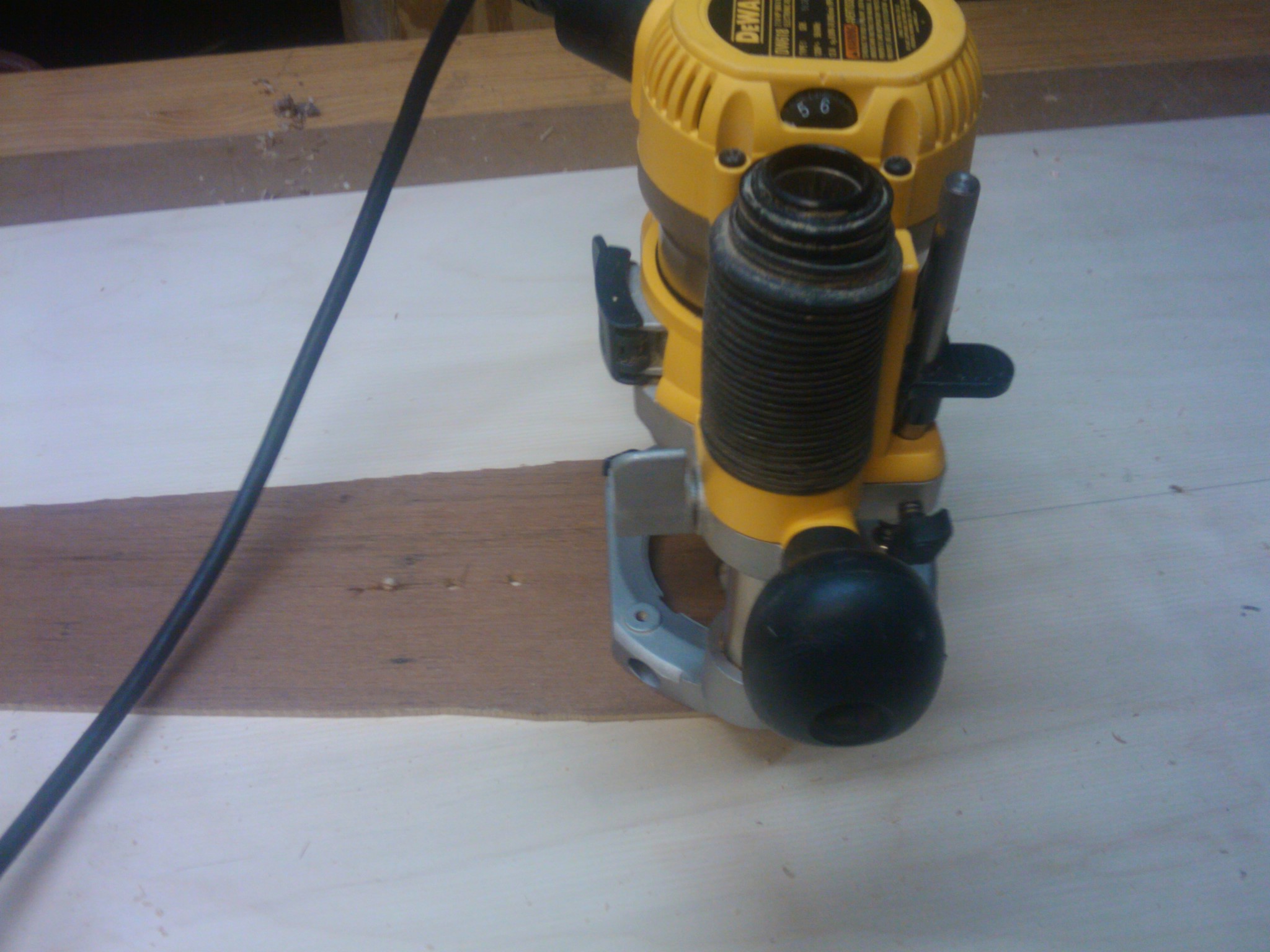
On the jig, I drilled three pivot holes to fit the dowel at four, five and six inches from where the bit edge.  From there, I installed a 3/8″ up spiral bit into the plunge router and set the jig in place.  Sure, it was kind of long for this smaller application, but if I ever have to cut a larger hole, I’d have the room.
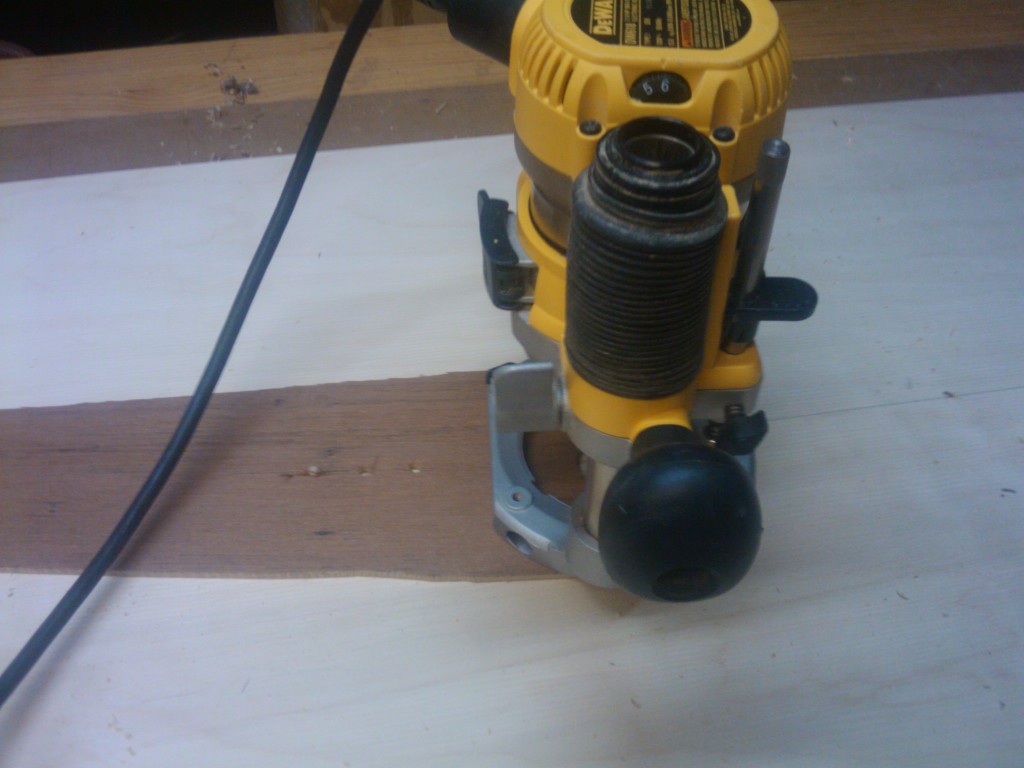
I set the bit plunge depth until it would just push through the board when fully at depth, and I knew I was going to have to do this in two or three passes so I wouldn’t burn the bit up.  Next, I popped the router and jig on the board, hit the on switch and let ‘er rip.  While you are spinning the router around, you have got to keep an eye on your power cable.  With two or three passes, you can easily get tangled up with the cord.  That’s not good.
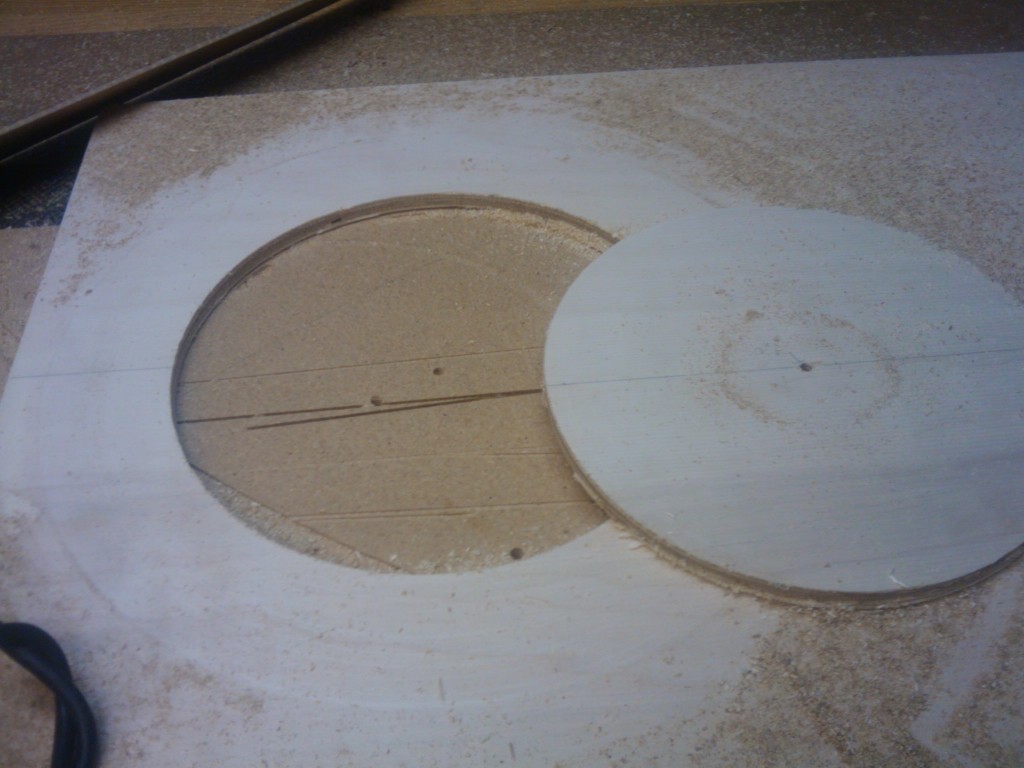
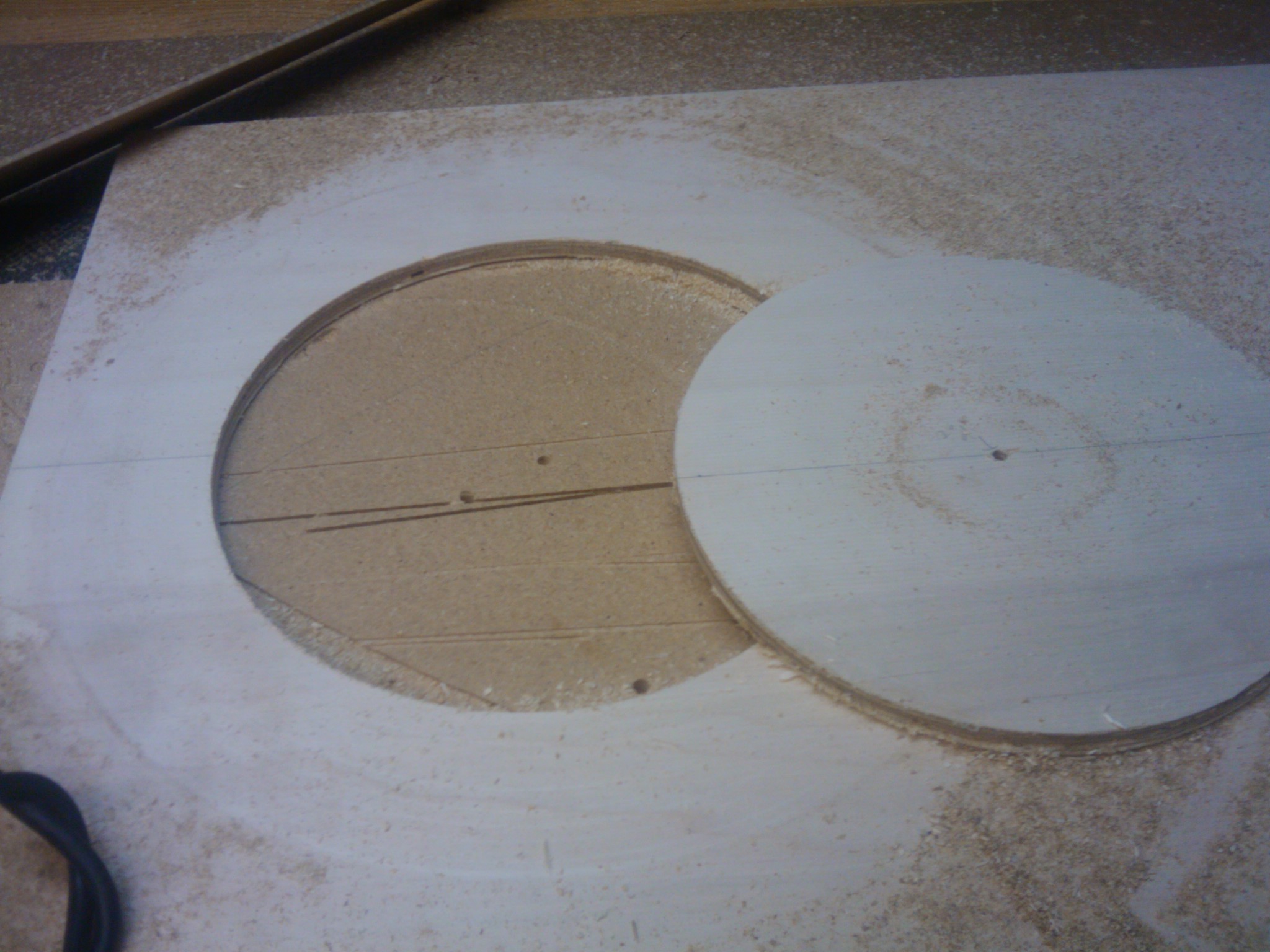
After three passes, the circle was ready to pop out.  I’d say the result was pretty darned cool.  It was a perfectly round cut with pretty darned smooth edges.  There was a little splintering, but nothing a few passes with a sheet of sandpaper couldn’t handle.
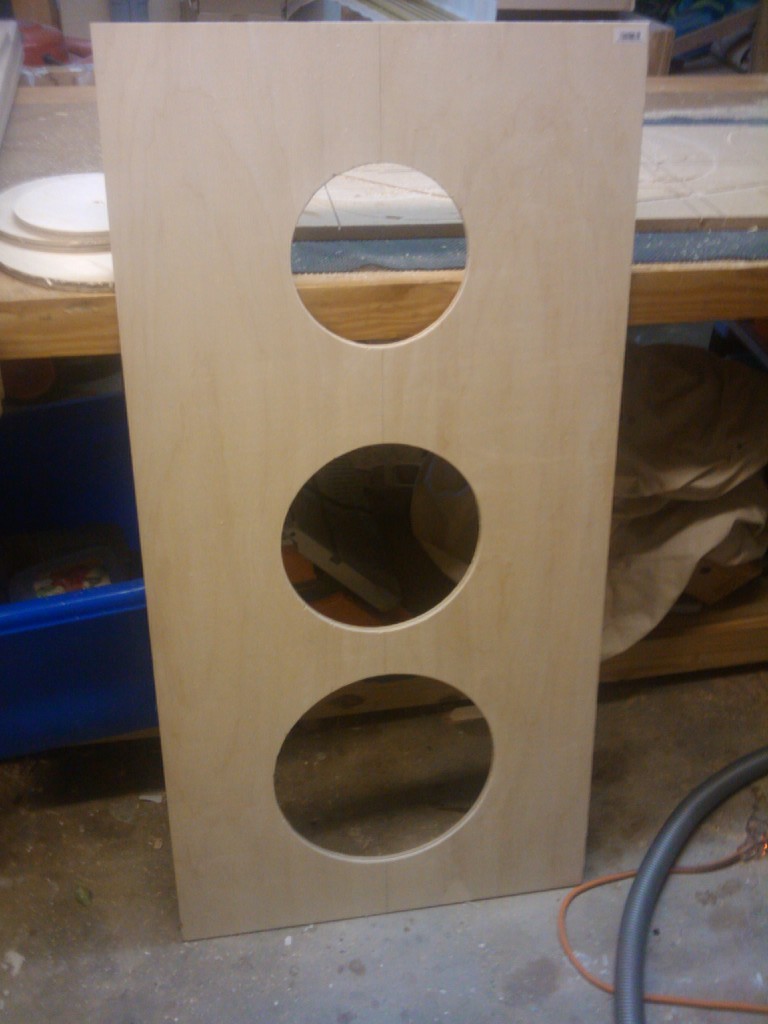
After repeating the procedure for the other two circles, here’s the finished project.  Sure, the holes are a little large, but remember, kids are throwing the bean bags, so it should be a little easier.  Now, my co worker and her daughters just need to paint, and this one will be ready for the bean bags.

 

Quick Poll

They are extremely useful tools. Typically, they are the first power tool a homeowner will buy.

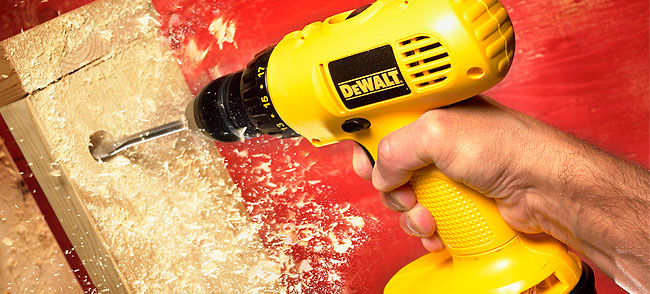
Power drills can drill holes from huge to small, cut plugs, use hole saws, drive screws…  They are multi taskers.

This week, let us know what the primary drill is in your shop.  For me, I do have a hammer drill and a corded drill, but my 18 volt cordless gets the lion’s share of the work, so, I’d vote for my cordless.


Not what I planned on writing today

No, with today being April 1, I planned on writing a funny post about a woodworker turning the world’s largest banana or a gasoline powered chisel… But, we had a real scare at the house yesterday.

A severe line of thunderstorms plowed through the west coast of Florida, and a huge chunk of ‘energy’ passed right over our neighborhood.  The National Weather Service will determine if what we had was really a tornado, but everyone who was home when this hit (including my wife and youngest son) swear up and down that the inky black sky and ‘freight train’ type sound was close enough for them to call it one.

Thank God that everyone was OK, and the damage, while stunning, didn’t put anyone out of their homes.  I will tell you that the most helpless feeling is having to work in the county’s Emergency Operations Center and not knowing if my loved ones were OK.

My Neighbor's house missing part of the roof


The neighbor across the street from us and her downed tree
The county's Fleet Management building - about a mile from my house

We’re cleaning up today…  In the meantime, here are some more shots of the event. What a mess…

My first four

This weekend, the NCAA men’s basketball national championship moves to Houston.  There, four teams who very few people selected to be there, will vie for the national championship.  The University of Connecticut, Butler University, the University of Kentucky and Virginia Commonwealth University will all be represented, and only one team is going to come out on Monday night as the national champion.

Since 1985, the NCAA has invited a slate of 64 teams to battle it out for the national title, and there have been some memorable tournaments since then. In order to include more teams, the field was expanded to  65 teams, and this year to 68 teams, with four play-in games the two days before the round of 64 tipped off.  Surprisingly, the VCU Rams played in one of those ‘First Four’ games, and are now poised to possibly claim the school’s first title.

This is always my favorite month for sports.  March Madness rules.

While we are now in the Final Four, the match ups got me wondering, if I had to pick my First Four tools – the first four off the bench –  the four essential tools that come out to play for every project, I’m thinking it might look a little like this….

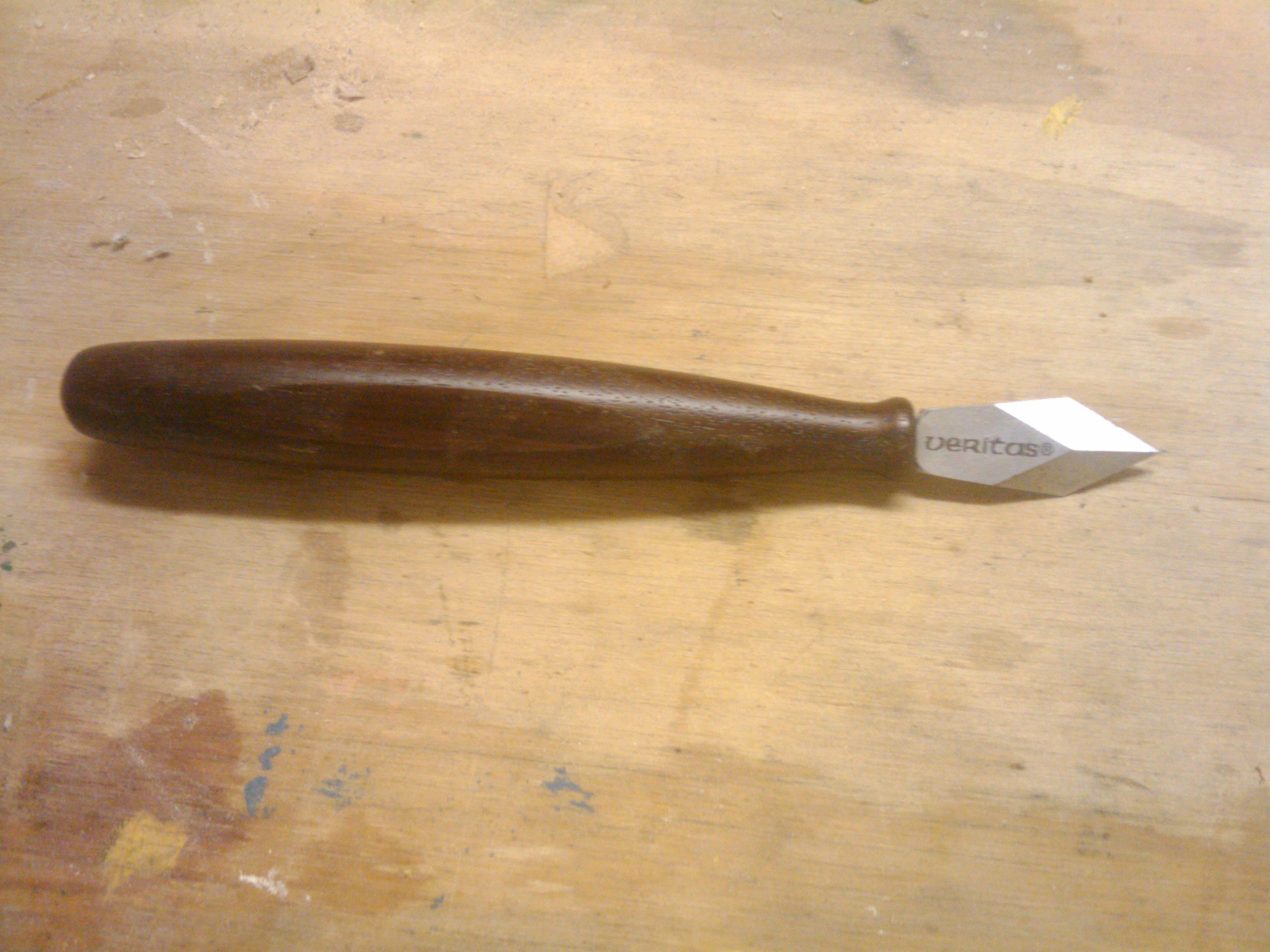
My marking knife.  This buy comes out on every project.  With a double knife bevel on the blade, I can mark from either the left or right side of a straightedge. This tool leaves a very fine line, and slices the top layer of wood fibers, giving me an indicator to get both a fine and clean cut for my projects.

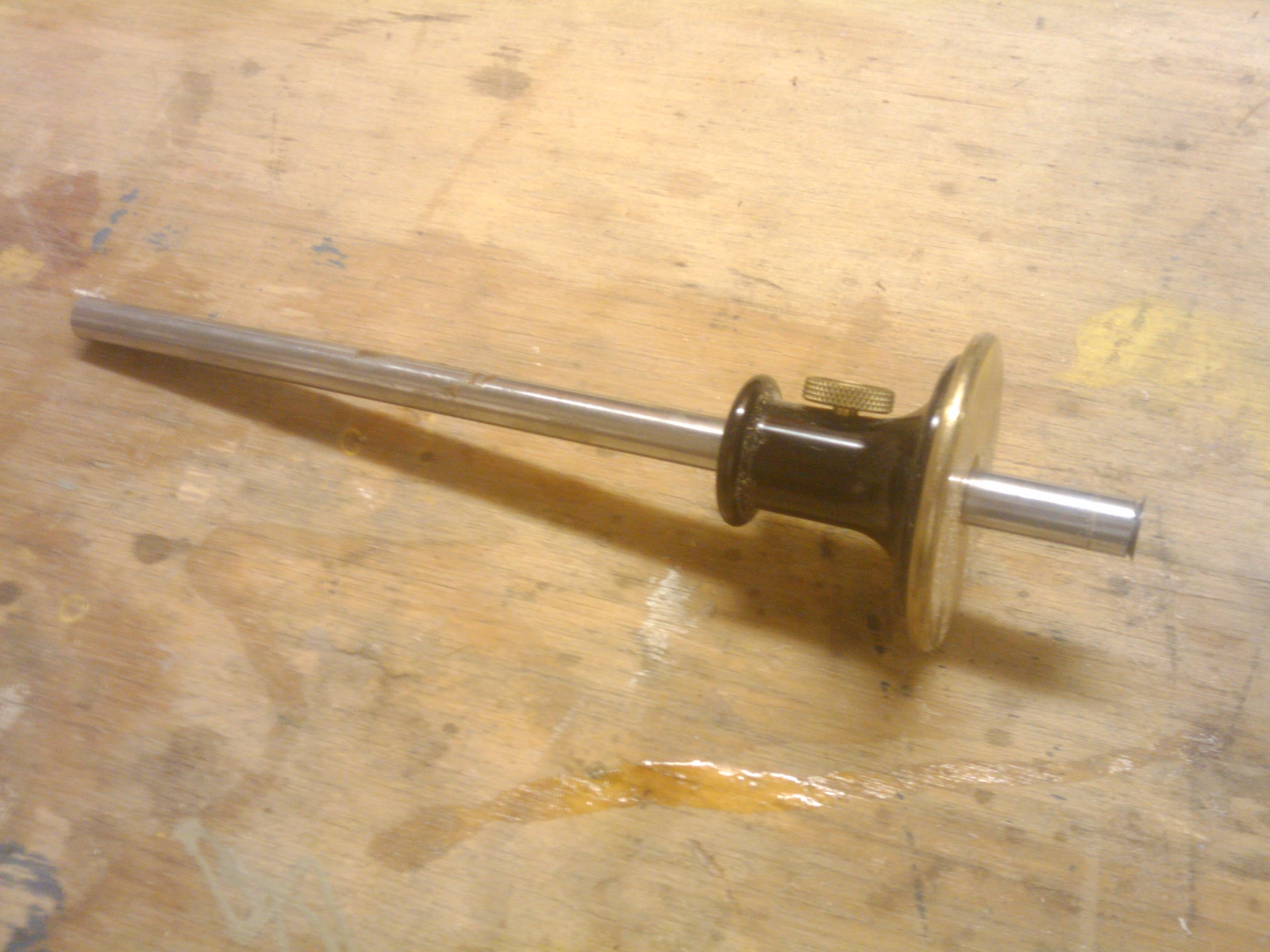
My wheel marking gauge. Yes, this is my second marking tool… but this one is so dang handy. I can set the cutting wheel an exact distance from the round fence on the tool’s stem and mark repetitively on board after board, getting the exact same marking on each.  Again, it also slices the wood fibers, giving me clean cuts.

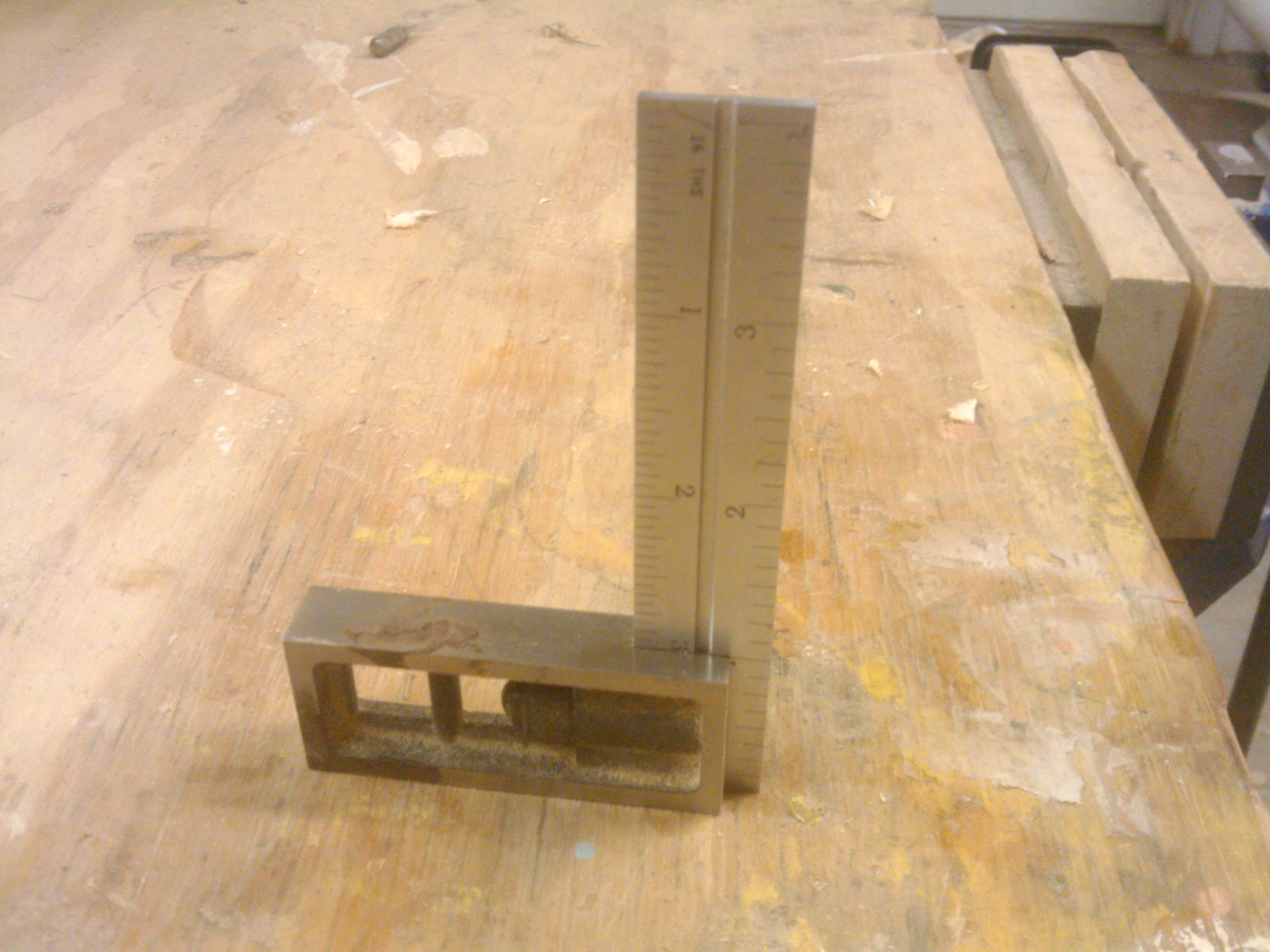
My double square.  Sure, it’s a 4″ model.  And, no, I can’t mark a 45 degree angle with it. But, this baby is so small and sits on the bench so nicely, I can’t not bring it with me. I can use it while I plane to ensure I am getting 90 degree edges, mark bit and blade height, get mortise depth or tenon length… the list just goes on and on.

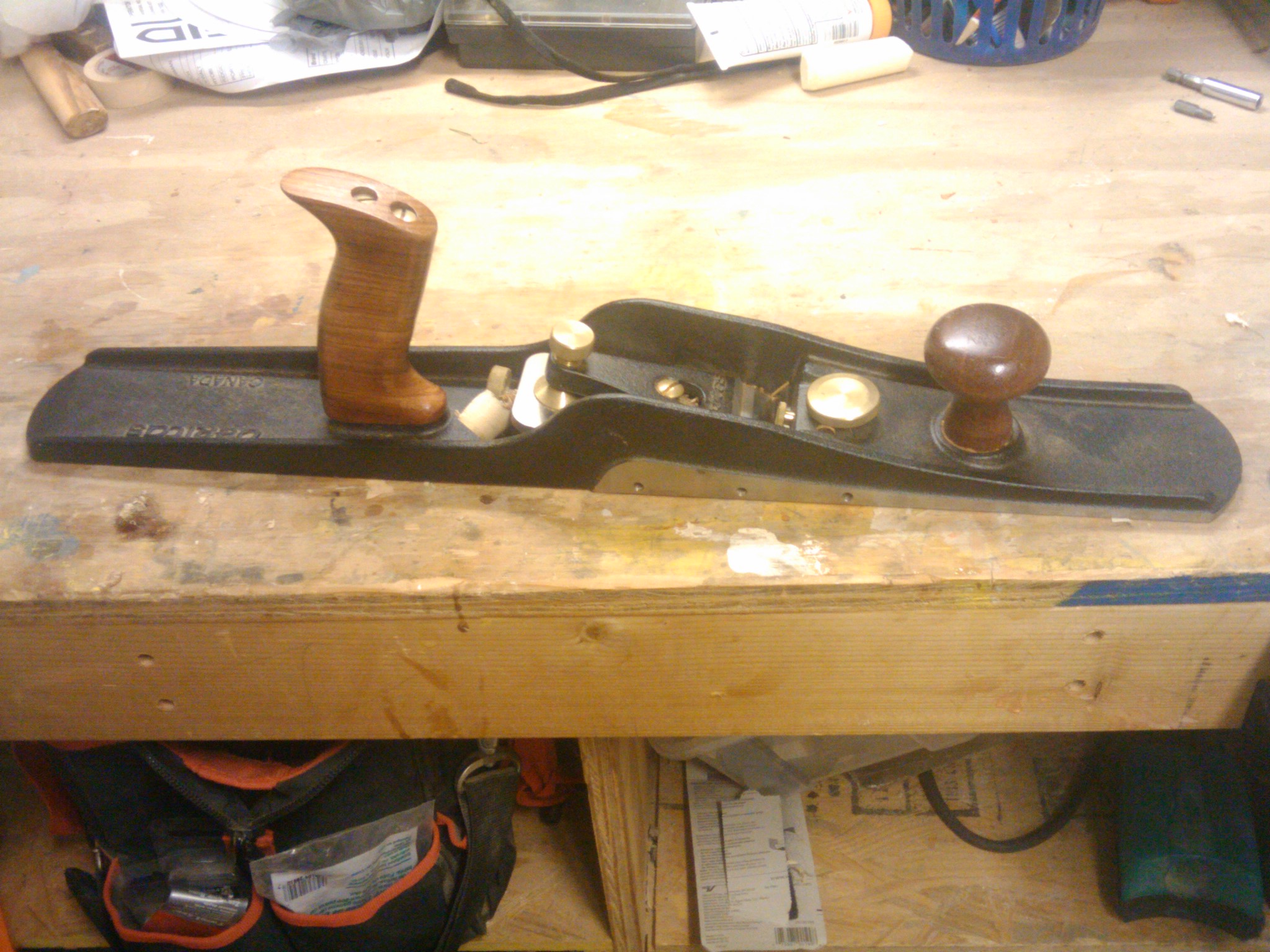
And, my bevel up jointing plane.  Most of the time, I am working with rough stock.  This plane does a great job of smoothing after I attack the surface with the jack plane, and trues up edges for glue ups. Its weight makes it a winner when I trim boards to length on a shooting board… I can’t say enough about it.

Well, that’s my list of the First Four tools I turn to when going to work in the shop.  Your list may look different or have other can’t-do-without tools. Hey, that’s cool. No matter what’s on your list, I’m sure it’s a winner!


You spin me right ’round…

I’m definitely a child of the 1980s.

Oh, yeah.  Ron Reagan in the White House. Parachute pants. Mullets. Ahhh…  When I was just a wee lad, another one of my favorite things to do was to go to school dances. The music of the 1980s was just the bomb. Devo. Thomas Dolby. Eddie Grant.  And, one of the classic dance jams of them all – You Spin me Round (Like a record) by the band Dead or Alive.  They were a one-hit wonder, but oh, what a hit that was.  That was back in the day when I had some moves…

What does this have to do with woodworking? Well, I was on the computer this weekend thinking about other things that spin. I found myself thinking about the pen I turned at the Woodworking Show the previous weekend.  Then, the thought hit me…

Why not get a lathe of my own?

Gosh, a great idea.   I’ll probably have to save up a little cash before I move ahead with the purchase.  This gives me an excellent opportunity to look at the different kinds of lathes out there.  That’s when my head started spinning…

As with band saws, table saws, routers or the like, there are a dizzying array of choices when it comes to lathes.  My first choice when looking at the lathes was to look for a small model.  Something that could turn pens, small bowls, drawer knobs, handles for small tools like ice cream scoops… the works.  And, I saw a few options when dealing with that size lathe.

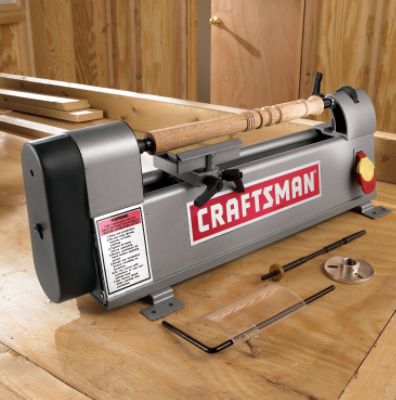
The one that stood out was the Craftsman mini lathe. This little benchtop unit has a decent 12 inch spindle length, and even comes in a package with three pen turning sized tools. Not a bad looking unit, either.

When I showed this to a friend of mine who turns, he couldn’t resist laughing.  “Dude, that’s so cute. But, you won’t be happy with that.  What if you want to turn something bigger?”

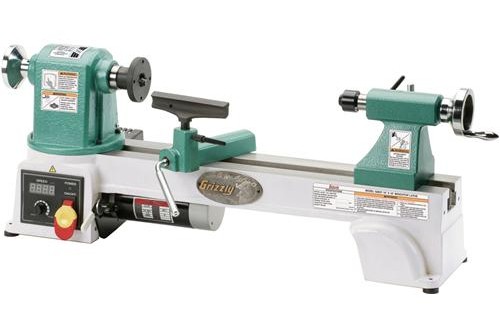
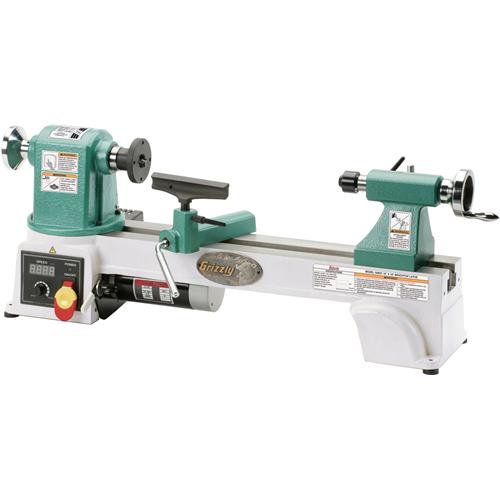
Crap. He might be right.  So, I started looking at the larger midi-sized lathes.  These babies sometimes are benchtop, but also sometimes on a stand.  They have more muscle than the mini ones, but don’t take up nearly as much room as the large ones.  This model at Grizzly tools has an interesting set of specs, and there are many more models in this size range.


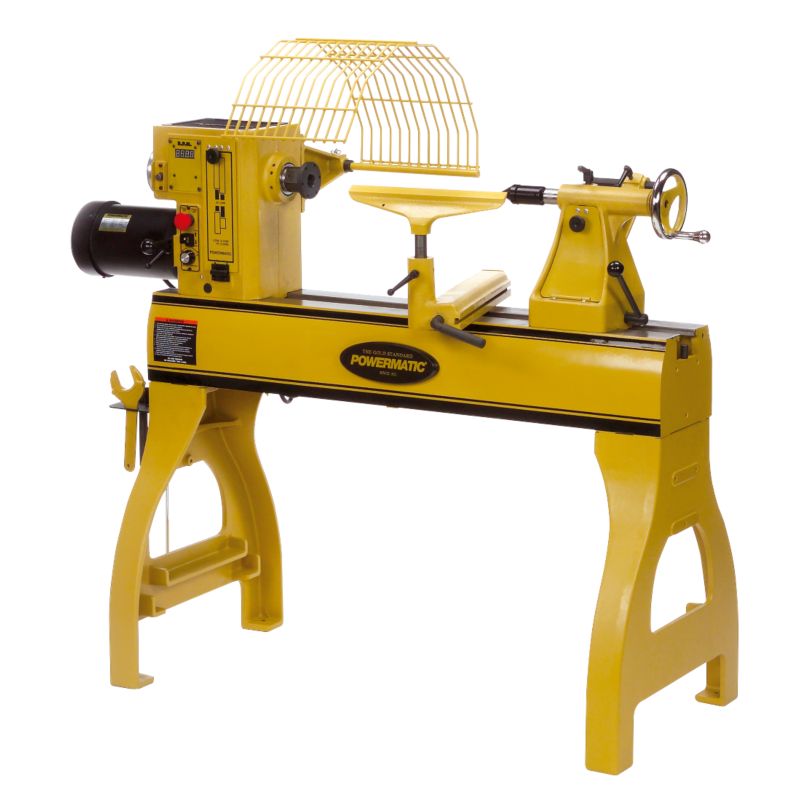
While these lathes are good for most work… they aren’t going to be able to turn big stuff.  Bowls with a 20 inch diameter. Ya know, that kind of work.  From there, I’ve discovered that the full sized lathes are where to go.  But, I’m not sure I can justify going that big. I’m having success with my Ridgid contractor table saw –  I don’t feel the need to upgrade to a big Delta Unisaw. The same thing is probably going to happen with a lathe as well… I can’t see myself (now) needing anything as big as this behemoth from Powermatic.

I know I have a lot of research to do before I make a decision on which lathe to buy… but I know one thing for certain:  The lathe purchase is just the start… There will be turning tools, face plates, chucks, safety gear and a whole plethora of accessories to make turning faster, easier and safer.

Do I still want to spin my way into this one?