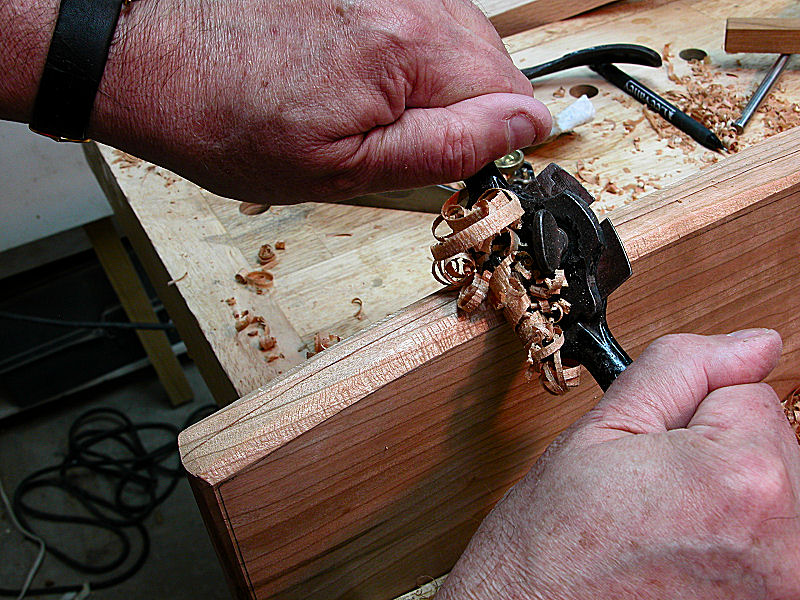
In the past I have written lovingly of my spokeshave. What a great little tool. That thing can sweeten up curves – both inside and outside – with no trouble. It can do a little bit of chamfering work. Heck, a sharp spokeshave is just plain handy to have around.
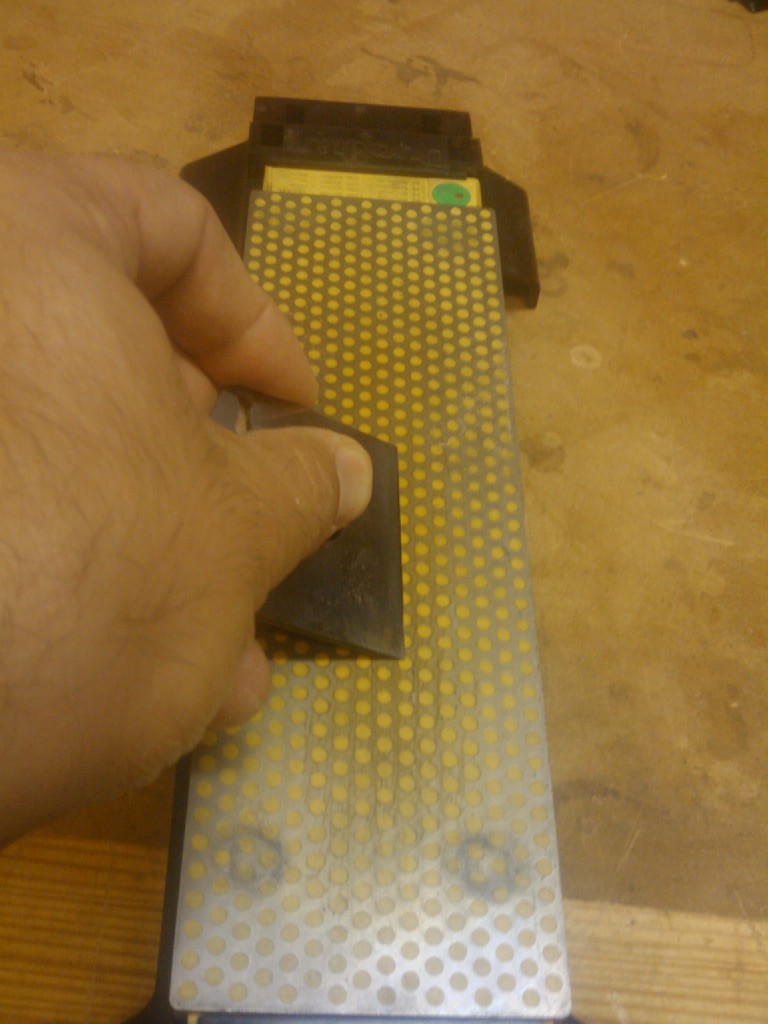
Note the key word in that last sentence – SHARP. That’s where I – and many other woodworkers – have trouble. You see, the iron on the spokeshave is just so short, it’s not easy to get a good grip on the sucker. I tend to scrape my knuckles against the sharpening medium as much as the blade bevel. And, after working the blade for a while, I tend to cramp up.
What I needed was a way to hold the blade more comfortably while getting a precise honing on the bevel. It may seem like a no-brainer to just put the blade into a sharpening jig and have at it, but there’s a problem with that – most side-gripping jigs can’t get a good purchase on the short spokeshave blade. And, holding the blade at a consistent angle is pretty darned important.
One low-cost solutions I have seen is to tape the spokeshave blade to a larger plane iron using duct tape, and then using that larger surface to get a better grip for either freehand or jig-based sharpening. It’s a pretty clever way to use what’s at hand, and, if you aren’t using the blade that often, it will certainly work for you.
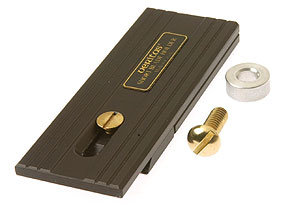
There are other methods to secure such short blades. For instance, Lee Valley offers a short blade holder that uses magnets and a stop block to secure shorter blade for sharpening.
On my Tormek, a multi-purpose flat tool rest fills the bill for short blades. It’s a simple matter to adjust the platform on the guide bars to get the right angle, and it creates a solid base to rest the blade on while doing the honing. Quick. Easy. Back to work. Gotta like it.
While sharpening spokeshave blades can be a bit of a hassle, there are definitely opportunities to make the job a lot less onerous. Which, of course, leads to more time at the bench. And, isn’t that what we are all here for anyway?
Having enough wood in your shop to complete a project – and maybe a little extra just in case there’s a special project you want to tackle – is an essential in any well-stocked woodworking shop.
Of course, GETTING that wood to your shop can pose a challenge. I’m discovering that with gas prices very high these days, my smaller, more economical car makes sense for the daily commute, but it totally stinks at carrying wood home from the hardwood dealer.
Why wait until the afterlife to have your own harp? Why not build your own in the here and now?
This guide, written by Sligo Harp’s Rick Kemper, takes woodworkers through all of the steps to build one of these gorgeous instruments. Start off with a discussion about design, wood selection and the function of each of the parts of a harp. From there, plans for the sound box to the neck and pillar, each of the steps are laid out in careful, illustrated detail.
While this is an ambitious undertaking, there’s nothing wrong with just sitting in awe looking at the intricacy of the plans. Some incredible woodworking here.
Oh, and one word of advice, if you are going to travel with your newly built instrument, be sure to exercise extreme caution should you visit the Golden Gate Bridge. After all, you don’t want to leave your harp in San Francisco.
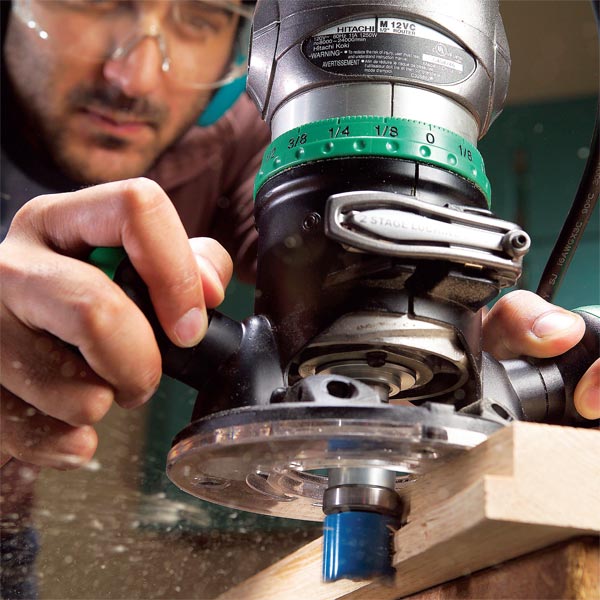
A router is the Swiss Army Knife of the workshop. It can cut dovetails and box joints. Dadoes and rabbets. It can excavate a mortise and cut the tenon to fit. And, that’s without even looking at decorative edges.
Some of these applications require a special bit. Others require the router to be mounted upside down in a table. Still others require you to remove the baseplate to replace it with another. That’s where I sometimes have issues.
You see, when I get into woodworking, I REALLY get into woodworking. Somewhere in the flurry of activity, it happens. I knock one of the router’s baseplate screws to the ground. This requires that I stop everything and sort through the dust on the shop floor to find the screw. That’s if I notice that it was knocked over. And, in order to fit the majority of routers out there for sale, these baseplate accessories either come pockmarked with dozens of holes, requiring you to spin the plate to try to get them to line up, or require you to drill your own holes and hope you get them right the first time.
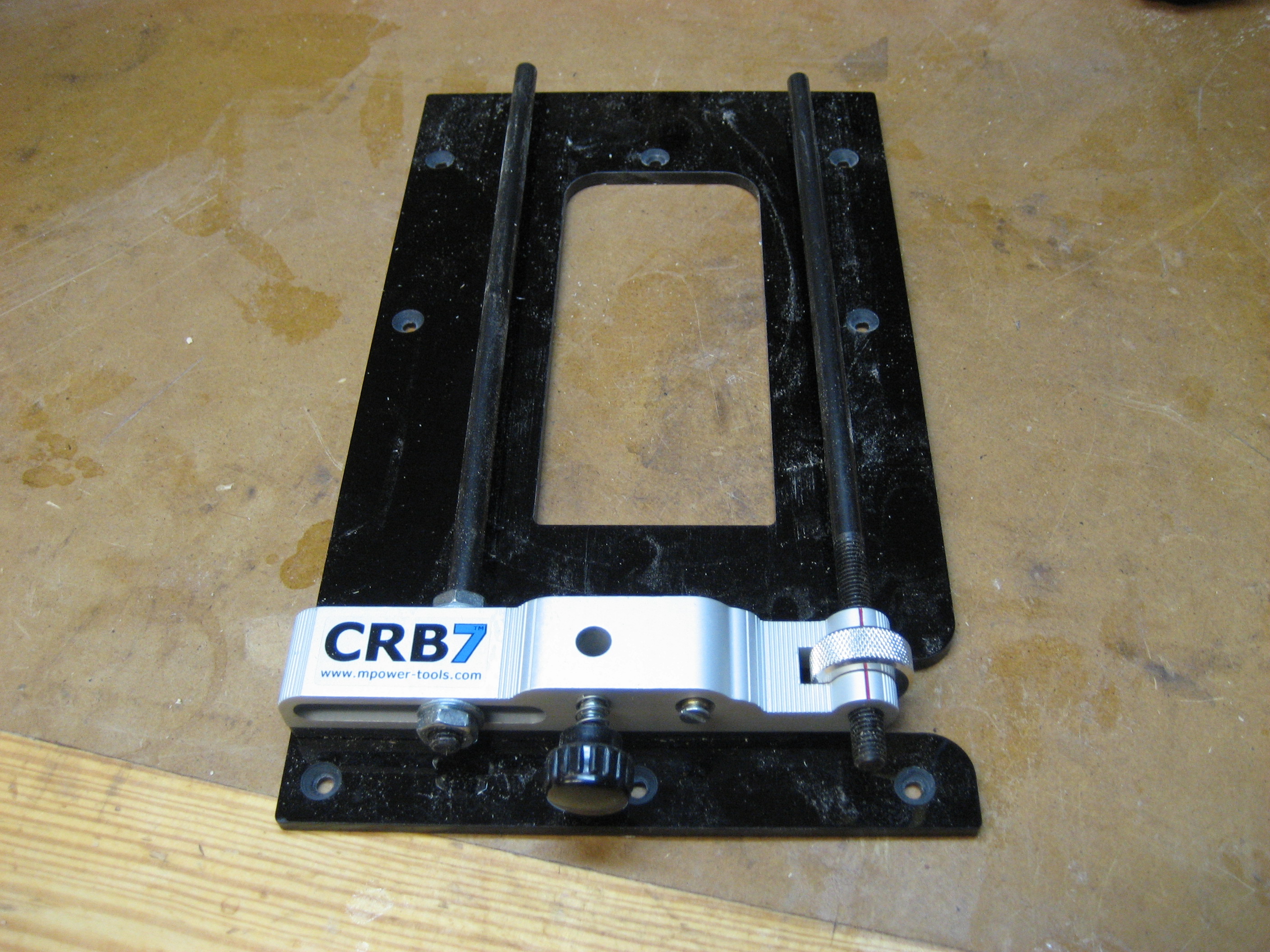
But, this isn’t always the case for router accessories, David Venditto of Infinity Tools recently sent me one of mPower Tools new CRB7 router guides. After using this, I may take all of my old baseplate-swapping guides and throw them in the trash.
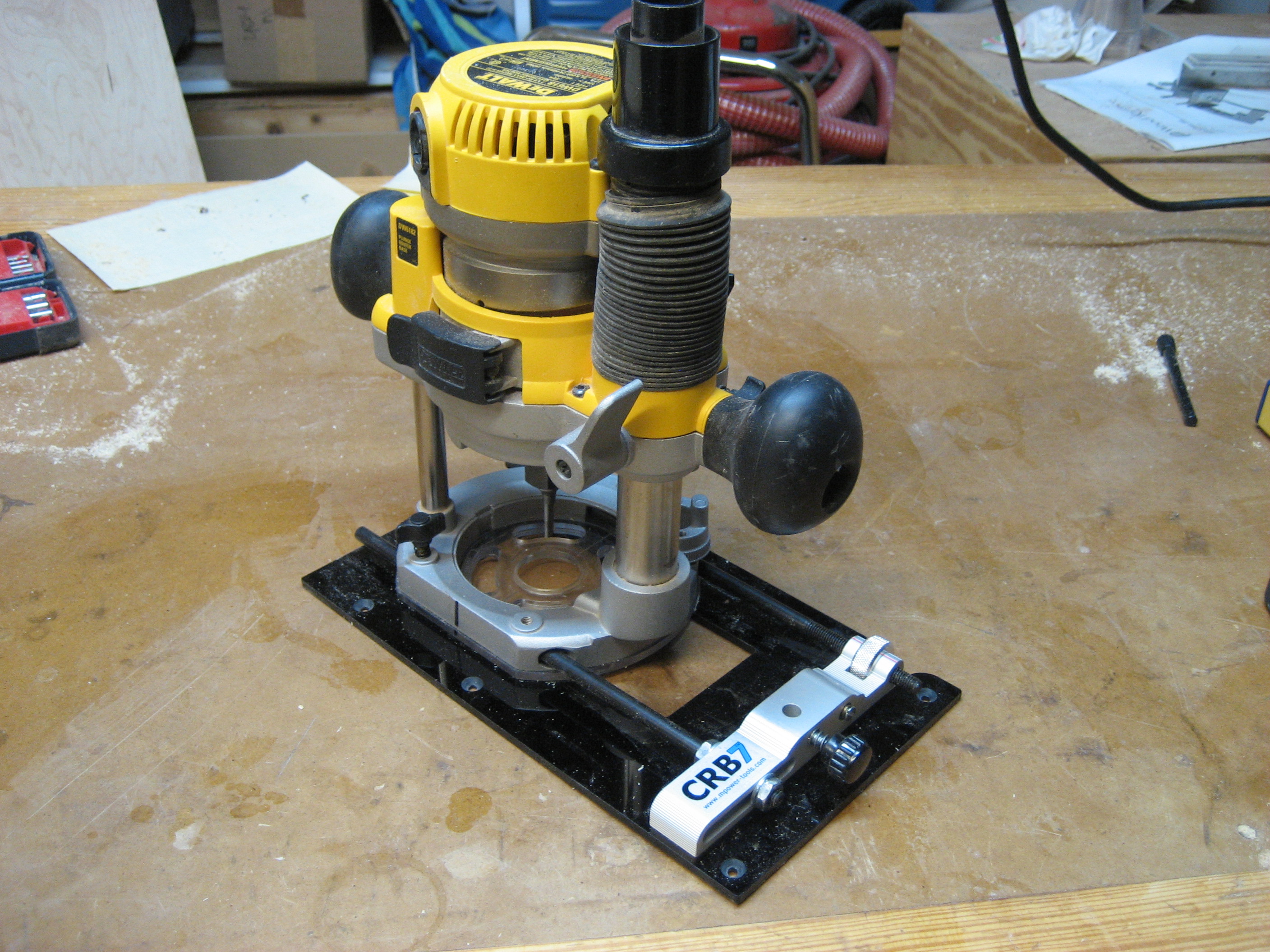
Unlike those others, this guide comes with a pair of guide bars that fit through the fence holes in your router’s base. These can be adjusted for any number of different router models. Now, instead of unscrewing the baseplate when you want to use it, you simply slip the guide bars through the holes and tighten them down. Easy as pie.
What can the guide do? There are seven functions you can use it for:
Offset Base Plate – Increases overall router stability and reduces errors when edge molding. The CRB also moves the pivot hand guiding the router toward the center of the panel smoothing out the router pass action, reducing the chance of burn marks.
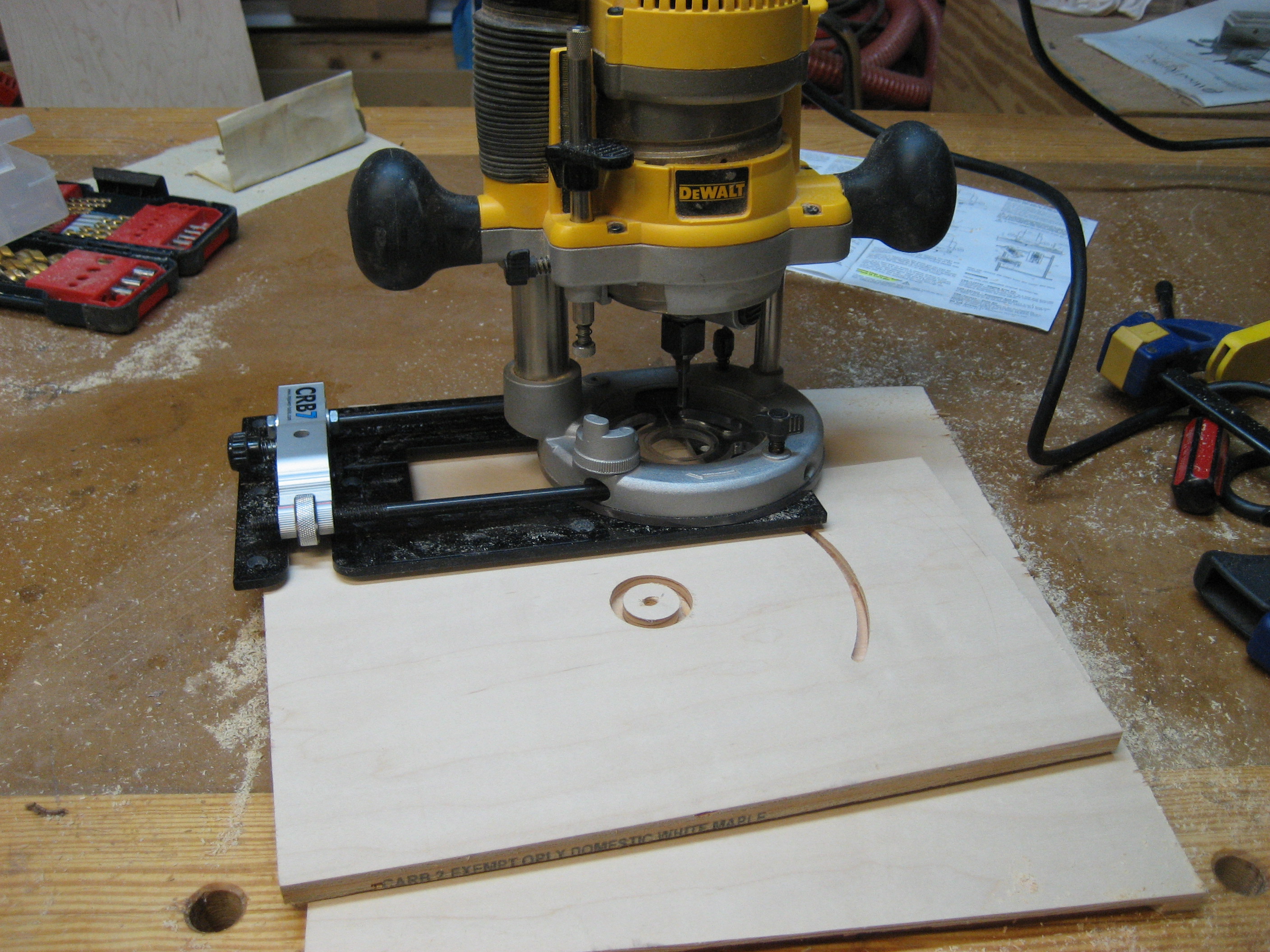
Circle Cutting – Rout precision circles and holes that are smaller than the base of the router – The CRB can route circles and wheels from 1½” to 17½” in diameter (38 – 450mm) using a ¼” (6mm) straight router bit.
Mortising – Allows “Centered and Off Centered” mortises plus you can control the actual width of the mortise.
Stable Foot – Most of the router’s base remains unsupported when edge routing – The CRB anti-tilt leg eliminates router tilt which is especially important when routing work-pieces with a high aspect ratio.
Straight Edge Guide – Set the clamp guide once and adjust the position of the router via the CRB7’s Micro Adjuster. The CRB increases router to clamp guide surface contact area and reduces clamp guide set up time.
Indexing – The CRB provides a simple and exceptionally quick way of accurately repeating a molded dado for production batch quality faux or false paneling.
Flush Trim Edge / Edge Kit – With virtually no set up time – quick fit the Trim Jig riser pad to accurately machine trim hard wood and iron on edge molding flush with the core board in seconds.
Ralph Bagnall put together an awesome video showing the features. Check it out here:
At first, the jig seemed intimidating, with all of the accessory parts it came with. But, after a few minutes of reading the manual and watching a great video the company produced, I was able to start putting it to the test.
I got the jig lined up with my DeWalt 618 multi-base router. That took about ten minutes, and I was going slowly to ensure I had everything set up the right way. The router slid smoothly onto the guide rods and a few twists of the thumb screws on the base made short work of securing the router in place.
The first test – cutting circles. I have done this task before with a plywood base I cut on the band saw. This worked great, but I could never figure out how to get circles where the diameter was smaller than the diameter of the router base. The mPower jig came with a screw in pivot pin that dropped into a hole I drilled in the board. My first test cut was a larger diameter arc, which the router handled with no trouble. The pivoting action was very smooth, and I never wondered if I had control of the router. The next test was to cut a much smaller circle. With an adjustment to the router position, I was easily able to make the cut. No muss, no fuss.
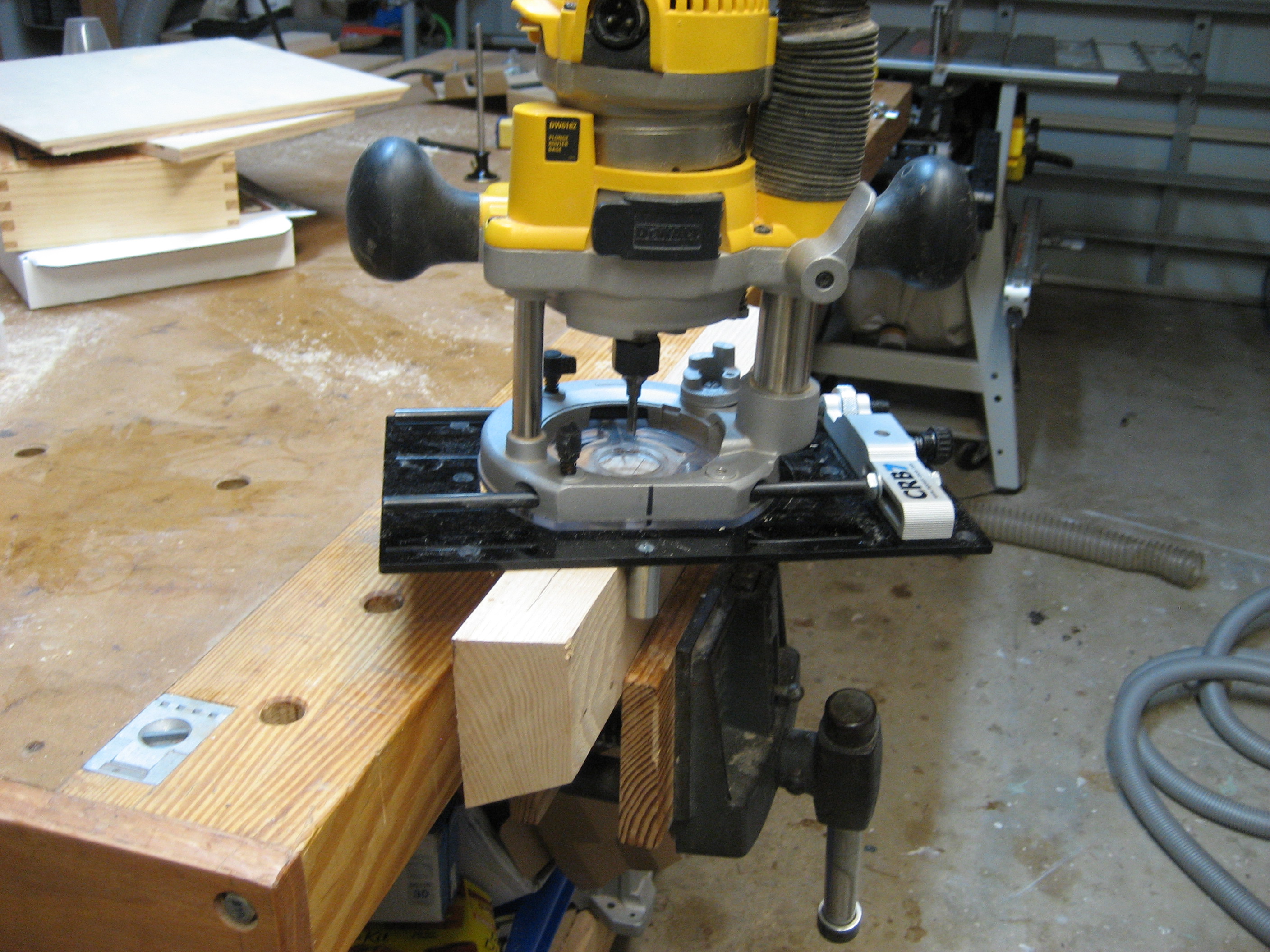
The next test I wanted to do was to cut a mortise. I had a large, thick chunk of ash I had planed down from another project, and thought I could try my hand cutting a mortise into that. I swapped out the pivot pin from the last test and replaced it with two mortising pillars. These mounted again with screws through predrilled holes in the baseplate. I set the jig on the board and twisted it so the router trapped each side of the board against one of the pillars.
A simple adjustment of where the router rode on the guide bars, and I fired up the router and began to plunge. Again, the control of having two positive points of contact with the board was – well – empowering. I knew I had total command of the router, and the results were on the money.
I still have other features of the mPower base to try out, but even if they didn’t work at all, I would say that this jig belongs in my router collection. It’s a real winner in my book.
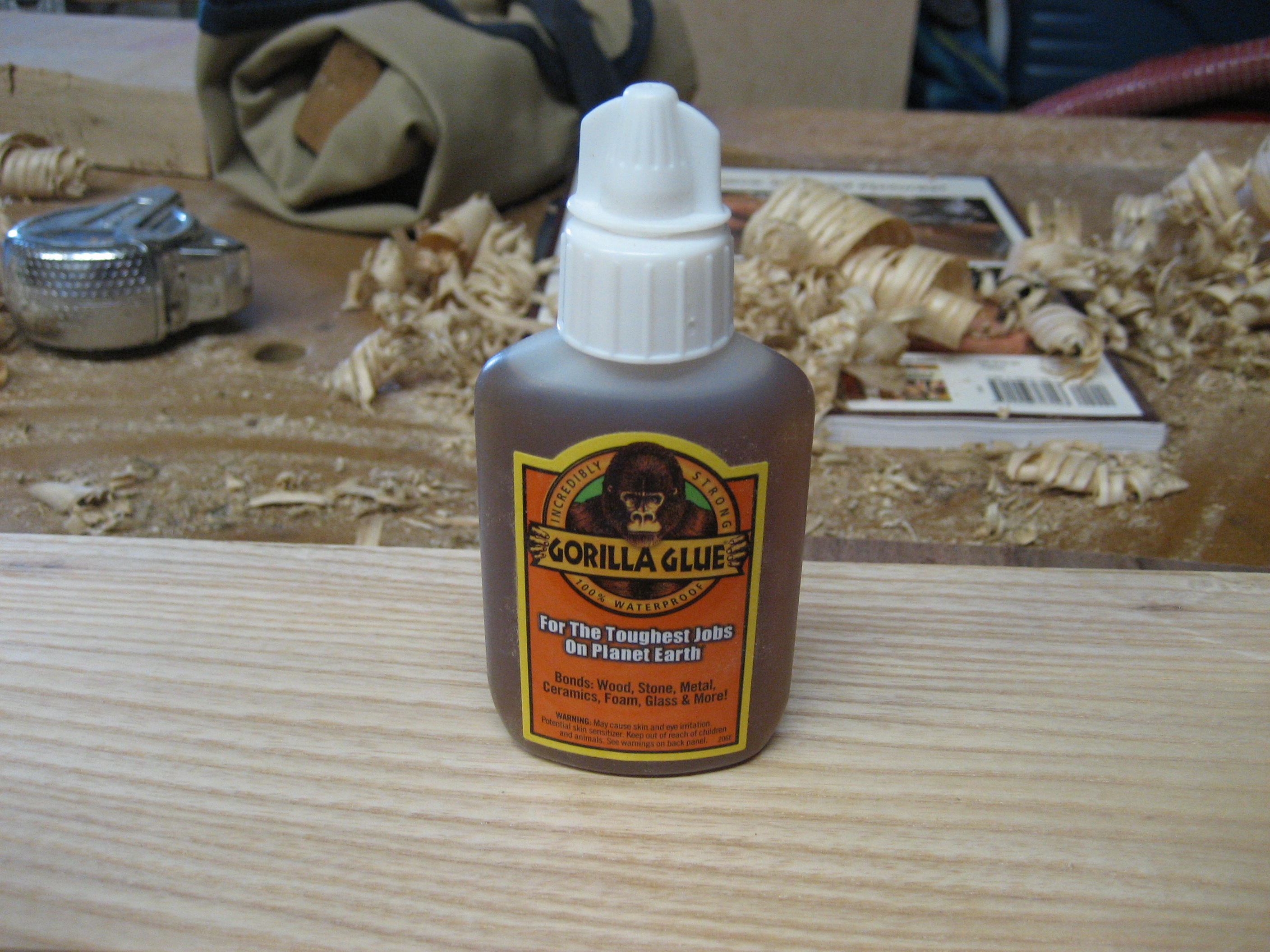
It has been a while since I last used polyurethane glue. I found it messy, a hassle to use and, once the container was opened, it would foam up in my humid Florida shop into a hard blob of goo in the bottle. Yuck.
Recently, though, the folks at Gorilla Glue sent me a few bottles of the stuff to try in my shop. They say that the new stuff is a better formula, and they have improved the cap so the stuff won’t go bad. So, why not give it another go?
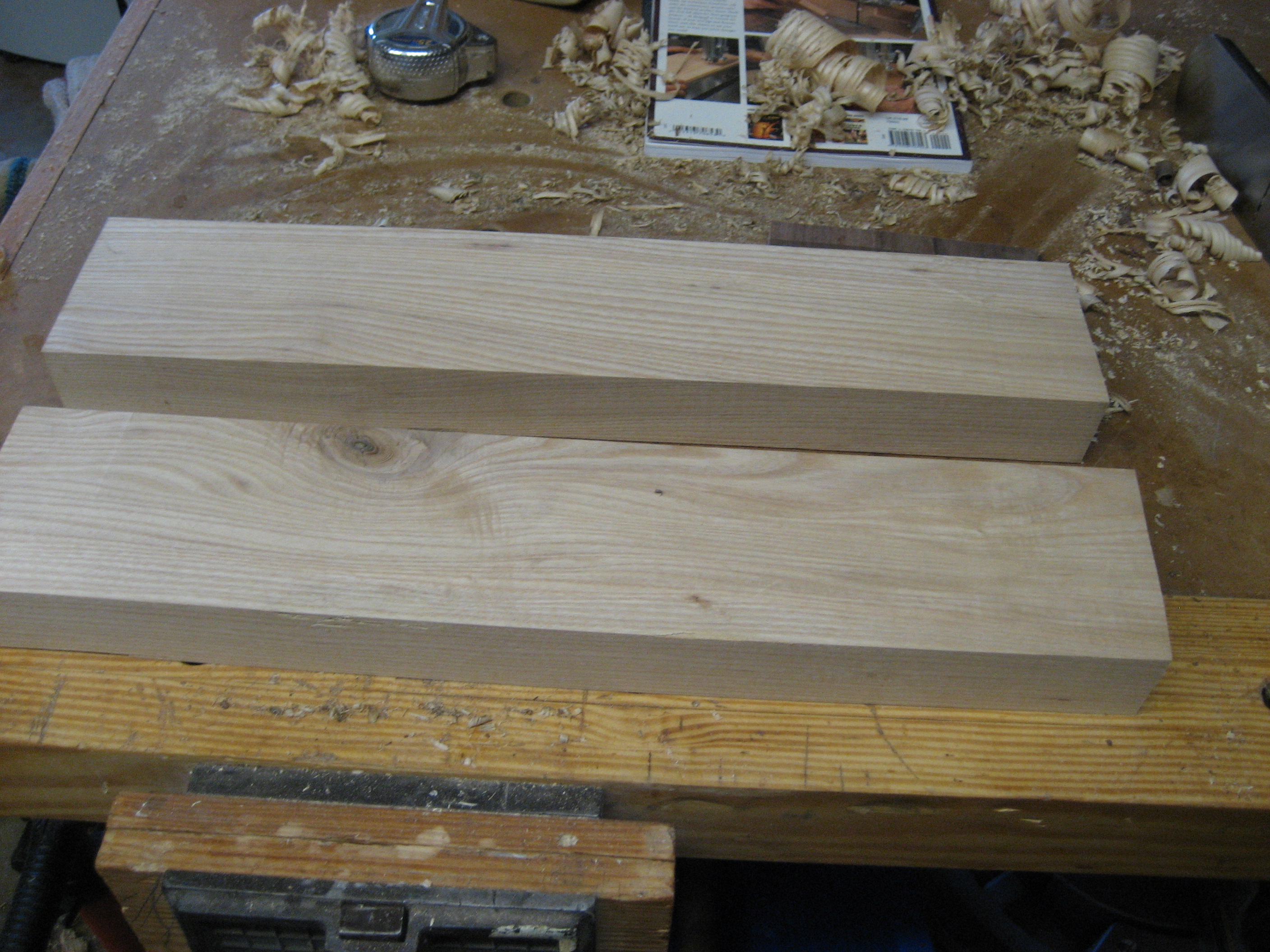
I’m in the process of building my first drawer-based bandsawn box, and I needed a thick piece of wood to build it. I didn’t have anything thick enough to do the box on its own, but I had a nice big block of white oak that had been sitting on my lumber rack for a long time. It measured out to 7/4 thickness had a big crack down the middle. That wasn’t going to be an issue, because I ripped the board down the middle with my band saw and planed up the pieces. It looked nice.
From there, I followed the instructions on the bottle.. Imagine that. Since this glue cures in the presence of moisture, I took the time to carefully dampen one of the mating faces with a little bit of tap water. On the other face, I took my time to lay down a good bead of glue and then spread it with a wood scrap.
Once everything looked good, I placed the dampened face of one piece on top of the glue-covered face of the other. I broke out my shorter K-body clamps and put a good amount of pressure on them. As expected, as the glue began to cure, it foamed up. It was pretty cool to see happen…
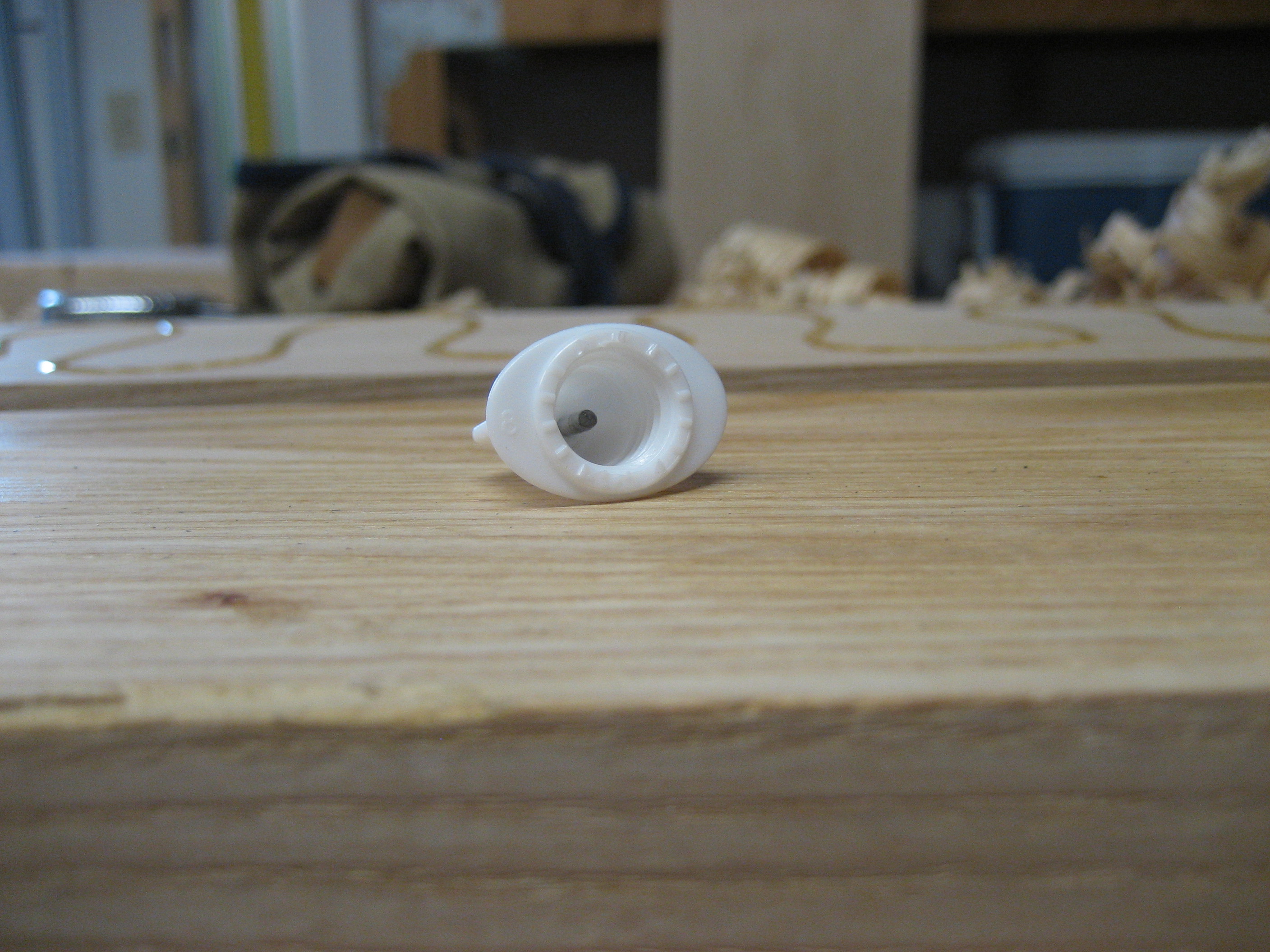
Once that was in the clamps, I wanted to get the bottle sealed up carefully so I wouldn’t have ‘issues’ later. The new cap from the folks at Gorilla Glue does two things to help keep moisture out. First, it’s a very tight screw-tip fit. This seals out air better than the old style of cap. The other tactic they are using is a steel pin mounted in the cap that inserts into the neck of the bottle. This presents another physical barrier preventing air from messing up the glue in the bottle.
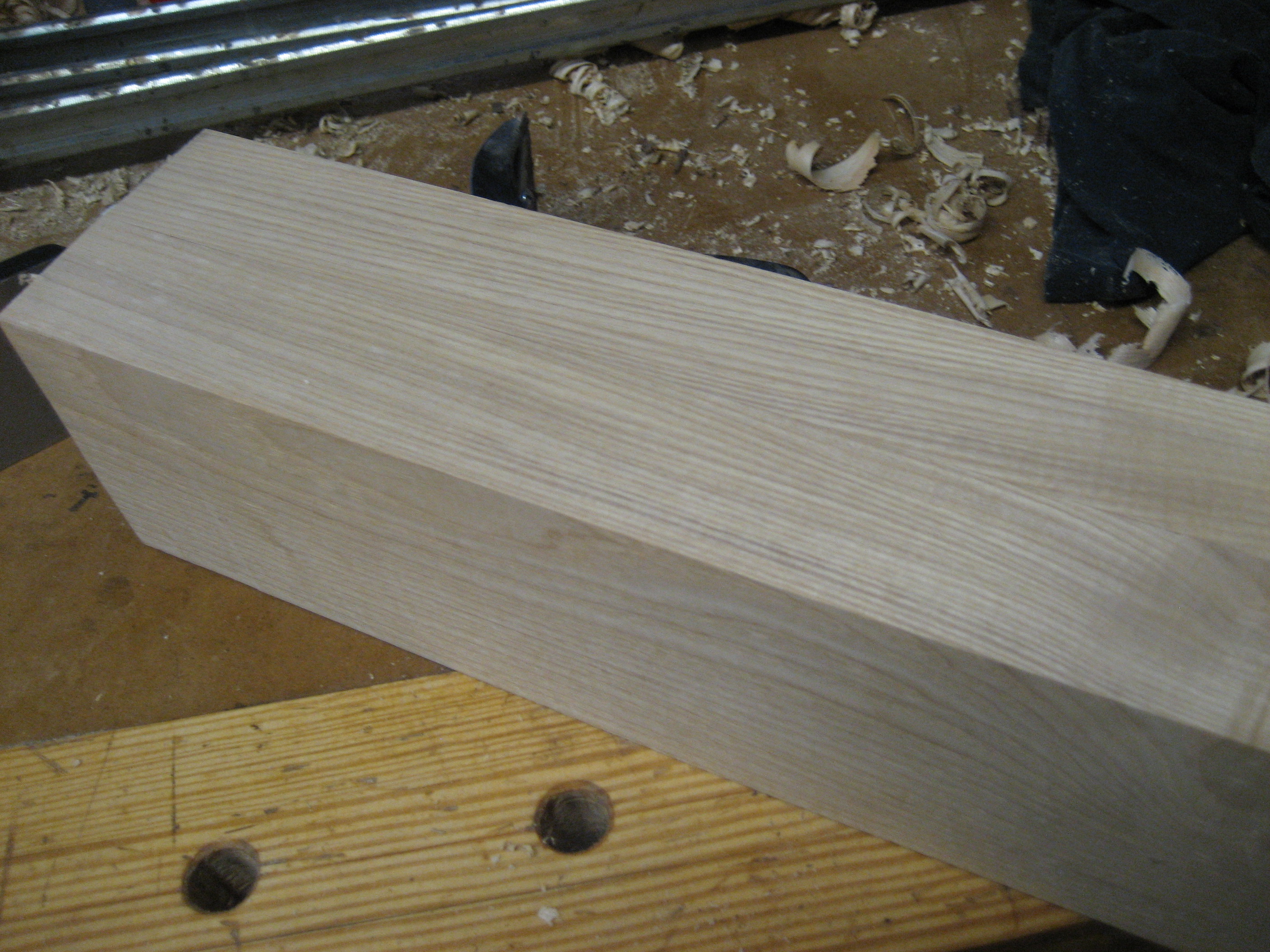
Once the glue cured (I gave it 90 minutes), I took the assembly out of the clamps and scraped off the foam. Then, I ran the block through the thickness planer to ensure everything was nice and flush. It seemed to turn out good…
I stared working on the bandsawn box, but my saw decided to chew up and spit out the lower tire off the band wheel… Crap. Oh, well, time to buy a new tire for the saw. I’ll have to put this project on hold until I can get the replacement part. And, I’ll have to check on the bottle of glue to see how well the contents have fared with the new cap.
When it comes to looking for woodworking information, there are few sources as good as woodworking magazines. Articles about techniques, wood choice and tool reviews. And then there are the plans! Tables, chairs, toys, beds… the works.
The only problem? Well, it’s kinda like that episode of Star Trek where the crew of the Enterprise had to deal with these cute little creatures called tribbles. They just kept reproducing by the minute, eventually overwhelming the ship, the space station they were docked to and – ultimately – the Klingon vessel they were beamed to.
This week, tell us what you do with your woodworking magazines once you are done reading them. Do you get rid of them as soon as you are done reading them, or do you hoard them in the nooks and crannies of your house?
This is a good Italian boy. He loves is mom. Eats lots of spaghetti. Probably is a secret Pavarotti fan.
We all know him as Marc Spagnuolo, the Wood Whisperer. Without his encouragement, many blogs – this one included – would have never gotten off the ground. Many woodworkers wouldn’t have taken the plunge. And, many strombolis wouldn’t have been eaten.. but that’s another story.
If you have visited his site this week – or perhaps tried to visit his site this week – you may have not been able to get through. No, he did remember to pay his server bill. Instead, he was the victim of a Denial of Service attack. Basically, some troublemaker out there figured out a way to get computers from around the world to make millions of demands on the server his site is being hosted on. Because the flood came in, we weren’t able to get there. Total gridlock. Total bummer.
Even worse, his service provider is offering very little in the way of help to get Marc out of trouble. He’s managed to get things sort of back and running with some bubble gum, spit and bailing wire, but he’s going to eventually have to find a new home – one that will offer more assistance when it comes to keeping the bad guys at bay.
Right now, he’s also on the hook for the charges that have been incurred since this little attack has started. Marc has asked for our help, so if you have been on the fence for joining the Wood Whisperer’s guild, or you need a snazzy new t-shirt, why not stop by and give Marc a hollar. Remember, the majority of the stuff he has done is free of charge for anyone to read. I’m sure he’d appreciate your support!