All posts by Tom

I'm the guy who writes the blog...

Good joints: The sliding dovetail

So, on this project I’m building, I have a shelf that will hold a special memento But, the shelf isn’t only to hold this item, I also need it to help hold the final piece – together with the breadboard ends – flat in an area of the building where it goes that is right by an exterior door. My concern is that with the opening and closing, there will be tremendous fluctuations in humidity, possibly making this piece warp without support.
The project is coming along nicely

Plus, since this is a cross-grain situation, I didn’t want to lock the shelf in place, possibly leading to cracks.

The best option I can see is to use is a sliding dovetail joint.

The sliding dovetail. It’s a member of the dovetail family that often gets overlooked. And, that’s a shame, because it’s a great joint, giving lots of flexibility. The only problem is that it can be very fussy to cut.
The dovetail bit in the table

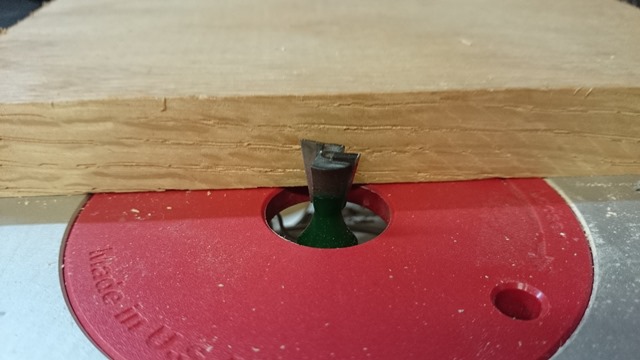
This is the method I used, and it worked well for me. The whole joint revolves around a standard dovetail bit. The total angle of the sides really isn’t important. I am using one with a 14 degree slope. This method requires a router table to make it work well,.

Once I put the bit into the collet, I lowered it into place – about one third to one half the thickness of the board I was working on.
My Osborne miter gauge

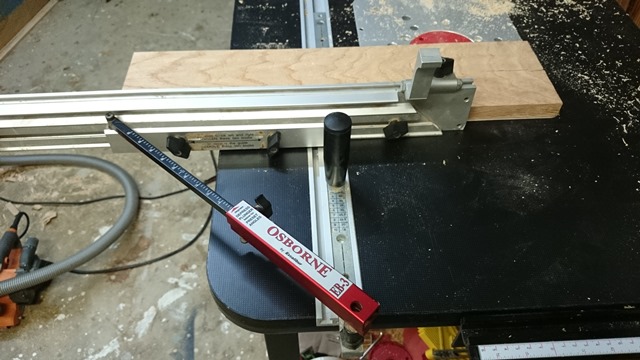
To ensure the piece wouldn’t move on me when I routed it, I used my Osborne EB-3 miter gauge from my table saw. It has a nice wide fence, covered in sandpaper to ensure a great grip.

Before you just go and push the work through willy-nilly, do yourself a favor. Cut some kind of relief groove where you plan on plowing this dovetail shaped dado. This will remove a chunk of the waste, helping your dovetail but cut more effectively. Some people will swap router bits to do this; I just ran to the table saw and cut a pair of saw kerfs.
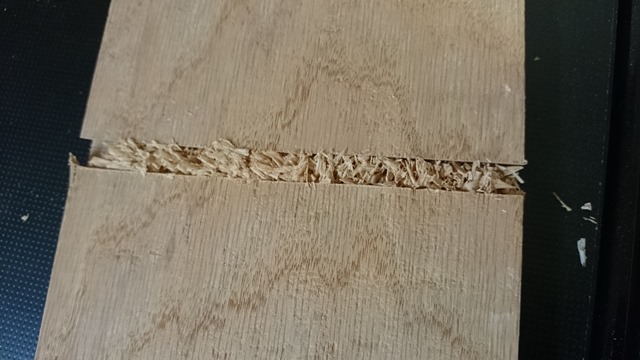
A real choke job

OK, back to the router table. with a careful push through the bit – ensuring that the work is held tightly against the fence. Believe me, the spinning bit will want to make your work move.

After you push the work through the bit, flip the board over and take a look. Odds are pretty good that the dado will be packed with sawdust. That’s normal. Remember, the bit cuts wider at the bottom of the cut than at the surface of the board. Once you vacuum the chips out of the dado, it’s all good.

Now, if you would like to waste shop time and pull most of your hair out, feel free to mess with the height of the bit at this point. If this is how you have fun in your shop, be sure to seek professional help. If you would rather just build, then don’t touch the bit height. At all. You have it set perfectly.
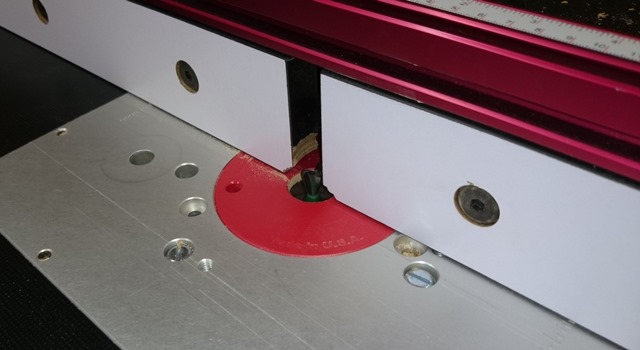
The bit is ready to cut

Now, you have to get your fence ready. WITHOUT TOUCHING THE HEIGHT OF THE BIT (did I mention this before?), put the fence on your router table and bury most of the bit behind the face of the fence. This part of the joint is trial and error, and it’s very easy to make errors. Believe me.

With the majority of the bit behind the face of the fence, put the mating piece edge down, riding along the face of the fence. Now is also a great time to break out your featherboard to ensure that the piece is pressed tightly to the fence as you push it past.
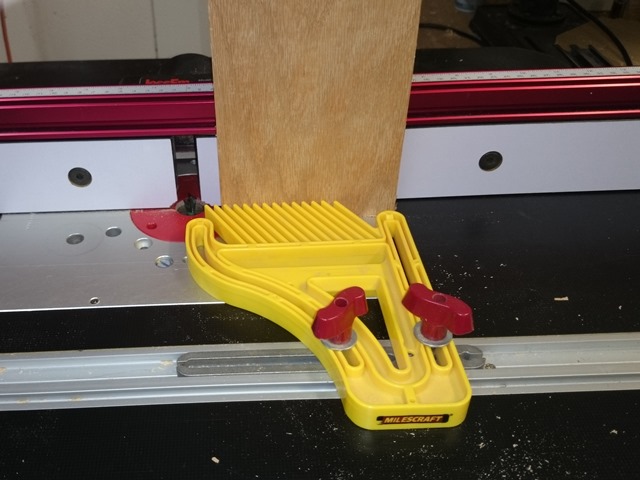
Light as a feather

Now, push the board through, then flip it over and rout the second side. This will give you the proper profile for the joint. It’s during this time that I subscribe to the mantra that it’s easier to take more wood off the joint than to add it back. Your first pass will probably leave your mating piece too wide to fit. Adjust our fence backwards by very small increments and test fit. Remember, since you are removing material from both sides of the joint, you are doubling the corrections you make.
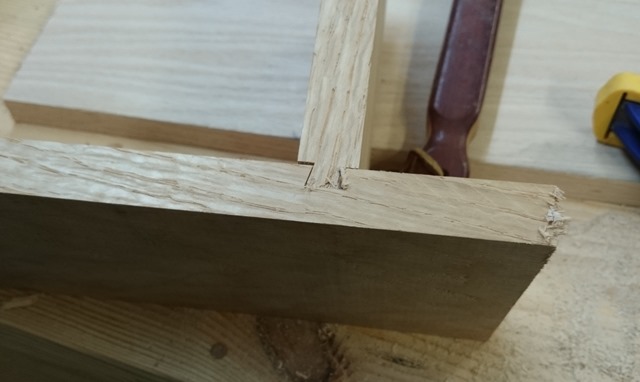
Slippity de do da

You will know when the joint fits perfectly when the mating piece slides into the groove and goes about 2/3 the way into the groove before it binds up. There is a lot of friction working on this joint, so you will probably need to tap it into place with a mallet to get it to seat all the way in.

The fun thing about this joint is what you can do with it. If you want to affix it permanently into place, put a dab of glue at the outside edge of the joint. This way, that section will stick fast, while the rest of the joint can slide freely as the board expands and contracts with changes in humidity.

Or, if you are feeling froggy and you want your joint to be able to be disassembled, try a little wax on the joint. This way, when you are ready to knock the piece down, it will take just a few taps with a mallet to free the joint. I have seen this on bookshelves, and it’s the handiest portable design.

Sure, it takes a little it of practice, but once you try the joint, I think you will be happy with the results, and you will want to use it more often than you think you will.
We interrupt this project…

I have a confession to make. This past weekend, I made no progress on the projects for my nephews. I did, however, have a very important project I had to start.

But, I can’t tell you what it is or who it’s for, because it’s going to be a surprise.

For this one, my choice of woods was already made for me. It has to be oak, and it’s final finish is going to be that golden oak color you see on kitchen cabinets. Hey, it’s not my first choice, but it will certainly work for this project.

The layout

The first thing I had to do was sort through the racks of hardwood at my local home improvement center. No, I don’t relish the idea of buying expensive oak from there, but for this project, I have a very hard deadline, and I can’t quibble with the cost.

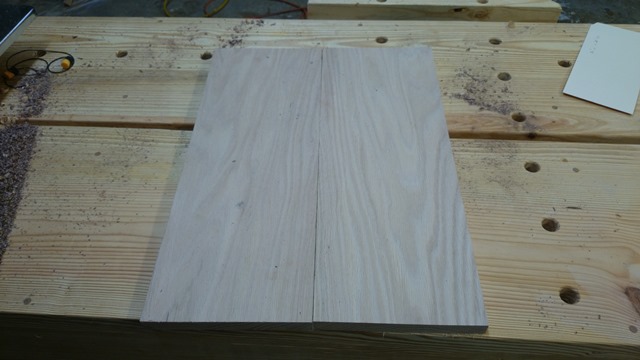
After selecting the board – a 1 x 8 flat sawn red oak board – I chose the best looking grain arrangement and matched a pair of boards. These will do the trick for what I need to do.

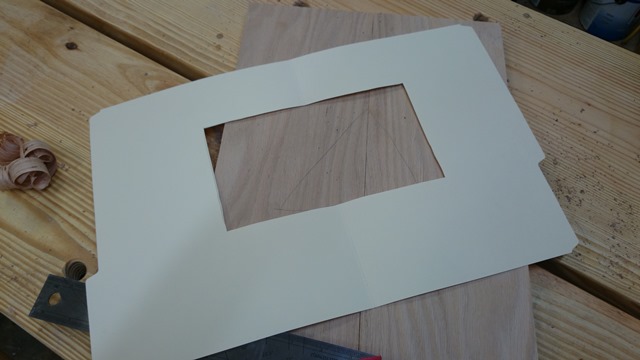
The file folder template

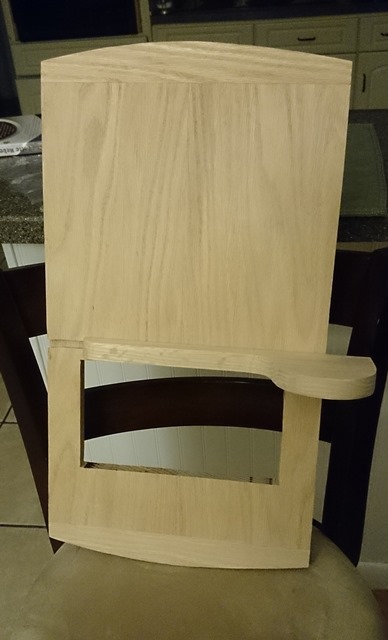
From there, I had to cut a hole in the middle of the piece. To make this happen, I first cut out a template in an old file folder to match the size that I needed. After carefully marking the size of the cutout, I stacked the two pieces together with some template tape, so I could cut both pieces at once.

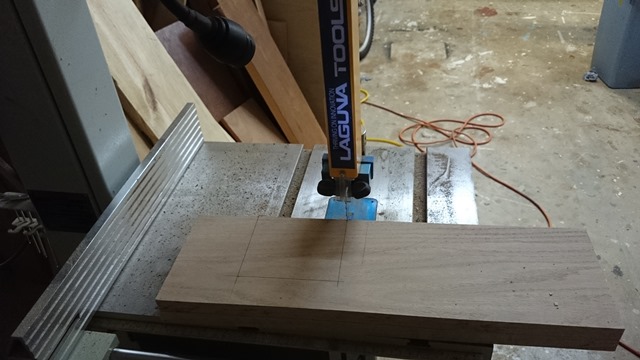
Laguna makes the cut

From there, it was a short hop over to the Laguna bandsaw for the cutting. This was a simple notch that had to be made, and the blade just sliced cleanly through the two boards, making a perfectly centered hole once I pulled them apart and matched them.

I wanted some breadboard ends for the top and bottom, because this piece is going to be in a place where the humidity could be an issue. So, onto the router table with the tongue and groove bit sets, where I grooved the ends and ran a tongue on the top and bottom of the main piece. They fit together beautifully.

DSC_0066

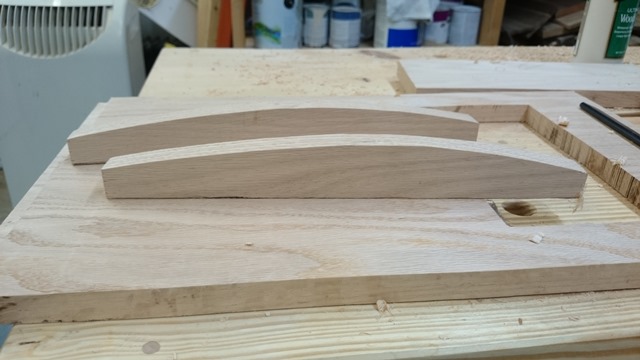
I cut a nice sweeping arc on the outsides of the breadboard ends, and once I had them all faired up, I attached them to the top and bottom tongues with a dab of glue smack in the middle of the piece. I like that look.

The next step was to cut a sliding dovetail for a shelf. That was a simple joint to cut, and I promise I will be showing how to cut that in a later post. Now, once I get the committee reviewing the piece, I will also shape the shelf and attach it with just a dab of glue at the end, further allowing the piece to expand and contract.


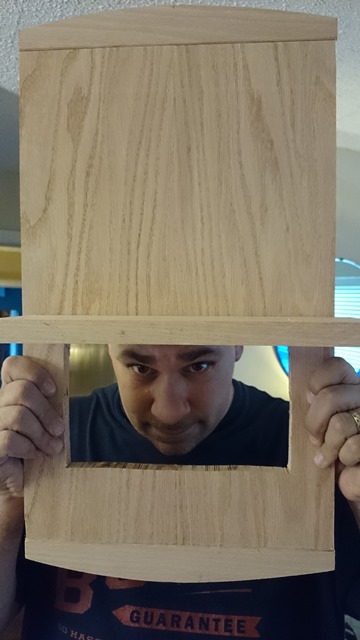
Peek a booNow, I have to bring the piece to where it will eventually end up to ensure it fits where it needs to, check out how it will work with the final accessories, and to design the final engraving.

I hope when it is unveiled, that it looks as good as possible and impresses the final recipient…

The weekly plan

Jeff Branch’s Queen Sized bed plan

So, I got maybe a few hours into my new weekly woodworking plan idea for the blog, and Jeff Branch contacted me. It seem he had a plan he designed that he wanted me to feature… and the story behind it is pretty cool. I’ll let Jeff explain its origin:

Jeff Branch's bed

I built this bed as a small part of the relief effort after a massive tornado outbreak in northern Alabama on April 27, 2011. Sixty-three tornadoes touched-down in our state that day killing 247 people – a very traumatic day for sure.

The bed was designed to be simple so it could be built quickly, but I also wanted it to be more than just a basic bed. I added a paneled headboard and unique finials to the posts. The joinery is mortise and tenon and stub tenon.

It was a fun and meaningful project. The bed was donated to a family who lived about 75 miles from my home.

If you are looking to build a bed, it’s a pretty cool – and totally FREE – plan.

Link of the week

Infinity Cutting Tools Blog

There are lots of tool companies out there, offering loads of tools for sale. And, while they look totally enticing, anyone wanting to buy these tools might have a few questions. How did the tool maker come up with the design? What are some other uses for the tool? How can I get the most out of my investment?

Kurt and AndyIn order to help prospective tool buyers, the folks at Infinity Cutting Tools have set up a blog, where woodworkers in residence Kurt Raschke and Andy Gibson use the tools, offer tips and tricks and go into detail on the best way to set things up. No, it’s not a groundbreaking idea, but it does offer some additional guidance while deciding if that tool is right for you and your shop.

Making his mark

My friend Lawrence Wroten is a real up and coming woodworker, but his blog, Midnight Woodworking, doesn’t get much traffic.

That’s a real bummer.

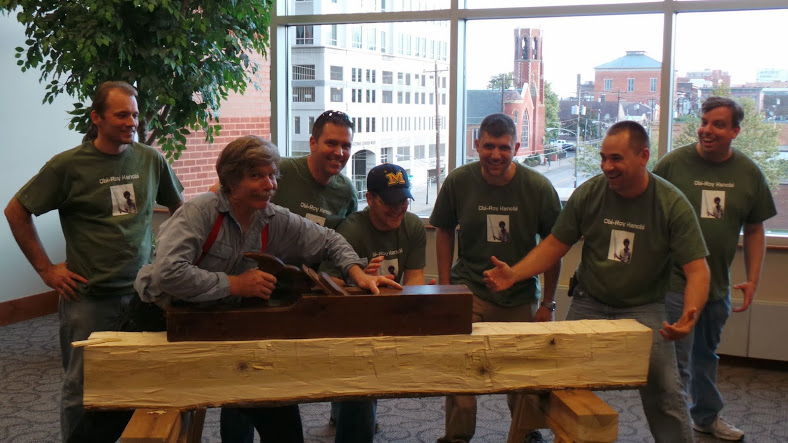
Lawrence, on the left, taking in what appaers to be a woodworking rendition of the last supper
Lawrence, on the left, taking in what appears to be a woodworking rendition of the last supper

It’s a real shame, because the content he has is just so darned good. For instance, he recently told me about a little experiment he conducted on how to sign his work, and the idea was nothing short of genius.

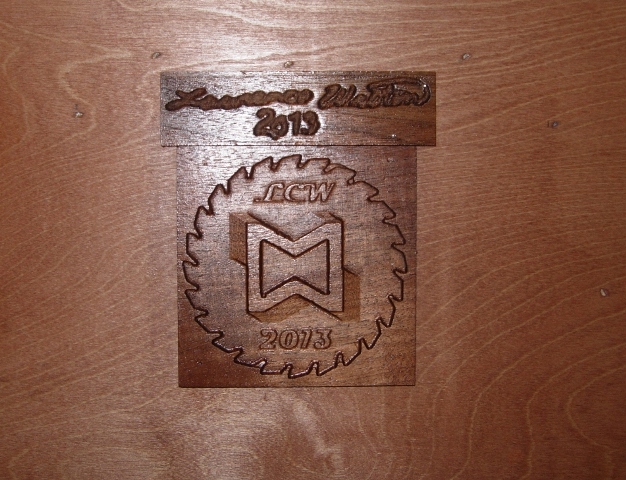
First, the background: Lawrence is out of his mind. Seriously. Instead of signing, branding or inlaying something into his work to identify it as his, he carved – yes CARVED – his logo into the project at the end. With such an intricate logo, this carving was adding about four hours to each project.

I can understand being proud of your work and wanting it identified for years to come, but, come on… FOUR extra hours? Wow… Lawrence's carving

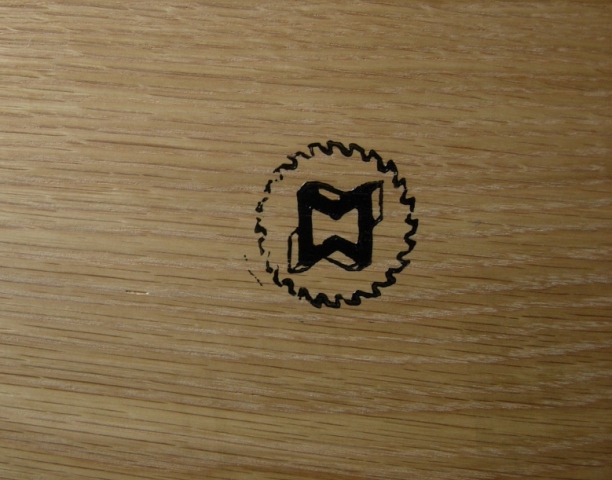
So, he got to thinking, why not create a stamp that he could use to apply an inked image onto the projects?

I don’t want to give away the method he went for, but I can tell you, it was inspired, and the maker’s mark came out looking good.

The Stamp! The Stamp!

Want to find out how he did it? Click here to see how well it worked out, and I guarantee you will be impressed.


Something new at the show

No, this isn’t more about the new weekly plan feature that I debuted yesterday (Although, that’s pretty cool!). This is instead about my visit to the Woodworking Show in Tampa this past weekend.

You see, I wanted to do some new stuff this week when I went. The first thing I thought I could do was to bring one of my sons with me. My oldest son Dominic was at some big high school business event taking place in Orlando, so he was out. But, my youngest was free, and he is also an excellent photographer and videographer, so I invited him to come along for the day. He went for it.

The boy can drive a bargainBut only if I included breakfast. That kid drives a hard bargain.

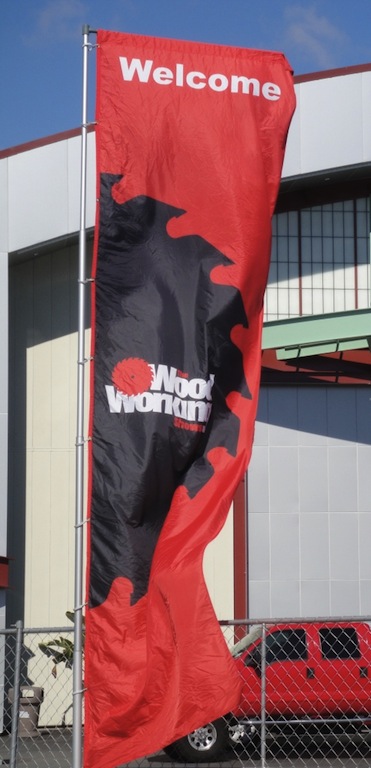
The Woodworking Shows Flags

After a big plate of pancakes and bacon, we were then off to the State Fairgrounds where the show was being held. When we got there, I was the one who was too excited to contain myself. My son had to calm me down and refocus me on the important stuff.

When we got inside, it was great to be there early, before the crowds got in, to conduct a few interviews and get some shots of the vendors before the madness begin.

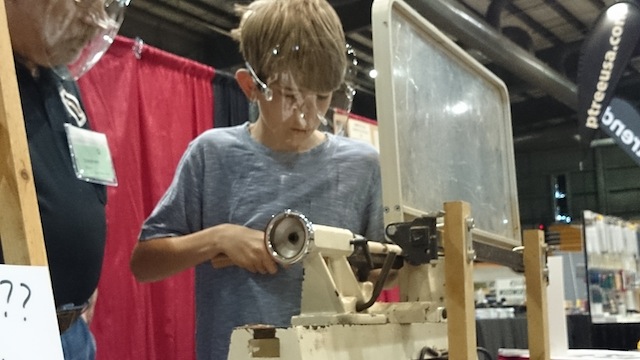
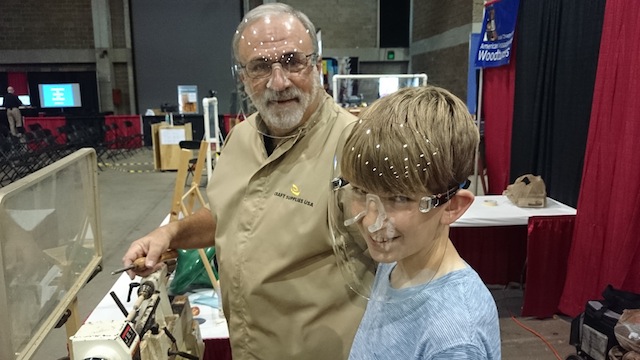
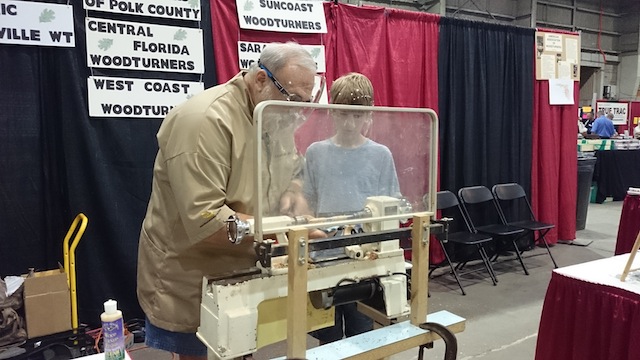
The real highlight, though, was watching my son turn his first pen. At first, he was very apprehensive, but with some great guidance, he was able to go from square blank to turned pen with ease.

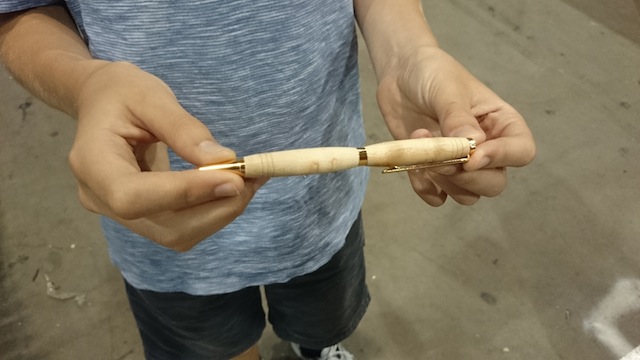
DSC_0037 DSC_0038 DSC_0039 And, the result.. well… it was something to see!

The resultHis first effort was so inspirational, well, I just had to to do something on iMovie…

Now, of course, I have my hands full. The first thing he said when he was done with the turning was to tell me, “Hey, dad, we need a lathe!”

I assume we will be shopping shortly…

And, now for something completely different…

Since I started Tom’s Workbench back in 2007, a regular feature of my weekly posts has been the weekly poll. In fact, the last poll I did was my 300th iteration of the feature.

Check that box!

While it would be easy to keep going the way I have, I have decided to change things up a little bit.

From now on, Sunday’s are going to be links to woodworking plans I think are pretty cool. I hope to spread the plans around the house – bedrooms, kitchens, offices, shop fixtures… the like. Some of the plans may be free, while others may cost a little, but I hope that this new feature allows you an opportunity to explore some pretty cool ideas you might want to tackle in your shop.

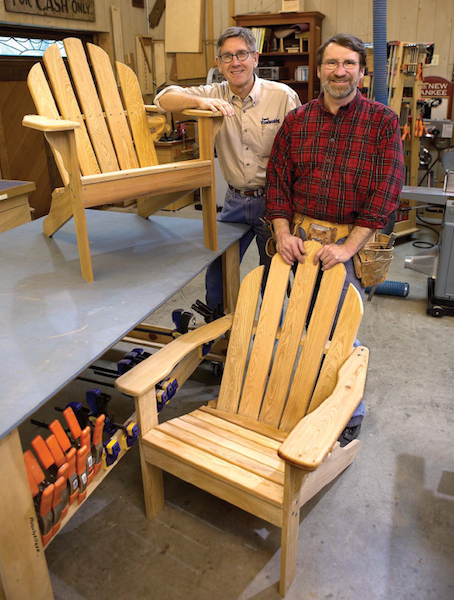
Norm Abram and Steve ShanesseyThis week,with spring in the air – and a request from reader Kevin Lambdin in my inbox – it’s only appropriate that we kick of with a plan to build an outdoor classic – an Adirondack Chair. This plan comes from our friends at Popular Woodworking, and was build by none other than the New Yankee himself, Norm Abram.  

Now, where have the polls gone? Trust me, they haven’t gone anywhere. In fact, Marc Spagnuolo has asked if I would be able to do weekly polls over at the Wood Whisperer’s site. This way, you can keep voting – and submitting your awesome ideas to me, so we can keep that up and running.