All posts by Tom

I'm the guy who writes the blog...

Woodworking Spotlight: Ron Hock

A router without bits is an interesting paperweight. A car without fuel in it is a nice piece of modern sculpture.

And, a hand plane without an iron is nice to look at, but that’s about it.

That’s why Ron Hock of Fort Bragg, California does what he does today. You see, Ron makes some of the world’s best plane irons for some of the world’s best woodworkers.
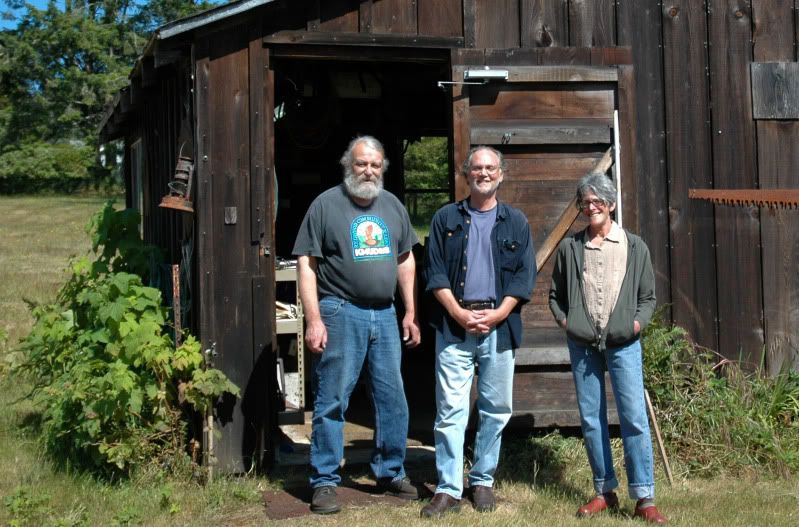
It all started back in 1981 when Ron, a budding knife maker, got his start the same month James Krenov opened his classroom at the College of the Redwoods. “Even though we were new to the area it was not difficult to feel an excited buzz in the community over the fact that the College of the Redwoods would be hosting his Fine Woodworking Program here.”

While Ron’s fame was made as the plane iron maker to Mr. Krenov, it was actually a different instructor and his student who first approached Ron for plane irons. After what Ron describes as a less-than-perfect first batch of irons, he refined his methods and the iron forms. Today, woodworkers can buy the same basic design as that second batch made way back in 1981.
Ron made it clear to me that he doesn’t forge his irons. “No sir, we’re not blacksmiths. We are machinists.” Using World War II era technology and vintage equipment, Ron and his associates follow the simple formula to success. First, the bar stock is sawn to size, slots are milled, bevels are ground and the maker’s logo is stamped. These raw irons get sent out for heat treatment and, once they come back, they are wire brushed to get the chalky oxide layer off. The bevels are reground and they are coated with a rust resistant oil. “This is not rocket science,” Ron joked.

While many of the irons are made in Hock Tools’ California shop, most others are made at a French facility which uses the latest technology. “Now, they use all the latest high-tech machinery: computer controlled lasers and grinders, cryogenic treatment. Even laser-etching the logo. In many ways, that IS rocket science!”

While there are many steel alloys out there, Ron’s irons come in two ‘flavors’ – O1 and A2. The O1 alloy is your basic high-carbon steel as was used decades ago. The addition of a pinch of manganese allows the blade to quench in oil, not water. A2 has added chromium, which makes the steel much tougher. The O1 blades are easier to sharpen, the A2 blades hold a honed edge longer.

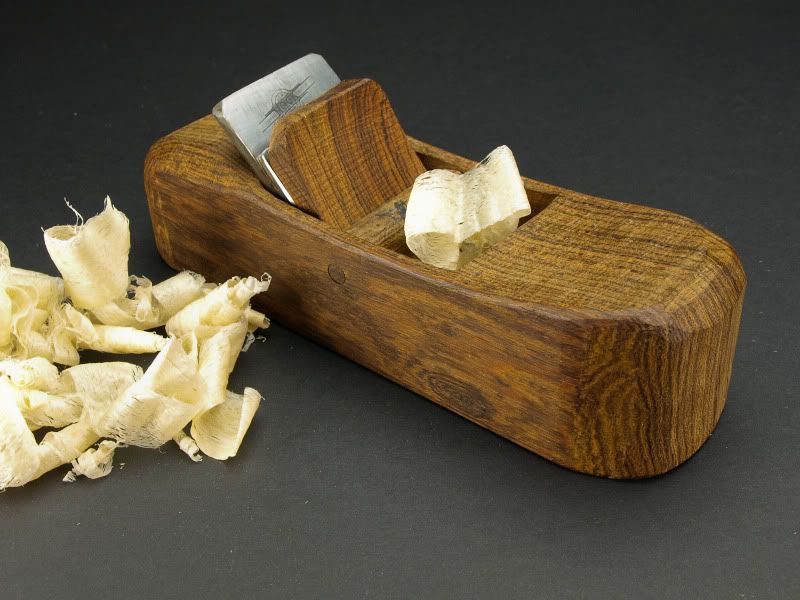
While Ron does make replacement irons, the real fun comes when woodworkers want to build their own planes. From the early days of Mr. Krenov making his own planes, the hand-made movement has gathered a tremendous amount of steam. There are scores of simple plans for woodworkers to construct a custom plane to suit their purposes. The choice of woods for the plane body is tremendous, and Hock Tools offers plane irons for just this purpose. Ron often gets pictures of completed planes where the woodworker’s pride and enthusiasm is easy to see. “These are certainly exciting times to be a tool maker.”

While you think Ron would be satisfied keeping to the plane irons he does best, he has actually stretched into a new field of interest – shellac. “My brother-in-law owns a paint company. His sons who worked there at the time asked, ‘Hey Uncle Ron, what about some wood finishing products with your name on them?’ To which I said, ‘Got shellac?’”
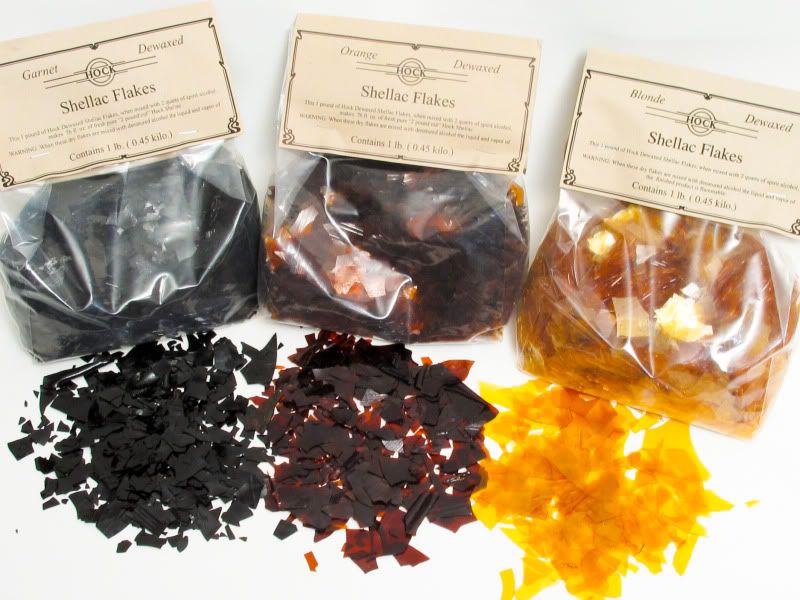
Ron says that shellac is a wonderful finish that is more intriguing the more you learn about it. It’s non-toxic, easy to apply, easy to repair, and it’s one of very few insect products that we humans routinely use. Shellac is extremely useful old-fashioned stuff and an entertaining adjunct to the old-fashioned tools he makes. “I like to say, ‘With shellac, we’ve taken another giant step back…’”

While Ron’s website is a valuable source of information about planecraft, it’s not the only place you will be able to read all about it. “I’ve just finished writing a book on sharpening for Popular Woodworking Books: The Perfect Edge is due out this fall. It’s heavy on theory and metallurgy, lots about heat treatment and rust. Abrasives, too: what they are and which one does what best, etc. I’ve found woodworkers to be eager for information about all aspects of their craft and there are very few woodworking operations that don’t include a piece of steel somewhere between the worker and the wood. A better understanding of that piece of steel can’t be a bad thing so I’ve included as much as I could about the metal side of woodworking, along with the how-to sections for the various edges in the shop.”

While making high-quality plane irons has its challenges, Ron is very happy to have landed where he has. “I am so fortunate to have fallen into this industry. Not just that I happened along at the exact right time but that it’s this industry. Woodworkers are the friendliest, most interesting, decent people and I can’t tell you how grateful I am to find myself doing what I do and dealing with the kind of people I deal with. You’re the best part of what I do. You keep up the good work and I’ll do my best to do the same.”

The woodworking world is certainly more interesting and entertaining with Ron Hock around…

Woodworking Spotlight:  Ron Hock

A router without bits is an interesting paperweight.  A car without fuel in it is a nice piece of modern sculpture.

And, a hand plane without an iron is nice to look at, but that’s about it.

That’s why Ron Hock of Fort Bragg, California does what he does today.  You see, Ron makes some of the world’s best plane irons for some of the world’s best woodworkers.

It all started back in 1981 when Ron, a budding knife maker, got his start the same month James Krenov opened his classroom at the College of the Redwoods. “Even though we were new to the area it was not difficult to feel an excited buzz in the community over the fact that the College of the Redwoods would be hosting his Fine Woodworking Program here.”

While Ron’s fame was made as the plane iron maker to Mr. Krenov, it was actually a different instructor and his student who first approached Ron for plane irons. After what Ron describes as a less-than-perfect first batch of irons, he refined his methods and the iron forms.  Today, woodworkers can buy the same basic design as that second batch made way back in 1981.

Ron made it clear to me that he doesn’t forge his irons.  “No sir, we’re not blacksmiths.  We are machinists.”  Using World War II era technology and vintage equipment, Ron and his associates follow the simple formula to success.  First, the bar stock is sawn to size, slots are milled, bevels are ground and the maker’s logo is stamped.  These raw irons get sent out for heat treatment and, once they come back, they are wire brushed to get the chalky oxide layer off.  The bevels are reground and they are coated with a rust resistant oil.  “This is not rocket science,” Ron joked.

While many of the irons are made in Hock Tools’ California shop, most others are made at a French facility which uses the latest technology.  “They use all the latest high-tech machinery: computer controlled lasers and grinders, cryogenic treatment.  Even laser-etching the logo.  In many ways, that IS rocket science!”

While there are many steel alloys out there, Ron’s irons come in two ‘flavors’ – O1 and A2.  The O1 alloy is your basic high-carbon steel as was used decades ago.  The addition of a pinch of manganese allows the blade to quench in oil, not water. A2 has added chromium, which makes the steel much tougher.  The O1 blades are easier to sharpen, the A2 blades hold a honed edge longer.

While Ron does make replacement irons, the real fun comes when woodworkers want to build their own planes.  From the early days of Mr. Krenov making his own planes, the hand-made movement has gathered a tremendous amount of steam. There are scores of simple plans for woodworkers to construct a custom plane to suit their purposes.  The choice of woods for the plane body is tremendous, and Hock Tools offers plane irons for just this purpose. Ron often gets pictures of completed planes where the woodworker’s pride and enthusiasm is easy to see. “These are certainly exciting times to be a tool maker.”

While you think Ron would be satisfied keeping to the plane irons he does best, he has actually stretched into a new field of interest – shellac.  “My brother-in-law owns a paint company. His sons who worked there at the time asked, ‘Hey Uncle Ron, what about some wood finishing products with your name on them?’ To which I said, ‘Got shellac?’”

Ron says that shellac is a wonderful finish that is more intriguing the more you learn about it. It’s non-toxic, easy to apply, easy to repair, and it’s one of very few insect products that we humans routinely use. Shellac is extremely useful old-fashioned stuff and an entertaining adjunct to the old-fashioned tools he makes. “I like to say, ‘With shellac, we’ve taken another giant step back…’”

While Ron’s website (hocktools.com) is a valuable source of information about planecraft, it’s not the only place you will be able to read all about it.  “I’ve just finished writing a book on sharpening for Popular Woodworking Books: The Perfect Edge is due out this fall. It’s heavy on theory and metallurgy, lots about heat treatment and rust. Abrasives, too: what they are and which one does what best, etc. I’ve found woodworkers to be eager for information about all aspects of their craft and there are very few woodworking operations that don’t include a piece of steel somewhere between the worker and the wood. A better understanding of that piece of steel can’t be a bad thing so I’ve included as much as I could about the metal side of woodworking, along with the how-to sections for the various edges in the shop.”

While making high-quality plane irons has its challenges, Ron is very happy to have landed where he has.  “I am so fortunate to have fallen into this industry. Not just that I happened along at the exact right time but that it’s this industry. Woodworkers are the friendliest, most interesting, decent people and I can’t tell you how grateful I am to find myself doing what I do and dealing with the kind of people I deal with. You’re the best part of what I do. You keep up the good work and I’ll do my best to do the same.”

The woodworking world is certainly more interesting and entertaining with Ron Hock around…
Now, that’s hot!

It’s been a tough couple of weeks if you are a fan of celebrities.  The King of Pop Michael Jackson passed. ’70’s sex symbol Farrah Fawcett passed. Kung Fu and Kill Bill actor David Carradine passed.   TV pitch man Billy Mays passed.

And, the one that brought back the most memories for me was the passing of the long time Tonight Show sidekick Ed McMahon.  When the news broke, the memories of he and Johnny Carson came flooding back. Johnny and Ed ruled TV’s late night airwaves for decades, bringing laughs to insomniacs around the world.

One of the best parts of the show was Ed’s call, “Heeere’s Johnny!”   Doc Severinsen and the band would belt out the Tonight Show’s signature theme song, and Johnny would emerge from behind the curtains to peals of applause.

That’s when Johnny really got into it, starting with his monologue.  My favorite jokes were the ones where the audience got involved.  For instance, during the summers, Johnny liked to talk about the heat in Los Angeles.  His joke would start like this:

Johnny: It was so hot today…

Audience: HOW HOT WAS IT?

Johnny would typically pause for a second with a mischievous smile on his face while Ed and the audience chuckled, then deliver the punchline.  Some of the most famous were:

  • It was so hot, I saw a robin using potholders to pick up a worm.
  • It was so hot, I saw a dog chasing a cat… And they were walking.
  • Burger King said, “If you want it your way, cook it yourself.”
  • Chickens were lining up outside of Kentucky Fried Chicken to get plucked.

Classic stuff…

Sweatin in the shop
Now that we are in summer, one of Johnny’s lines could easily be, “I saw a woodworker in Florida melt.”  It’s hot in my shop.  I mean really hot.

My shop is in an attached two car garage.  There is no insulation above in the attic, and the garage door isn’t insulated, either.  Which means that the sun beats down, and the temperatures spike in the latter part of the day.

How hot does it get in the shop?  Well, a thermometer out there this past weekend registered a cool 94 degrees F.  It wasn’t too long into my work session that I was drenched in sweat from my the top of my head down into my squishy shoes.  That’s no way to treat a woodworker!

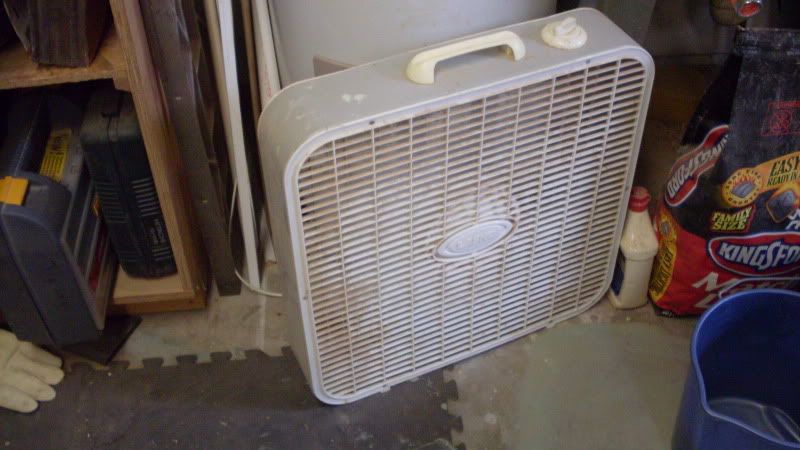
My first – and only –  line of defense for the first few years of woodworking was a box fan I had picked up at a mega merchandising store.  I put the fan in the back of the shop blowing toward me and the bench.  It did move the air around and provided a little bit of relief.  There were only two problems with this plan.  First, the box fan stirred up tremendous amounts of sawdust and planer shavings.  Secondly – and most important – it really didn’t do much to cool me off.  It was blowing the hot, humid air around.  Since the very humid air wouldn’t allow the sweat to evaporate, I just ended up  gasping for breath.

In those years, I absolutely had a woodworking off season. I would race to finish my projects by the middle of May, and then I would start again in late September when the humidity and the searing heat would start to back off and the fan became more effective.

One year, my wife told me to get in to the car and took me on a surprise trip.  “Where are we going?” I kept asking.  She drove silently with a big grin on her face. When we pulled into the Home Depot parking lot, I had an idea of what was going on.  We headed straight for the area in the store where the air conditioners were on display.

R2D2 at workThat’s where we found this little portable unit.  The boys used to call it R2D2, after the droid of Star Wars fame.  It’s a clever system that didn’t require me to make any modifications to the shop.  It plugs in to a 110 volt outlet and has a vent which exhausts the hot air through the window on my side garage door.  There is no condensation drain on the unit – apparently, the condensation is evaporated and sent out through the same exhaust port.

This unit has served me well for the past four years.  I can turn it on before a shop session to get a head start on cooling the room for me.

Now, while it does cut the edge off the ferocious heat, it’s only an 8,000 btu unit.  It does struggle during the heat of the day to keep up with the tremendous heat gain.  However, if  I turn the AC toward me, and I also use the box fan, I can get it to cool me more efficiently.

Is this the ultimate solution to my climate control problem?  No way. That 94 degree F reading was just as I turned the AC unit on, and all it managed to drop the temperature to was 88 degrees F.  I would definitely love to get my hands on a larger AC unit, even if I had to run a 220 volt circuit to serve its needs.    I’m sure I could also insulate the garage door to help hold some of the cool air inside the garage.  That will be work for another day.

Right now, I just have to remember to work more slowly, take more breaks and drink plenty of water and – if it’s a long shop session – Gatorade.

Ultimately, I could I could try working after the sun is down, which would limit the heat gain in my shop.

But that’s when I’m busy watching late-night TV…

Quick Poll

Of all the woodworking skills you can learn, turning has got to be one of the most interesting.  You can take a square piece of stock and – quite literally – ‘turn’ it into a graceful, flowing shape. Some people have described is as hypnotic, something they can do for hours while fragrant curls of wood fly from the work.

However, there are also some practical considerations as well. Should the workpiece come free from the lathe, it could fly quickly and injure you if you are not wearing a full face shield.  Then, there’s the challenge of turning identical parts for – say – the four legs of a table.

Finally, there’s the cost.  The lathe, the tools, the right kinds of chucks… well, you could run into quite an expense before you get to put skew chisel or bowl gouge to a workpiece.

This week, I want to know what you think about wood turning…

[poll id=”79″]

Link of the week

Minwax Wood Finishes

Minwaxs 100th Anniversary Logo from 2004When it comes to wood finishes, it’s hard to find a company larger than the Minwax-Thompson company.  Their products can be found nearly everywhere you can purchase wood finishing products.


The Minwax line is very extensive, including oil and water based stains and finishes, brushable lacquers, wood fillers and many other specialty products.

The site is easy to navigate, and has links to step-by-step instructions, free plans for wood projects and a gallery of ideas which may spark your own designs.  The site also features an interactive wood finishing forum, a newsletter and a user submitted project showcase.

Wood and Food are Good

When I was growing up, I must have driven my mom and dad crazy.

While my brothers were involved in things such as auto repair, music and sports, I spent quite a bit of time relaxing, watching TV and just hanging around.  In other words, I had very few hobbies I wanted to pursue.  Since both of my parents kept exceptionally busy with yard work and other necessary home jobs, I was often encouraged to get off my duff and take up some activity to build my interest and keep me active.

Boy, have the times changed.

Today, my wife has to caution me to take things a little easier and find some time to relax.  I can’t help myself, because the hobbies I found an interest in are just so darned interesting.  I’m writing, reading and studying the weather.  I’m watching old movies. I’m even home-brewing beer.

And, my three favorite hobbies are woodworking, food and wine.

Talk about three fields of interest where you can study for years and never discover all of the nuances.  New and exciting wines from nearly all corners of the world are popping up on specialty store shelves.  Some wines can even vary tremendously from the same stretch of sunny river valley depending on how much sunlight they get or the composition of the soil.

Foods from around the world illustrate different cultures’ views of taste and the evolution of their ingredients.  Even something as simple as pasta has hundreds of different iterations – from udon noodles in Japan to the familiar spaghetti with meatballs my mom makes.

And, woodworking… well… the selection of furniture styles (Shaker, modern, Chippendale), building materials (plywood, hardwoods, exotics) and tool choices (table saw, band saw, lathe) alone can keep your average woodworker busy for decades.

However, the more I learn about these three hobbies, the more amazed I am about how tied together they really are.  In fact, many aspects of what we eat and drink owe their existence and unique characteristics directly to their contact with wood.

Of course, there are the completely obvious examples.  Tree fruits (apples, cherries, peaches, olives) and spices (nutmeg, cinnamon, allspice) simply wouldn’t be if they didn’t have the trees they grew on.  And, once those trees have finished their long, productive lives, many of them find their way into workshops around the world to start their next life as a beautiful piece of furniture.

In the days before cardboard,  airtight cryopacks and other modern packaging methods, wood built the containers of choice for carrying foodstuffs. Crates, casks and barrels were all made of wood, and these durable containers served well for many years.

In fact, one of the ‘goofs’ listed for the movie The Godfather was that during the scene where Don Vito was shot during an assassination attempt, the oranges he spilled out onto the ground came out of a cardboard box… not the standard wooden crate that would have been used during that era.

The skill of the cooper – or barrel maker – was exceptionally important in days past, and still is now.  Any food item that primarily a liquid or a fine powder that could leak out had to be contained in a relatively water-tight container.  Flour, corn meal, salt pork and beef were stored in barrels, and some of my earliest memories of going to lunch with my dad involved fishing pickles out of a brine-filled barrel at a New Jersey deli.

The relationship between beverages and wood is legendary.  Modern steel beer kegs may have replaced wooden barrels, but the romance of tapping the wooden keg is still strong.  Even though the beer may come from modern tanks to ensure the product’s freshness, many microbreweries will decorate their establishments to at least make it appear the beer is still tapped straight from the barrel.

One large American beer company even goes so far as to advertise their brew Beechwood Aged.  It is what it sounds like – the young beer is pumped into a large lagering tanks with beech chips which affects the flavor of the final product.

Wine and spirits, on the other hand, are frequently aged in wooden barrels which impart unique taste and color components to the beverage.  Bourbons, Scotches and other Whiskeys come from the still as clear as vodka, but gain their characteristic brown shade from interaction with the wood in the barrels.

Many red wines and a few white varieties (particularly wines made from the Chardonnay grape) add layers of complexity when allowed to age in oak barrels.  The vintner can fine-tune the flavor of the wine by carefully controlling how much time it spends in the barrel. Italian and Spanish wine makers are even required by law to age any wines labeled Reserva in oak casks for a minimum of an additional year to concentrate the flavors and further mellow the wine.  Gran Reservas require a minimum of at least three years in the casks to earn that designation.

Then, there is food preparation.  The first chopping boards ever used may have been the stumps of downed trees.  Those later evolved to sawn tree rounds and then to large butcher blocks made of end or edge grained hardwoods.  Apprentice butchers would often buy a butcher’s block and use it throughout their entire careers, planing the surfaces smooth after they became heavily worn.

And, just think, I haven’t gotten to wooden bowls, serving utensils, rolling pins or any of the dozens of other kitchen implements that can be made out of wood.

The next time you are in the kitchen preparing a meal and sipping one of your favorite beverages, stop and think for a minute about the inseperable ties between food and wood.  They are very, very good.

The results are in!

I’m sure that most of you are on tenterhooks, anxiously awaiting the results of the Great Wood Movement Experiment of 2009.  And, yes, I did promise that about two weeks ago, I would have the results.

However, a little thing called ‘Life’ got in the way.  My timing was terrible.  My two confederates in this project  – Dave Campbell and Marc Spagnuolo – both had things that kept them away from measuring the sample boards I had sent.  For Dave, it was a family camping trip that set him back a day or so.  For Marc, I must have been clairvoyant.  I sent him the boards smack in the middle of a move between houses. No wonder it took some time to get the results back.  Dealing with power, phone and cable companies takes time!

Anyway, just to recap what had happened:

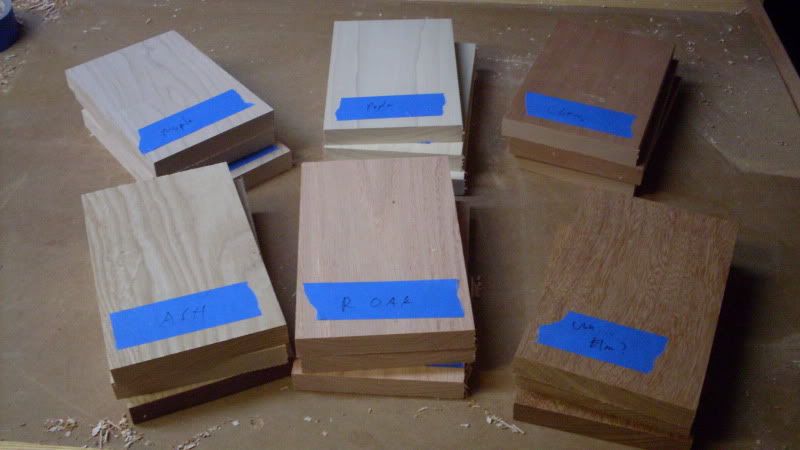
I had prepared some samples of commonly used boards in cabinetmaking – cherry, poplar, hard maple, ash, red oak and a mystery board which looked a lot like elm.  All were 5″ wide by 8″ long and were shipped to my victims – errr – volunteers by USPS Express Mail.

Dave Campbell is the deputy editor of Wood Magazine, and calls the Des Moines, Iowa area home.  Marc Spagnuolo is the Wood Whisperer himself, and has bounced between two homes in the Phoenix, Arizona area for the past few weeks.

Both of these guys let their packet of sample boards aclimate to their shops for  about two weeks. I kept a third set of boards here in my Tampa, Florida area shop in the stifling heat and humidity.

Now for some notes about the experiment…  First of all, I discovered that I really need to tune my table saw.  I was having some discrepancies across the width of the board.  For instance, my sample of ash had a difference of .006 in the width of the ‘top’ of the board and the ‘bottom’ of the board.  Guess it’s time to haul out the operator’s manual and get busy on that…

Also, none  of the boards had appreciable expansion along their length.  This was the expected result because wood doesn’t expand dramatically along the length of the fibers.  Of course, the next time I do something like this, I will cut the boards 5 inches square, so we can fit calipers across both dimensions….  Live and learn, right?

The width measurements were all taken in decimal inch measurements on or about June 8.  Just for your reference, the weather readings from the three cities on that day were:

  • Tampa, Florida – Mean temp: 79; Dew Point: 69

Tampa was its typical summer-like self.  The weather was exceptionally rainy at the start of June, and the added humidity made going into the shop a challenge.

  • Des Moines, Iowa – Mean Temp: 66; Dew Point: 65

Des Moines saw the passage of a frontal system which not only brought rain, but severe weather as well, with the touchdown of at least one confirmed tornado.

  • Phoenix, Arizona – Mean Temp: 84; Dew Point: 36

As with Tampa, Phoenix was enjoying – if you can use that word with a straight face – its typical hot and dry weather, with a dew point which seems just way too low for someone living in Florida.

The results were pretty interesting:

Cherry:

  • Tom –   5.014 inches wide
  • Dave –  4.995  inches wide
  • Marc –  4.938 inches wide

Poplar:

  • Tom – 5.007 inches wide
  • Dave – 5.004 inches wide
  • Marc – 4.938 inches wide

Maple:

  • Tom – 5.003 inches wide
  • Dave – 4.990 inches wide
  • Marc – 4.906 inches wide

Ash:

  • Tom – 5.002 inches wide
  • Dave – 5.001 inches wide
  • Marc – 4.875 inches wide

Red Oak:

  • Tom – 5.008 inches wide
  • Dave – 4.985 inches wide
  • Marc – 4.938 inches wide

Uhh, Elm?:

  • Tom – 5.003 inches wide
  • Dave – 4.996 inches wide
  • Marc – 4.875 inches wide

Since Des Moines’ dew point was higher that its normal levels due to the increased rain, Dave’s samples had considerably less movement than I had expected.  In many cases, the difference between widths was mere thousandths of an inch – something which could easily be accounted for given my faulty saw setup.

However, Marc’s numbers were considerably smaller than the samples kept in my shop.  Going from the near tropical conditions in Florida to Phoenix’s desert, the boards gave up their moisture content to equalize with the surrounding environment.  The ash sample was dramatic, shrinking nearly 1/8 of an inch across a five inch wide board over the two week period.

Even with my faulty science and measurement techniques, hopefully you have been able to see that yes, there is definitive evidence to suggest that wood does move over its width with changes in humidity.  This expansion and contraction does have to be accounted for in your construction methods, or the boards will crack or push apart the joints.  Floating solid wood door panels and table fasteners are some of the time-honored techniques for handling these expansions and contractions.

Will this be the end of the Great Wood Movement Experiment?  No way.  There are so many other aspects to check out… For instance, will boards of the same species expand and contract at the same rate if they are finished?  Will quartersawn or flatsawn boards expand the most?  Oh, so many wood samples to cut, so little time…

All I can say is that the Great Wood Movement Experiment of 2009 has been a moving experience for me.  I have to move myself out to the shop to get that saw tuned up!

Link of the week

Build a Tie Rack for Dad

tying a tieOK, the tie is the ultimate cop-out Father’s Day gift.  I have gotten ties from my wife and kids on Father’s Day, and I don’t even wear suits.

How do I know that ties are such cop-out gifts? Because I used to give my dad ties for Father’s Day, even though he delivered Coca Cola for a living.

What was I thinking?

Well, if you have given dad plenty of ties in years past, Canadian Home Woodworker has a Father’s Day Tie Rack plan you can easily build in a weekend.  Using a small amount of wood and some lengths of dowel, dad can now have space to hang up to 14 ties in a compact area in his closet.

The perfect place to put those gifts from Father’s Days past.

Oh, and to all you dads out there, Happy Father’s Day to you.