All posts by Tom

I'm the guy who writes the blog...

Link of the Week

Greenwoodworking

Most woodworkers have to wait a while to use wood cut from a tree.  It needs to either have a trip to a kiln or spend some time in a stack to get its moisture content down.

Then, there are woodworkers who take the wood directly from the tree to build their creations.  At Greenwoodworking, Jennie Alexander takes readers through the techniques of working with wood fresh from the tree and shows a host of projects that can be made from green wood.

Sure, it takes a little bit more thought and consideration when working with the fresh stuff, but the results are well worth it.

Me, My Shelves and I

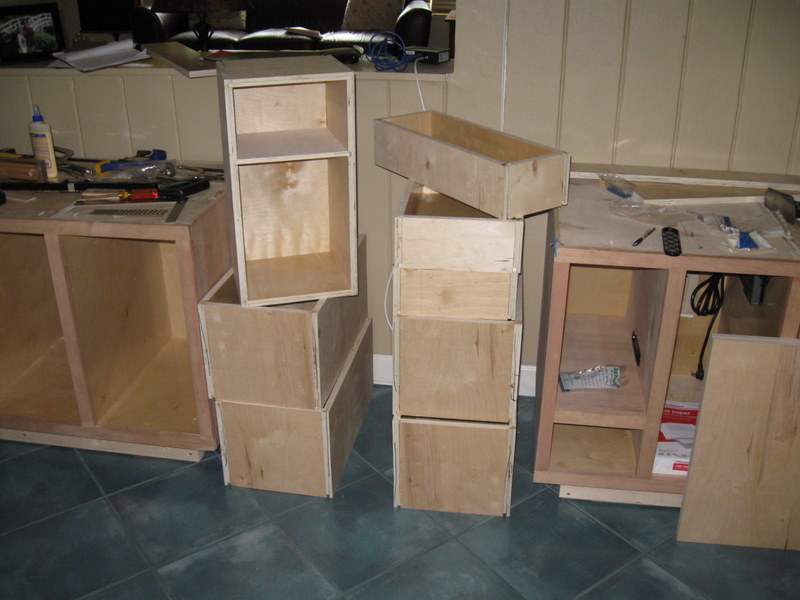
The cabinet project is moving ahead, and the end appears to be in sight…

Of course, this is when things get trickier. More refined. Every single boo boo stands out.  So I have to be on my game, otherwise that’s what everyone will notice when they look at the project.

Next up are the shelves for the bookcase units and the desktop that spans the two banks of cabinets.

The plywood that Paul selected is some very cool stuff. It has great grain, and it blends very well with the solid cherry, so it looks like the shelves are made out of one piece of wood – the ideal situation.

When you build plywood shelves, you have got to keep a few things in mind. How much space you will allow the shelves to ‘float’ side to side in the cabinet, how deep they should be inset inside the case… those basic aesthetic considerations.

Mechanically, though, you have got to consider how well the shelves will stand up to the weight of the objects placed on them. As you place a heavy-duty load (such as books) in the middle of a shelf, you will start to notice a sag in the shelving material. How much will it sag?  Well, there are a couple of ways to figure it out.

Sure, you could just build the shelf, load it up and hope everything works out … nah.  I don’t think I can handle getting an angry call from Paul in the middle of the night because a shelf full of family photos fell to the ground.

I imagine I could do a bunch of complicated math, but I was an English major… so math and I don’t do well together.

Fortunately, there is a great utility out there called the Sagulator.  Designed by the folks at Woodbin woodworking, the utility allows you to compute how much your shelves will sag under a load before you build them.

In my case, I selected the plywood option with an edging strip of solid cherry. Figuring a load of 40 pounds per linear foot (given as a standard load for a library shelf), I came out with a total of .02 feet for the total of the 24 inch span. Since the eye can detect a deflection of .03 feet per linear foot, I’m doing pretty well.

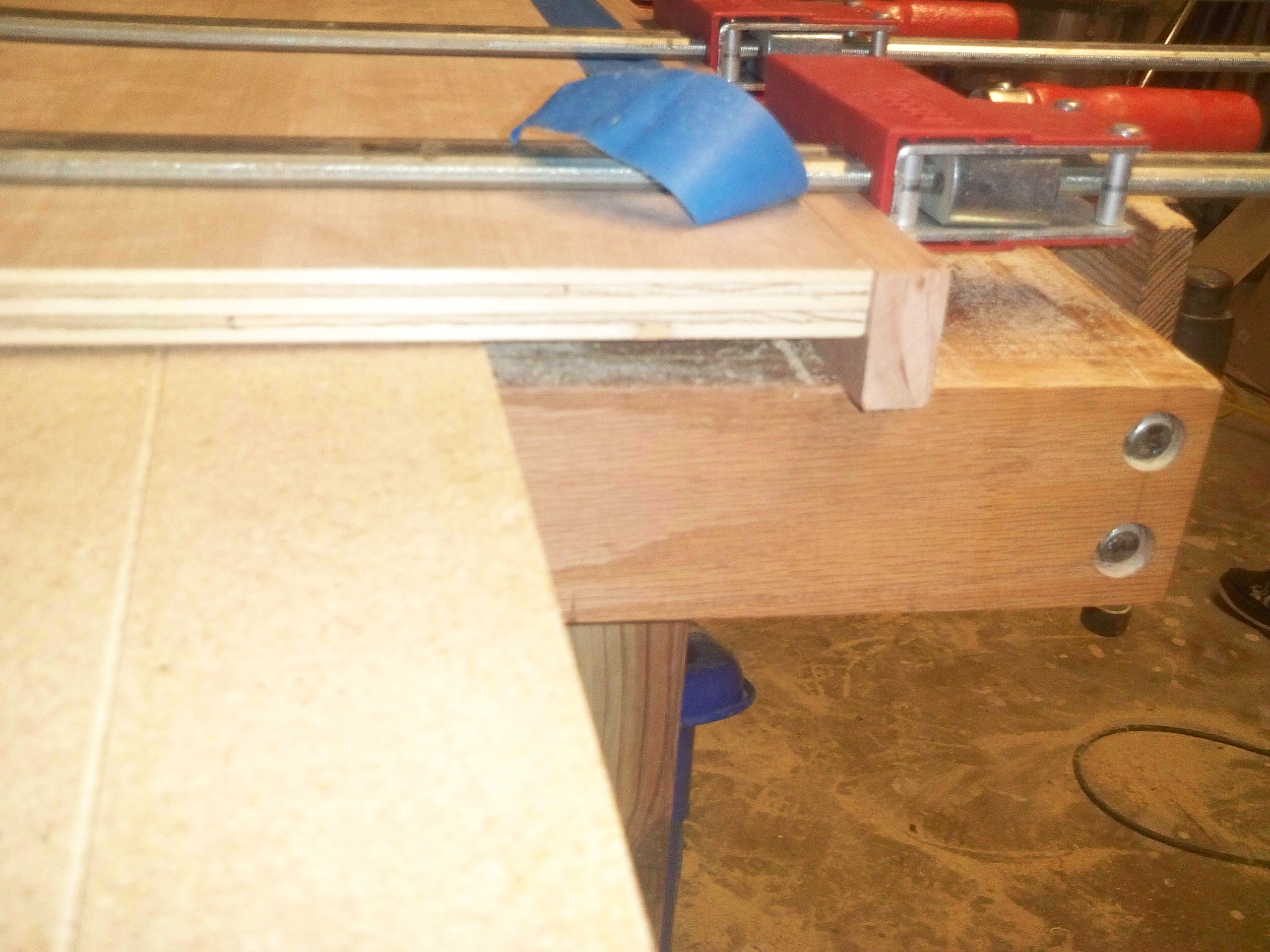
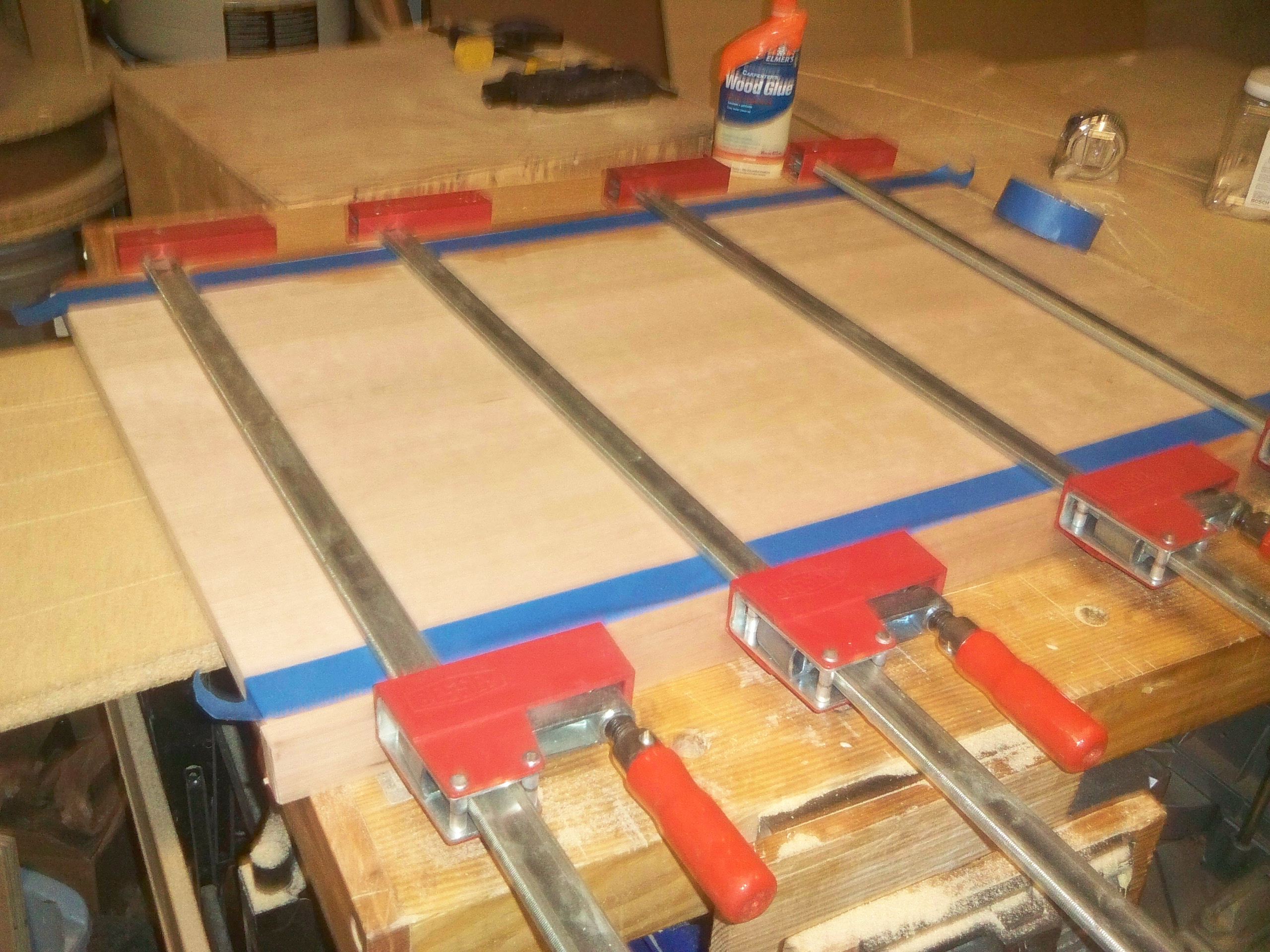
The desk span is essentially another shelf that will bridge the base units. Since it will be nearly three feet long, I decided that perhaps I should beef up both sides of the desktop to make it even sturdier. Again, it’s a simple piece of cherry plywood with a 3/4″ wide by 1.5″ tall solid cherry edge. I glued the edges in place, using biscuits to keep it aligned and provide some additional reinforcement.

Later, we will drill a hole for a grommet to allow monitor and keyboard cables to come up from below. Once the glue dries, it will be ready for some finish sanding and installation.

And, yes, that’s it. The desk shelf is the last piece of the project I will have to build (Although I will need to mill a little bit of molding…)

We’re getting closer!

My Mythic Labor

For those playing along, today is Labor Day in the United Sates and Canada, so let’s hear it for those hard working men and women who bust their butts every other day of the year!

Today, sit back, relax, and I’ll tell you a story about a guy who really did some work.

His name is Hercules, a mythical Roman figure (who went as Heracles in Greece…) who was asked by Jupiter (Zeus in Greece) to come over for some pizza and beer in order to help scratch a few things off the to do list around Mount Olympus.

Well, just as everyone knows, when you are asked to ‘lend a hand’ tackling a few chores, the magnitude of the tasks at hand seems to grow exponentially. Before he knew it, Hercules was asked to go and handle some tasks that were believed to be so difficult that no mortal could complete them.

You know, easy stuff like slaying the Nemean lion, capturing the Golden Hind of Artemis and obtaining the Girdle of the Amazon Queen. I can see the exchange now. “Jupiter, seriously?  You want me to go on a panty raid?”

One of the most demeaning tasks for our hero was that he had to clean the Augean stables in a single day. Since these cattle were immortal, they created quite a healthy layer of cow pies. And, since everyone looked the other way for the  30 years prior to his job, well, it was piled higher than you could find on Capitol Hill.  Just barely.

Our pal Hercules had a trick up his sleeve (he’s usually painted at least half-naked, so I’m wondering where he may have actually hid that trick.  In his boot, perhaps?) and turned hydraulic engineer, diverting a few rivers through the stables.  Before you can say, “Don’t drink the water downstream!” the stables were sparkling and shiny new.

I’m wondering if I can give good old Hercules a call to give me a hand with my shop…

Now that the cabinet job is entering its final phases, just about all of the pieces that need to go to Paul’s house are there.  Which means I no longer have any excuses for not being able to get to the dust anymore. All of those piles of sawdust and tools I took out but never put back immediately are out there, taking up space. The plug ends of tools are mixed together in a knot on the floor near my power strip…. so I have to sort those out. The vacuums are full of dust and shavings and need to be emptied … aww, heck, it looks like my day off from work is going to have me out in the shop.

Well, at least I have a barbecue on the schedule today… that will give me some time to rest before my next labor.

Quick Poll

Football season. Baseball season. Hunting season. The holiday season.

There are times in the year for just about everything. For some woodworkers, there is also a woodworking season – the time of the year when they can get into the shop and start building.

Woodworkers may wait for the temperatures to warm up or to cool down. Others may have to wait for kids to start school or to start their summer break. And, for others still, there isn’t any let off at all – it’s woodworking year round.

This week, let us know when your woodworking ‘season’ happen.

[poll id=”137″]

Link of the Week

The Basics of Woodworking with Stone Age Tools

Are you a woodworker who likes to use old tools?  You know, hand planes from the mid 19th century? Reproductions chisels from the 18th century?

That’s not old…

Try knapping a piece of flint to use as a plane and then tell us about old woodworking tools.

Torjus Gaaren of primitiveways.com takes readers on an adventure into really-old-school (up to 2.5 million years ago) woodworking with stone and antler tools for splitting, hewing, sawing, carving and planing wood.  While it may seem like a crazy thing to even consider with today’s modern steel tools, the write up is fascinating and can give you a unique look into the history of our craft.

The Hole Truth

Shelves in furniture projects are great.

They can hold books, boxes and clothes.  Important papers, stereo components and bottles of wine. Clocks, pictures and ceramic figurines of pink flamingos that scream “I live in Florida!”

The tough part is getting them mounted securely and having them come out level so the stuff doesn’t roll off onto the floor.

There are several schemes you can use.  Screw cleats into the sides of the furniture and permanently affix them in place. Or, you could rout out grooves to install a metal shelf standard. While these are good ways to get them mounted, the way that many woodworkers go with is the use of shelf pins.
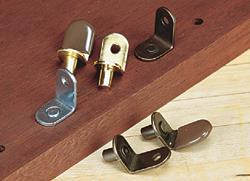
You can find them spoon or L shaped, and they can fit into holes drilled directly into the case sides or into sleeves which fit into those holes. They are exceptionally convenient if your book, electronics or knick-knack collection changes over the years by simply moving the pins to holes above or below to raise or lower the shelves.

The real trick is to get them level.  A typical shelf will use four pins – two on each side – and, if they aren’t absolutely level, you are going to have some trouble with wobbly shelves.

Since the thought of hand measuring and marking every single hole will drive you bonkers in short order, we often turn to jigs to speed up the process. A shelf pin jig can be as simple as a piece of shop grade pegboard or as complex as a production jig for making European style cabinets based on the 32 mm system.

Me, I’m looking for simple, inexpensive and foolproof.  Heaven knows I’m a very advanced fool, so foolproof is definitely a selling point.  That’s why I went with a simple hand drill based commercial system.

Sure, you are probably yelling at your computer right now.  “Tom, why spend money on something you can build from scrap?”  Simple, I’m lazy, and I figure that when I want to do shelf pins, I just want to be able to grab it and go.  No fuss, no muss.
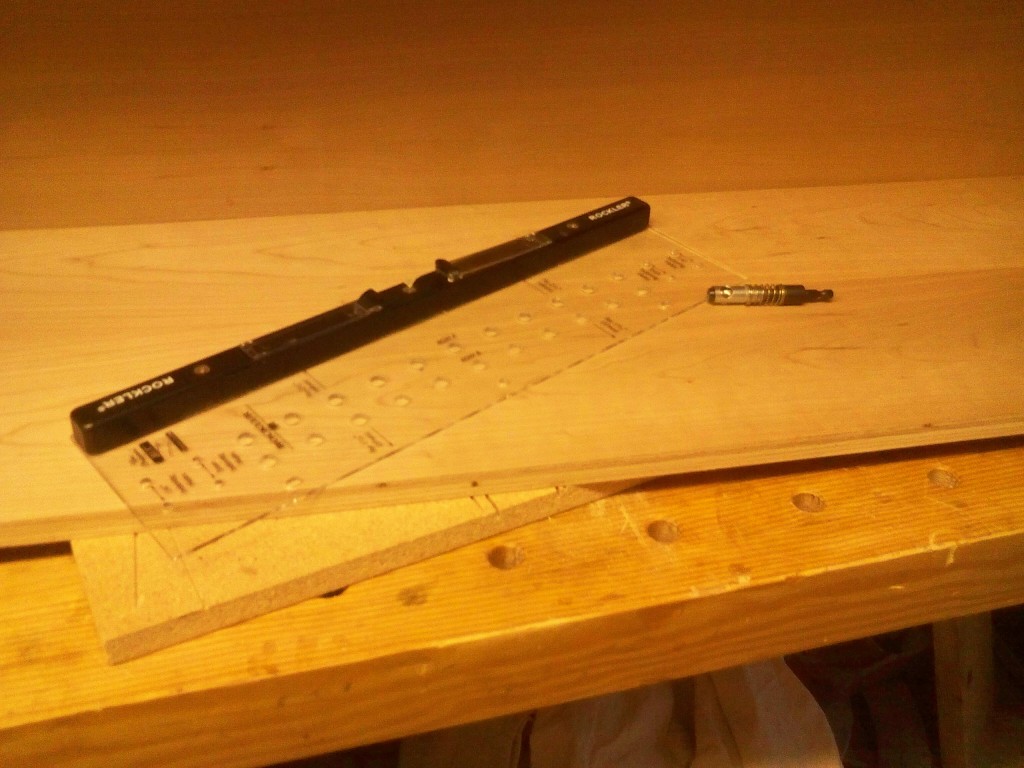
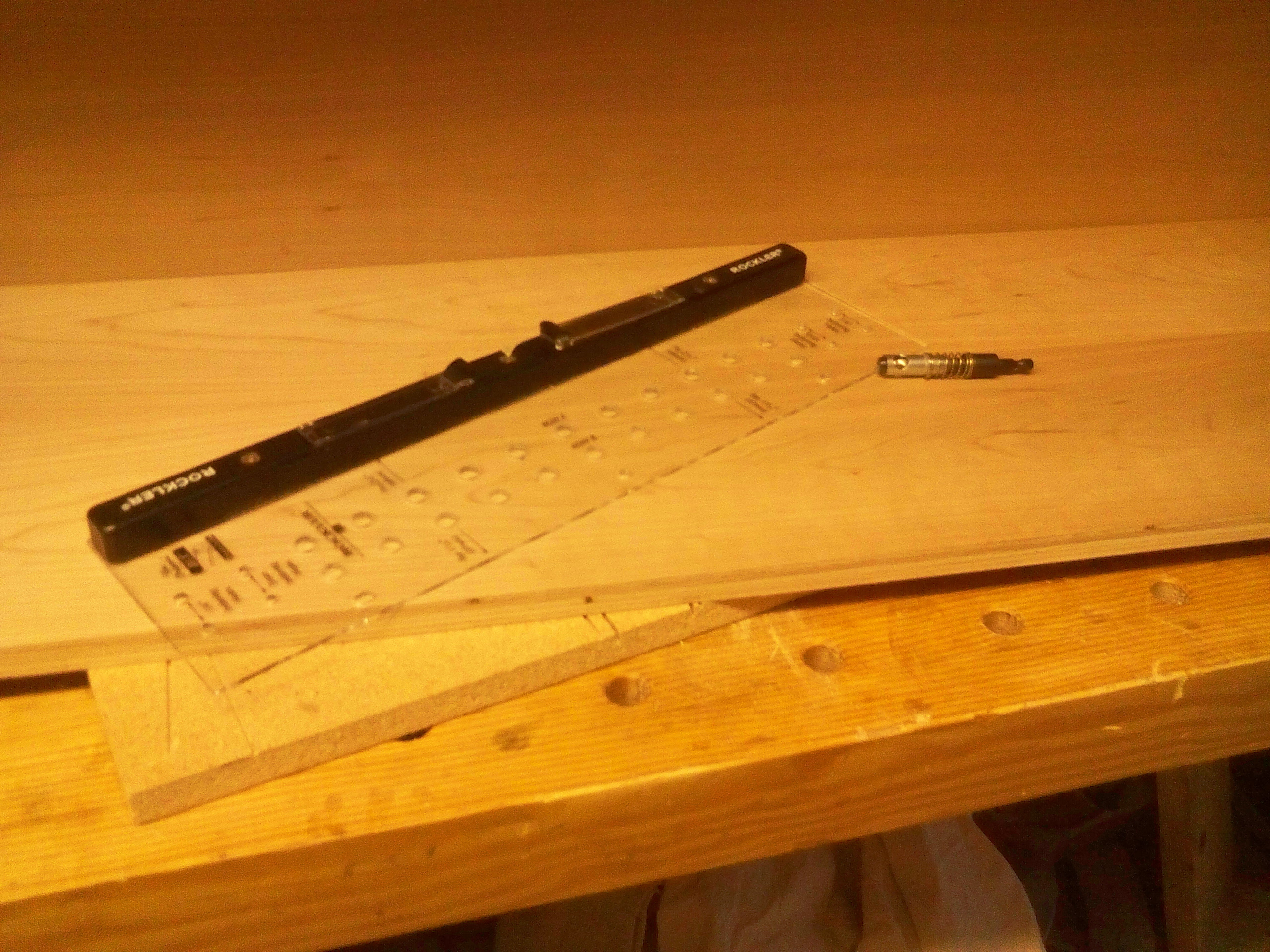
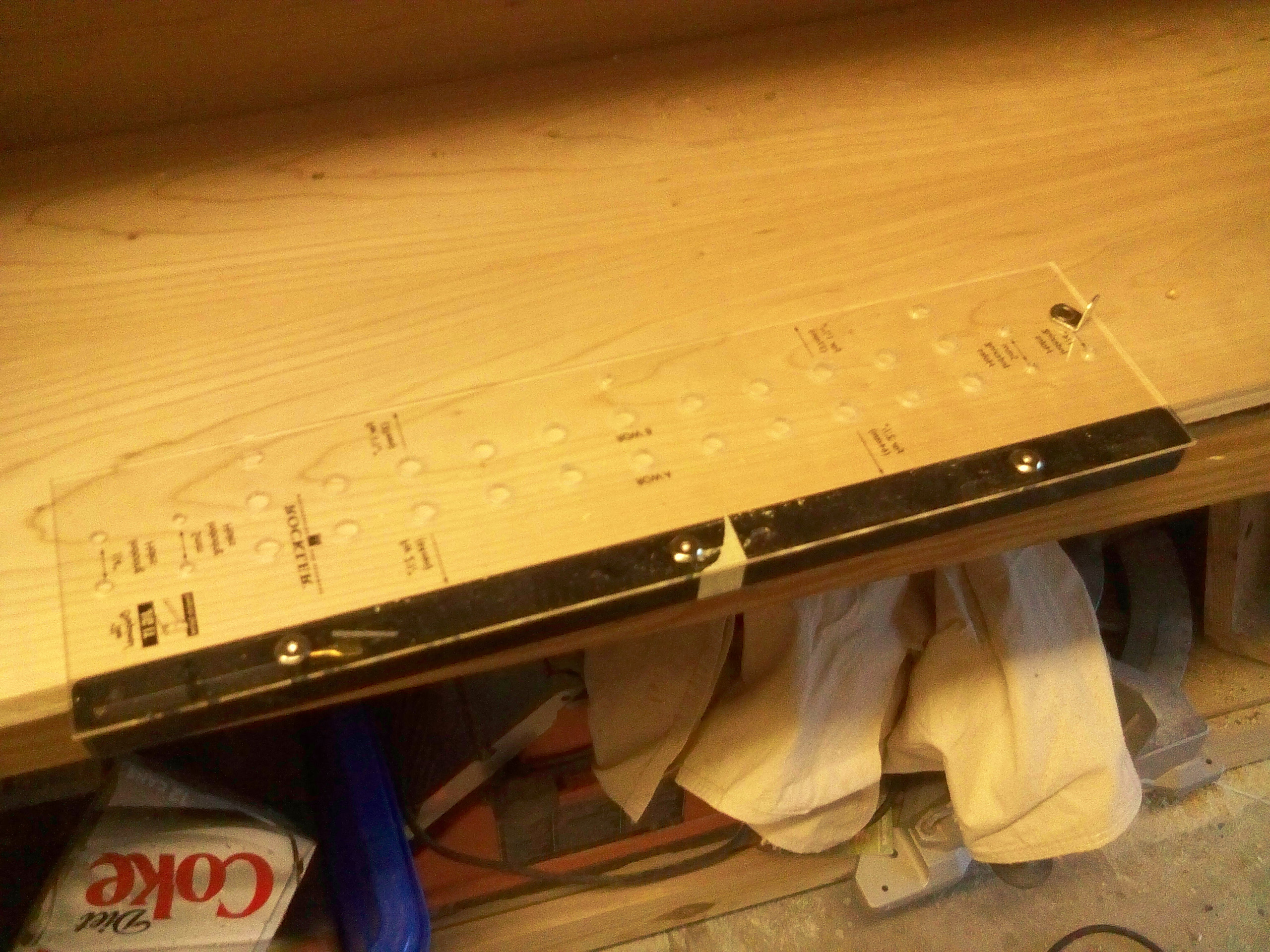
A system like this is insanely simple.  It’s a piece of plexiglass with shelf pin template holes drilled into it. These holes are placed so there is the same distance from either edge of the jig to the first hole.  This way, you can use the jig in any number of configurations and the spacing will come out right on the money.

The secret weapon with this jig is the special bit that comes with the system.  It has a 1/4″ drill bit set in a spring loaded body. When you position the bit, the plastic ring at the top of the bit engages the jig’s hole, preventing it from sliding.  Once you start the drill and plunge, the bit cuts into the wood. The bit also has an automatic stop which allows it to  plunge just shy of 1/2″ deep, which means you won’t drill through your cabinet material.  Sweet.  More foolproofing.
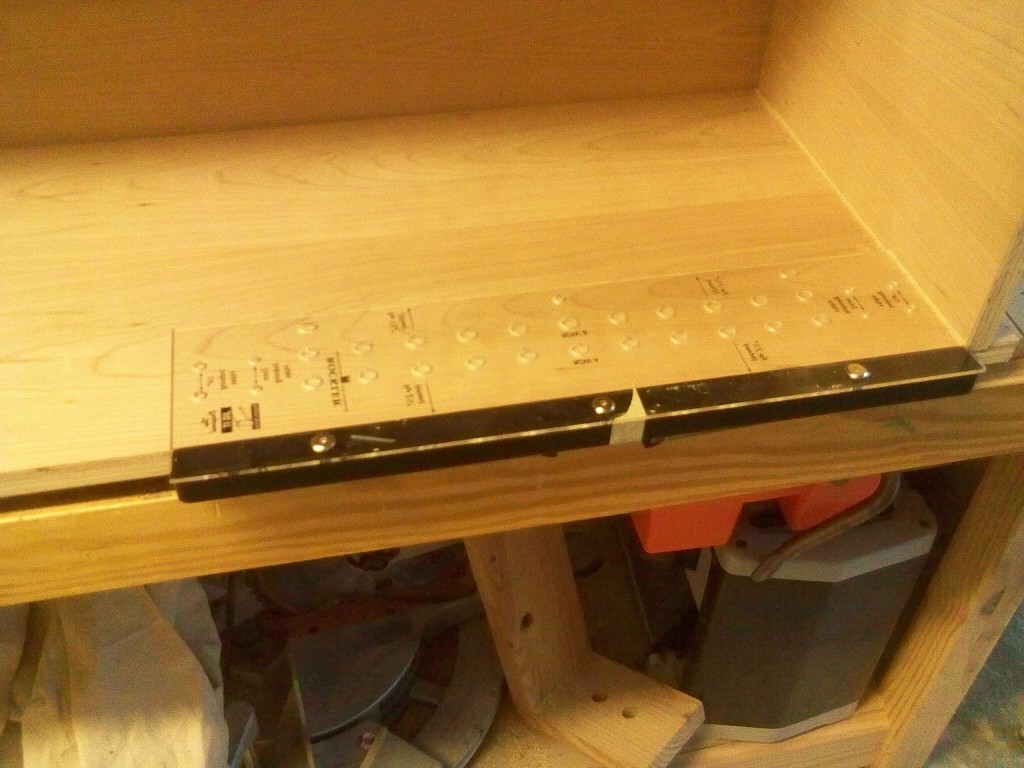
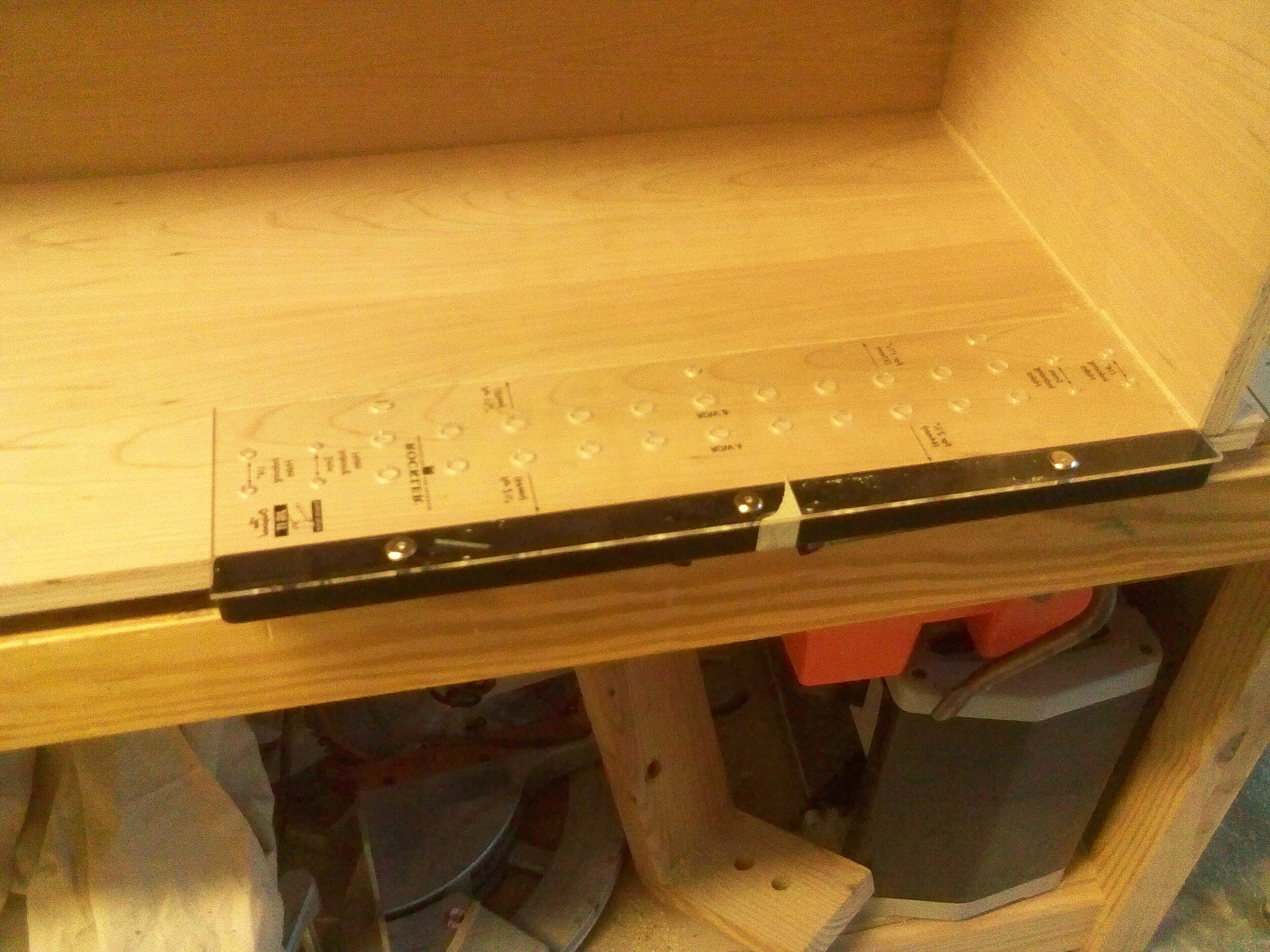
For the two cherry bookcases I’m putting on the top of the cabinet project (which is now entering the home stretch – yay!), I’m drilling holes to hold the shelves.  To begin, I set the jig with the stop facing down and pressed firmly to the cabinet’s face. Then, I push the jig flush to the bottom of the cabinet. I count up a number of holes (I don’t need adjustable pins three inches off the floor of the cabinet, right?) and start drilling.

“But, Tom, the jig isn’t long enough to reach from the bottom to the top of your case! What do you do now?”
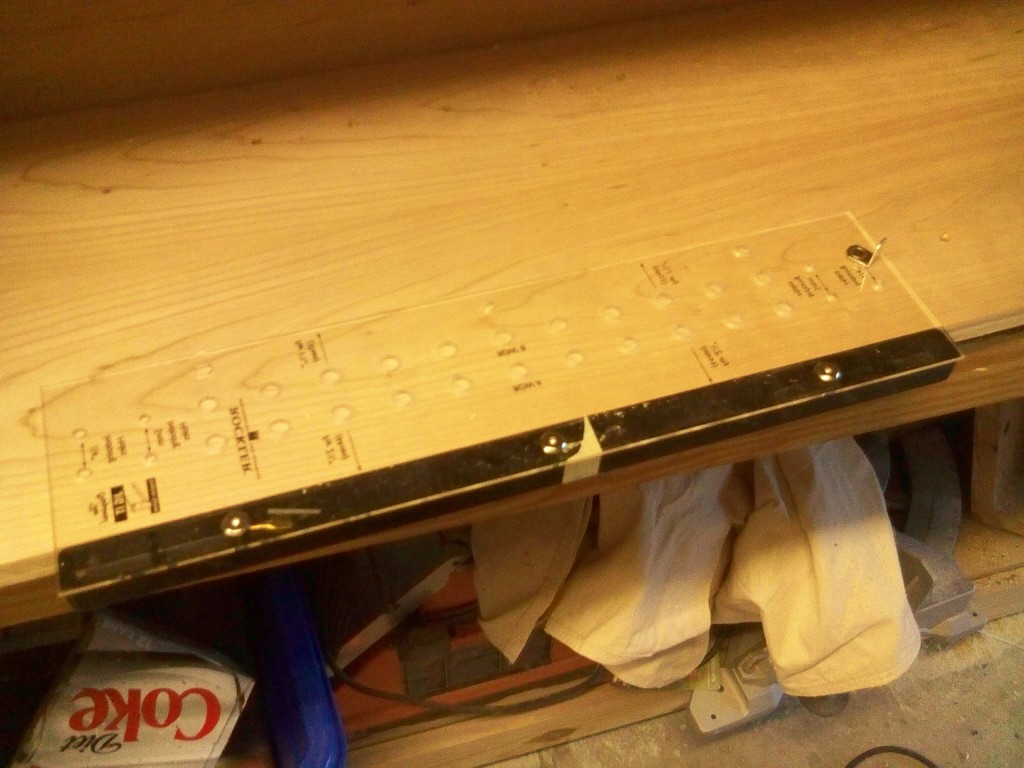
Piece of cake. At either end, the shelf pin jig has an indexing hole. I move it over a hole I already drilled, insert an old shelf pin through the indexing hole and my spacing continues up the case.  I can move the jig as many times as is necessary to go to up the case.

And, when I need to drill the back rows of holes, I flip the jig over, press it down on the bottom of the case and firmly to the back, and drill ’em just like the front.

The one caveat about using this jig is you need to drill at a high speed. Some battery operated drills just don’t get revving as fast as they need to, and you will see some tearout where the drilling happens.  I use my corded drill, which has the RPM to give me clean holes.

I’ve used this jig on a number of projects in the past, and the shelves come out dead on.

And, when I finish the shelves for this part of the project, I’ll show you what it looks like.

Stay tuned for a future post to see those!

The Quick Drawer

If I’ve learned anything from watching movies, it’s that directors of western movies love to feature gunfights during climactic scenes. It’s a big time cliche. You usually had the bad guy (you are able to tell he’s the bad guy because he wears a black hat) staring down the main street of some western city at the good guy (yup, he’s usually wearing at white hat and, more often than not, a badge marking him as a lawman).

As the two adversaries face off, there’s usually a tumbleweed that goes blowing past, then the camera will focus on the anxious eyes of the townsfolk. All they are waiting for is the 12th chime, indicating that high noon has struck and it’s time to draw and shoot.

Apparently, all the steely-eyed gunslinger needs is a fast draw – and some accuracy – to defeat his opponent and bring peace and order back to the town.

During my cabinet build, I have also discovered that fast drawers are a good  thing. Since I had to build eight of them for the cabinets, I needed a design that would be simple to execute but strong to survive years of abuse.

Of course, many woodworkers turn to dovetail joints to provide the maximum durability.  Since my drawers were going to be made out of plywood, I decided to go against that plan. Something about dovetails and plywood didn’t seem to sit too well with me. I’m sure it can be done, but I wanted to try a different plan for the build.  Besides, it’s really hot in the shop this time of the year.  The thought of spending hours dovetailing wasn’t appealing.

My next thoughts ran toward the very fast. Biscuits. Dowels. Pocket screws. And, I’m sure that I could have made all of the drawers in very short order using these methods and produced serviceable drawers in short order.  But, that just seemed too easy.  Plus, there is still the chance that something could go wrong and the work could slip while I was assembling. Maybe not the best choice.

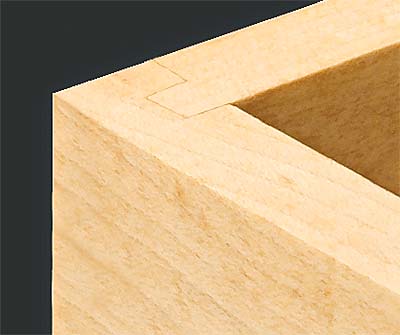
What I needed was a drawer joint I could produce easily that would be strong, easy to assemble and ensure nothing could possibly slip. That’s when I decided on the tongue and dado (a.k.a. lock rabbet) joint.

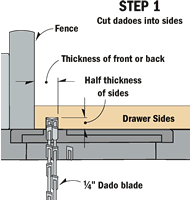
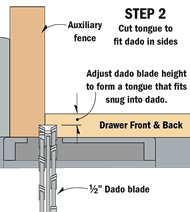
Basically, this joint involves cutting a dado in the side piece that is half the width of the front and back set back that same distance from the front edge of the sides.  (Check out Wood Magazine’s tutorial)

To start, I measured the thickness of the the front and back pieces – the same nominally 3/4″ birch plywood used on the cabinet boxes.  It came to .700″ when measured with a caliper. Translated into fractions, that came to about 11/16″, so I set up my stacked dado blade to 11/32″ using a combination of shims and cutters. I set the cutting depth to 3/8″ for the dado and tongue.

I set the distance between the rip fence and the inside of the dado to 3/8″ and ran the side pieces through. I made two dadoes on each piece – one for the box front and one for the back.  Those were easy to cut.

What I did then was reposition the fence so I would make a rabbet on the ends of the front and back pieces.  It took a little fiddling, but once I got it dialed in on some scrap, the tongues were cut in very short order.

A little touching up with a block plane, some grooves for the bottoms, glue and clamps and bingo… drawers!  Now, all that’s needed are the drawer fronts and some hardware. Since Paul is an engineer, I’m leaving the fancy fitting to him!

Next, some tops for the cabinet bases, shelves for the bookcases and toe kick covers, and we’re into the home stretch…