The coolest job in any restaurant belongs to the bartender. Sure, the chef gets the credit for the outstanding meal, the maître d’ for the ambiance of the place and the wait staff for the overall dining experience.
But, when people want to have fun and strike up a conversation, they turn to the bartender. Think Isaac on the Love Boat. Tom Cruise in that stinkin’ movie about being a bartender.

“Yes, Mr. Bond would like his martini shaken, not stirred, Mr. Sinatra wants a highball, and Evel Knievel wants two fingers of Wild Turkey before he tries to jump the fountain in the parking lot on his Harley.”
While no one may be hanging out in your wood shop, you can be just as cool by mixing your own wiping finish. Why mix your own? Instead of just relying on what a manufacturer thinks is the best mix, you can adjust your formula to fit your own needs – faster drying time, more film build, etc. Also, if you have cans and bottles of the components, you can use them in your finish instead of throwing them out.
Mixing your own finish is very easy. There are dozens of formulas out there to suit individual needs, but this is my formula I have used very successfully through the years.
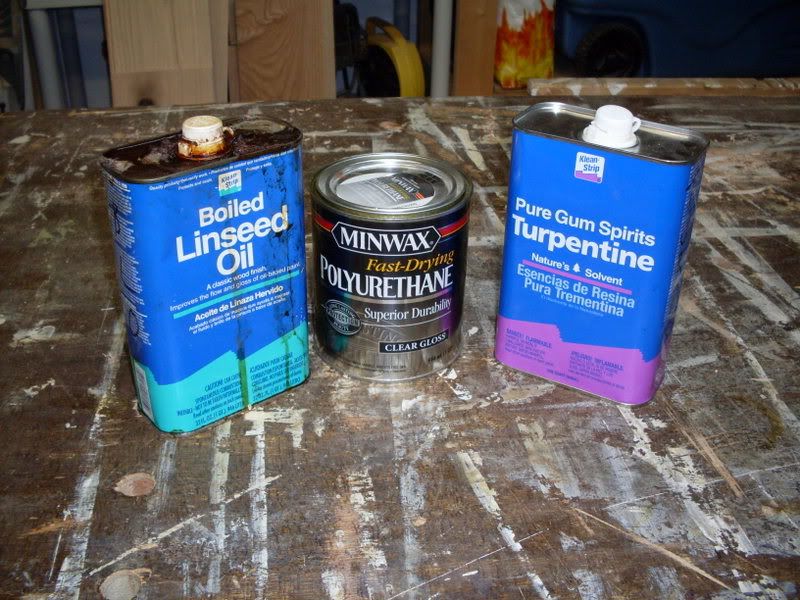
The ingredients can be found in any hardware store and start with boiled linseed oil (BLO). This natural oil helps the figure in wood ‘pop’ and gives it a rich, deep finish. The next ingredient is polyurethane or some other type of varnish. It offers a great deal of protection from water, abrasion and other hazards. Finally, you have to add a thinner to the mix. I like turpentine, but paint thinner or naptha will work as well. It makes the finish flow nicely and level without brush marks and runs.
Now, here comes the hard part – mixing it together. The ‘standard’ mix that a lot of people refer to is 1/3 varnish, 1/3 BLO, 1/3 thinner. While this does make a nice mix, I have found that I can mix it 1/2 varnish, 1/4 BLO and 1/4 thinner. It gives me a little faster build on the finish while still making for an easy wipe on.
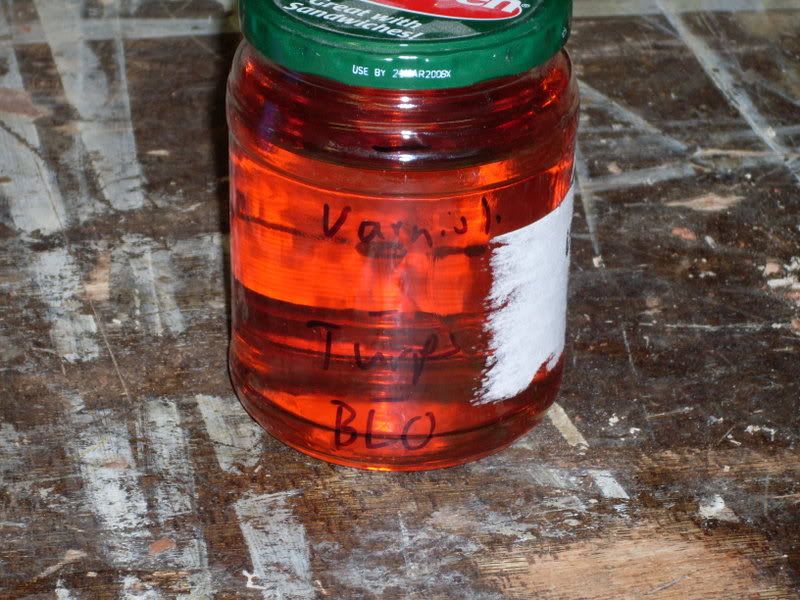
My scientific method for mixing involves an old pickle jar. I measured up from the bottom in one inch increments, and poured the ingredients up to the lines. No, you are not trying to send people to the Moon or split the atom, close enough will work…
After sanding the piece, I again prefer to wipe on a coat of 1# cut dewaxed shellac and sand it down to 400 grit after letting it cure. Then, I wipe on the finish with a rag. Don’t be bashful, the wood will soak up a lot of the finish – especially in end grain. Let it sit for about five minutes, then wipe off any excess with a dry cloth.
I love how easy the mix is to use, and I have yet to be let down.
Now, after all that hard work, I think I’ll take one of those fancy martinis to celebrate.

 Look at any blade maker’s catalog, and you’ll see dozens of blade designs to choose from. Combination, plywood, crosscut, rip, glue-line rip… the average woodworker could go well into debt buying just one portion of the offerings – and that’s just from one manufacturer!
 No, this is not wood related. At all. However, if you live in the area potentially affected by Hurricane Ike – please heed all evacuation orders and leave immediately.
 The reason most of us hobbyist woodworkers go to the shop is to have fun. Designing our own projects. Working with beautiful wood. Skillfully cutting joints. Unveiling the finished project for display and admiration.
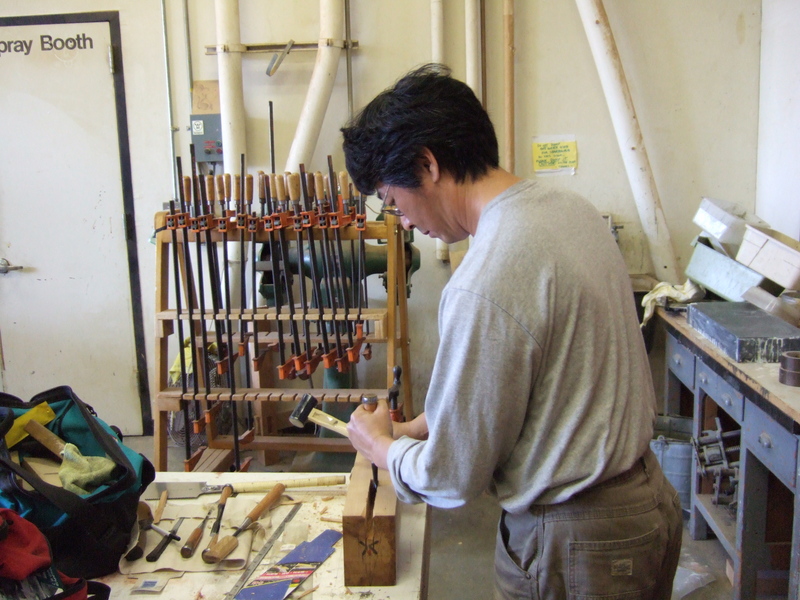 Since the Japanese word for carpenter is Daiku, and the word Dojo means hall for training, it’s easy to get an idea of what this site is about. It is a community organization designed to help provide the education and skills necessary for the use of Japanese style hand tools in woodworking.