In tip-top condition

The one thing I enjoy most about Tom’s Workbench readers is your concern for my well-being and the well-being of my shop.

For instance, when I cut my finger while trimming bushes this past May, lots of folks e-mailed me to see how I was doing and to wish me a speedy recovery. I even got one e-mail where the poster made a mistake and referred to me as Einstein… I was flattered to be held in the same company as the genius himself, but it certainly wasn’t necessary.

So, it comes as no surprise that when I posted the picture of my poor table saw top after this weekend’s Halloween festivities there were plenty of people who were concerned about what they saw. I mean, with those rust rings from cold drinks and some mysterious sticky substance that appeared gray on the saw top, who could blame them?

One person wrote that he was worried about the lack of respect I was showing for the cast iron top.  Another was so concerned, that he urged me to give up woodworking to prevent the possibility of inflicting more damage to the poor saw.

Bless your hearts…

Fortunately, cast iron is pretty tough stuff, capable of taking some abuse before giving up the ghost.  And, recognizing the need to get myself right with the iron, I set out on my plan to restore the top to its shiny dignity.

What I needed was already in my shop…
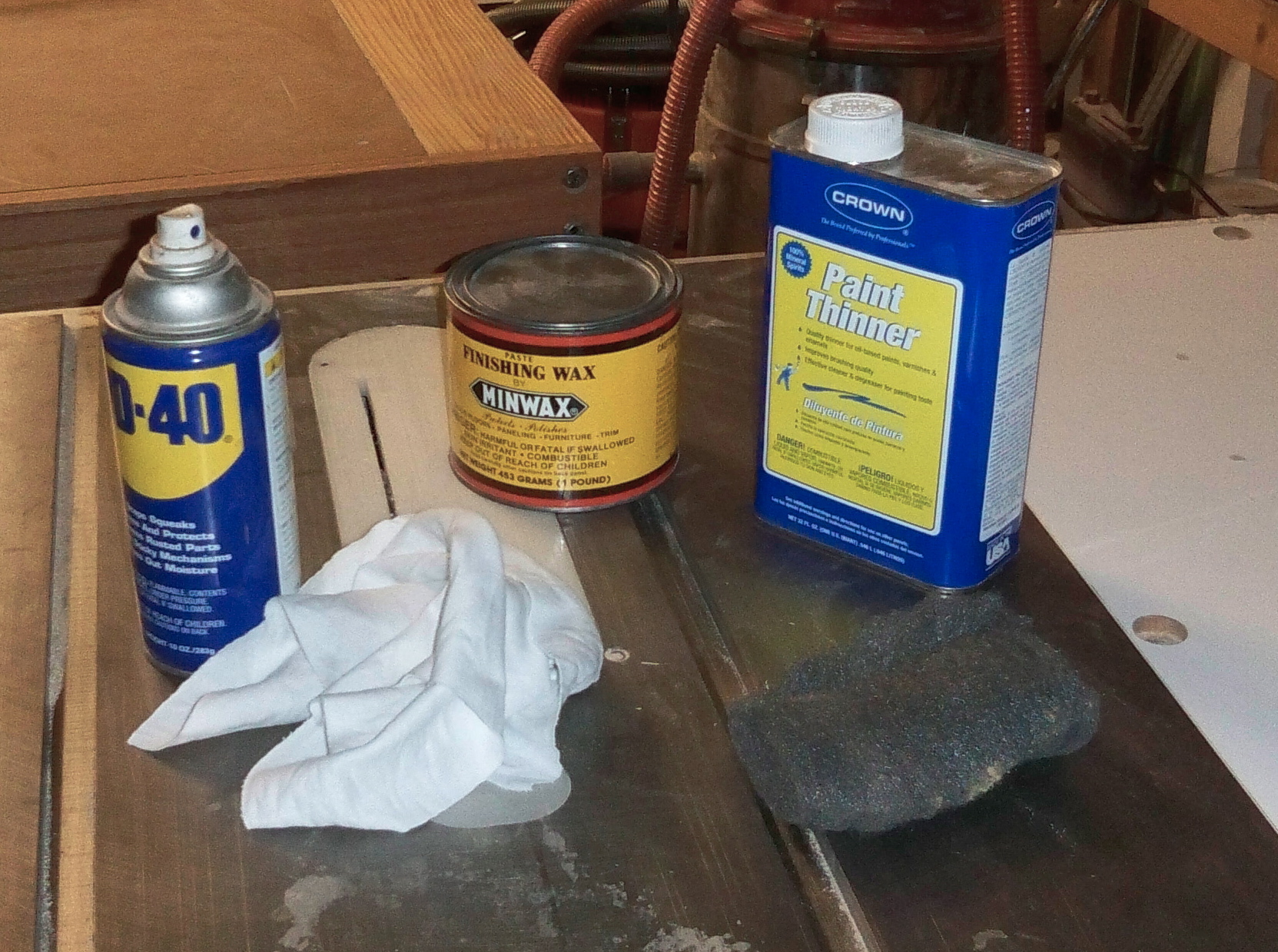
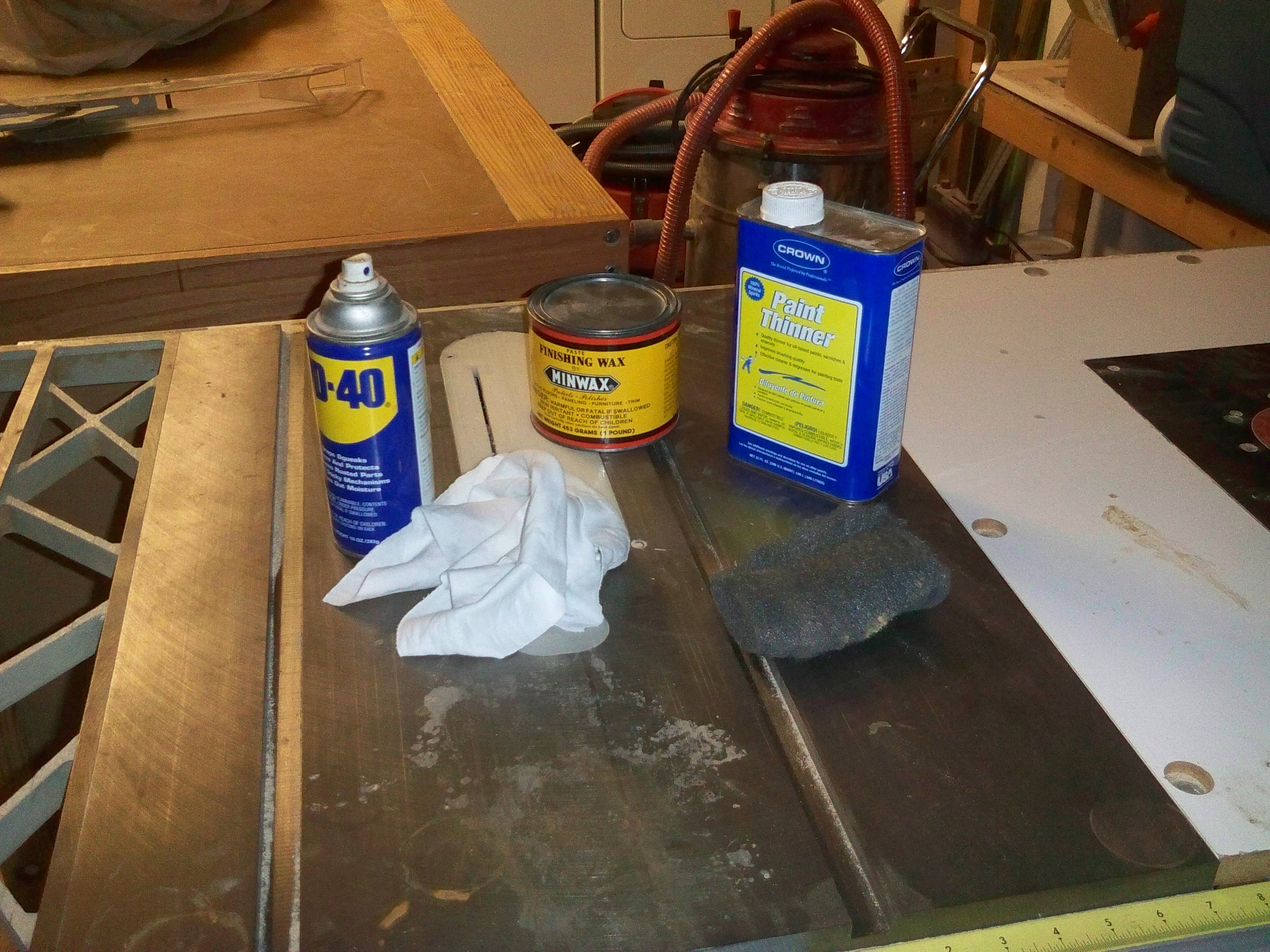
From left to right, there’s a can of the most popular spray lubricant in the known universe, a scrap of t-shirt (I actually used two…), a can of paste wax, some paint thinner and a steel wool pad.


Oh, and the most important ingredient of all… ELBOW GREASE!  Ask for it by name…

First, I started by removing the splitter, guard and lowering the saw blade below the table.  And, I made sure the saw was unplugged.. Very important step. Then, I dampened the piece of cloth with some paint thinner and started wiping the saw top.  Within – oh – seconds of starting, the red rust from the rings and the mysterious goop was removed from the saw top, deposited firmly on the surface of the cloth.  This removed not only the badness from the party, but the old paste wax from the last time I did the saw.
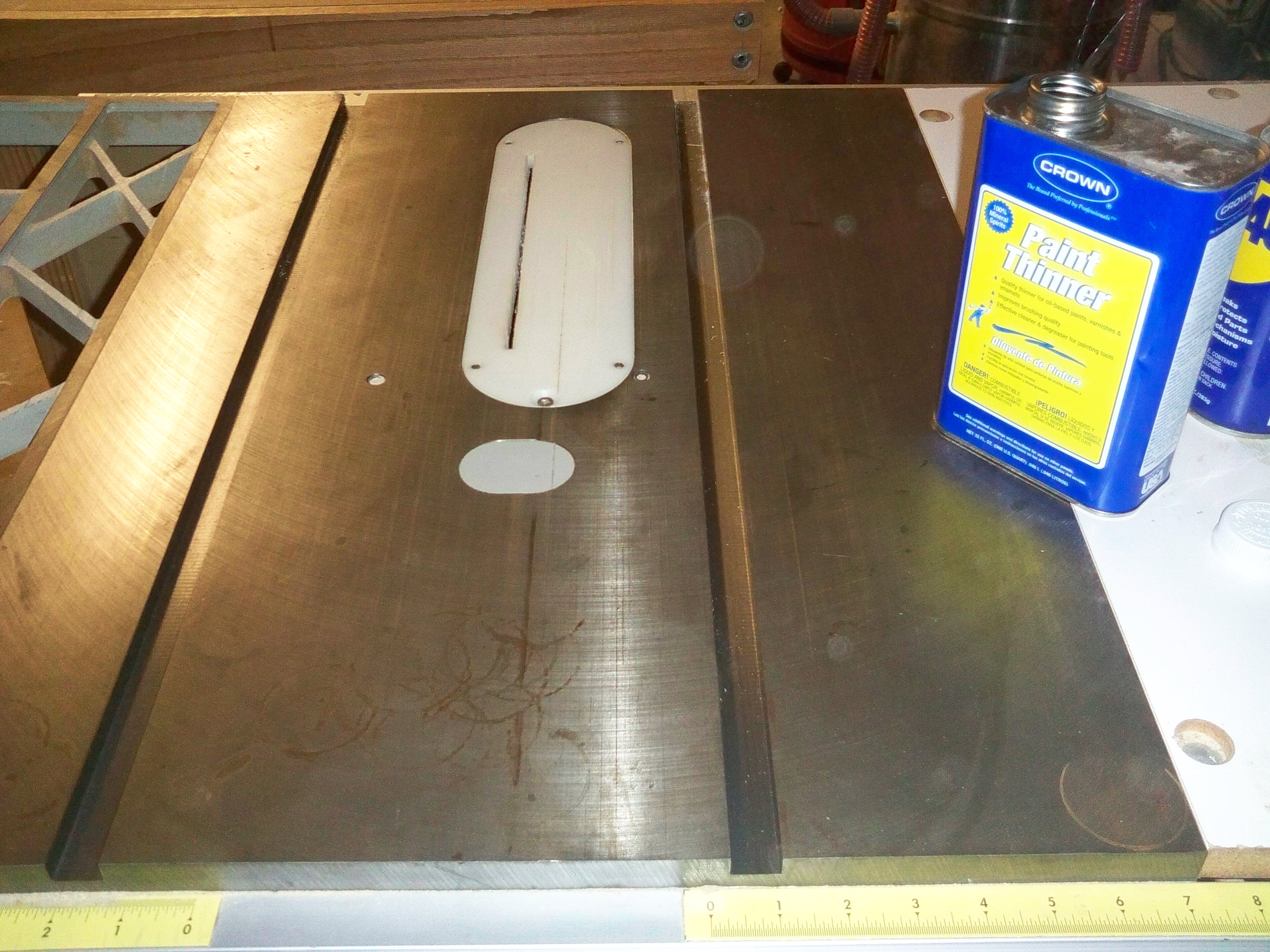
I was happy with the results, but the rust stains were still semi-etched into the top… bummer.  Well, there’s only ONE solution for that.. a quick spritz of WD-40 and the steel wool.  Rub, rub, rub… soon, I had built a little slurry on top of the saw (with just a little help from some 400 grit wet/dry sandpaper). A wipe with the t-shirt and bango…  the rings were gone.
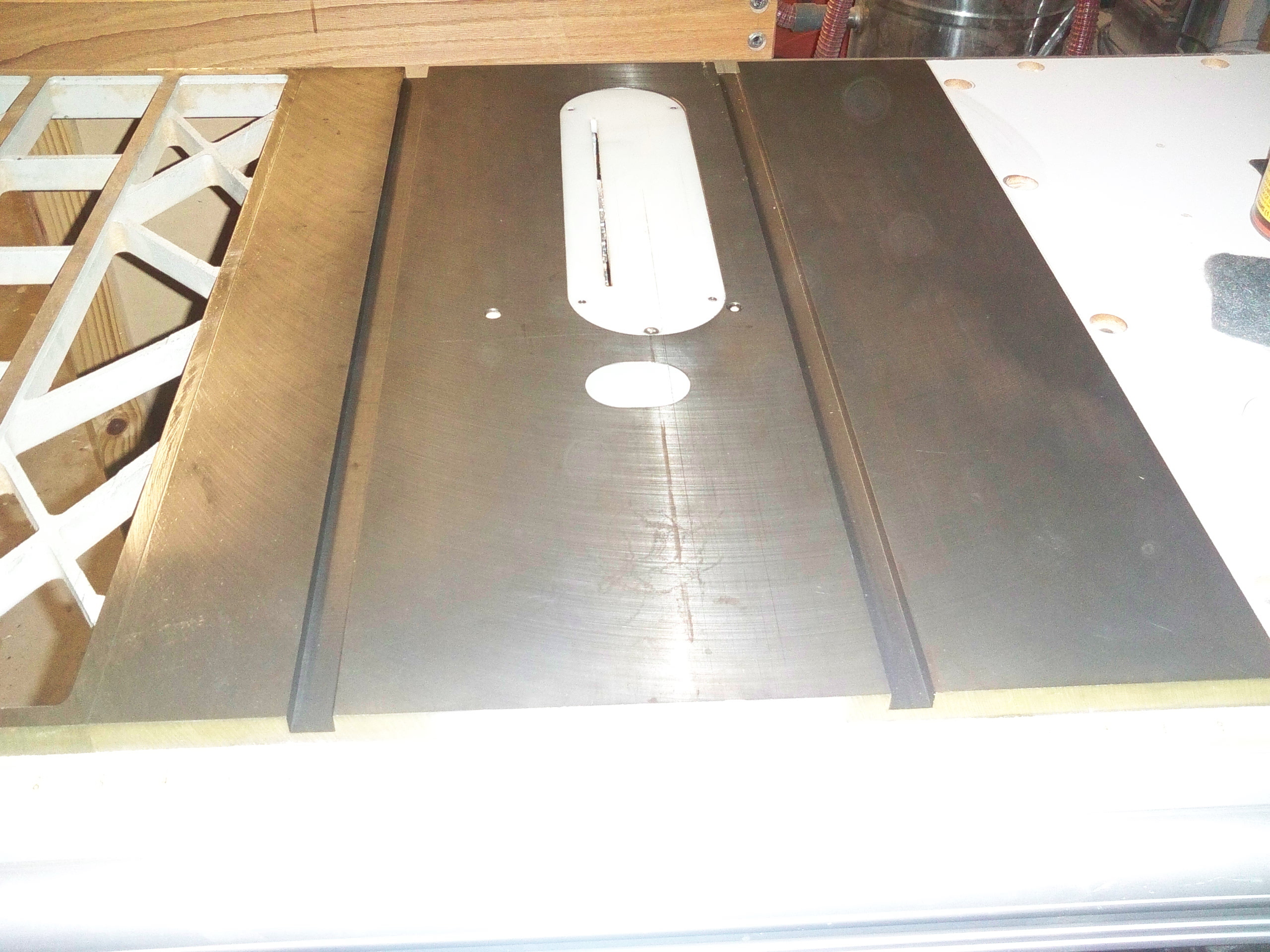
Well, now that the top was looking good, there was only one thing left to do. That was to use some silicon-free furniture paste wax.  I grabbed a little glob out of the can, buffed it into the top and then buffed it off.
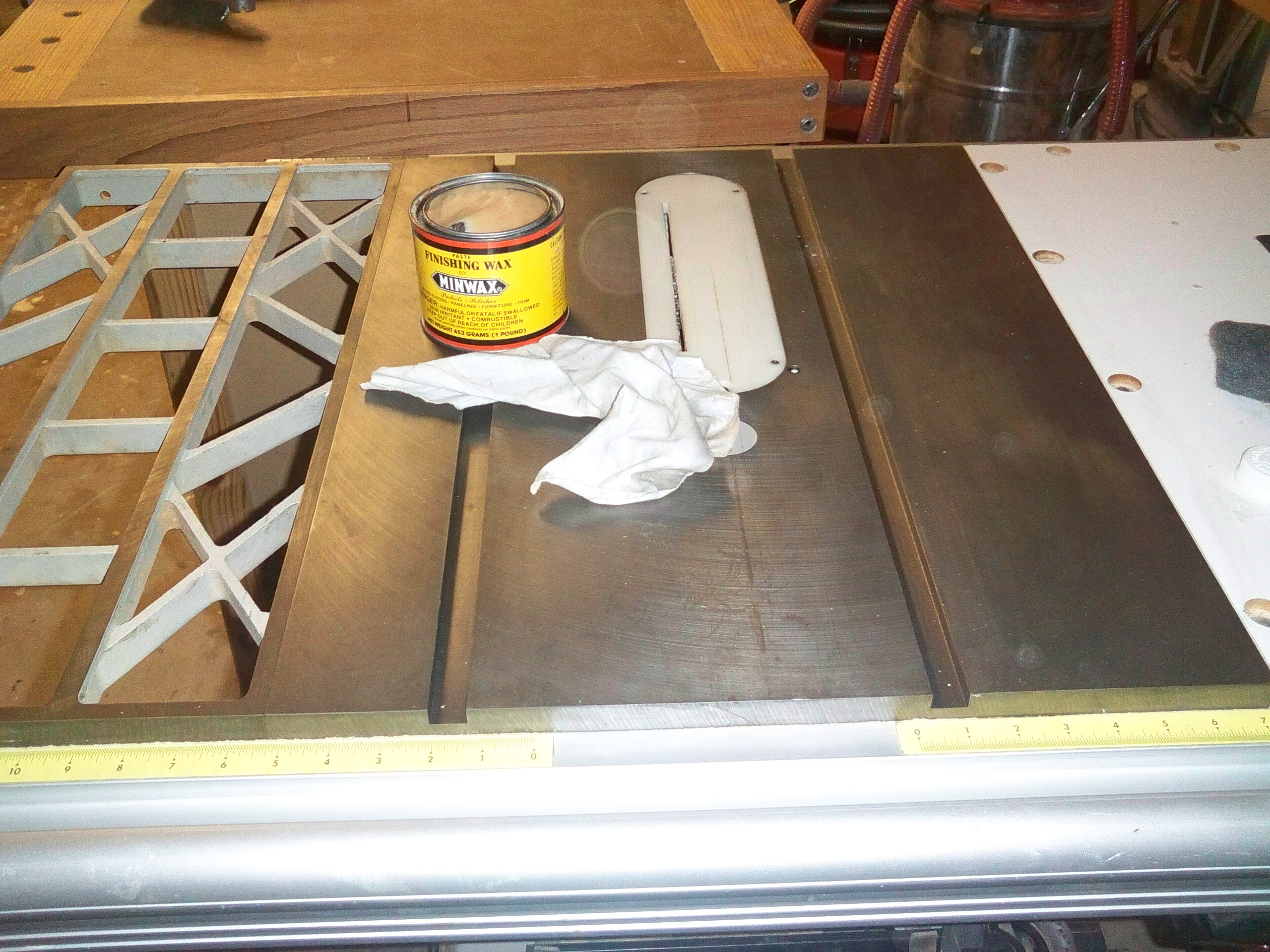
A grand total of six minutes from rust rings to shiny smooth top.  I got so inspired, I waxed the front and rear rip fence rails as well as the two faces of the rip fence so things would slide beautifully across the top.  I even waxed the splitter so there would be less friction should a board rubbed against it during a rip cut. I even went a little nuts and checked the blade/fence/miter slot alignment… it was all well within spec.  Tonight, I’ll take the blades out, give them a once-over for pitch and hit them with a little dry blade lube.

Hey, I want to thank all of you out there for keeping an eye on the shop and preventing me from letting my tools suffer the abuse of neglect!
A masquerade event

I have a room in my house that has a large door that opens overhead, a bare concrete floor and florescent lights.  There’s an attic access panel, a breaker box panel and even a side access door. It’s got 8 foot finished ceilings and a nice, open floor plan.

The real estate agent called it a garage, but it’s known as my shop. It’s where I keep the tools, build the projects and get away from it all at the bench. And, no, it hasn’t seen a car inside of it for the past eleven years…  But, there’s one day each year where the shop is neither a garage nor a shop – it becomes the base of operations for our annual Halloween pumpkin carving party.

In order to convert the shop into the Halloween wonderland, I have to move some stuff around.  Actually, a LOT of stuff around. I have to clean up the shop, push the table saw and other tools to the side of the room and pull the bench onto the driveway to serve as a – uhh – workbench for carving the gourds.

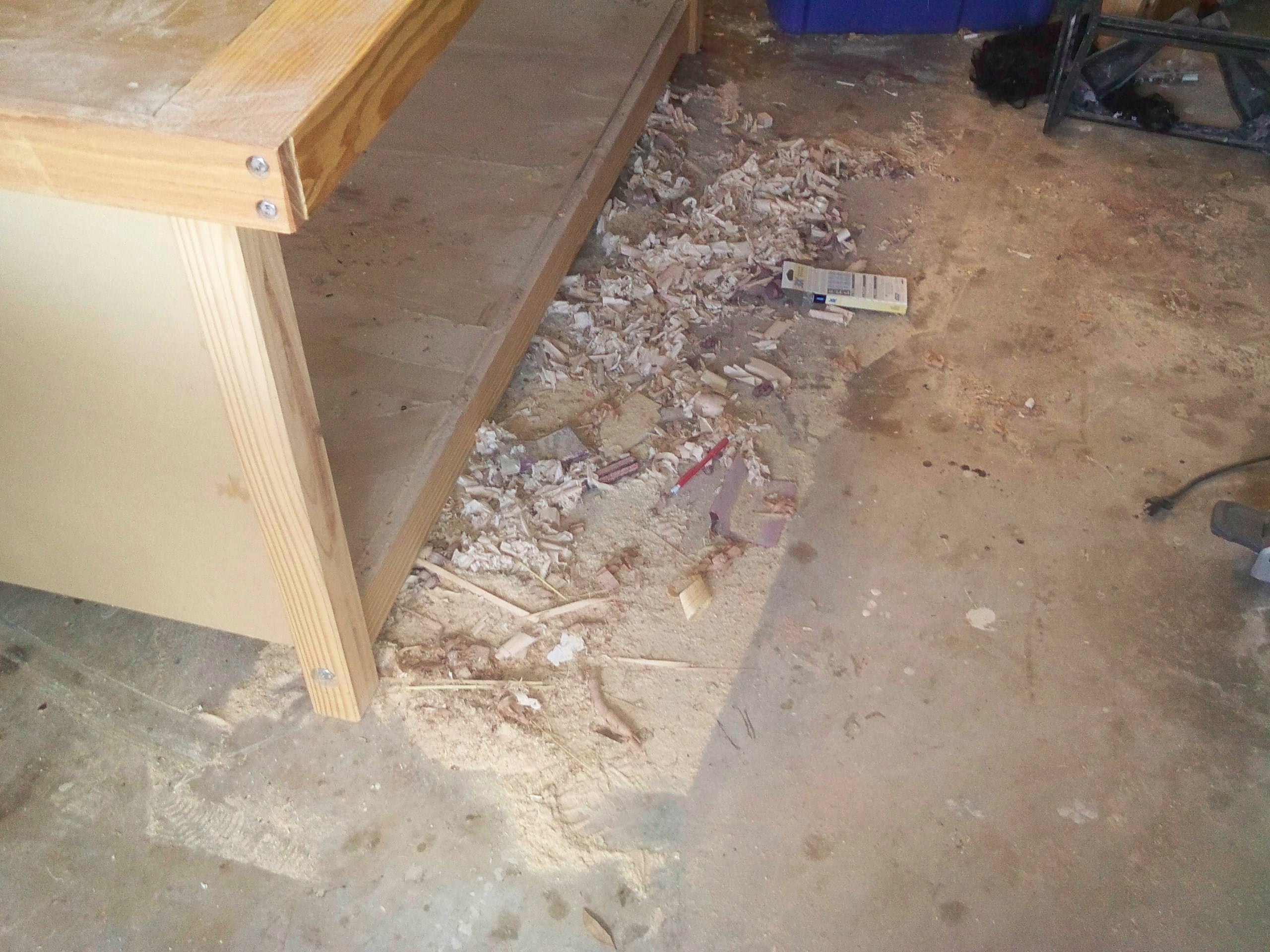
This is always a great opportunity to finally get under the bench to sweep. So, my oldest son and I pushed the heavy bench to the side of the shop to get better access to the bench… wow. Since I move the bench to do this once a year, I get a chance to see all of the projects I have worked on during the year.  For instance, in this year’s rat nest, I saw the refuse from the wine racks, the purple heart and maple cutting boards, the cradle, Carolina’s hope chest and lots of bits and pieces from the cabinet job.

Oh, and that’s where my screwdriver rolled off to!

Once that mess was cleaned up, the shop was relatively clean and ready to receive guests.  And, boy, did they come in droves!  Normally, we’ll invite a bunch of folks, but many have other obligations and can’t make it.  Not this year… we had more than 30 folks in attendance! While there was lots of catching up and laughing, the star of the night was the gourd carving.  Quite a bit of them were done, with some impressive entries…

While lots of our guests let us know how much fun our event was, there were more than a few who pulled me aside and asked, “So, where did all the tools go?”  Hey, they were hiding as my shop masqueraded as a pumpkin carving lab.

Now, to get the shop back into shape…

Link of the Week

The Eames Gallery – Furniture

What is modern as it applies to furniture?

Basically, it’s a design movement that  started in the mid 20th century and broke with traditional furniture forms and sought to explore new materials.  Charles and Ray Eames, a couple who worked as architects, film makers and furniture designers, stretched designed elements to give a radical new look to existing furniture forms.

This online gallery shows some of the radical design forms they helped bring to reality.  Definitely poke around on this site to check out some of the more interesting furniture forms they worked on.

‘Tis better to have loved and lost…

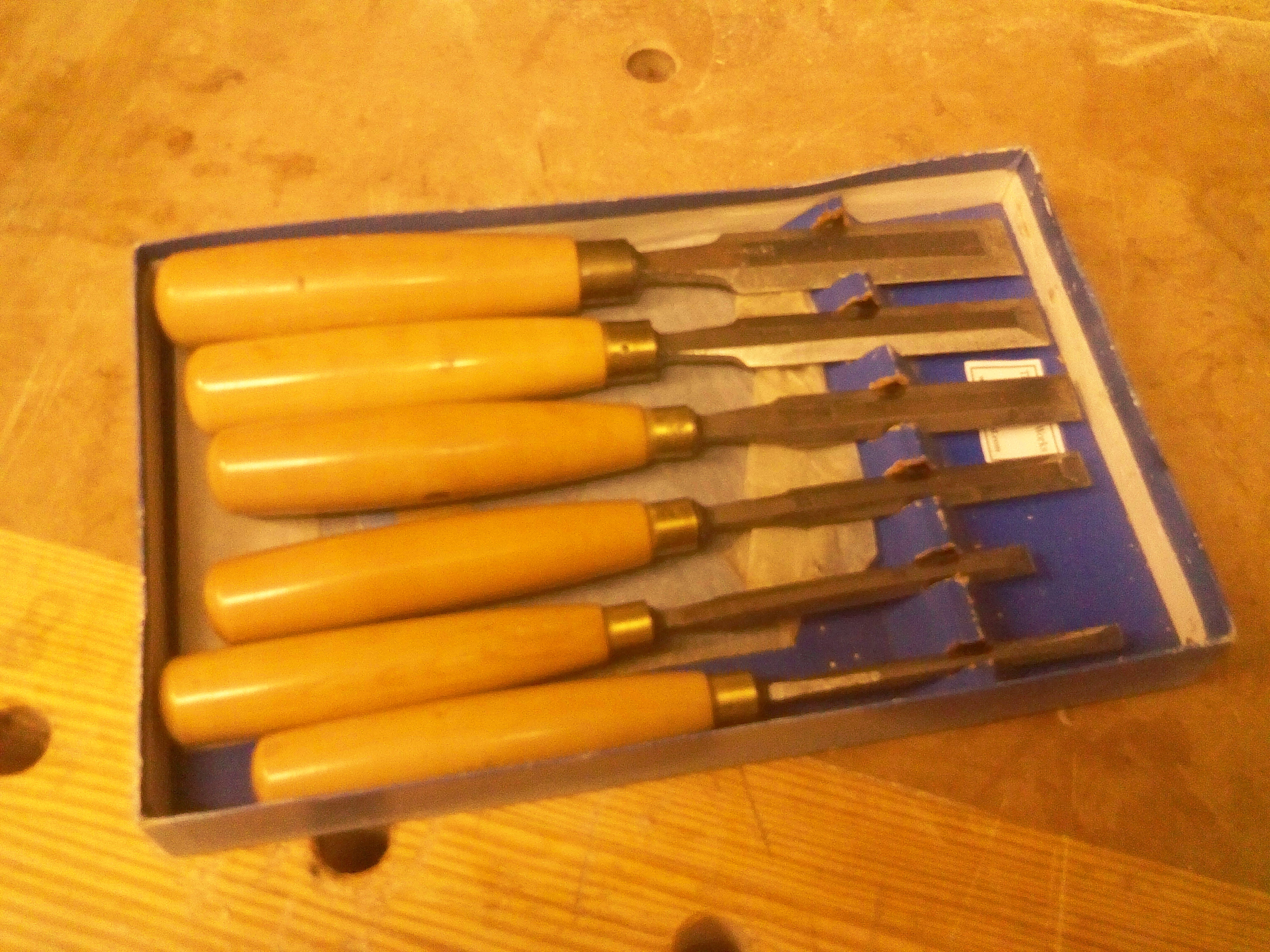
Can it be?  Just a few weeks ago, flush from my return from Woodworking in America, I proclaimed my love for a new set of old English chisels…

They were beautiful… made in the 1950s… with curvaceous boxwood handles and legendary antique steel. These were going to be the Mack Daddy… the be all and end all of my hand tool collection. I envisioned myself in chisel Valhalla, able to slay my hand tool working demons.

It was easy to fall in love with them.  They were on the table, still in their original box.  My hand was drawn to them. I imagined the former owners working with them, creating perfectly pared dovetails on an heirloom project.

I was grinning from ear to ear flying back from Cincinnati, trophies safely stashed in my check on bag.  I could almost imagine the TSA folks checking through my bag, stopping when they located my beautiful set of chisels to admire and fight off their desire to covet them for themselves.

The next day, after that pesky work thing was out of the way, I raced back to the shop with visions of freshly-honed chisel bevels dancing in my head. As soon as I could get changed into some dirty work clothes, I dashed off to the shop to retrieve my diamond stones and strop to begin the sharpening process.

Of course, I had to start with the backs. Can’t really sharpen chisels without ensuring the backs are nice and flat, right?

Well, that’s when I discovered a heartbreaking surprise. These chisels were – how shall I put it – not flat.  Not by a long sight. They were plumb out of whack. I colored the back of the blades with a permanent marker and ground some, then checked my progress.  My fears were confirmed.

Now, I can understand that decades ago, technology wasn’t quite what it is today. But, wow, these things were curved. I was rubbing the back against my coarse diamond stone to discover that the back of the blade only touched at the tip and right near the handle.  I double – even triple checked to ensure I wasn’t trying to grind away the bolster, but no.  The blade was lying as flat as I could make it…

I e-mailed Patrick Leach of Superior Tool Works to ensure I wasn’t seeing things. He and I had an exchange about the chisels and encouraged me to keep at it.

But, wow, those chisels were really out of whack.

I want to say this about Patrick and Superior Tool Works – he gets his hands one some sweet old tools, and he is a stand up guy…  On his site, he writes:

Old tools have been an obsession now for some sixteen years, and this source has been selling old tools through the internet longer than anyone else. When you buy old tools from The Superior Works, you not only receive quality goods at fair prices, but you also get unlimited “road service” in their proper usage, tips for making them do stuff you might not imagine, advice on which is the correct or better tool for the job you have in mind, historical perspective of their design and use, construction advice from architecture to cabinetmaking (there isn’t just an anonymous merchant looking to part you from your money behind this screenful of text – much of this stuff is actually used here) and, of course, a 100% satisfaction guarantee.

Every word the man wrote is true.  After some more work and a few more e-mails, I sent the chisels back to Patrick and received a prompt and courteous refund. The next time I go shopping for old tools, I’m checking with him first.

So, what now?  Well, I have a birthday coming up, and the holiday season is right around the corner.  Maybe I’ll drop a few hints to the Jolly Old Elf about finding a new set of chisels.  Until then, I have decided to drop back and punt…

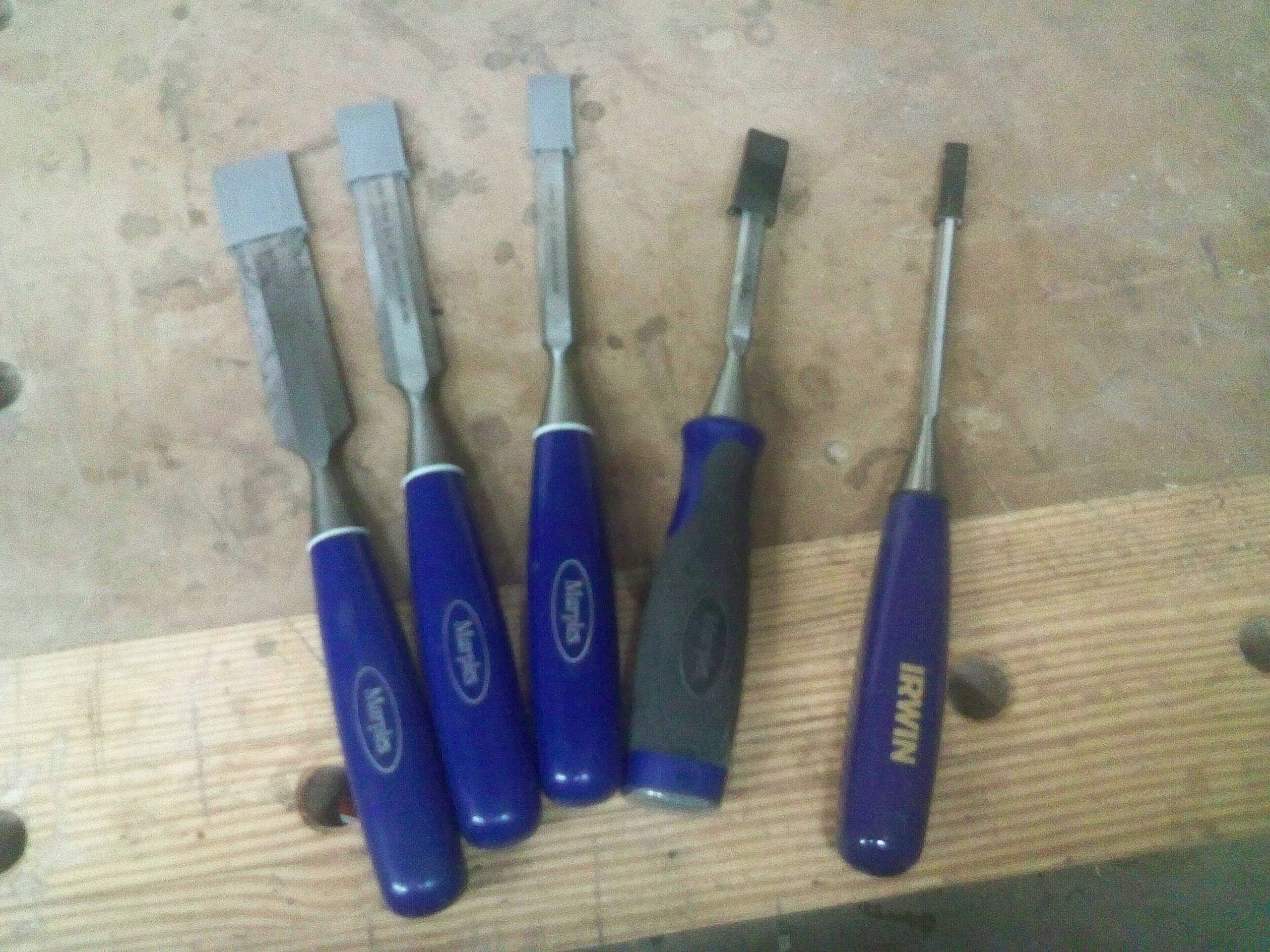
I broke out my set of Marples Blue Chip chisels I have been using and started honing them on the equipment I already had out. I put a sweet edge on them, so nice they can pare end grain maple. That’s sharp.  I’ll just have to keep an eye on them and be sure to hone the edges when they start to drag.

Besides, there’s lots of wood out there that’s waiting to get built into projects!

The tale of the till…

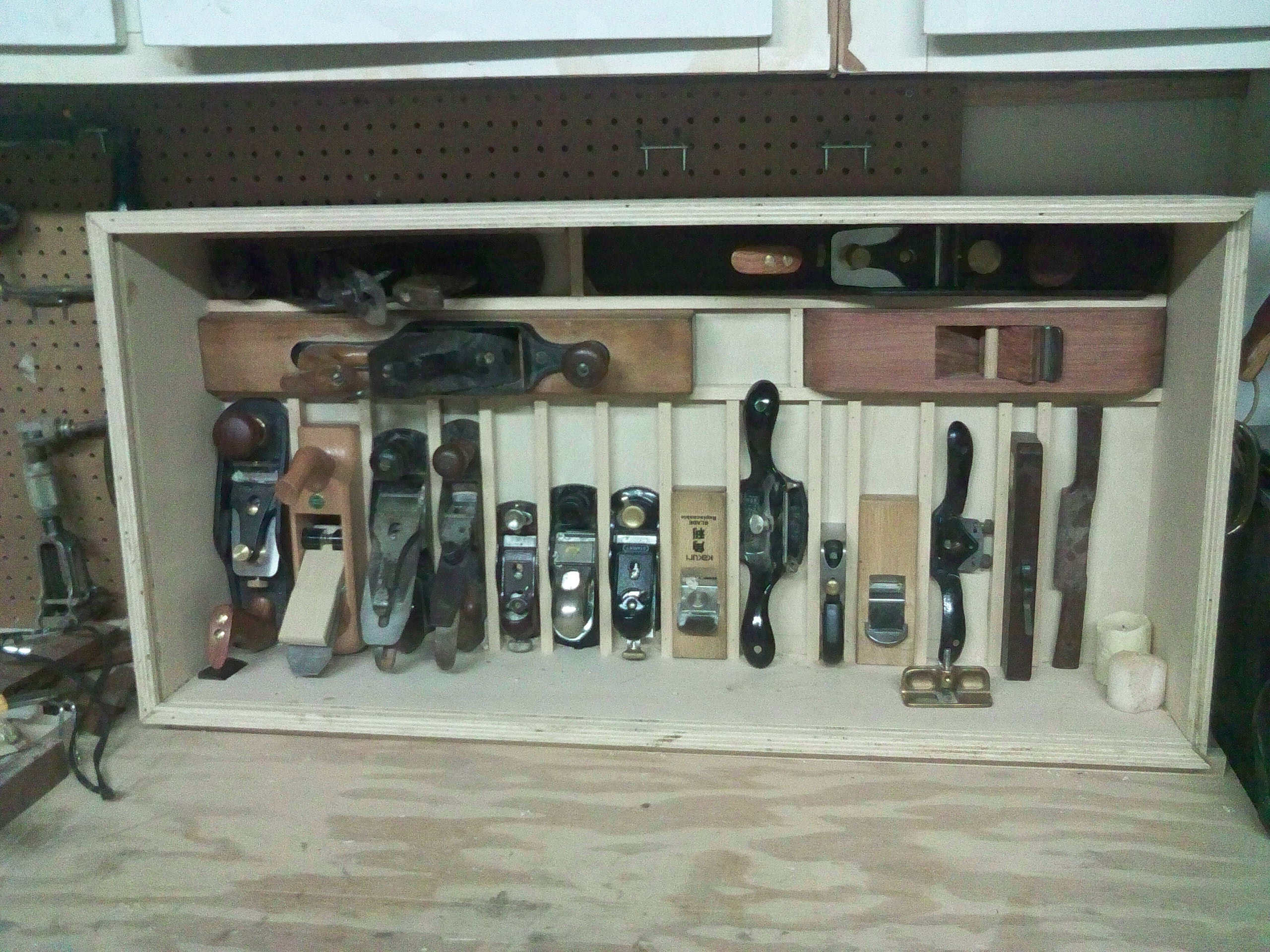
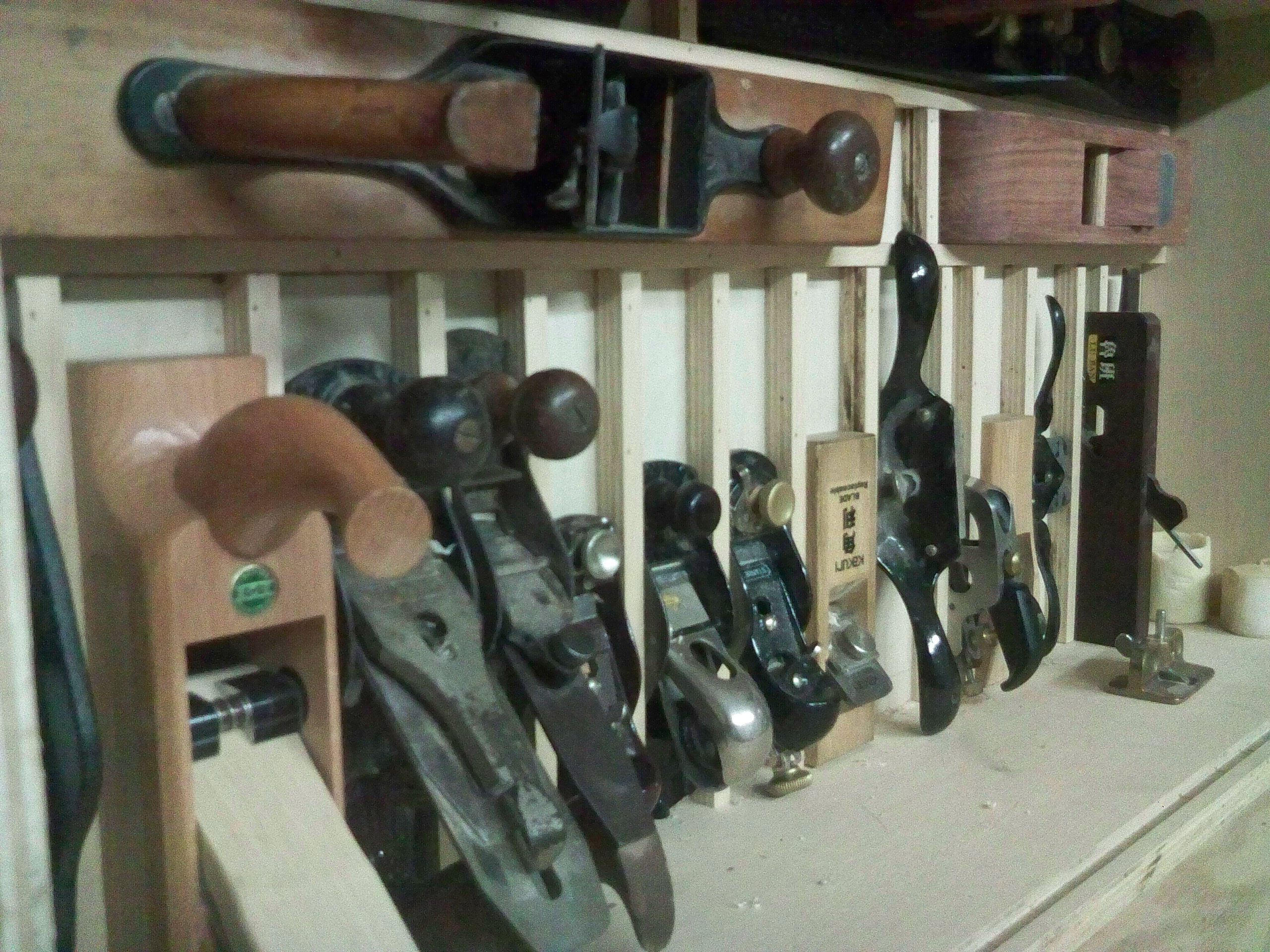
So, when last we left the rolling plane till project, I had just finished the outer shell of the case and just had to put in the dividers to hold the plane arsenal.

That’s just what I did.  I had to choose a material to use for the dividers, and I went for more plywood.  You must be thinking, “is there any end to the scraps coming out of Tom’s shop?” but WOW, a cabinet job leaves you with a bunch of ’em!  I ripped larger pieces of 3/4″ plywood down to 1/2″ wide slats and then crosscut them so they would fit the length of the case.  Once that was done, I had to start arranging planes to fit in the case.

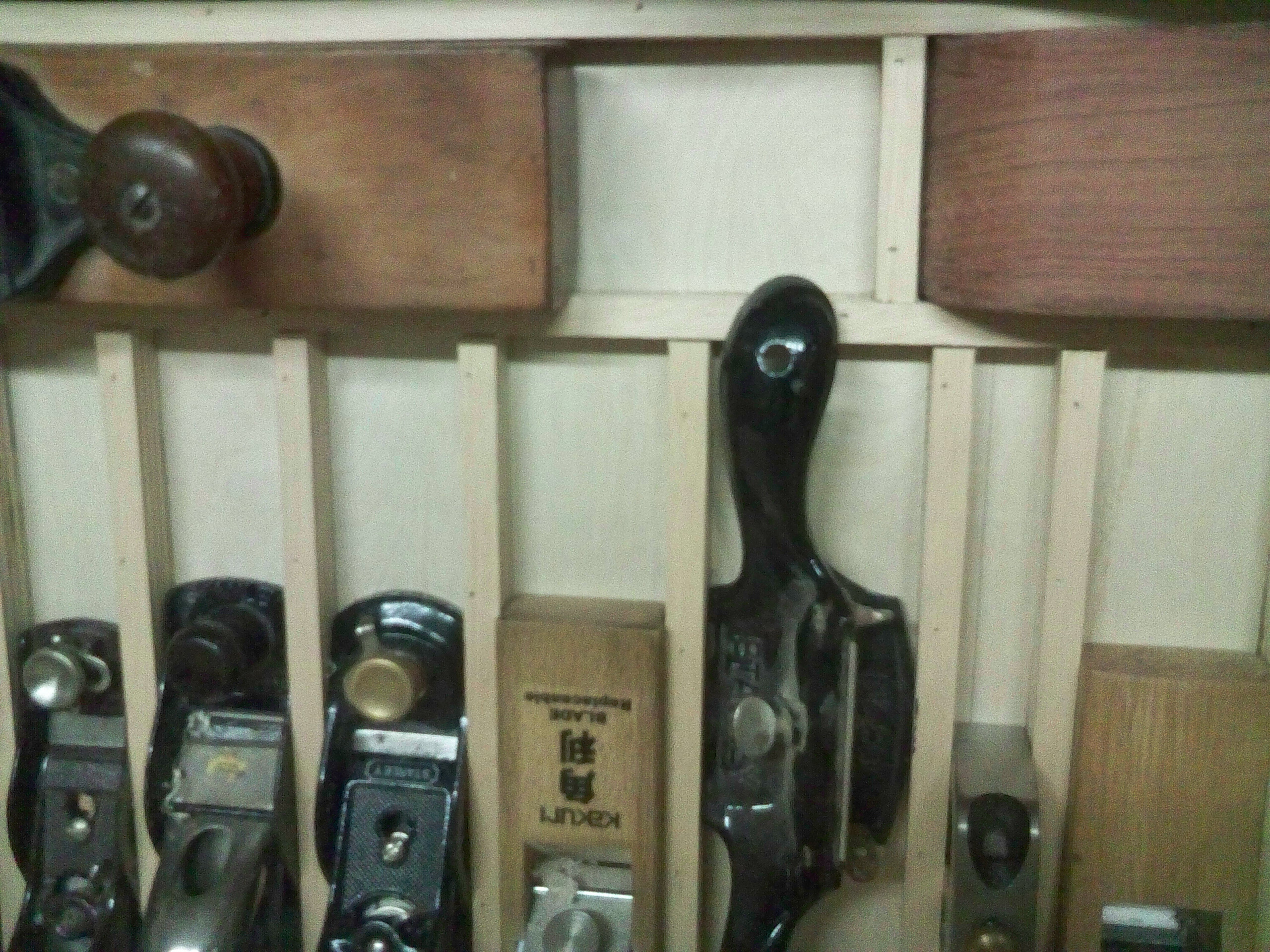
OK, my bevel up jointer and my transitional fore plane took up some serious space.  So, I had to run them parallel with the length of the case.  They were also different widths, so I had to spend some time trying to match widths of planes as closely as possible.  I discovered that my shop made bubinga plane was very close to the width of the transitional fore plane, so those babies went together.  The old No. 5 jack (I’m still looking for a replacement cap iron), while thinner than the jointer, was a nice snug fit when I added a scrap of a slat.

After I laid the planes nose to tail, I glued the backs of the slats and bradded them into place.  I’m sure I could have used a more sophisticated method of attaching them, but hey, I’m trying to get this done, alright?

Once I had the longer planes secured, I discovered that if I placed my longest shorter planes perpendicular to the flow of the first two rows, they would fit beautifully… YES!  So, I measured out the slats and made repetitive cuts using a stop on the table saw to make a stack of sticks.  After that, it was a piece of cake… put the next plane down, glue and brad the stick tight to the plane’s sole, then move to the next.  I took the planes out ever so many sticks were attached to wipe any excess glue that may have leaked out from the box and the plane soles.

Then came the moment of truth.  Could I stand the plane till up on its wheels to cart it around without the planes falling out?

I had spent a lot of time thinking this one over. Leather straps attached at each slat to wrap over the handles of each plane? Maybe a cut up bungie cord?

Turns out I didn’t have to do anything.  Because the slats were attached tightly to the plane soles, they stuck firmly in their slots while I wheeled the till around the shop floor. I may still add something later, but for now, they rock.

An even tougher test was yet to come.. could I stand the till upright against the wall behind my side bench without having them all clatter out of their holders?  To help stack the odds in my favor, I screwed at 1″ thick strip of maple from my scrap bucket to the plywood top to prevent the till from dropping to a full 90 degrees – it would stay tipped back just a little bit to help hold the planes in place.  I hoisted the rather heavy case up onto the side bench and lifted it into place so the front edge sat on the maple strip.  I eased the till back against the wall… BINGO…

The planes held their spots easily… and when I go to pull a plane out of its little cubby, it comes out smoothly. And, when it’s time to return it to its home, it slips right back into place.  No fuss, no muss…

Since I had made the plane till so deep – probably 1.5″ deeper than it really needed to be, I have plenty of room to slip in a chisel roll and my nylon saw scabbard.  This way, when I take these tools to my sons’ schools, I’ll just have to bring the one case.

Of course, with a project like this, it made me take a good hard look at the condition of my planes.  And, yes, it was definitely time for me to do some sharpening, which is what I spent the majority of yesterday doing.

But, when you have a project that showcases the planes in your collection like this one, well, you never know when you’ll be asked to bring the iron out to show how well it works!

Quick Poll

Woodworkers love to build projects, and few are as necessary or satisfying as those we build for the shop.  Workbenches. Tool stands. Jigs and fixtures.

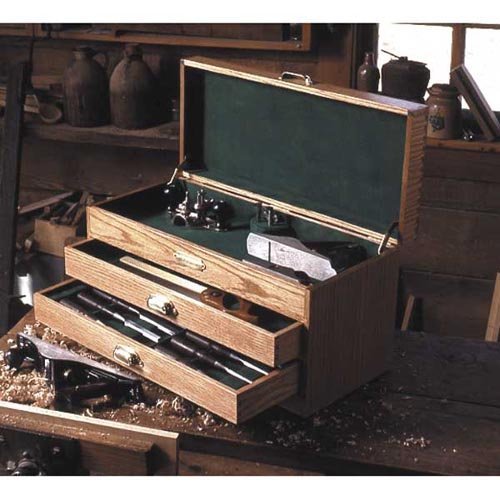
Tool storage and transporting projects, however, are seen by many as a true sign of craftsmanship.  I mean, when you roll up to a job with a boss tool tote or show off your hand crafted tool storage cart, well, now we’re talking.

This week, have you ever built your own tool storage and transport projects, and how’d you do?

[poll id=”143″]

part of the Wood Talk Online community