Stuff I’ve built: The kitchen pantry

No, no post yesterday.  Instead of writing something for the blog, I spent the day cooking Easter dinner for 16 folks. My two sisters in law with their families, my in-laws and my mom and step dad. And, boy, did we ever eat. Roast lamb. Ham. Roasted potatoes. Two veggies. Two different kinds of salads. It was nuts.

And, when it comes to the kitchen prep in our house, we like to keep a lot of the staples close at hand. Different oils, vinegars, rices, pasta… the works.  This way, we can whip up a meal fit for guests whenever we need to.

Unfortunately, it wasn’t always so easy to store these staples. We had very limited pantry storage area in our kitchen – basically a linen closet in one hallway and whatever space we could eke out of our cabinets. Very tight and sloppy.  We needed a solution.

To help contain all of these goodies in one convenient place, I built this freestanding pantry unit for my house. Based on Danny Proulx’s design in his book Fast and Easy Techniques for Building Modern Cabinetry, it is a very simple yet useful design.
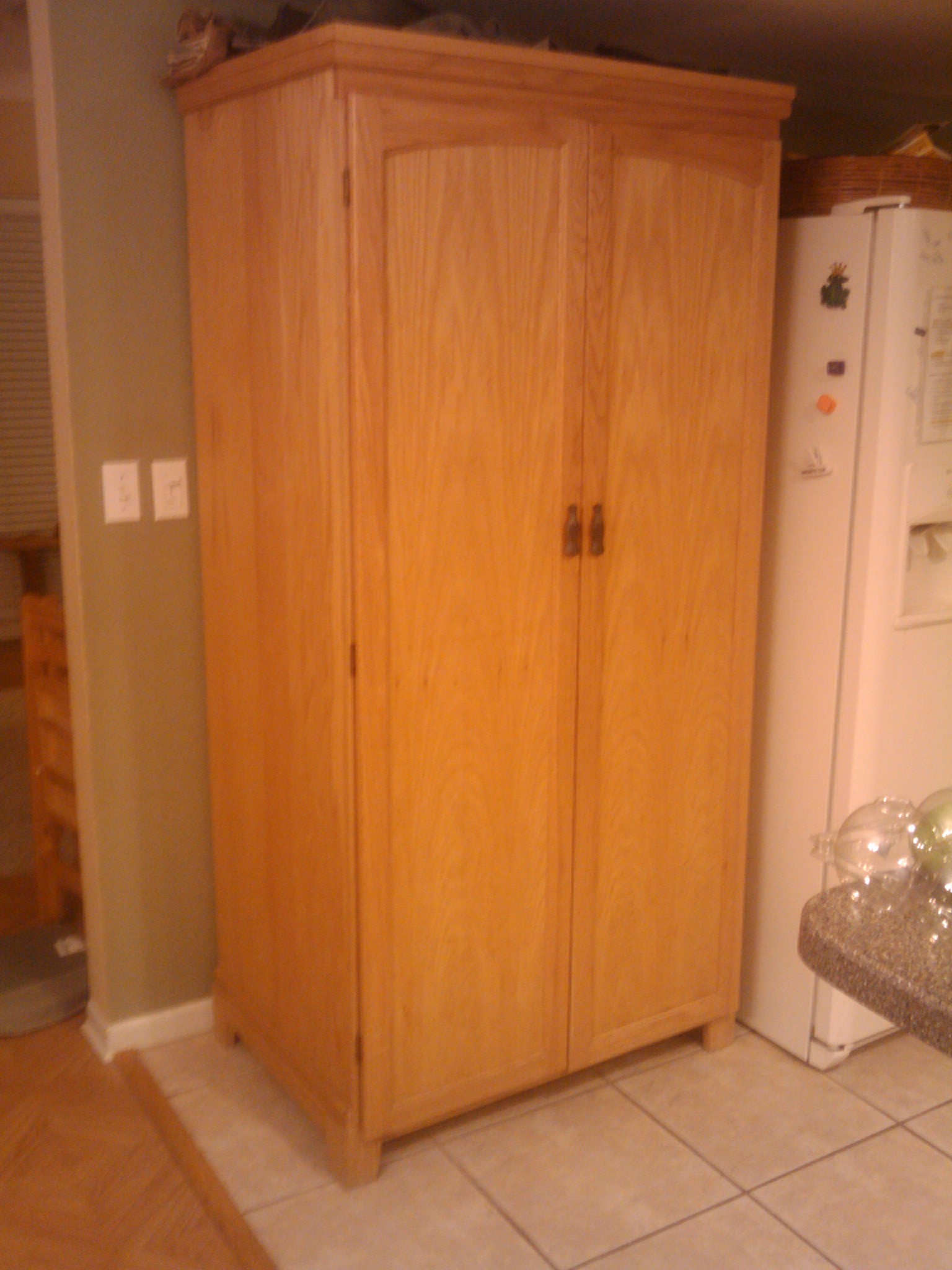
Basically, it’s a large cabinet built out of red oak plywood. About seven feet tall and 18 inches deep. Rather than sitting on the floor, I built a frame for the piece to make it look a little more graceful. The piece is held together with glue and pocket screws, and I built the doors for it. I figured the curved top rail would allow it to look a little fancier. It’s as plain as plain can be… but when you get into the inside, this is where the piece shines.
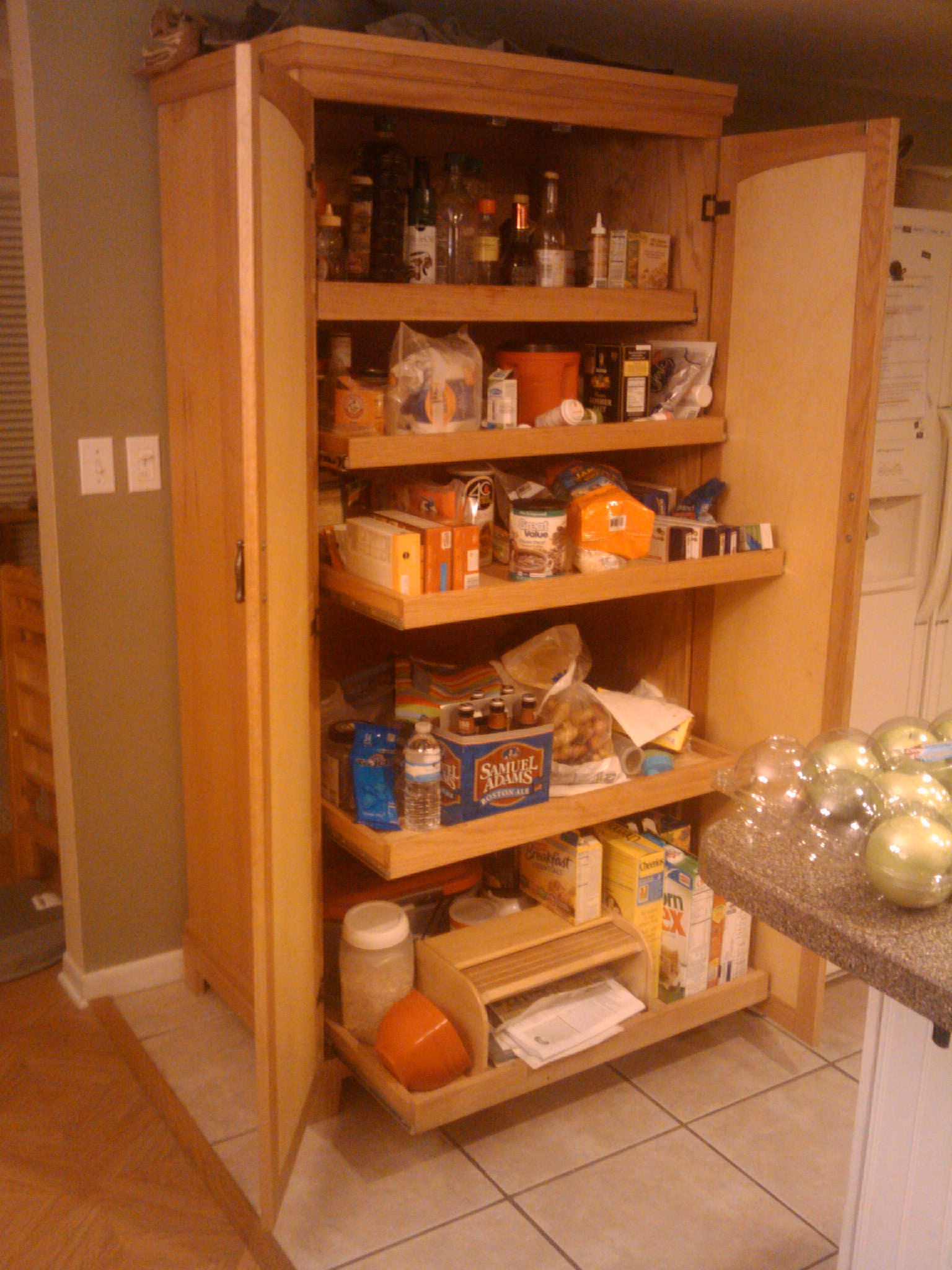
Inside, there are five full-extension heavy duty pull out shelves on runners that can handle 100 pounds each. This baby is designed for heavy lifting and ease of use. I built the shelves from pieces of 2 inch wide by 3/4 inch thick red oak runners with 1/2″ plywood grooved inside. The sides are held together with more pocket screws.  I purposely graduated the height of the drawers from the bottom to the top of the piece to allow for taller storage on the lowest shelf, and to restrict the number of canned goods that could be stacked on the upper shelves, preventing too much weight from being placed on one shelf.

The best thing about the piece is simply how much stuff it can hold. We store all kinds of goodies in there – the breakfast cereals, the bags of coffee, the large mega-retailer packs of pasta – the works. This way, we can stock up at the local membership clubs and keep all of those things out of the way safely tucked in the pantry.

This piece has allowed us some great flexibility in storage at our home, and we’ve had more than one visitor remark how they would like to get their own copy of the pantry for their kitchen.

 

Link of the week

eShoji

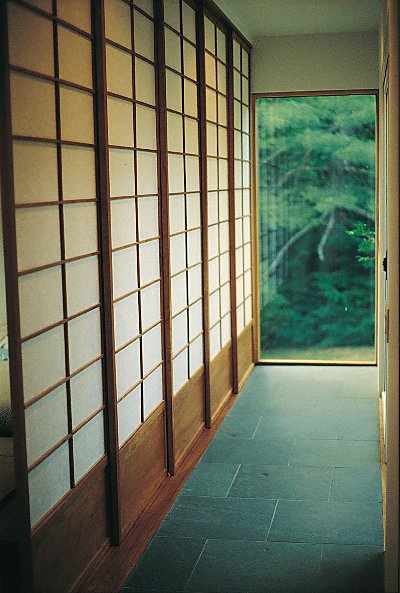
There is nothing quite as elegant as the simple, strong lines of Japanese Shoji screens.  These traditional room dividers are made to look delicate, but have incredibly strong joinery.

If you wanted to ever try your hand at making traditional Shoji, eShoji would be an excellent place to start.  Here, you can learn about the history of these decorative panels, discover the classic ways in which they are used and find the materials and resources you need to build your  own.


Amazing lobby woodwork

So, I have been in Atlanta at the National Hurricane Conference this week, and as always, the conference has been a great learning experience. I’ve moderated a number of panels and taught a few classes about public information and getting ready for the upcoming hurricane season.

But, no, that wasn’t the most surprising attraction.

Well, maybe it was the other tourist-based venues I had a chance to take in. The World of Coca Cola was a huge hit, and I enjoyed the nostalgic look back at one of the world’s most popular beverages.

But, no, that wasn’t the most surprising attraction in town, either.

No, I experienced that when I checked in.  This year’s conference is being held at the Hyatt Regency here on Peachtree Street in downtown Atlanta. The hotel, opened in 1967 was designed by John Portman.  It was the first in the world to be designed around a massive inner atrium, and features high-speed glass elevators rising to the 22 floors of rooms.  While is massive scale and architecture was impressive, it paled in comparison to the major improvements being undertaken in the lobby – including the lowly furniture.

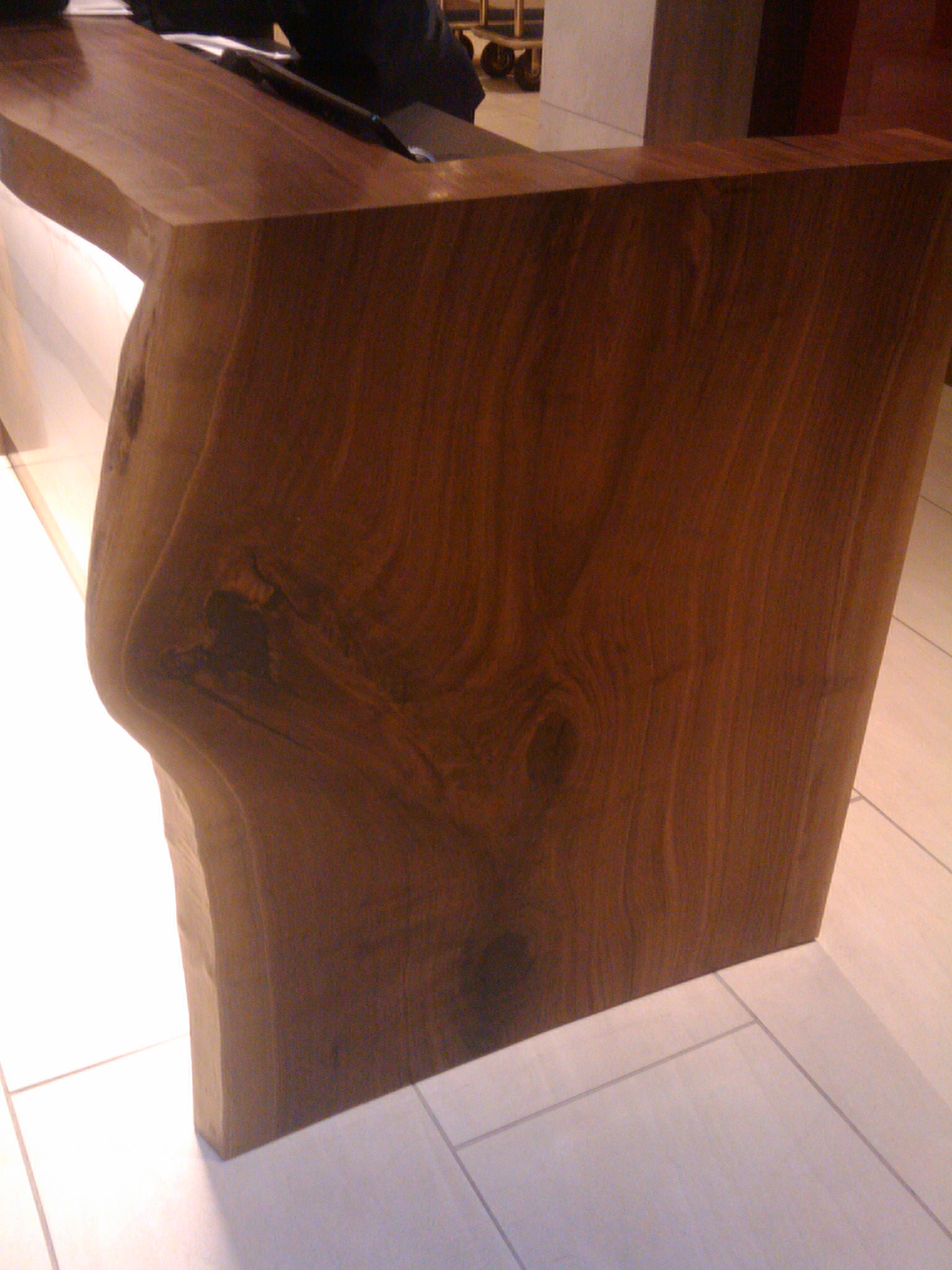
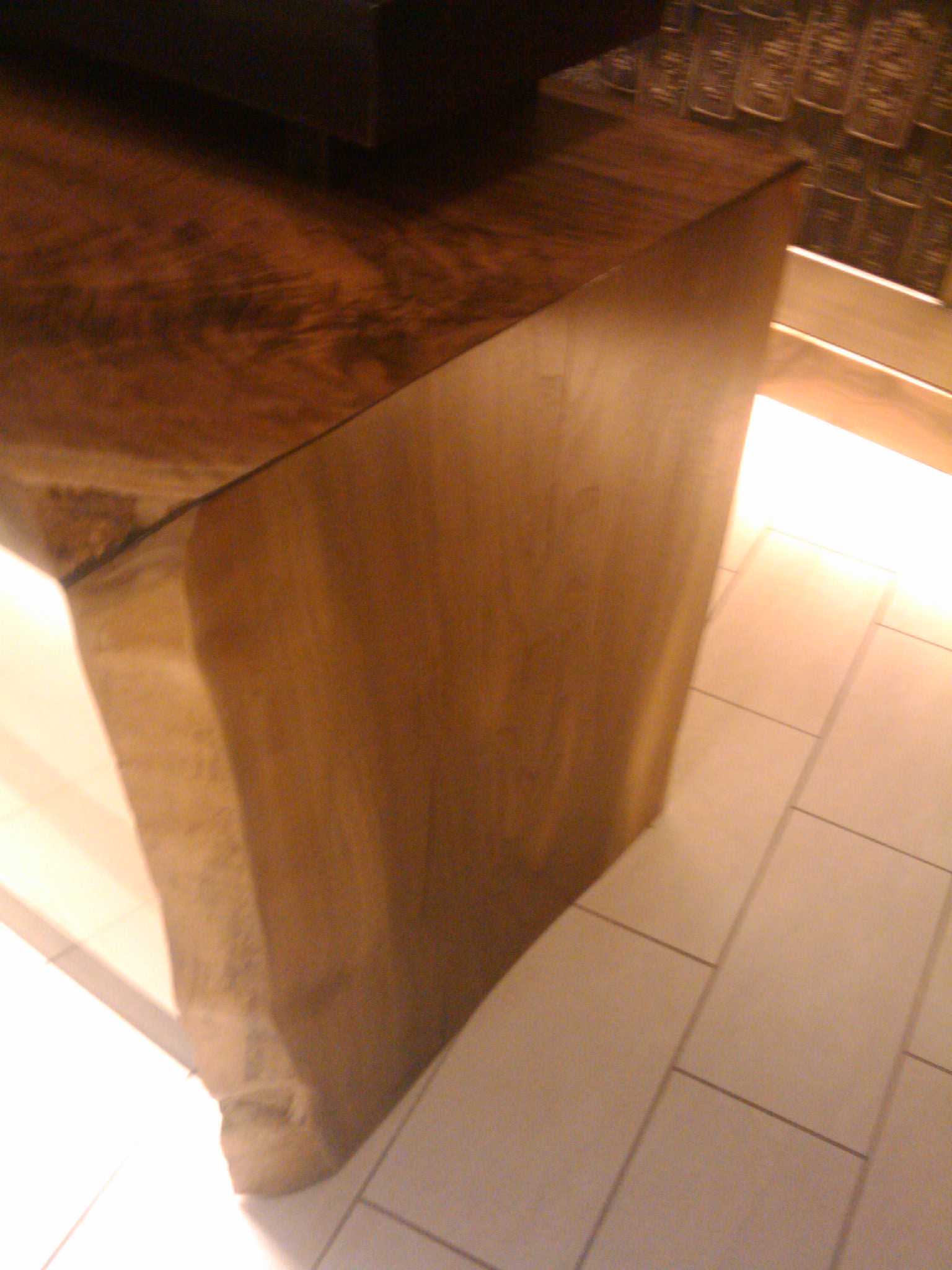
The bell and concierge desks as well as the valet stand – at first glance – looked like some interesting thick wooden laminate.  That was until I walked up to them and felt the live edges. It turns out that the folks planning the renovation of the lobby turned to woodworker John Houshmand to craft all of the desks out of large, live-edged slabs of black walnut.

Each is crafted of slabs nearly two inches thick and up to two feet wide.  They are mitered at the corners, eliminating the need to look at edge grain. The figure and grain pattern in these boards is awesome, and I have spent plenty of time in the open lobby standing at the check in desks snapping pictures like a fool.

While searching around on the internet, I came across a pair of videos about the project.

On the first video, Houshmand is interviewed about how he sourced the wood and how he built the projects.

This second video shows a representative of the Hyatt hotel chain talking about the renovations and what work is being done.

Here I was thinking that there would be no woodworking this weekend.. and look what I found!


Flowers again? No way!

Albert Einstein was pretty darned smart. No. Seriously. His work in physics has helped unlock many of the mysteries of the universe – that mass could be converted to energy and energy could be converted back to mass. The whole space-time dealio. And, my favorite, the theory of relativity.

Relativity is something my feeble mind can wrap itself around because Einstein gave a really good example to describe how it works:

Put your hand on a hot stove for a minute, and it seems like an hour. Sit with a pretty girl for an hour, and it seems like a minute. That’s relativity!

Einstein was spot on. When I’m sitting in a meeting at work, the time seems to drag on forever. But, when a holiday is approaching, and you realize you haven’t done anything to get ready for it, the days quickly slip by, leaving you in full-blown panic mode.

You don’t have to be an Einstein to know that Mother’s Day is on the way. It’s just one of those holidays that creeps up on you, leaving you scrambling at the last minute to find the appropriate gift. “It’s happened to all of us,” said Tim Walter of Eagle America. “Your mom, mother in law, wife, daughter… whoever is a mom in your life is expecting you to remember the big day is coming. While they may not be expecting you to break the bank and buy them something lavish, the fact that you noticed and thought to remember the occasion is expected – and greatly appreciated.”

That’s why Eagle America is helping make it easy for woodworkers to come up with ideas to show a little extra appreciation for that special someone in their lives. “Sure, you can go the whole flower route, but that could be a little impersonal. Besides, cut flowers last only a few days in the vase. A wooden gift – that will be treasured for a lifetime!”

Let’s start with the basics. Picture frames are great gifts for moms to showcase pictures of their moms, their kids and the entire family. “Whether you want to build something elaborate or simple, the handcrafted touch really helps those special photos stand out.”

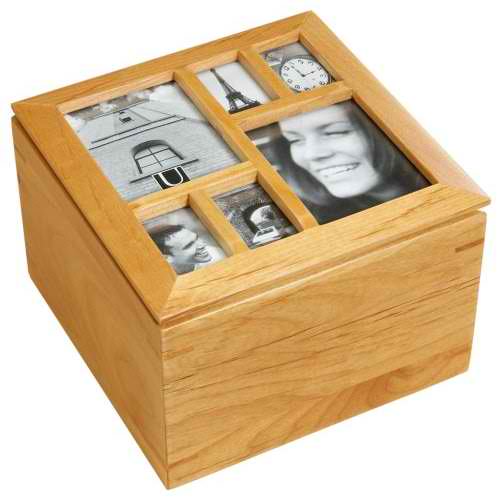
Small ‘treasure’ boxes are also a great place for the mom in your life to stash some of her more special and memorable items. “With digital photography, we don’t always get prints of those memorable shots. But, for those pictures sitting in plain storage boxes, a beautifully crafted box makes an awesome place for her to stash some of her favorites.” Tim continued, “Heck, go crazy and build your box, but make the top a picture frame! This way, it will serve a dual purpose.

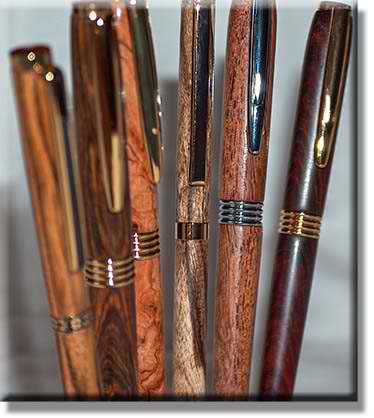
For turners, it’s difficult to go wrong when turning an elegant pen. There are dozens of styles of pen works out there, and with some imagination and a few wood scraps, you could make a unique creation she will love. “Go all out. Turn a pen out of the best looking pieces of wood you have, then invest in a little personalized stationery for her. You will be a hero!”

If you really want to go out there with a different twist on things, why not plan a family project? “We have plans for easy woodworking projects that are perfect starting places for kids to build. Plus, we also offer a number of simple woodworking kits the whole family can enjoy. That quality time will be remembered forever.”

Just be smart about the time you have to work. “Even Einstein would tell you – get started now so you won’t be rushed trying to beat the deadline!”


Quick Poll

Picnic tables. Arbors. Flower boxes. Play sets. That relaxing Adirondack chair.

If you haven’t realized it by now, there’s a great big world of woodworking projects you can tackle for use in the great outdoors.

And, if you have built for the outdoors, you will no doubt know of the challenges that face you. The beating sun. Rain and other precipitation. Fasteners rusting and glues failing. Building something to stand the test of time is a far more daunting task when the piece isn’t protected from the elements.

This week, let us know if you have ever built an outdoor project, and be sure to tell us about the experience!


Link of the week

The Cool Hammer Company

Artist. Craftsman. Teacher.

There are a lot of things you can call woodworker Ron Brown, but one of the most appropriate thing might be woodworking wizard.

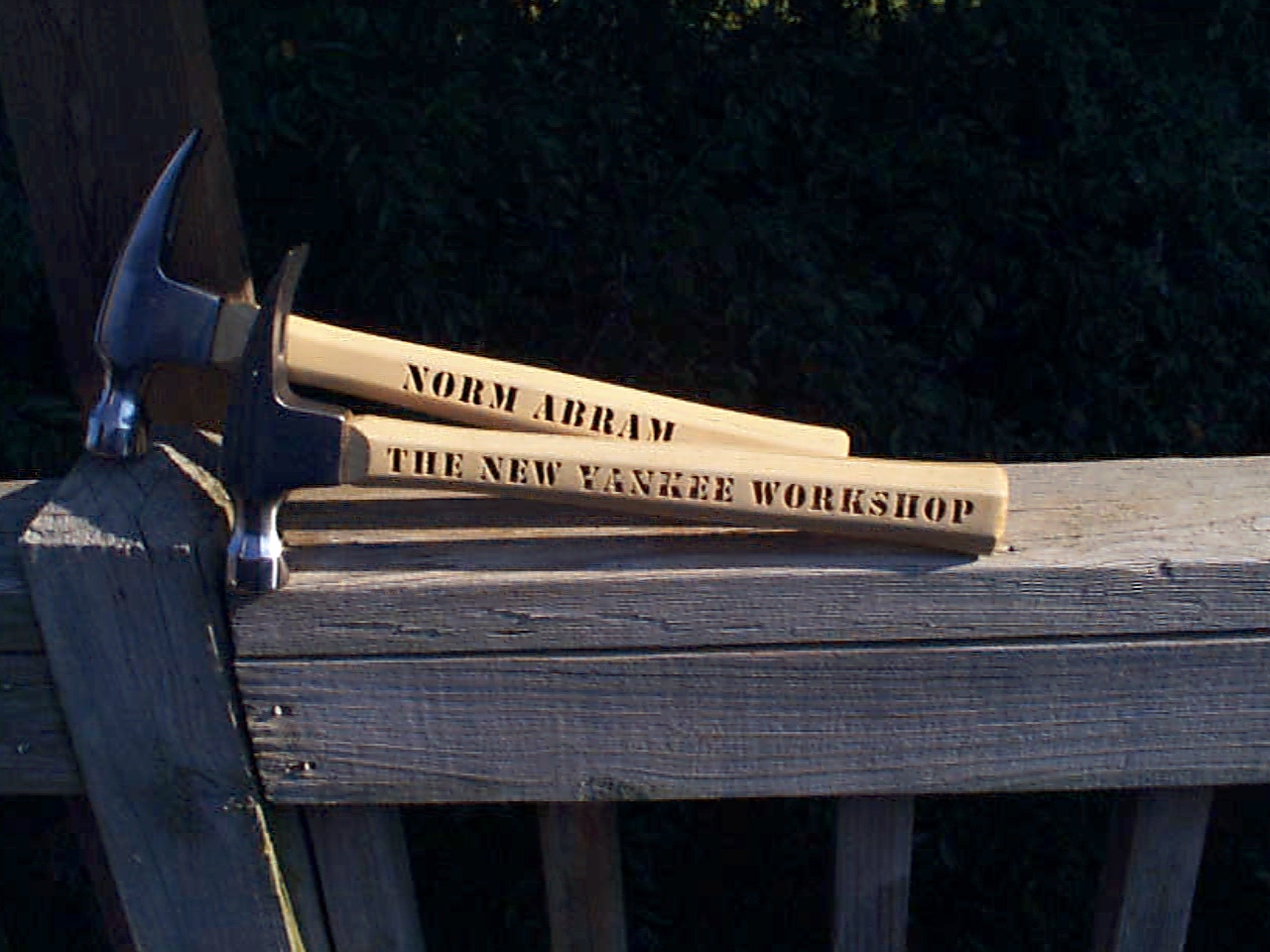
Known for his how-to videos, plans and pen blanks, perhaps his most notable project plans are to make some crazy personalized hammers.

Yes, these are hickory handled hammers with the letters scroll sawn through the handles.  Ron sells DVDs that show the procedure step-by-step so you can build your own.  Needless to say, you aren’t going to be using these for driving nails after they are done.

Definitely a site you want to check out.

Species Spotlight: snakewood

If you have been following the news in recent months, perhaps you noticed the story of the Egyptian cobra that escaped from its enclosure in the reptile house at the Bronx Zoo. For a week, the venomous snake slithered around, closing the facility until it was captured.

If I had followed my career ambitions in second grade, I might have been the guy who went in to catch him.  Yup, I had been on a field trip to the same reptile house that year, and I became totally fascinated with all things herpetology. I’m not sure what it was that caught my imagination.  Maybe it was the the way they moved so fluidly on their bellies, with no apparent way to move themselves. Maybe it was how menacing they could look  if they were threatened.

But, I’m sure it was the stunning appearance of their scales. The rattlesnakes, coral snakes and cobras I saw back then had exotic looking scales in a bewildering array of patterns, colors and textures.

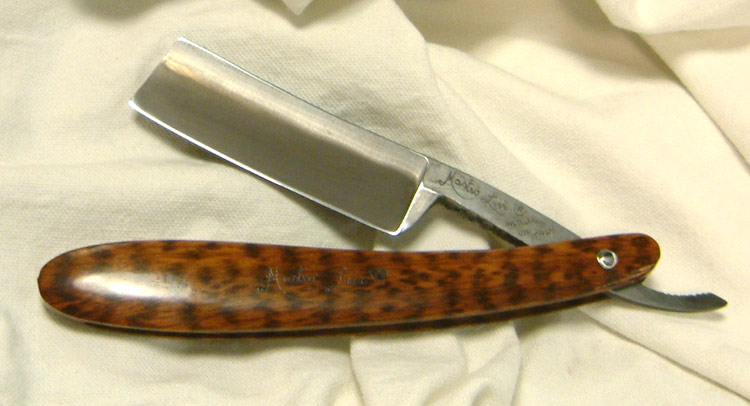
While my days of wanting to play with snakes are way behind me, I am still fascinated by stunning patterns in natural products. That’s why I was so excited when Eric Poirier of Bell Forest Products brought snakewood to my attention.  “It’s a very rare and exotic wood that’s tough to work with, but once you get it into shape, it’s something to see.”

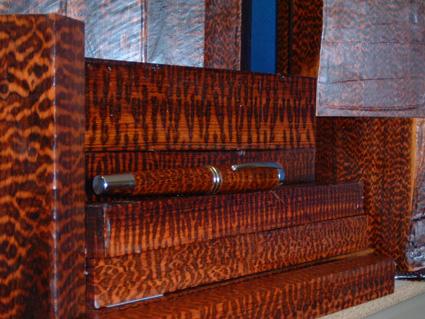
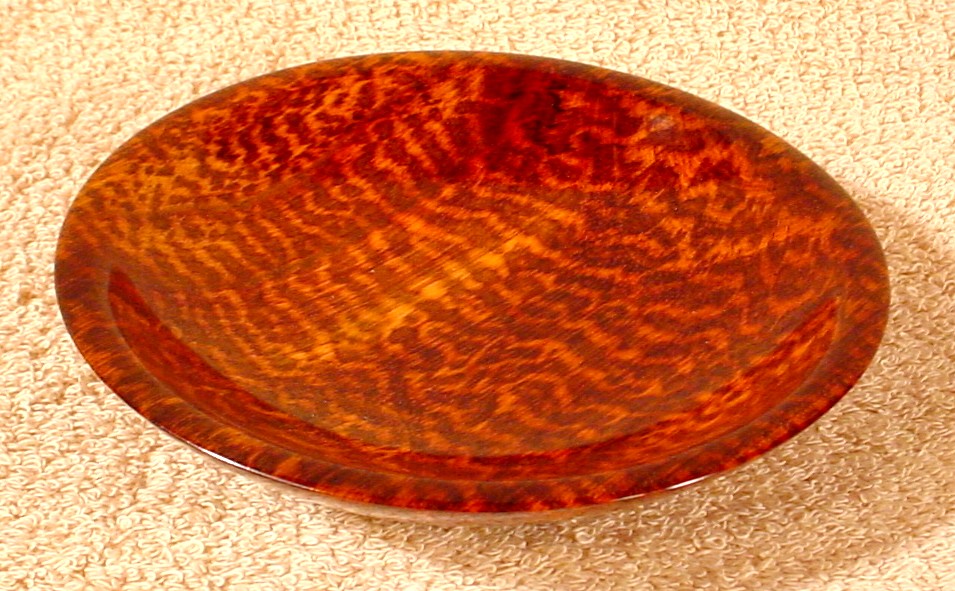
Snakewood comes from small trees found in Central and South America.  Initially deep red in color, snakewood changes color to a rich reddish brown upon exposure to air. “The color change is pretty dramatic, but nothing like the figure you will find in the wood.  It is comprised of dark and lighter specs that resemble the scales on a snake.  It’s some wild looking stuff.”

An extremely dense hardwood, snakewood can be somewhat challenging to work with. It splits fairly easily and tends to be splintery. It’s also hard to cut and drill. “This stuff can be a challenge even to the most experienced woodworker. The key is to use very sharp tools and take your time.  Believe me, your patience will be rewarded.”

And, yes it will be. Snakewood turns well and polishes beautifully, showing its dramatic color and figure.  “Any project with snakewood in it is going to attract attention in a big way. You will want to put those  accents in a prominent place.”

While it can be a bit spendy (actually, one of the more expensive woods out there), a little bit goes a long way. “It’s generally sold in small blanks and is best used in making items such as bowls, vases, knife handles, pool-cue butts, and the like. Some times, you have a splurge a little bit, but the pieces are so small, it won’t break the bank.”

Don’t be surprised if you find snakewood slithering its way onto your list of favorite woods.


part of the Wood Talk Online community