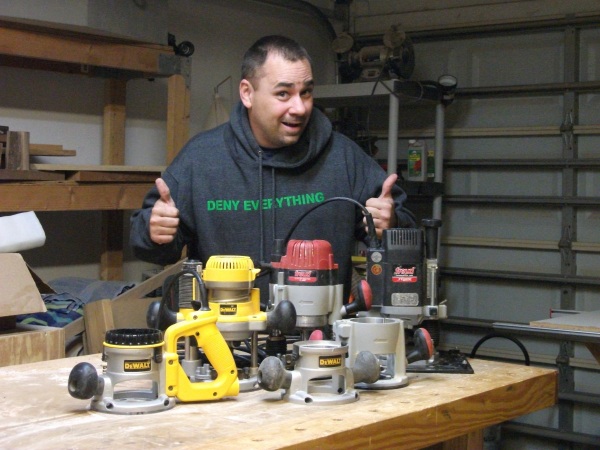
Take it to the edge

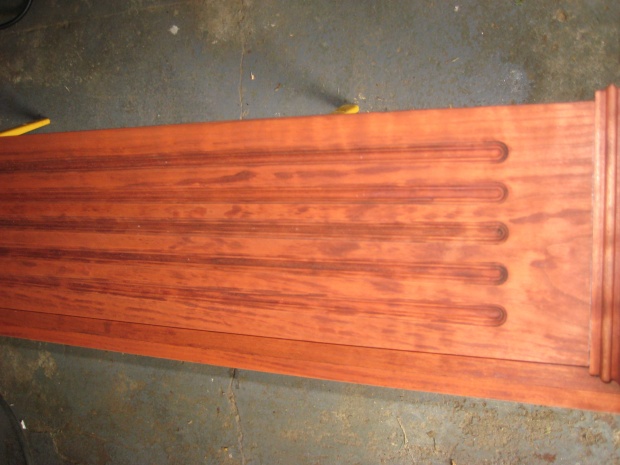
My woodworking world was rocked when I discovered cope and stick bits for my router.  Instead of trying several convoluted methods of cutting and attaching rails and stiles for cabinet doors, I was able to use two matched bits to cut everything. The pieces slid together snugly and the inside bead around the panel was something to behold.
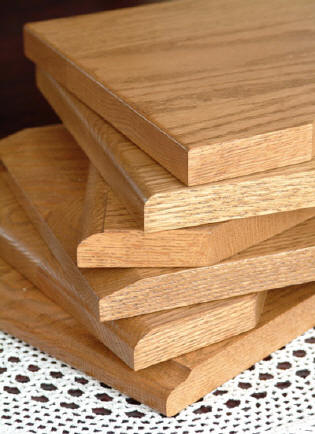
The only problem I began to notice was that while the inside of the doors was pretty, the outside edges were just plain Jane. I noticed the same thing on the tops of the tables I built – there wasn’t much in the way of ornamentation.

“That’s a common design flaw for beginning woodworkers,” said Dan Walter of Eagle America.  “It’s so important to tackle the more complex joinery, but easy to forget that there is an outside of the project that people will see as well. It’s a shame, because the additional detail can take a basic project and really make it noticeable.”
So, what’s a woodworker to do?  “It’s easy to do something like put a roundover on the edge, but why not try something an little more complex?” Profiles that feature numerous coves, roundovers and steps provide much more visual interest, but do some other things for the project as well.

“They tend to make the doors and table tops a whole lot more durable.  Sharp edges on woodworking projects – especially ones that take a lot of abuse like door edges and table tops, can easily be damaged by a sharp blow.  By rounding them over, you create an edge that’s less likely to take a sharp knock, and any force that is applied tends to be more of a glancing impact.”

Dan also went on to describe one of the more visible aspects of woodworking – the play of light across the project. “Shadow lines on anything give the piece a more stunning impact.  Think of the monuments in Washington, D.C.  The fluted columns around the Lincoln Memorial are very intricate, and the way they cast shadow on the while marble casts striped shadows on what would otherwise appear as brilliant white columns. A fillet – or step – on the molded edge of a table top does the same thing, making your project stand out a whole lot more.“
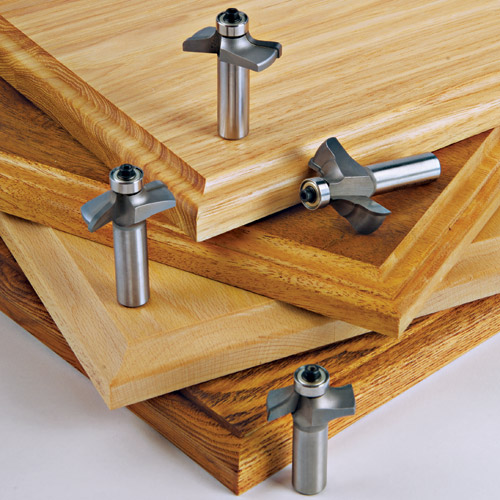
Eagle America has a great deal on one of their most popular four-bit sets for creating table or door edges. “We put together these bits to give woodworkers the opportunity to create some dramatic effects at the edges of their projects. With these bits, you can choose from the simple to the complex, giving you the opportunity to pick the perfect edge to suit your project’s style.”


 

Remembering the fallen

Today is Memorial Day here in the United States.  It’s the start of the summer holiday season.  A great day to go pick up a bargain on a TV at a local mega-retailer. You can officially wear white again.

Oh, yeah, there’s also the reason why we commemorate the day in the first place… to honor all who fell in battle to preserve, protect and defend the Constitution of the United States.

I am not one who glorifies war. With two young sons who may one day be called upon to serve, I hope and pray that they will never be put into dangerous situations.  I’m sure that anyone in uniform or knows anyone who serves wishes the exact same thing. At the same time, I also understand and respect the ultimate sacrifices made to ensure that freedom and democracy are seen around the world.

Take a moment today and think of those who made that sacrifice, those who served with them and the families who lost their loved ones.

One of the most fitting tributes to help those who lost their loved ones in uniform is to build a memorial flag case to hold the burial flag.  There are lots of plans out there to built them, but this one from Wood Magazine has the added benefit of requiring only 45 degree cuts, dramatically simplifying the building process. Even if you don’t know of anyone who has died in battle, building one to donate to your local American Legion, Veterans of Foreign Wars or other service civic club would be a very touching gesture for those who gave so much.


Quick Poll

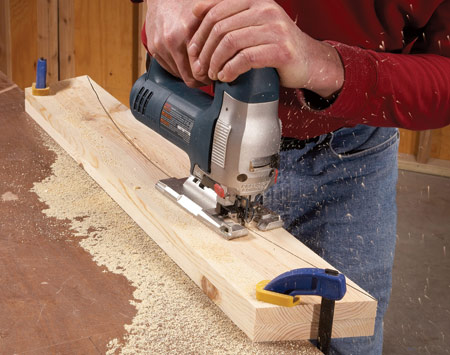
They are often the first power saw a home owner will buy. They can cut curves and straight lines. It can cut through wood, metal, plexiglass and other materials. With the right blade and proper techniques, they can make very smooth cuts, or with the wrong blade… it will make a  mess of your project.

The jigsaw or saber saw is one of those tools most woodworkers either love or don’t… it can be a problem solver or its own problem altogether.   What are your thoughts about the humble jigsaw?

Link of the week

Bear Mountain Boat Shop

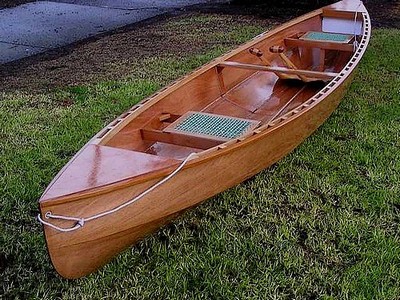
Wooden canoes are traditional, stylish and can make a day on the lake a great adventure.

Did you ever wonder how they are built… or even if you could try your own hand at building one?

The Bear Mountain Canoe Boat Shop is a great resource for prospective canoe builders. Videos, plans and and technique articles help guide you through the design, planning and building phases. There are plenty of styles to choose from, so you can find a model suitable for adventure or leisurely cruises.

Canoes not your style?  They have plans for kayaks and small boats as well.

An interesting site for the outdoor enthusiast in your life…

###


Species Spotlight: Cherry

There are lots of ways to know that summer is approaching. The Florida heat gets cranking. Local reporters call for hurricane stories. And, suddenly, the boys and Rhonda have a lot more time around the house.

The surest way for me to know that summer is coming can be found in the produce section of my supermarket. That’s where I can find the summer fruit. The peaches, nectarines and plums are delicious, but my favorite are the cherries. I can snorf those little red fruits down all day. They are a little tart, but oh, so sweet. I have to frequently battle the kids for a chance at the cherry bowl.

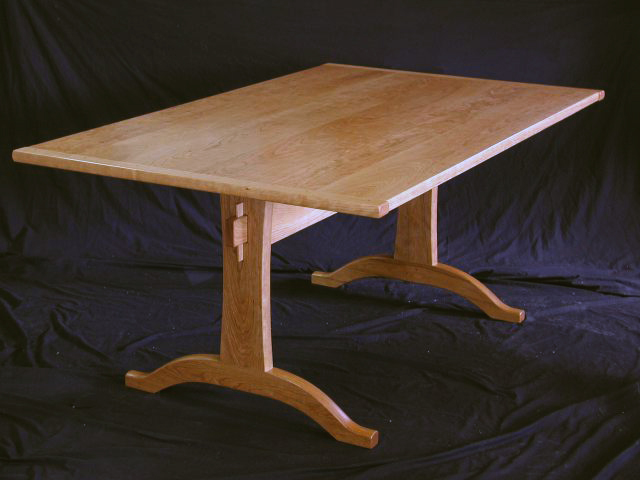
But, that’s only one way I love cherry. “Cherry is a classic for fine woodworking,” said Eric Poirier of Bell Forest Products. “It works very well, makes great looking furniture and has a very handsome color. There’s a very good reason why it’s popular.”

American cherry trees grow throughout the east and midwest United States, primarily in Pennsylvania, West Virginia, Virginia and New York. The trees can grow from 60 to 80 feet tall. Cherry heartwood is a beautiful red to reddish-brown with very pale sapwood. “The one surprise for many woodworkers is that the heartwood becomes darker when exposed to sunlight. So, say you build a book shelf, you’ll be surprised to see that when you move the shelf, the wood behind the shelf is lighter. It can be very pronounced.”

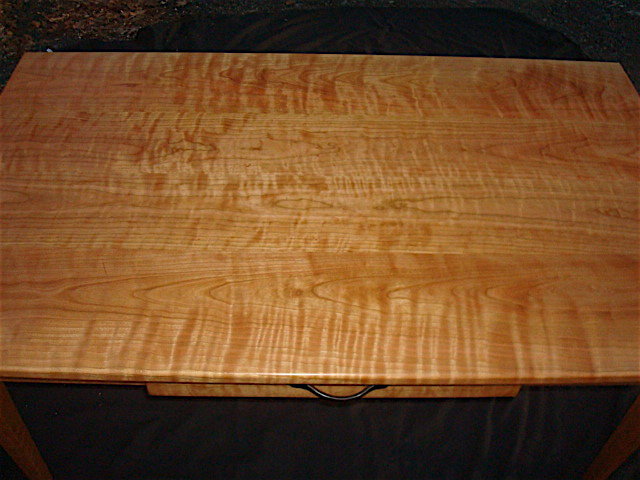
Cherry can also show some curly figure. “It’s not as common as curly maple, but when you find a piece of figured cherry, wow. You are in for a real treat.”

Bring cherry to your workbench, and you discover that its workability is legendary. “What kind of joinery do you want to cut? Hand cut dovetails? Machine cut mortise and tenon? Biscuits and dowels? Cherry’s going to give you very sweet results no matter how you choose to go.” It’s a great choice for chairs, tables, cabinetry, chests and many other pieces. It’s a classic for Shaker style projects, as many Shaker communities were established in areas where cherry was plentiful.

And, when it comes to finishing, cherry gives great results whether you plane, scrape or sand. “You may find some small gum pockets in the wood, but they won’t leak resin like pine will. Those add visual interest to the piece if you choose to include them.” The one place you might be surprised in the finishing. Cherry tends to have a wavy grain structure, which can lead to blotchy finishing. The best way to prevent a blotchy finish is to apply a 1# cut of dewaxed shellac, sanding it thoroughly with 320 grit paper once dry. From there, you can apply the finish as normal. This prevents the uneven absorption, giving a much better look.

Cherry is readily available and is moderately priced, but projects built with it look like a million bucks. “If you are looking for a great wood for your next project, you can do a whole lot worse than cherry. Treat yourself to this sweet looking wood.”


“I can’t do anything with it.”

Accountants have their time of the year just before tax day.  Wedding planners work their butts off on Saturdays in June. The post offices and other shipping companies have their times during the holiday rush.

This is my time of the year at work.  Hurricane season begins June 1, and I field a bunch of phone calls.  From the media looking for story ideas.  From other public information officers looking to share information before we head into the season. From groups around the county looking for a speaker to talk about hurricane preparedness.

It’s a busy job, but someone has to do it.

That’s why I wasn’t too surprised a few weeks ago when my desk phone rang. It wasn’t a number I recognized, but that’s par for the course this time of the year.

I introduced myself, and the lady on the other end of the phone asked if I was THE Tom Iovino.  I know there are others out there, but I think I’m the only one on the west coast of Florida.  “You are the woodworker, right?”

Now, that was an odd one for me. I never get calls about my woodworking at my day job. I like to keep it that way – as does my boss.

“I am,” I responded. At that point, she started talking about her father who recently passed away.  He had some furniture in his home, and she was asking if I could take it, break it up and use it to build other projects.

“You’ll have to come today to pick it up,” she said. “We are closing on the place tomorrow and it has to be vacated. I can’t do anything with this.”

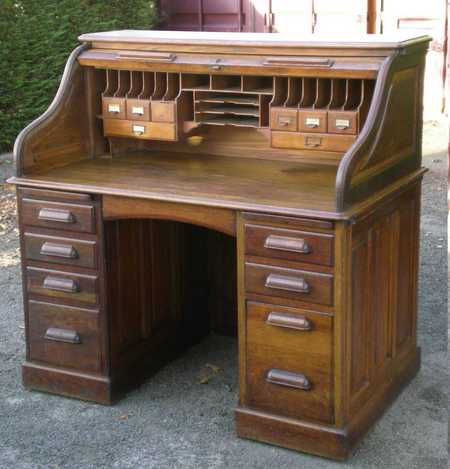
I asked a few more questions. It was a desk and a clothes dresser. She believed he had purchased the pieces back in the 1940s.   It was also very high quality, either made of some kind of oak or mahogany. She couldn’t tell. All the drawers were dovetailed. The pieces were solid. Her dad had used the desk to run his personal accounts.

I’m not one to pass on free wood. If someone were offering me a few sweet timbers, I’d leap at the opportunity to snatch them up. And, the temptation to get someone with a truck, run up to this place and hoist some sweet timbers-to-be back to my shop was very difficult to overcome.

But, then, a completely different thought entered my mind. Somewhere back in the piece’s time line, a skilled craftsman searched through a stack of boards to find the right ones to build these pieces. They were milled, cut to size and carefully laid out. Since through dovetail joint jigs weren’t around before the 1970s, there was probably a good bit of hand work to make those dovetails on the drawers. Planing and sanding. The careful application of a finish.

I couldn’t bring myself to break apart well-built and well-used pieces of furniture to build other projects. I guess it’s a reverence for the skill of the person who built the project in the first place.  Or the vision in my mind’s eye of the former owner sitting over it, late at night, tracking his family’s finances, doing his tax returns or writing a heartfelt letter to a loved one.

The furniture – in essence – was worth well more than just the sum of its parts.

After she finally explained the situation with me, I told her no, I couldn’t possibly do that to a piece of quality furniture. I did, however, tell her to call the local Salvation Army office to arrange a pick up of the dresser. At least that would give the piece a little bit more time to find a suitable home.

As for the desk, I searched for the numbers of the three nearest public schools and read them off to her. I told her about how my wife was working on a beat up, rickety desk  until one of the school’s administrator changed schools, leaving his more capable desk for her to use. I told this lady that one of these schools would love to get a sweet piece of furniture to replace an outdated desk in a teacher’s classroom. She promised that she would call to arrange some kind of pickup for a deserving teacher.

I hung up the phone feeling as if I had provided at least a stay of execution for two well-crafted pieces of furniture.  At the end of the day, I felt that was something she could do with the pieces.


Quick Poll

When it comes to some tools… the majority of us have just one.  One table saw. One thickness planer.

And, then there are routers.

There are lots of reasons why woodworkers like to own them in multiples. You can get multiple setups for different operations. You can mount one in a table and use the other hand held. Different sizes to tackle different tasks.

Today, let us know how many routers you have in your collection. Count ’em all… small trim routers, big table mounted beasts… the works.

It’s OK, you are among friends… and you don’t have to give your name.  So we can’t rat you out.


part of the Wood Talk Online community