The weekly plan

How to build your own bar

How would you like to come home after a hard day’s work, pull up a stool at a comfortable bar where everyone knows your name and enjoy a frosty beverage?  What if I told you that you could have that luxury in your own home.

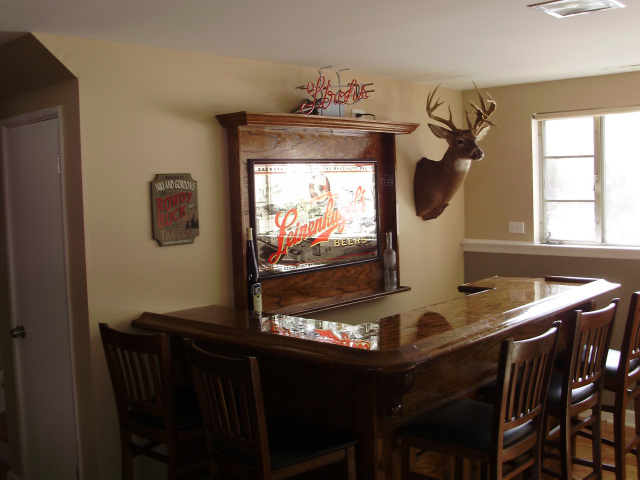
The bar that started it all

This page, offered by Milligan’s Gander Farm, shows you the basics of how to build a bar in your own home. In addition to providing the basic measurements and tips on materials, it shows detailed construction drawings that can help you make an area that is perfect for entertaining guests.

Whether you choose to tap some adult beverages or want to become your own barista, you will will have a lot of fun with this project.

I cut the line

So, this year, I have finished one large project that required me to make accurate cuts on plywood. Now, you can try to do this on a table saw, but I will warn you that a 4 x 8 sheet of 3/4 inch plywood tips the scales at a hefty 80 pounds – give or take.

That's one way to carry plywood...

And, it’s pretty cumbersome to maneuver around on a table saw top, so maybe that’s not the best way to go for breaking down the panels. Unless, of course, you build a set of infeed and outfeed tables, work holding devices and other items…
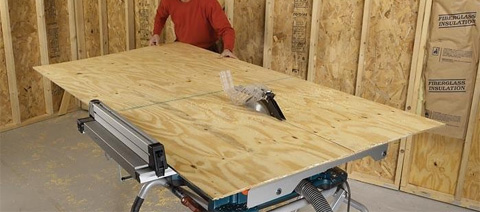
Table saw cutting

To defeat this problem, you can go with a portable tool. The easiest way to do this would be to either strike a line and try your skill, use a batten to cut against or build a jig like the sawboard I built a few years back.

My old sawboard

Those are swell, and certainly easy on the wallet, but unless you are super duper careful, your hand can wander.

That’s when the track saw was invented. Introduced by Festool, these babies are awesome, and can break down sheets of plywood with ease and no splintering.  In fact, when my friend Paul and I built his home office, we turned to a Festool track saw for all of the critical cuts, making building all those boxes a breeze.

Paul working the track saw

However, are those babies ever spendy. Fortunately, other companies have jumped into the fray, offering high quality track saw systems at a fraction of the price of the originals.

But, what if you don’t want to go uber cheap, but still want to get the best cuts possible? Or, maybe you want to build a track setup for a battery operated circular saw?  What then?
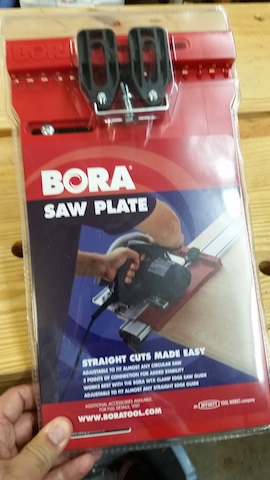
Sawplate

How about something simple like this Bora saw plate?  This baby will set you back about $30, but gives awesome results, especially when paired with one of the company’s guide track clamps. It’s easy to set up on a circular saw – it took me all of five minutes – and gives surprisingly good results for the money.

Adjusting the width

First, you have to set the width of the clamp setup, which is a piece of cake with a built-in edge clamp. Just snug the right edge to the clamp’s right side, then slide the adjustable left jaw until it just touches the left side of the clamp.
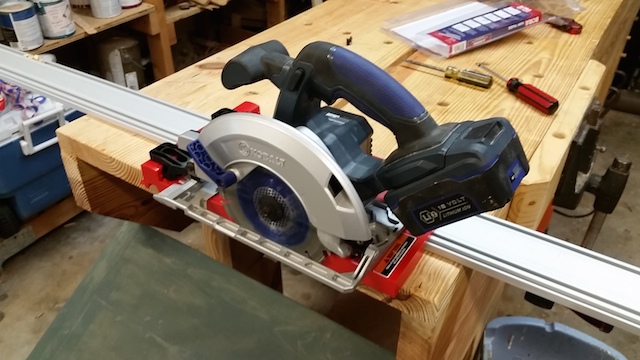
Ready to go

The saw fits in nicely with a few screwed down clamps on the front and side of the base plate of the saw.  This baby is now ready to cut, and you can line up the edge of the clamp with your marked line to ensure an accurate cut time after time.

As you will also notice, this saw is battery powered. Again, can’t stress that enough. If you find yourself away from your shop trimming things down to size, this thing could be worth its weight if not in gold, then certainly in Oreos. And cold milk.

Mmmm….

Climate change

So, does anyone remember this?

A little snowy?

Hard to believe it was only a few months ago when many states were piled under by feet of snow and people were begging for mercy.  Well, here in the Tampa Bay area, we’ve had the opposite issue to contend with. Our temperatures have been pretty well above average, making April feel more like July. Well, almost everyone has it right…

Wintry mix?

This was a big oopsie from one of the local TV stations. A wintry mix at 90 degrees? What, was this April 1?

OK, so now that we have established it is getting hot, I also had to address the 800 pound gorilla in the middle of the shop – my old air conditioner had reached the end of its life.

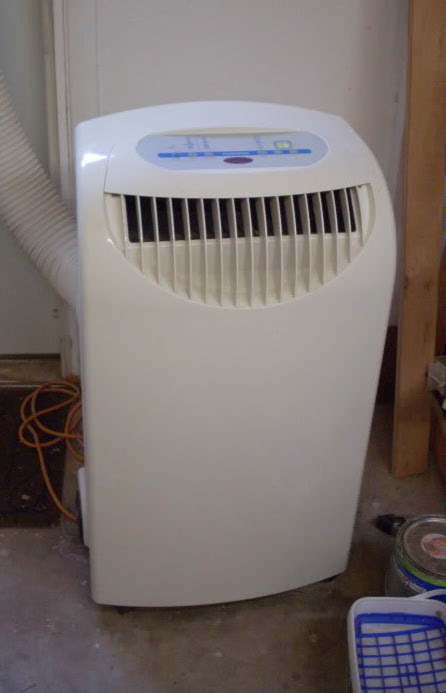
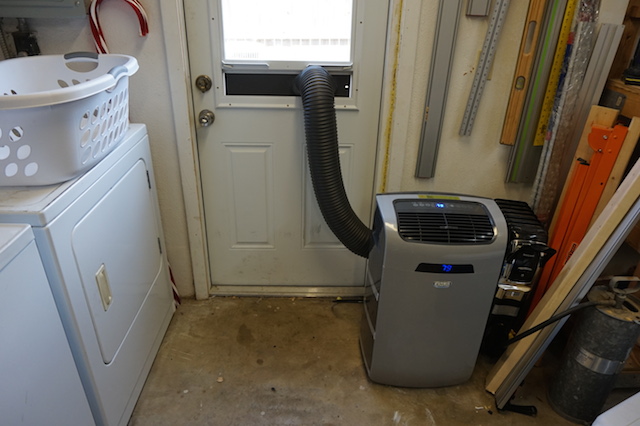
The old ACYup. R2D2 had gasped and wheezed through last summer, but the fan would no longer switch to high, and the unit was already woefully underpowered at 8,000 BTUs. But, I can’t complain, it served me well for nearly nine years, and it helped keep the shop tolerable where I built many summer projects which would have been impossible otherwise.

The new cooler

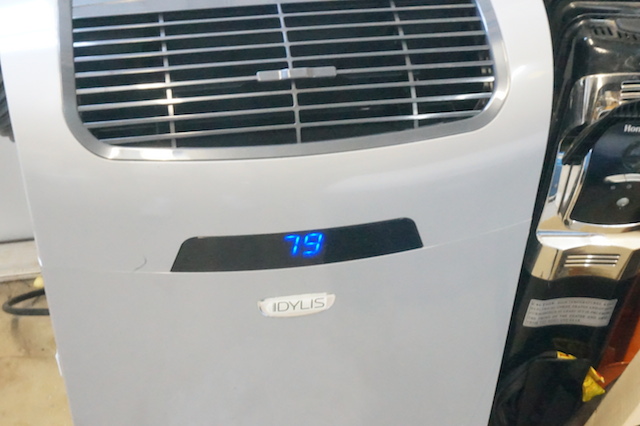
So, now we’re talking about a new system. I picked this baby up at the local home improvement center, and believe me, it’s a major improvement over what was here. First, the fan goes all the way to high. Kinda like a guitar amplifier that goes to 11…

Just like the previous model, this one displays the current room temperature, but the new one displays it in big numbers on the front, making it easy to see the current temp across the room. It’s the small things in life that make me excited.

Check out that temp

Oh, did I mention that this is a 12,000 BTU unit?  That’s going to help get the garage just a little cooler during the heat of the long Florida summers.

My biggest fan

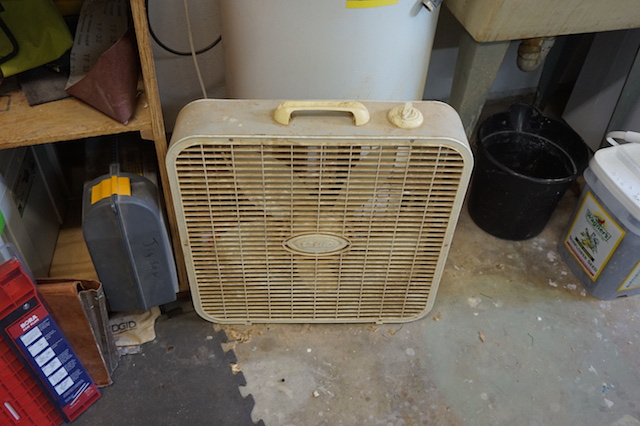
Of course, my trusty old box fan will be helping with the cooling duties, circulating the cool air through the shop while I work. That will certainly help things, but I have a feeling that sometime in the not to distant future, I am going to have to install some type of garage door insulation kit to help keep some of the heat out of the shop and the cool inside.

The setup

With that, I hope that I can affect a positive climate change in my garage for the summer woodworking season.

The weekly plan

Build a Colonial Shed

Springtime, and thoughts – and much effort – now turns to outdoor maintenance. Lawn mowing. Edging. Planting. Gardening.

And, with all of that comes a whole slew of tools that have to be stored somewhere. You know that can’t happen where you do your woodworking, right?

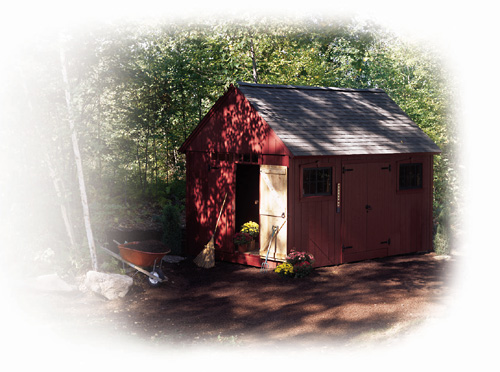
Shed vigniette

That’s what makes today’s plan so awesome!  This baby is a spacious 10 foot by 16 foot shed with a tall roof and plenty of space for storing huge items like ride on lawnmowers. It will teach you the basics of roof and wall framing, and will be so handsome, you might just want to consider moving your shop out there!

An abrade upgrade

So, remember when I was left with a divot after planing some cherry on the lid of my latest project?

Yeah, I was hoping you’d forget, but I knew you wouldn’t. But, that’s cool!  I’ve got this one nailed here. I went out and bought some new, fresh 80 grit belts for the sander and got ready to set to work.

Nice stuff, dude

But, safety first!  You will also notice that I’m wearing my full safety complement – which really needs to be dusted. But, hey, there’s no substitute for safety.

The rig

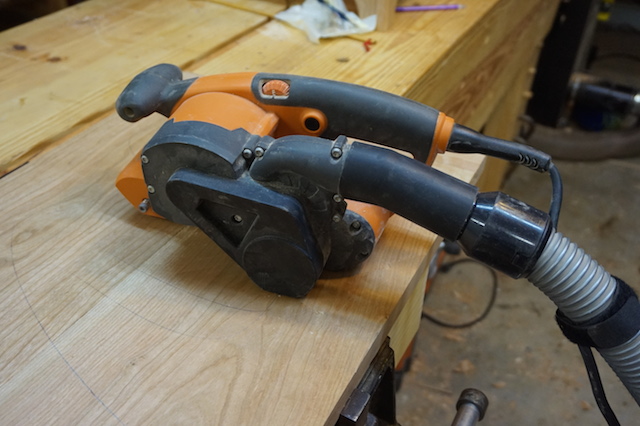
I also took the time to attach the dust collector hose directly to the sander. This way, all of the sanding dust was going to get picked up at the source instead of floating all around the shop.

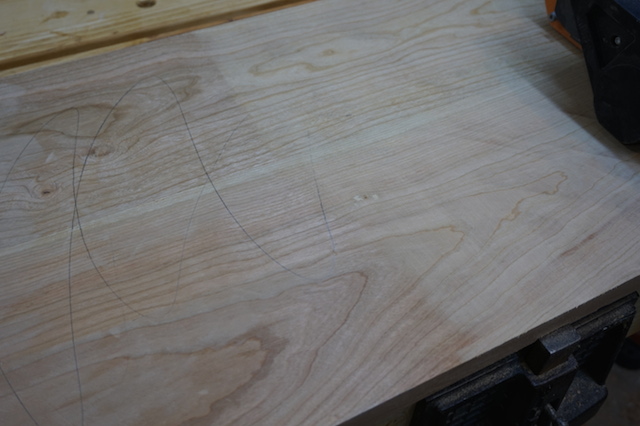
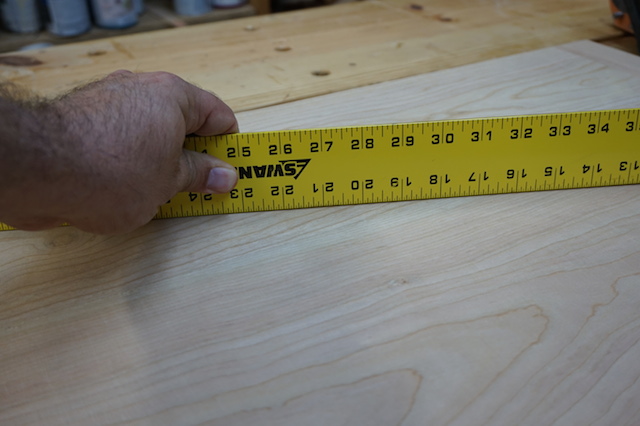
I clamped the lid down to the bench and took the time to mark a pencil line across the piece. This way, it would help ensure that my sanding would be nice and even. The clamping? Well, that was to make sure the lid didn’t become airborne…

Halfway

As I had explained in my should-have-been-award-winning 2011 post My Abrasive Personality, I started the sander across the grain, which just so happened to be with the grain on the breadboard edges, and worked it evenly across the surface. Surprisingly, it took very little effort to level out all the little imperfections in the lid, and fix the divot I dug with the hand planes. I even used a straightedge along the surface just to make sure I wasn’t sanding hollows into the lid.

Now, that's straight

To ensure I was sanding with maximum efficiency, I stopped every few minutes and ran the sanding belts against a crepe rubber sanding block to remove any sanding dust that embedded itself on the belt. Sure, I could have used a crepe rubber soled shoe, but a) I didn’t have one and b) I bought this crepe rubber block on a stick about a decade ago, and it still has plenty of life in it. Cost me a whopping $6. Woooo…..

The crepe rubber block

With the heavy leveling done, and the kids needing help to get their homework done, I decided to call it a night. But, I wanted to make sure I had the next tool ready to roll in the prep process.

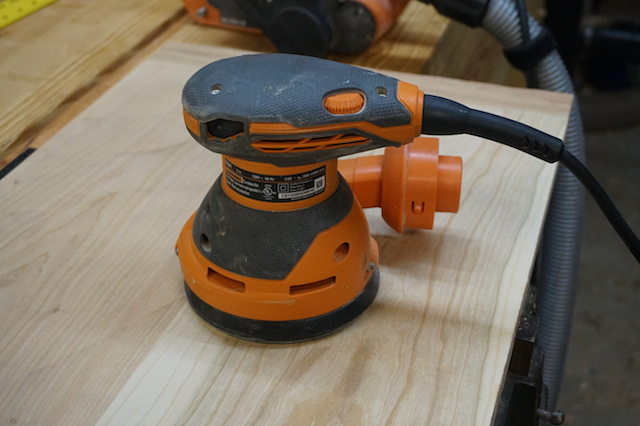
Random Orbit Sander

Yup, the random orbit sander is going to get a workout, followed by a little scraping to get a nice, smooth finish on this beauty.

Then, the embellishment, followed by a finish and – hopefully – the presentation to a happy niece…

Oops, I did it again…

I really like stories about celebrities who work their way into oblivion, only to reinvent themselves and come back legitimate. Think John Travolta, who hit it huge in Saturday Night Fever only to fall into obscurity before coming back in Pulp Fiction. Or maybe Kurt Warner, who led the1999 St. Louis Rams – the greatest show on turf – to a Superbowl victory, then almost snatched a second victory from the Pittsburgh Steelers in 2008 as quarterback of the Arizona Cardinals.

Britney Spears

Or, maybe the train wreck that is the life of Britney Spears. Once at the top of her game from 1999 to 2003, but collapsed into a drug-frenzied tailspin before pulling her career out of the ash heap in 2011.

Why bring up the ever so lost Ms. Spears? Simple. One of her songs is so darned appropriate for today’s post.

Yes, that gem is titled “Oops, I did it again,” and you can bet I pulled another boneheaded move in the shop. But, as I have done in the past, I was able to pull this project from the ash heap and save it while making it look so good.

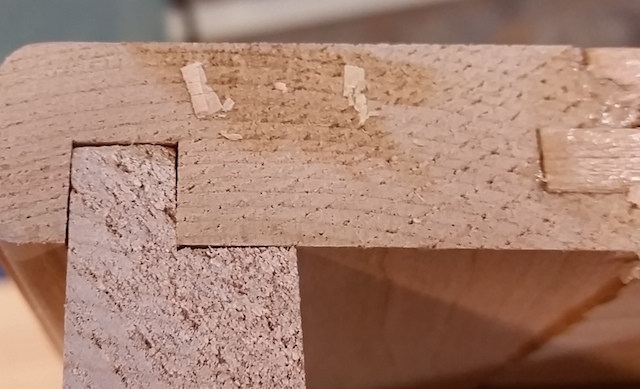
Here’s where the trouble started. I was attempting to cut a joint like this one, which I used on my niece Lauren’s hope chest. It made it easy for me to ship the chest to my brother-in-law Larry, who could glue the piece together at his house and bingo, bango, chimi-chong-chango, it would be there and looking its finest.

So, I set up my table saw to make the cuts. The grooves… they were a piece of cake. I measured the width of the side stiles, set a width for the groove and blammo, I whipped out all four cuts. Piece of cake.

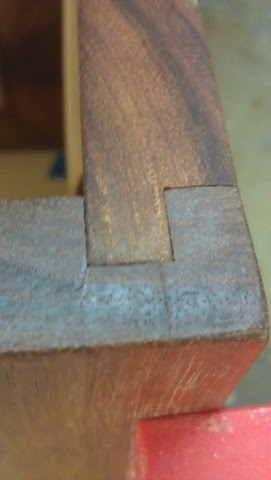
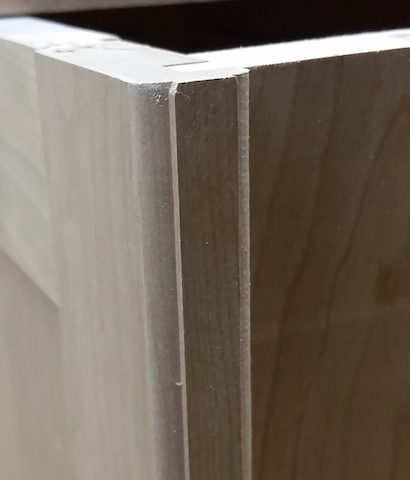
Where I made my mistake was that instead of cutting away the material for the tongue of the board from the front of the stiles, I actually cut it from the back side. Which, as you may know, gives you a joint that looks suspiciously like this:

Oops...

Yeah. crap. So, I’m thinking to myself that now I’m going to have to mill four new stiles to replace the ones I messed up, when an idea hit me…

Why not turn my mistake into a design enhancement?

Router table

So, I turned to my router table. Put a small beading bit into the router and ran a bead on the front and the back of the piece. Now look at it…

Shadow lines

This now creates an interesting shadow line and a design feature which really makes the chest look unique, and not just a plain old box.

And, I didn’t have to bust the thing apart and start over. Talk about a tale of redemption!

A fabulous new product

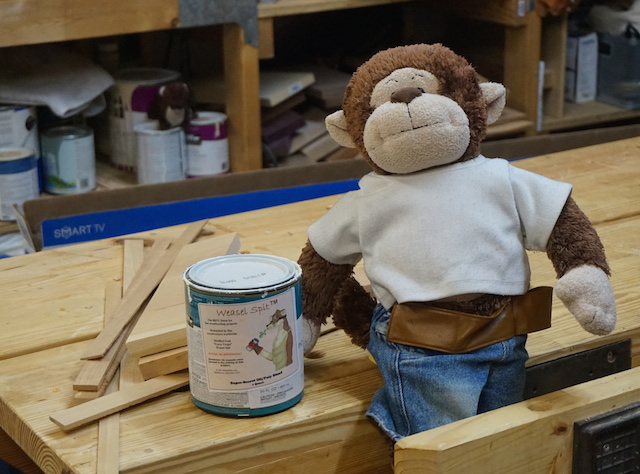
Hey, everyone, it’s me, everyone’s favorite Trained Shop Monkey, and I have to tell you about the best new product for woodworkers I have ever seen. I mean, this stuff is the absolute bomb. It will change the way you woodwork forever.

Weasel Spit

That’s right. It’s super high quality Weasel Spit, distilled from only the finest quality expectorations from members of the Mustela Genus. Used for centuries in the Subcontinent on the most expertly crafted furnishings of the grand Svengalis, this finish has the ability to turn lumps of simple scrap wood into outstanding expressions of the craftsman’s art.

Weasel Spit. before

Allow me to show you an example of Weasel Spit’s tremendous power.  Here I am in the shop (We try to keep Tom out of it more often than not these days, what with his long commute and all) with just some simple scraps and a can of my new favorite finish. As you can see, nothing up my sleeves, no slight of hand here.

Weasel Spit, after

And, this is what the project looks like with just ONE coat of Weasel Spit on it. Do you notice just how quickly it pulled the piece together and made the details pop? I tell you, it’s dynamite stuff.

What else can you use Weasel Spit for? It cleans stains off of bath fixtures, etches concrete for epoxy finishes, removes rust from cast iron surfaces in one swipe and makes a great ice cream topping.

While people have harvested wild Weasel Spit for centuries, it has only recently come to light that excretions of a higher quality can be had from ranch-raised weasels. In fact, it’s been discovered that the constant playing of Barry Manilow songs increased weasel output up to 75%.

Barry Manilow

Fortunately, these weasel ranches can be isolated to keep the noise complaints to a minimum.

Oh, and happy April Fool’s Day!

part of the Wood Talk Online community