Link of the week

Glass Etching Secrets

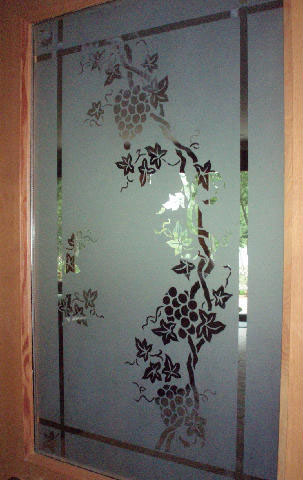
Glass doors on a cabinet can really make a project shine. Glass table tops allow for interesting effects. Glass covers for picture frames and flag holders display what’s behind.  But, they all have one problem… plain glass is BORING to look at.

Wouldn’t it be great if there was a cheap and easy way to jazz the stuff up?

There sure is.  It’s called glass etching, and it can turn your plain-Jane glass into a work of art.

The Glass Etching Secrets site goes into detail about the common methods to do glass etching, shows you where to get some etching patterns  and even sells supplies to allow you the opportunity to try your hand at this impressive skill.  Perhaps this would be a great skill to add to your repertoire.


Are you ready for some football?

Millionaires arguing with billionaires?  Yup.

Spoiled athletes making big bucks playing a game kids play?  You betcha.

But, I couldn’t be any happier that the NFL lockout is over and football will happen this year.

What does this have to do with woodworking?  Plenty.

You see, in my shop, I have a longstanding tradition.  For me, the best and most productive days in the shop happen in the fall, when the infamous Florida summer heat and humidity breaks. There’s a project on the bench, the garage door is open wide and the kids are playing touch football in the street. And, on my radio, Gene Deckerhoff and Dave Moore are calling the Tampa Bay Buccaneers game.

I’ll often stop after an amazing play, poke my head outside and tell the kids they need to come in and check out the replay on TV. After they check it out, they’ll run right back outside to try to recreate that play. And, I’ll smile.

Of course, as the game starts to wind down, the announcers get a little more excitable as the game hangs in the balance.  I’ll drift in to watch with the family as the end game plays out. We’ll slap high fives all around when our teams win, and we’ll shake our heads in disgust when they can’t get the deed done.

I’ll head out to the shop and listen to the post game analysis. I’ll listen to the late game. And, after a hard day in the shop, I’ll come in, clean up, eat dinner and snuggle with the kids as we get ready for the night game.

Oh, yes, I’m ready for some football!

A Monday mélange

Well, today’s post is late.  That’s because my wife an I just got back from a wonderful evening in downtown St. Petersburg celebrating our – wait for it- 18th anniversary. The woman is a saint.  Dinner last night at The Moon Under Water was great (If you get there, try the green curry and get it HOT!  It burned, boy BOY was it good), and breakfast at the Hangar Restaurant and Flight Lounge overlooking Albert Whitted Airport were amazing. And, if you ever need to stay downtown, the Renaissance Vinoy Hotel is a charming piece of history and  a great place to kick back, relax and enjoy yourself.

But, that’s not the only thing that happened this weekend.  No sir. There was a lot more that happened, and here’s a look at some of the activities:

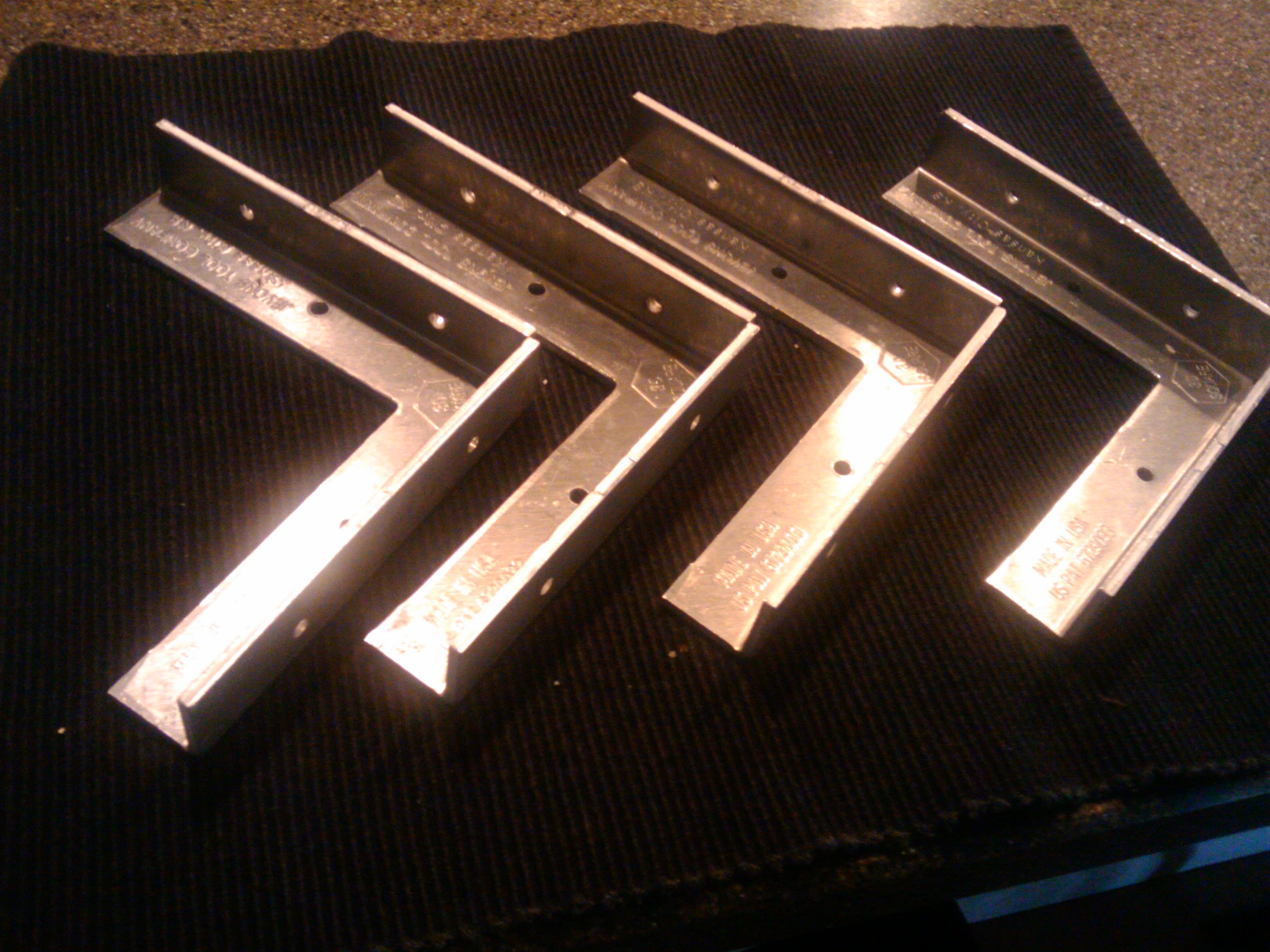
First, after my out of square experiences of the past weeks, Chris Wong of Flair Woodworks and I worked out a trade. He had a slew of Jevons 3D assembly squares, and I had a slick that was taking up space in my tool chest. After dealing with the vagaries of international shipping (He’s in Canada, I’m here in the United States), we were able to work out a deal.  Those babies are good to go and ready to find a spot in my shop.

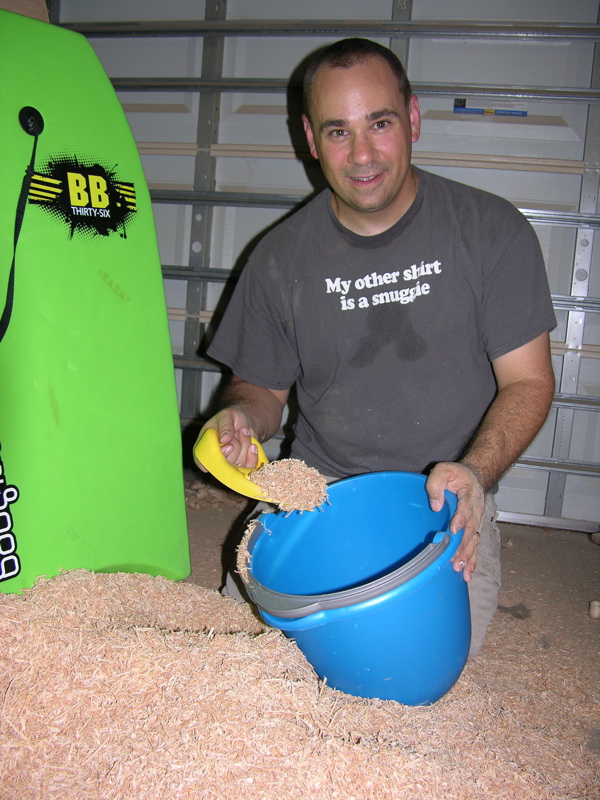
The next fun thing was that I got a lot of milling done on the shelves for the bookcase project I’m working on. How much work?  Well, let’s just say that a day in the shop is like a day at the beach for me…

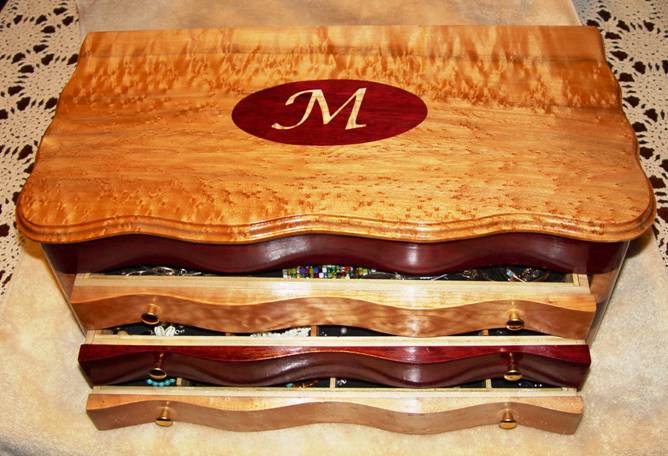
The next really cool thing was that I got an e-mail from one of my readers named Bill Murphy. He’s a St. Petersburg based woodworker who wanted to share a project he had built.  This is a jewelry box he had built from maple and purpleheart for his wife.  Bill, I don’t want to go too far out on a limb here, but that’s some freakin’ awesome work!

Bill also let me know he is a member of the St. Petersburg Woodcrafters Guild and he wanted to invite me to come out to an upcoming meeting.  Looks to me like I’m going to have to spend some more time in the Sunshine City!

Whew, I’m spent, and I’m gonna need a few days off to recover from this weekend’s fun. I do want to give y’all a heads up – this Wednesday, I’m gonna have a pretty big announcement about an offer for Tom’s Workbench readers.  Stay tuned!


Quick Poll

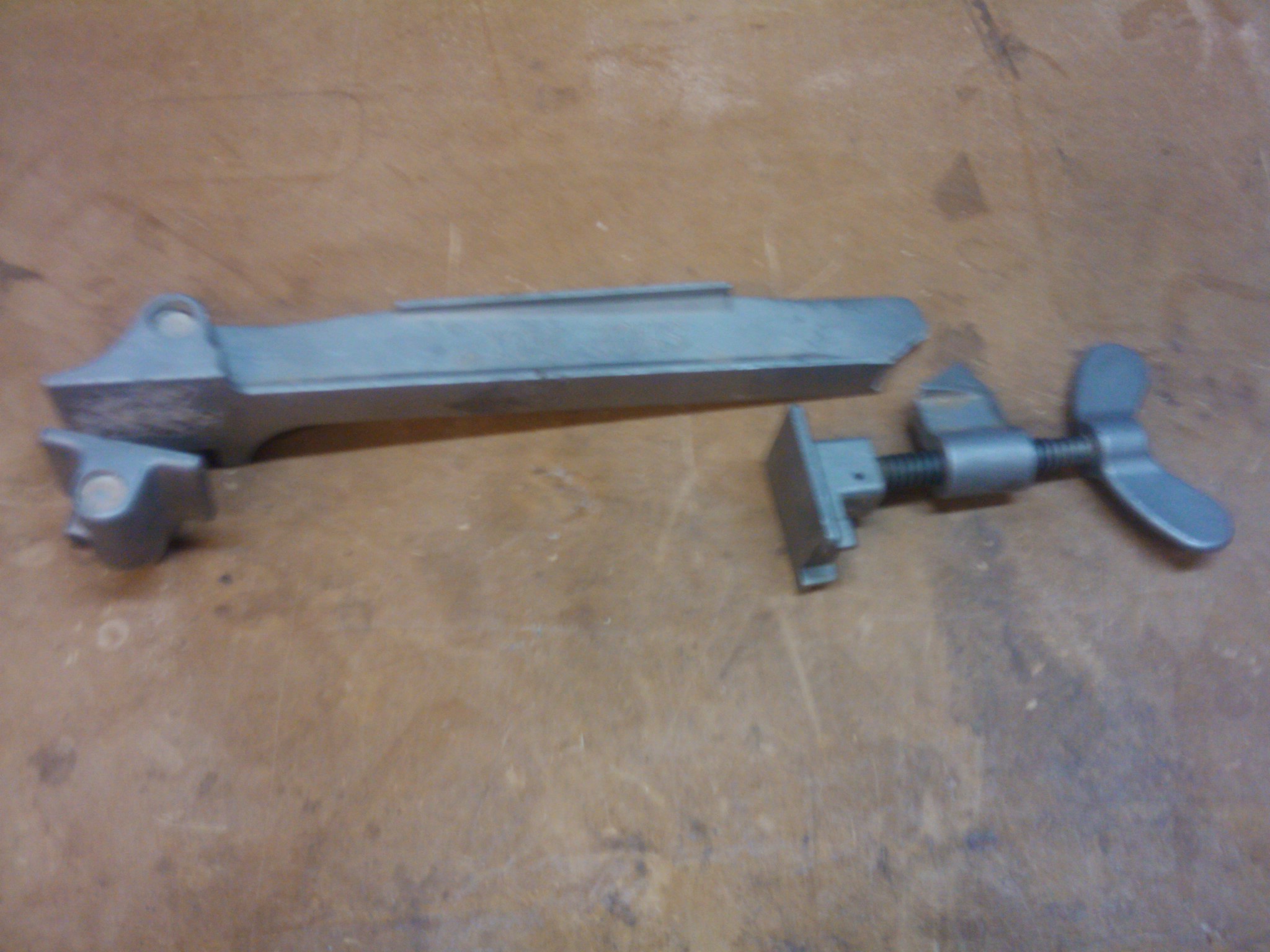
You just KNOW it had to happen. There I was, gluing up the frames for my current project, and I discovered a set of Shop Fox right angle clamps that were perfect for clamping the angled front support to the top and bottom rails. I hooked one of them to the wood, cranked down the handle and felt the clamp give way. Sure enough, I looked down and saw the clamp broken in two, lying on my bench.

I had a feeling these babies were light duty models, but this was the FIRST time I had ever broken a tool in my shop.

Which got me to thinking… have you ever broken a tool in your shop? Did it break because you were using too much muscle? It was a poorly made tool? Did you drop it to the concrete floor of your shop? It’s OK. We won’t tell…

###

Gimme Five with the Shop Monkey: Tools with tails

Iggy the Trained Shop Monkey is swinging from the rafters this week – appreciating the dexterity of his tail.  While hanging from the lumber rack, he got an idea for this week’s entry and it involves a tool with a tail!

The top five reasons why you should still own a corded drill even though cordless models are so good:

  1. You never have to wait for batteries to recharge. Unless you plan on woodworking in some out-of-the-way location or during a blackout, there’s always plenty of power available to you.
  2. Corded drills typically spin at much higher rates that cordless models.  Higher speed is a good thing for drilling pocket screws, doweling, mortising and other shop tasks.
  3. You can use the cord as part of an elaborate booby trap should someone try to break into your shop after hours.
  4. High quality corded drills sell for much less than high quality cordless models. That leaves you more money to spend on a kick-butt set of forstner bits.
  5. Corded models can be lighter than cordless NiCad powered drills.  After drilling all day, your shoulders and arms will thank you.

Link of the week

Popular Mechanic’s Building a Timber-Frame home

Woodworking on a small scale is pretty cool. But, how about on a massive scale – doing something like building a timber-frame house?

The folks at Popular Mechanics put together this lavishly-illustrated article a few years ago, and it shows readers the step-by-step process of designing, selecting material for and building a timber-frame home. If you can’t get excited about the massive timbers, joinery on an enormous scale and the extensive use of wood, well, maybe we need to have a big woodworking meet-up at a timber frame construction site!


Species Spotlight: Hard Maple

This past weekend, my oldest son came up to me while I was drinking my morning coffee. “Dad, would you like French toast for breakfast?”

Who was I to turn down this offer? The young man is becoming quite accomplished in the kitchen, and, shortly after I said ‘yes’, he was hard at work, mixing up the eggwash, stacking slices of bread and preparing a pan for the cooking to come. And, in very short order, a stack of steaming hot slices of goodness appeared at my place at the table. The only thing left to do was reach for the bottle of maple syrup to make the goodness complete.

“That is one way to enjoy maple,” said Eric Poirier of Bell Forest Products. “And, I can’t get enough of the stuff on my pancakes in the morning. But, woodworkers also have other reasons to love maple.”

Hard maple is one of the classic North American hardwoods used since early colonial times, and is found most typically in the northeast and upper Midwest United States well into Canada. It’s so representative of Canada, a red maple leaf was selected to adorn the country’s flag.

Mature trees grow from 80 to 100 feet tall, with some specimens growing taller still. One of the most striking features of the tree are the vibrant orange, yellow and red colors the leaves turn during autumn. “A hillside of maples with their autumn leaves is a sight to behold. No wonder the roads are crowded with leaf-peepers every fall.”

Maple was a popular choice for the Shakers. Those communities further north used the wood extensively in their chairs, tables and cabinets.
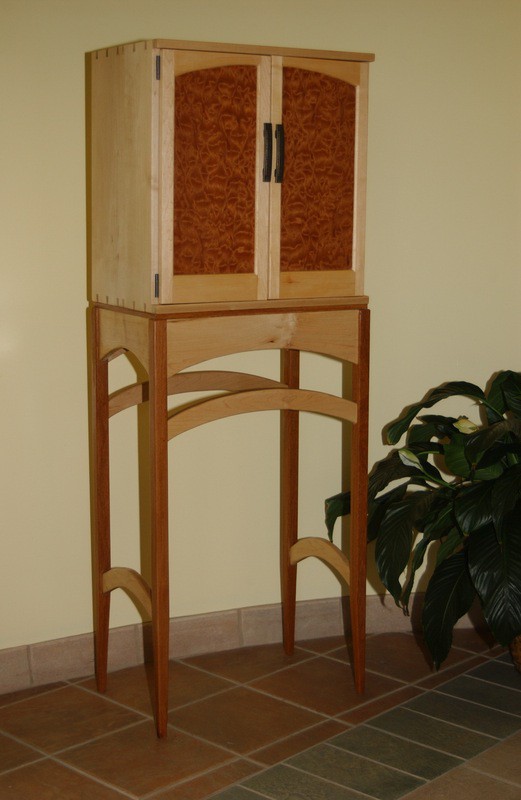
The wood itself is a very light creamy color with a subtle grain pattern and occasional darker mineral streaks. It’s also a very hard wood. “Hard maple is one of the hardest domestic hardwoods being harvested today, with a Janka test score of nearly 1,500 pounds. That’s why it’s a popular choice for hardwood floors and other high-wear items.”

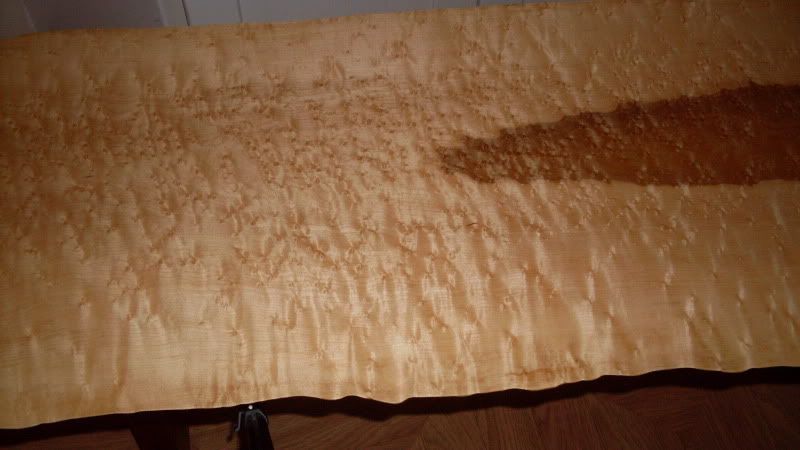
While at first glance maple may seem kind of pale and plain Jane – you may want to look for some special eye-popping pieces. “One thing that we specialize in here at Bell Forest Products is figured maple. We love the stuff – and so do our customers.” Figure in maple can range from lazy waves to intense bird’s-eye features throughout the board. Some boards can exhibit several different types of figure, such as the board I used to top off my Nakashima-inspired bench.
Maple also has a very tight, closed pore structure. When combined with its legendary hardness, maple becomes an ideal material for building cutting boards. “If you build a cutting board out of an open-pored wood like oak, the liquids in the food will be drawn into the board by capillary action. That’s not good if you are cutting something like raw chicken on your board. Maple’s tight grain significantly reduces that process, making for a more sanitary surface to work on.” The edge grain of maple is fine for a cutting board, but nothing beats an end-grain butcher block board for durability and appearance. “The cutting board kits we sell all feature hard maple and another contrasting hardwood to make a plain kitchen tool a stunning highlight in your home.”
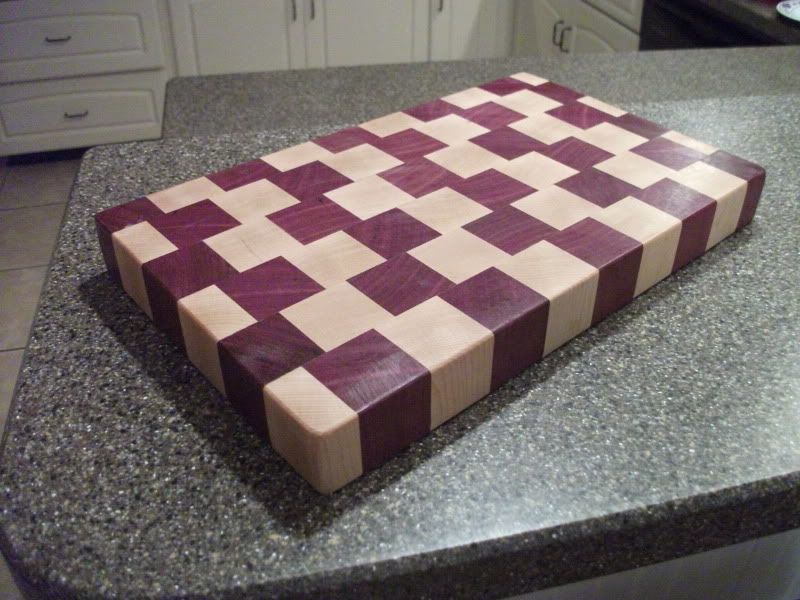
While cutting into my French toast, my son disappeared back in to the kitchen and came out with some fruit he had just cut up on the maple and walnut cutting board I had built for our kitchen. Even after several years of service, it still looks great and is holding up to daily wear. Who knows, my son may even try to take it with him when he leaves to start his own household.

That would be pretty sweet.

 

part of the Wood Talk Online community