Category Archives: Tools

Band of utility

Curves. Resawing. Joinery.

The band saw is one of those tools you wonder if you need at first, but wonder how you got along without after you  have used one.
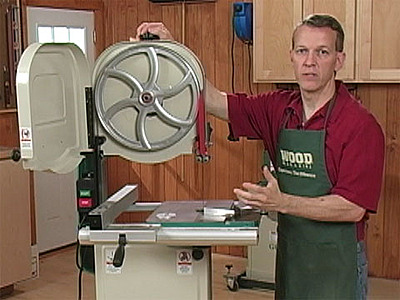
“Band saws are amazing tools,” said Dan Walter of Eagle America. “When set up and properly tuned, even the most basic of band saws can improve your woodworking capabilities.  Slice your own book matched veneers. Make elegant band sawn boxes. Heck, you can even cut hand cut dovetails without touching a hand saw simply by using your band saw.”

The band saw works by – as you might imagine – pulling a narrow band of steel with saw teeth cut into the edge through the saw’s table. The energy for the cutting is provided by one powered wheel, with a second idler wheel on the top of the saw that keeps the band spread and helps it track. “The size of the saw is based on the diameter of each of these two wheels. So, a 14″ saw has two wheels 14″ in diameter… and, no, it doesn’t take a 14″ long blade…”
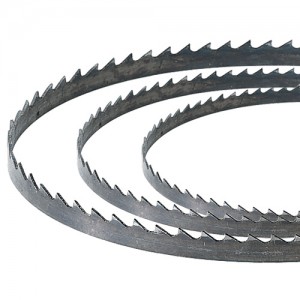
Band saw blades are exceptionally thin under some tremendous pressure, so the steel has to be both flexible and strong. It also has to have hard teeth in order to slice through wood with little trouble. “It’s a delicate balancing act for saw blade manufacturers, and it takes a lot of thought to get things to work just right.” Dan explained to me that Eagle carries the Olson line of bandsaw blades. The standard Flex-Back models are a great value general-purpose blade, and the All-Pro blades have additional elements added to them to make a harder steel that gives more durability while still maintaining flexibility.
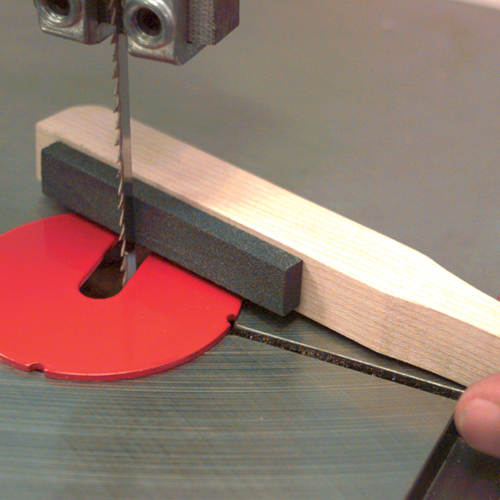
Because the blades are cut and then welded together, there’s a chance that a rough weld could give you a rougher cut. And, curves are easier if the back square corners of the blade are rounded slightly. Eagle sells a special band saw blade stone that can be held against the back corners of the running blade to smooth  things out, or a standard whet stone can be used as well. And, once the blade is polished with smooth back corners, a blade lubricant can help improve the quality of your cut.

What those blades ride on are the wheels – and the tires that cover the wheels.  “Tires are so often overlooked on band saws, but they play a major role in how true a blade will track.  Rubber tires can crack and wear over time, and urethane tires give a better ride for the blades.  If you have trouble with your blade tracking true, you might want to check the condition of those tires and replace them if needed.”
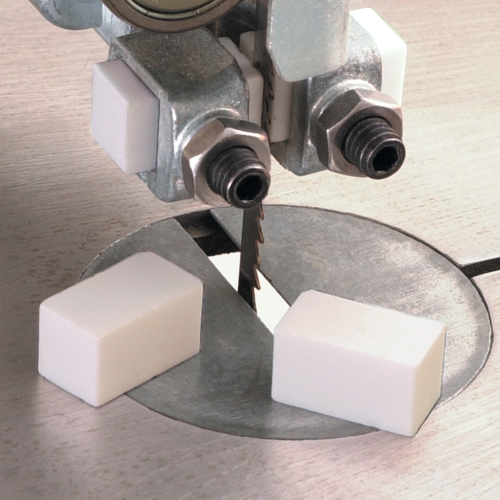
The blade on most band saws is guided both above and below the table. They help keep the blade running true and prevent unnecessary twisting as the cut is being made. “Your standard-issue blade guides in most saws are metal blocks that help to contain blade movement.  They are adequate, but they tend to create a lot of heat as the blade rides through. To help extend the life of your blades, you might want to consider something like Cool Blocks that deposit a dry lubricant on the blade as it brushes against them, or upgrade to ceramic blocks which also reduce friction heat build up and can ride very close to the blade.”  Dan pointed out that even a standard set of blade guides can be replaced with a product called Band Rollers, which use bearings to guide the blade, meaning that the guides can touch the blade body with no chance of heat build up.
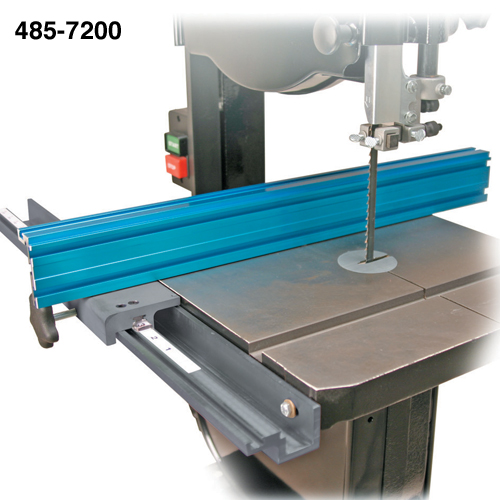
In order to reduce costs, many manufacturers don’t include a fence in most entry-level band saws. To overcome this, you can build your own fence system, clamp a flat, straight piece of wood to the table or you can purchase an aftermarket fence system like the Kreg precision band saw fence with an optional micro-adjust feature and a resaw guide to make working safer and more accurate.

“The three most important things about the band saw – or any tool for that matter – are to assemble and prepare it right when you set it up, understand the best ways to work with it and to maintain it properly. If you take care of your band saw, it will serve you well for years to come.”
 

It’s hip to be square

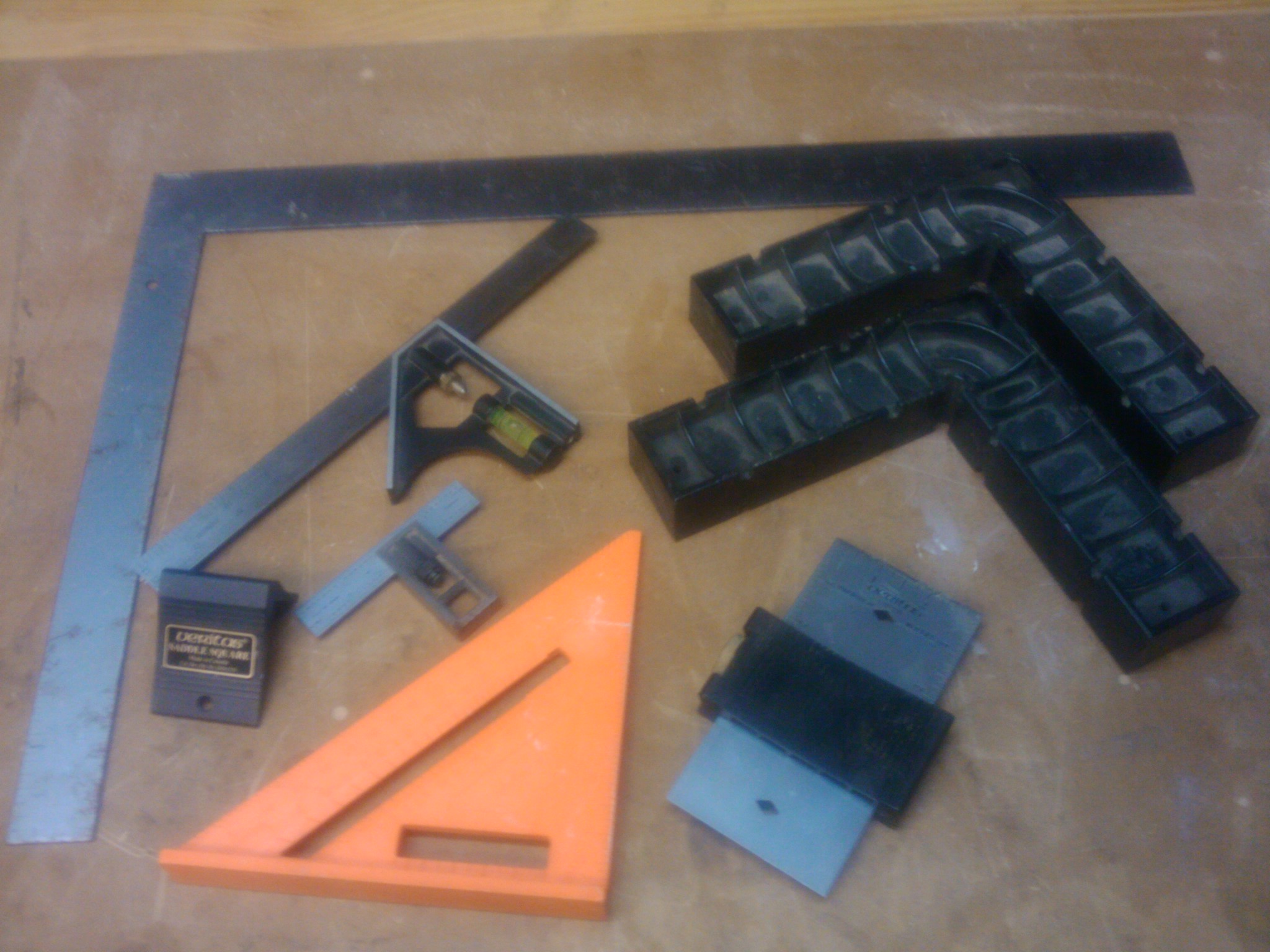
So, after this weekend’s fun and festivities in the shop, I decided to go out to the shop and take a look at the squares I have in my possession. No, none of these babies is a Starrett, but I can guaran-dang-tee if I had used one of them during the project assembly, I wouldn’t be in the mess that I am.  It’s not an unimpressive collection, and I guess if I use them on a more regular basis, well, maybe I could do a better job on my assembly.

First on the top I have top and left side is my carpenter’s square.  It’s a very useful tool. Besides measuring large cases for square, this baby also makes figuring out the rise and run of a slope a piece of cake…  There is so much more I can do with this, but that’s for more complicated carpentry projects, and I still have a lot to learn.

I have my combination square.  Got it on special at a local woodworking shop, and it came prepackaged with a center finding head and a protractor head as well.  This is a handy tool for drawing lines across a project, setting the depth of a blade or bit, and, yes, finding square.

To the right are a pair of assembly squares I picked up a few years ago.  These babies are dead-on 90 degrees, and are great for clamping into place to force an out-of-square assembly into square.  They also make gluing up miters a whole lot easier, since the points of the miter can nestle into place in the corner as you clamp the sides into place.

At the bottom of the combination square, you can see my saddle square.  While this won’t help you make an assembly square, it is totally awesome way to transfer marks dead one from a face to an edge.

Next to that is a handy little double square I use a lot when I edge plane a board.  I just press the beam against the face of the board and run the blade over the edge I just planed to ensure I’m getting a nice square edge on the board.  This one is small enough to put into a shop apron pocket… if I wore my shop apron.  Instead, I rest it on my bench.

The orange square is my speed square I picked up at the local home improvement center.  Again, another VERY handy carpentry square with ooodles of uses I would have to work as a carpenter to use, but simply using it as a square is an easy way to get that square assembly you are looking for.  It also doubles as a saw guide for circular saws… a sweet multi-tasker.

The last one is my sliding square… it’s a pretty cool tool for laying out square lines during design. Again, this can help in the marking and cutting, but not so much during assembly.  But, that’s OK…I’m down with that.

Do I need to buy new squares?  Nope. What I need to do is set up something around the bench where I can keep these squares a lot closer at hand.  I figure if I can see them, maybe I will be encouraged to get them when assembling my project. I’m gonna start doing that.

Oh, about the title of this blog post.  Once I wrote the title down, you KNOW this was the song going through my mind…

As a woodworker who came of age during the 1980’s, consider it my gift to you!


Tools I use: My biscuit jointer

What the heck is up at the workbench?  First, it’s dowels, then I’m talking about biscuits?  Where are the hand cut  mortise and tenons?  The expertly executed blind half-lap London-pattern dovetails?

OK, everybody, take a step back and inhale deeply, count to ten and then exhale slowly repeating, “Serenity Now.”  I still love my hand tools and cutting classic joints, and my biscuit jointer is relegated to a few limited but very important tasks.

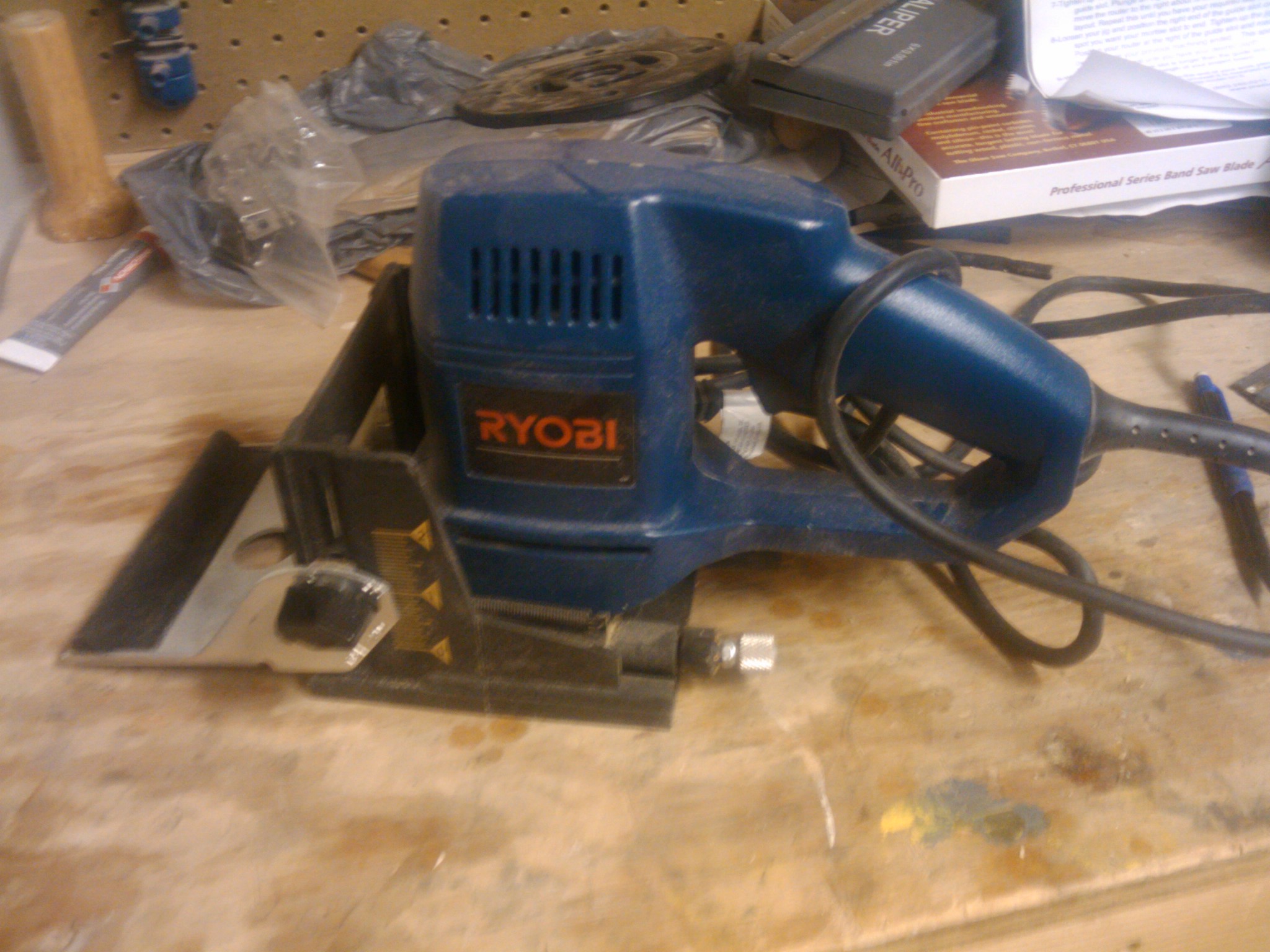
First, lemme tell you about my biscuit jointer.  It is a Ryobi model that I picked up at Home Depot many moons ago – I believe sometime about 2000 or 2001. You see, Norm used one in just about every project he built, and that convinced me that if I was ever going to build woodworking projects, I was going to need one of my own.  I chose this model because it was dirt cheap – for $99, it was a steal. And, I used it for a lot of tasks when I started out.

Did it get good ratings in the woodworking mags?  Nope.  Has it served me well?  You bet.

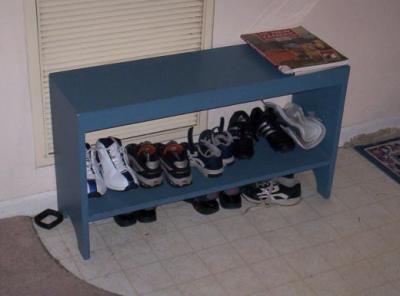
I would attach shelves in bookcases with it. I would build cabinet boxes with it. I built this sweet little shoe bench that sits by the front door that allows us a place to stash the shoes when we come in and gives us a place to sit and put them on before we leave. I built it back in 2002, and it has held up for the past nine years with nary a complaint, and it’s still as rock-solid as the day I built it.

As my skills developed, my reliance on the biscuit jointer started to wane. I learned how to cut dadoes and rabbets.  I got my Kreg pocket hole jig setup. I started using more and more mortise and tenon joints.

Today, my biscuit jointer comes out from time to time to help reinforce miters, attach solid wood edges to plywood panels and it makes an appearance when I do panel glue ups.  Did I mention that I have issues when I glue up panels?

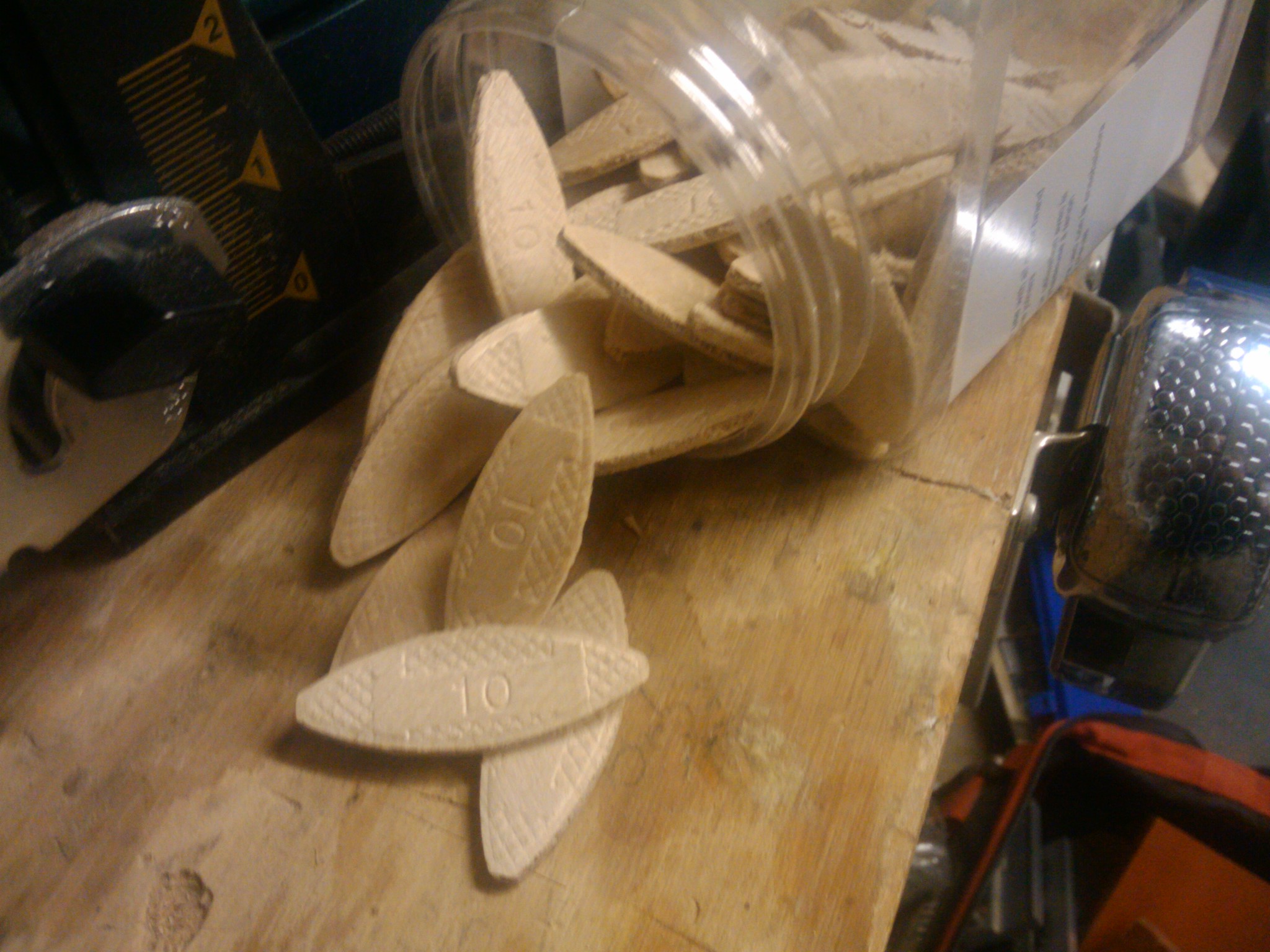
Now that I am entering the next phase of the project assembly – creating the actual shelves that will hold the books and span the distance between the two frames – I’ll be using the biscuit jointer to help keep my shelves on an even plane when I glue up the shelf boards. I had to stop to check my supply of biscuits and yes, I have enough to do the shelves.

All I need now is some quality shop time with my old friend and a stack of boards, and we’ll take another big step together toward project completion.


Don’t get your feathers ruffled

At my day job, I have given hundreds of hurricane and disaster preparedness talks. Big groups. Small groups. Companies, churches, neighborhood association meetings … you name it, I’ve gone there and spoken. For me, it’s all old hat now.

But, that hasn’t always been the case. When I first started out, I was told by my boss at the time that I needed to not run my talks free-form. Instead, I was encouraged to build a PowerPoint presentation, rehearse my material based on cues from what was on screen and NEVER deviate.

For my first few talks, this worked well. I never forgot a single point. I always put the emphasis on the key message I wanted to convey. I went from success to success, clutching tightly to the security blanket of my canned presentation.

Then, well, it had to happen. I went one place to talk, and blammo – no outlet was convenient for me to set up my projector and laptop, and I didn’t have access to an extension cord. Boy, did that ruffle my feathers.

The same thing happens when we are in the workshop. When we have our table saw tuned up and ready to make a cut, we become comfortable using the equipment. But, if you need to cut something on edge or try something a little out of our comfort range, it’s easy to get flustered – and worried – by the operation.

“That’s where feather boards come in,” said Dan Walter of Eagle America. “These simple jigs give you much more control – and confidence – over your operation.”

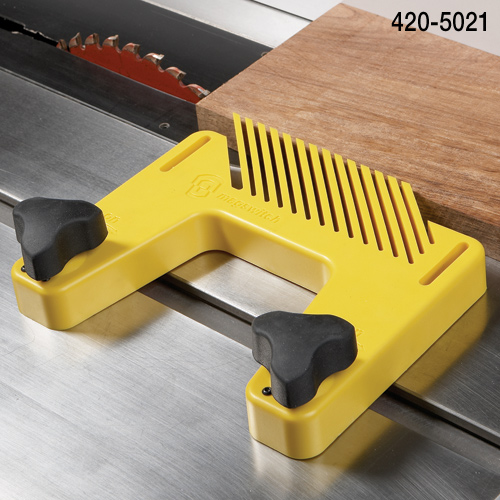
Feather boards are very useful jigs that help hold your work down to the table or against your fence to ensure a more accurate cut. And, they also can help prevent kickback, improving safety.

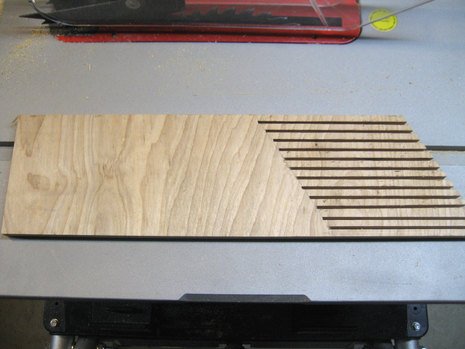
“The classic way to make a feather board is to fish a piece of scrap out of your wood stash, cut a series of parallel angled fingers and clamp it down to your saw,” said Dan. “And, you know, there is nothing wrong with that. It’s a cheap, practical shop solution.”

But, Dan also told me that commercial feather boards offer more versatility, are more durable and don’t take valuable shop time to make. Eagle America carries an extensive line of feather boards – each of which has special features.

“If you need feather boards for your cast iron topped table, band saw or other ferrous metal work surface, the Magswitch featherboards offer incredible convenience and flexibility.” Using a special magnet users can switch on and off, these feather boards can mount anywhere on the table, independent of the miter gauge slot.

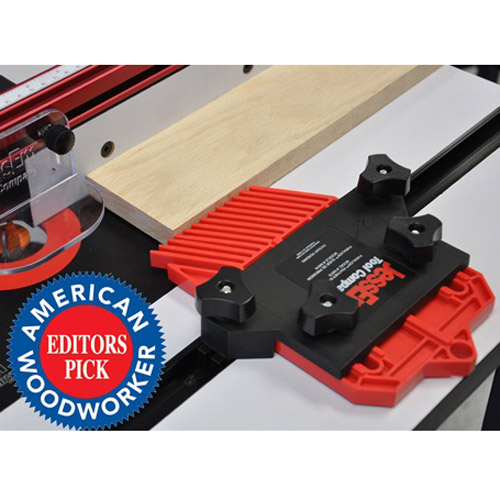
Jessem’s Paralign models allow users to align them parallel to the work piece while they are clamped in the table. “In router tables, this is a very handy feature that allows you to skip all of the trial-and-error fidgeting to get the set up right.”

Milescraft’s dual slide motion feather boards feature large ergonomic handles for tightening them in place. “What a boon for people who may have limited hand strength. The ability to set these into place and know they will be rock solid helps ensure accuracy in cuts.”

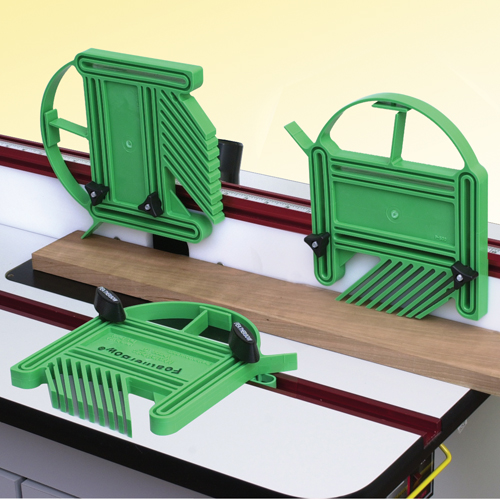
Feather Bow’s offerings feature a traditional looking feather board finger design on one side and an innovative bow hold down on the other. Shaped somewhat like the leaf spring in a car, this focuses the pressure exactly where you need it without applying it across the entire length of the fingers. “These babies work very well on router or shaper tables where it’s critical to get proper bit or cutter contact to ensure a flawless shaping job.”

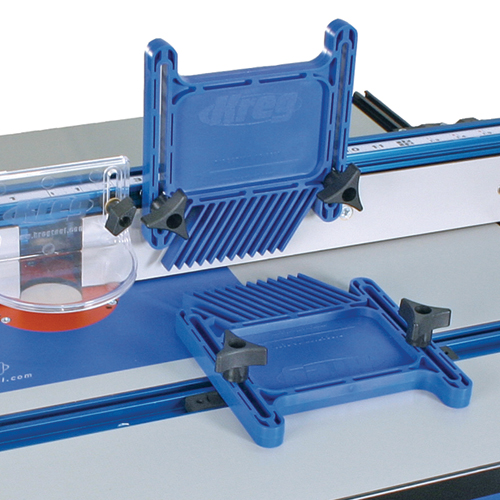
And, Kreg’s True Flex models not function as either a feather board or a stop block. “Their locking system also relies on a wedge to get a solid lock in a miter slot. That’s going to help ensure nothing slips when you are pushing the board past the blade or cutter.”

Dan also pointed out that many of these commercial feather boards can also be stacked together to give you control when resawing, cutting raised panels on a table saw or other functions. “I’m always surprised when a company comes out with a new and innovative feature on such an old power tool standby. There are some creative minds at work!”

My speech in front of that group sure threw me for a loop. But, it also taught me to look beyond just that one tool in my public speaking toolbox. Today, when I go out to talk, I know that I can adjust my presentation style to meet the needs of the specific group I’m addressing.

And, it allows me to stop obsessing over what could go wrong during the talks and start enjoying my time off in the shop a whole lot more.


Take it to the edge

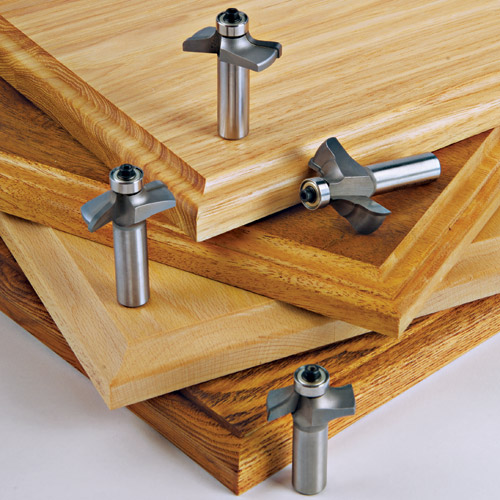
My woodworking world was rocked when I discovered cope and stick bits for my router.  Instead of trying several convoluted methods of cutting and attaching rails and stiles for cabinet doors, I was able to use two matched bits to cut everything. The pieces slid together snugly and the inside bead around the panel was something to behold.

The only problem I began to notice was that while the inside of the doors was pretty, the outside edges were just plain Jane. I noticed the same thing on the tops of the tables I built – there wasn’t much in the way of ornamentation.

“That’s a common design flaw for beginning woodworkers,” said Dan Walter of Eagle America.  “It’s so important to tackle the more complex joinery, but easy to forget that there is an outside of the project that people will see as well. It’s a shame, because the additional detail can take a basic project and really make it noticeable.”

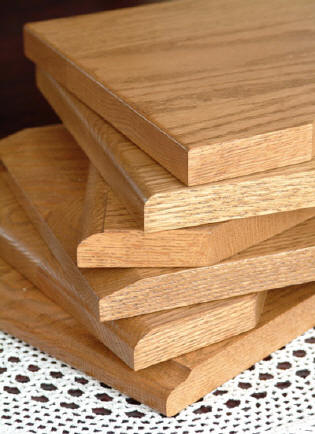
So, what’s a woodworker to do?  “It’s easy to do something like put a roundover on the edge, but why not try something an little more complex?” Profiles that feature numerous coves, roundovers and steps provide much more visual interest, but do some other things for the project as well.

“They tend to make the doors and table tops a whole lot more durable.  Sharp edges on woodworking projects – especially ones that take a lot of abuse like door edges and table tops, can easily be damaged by a sharp blow.  By rounding them over, you create an edge that’s less likely to take a sharp knock, and any force that is applied tends to be more of a glancing impact.”

Dan also went on to describe one of the more visible aspects of woodworking – the play of light across the project. “Shadow lines on anything give the piece a more stunning impact.  Think of the monuments in Washington, D.C.  The fluted columns around the Lincoln Memorial are very intricate, and the way they cast shadow on the while marble casts striped shadows on what would otherwise appear as brilliant white columns. A fillet – or step – on the molded edge of a table top does the same thing, making your project stand out a whole lot more.“

Eagle America has a great deal on one of their most popular four-bit sets for creating table or door edges. “We put together these bits to give woodworkers the opportunity to create some dramatic effects at the edges of their projects. With these bits, you can choose from the simple to the complex, giving you the opportunity to pick the perfect edge to suit your project’s style.”


Tools I use: my circle cutter

OK, this I know my drill press is on the list of tools I would like to use more. And, when I wrestle it out of the body of the rolling shop table, I love to use it.

But, I like to use my corded hand drill to make small holes with twist, spade or forstner bits. And, I like to use my router to cut larger holes.  And, I have a spindle sander that I use to sand inside and outside curves. That’s a big part of the reason I don’t haul it out.

But, this past weekend, I used a new accessory while making the wine bottle balancers that may have me turning to the drill press for more moderately-sized holes.

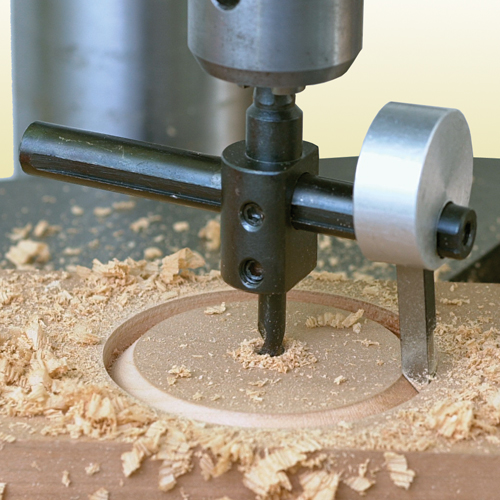
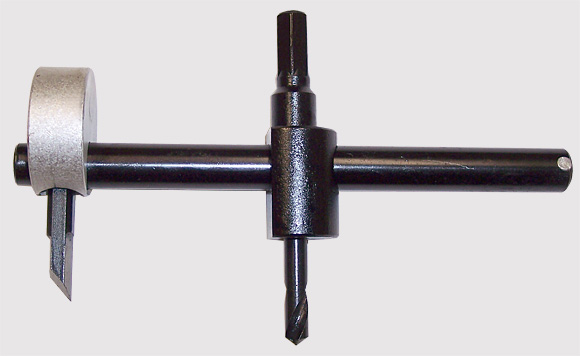
The accessory is a combination circle and wheel cutter. It’s a pretty complicated looking contraption that works fairly well on holes from 1 inch to about six inches.

It’s a tool with a body that chucks into the drill press. There is a slot in the body for a beam to pass through and a drill bit at the bottom for starting a hole. The beam is adjustable and it holds a cutting head equipped with a sharp angled blade underneath.

It’s simple to operate. Just chuck the tool in, loosen a set screw to adjust the cutting head on the beam until it matches the radius of the circle you would like to cut and tighten it down.

You will also want to take this opportunity to adjust your drill press speed to its slowest setting – about 500 rpm. You are swinging a lot of steel around, and you’ll want to keep it under control at all times.

Mark the center of the circle you would like to cut on the board and adjust the piece until the bit is right over the center. Clamp the work to the table, start the press and slowly plunge the bit into the wood.

It takes a little getting used to when you use this for the first time.  Keep an eye on your fingers when you turn the press on, because that beam has one heck of a swing. I was anticipating a lot of wobble with the drill press, but it stayed solidly on the bench.

The cutting action was pretty interesting. Because the cutter is ground on an angle to a point, there is a definite slicing action at the cutter. Keep a light hand on the plunge – you don’t want to force it.

One of the down sides to this is that it doesn’t have a great plunge depth. So, even if you are drilling a piece one inch thick, you will have to stop the press, flip the work over and go at it from the other side.

The results are pretty sweet.  Yes, you will need to sand the inside of the hole – it does leave things a little rough – and you will have to go slowly to prevent tear out where the cutter enters the wood, but the work goes very quickly – even in dense purpleheart.

The cutter is also reversible, so you can also use the cutter to cut wheels for small toy vehicles, faces for clocks and other more imaginative uses. Since you are also drilling a center hole, you will need to keep that in mind as well.

Can I cut holes with forstnter bits, hole saws and other specialty bits? Of course. But, the hole cutter allows for a great range of adjustability… negating the need to amass a great collection of specialty bits for the drill.

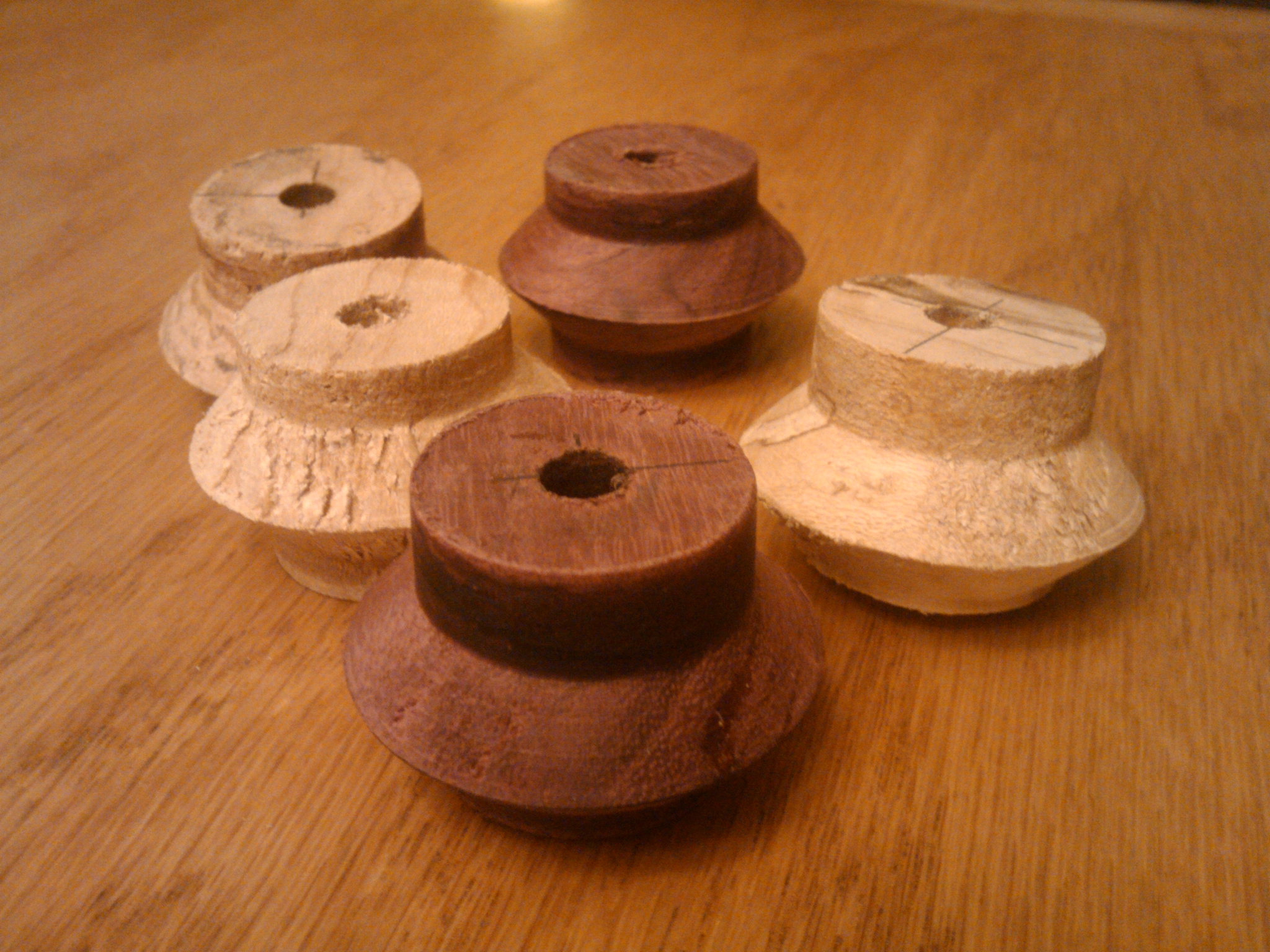
For the small holes I had to drill, the offcuts almost look as if they would make some cool toy tops.  Hmmm… maybe that would be fodder for another article!


Tools I use: My computers

I can’t live without my computers.

Call me addicted, but, I have become a creature of the Internet. Every day, I work with one at the office. And, when  I’m not at work, well, I like to do more stuff on the them!

I’ve had a few folks ask me over the years just what I use to put Tom’s Workbench up on the web.  You’d be surprised just how little computing power I have at my fingertips…

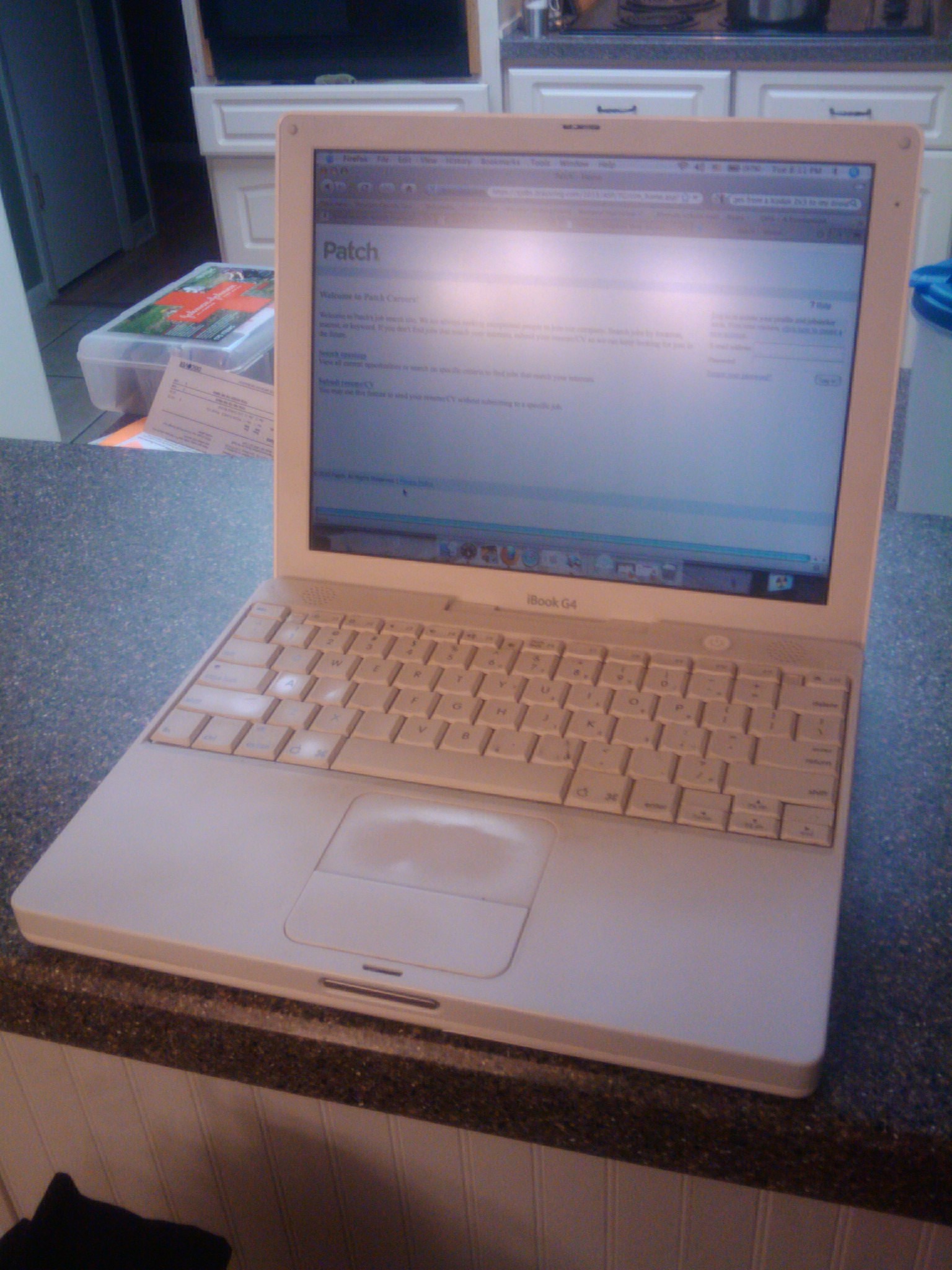
The main computer I use is this ancient (in computer years) iBook G4 my wife and I bought on Valentine’s Day back in 2004.  With a totally amped up 40 gb hard drive… well, it still runs.  We bought a little USB plug in drive with 500 gb  storage for us to move the family photos to. None of the big browsers supports this baby any more, so we’re kinda stuck with the last versions of the software out there.

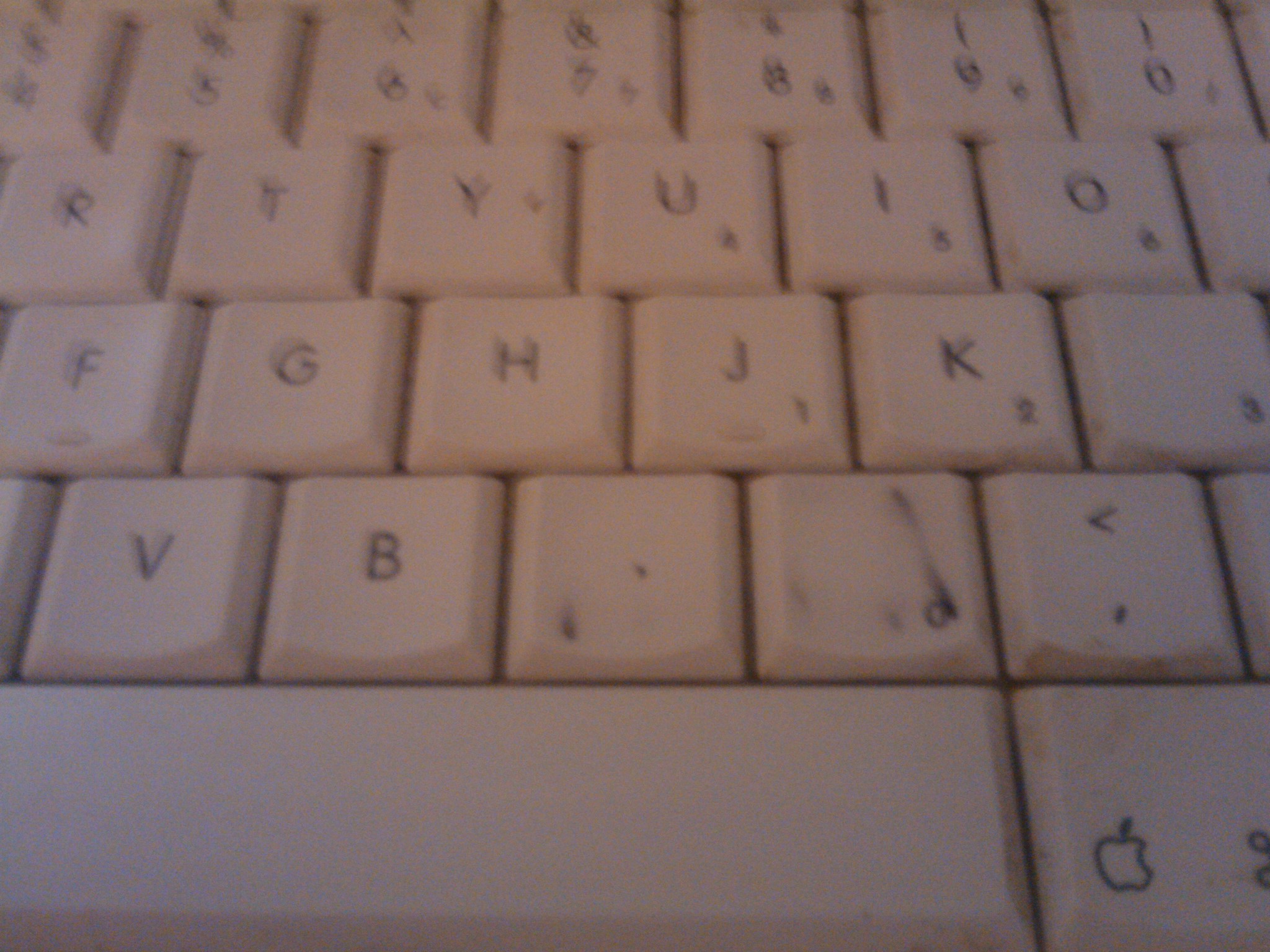
We love to get the most out of our purchases… we’re probably on our third battery for this baby and we have literally typed the characters off the keyboard.  No fooling.

Fortunately, we recognized the need to upgrade the equipment last year, and we took advantage of a great deal on a new netbook computer over at Best Buy. Plus, with our sons getting more computer-based homework, well, we really needed something a little more modern.

This is the little Toshiba netbook computer. With all the bells and whistles, it came out to a tad more than $600, and it really does work like a champ.. once I got used to the smaller keyboard. It runs Windows 7 light, and it allows us the chance to use programs that the Mac doesn’t run.

One of these days, I would like to upgrade the Mac with maybe one of those newer MacBook pros. I’d love to get a little bit more into doing videos for Tom’s Workbench, but wow, the old Mac is pretty slow.

Until then, we limp on.  And, I am adding my new Droid phone to the mix as well, giving me more computing power.

I seriously doubt we will ever have the bleeding-edge latest computer equipment, but so far, we manage, and Tom’s Workbench gets posted on a regular basis.