All posts by Tom

I'm the guy who writes the blog...

The most powerful tool in your shop

Back when I was in middle school, my dad approached me one day. “Son,” he said, “when you go to shop class tomorrow, ask your shop teacher if he has any literature on raised panel doors.”

This struck me as funny because 1) I wondered why Shakespeare or Dickens would be writing about raised panel doors, and 2) How would the guy teaching me how to build a coat rack know how to build raised panel doors? Undeterred, I went to school the next day, worked through the hour long shop class and totally forgot to ask my shop teacher about how to build raised panel doors. Remember, that’s how the 13 year old brain works… I see that from time to time in my oldest son.
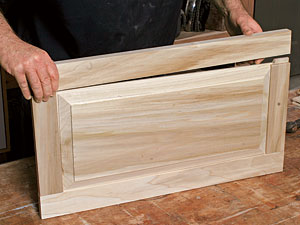
What my dad needed was something a little more – uhhh – available to him when he needed the information. Oh, sure, our library had books about woodworking, but its hours were limited, and my dad worked late. No, what he needed was… TA DA… the Internet.

It’s stunning to see how much the Internet has changed things since I first got into the craft back in 1999. Yes, there was an internet back then, and yes, there was information about woodworking on it. Compared to today, why, it was just a drop in the bucket.

If my dad had access to the internet today, he could not only found out about how to make raised panel doors, he could have also learned how to build a TV cabinet, stud a wall or  lay carpet– all tasks we tackled in the basement remodel at our house.

He could have even learned techniques to help his teenage son remember things.

The beauty about being a novice woodworker today is that there are thousands of sites out there, each available to teach you about the craft.  Are you interested in turning? Marquetry? Chair Making? Building kitchen cabinets? It’s all out there on the web.

Point is that it’s never been a better time to be a new woodworker. Your internet connection can put you in touch with tool manufacturers, hardwood suppliers, other woodworkers who want to lend a hand… it’s all out there.  Take advantage of the opportunities and get into the game.

And, to think, you don’t have to rely on a forgetful teen to remember to find information on how to do things.

For those of you who have Twitter accounts… check this out. Tonight at 9 p.m Eastern (that’s 2 a.m. on Thursday in Timbuktu), I’m going to be on WoodChat discussing Get Woodworking Week. If you would like to participate, sign in to your Twitter account, then follow this link to TweetChat. There, you can ask questions about why this week is happening and get further inspiration. Hope to see you there!

The links for Get Woodworking Week keep on coming… and, they are awesome!  Here are a few more…


Get Woodworking Week: Tuesday

OK, everyone, it’s day THREE of Get Woodworking Week, and the posts keep coming in! I think we’re starting to generate a little bit of excitement out there.  Now, remember, Get Woodworking Week works when we spread the word, so take some time this week to talk to others about the craft.  Not sure what to say? Either was I when I spoke in front of my sons’ classes the past few years. Here are the videos of those events:


This was from my 2011 trip to the schools


And, this was from 2010.

Here are some of the blog posts that came in yesterday.  I hope you enjoy reading them!


Get to the guild!

Now that we are in Get Woodworking Week, I guess the first question many new woodworkers may have is, “Where could I begin?”  Sure, there are plenty of websites to check out. Your library has tons of books. You can always go out to a local home improvement center or – if your town has one – a specialty woodworking store for more information.

But, there’s nothing like getting some face time with other woodworkers. Someplace where you can find a few other experienced woodworkers and ask them how they got started, where they can get wood for cheap or which tools are the best for the beginning woodworker.

When it comes to finding those folks, there’s just one bit of advice – get thee to a guild. Or a club.. there’s nothing wrong with those either.

In most civilized areas of the world, you will find folks with similar interests who have banded together to share the experience with others. Mom’s clubs. Biking clubs. Tennis clubs. Golf clubs – YES, pun intended! Just try asking around at your local library, hardwood store, woodworking store or community center. You’d be surprised how many woodworking clubs or guilds there are.

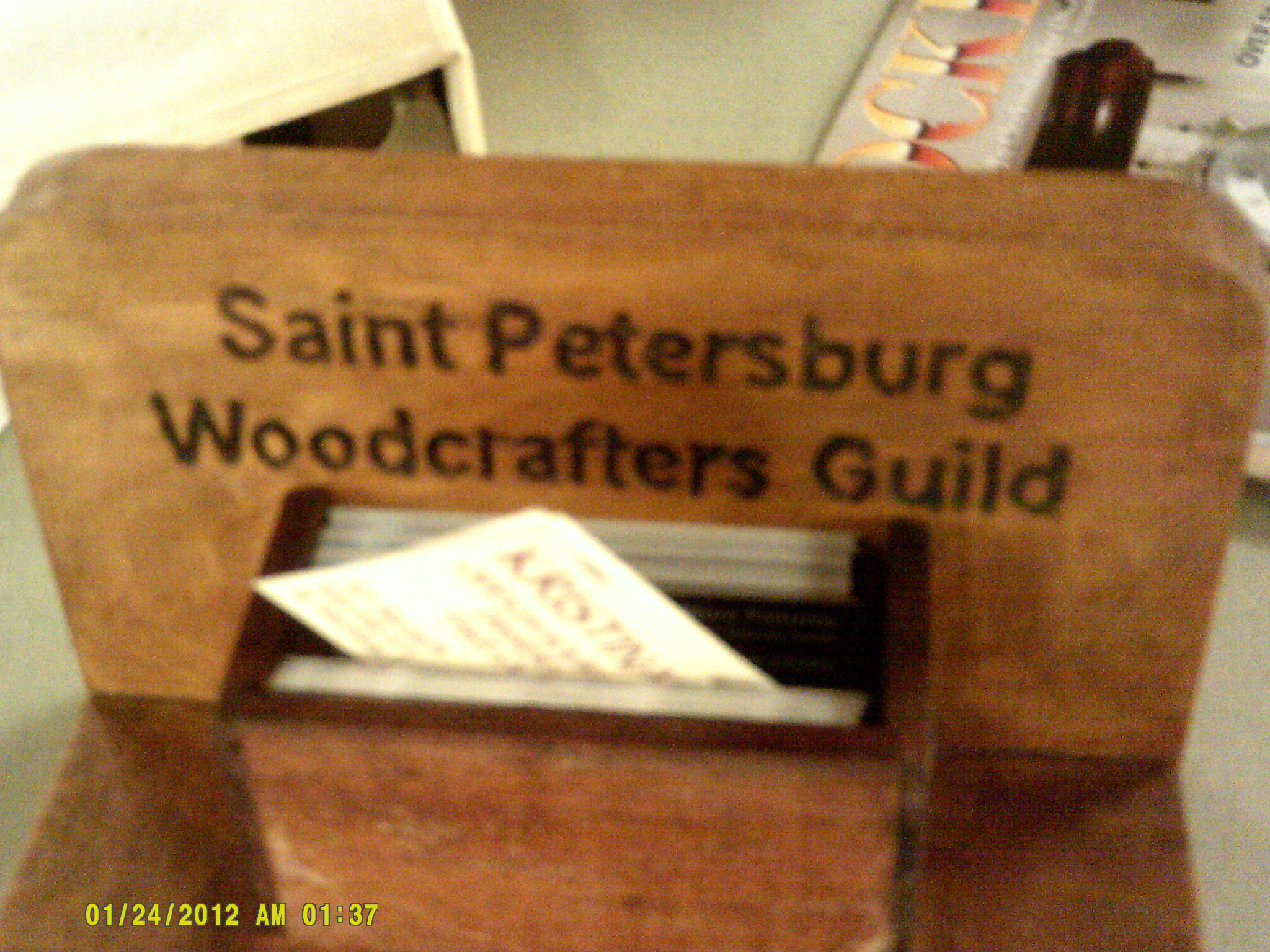
For instance, I was recently invited to attend a meeting of the St. Petersburg Woodcrafters’ Guild. For several years now, the folks at SPWG have been reading and commenting on my blog posts, and I was asked if perhaps it might be time to meet up. Not sure what to expect, I loaded my contemplation bench into the car, brought some business cards and headed on down to a local Lutheran church for the meeting.

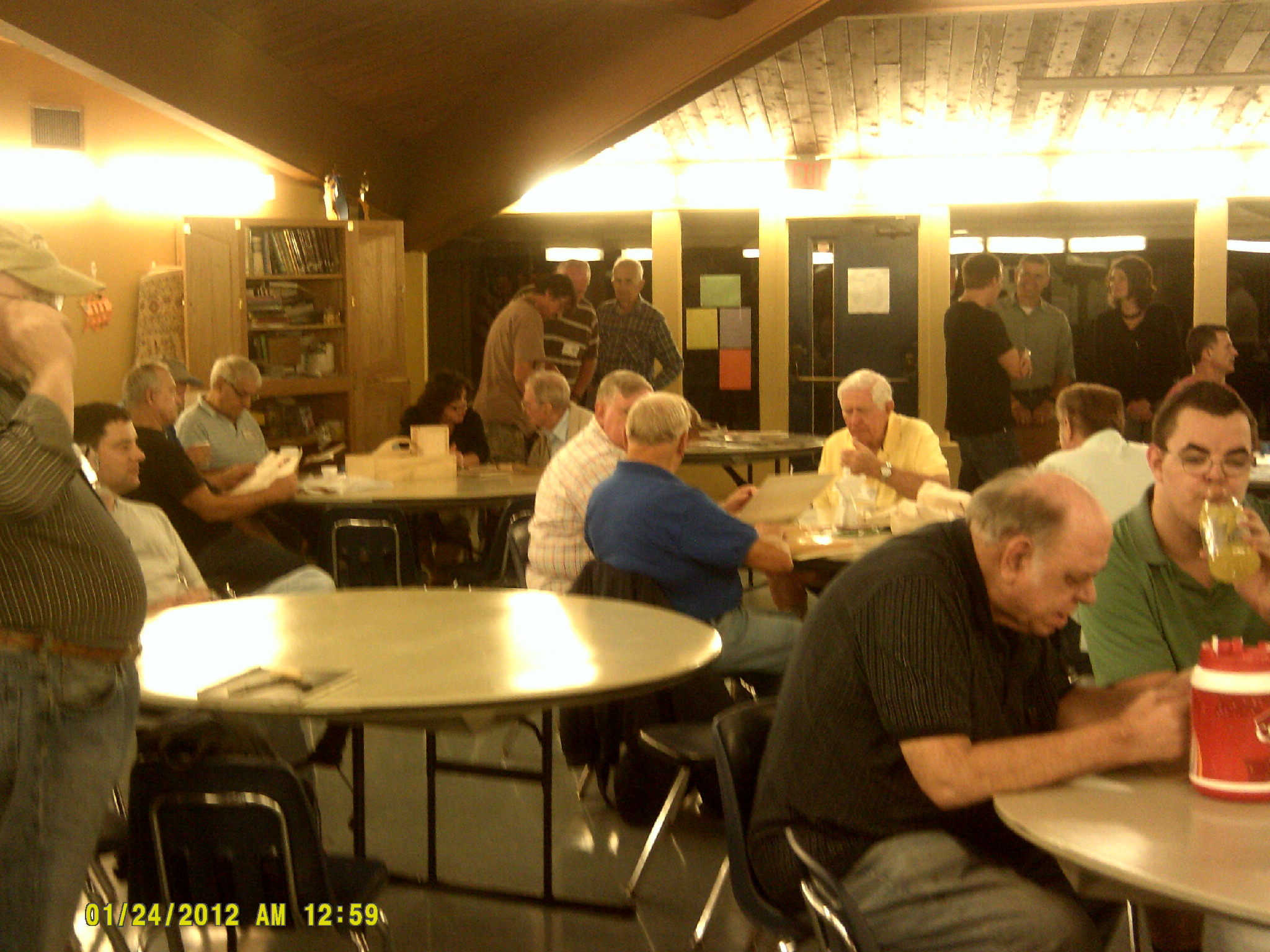
When I got there, I was totally impressed. There must have been about 60 woodworkers gathered in the meeting hall. The age of the attendees was a very good mix – some as young as their mid-20’s through veterans who had a few years under their belts. There was excitement in the air – the excitement of friends who were meeting again to brag about some of their successes and ask lots of questions about how to do certain tasks.

President Joe Pettit called the meeting to order, and there was some business to attend to. The SPWG is a registered non-profit organization that has by-laws, and – as with any other similar body, there were financial reports, membership reports, updates on previous activities and future business that had to be conducted.  The discussion then turned to introduction of guests and – my favorite part – show and tell. Since this was the first meeting of the year, holiday projects for children and grandchildren many states away were shown proudly. Questions about building and finishing techniques were asked, and each member showing his or her experiences.

Within maybe 20 minutes, all of the business had been handled, and there was going to be a rather longish break. I was wishing the meeting would keep going on, but it was then that I discovered the real purpose of the guild meetings. Everyone got out of their chairs and started talking with other members about tools, wood and their shops. I could overhear several members asking others about the challenges they were facing, and getting several good suggestions on how to overcome them. I spoke at length with several woodworkers about their woodworking. Some were turners. Others worked extensively with veneer. Still more were scrollers. Marquetry. Band saw experts. Cabinetmakers. Chair builders. If there was a specialty, someone covered it.

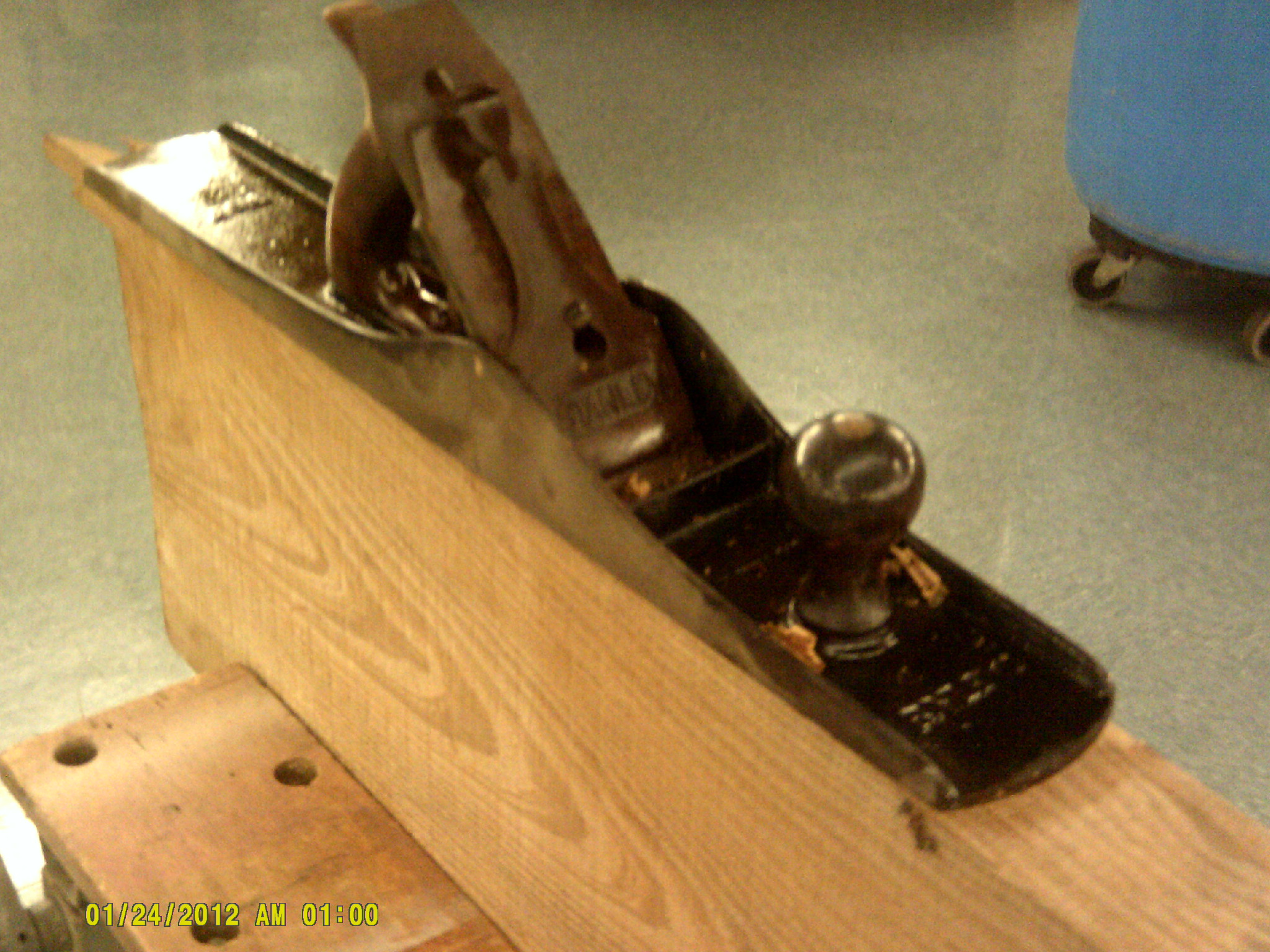
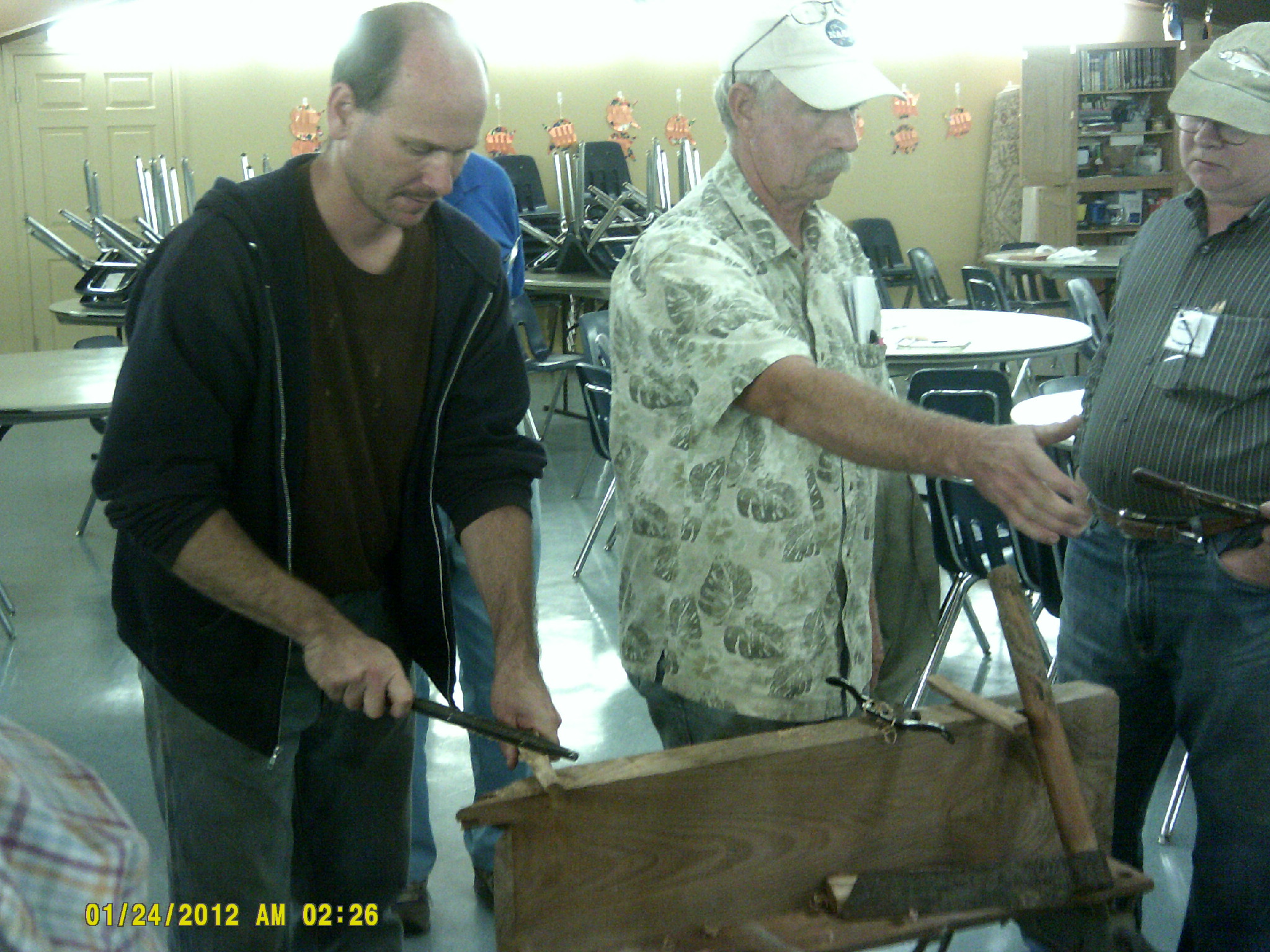
The last part of the meeting was a discussion about the work the guild was doing at the Folk Festival, and old hand tools in general. We had a chance to go hands on with a beetle and froe, spokeshave and hosts of old hand planes that had been lovingly restored.

By the time the meeting broke up, I was energized – ready to get out to the shop and try some new techniques.

So, if you are interested in getting into woodworking, ask around and find a local club or guild. You’d be surprised how much that can help you on your path to woodworking success.

Oh, and here are some articles about Get Woodworking Week you may want to check out:


Quick Poll

What time is it?  You bet your sweet patootie, it’s Get Woodworking Week!

Remember, this week, woodworking bloggers and other woodworking websites are coming together to encourage new – or potentially new – woodworkers to get off the sidelines and get into the shop. I’ll be posting all week, and I’ll be collecting blog posts from around the wood-wide-web.

If we’re going to talk about beginning woodworkers, let’s start at the start. For this week’s poll, tell us how long you have been woodworking. Are you an old hand at the craft, or are you using this week’s event to get into the craft?  If you are just a beginner, be sure to leave a comment by looking at the bottom of this article.  We definitely want to hear from you!


Link of the week

Around the Woods

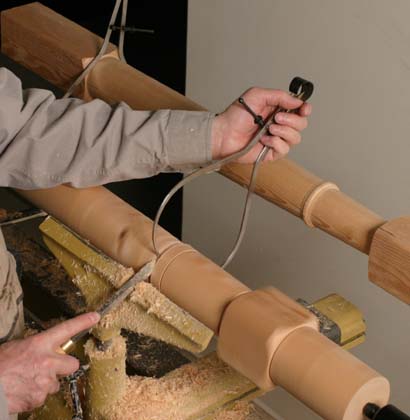
Wood turners are an interesting bunch. They can crank out projects from rough blocks to finished masterpiece in short order – often times in one shop session.

Want to learn some of their secrets? Around the Woods is a site that offers interesting links to wood turning tips, tricks and projects for turners from the novice to the expert. Find out about building turning tools, what to look for when buying lathe accessories and even take a look back at some archived turning classes – from the early 1900s! There are also links to other sites that deal with wood turning.

If you are interested in turning, why not give this site a spin?

The right grind

I’m always amazed when I go to a specialty coffee shop. Not only is there a bewildering array of beans grown and harvested from areas around the world, there are also numerous levels of roasting that have been put on them to create a different cup of coffee. How about a light roast from Kenya, or a darker roast from Hawaii? And, once I make my choice, the questions keep coming at me… How do I want it ground? For a drip machine? A French press? Espresso? At this point, I’m usually looking for someone to just hand me a steaming cup of Joe and send me on my way.

When it comes to sharpening, the question of grinding comes back into play. Flat or hollow ground that is. And, depending on how you sharpen, you will come to understand and appreciate the difference.

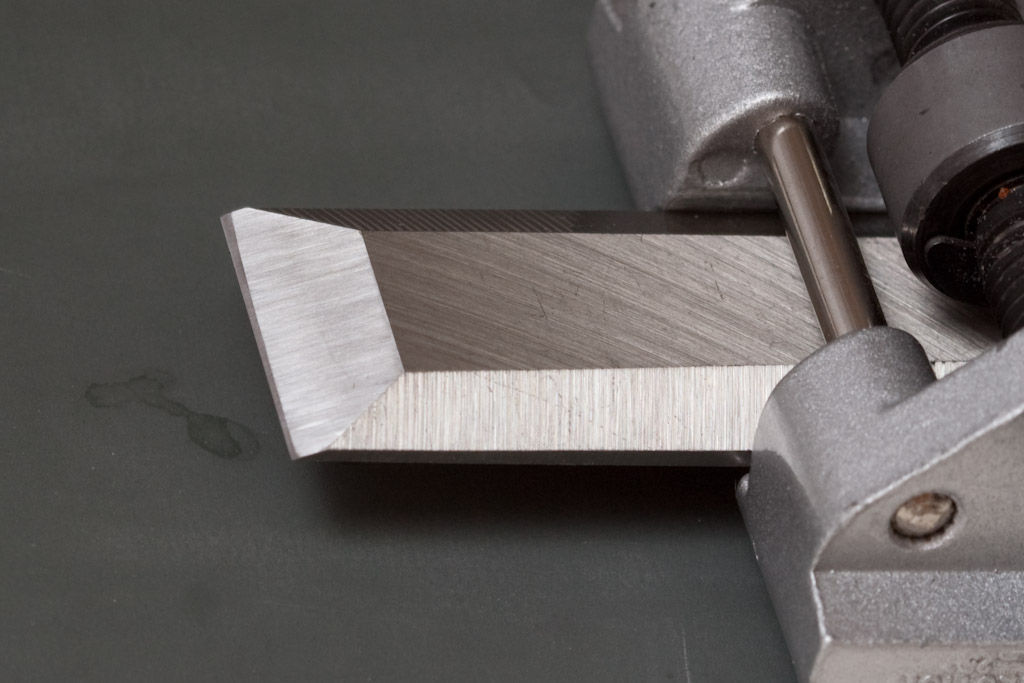
Let’s start at the beginning, shall we? When a woodworker sharpens a chisel or plane iron, you are looking to get an edge where two faces of the tool intersect with zero radius. One face is the flat back of the tool. That’s why it’s critical to get the back of a chisel or plane iron flat and smooth, so it will intersect with the other side as cleanly as possible.

That other side, of course, is known as the bevel. Depending on the purpose of the chisel or plane iron, that can be any one of a number of angles. For most bench chisels, that is somewhere about 25 degrees.

Now, there are two different ways a factory – or a woodworker in his or her shop – can get a bevel into that shape. That can be done first on a flat sharpening medium. In that case, the bevel rubs against a flat surface, grinding away steel from the bevel from tip to heel. This is how people who use stones or flat-platen grinding setups create their bevels. Some experts say that because this is a tough way to sharpen and hone an edge, because at every phase of the sharpening process, you are abrading the entire bevel, a relatively large area to grind.

To help make restoring the tip of the bevel an easier task, many people who flat grind will take a few passes with the tool tipped to a slightly higher angle. What this does is polish just the tip of the tool, creating a very narrow band of honed steel at the end. This is known as a microbevel, and it can make keeping your tool sharp easier if you are going on the flat.

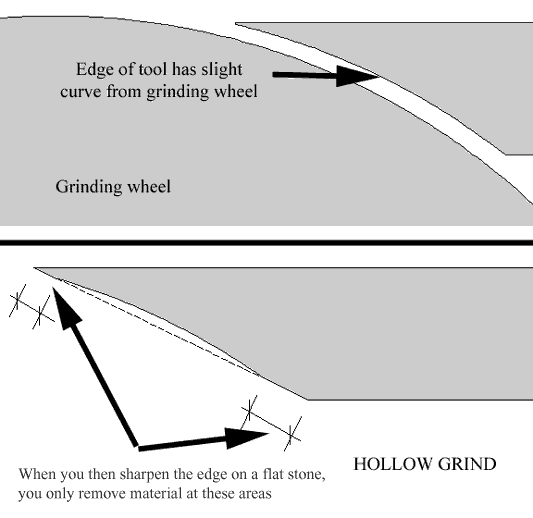
Now, if you are using a wheel to grind your bevels, you are looking at a hollow ground. When I’m working with a tool at my Tormek, The bevel of the tool is rubbing against the surface of a large-diameter wet grinding wheel. As the bevel touches the stone, it’s working against a rounded surface, which means if I have my guide set properly, the middle of the bevel is going to make contact with the stone first. In order for me to grind the bevel from tip to heel, I have to remove more steel from the middle of the bevel. This means that the bevel is being ground into a slightly concave shape. Remember, we’re not talking about a huge curve here… the surface of the bevel is relatively small compared to the diameter of the wheel.

This hollow ground, though, provides an interesting effect should you want to hone the tool on a flat medium later. As you sharpen the bevel, it will make contact on both the heel and the toe, removing material in two bands. This effectively reduces the amount of contact with the sharpening medium, making for easier honing later.

Are microbevels or additional flat honing required? Nope. A sharp edge will slice wood beautifully.

Which leaves more time to take a break and sit down with a nice cup of coffee.


Try something new

The weather was gorgeous this past weekend – even better than normal. I was shaking off the remnants of a cold and needed to get out of the house for a while to stretch my legs. What could we do? A trip to the beach?  Ehhh, we’ve done that before. How about a romp in the park? Fun, but we’d only be there for a little bit of time.

How about doing something we’ve never done as a family, and go to the Heritage Village Folk Festival? Now we’re talking!

I’ve worked for the Pinellas County government for 18 years now, and Heritage Village is owned and operated by the government. They’ve held the Folk Festival for years, but for some reason, the idea of folk music didn’t do it for me.  They also have traditional crafting demonstrations, but there’s only so much work on the loom you can stand. And, when you’ve seen a few meticulously-restored Model A Fords, well, they start to blend together.  The kids really dig that they had kettle corn, so, that was a draw…

But, that was it. I had never gone to the event… Even though I live about a five minute bike ride away…

This year was different. I had been in touch with the folks at the St. Petersburg Woodcrafter’s Guild (more is coming on them… believe me!) about possibly participating in the event, and I heard they worked out a deal to be there to show the craft.  SCHWEET!

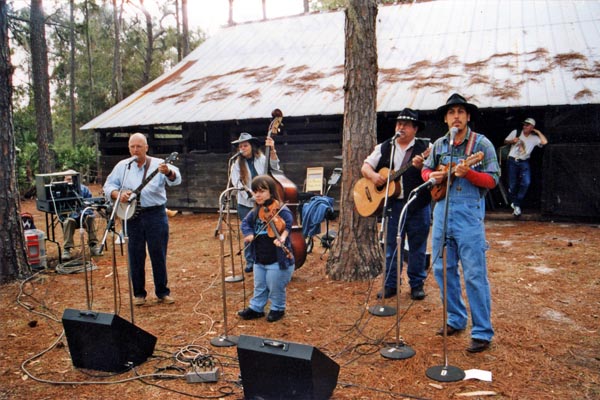
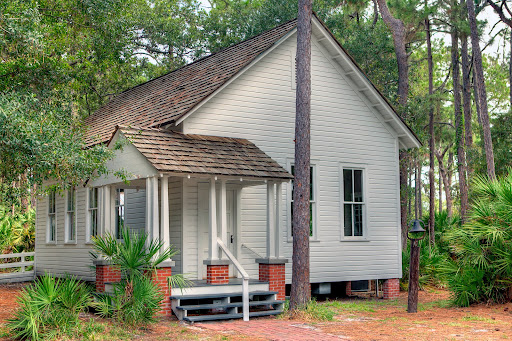
So, we walked around, taking in the beaming sunshine, fresh air and twanging sounds of folk music. We stopped in a few historical homes to take a peek, and when we got to the Harris School, the banner for the guild was hanging proudly. Ahhh, here we were!

We went into the one-room schoolhouse, which normally has period desks lined up in rows. Instead, the desks were removed and the building was converted into one sweet hand tool shop for a day.

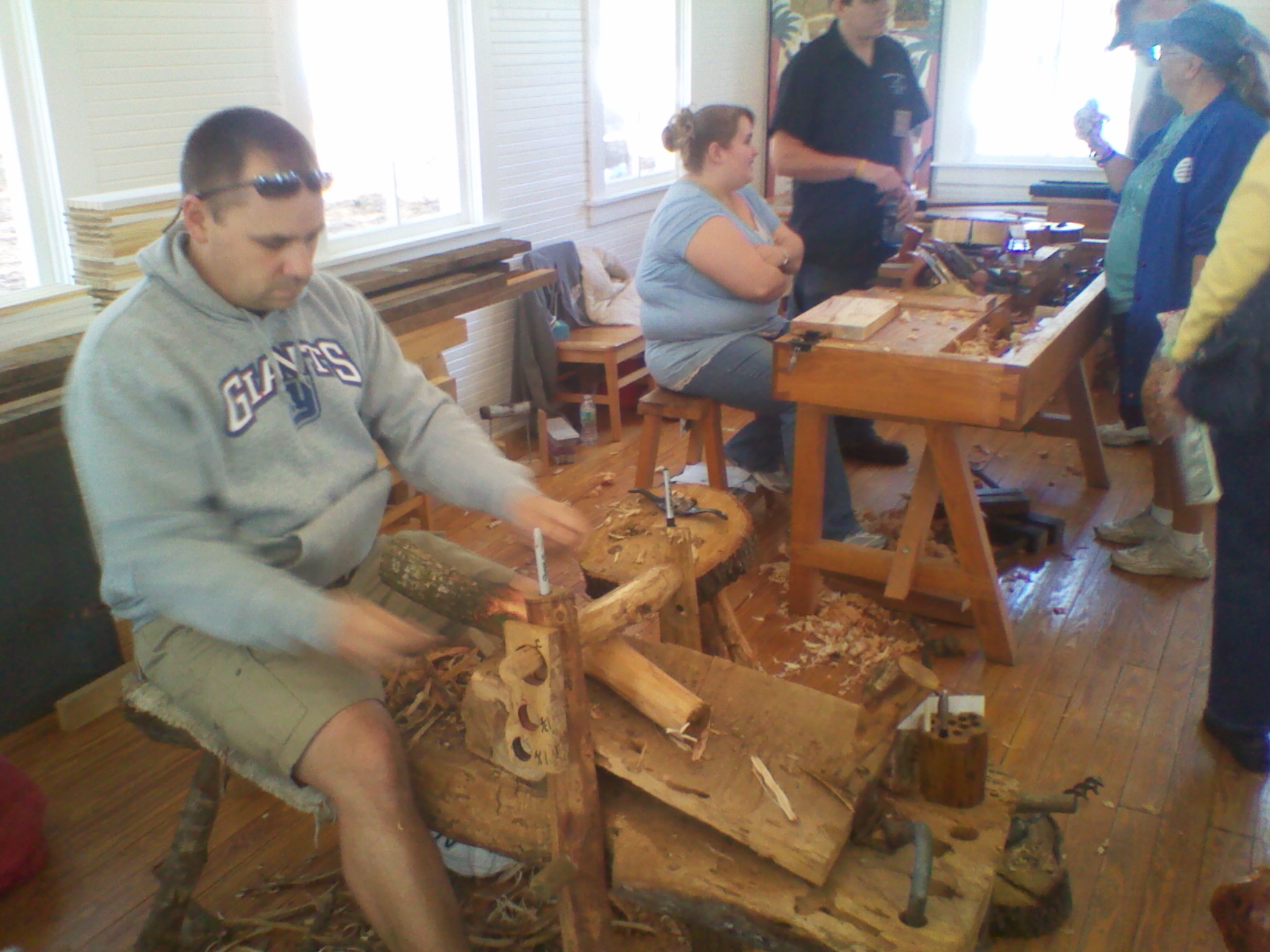
Members of the guild were there showing off several period tools – a spring pole lathe, a shaving horse, smoothing planes… the works.  Each of the stations had a few guild members helping visitors get a handle on what was going on in the shop.

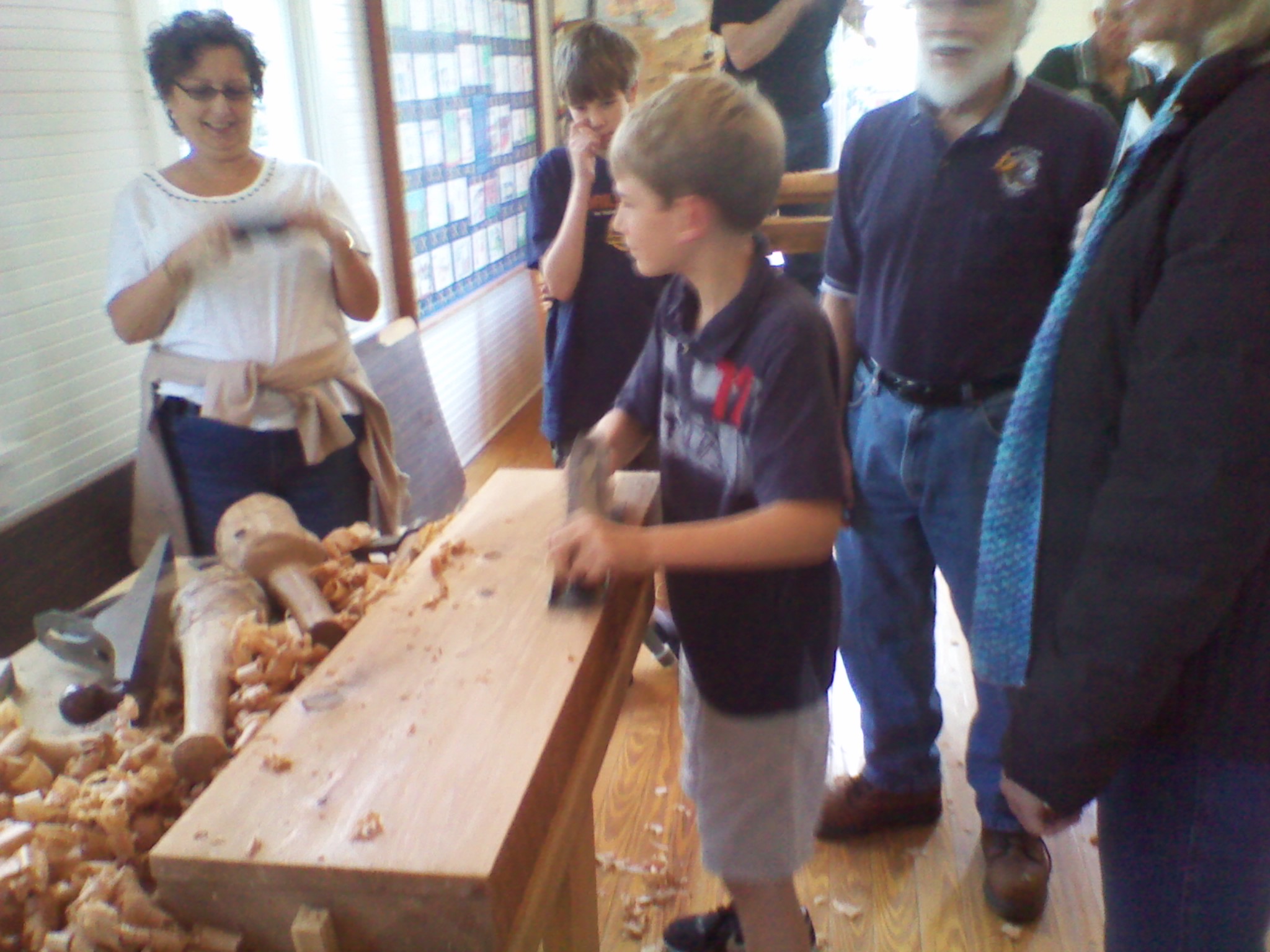
My son Steven got a chance to handle a sweet smoothing plane. I think he’s a little short to get the maximum effect.

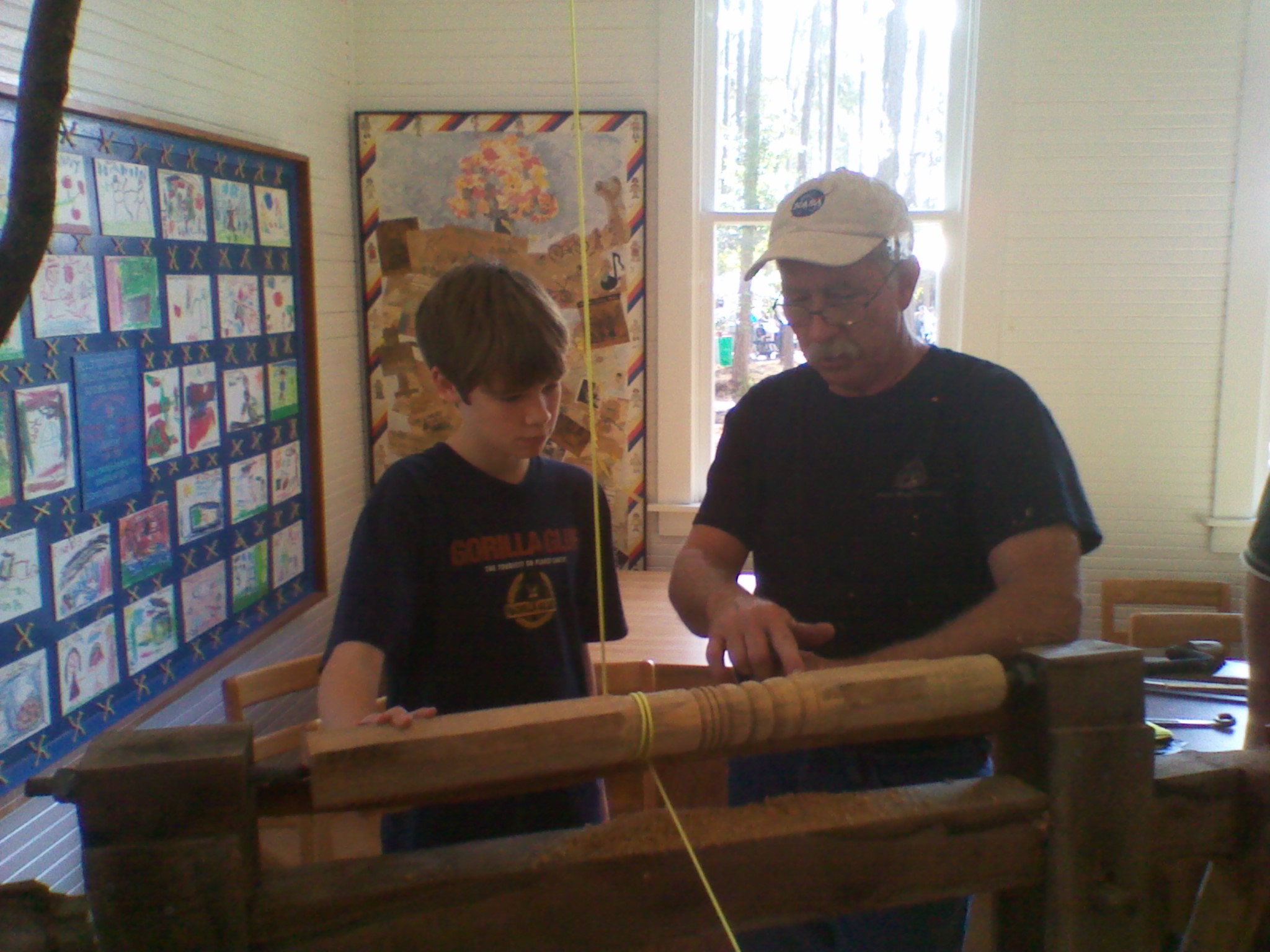
Dominic was the man behind the spring pole lathe, getting some good direction on how to use the turning tools. The boy is a natural!

And, me? Well, giddayup! I was working the shaving horse… for the first time ever. That oak never stood a chance!

During the 20 minutes at the Harris School, I learned a few things:

This was the first time the St. Petersburg Woodcrafters’ Guild ever came to an event at Heritage Village. Judging from the pile of sawdust, shavings and other wood scraps on the floor, I’d say they had been very busy – and we all know, a busy shop is a popular shop!

Secondly, the folks at the guild are knowledgeable about what they are doing, and they can communicate that clearly to visitors… Perhaps we can see some new woodworkers after this weekend?

And, finally, trying new stuff in woodworking?  It totally kicks butt. That was a blast to get on the shaving horse, and I can see why people like that so much.  Heck, I may have to build my own…

After our trip to the Harris School, we walked around the grounds for a while, and yes, we bought the boys their kettle corn. As we were heading out, we passed by the Harris School again. Amazingly, there was a line of people waiting to get into the building.  As I walked past, I smiled.  Woodworking was definitely alive and well in Heritage Village that afternoon.