All posts by Tom

I'm the guy who writes the blog...

Quick Poll

All of the instruction manuals for your power tools tell you to give your complete, undivided attention to operating the tools.  However, if you look into most shops, you will find that woodworkers are splitting their attention – slightly – by listening to music or talk radio while doing their work.

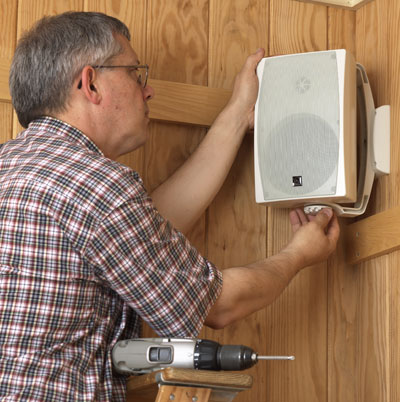
Wood Magazine's Bob Wilson hanging a speaker in his shop (photo courtesy Wood Magazine)

Since it’s very unlikely that you will be continuously running your table saw or router for hours on end, most woodworkers are easily able to focus on those particular cuts for the necessary time and then listen to something else between operations.  And, when it comes to a tedious task like sanding, well, a radio is very much appreciated.

This week, we want to know what you listen to while in the shop.  Sure, you may listen to several different things, but which is the primary thing you will listen to?

Link of the week

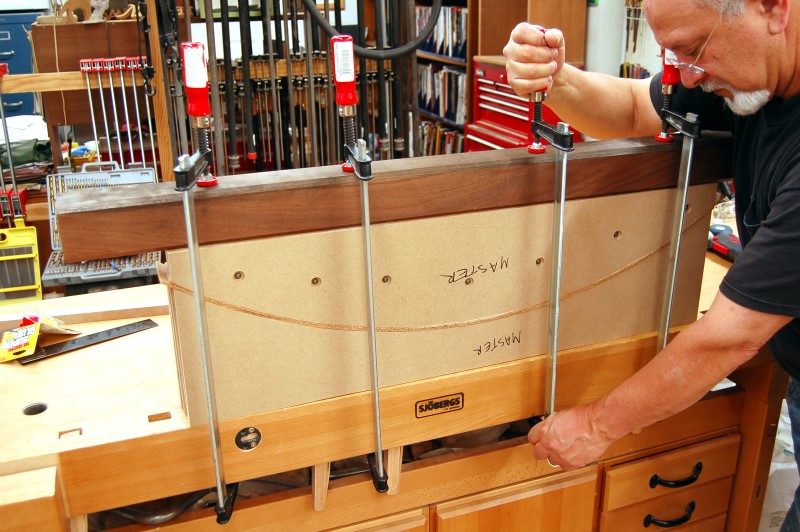
Making a form and  a bent lamination

Building furniture with straight lines and square corners is a great accomplishment. But, when you throw things a curve … wow.

Online woodworking how-to guru Al Navas of Sandal Woods Blog built a table with some sweet curved legs a few years back. While there were many compliments, there were many more that came in about how he built those legs.  Al used the tried-and-true method of bent lamination – an easy way to make the curve without having to create a steam box.

To answer those e-mails, Al created a tutorial page that takes readers from layout to form preparation to resawing the stock to the think strips required to make the lamination.  Even if you don’t want to build a project with flowing curves, it’s still a joy to watch Al go through the process – and see the results!

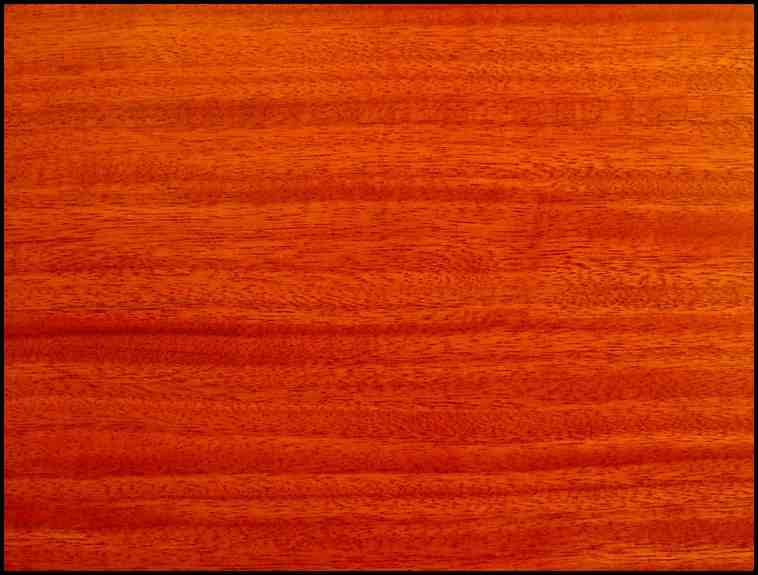
Species Spotlight: Santos Mahogany

Nothing inspires a woodworker like working with a fine, easy to work with timber that polishes up to a gorgeous piece of furniture. And, high on that list of most desirable woods is mahogany.

Its popularity was its undoing, as overharvesting of true mahoganies has lead to the search for a replacement for this very popular wood. Sapele is one species which has stepped in as a mahogany substitute, as has Philippine mahogany.

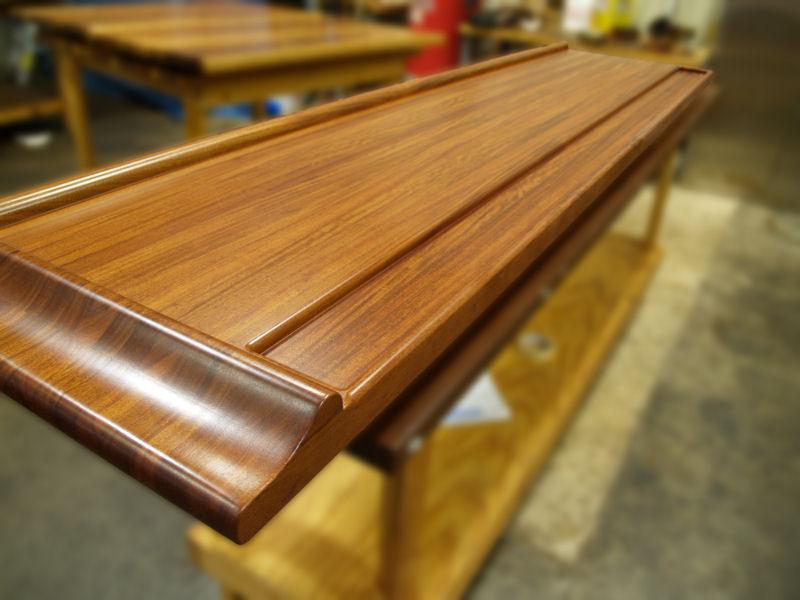
Another awesome substitute not to be overlooked is santos mahogany. This species – Myroxylon balsamum – is a very tall tree which can reach to heights of up to 100’ feet tall, with a wide trunk of up to 3’ feet wide. Santos Mahogany is a native tree to the Central America and South America areas in such countries as Peru, Brazil, Mexico and Guatemala.

The tree’s wood gives a very sweet and spicy aroma when cut due to the large amount of resin – known as balsam of Peru – which it contains. This is used in perfumes and natural medicines.

The wood is dark brown with a deep red heartwood. It has a very fine grain – just like other mahoganies, making it great for woodworking projects that need to be polished to a very lustrous finish. The one word of caution is that – like sapele – the grain is interlocked, which could lead to issues when planing and surfacing. Very sharp tools with very light passes are the order of the day.

Another thing you will notice about santos mahogany is just how darned hard the stuff is. It’s janka score comes in at 2200… putting it nearly as hard as hickory, and considerably harder than bubinga (1980), purpleheart (1860) and hard maple (1450) – making it a good choice for flooring. Carbide tools should have no issue with santos mahogany, but hand tool edges may need to be honed quite frequently while working with it.

Natural oils grant it excellent decay resistance – so, it could work for some outdoor furniture. As with other tropical woods, these oils have been known to cause allergic reactions. Although severe reactions are quite uncommon, it cause skin and respiratory irritation. So, be sure to use a dust mask and good dust collection when working with it.

The furniture is definitely something to behold. Crisp detail stands out prominently and the strong color and fine grain create a classic, timeless feel to the pieces. You might just find that santos mahogany becomes one of your favorite woods.


Good to see the crew

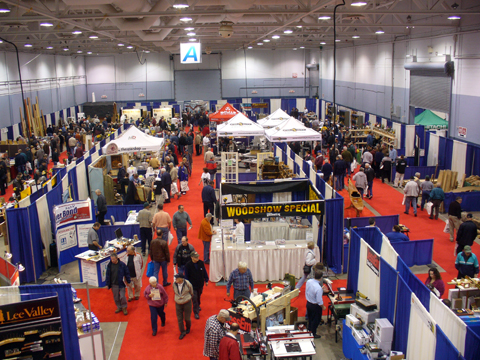
This past Saturday, I followed through on my promise and went to the Woodworking Show in Tampa. As always, what a great experience. There were vendors, woodworkers and some good friends I haven’t seen for an entire year.

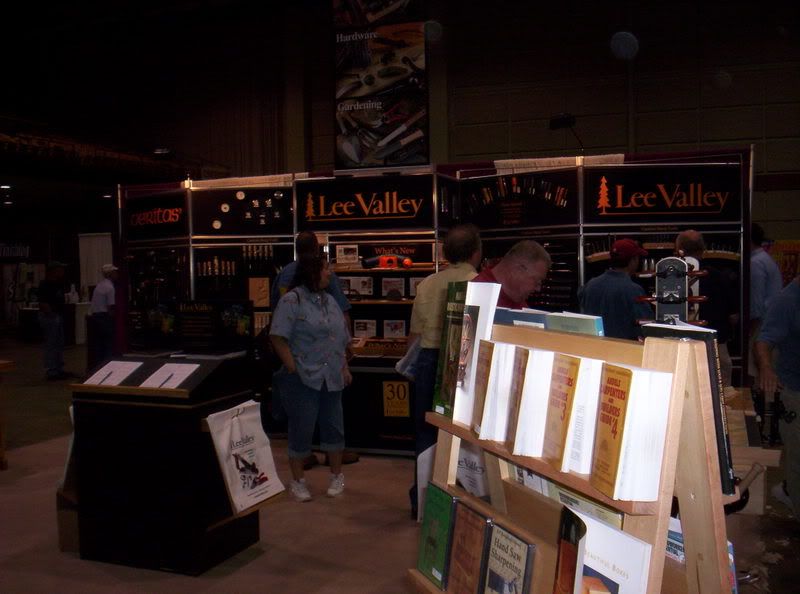
Here are some shots from the show…

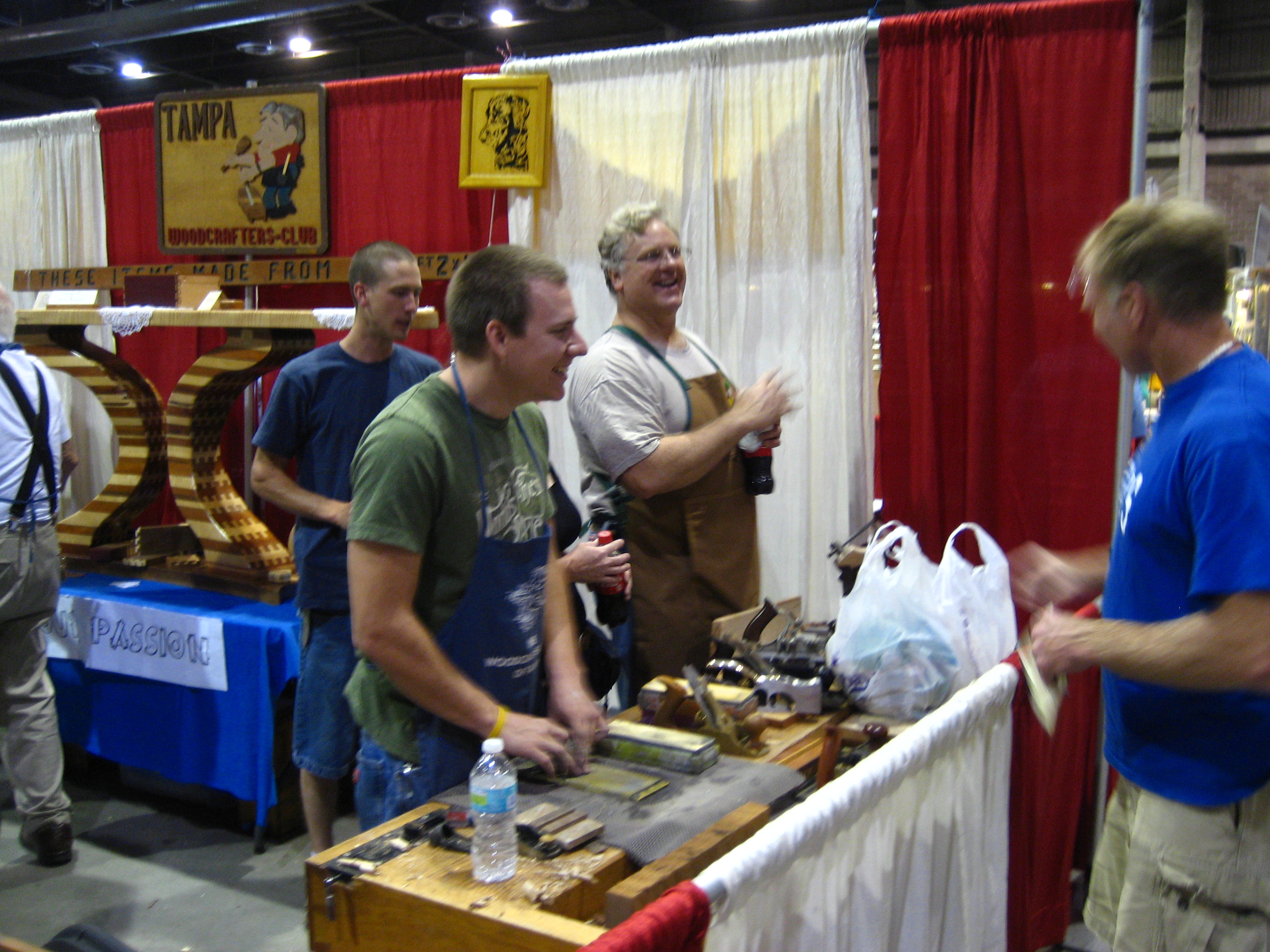
There were folks from the Tampa and St. Petersburg woodcrafters' guilds
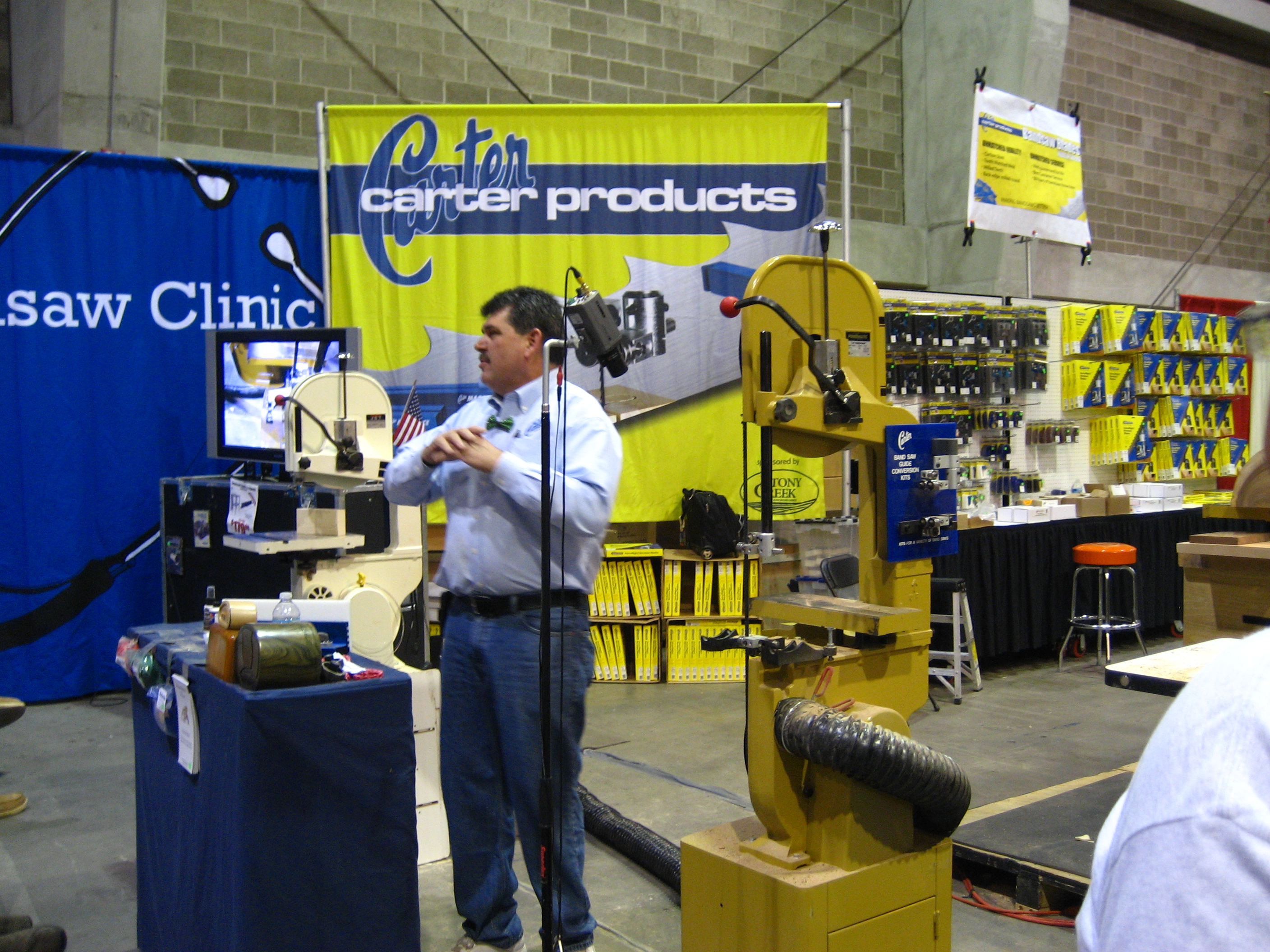
Exhibitors such as Carter Bandsaw Accessories were doing some great classes
Tommy Mac of Rough Cut was there doing some scraper demonstrations
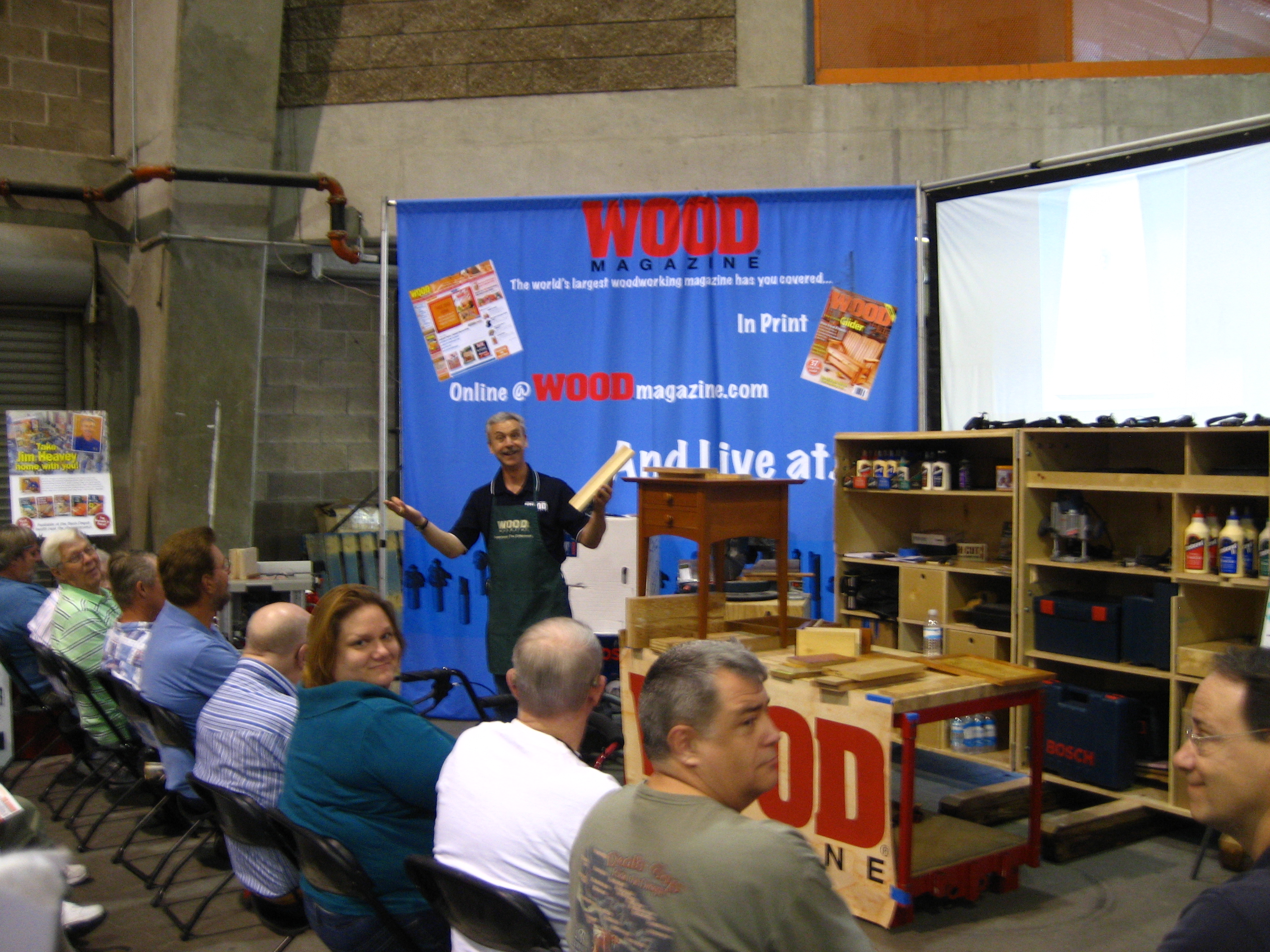
That clown Jim Heavey doing his song and dance
Sam Hamory of Earlex sprayers was teaching me a thing or two about shooting a finish
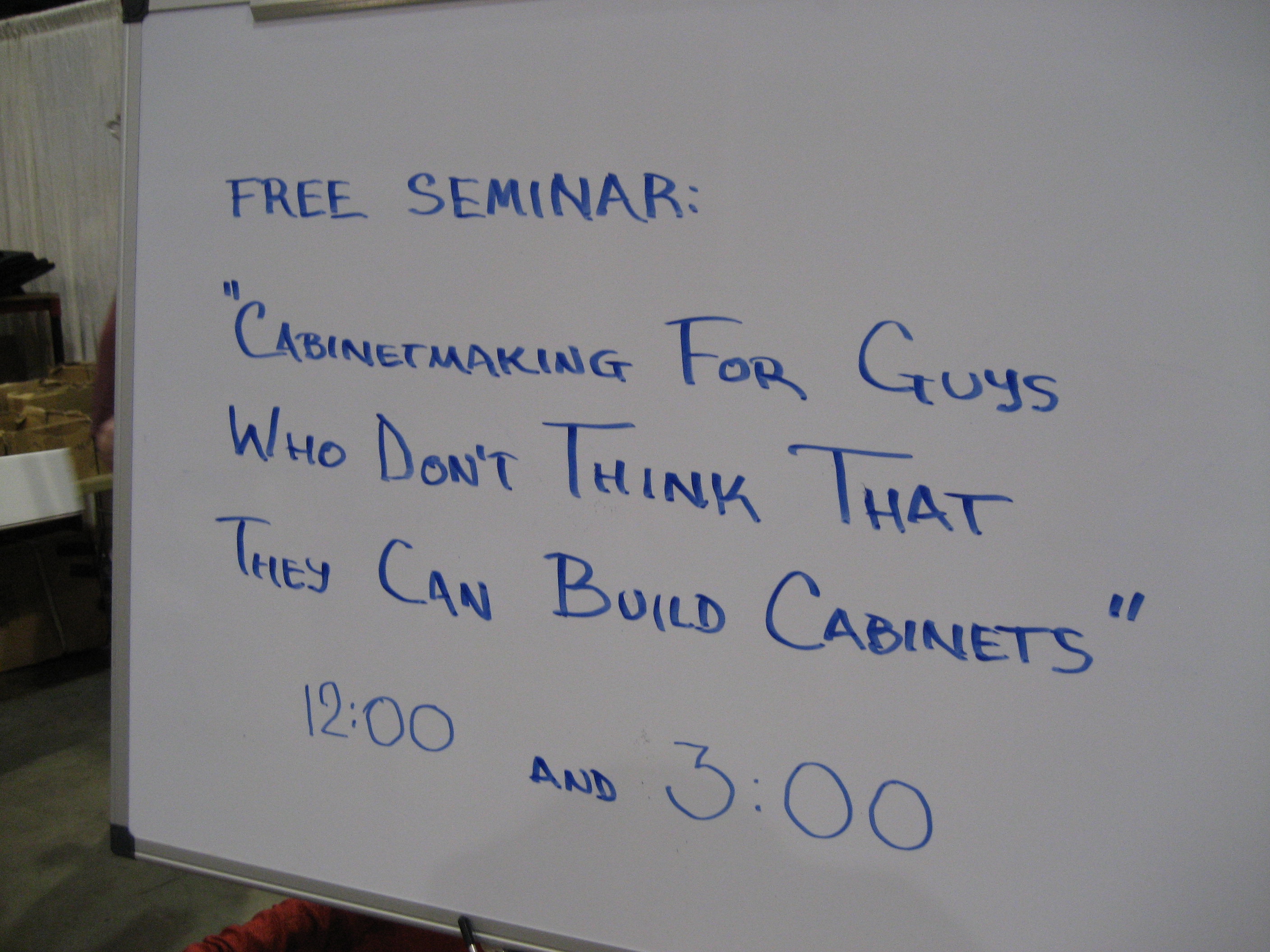
The absolute best title for a class all day...
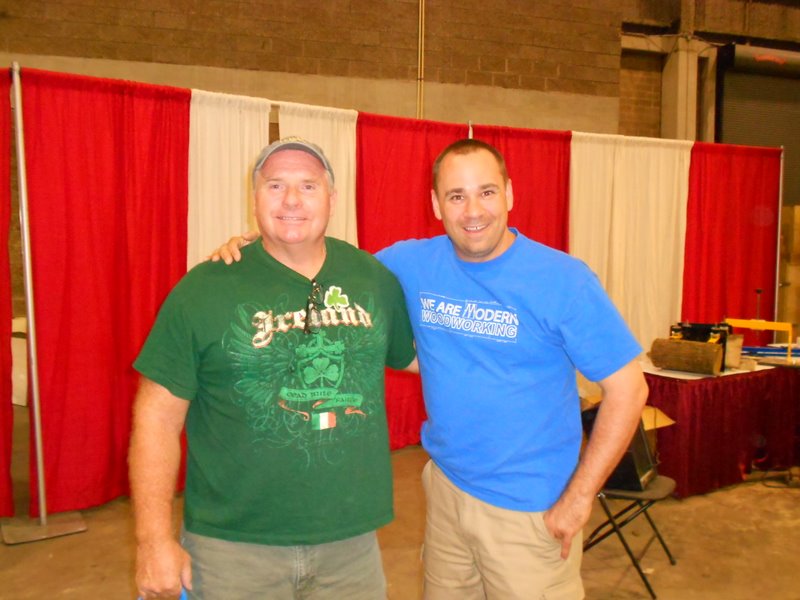
My favorite shot of the day

Now, why would this be my favorite shot of the day? Simple… this guy is Eric Rusch. He’s has been a long time reader of this blog, and his past weekend, we finally had the opportunity to meet face to face. What a great guy… We talked for a while about our woodworking hobbies and we took a few shots. I’m hoping we have an opportunity to meet up again sometime soon!


Quick Poll

While they may have lost some of their luster due to the Internet and the current economic situation, woodworking shows and expos are some very interesting places to visit.  You get to meet and talk with – in many cases – the same people who created the tools they are selling, to hold the tools in your hands and see them in operation.

Yesterday, while I was at the Woodworking Show in Tampa, I saw some folks hugging the wall just taking some mental notes on what they wanted to buy, while others were staggering out the doors of the convention hall, struggling to carry home all of their goodies.

This week, we want to know how you feel about purchasing something – anything – at a woodworking show or expo.

Shop short cuts

A few years ago, I embarked on one of my most ambitious projects.  It wasn’t just one woodworking piece – it was nine copies of a wine rack plan I had seen in Wood Magazine.  The holidays were just around the corner, and I knew that the wine lovers in the family were just going to love having their very own Tom Iovino creation to rest their fine bottles on.

The one thing I hadn’t counted on was just how many pieces I was going to need to cut in order to make these projects.  Each one had four uprights, four stretcher, four curved bottle holders and two feet.  Add in that each stretcher needed to be tenoned on both ends and each upright had to have two mortises cut to receive each tenon… well, I quite literally had my work cut out for me.
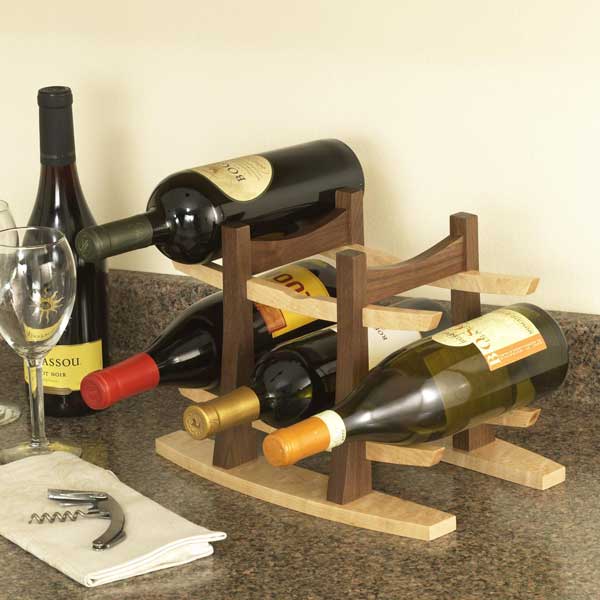

I also knew that I wanted each of these projects to look identical. Well, maybe not identical – I was using different kinds of woods for the project pieces – but similar in shape and form.

Cutting each of these pieces individually was going to be out of the question. I mean, if I  had to set the cuts for each of these components by eye looking at pencil marks, it was going to take a long time to set up for each operation, and there was little to help ensure that the cuts were going to land on exactly the right place.  With the time ticking down  toward the holiday season, I was going to have to work smarter, not harder, to make my deadlines.

That’s when I turned to some tried and true shop short cuts that helped to knock this big job down to size.

The first had to do with the measurements.  Now, I’m sure I could have brought out a steel ruler to mark the depth of the tenons I had to cut, but how was I going to be sure that I hit the right tick mark every time? And, a combination square would work well, but, ya know, if it ever got reset for another measurement, how was I going to remember the exact point I had set it to at the beginning?  No, my friends, I needed to work with a known distance.  That was conveniently provided for me by a set of set-up bars.

These handy little blocks were perfect for setting the depth for my mortising gauge so I could scribe the depth line for the shoulders of the tenon. This way, I could keep coming back to the  correct measurement time and again without having to re-measure.  Pretty convenient.

Another thing I did was to set stop blocks on my miter gauge to establish the width of a set of notches I had to cut. This way, there was no need to eyeball a pencil mark on each piece to ensure the right width of notch.
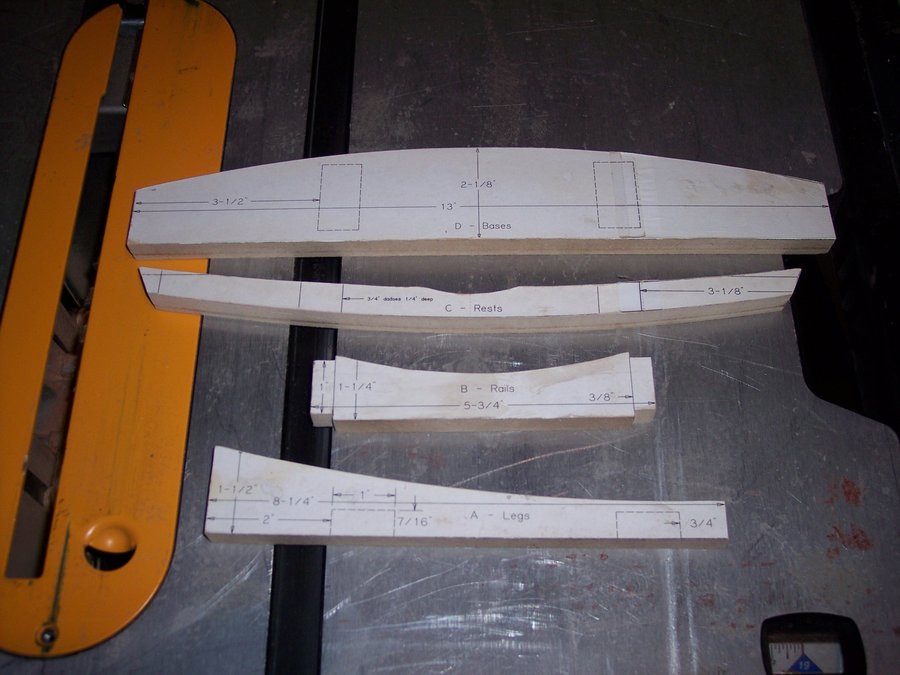

I was soon using shortcuts like this in other parts of the project. MDF spacers to ensure that glue ups were nice and square.  Templates so I could mark and cut the curves on the pieces, and later pattern rout them to the proper shape. Why, with the proper short cuts, I was nearly invincible!
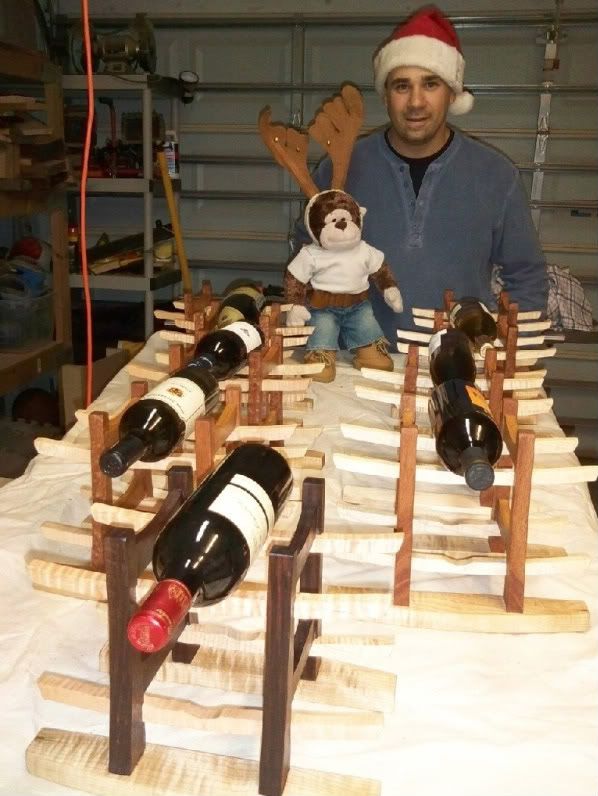

As near as I could figure, my little short cut tricks saved at least one day in the shop on some very monotonous, repetitive operations, and made the pieces look pretty darned sweet.

And, the proof for me was the sight of so many happy faces when the recipients opened their presents. It just goes to show you that simply taking the right shortcut to completion can make your shop time a whole lot more rewarding.

==================

And, remember everyone – this Saturday at the Tampa Fairgrounds, we’re having the first ever Modern Woodworkers Association Florida meeting!  Be there or be out of square!