All posts by Tom

I'm the guy who writes the blog...

Link of the week

Hancock Shaker Village

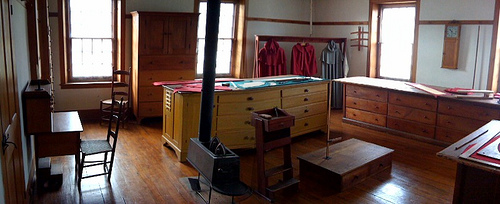
Many woodworkers admire the clean, simple lines of Shaker style furniture. The forms are classic, and are still reproduced even though it has been a century or more since the originals were made.

So, if you are big fan of Shaker Furniture, you should probably go to a Shaker Village to get a better idea of how members of this religious sect lived, worked and interacted with their craft. Hancock Shaker Village is a lovingly preserved Shaker settlement where you can see, admire and immerse yourself in the Shaker lifestyle.

Time to relax

All year, I have been looking forward to the Woodworking in America Midwest event taking place this week in Cincinnati. But, I was thrown off the track by a few things… Tropical Storm Debby, Hurricane Isaac, the Republican National Convention, and most recently when Hurricane Sandy decided to make a late season rush at the northeast. Since I’m a transplanted guy from Jersey, I had a lot of folks up in the that mid-Atlantic area I was concerned about – my parents, relatives, friends… the works.


While I was relieved to see that my peeps weathered the storm surprisingly well, that’s not the case for everyone. In fact, Sandy could end up being one of the most disastrous storms to hit the United States in its history.  Many places I can remember visiting up in that neck of the woods are completely torn up, flooded and many people are going to take a long time to recover. Thoughts and prayers go out to them.

I was also glad to see that many of the woodworkers from that area who were going to attend are OK as well, and their  travel plans – while threatened – are not cancelled.  That’s why I’ll be traveling up for this year’s Midwest edition of Woodworking in America.


The fun begins at the Keystone Bar and Grill on Thursday night 8 p.m. until midnight, when we get as many people together as possible to meet up before the big event begins. Last year’s meetup was one for the history books, and there’s no reason why this year shouldn’t be a HUGE deal!  Join us starting at 8 p.m. for a little nosh, a few drinks and some great conversation.

Starting Friday, you can look me – and Dyami Plotke –  up a the Modern Woodworkers Association booth in the marketplace. We’ll be bouncing between that booth and the Hand Tool Olympics booth run by Mike Siemsen.

And, remember, we get an EXTRA HOUR for free at the Woodworking in America Midwest event this year – yup, we turn the clocks back an hour early Sunday morning…
I’m definitely looking forward to catching up with everyone… now, I’ll have to pack my thermal underwear.  November weather in Cincinnati is too chilly for this thin-blooded Floridian!


My new little friends

This big shop reorganization/clean up/redesign that I’m in the middle of has been quite the eye-opening experience. My whole status-quo has been thrown into the air. Tools in new locations. New work flow patters. Heck, new tools…

And some tools I had, but never really used. The drill press was a big discovery, but there was another one that wasn’t as big. But, it has been pretty useful.

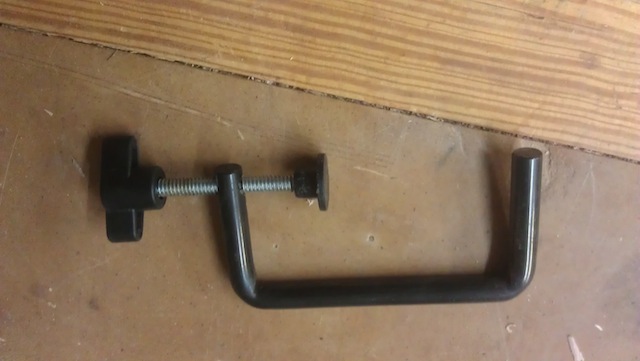
I bought a set of these little clamps about seven years ago. I brought them home from the Woodworking Show in Tampa, set them down on my workbench … and, well, they got pushed to the back. And buried under a ton of stuff. That was a shame, because I just learned just how darned useful they can be.

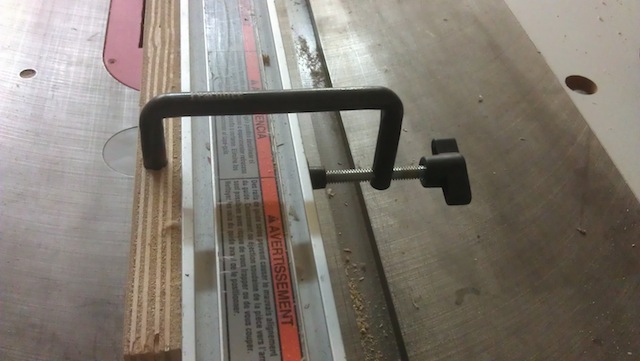
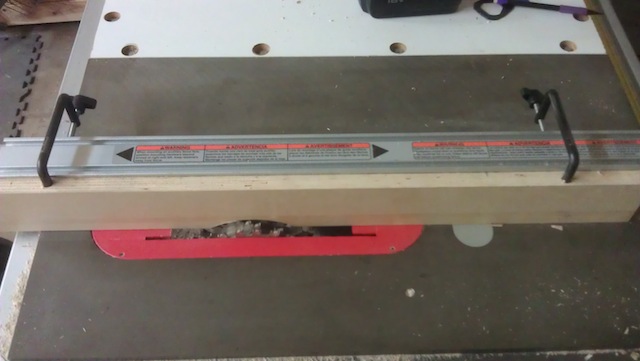
How do they work? They are a simple as can be. First thing I did was took a strip of 3/4 inch  plywood that was about as long as my rip fence, but just a bit shorter in height. Then, with a simple 3/8 inch drill bit, I drilled two holes into the top of the piece. It was a simple thing to drop the front into the hole I had just drilled and opened the clamp screw wide enough to clear the fence. Then, I tightened the clamp and bingo, the strip of plywood was in place.  But, for what?

Well, obviously, it was as an auxiliary fence so I could bury a dado blade in it to cut rabbets.  What I like about this setup is just how easy it was to get in place. And, since they don’t become part of the jig, and can be used on other fixtures, I can see a bunch of other uses for them.  Offset blocks for crosscuts. Stop blocks for the router table. The mind boggles at the opportunities.

This cleaning up business isn’t all that bad, once you think about it!


Link of the week

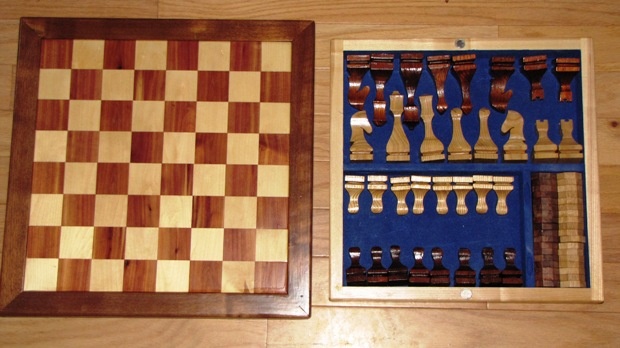
Rod Johnson’s Chess and Checker game board pictorial

Back in 2010, woodworker Rod Johnson had to come up with a woodworking plan to instruct a group of 4-H participants on woodworking. Something that would build their skills and challenge their minds. Why not a chessboard complete with chess pieces, checkers and storage!

While his method might lead to some issues with expansion and contraction on the board, you will certainly get a kick out of how he made the checkers and chess pieces. It is certainly a simple plan that does give very good results. With the holiday coming up, it is time to start thinking about those gift projects…

My secret board stretcher

So, I’m trying to finish my niece’s hope chest so I can get it to her in time for her birthday. Yes, this is the hope chest I wanted to get done BEFORE I traveled up to teach at the Emergency Management Institute back in August. Yes, I’m slow!

I am using some Peruvian Walnut that was sent to me by my good friends at Bell Forest Products. Man, that stuff is SWEET! Kind of a dark purplish brown with some very interesting grain patterns. I spent this past weekend doing the cope and stick profiles in the rails and stiles, and those babies are all ready for assembly. But, say my niece doesn’t want everyone to see her belongings? I mean, this chest seems to be missing something…

Oh, yeah, panels!  I knew I would forget something!  That’s why I went looking through my wood pile to find some contrasting wood.. maple, perhaps. Maple is one of my favorites. The only problem? I didn’t have a board wide enough or long enough to make all six panels (the front and the back faces have intermediate stiles on them), as well as making the lid. Hmmm, I was in a conundrum, so I went locally to Weiss Hardwoods to see if they could help.

That’s when I ran into the mill guy Earl. Now, Earl has an eye for this kind of thing, and when I was describing what I needed, he scratched his chin for a minute, and then walked over to a bunk of rough maple. He was going to take a piece from this one order he had collected… it had some figure on it, and the guy he was milling it for probably didn’t want any of it.

Earl did his magic, planing, jointing and then sanding the piece on the wide-belt sander in the shop. That piece positively glowed when he took it off the sander.  He cut it into two seven foot long sections and helped me trundle it off to the car.

When I got home, I knew I had it nailed. That piece was plenty long for me to get panels cut out. I was feeling so full of myself… until I had a very bad thought. Would the piece be wide enough. Now, it’s not often that you get a beautiful piece of maple that is 14 feet long and 10 inches wide. The only problem, though, was that I was going to need panels that were 10 1/2 inches wide…

You have GOT to be kidding me. If I put the chest together like this, I was going to need a board stretcher to get the extra half inch. I looked at the board, then at the milled pieces of the frames. Then back to the board. As I pondered the kind of major surgery it would take to shorten the rails so they would fit, an audacious idea hit me… why not just make the board wider by adding two 1/4 inch strips to the top and the bottom? After all, most of these strips would be rabbeted to fit into the rails and stiles, right? I reached in the scrap pile, cut some lengths of 1/4 inch wide maple strips and glued them on.

After the glue dried, I planed  and sanded the strips flush. Bingo. They were on there solid as a rock. Now, all I have to do is cut the panels to length, rabbet all four sides, and get those panels into the frames for the glue up. Just a little more work, and I can send this project to one very happy soon-to-be 16 year old.

Giddyap!

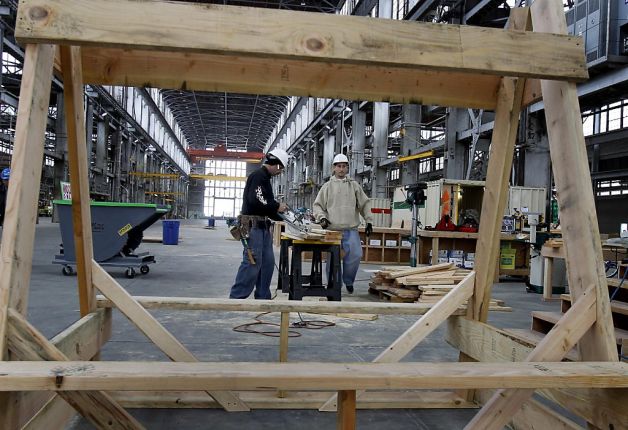
When it comes to carpenters, there are few tools as ubiquitous as the sawhorse. The create a great place to stack lumber and a nice, sturdy platform to make hours and hours of cuts.

But, what about for woodworkers? Are they just as important?

For me, yes, they sure are. Throw a piece of plywood over a pair of them and you have either a tool rest, an assembly table or a great place to do a little finishing. Want to cut a sheet of plywood? Lay it over the two horses, set your blade depth and cut straight through, kerfing the top of the horse to ensure you get a full depth cut. And, if you really need to work on large timbers (say you had to work on some large pieces for a deck, gazebo or play structure), they are a must!

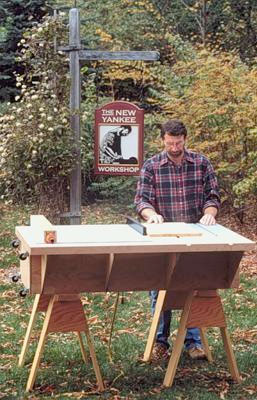
Most sawhorses are cobbled together on a job site. I can remember reading many of my dad’s home improvement books that showed how to quickly bang one together with some 2x4s and a few easy beveled rip cuts. This all-wood sawhorse zen reached its zenith when Norm Abram featured them as an integral component of his table saw station for a little bench saw. Yes, I built one of these when I had my first undersized and underpowered saw, and the saw horses were without a doubt the most sturdy I had ever dealt with.

When I sold this saw to a friend, it had to go with both of the saw horses, so I was steed-less. That’s when I turned to the next evolution in saw horses – the pre-made kit. These babies came with the pre cut 2×4 stock and metal brackets to make building these babies a piece of cake. They served me well for several years and were sturdy enough to work for most projects. The did have a lot more wiggle in them than the Norm-designed ones.  They also shared another issue that I had to resolve – they were always ‘set up’, taking up precious space along the wall. No, I needed a new solution.

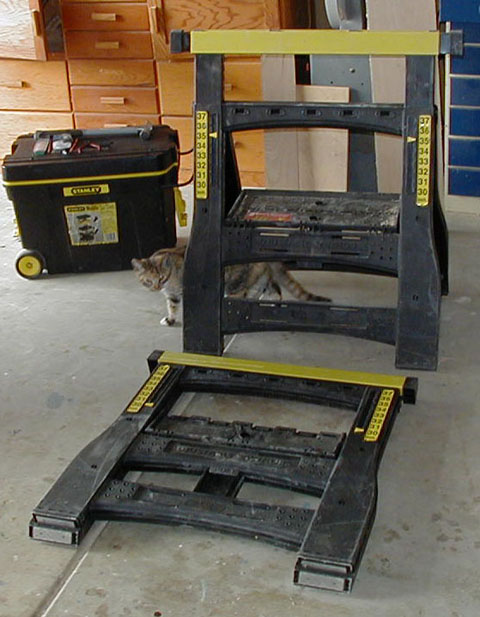
My first thought turned to those fancy plastic fold-up sawhorses. They have all kinds of features, from height adjustment to built-in tool storage. Some have extended outrigger for wider pieces. This was looking more promising, but I still had a few issues. Even folded up, they still take up a considerable amount of space. I have also used them at work for set construction and wasn’t ever really satisfied. They seemed a little flimsy with heavier items stacked on them. And, they were just a little awkward to carry around.

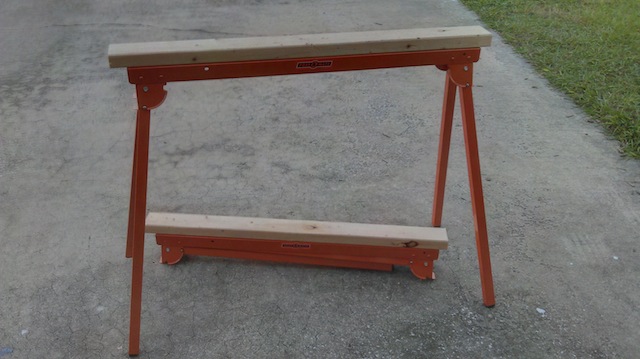
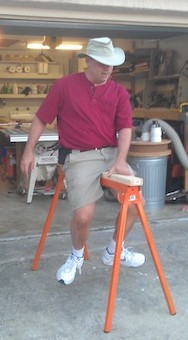
No, I needed a better solution. And, it came to me from Craig Ursell over at Portamate tools. He sent me a pair of Portamate 3300 saw horses, and these babies were just about what I needed. First of all, they are made of sturdy steel. I have thrown some heavy weight on top of them (when I assembled my son’s new basketball hoop), and they held the weight beautifully. They also have folding legs, which means that they collapse into a very small package when you want to store them. And, you also have the ability across the top beam of the horse to screw some 2x4s to the horse, allowing you to cushion your work while you lay it across the horses, and to replace these if they become cut up after they are used up.

These babies also have another useful feature – they can be used low on the ground with the legs folded up. If you have ever worked on your workbench and struggled with trying to clamp – say – a middle shelf on a bookshelf while it lies on its side, placing these two folded up sawhorses on the bench under the project will leave plenty of room for you to get the head of the clamp under the piece… easy peasey lemon squeezy!

Now, you may never be able to ride these babies off into the sunset, but having your trusty steed in your tool stable, you will find your work a little easier…