All posts by Tom

I'm the guy who writes the blog...

Species Spotlight: Spalted Maple

Microbes can be your friends. Yup. Ever drank a beer or a glass of wine? The fungus yeast is responsible for the fermentation. How about some blue cheese? Bacteria’s hard at work giving the cheese its distinctive twang.

And, when it comes to woodworking, you’d be surprised at the magic that fungi can work on what would otherwise be plain looking boards. That’s why wood merchants such as Bell Forest Products actively seek out logs that have had a touch of fungus development.
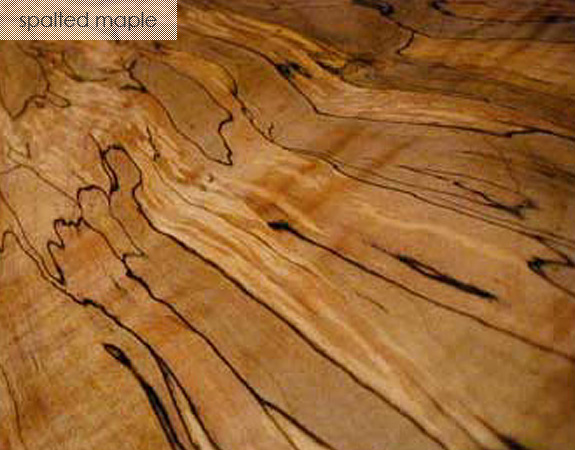
“The wood is referred to as spalted. Really, what’s going on is that the board is just starting to rot,” said Eric Prorier, “But, that’s a good thing. The fungi that start the process of returning the tree to the forest’s soil have just gotten a toe hold in the board.” The fungi, hitching a ride in the water that wicks up the tree’s vascular system, begins to consume the lignin in the wood. As part of the metabolic process, the fungi excrete a dark colored pigment, which starts to permeate the wood.

Knowing that spalting is a sure sign wood is rotting, it’s important to catch this process at just the right time. “The boards need to be sawn after enough color has been developed but before it gets to the board becoming punky.” Said Eric. Once sawn and kiln dried, the fungus has been killed and the board is as beautiful as it will ever be. “When we catch the development at the right time, the look is amazing.”

While woods such as birch and beech can spalt, the king of spalted woods is maple. It’s light appearance and intrinsic strength makes it ideal. “Plus,” said Eric, “there’s a reason why it’s called sugar maple – the carbohydrates are an easy source of food for the fungus.”
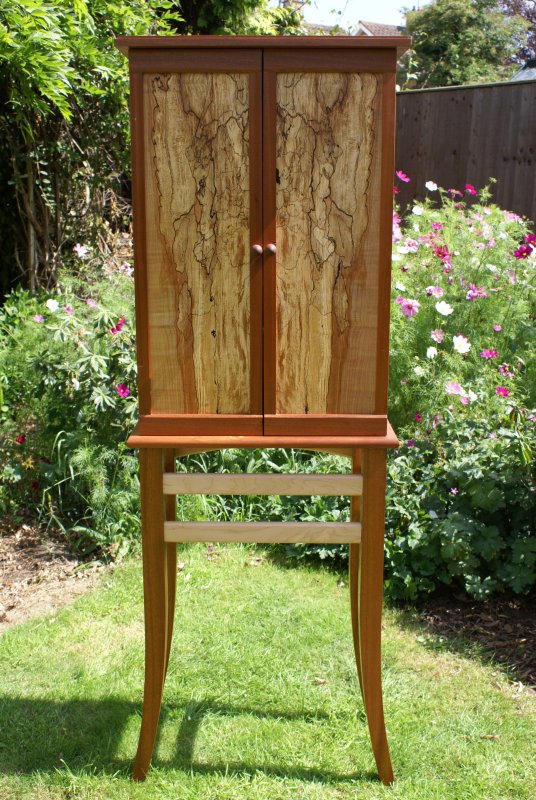
The appearance of the spalting in maple closely resembles that of a pen and ink drawing. “In some boards, it can be very subtle, offering an understated appearance. On other boards, it’s dramatic and widespread.” One of the most striking uses for spalted maple is to resaw the boards to make bookmatched panels. “When you look at two doors bookmatched like that, it creates movement and drama in your design.”

Since there is this fungus in the wood, woodworkers may wonder if they have to take any special precautions when working with spalted maple. “It’s a great question to ask, because you never know how sensitive you may be. Dust collection is always recommended and a dust mask is a good thing to wear when cutting or sanding.”

Since spalting is such a unique phenomena, selecting boards one at a time is the best way to go. “Since we offer the opportunity to view and hand-select boards, looking at our spalted maple selection will give you a good idea of what level of effect you are looking for.”

Outta This World

The folks at NASA think of everything.  They taught the world how people can survive for days on food squeezed out of a toothpaste tube.  The taught us how well monkeys endure the rigors of space travel.  And, they are learning how people react to long duration missions.

The reason is simple… Say, you have a mission to Mars. The crew would launch, then accelerate toward their destination.  They would quickly watch the Earth shrink to a pinprick of light – then were would be nothing but blackness… For a long time.

Then, as that little red dot starts to fill the ship’s window, the crew would get excited.  Finally!  The destination is approaching.  But, as the destination grows closer, the speed of the ship has to start decreasing. Progress will slow, and the crew would start to get antsy.  When will we get there?

NASA has done so much research in this field, in fact, that the Chilean government has consulted with space psychologists to better understand how the miners trapped underground will fare with their prolonged stay in a collapsed mine.

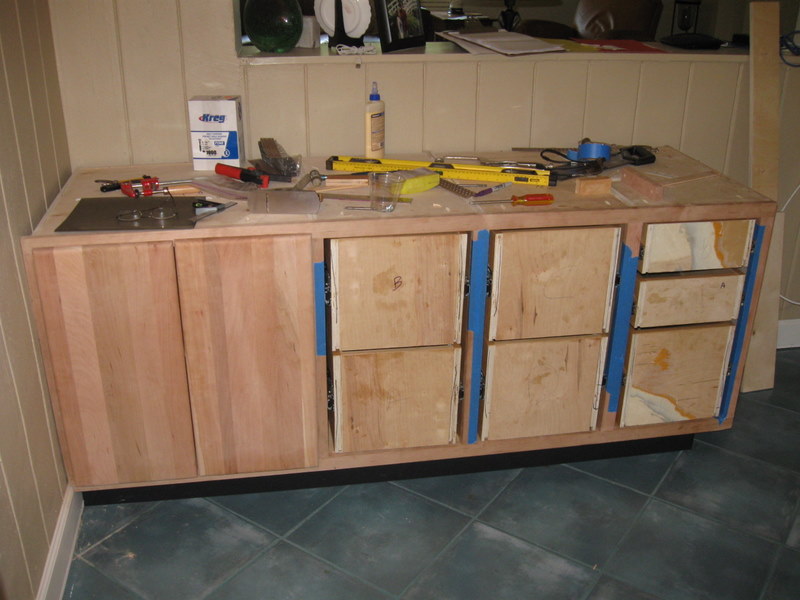
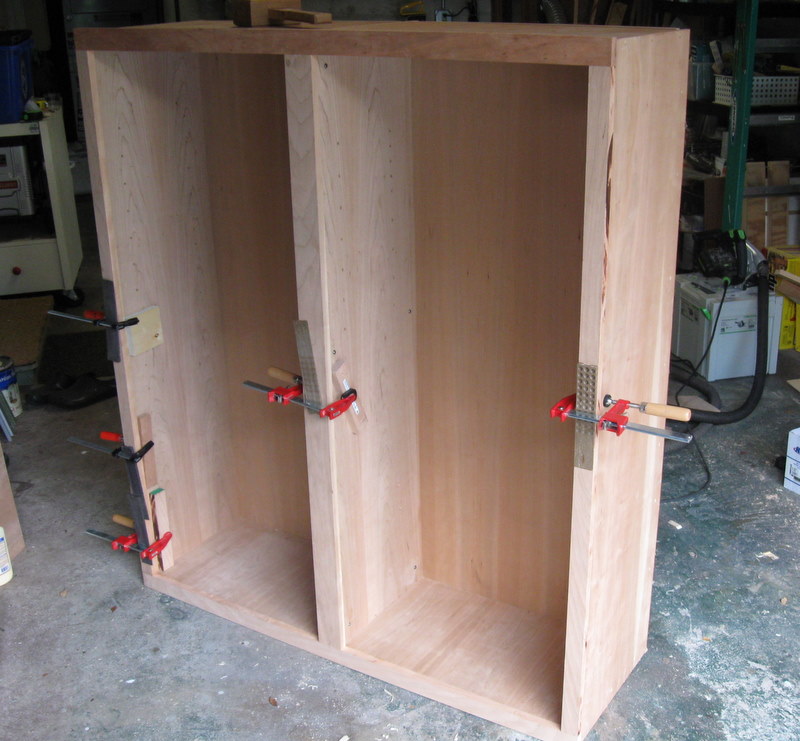
Since I live in Florida, perhaps I should consult with the folks at NASA about how to deal with the final phases of a woodworking project.  This past weekend, a major milestone was reached on the cabinet project at Paul’s house. With a final pocket screw to pull the face frame snug, construction came to a conclusion.  I had built these two bookshelf units early on, but it’s nice to see them screwed together and framed out.

Back in the house, the two banks of cabinets are in place and the desktop spanning the gap between the two cabinet banks is fitted into place. Paul was able to oil the drawer fronts and doors and get them into place.  I’ve got to tell you, with those in place, the project no longer looks like a jumble of boxes and lumber.  I’m stunned how nice it looks.

From here, Paul and his wife will take matters into their own hands. Sanding and several coats of finish – Waterlox – will be applied over the next week or so.  I’m going to have to spend some time over the next week or so collecting the tools I had brought to Paul’s house over the past two months – that is, if Paul doesn’t put them up on eBay first.

Once the finish is done, the last thing to do is mount the bookshelves to the top of the right bank of the cabinets.

And, when that’s done, I’ll be so happy, you can see me in orbit.

Quick Poll

Building on last week’s poll…

Imagine you have a board of red oak with nice straight grain that’s three feet long, seven inches wide and 3/4″ thick.

You have to rip a piece the full length that’s six inches wide from that board.

How would you make this cut?

[poll id=”139″]

Link of the Week

The Village Carpenter

There is a wide variety of woodworking styles out there. Some  focus on the latest and greatest developments in woodworking  technology.  Then, there are those  which embrace the older aspects of the craft, demonstrating the amount of sophistication and skill required by the woodworking masters of days long ago.

Kari Hultman, also known as the Village Carpenter, is one of those woodworkers who falls into the second camp.  She’s a talented carver, plane maker and – from what I understand – she can handle a a brace and bit like a champ. Her site is loaded with how-tos and explores the fine details of the craft. She has traveled to several historical sites and interviewed the interpreters demonstrating their techniques, showing how you can bring elements of these older forms of woodworking into your shop.

The best part is that Kari does it with a great sense of humor, making the topics more approachable and giving the reader a chuckle along the way.

Room to Dream

What I love most about woodworking is meeting and speaking with other woodworkers.  And, yes, I invariably find that woodworkers are a generous bunch of folks.

One of the first professional woodworkers I had the pleasure of meeting – and interviewing – is Gail O’Rourke of Plymouth, Massachusetts.   She is now a project manager with Chestnut Bay Cabinets, and they are working with a charity known as Room to Dream Foundation. When she told me about an upcoming build, I wanted to share it with you.  Remember, Gail, I want to see pictures when you build the furniture and when it’s installed, alright?

The Room to Dream Foundation Partners with Hutker Architects to Renovate Space for Falmouth Child

The Room to Dream Foundation – dedicated to creating living spaces that give children and adolescent’s room to dream of a healthier future – has teamed up with Hutker Architects to help a family with a chronically ill daughter in Falmouth, Massachusetts.

Designers Abby Bart and Courtney Fadness of Hutker Architects met with the family and designed a space to meet her medical needs as well as provide expertise, design creativity and volunteers to make it all happen. Working with Room to Dream they evaluated the space and set to work to design a space suitable for a teenage girl. The project is set to be completed the first weekend in October.

“Hutker Architects has thoroughly enjoyed being part of the team to help re-create Tyla’s ‘Room to Dream’,” notes Mark Hutker, president of Hutker Architects. “We are looking forward to installation day and hope she loves it! We have been very encouraged about the forthcoming support from our friends and colleagues here in Falmouth for Tyla’s room.”

Additional help for this project comes from the generosity of the following sponsors: Chestnut Bay Cabinets, Steven J. Bishopric Construction, Sea Crest Beach Resort, Ideal Flooring, Crane Appliance, Sherman Williams, Tony DaCruz Painting, Patton Electric, KAM Appliance, Maxwell’s Clothing, and Headlines.

The Room to Dream Foundation is a Boston-based not-for-profit organization whose mission is to create healing environments for children who are facing chronic illnesses. As they recuperate and recover, the hope is that their renovated spaces will improve their quality of life, promote strength, imagination, self-worth, and aid in their recovery processes. The foundation typically undertakes 6 to 8 projects a year relying entirely on donations and volunteer work.

To learn more about The Room to Dream Foundation, call 617-332-3066 or visit the foundation’s website ,www.roomtodreamfoundation.org.

The Door to Completion

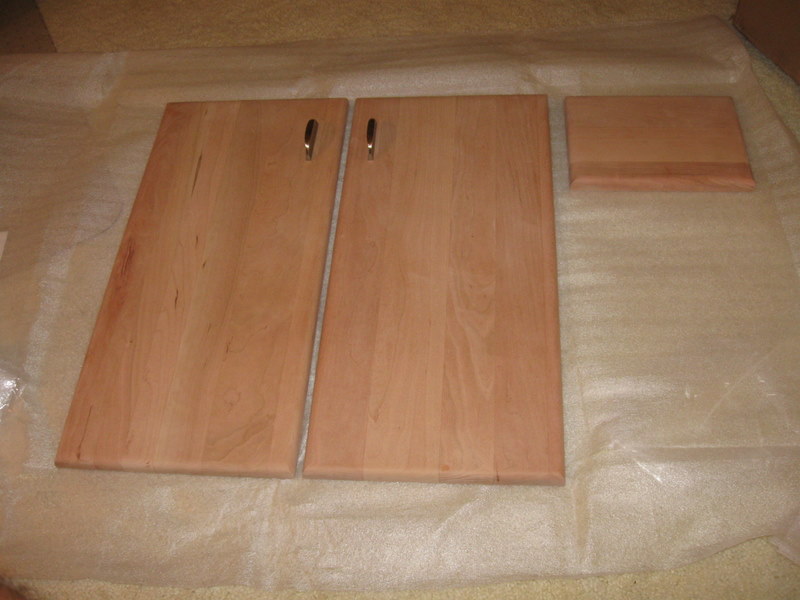
One question I have gotten about the cabinet job Paul and I are working on is what we are doing for the doors and drawer fronts. Something fancy with raised panels and beaded rails and stiles?  A wildly veneered flat panel door?

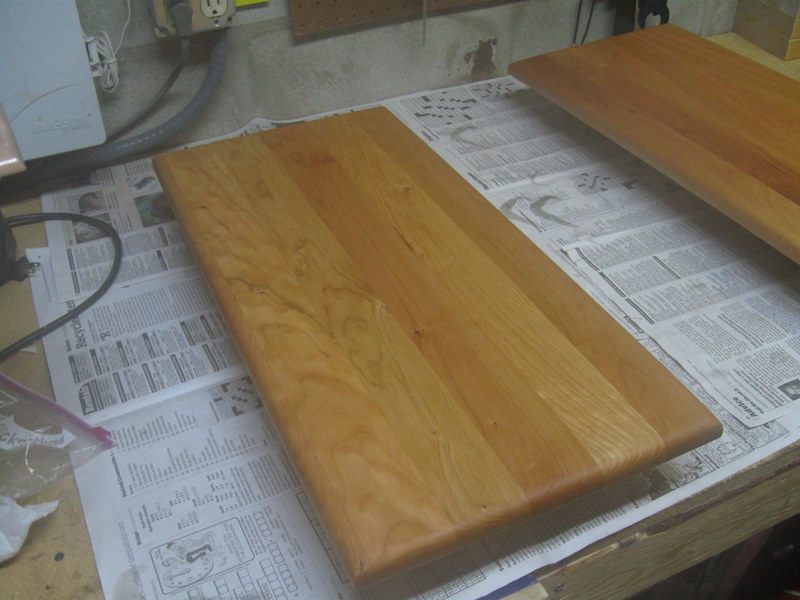
Actually, Paul wants to go simple.  Slab doors made of cherry. This way, the doors will match those in the tidy and well laid out kitchen.

And, no, we’re not building them.  He ordered them from Raw Doors online, an outfit that makes all kinds of doors including the basic solid wood slab doors.

Surprising, isn’t it?

Paul had his reasons, and when I left his house this past Saturday, he told them to me.

First, he said that he wanted to learn how to build cabinets.  That’s why he asked me to build them – this way, he could get the cabinets he needed and see how one woodworker does the task.  No truer statement could have been made – we have both learned a lot from this project. Did he need to learn how to edge glue boards together?  No.  That’s pretty much what we would have been doing to build the doors anyway.

Second, there is the time factor. Paul’s a busy guy. And, he also respects the fact that I’m eking out time after work and on weekends.  Building the doors and drawer fronts would have taken a considerable amount of time for all of the glue ups, but only a few weeks when ordered online.

Finally, we’re building this project in Florida. Solid cherry is available here – at a premium price. The cost between the complete set of doors built by Raw Doors and all of the stock wood wasn’t very large, so it made sense economically as well.

Paul and his wife Gail are finishing the doors in their garage, and they are looking very good. Visions of well-aligned drawer fronts and doors enclosing the insides of the project are dancing in my head…

Quick Poll

When it comes to woodworking, there’s more than one way to skin the proverbial cat.

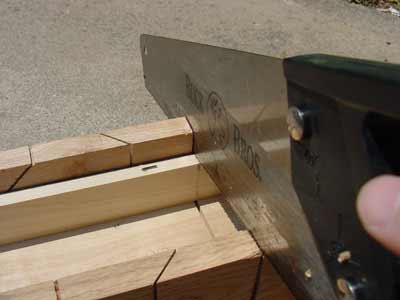
Imagine you have a piece of wood that’s 3/4 inches thick, 1 1/2 inches wide and 36 inches long.  You have to accurately cut a piece 24 inches long for your project.

What would be your preferred method to do the deed?

[poll id=”138″]