All posts by Tom

I'm the guy who writes the blog...

Putting the help to work…

Hello everyone.  It’s me, Iggy the Trained Shop Monkey again because – as is always the case – Tom is taking forever to build a project I could have whipped out faster than you can say Bananas Foster.

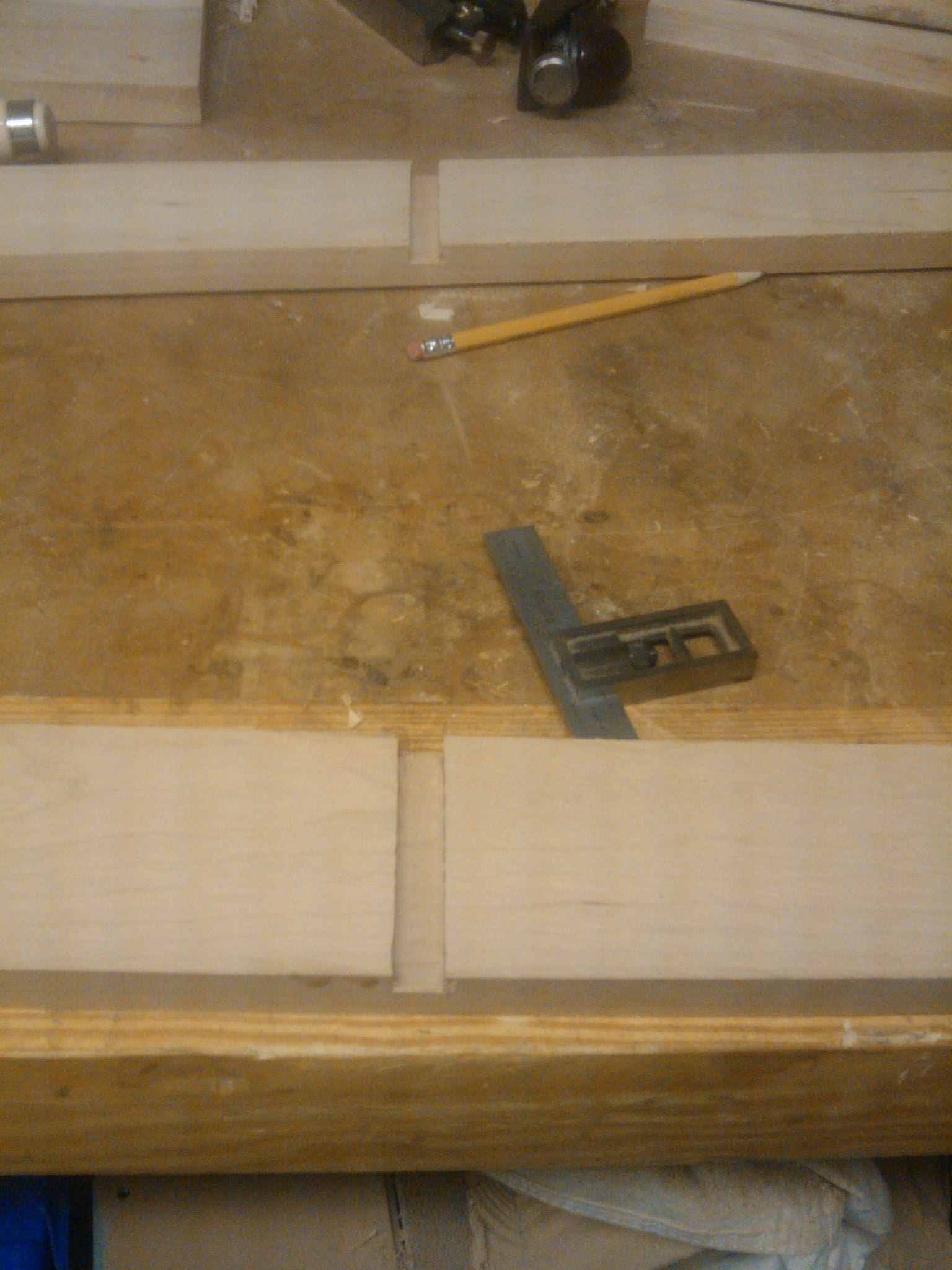
First, he’s out there doing his silly debate on what kind of joinery to use to make the sides.  Then, after all of that prep work, he manages to lose his square and mess the assembly up.  What a dufus.  I can’t believe I still hang out with the tailless wonder.

To help speed this project along, I have noticed that his oldest son Dominic has been sitting around the house all day in this – the last week before school starts for him. He’s looking both bored AND like he’s wanting to show his old man up. So, I solicited his help.  Actually, I was able to induce the young lad with the promise of a banana split if he did a good job.  Of course, I’m going to have Tom pay for it.

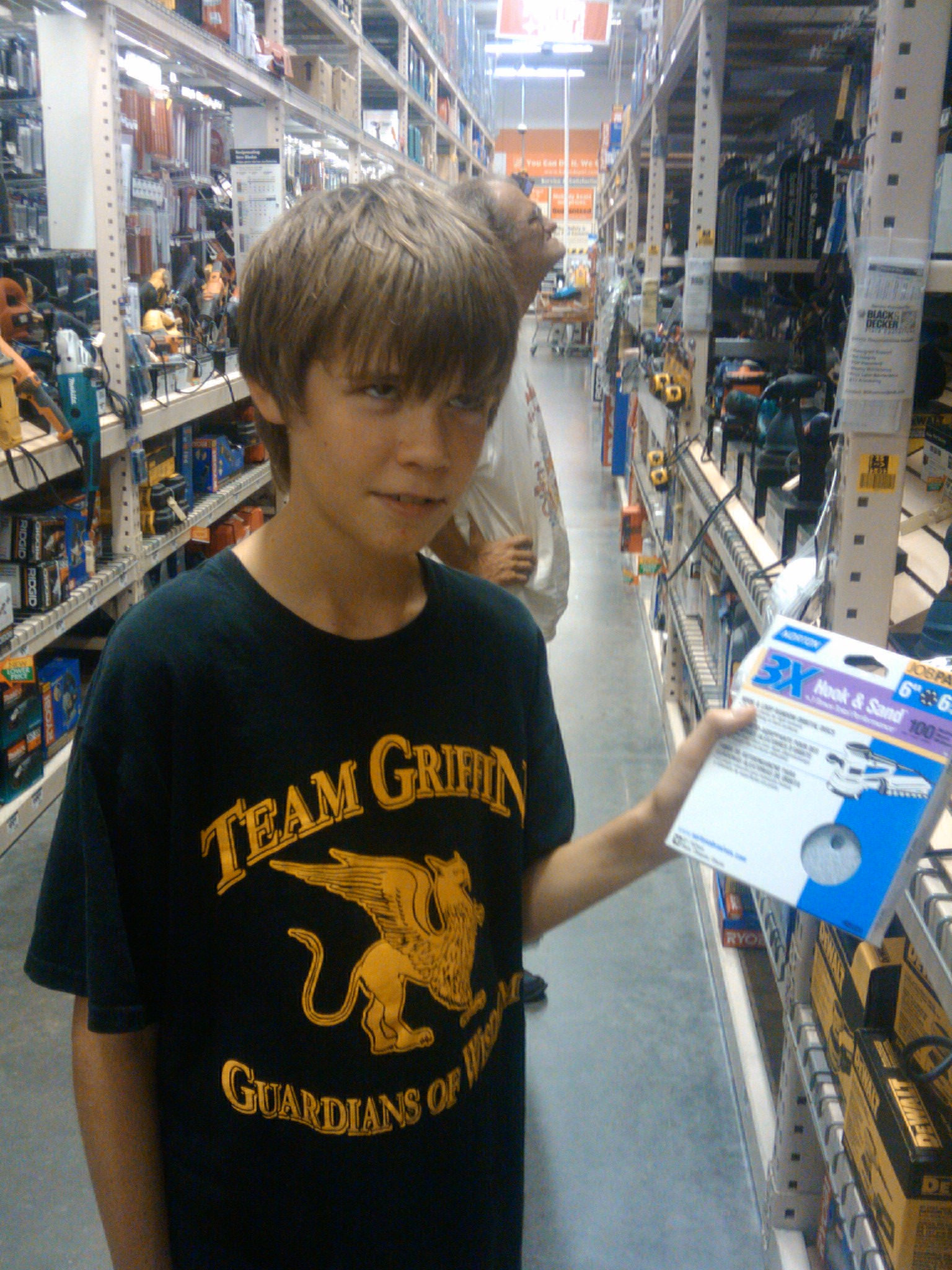
We went off to the big home improvement center to pick up some new circular sanding sheets for Tom’s random orbit sander. The young lad appears to be super-thrilled to be starting a loud and obnoxious sanding job in a very hot garage instead of doing something boring like playing his favorite video games or doing that crazy Facebook thing with his buddies.
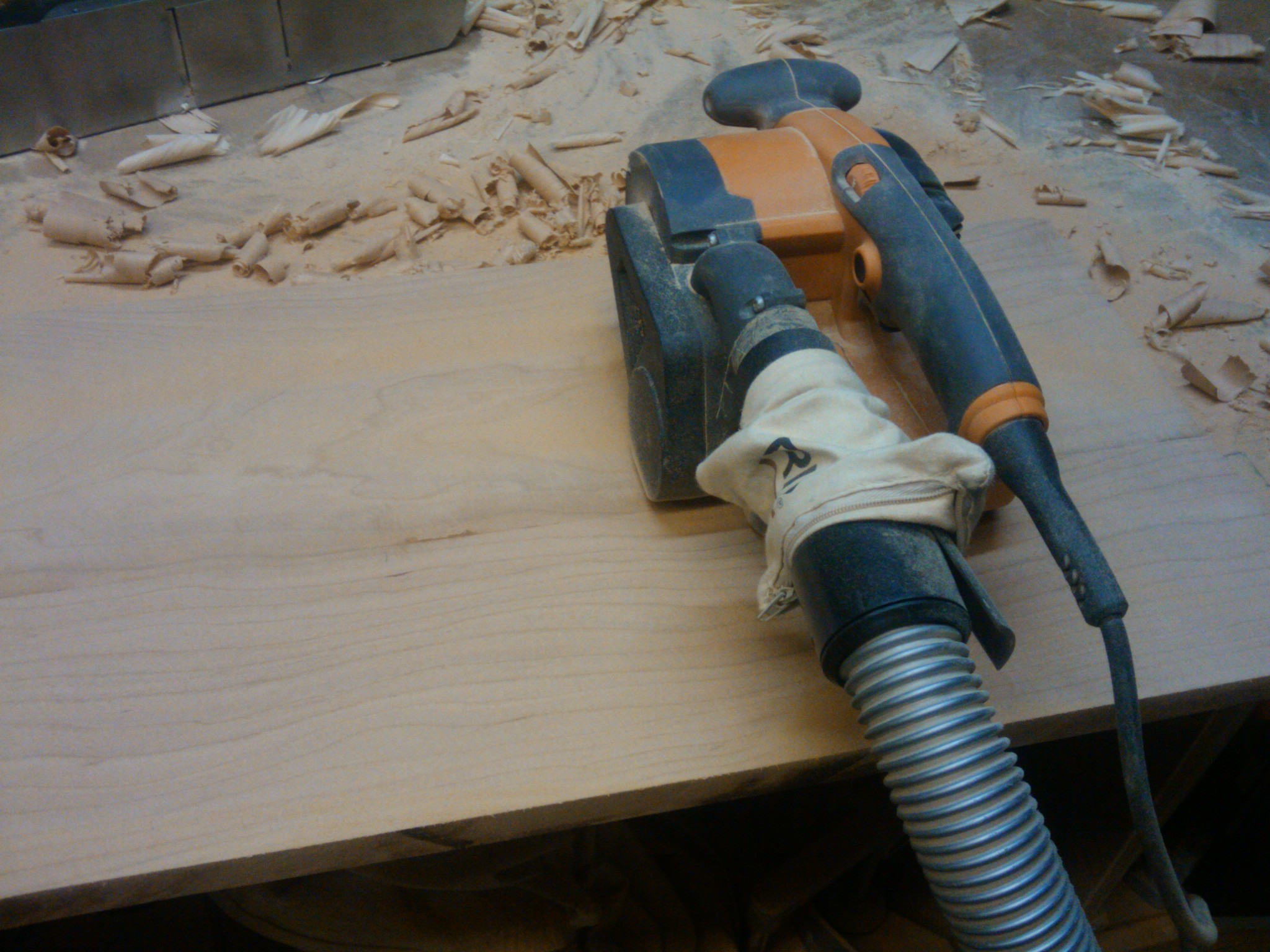
Since Tom had already flattened the boards with the belt sander, all I needed Dom to do was to start working with the coarser grit sanding pads on the random orbit sander.  I taught him a trick which – I am absolutely certain – Tom would have never thought to do. I drew a squiggly pencil line across the face of the board and instructed the strapping young lad to sand evenly until the pencil line was ‘erased’ by the sanding pad. By doing this (and, of course emphasizing the need to keep the sander’s pad flat on the board’s face), he will be able to more evenly sand the pieces, getting better results than Tom could ever hope to get on his own.

I also made sure that the boy is doing this safely.  I have the air conditioner turned on in the shop, we have the sander attached to the Fein dust collector and he’s wearing both eye and hearing protection. If I’m going to make him work in the shop, at least I have to be sure to consider his welfare.

Good boy.
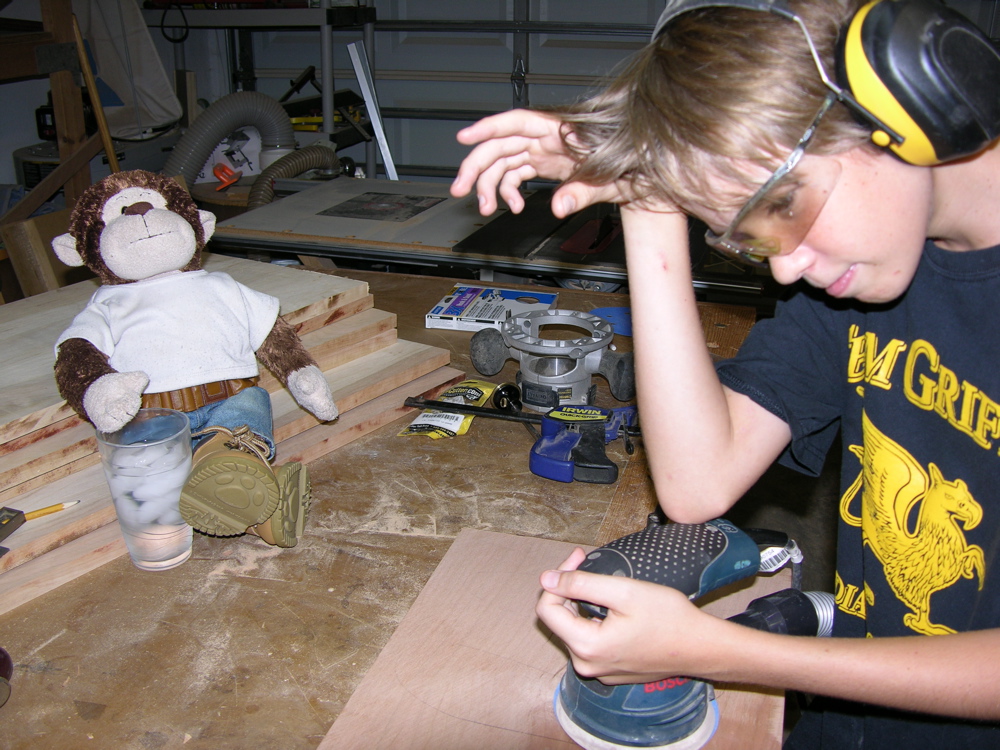
Now, all that’s left to do is to ‘motivate’ the boy to do the hard, dusty work smoothing the board with the random orbit sander while I kick back on the stack of unsanded shelves with an ice cold beverage.

Supervision is a very tough job, but I’m just the monkey to do it.
 

Silly rabbets…

OK, so now that I’m back on track with this bookshelf project (doesn’t it seem like this project is taking longer than it should?), I am moving on to the joinery.  When last I left the frames for this project, I had cut the dadoes and grooves in order to put the shelves into place.

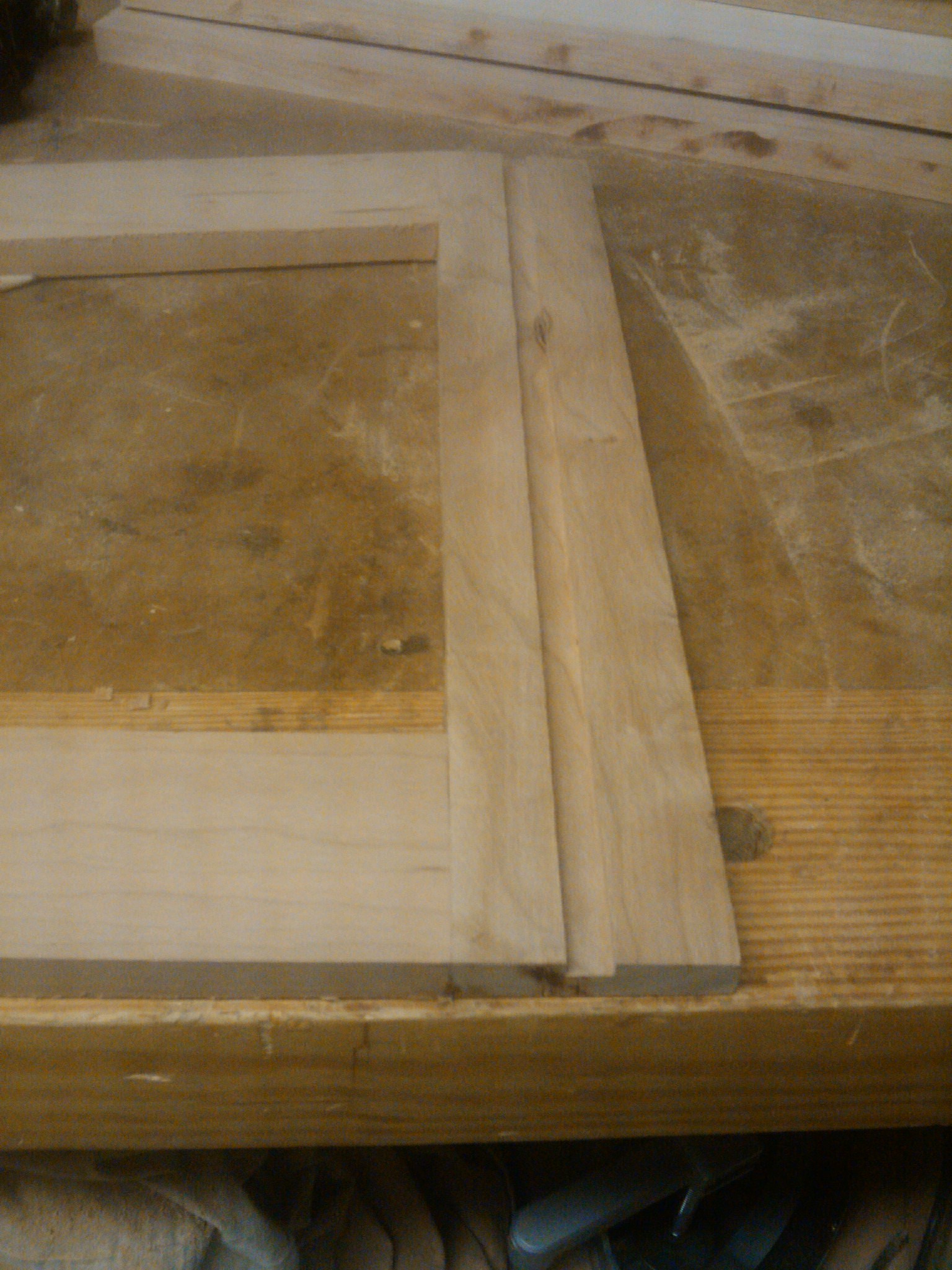
For the upper and lower shelves are a piece of cake – 1/2″ wide parallel grooves at 3/8″ deep along the length of the top and bottom boards to capture the shelves.  Since there is no problem with a cross grain situation, I will be gluing the shelves along their entire length to get the best contact possible.

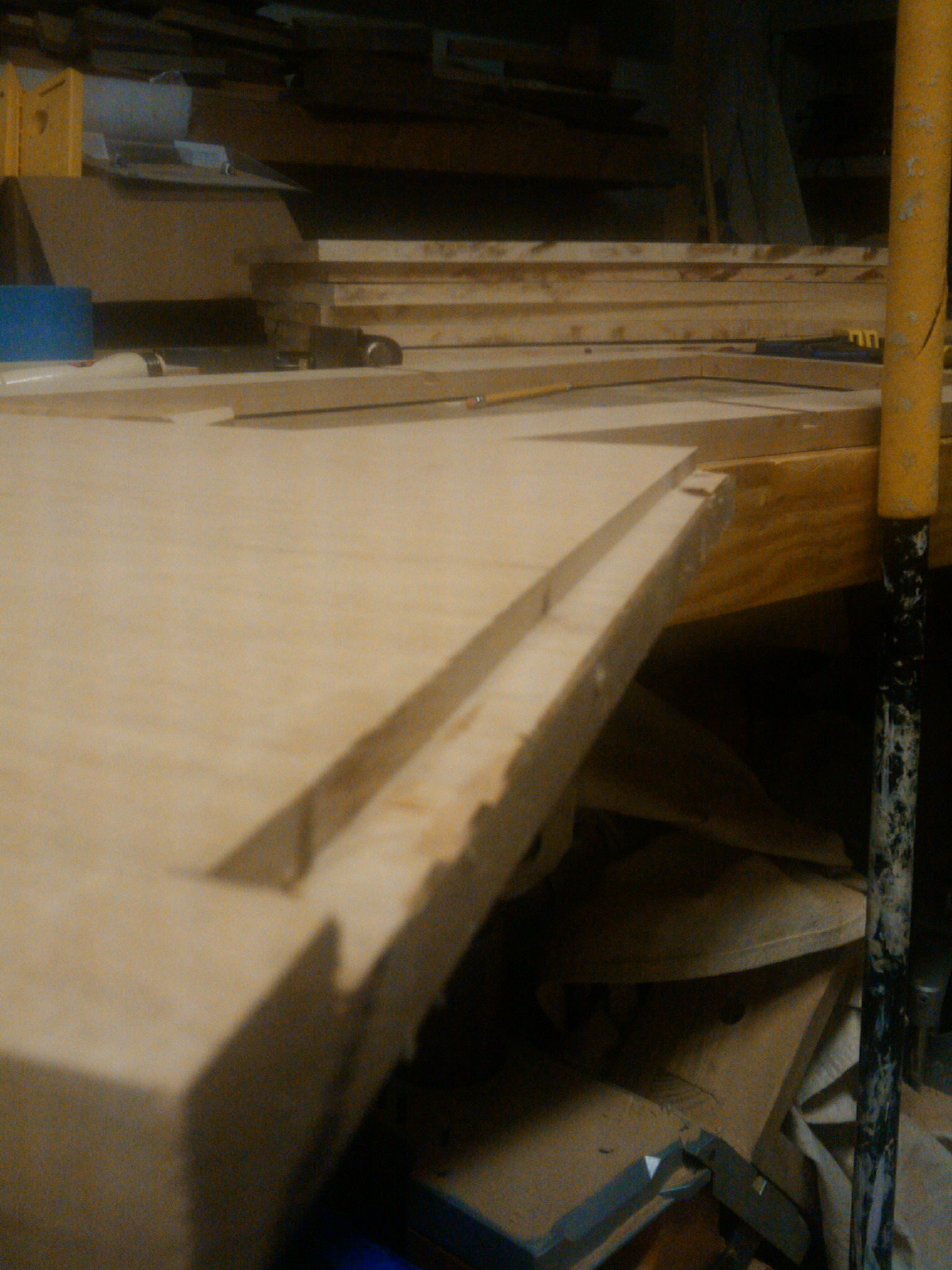
Cutting these rabbets was pretty straightforward, but it did require a bit of care. I am having each of the shelves extend past the front of the unit by one inch.  This means that I had to hold the rabbets back that one inch from the front in order to keep the that extra material there to work with.

I went with my hand-held router and a rabbeting bit to cut the joints, and they were plenty easy with my DeWalt router. I held back from my one-inch line from the front, and simply squared the rounded edge the router bit left with a sharp chisel.

These were the easy ones.  I’m now going to figure out how to rabbet out the two middle shelves for the unit.  They are attached to the bookshelf sides with a groove that spans both the front and back uprights, and the front upright is at a slant, meaning my rabbet will need to have angles cut into it to match up with the sides…

This should prove to be  pretty fun…


Link of the week

Visit Minnesota’s How to Make Snow Shoes page

Sure, we in the United States just suffered through one of the hottest months of July on record. Texas is enduring a record streak of 100+ degree days.  We’re still only in mid-August.

It’s the perfect time to start building snow shoes!

This site, run by Minnesota Visitor dot com, gives the basic instructions on how a pair of traditional snow shoes using willow saplings, branches and rawhide or string.  Sure, it’s a tedious process, but I can guarantee that you’ll want to have them ready to roll once the first flakes start to fly!


My abrasive personality

Being originally from New Jersey, I have many mannerisms that people here in Florida either love or hate. Sometimes, I have to speak a whole lot more slowly for folks to get me. Where I’m from, people talk fast because we have a lot to say.  Sometimes, people tell me I drive too fast. Well, I learned how to drive in a place where people drove with a purpose.

And, there’s something about my personality… I’m not sure what it is… but it makes some of the folks down here think I am obnoxious. Abrasive. Quick to judge.

No way… not me.  I’m as easy-going as the next guy.

But, there’s one thing that has me seeing red and using colorful language as of late… I’m still having issues with my panel glue ups. Even with very straight edges, biscuits and cauls, I still get the occasional slipped joint. Oh, my technique is so much better now, and the steps are no where near as bad as they used to be… but they are still there.

In the past, I have used my jointer plane to cross plane my boards to get them to size. But now I’m relying on an easier technique – for me at least.

Welcome to the world of abrasive planing.  That’s right, I’m using my belt sander to get my boards smooth and level when there are issues. Why the belt sander?  Well, I seem to have a whole lot less splintering or tear out to worry about when I use the sander.  And, with the right grit belt, the work seems to go faster.

I have been starting with a 50 grit belt.  “WOAH!” you may be thinking. Sure, that’s kind of a pebbly grit to be using on fine boards, but, believe me, sanding is all about starting with the right grit and working finer.  If I had started this with a 120 grit belt, I would be out in my shop forever trying to get even the smallest imperfections out of the glue ups. With that powerful grit, I can take the board down to smooth (well, level… smooth is next) in very short order.

My method starts by working across the grain…

“GAAAAAAK!”

Would you please chill out?  Shesh… By working across the grain, it’s sort of like planing across the grain… my goal is to get all of the boards in the glue up level to each other.  If I sand with the grain, I’m just going to get individual sanding rows nice and flat, but the board may still be out of flat across its width.  Sand back and forth across the entire width of the panel. Don’t leave anything out… you don’t want to wear channels out where the glue ups are.

Oh, and remember that the other nickname for this tool is the belt saw… so never leave it in one place or you will dig a hole clean through your board. And, those kinds of sanding divots don’t come out easy.

Once I get things flat across, just as you would use a jack plane, I have to then go across the board diagonally. This helps even out any spots that may be higher than the others on the flattening operation.

Finally, I make a few passes on the board from one end to the other parallel with the grain.  By this time, any irregularities in the board are gone and the panel is nice and flat.

From here, you could go and progress through the grits… 80 and 120 in the belts, followed by 120 and 180 with an orbital sander.  If that’s how you work, more power to you.  But, I’ve found that a hybrid approach works well for me. The first thing I do is brush any sanding grit off the boards. Then I take my Veritas Low Angle smoother, get it set for a fine cut, wax the sole and get at it.  Usually two passes on the board gives me nice smooth results, but the first pass is actually pretty darned good.

Is this the ideal situation?  No.  Gluing up by boards perfectly would probably be a much better solution.  However, if you do have some irregularities, this isn’t the worst way to work.

What? You got some kinda problem wit that?


Four More Years

It’s the interval of time between Olympic Games (well, between two summer or two winter Olympic games, to be accurate). Or the time it takes an average college student to get a Bachelor’s degree. Or the length of time you spend in high school… if you don’t get held back. Or the interval between World Cup soccer tournaments. Or one presidential term for the United States of America.

It’s four years. And, today, Tom’s Workbench has been up and running for four years.

Sure, we officially got off the ground in January, 2008. But, it was four years ago today that Marc Spagnuolo published the first article for his very old ‘Wood Talk Online’ website. It described the symptoms a Wood-A-Holic might experience. You know, to this day, I still experience those symptoms.

Through these four years, I hope that I have made you laugh, I may have made some of you cry and I certainly wanted to make you look beyond your mistakes and see the great project you are building.

Through these four years, I have made so many friends along the way. People like David Life who never let his disability stand in the way of doing awesome woodwork. People like David Wert who are serving our country thousands of miles away who miss their families, friends and shops. Woodworkers such as John Lucas and Niki Avrahami who left their knowledge for  us before they shuffled off their mortal coil.  My supporters Bell Forest Products and Eagle America tools.

And, then the friends… OH the friends! Marc Spagnuolo, Matt Vanderlist, Matt Gradwhol, Shannon Rogers, Ron Hock, Eric Poirier, Kari Hultman, Dyami Plotke (Yes, the article still needs to be written!), Dan Bean, Doug Stowe, Gail O’Rourke… Dude, I will NEVER name everyone I have to thank… Please, everyone,  accept those thanks!

My plans? Heck… I plan on coming back strong… for at least four more years.  Yes, you are stuck with me and you will have me to kick around!


Quick Poll

Money is always tight. You have to pay the mortgage or rent. You have to put food on the table. Gas in the tank. And, you occasionally like to go on a vacation, right?

That’s why when it’s time to plunk down your hard-earned money for a new tool, you want to made sure that you are getting your money’s worth at a minimum.  So, while you are evaluating your purchase, where do you get the best advice on what tools to purchase?