All posts by Tom

I'm the guy who writes the blog...

Link of the week

The Furniture Finishing and Restoration Wizard

For many woodworkers, finishing is not their favorite part of the craft. There’s the proper sanding. Then, do you stain, dye or glaze the piece? And, what kind of finish should you use if the project is an entertainment center? Should that be different if it’s a dining room table?

Wouldn’t it be great if you could wave a magic wand and the get answers?

Well, it’s not magic, but woodworker Paul Snyder has put together an interesting site that deals with preparation and finishing issues. The site covers such diverse topics as how to finish blotchy woods such as cherry, why a washcoat can help make your finish a winner and which finishes are good for different applications.

It looks as if it may have been a while since the site was updated, but the information here is still worth a read.

Slow and steady…

I’m a big fan of turtles. The mascot at my Alma Mater, the University of Maryland? The terrapin (no, it’s not scientifically a turtle, but dude, I wasn’t a biology major). My favorite cold war era nuclear attack preparation video?  Duck and Cover, featuring Bert the Turtle. And, in the fable of the tortoise and the hare, the turtle beat the rabbit (I told you I wasn’t a biology major!) by sticking to the game plan.

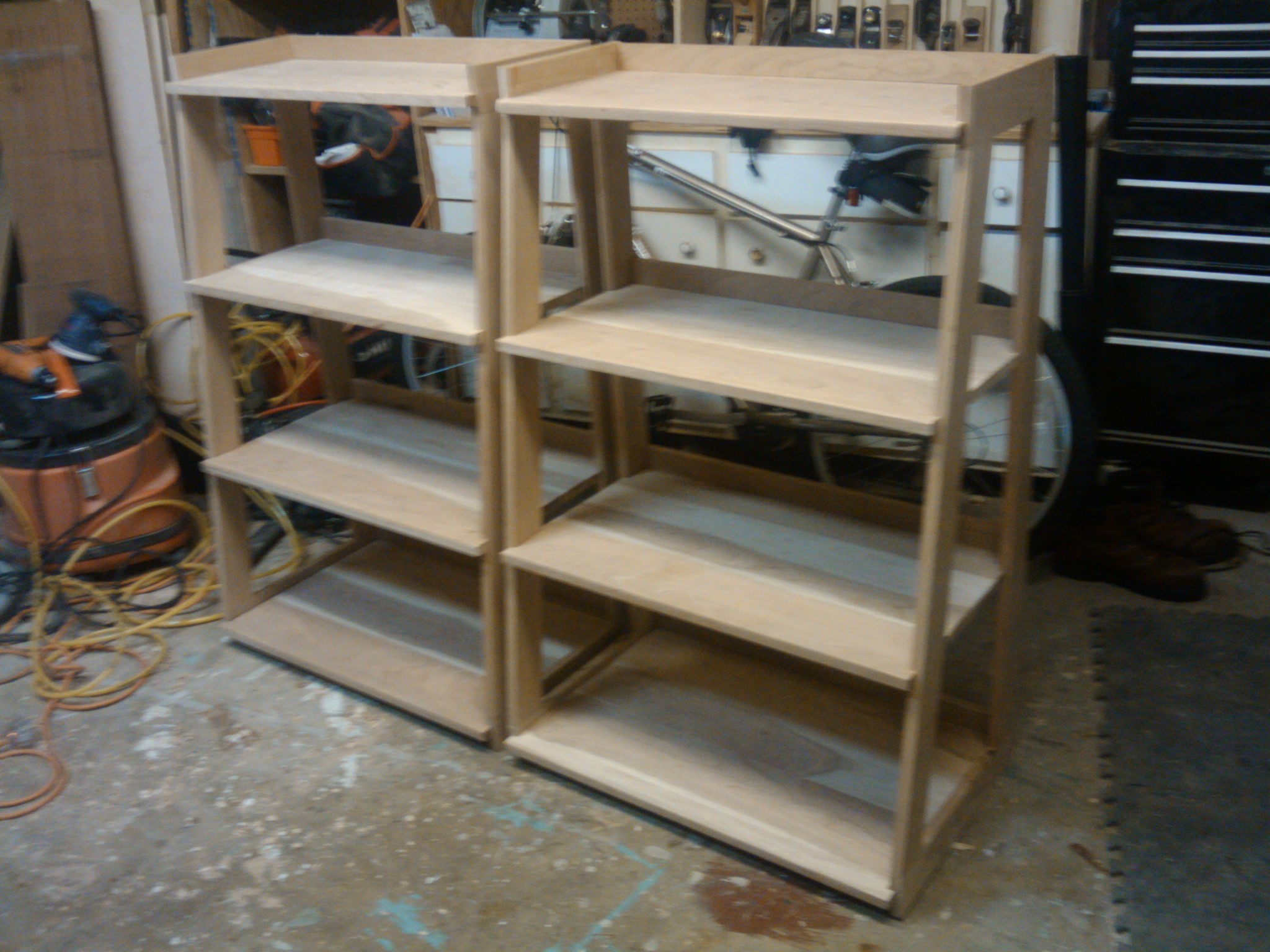
That’s why I’m so damned happy to be reporting that the construction of the ladder-step looking bookcase is complete.  Yes, this is the project that started going together in mid June. It’s the same project on which I discovered how important square assemblies are.What slowed me down? The summer heat. Hurricane season. Wild and crazy kids.  You get the picture, right?

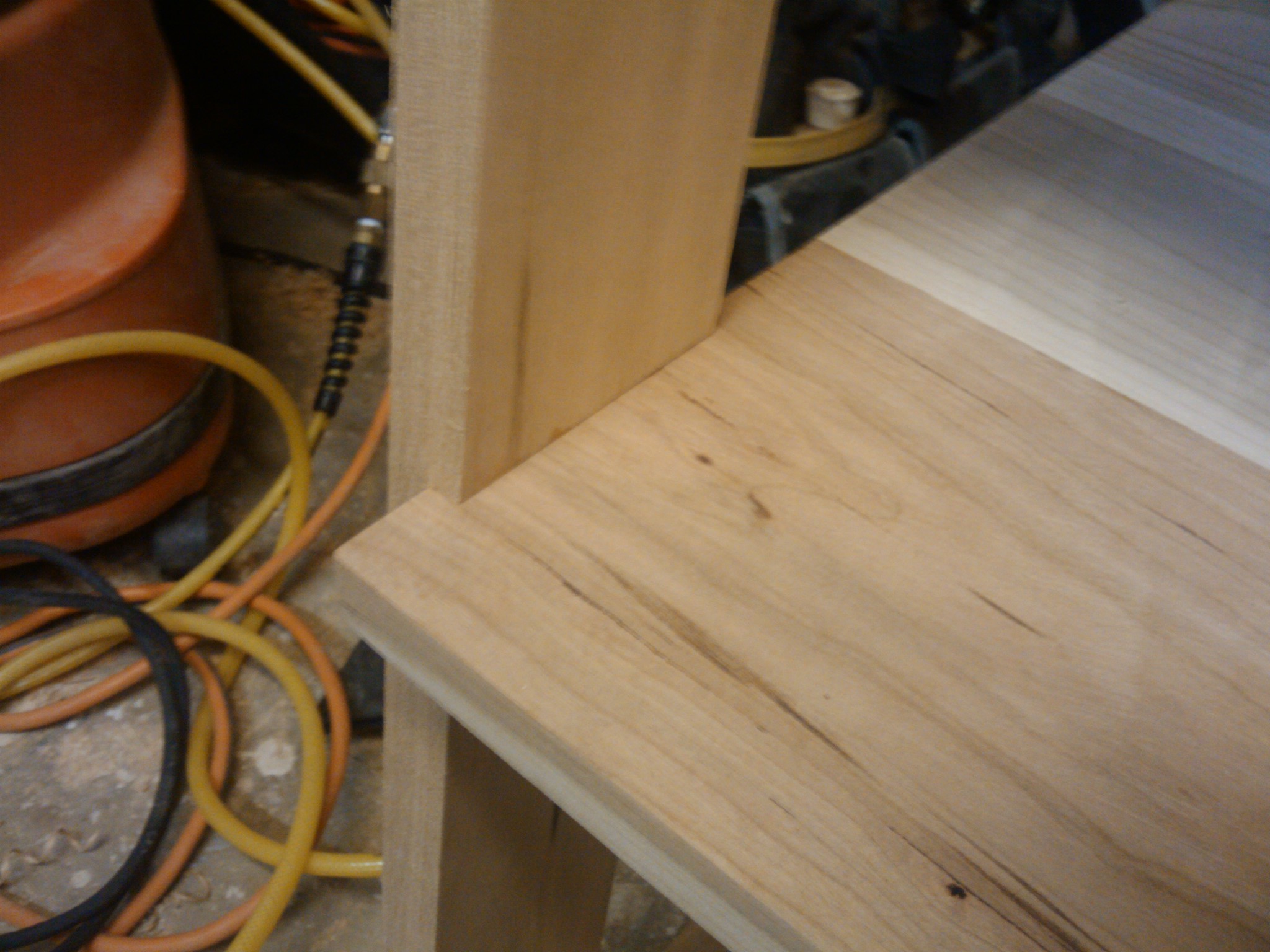
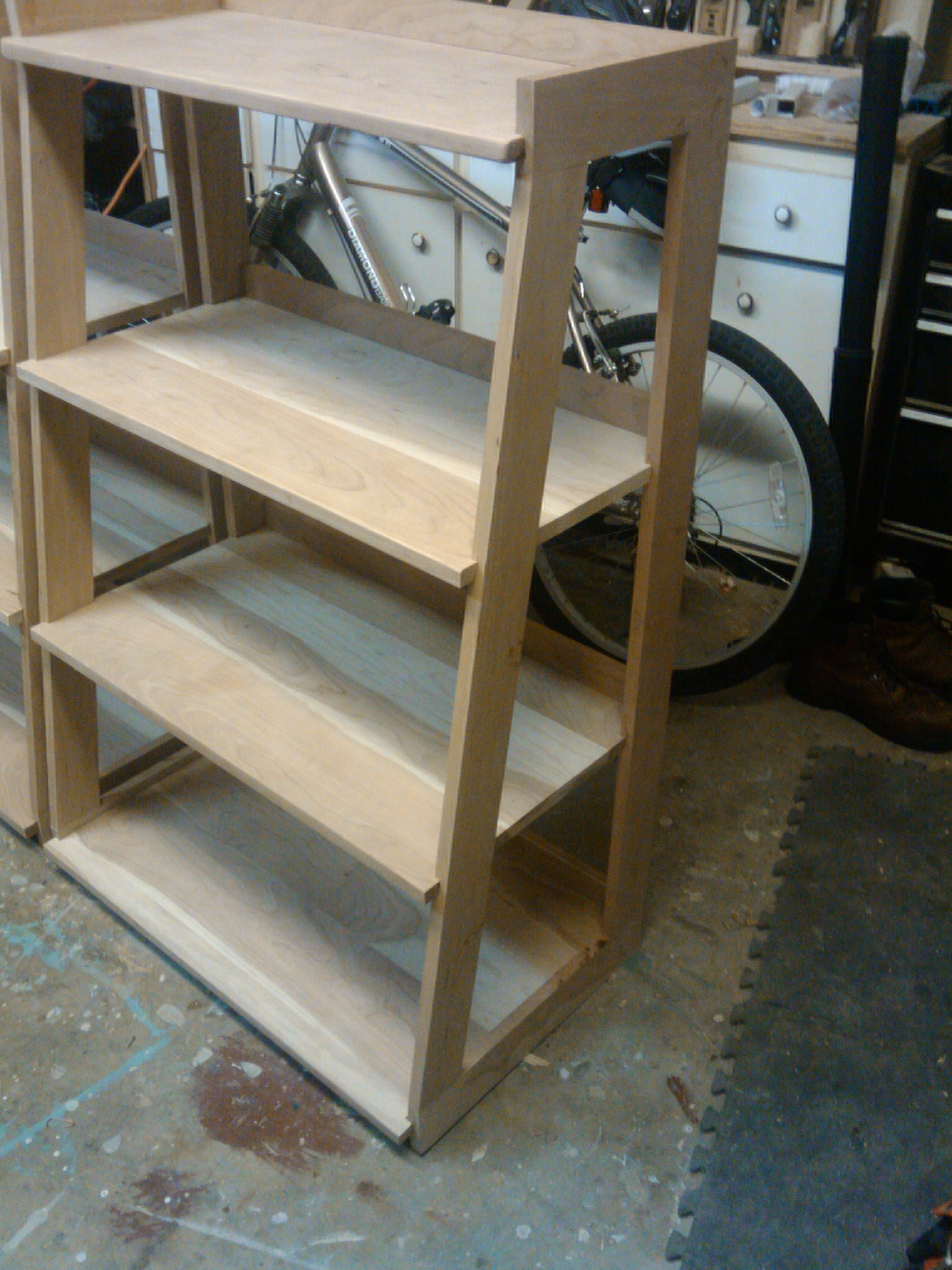
I think they came out looking pretty sweet. The top and bottom shelves fit into full length grooves in the upper and lower pieces. The middle shelves fit into custom cut notches.  Now, this is where things get exciting.  The notches in the back uprights is a nice and easy 90 degree cut. No sweat there.

The notches on the front legs are a tad more difficult. Those babies are slanted back, but the shelf sits parallel to the floor, meaning the notch on the shelf  has to be angled to accept the leg. This took a little bit of head scratching on my part, but I think the final product looks pretty darned sweet. For the assembly, I just glued the front notch, and let the back one float to avoid issues with wood movement distorting the frame.

I really dig the look at the side – the exposed shelves through the side frame really give the piece a lot of visual interest. It will be cool to look in there and see the stuff on the shelves.

Next step? Sand… sand… sand… sand… and sand some more. I have to ensure everything’s nice and smooth as well as breaking the corners on the pieces. Then, I’m gonna stain this one with some gel stain to unify the colors. Then, a bunch of coats of wipe-on varnish to ensure the piece is protected.

But, for now, I just wanna crash on the couch with a beer and sleep better, knowing that I have the tough stuff behind me on this big project.


My apprentice philosophy

There has been a move afoot recently in woodworking – a more back-to-basics approach as seen in the shops of the 18th century. In many cases, this leads  folks to eschew power tool woodworking completely and go entirely to hand tools. I have got to admit, watching someone build a project solely with hand tools is an impressive feat. Sort of hearkens back to the days of everyone’s favorite French woodworker André Jacob Roubo.

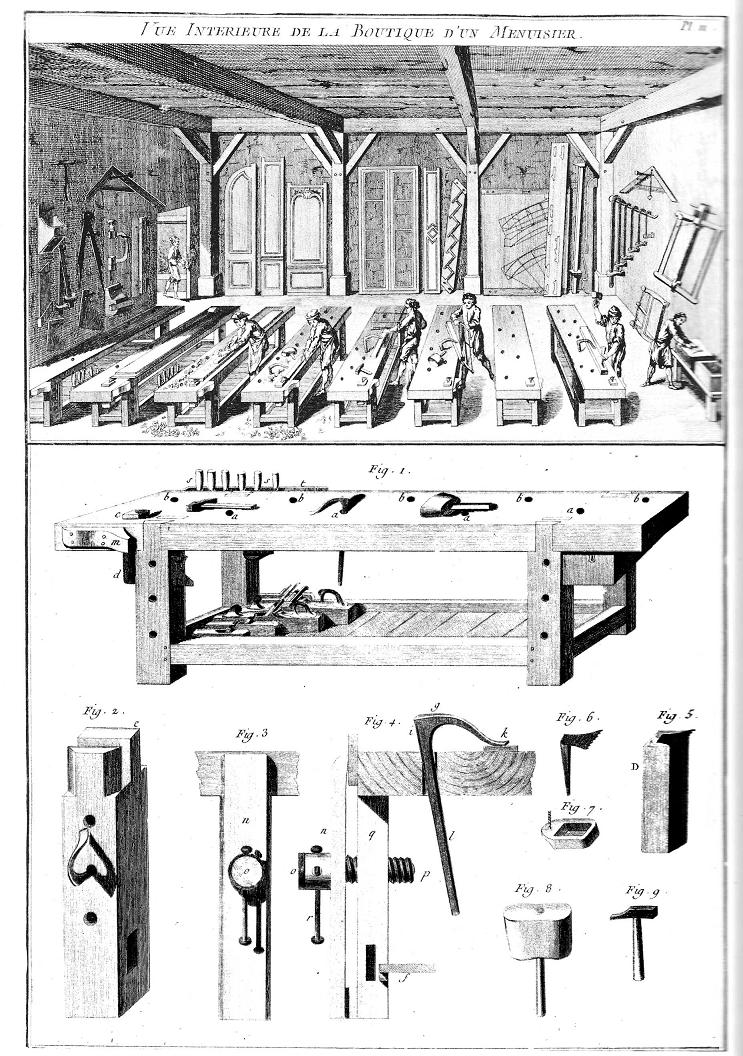
And, if you have been following the woodworking media for the past few years, no doubt you have seen the ultra-famous plate 11 from Roubo’s master work L’Art du Menuisier showing his shop in detail. There’s even a close up of the bench that he used as he worked wood in Paris before the French Revolution.

While many get fixated on the images at the bottom of the page showing the equipment furniture makers used in the day, I think the most telling part of the image is on top. There, you see nine rows of workbenches with different parts of projects spread out upon them, seven people people hard at work at those benches and one person walking into the room. Believe it or not, everything I have been doing to this point in my development as a woodworker has to do with the folks in that image.

Think about it. Say, on a typical Monday in Roubo’s shop, he would be working there as the big cheese… the head honcho. Roubo was a master carpenter and furniture maker, and his work was in demand. So, his job was to run the business as well as doing the highly-skilled woodworking. When it came to making a furniture piece work, he was the man. After all, his name was tied in with the operation – so his reputation was on the line.

But, who were these other folks? Didn’t Roubo do all the work himself?  Were there there to cheer him on and offer moral support?

Nope. If his shop was like any other shop, he had other folks who were working hard to make the shop hum. The guys doing the mundane work such as flattening and thicknessing boards were the apprentices. Starting at a young age, these up-and-coming furniture makers had to make their  bones for years learning the basics of how wood works, and how to prepare boards for those higher up the food chain. They would also be called upon to do much of the grunt work – such as pulling highly detailed profile planes with ropes while the more skilled carpenters in the shop guided them. Sure, it was a hard life, but if skills were going to be passed on, this full-immersion operation was critical.

Next up the ladder were the journeyman carpenters and furniture makers. Now, these folks had already done their apprenticeships, but had yet to be considered a master in the guild. As such, they could charge a daily rate for their work (the name journeyman comes from the French journee – the word for one day). Now, these journeymen were skilled and already possessed knowledge, but they were still working to learn more about the craft. As such, they could be counted on to do things like cutting joinery and even completely assembling less complicated pieces. Eventually, the journeyman would build a project which could be submitted to the guild for consideration to full membership. This project would be known as their masterpiece.

Now, what the heck does this have to do with my shop? Everything. Just as Roubo was busy doing several things, so am I . I have that old eight  to five gig – with additional nights and weekends for talks and events. There’s the laundry, lawn mowing, dish washing, home maintenance and other required chores. I have to ride herd on the boys with their homework. I’m coaching my sons in basketball this fall. My wife would like some time with me away from the chores. There’s this blog thing. And, yes, I also like to woodwork!

In my mind, I have come to appreciate the work that my apprentices can do for me.. by plugging in my power tools. Yup, I can tell my portable 12″ apprentice to plane project boards down to a certain thickness, and it gets done. I can also plug in my 1.5 hp apprentice and instruct it to clean up the dust and shavings, and that job gets done as well.

When it comes to the work that the journeymen would do in my shop, sometimes I like to do it. I’ll try hand cutting dovetails or hand planing edges of boards for glue ups. But, I have absolutely no problem giving these projects to the router or table saw to handle.

Of course, I keep the master work to myself. The design. The final fitting of joints. The careful surface preparation. That’s where I see the enjoyment of the craft in my shop.

Classifying the work I do in my shop into these three categories has helped me keep my sanity on many occasions. Rather than trying to achieve some mind-numbing hand tool technique, I will make an assessment on my own of where the job belongs and assign it to the proper folks in the shop, just as Roubo had to back in the day.

Keeping this in mind helps me work more efficiently in my limited shop time, and it also gives me a better appreciation for the folks who had to the do the job centuries ago – and the folks who invented the power tools to give me the option to handle them on my own.

 

Quick Poll

Simple woodworking projects are a lot of fun to build. They can be done quickly and build a lot of confidence. And, then there are more complicated projects. Ones that involve a lot of thinking, a lot of planning and a lot of tricky joinery.

For some woodworkers, this isn’t a big deal. For others, well, we need a little bit of help trying to sort out the building and assembly steps.  Will we need special clamps or a fancy jig to make things happen?

Fortunately, there’s an easy way to get to the bottom of these questions – build a prototype. Using inexpensive pine, plywood and even cardboard can help you get an idea of the building challenges and the overall size and proportions of the project.

Today’s question – which comes from our friend Allen Grayson – do you build prototypes of your projects?


Link of the week

The de Havilland Aircraft Heritage Center

Yesterday, the United Kingdom commemorated Battle of Britain day – the anniversary of the day of heaviest fighting between the Royal Air Force and the Luftwaffe during the crucial Battle of Britain. Had the RAF faltered and not held its ground against the Nazi air force, the history of the world would have been very different.

After the battle, the RAF realized they need a way to get more high-performing aircraft into the air as cheaply and efficiently as possible. While the Hawker Hurricane and the Supermarine Spitfire were modern, capable aircraft, they were made out of precious aluminum and had to be assembled in specialized factories.

That’s when the de Havilland aircraft company came up with the idea of the Mosquito. This multi-role aircraft handled a great deal of assignments – fast bomber, fighter-bomber, night fighter, torpedo bomber, maritime patrol, transport and reconnaissance. What also makes this plane unique is that its fuselage was made out of wood.

That’s right. The plane’s body and wings were made from plywood and wooden laminations, giving the plane some impressive strength.  The plane held its own against more advanced all-metal planes operated by both the Germans and the Japanese.  Herman Goering, the commander of the vaunted Luftwaffe, even remarked:

It makes me furious when I see the Mosquito. I turn green and yellow with envy. The British, who can afford aluminium better than we can, knock together a beautiful wooden aircraft that every piano factory over there is building, and they give it a speed which they have now increased yet again. What do you make of that? There is nothing the British do not have. They have the geniuses and we have the nincompoops.

The museum offers visitors a chance to see this game-changing plane up close to appreciate the craftsmanship of these craft and tells the story of how the Mosquito helped turn the tide of World War II.

A boring conversation

My cable service offers more than one thousand channels. I have four movie megaplexes in a 20 minute drive from my house. The Internet can bring me thousands of movies on demand.

So, you can understand why I don’t like to be bored. I have plenty of opportunity to make sure that I never get that way.  Woodworking also helps me stay out of that dreaded state or boredom.

That’s why I can’t understand why talking about drills and what they do is called boring. It’s anything but. Whether in a drill press or a hand-held unit, there are dozens of things you can do with the right selection of bits.

Just as with the router, drilling tools are nothing but fancy paperweights without bits. The bits come in a bewildering array of sizes and shapes to do a great number of tasks. Don’t be misled by looking at the selections in the local home improvement center.  There, you will typically see your basic twist drill bits which do an OK job on wood and metal. But, if you haven’t tried bits specifically for fine woodworking, well, let me be the first to welcome to you a brave new world!

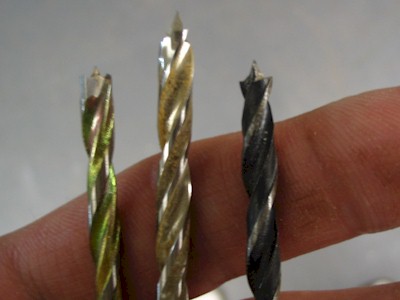
When it comes to drilling smaller diameter holes in wood, it’s hard to beat the brad point. They look very similar to the regular twist bits, but have a sharp brad point at the business end with two cutting spurs at the outside diameter. These two features allow you to start your drilling without the fear of the bit wandering. And, with the cutting spurs, the hole is very clean. If  you are the kind of woodworker who likes to drill your mortises, these are two very important traits you want in your drill bits.

For larger holes, there’s another specialty bit that you should consider – the Forstner bit. These bits feature straight shanks with a larger sized cutting head at the bottom. Forstners excel at cutting smooth, straight holes with flat bottoms.  But, not the only thing you get with them. Since the bit is large and the rim of the bit does the cutting, you can bore on an angle, or just use part of the bit to drill an arc. And, if you are looking to mount something like a clock insert, it’s as simple as chucking the right sized bit and drilling until you get the proper depth. Since the cuts are so clean, there’s little – if any – clean up required.

You can also pick up a forstner bit extender, which allows the user to drill deeper into the work. You may not use it every day, but when you need that extra little bit of reach, well, it’s a very handy attachment.

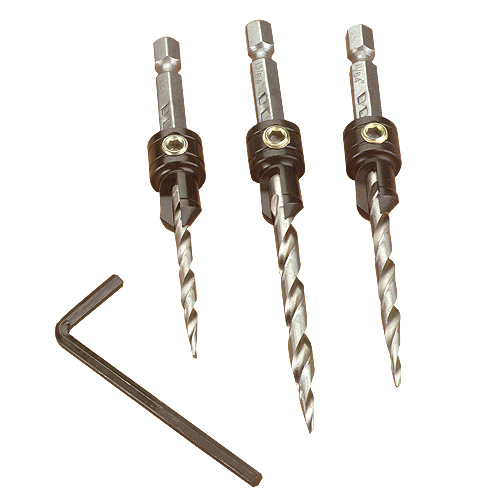
There are also  a number of other specialty bits available. For instance, for most countersinks, the drill bits are tapered.  It seems like a small thing, but if you are using traditional tapered wood screws, a tapered bit is going to give you excellent thread contact for the entire length of the screw.  More thread contact means better holding power.

From there, well, where can you go?  Plug cutters? Tenon cutters? Hole saws? Spade bits?  Hey, let’s talk about them later.  I’ll need something to do the next time I get bored!


The doweling mysteries

One of the first real woodworking ‘tricks’ I learned was how to join two boards together without using metal fasteners. I had gone to a building supply store that was going out of business to buy wood, hinges and a special tool I had heard a lot about – a doweling jig.

While my first woodworking project wasn’t anything to look at, it marked a real monkey-and-the-monolith moment in my woodworking avocation – using wooden dowels to join project parts together.

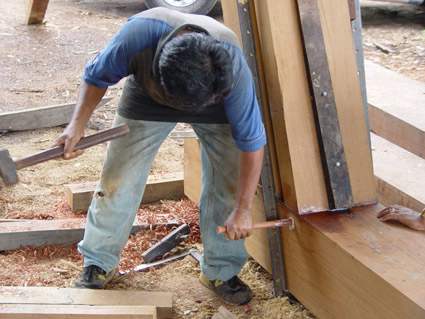
Using dowels is a tried and true woodworking technique that stretches back thousands of years ago.  The massive joints in timber-framed buildings are set in place with treenails – wooden dowels across mortise and tenon joints. Craftsmen have similarly pegged smaller mortise and tenon joints in their furniture projects for just as long. Masters such as Krenov and Maloof used dowels in their projects as well.

If we’re going to get to the bottom of dowels, we need to break them into two groups…

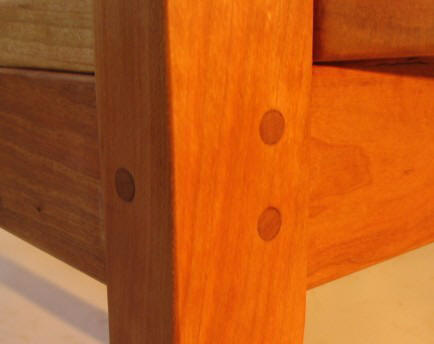
The first group involves visible dowels. These joints are created by drilling through a project and driving a dowel in.  How versatile is this joint?  I dunno – how creative can you be? I’ve seen through dowels being used to affix breadboard edges on tables, to join sides to fronts on drawers – even just for decoration.

Do you need glue for the joint?  It depends – is the joint permanent (locking together a mortise and tenon joint) or is it part of a project that can be disassembled (like locking a stretcher on a trestle table base in place)?

The dowel material can be a simple ambiguous ‘hardwood’ dowel picked up in a home center, a dowel of a specific species ordered from a supplier or even one you custom turn from a treasured blank on your lathe.

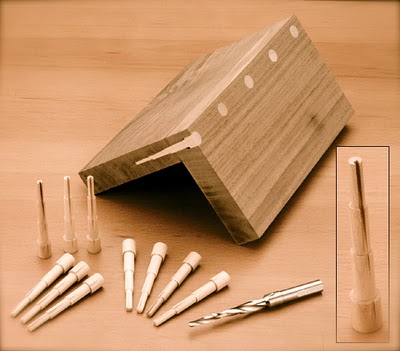
While these joints can be made with a drill and the right sized bit, there is a product that allows for through dowel joints that get extra bite. The Miller Dowel system relies on a tapered drill bit and specially formed dowels that step down in diameter. These steps on the dowel allow it to be driven into the tapered hole and get a solid grip. They come in an assortment of commonly-available species.

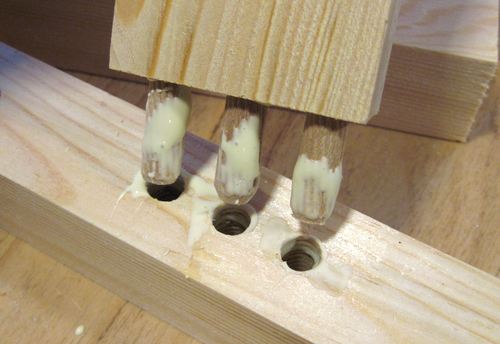
The other type of dowel joints involves hidden dowels. This is when you drill mating holes into two parts of a joint and insert a length of dowel that’s hidden from view. These dowels work like a small floating mortise and tenon joint.

Needless to say, the two holes had better be drilled accurately into both pieces, or they won’t mate properly. You can lay out these holes with a ruler and pencil… and, if you take your time and work carefully, yes, you can do a fair job.

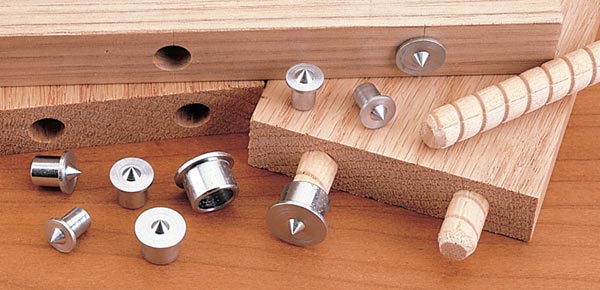
One tool you can use to help ensure better accuracy is called a dowel center.  After you drill the first hole, you insert one of these centers in it. The part that sticks out from the hole has a sharp point that – when pressed against the mating board – accurately marks the center of the hole you will need to drill.

The next step up is the basic dowel jigs you can find on the market. The most popular of these models are self centering, with adjustable jaws that grip the work and hardened steel bushings in the guide itself. Simply line up your center marks, clamp the guide in place and drill with the properly sized bit. These jigs no only help ensure the dowel hole is centered on the edge of the board, but also perpendicular to the face you are drilling.

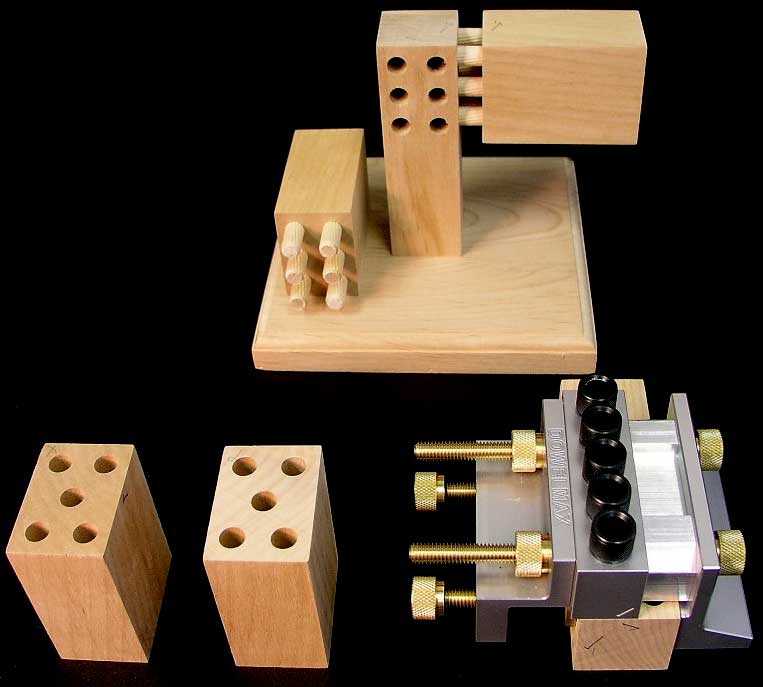
If you are looking for more flexibility, there are some high-end doweling jigs that offer even more usefulness. The DowelMax and Joint Genie are two models that allow you to drill just about anywhere and get accurate holes.

When it comes to the hidden dowels themselves, you can certainly use lengths of store-bought dowel cut to size, but there are also dowels designed specifically for the task. These dowels have flutes or spirals carved down their sides to allow room for excess glue to move to, preventing hydraulic pressures from letting the joint come together.

Dowel joints are fairly strong joints, especially when larger dowels are used.  Also, when drilling the holes for the dowels, you want them clean and as straight as possible. To get the best holes, opt for brad point drill bits.