All posts by Tom

I'm the guy who writes the blog...

Quick poll

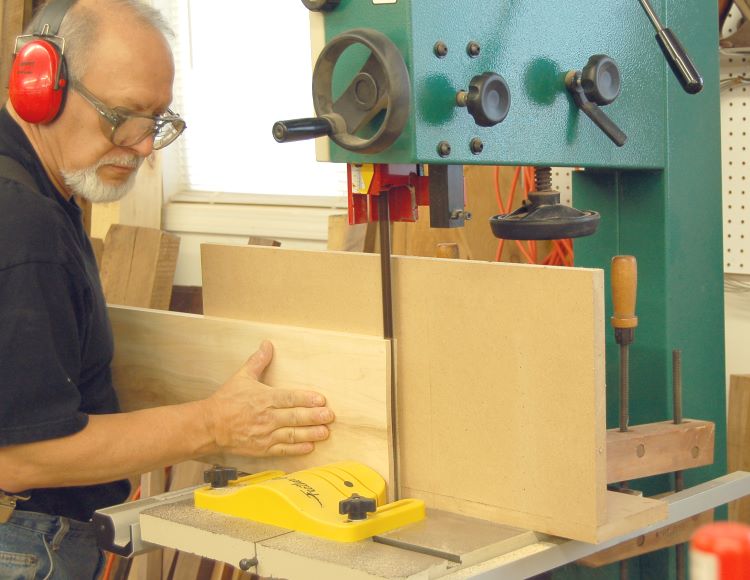
In most woodworking shops, things kinda happen around the table saw or, in the case of hand-tool shops, the workbench. Those are some critical components you can find in most shops, but there is another tool a lot of woodworkers rely on – the band saw.

That leads to this week’s question. Not every shop has a band saw. So, how does the band saw rank in your shop? Is it a critical piece of shop equipment, a nice to have or a waste of space?


Link of the week

Woodshopdemos.com

In February of 2010, the online woodworking community lost one of its pioneers. John Lucas, who had run Woodshopdemos.com since 1999 passed away, leaving us – fortunately – with an impressive eleven years worth of online woodworking knowledge. The question many of us had, though, was what was going to happen to that treasure trove of information?

Enter Craig Bentzley.  He has worked with the Lucas family and has taken over the Woodshopdemos.com site. While no one can fill John’s shoes, Craig promises that he will work to keep John’s spirit alive through his posts. Check out Craig’s new posts, and be sure to visit John’s old site, which has been restored to the way it looked when John wrote his last post.

Big honkin’ rabbet bits

My family loves to watch movies. We subscribe to Netflix and get the movies sent to us, or we’ll watch them on the kids’ Play Station. Man, that’s a convenient way to watch movies!

And, while we love to watch movies, getting out to them can be a real trick. I think most of our local theaters now offer easy financing at the snack counter. When they don’t post the price of the popcorn-and-soda snack deals, well – as they say – if you have to ask the price, you probably can’t afford it anyway.

So, when we go out to see a movie, we have to choose our selections carefully. And, there was a stretch back in 2005 when the only good movies out were animated. Hoodwinked was a great one. So was one of the Shrek franchise films. But, the one that we liked the most was Wallace and Gromit and the curse of the Ware-Rabbit. Now, it sounds kinda hokey, but if you haven’t seen it, it’s definitely worth a watch.

I don’t want to give away the entire plot, but it does involve a giant veggie-stealing rabbit and the hijinks that go along with putting an end to the terror plaguing the contestants in the annual Giant Vegetable competition.

Sometimes in woodworking, we need to look to rabbits as well. Or, is that rabbets? A quality rabbeting bit can be a big time player in your arsenal.

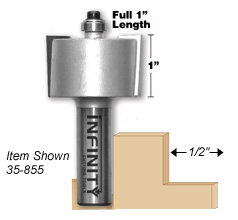
Me, I’m happy to have a big rabbeting bit I picked up from Infinity tools. This baby is a real brute. It has a half-inch shank and a two-inch diameter slug of metal with a full one-inch depth of cut.

Why such a massive bit? Options, my friend. With the rabbeting bearing kit, you can take this massive bit from an 11/16” cut all the way down to a flush trim. Of course, for a very deep rabbet, you’d want to do that in steps as to not get all kinds of tear out. For that, you may want to lower the bit to the proper depth over a few passes, as opposed to changing the size of the bearings.

The one-inch cutting surface is pretty cool as well, making flush cutting easier. And, if you want identical parts for a project, template routing makes it easier to get the accuracy you want.

The thick carbide tips lean forward (positive shear angle) so you get fine wood shavings. Yes, you get shavings, not dust or chips with this bit.

I have found mine to be useful for rabbeting the backs of cabinets to allow for a back to be mounted. And, when paired with a router based tenon cutting jig, you can make mortise and tenon projects easily.

Those are just a few uses for a quality rabbeting bit, and I’m sure once you get some experience using one, you’ll be able to pull a few woodworking rabbits out of your own hat.


Stuff I’ve built: The hanging wall cabinet

Can it be that time of the year again? The National Art Program show is back at the Pinellas County courthouse, and I had to get back into the competition. Sure, there were other project ideas I was going to build. A chair with bent laminated legs and a carved seat. Didn’t have the time to get that one built. Dominic wanted to enter a bench. Nope. Too many things going on with him.

Ahh, but I did have one trick up my sleeve. I wanted to build a hanging wall cabinet, and I had a really good model to work from over at the Wood Whisperer’s Guild. Gauging my design off of that, I built one of these…

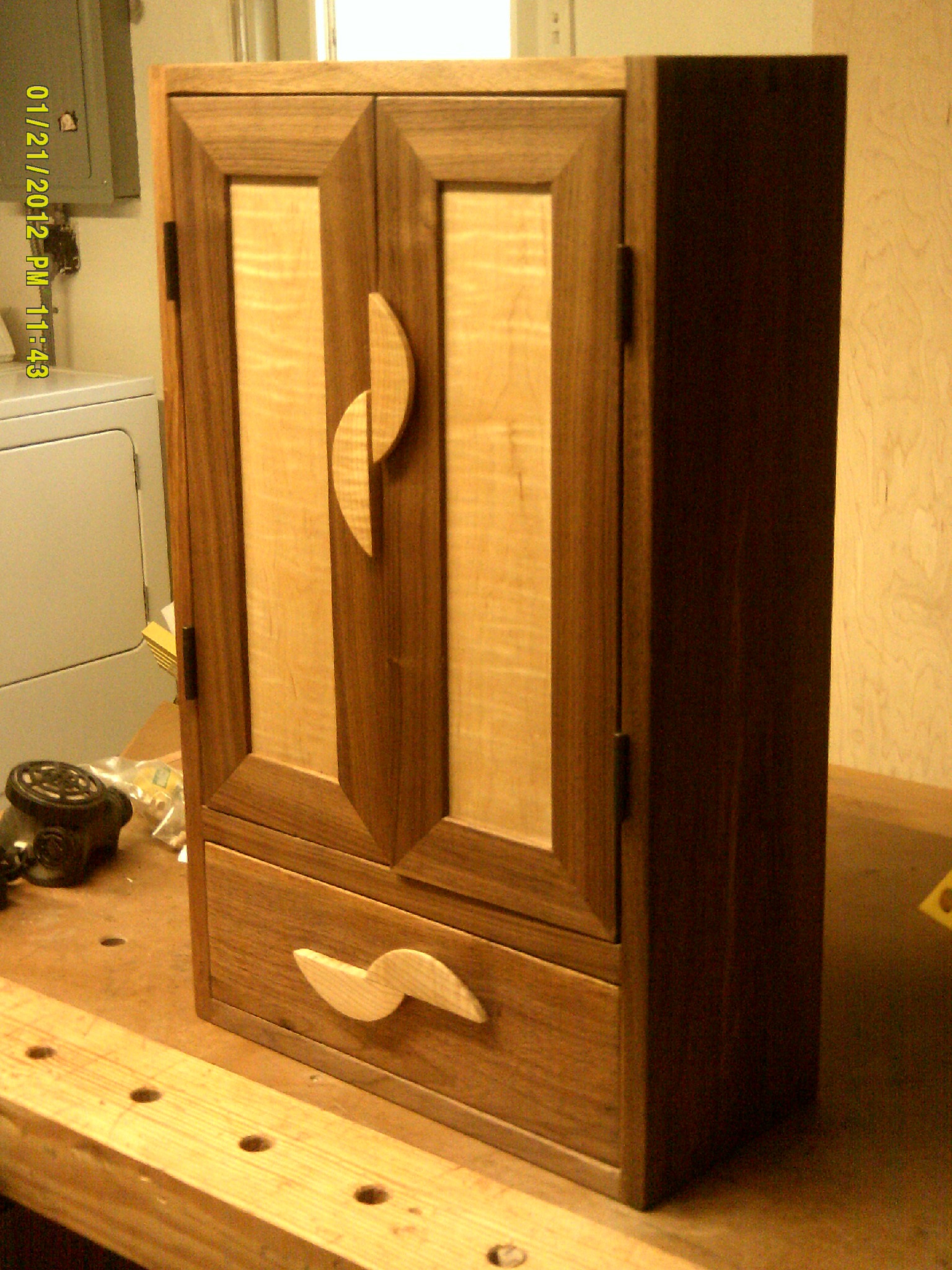
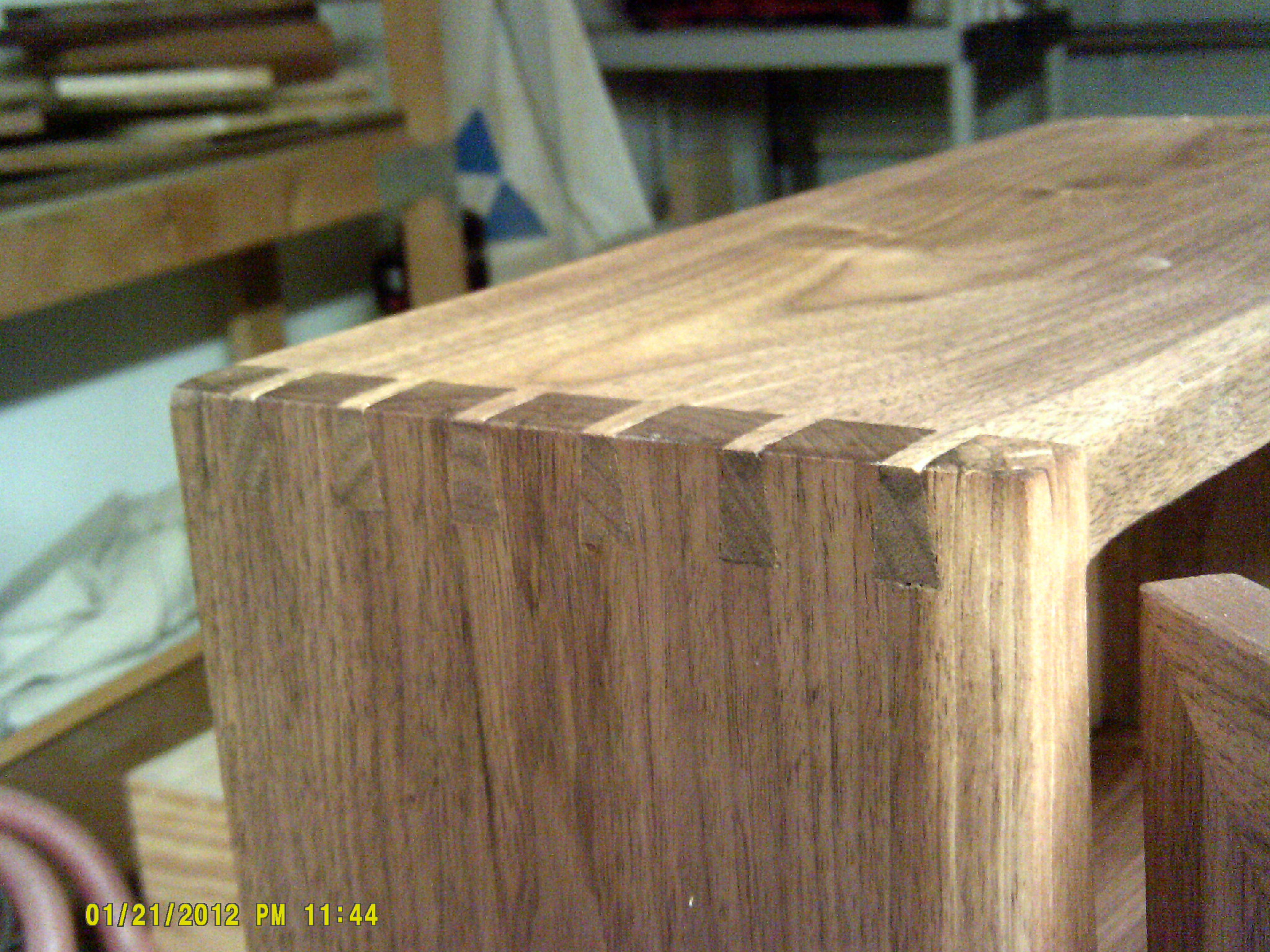
This is my version of the case made of walnut and tiger maple. The case stands about 26 inches tall by 16 inches wide by 7 inches deep. It’s a very straightforward design, with a drawer and a taller part of the case covered by a pair of doors.

The corners were joined by a through dovetails. And, no, I did not hand cut them. They are WAAAAAYYYY too tight for that.

The doors are the ones I wrote about last week – mitered.  The drawer is box-jointed walnut and maple.

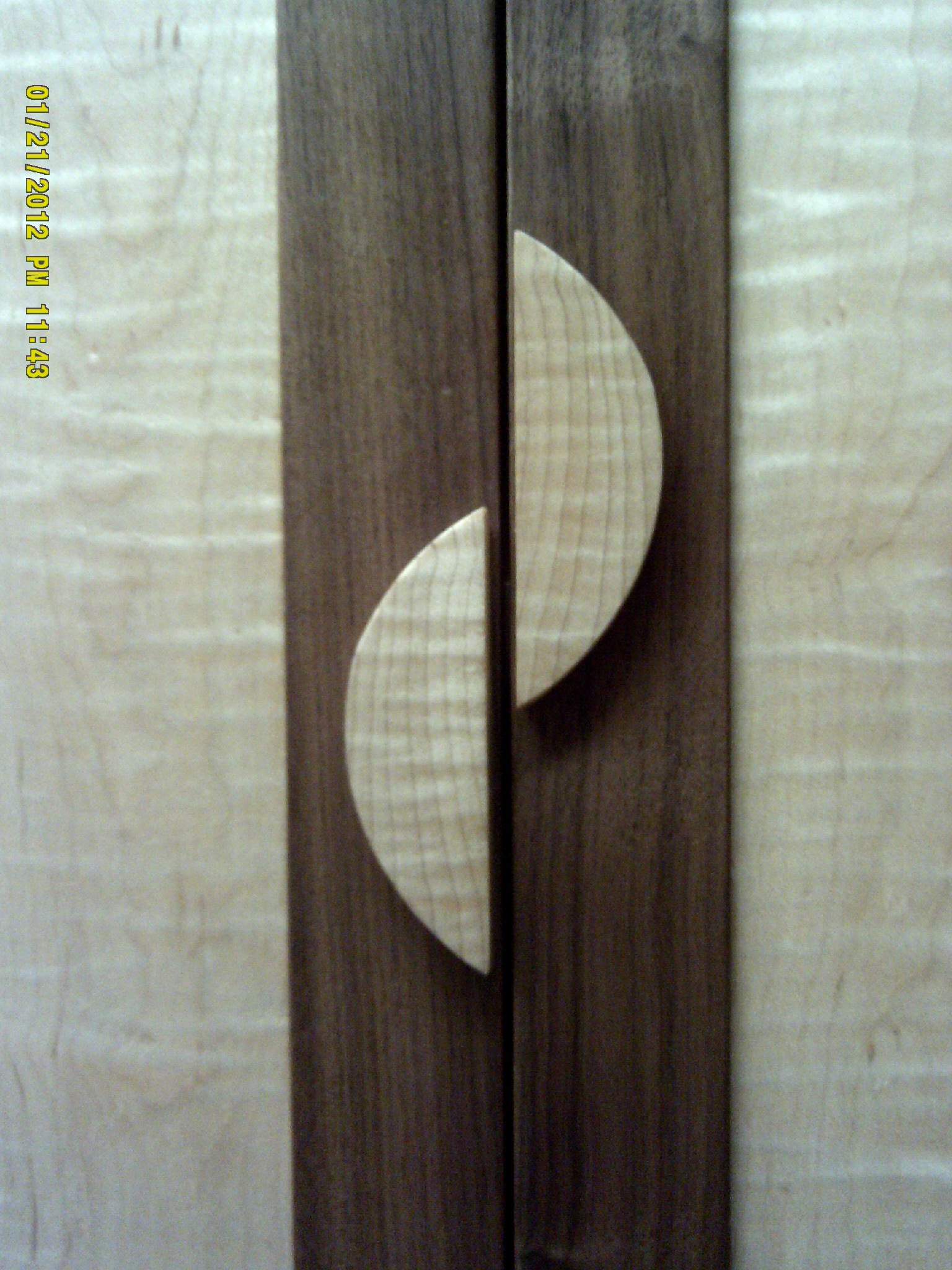
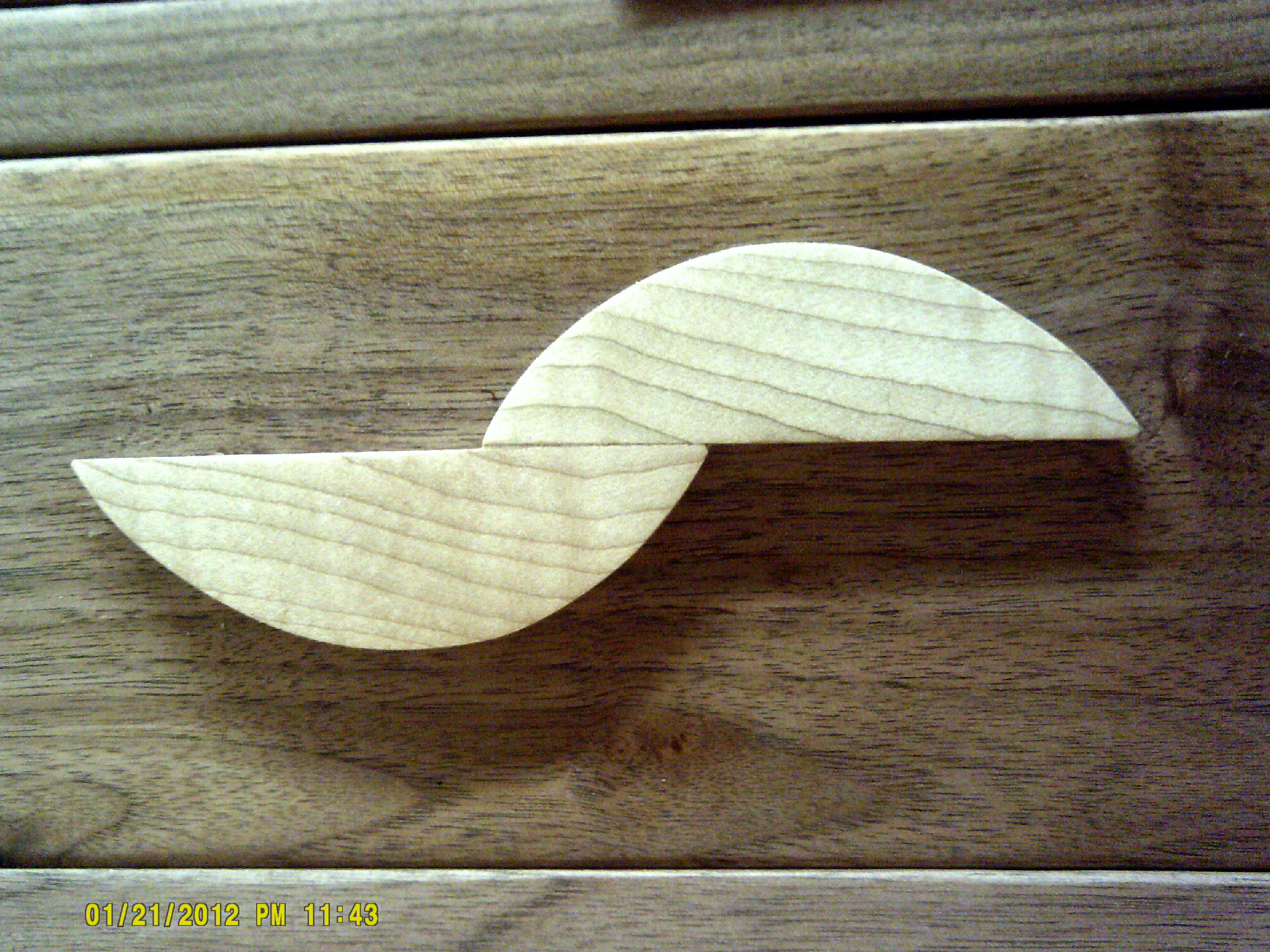
The real design question was with the handles. I couldn’t just go buy handles at some hardware store, I needed to do something a little more fancier and shop made. I toyed with a few designs and was going to go with a pair of shell-type pulls I would cut out of tiger maple and cove out over at the router table. While pondering how I would make this cut, I was struck by how thick and chunky the blanks were that I had roughed out on the band saw. That’s when inspiration hit me – why not split them in half and use the bookmatched grain to do something interesting… kinda like this on the door.

Or these babies as the drawer pulls.

I finished the piece by sanding it to 220 grit, then wiping it down with a coat of 1# cut dewaxed shellac. Once dried, I sanded it down with 220 grit paper to get it baby’s behind smooth. From there, I applied two coats of my hand mixed oil/varnish blend, sanding with 400 grit paper between coats. Finally, I buffed it down with some paste wax to give it a nice soft luster.

It goes into the display cases today, and next Monday, we’ll see how well is places in this year’s contest.  Wish me luck!


Quick poll

Finishing can be such a tricky part of woodworking.  Will the piece be subject to a lot of handling? How easy do you want the clean up? Will the piece be exposed to water? Will it be handled by infants or very young children?

And then there is the application method. For most woodworkers, we got started brushing finishes found in the local home improvement center. But, as our skills evolved, we found so many other ways to apply the different finishes we experienced.

Today, let us know what your favorite method of finish application is – regardless of the finish material being used.


Link of the week

Vintage Saw’s beginner’s saw filing primer

Old hand saws are great tools. They were built to work hard and give years of outstanding service.  Only, of course, when they are properly sharpened.  And, somewhere along the line, woodworkers went from sharpening their own saws to relying on shipping their prized tools out to be sharpened.

To help get sawyers back to sharpening their own saws, the folks at Vintage Saws have prepared this very detailed page about the process. From understanding saw tooth geometry to process of straightening, jointing and filing the teeth, users can go step-by-step from dull and lifeless tools to ‘sticky sharp’ teeth that cut like a dream.

Even if you don’t want to sharpen your own saws, this page will at least give you a good introduction to saws and how they work.

Mitered door frames

I’m currently in the middle of a project, and I needed to build a set of inset frame and panel doors. Time to break out the cope and stick door frame bits, right?

Not so fast, bub. I thought this project would look better with some mitered door frames instead of the plain old plain old. To make this happen, I reached back for a trick I had used on the first project I built with doors – a mitered door frame.
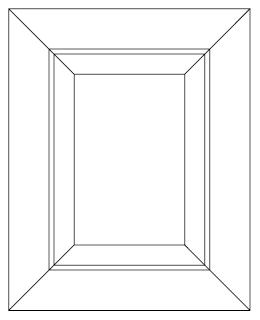
As you can guess, each of the four sides of the door are joined at the corner with a 45 degree miter joint. A few benefits of building a door this way are that you don’t have to buy specialized router bits to do the joinery – a table saw, miter saw, hand saw and miter box or any other method you use to make crisp, accurate 45 degree cuts will fill the bill. Also, if you want to rout special features into the face of the panels (Maybe a bead on the inside edge and other fancy molding profiles), when you cut the miters, the design will wrap all the way around the frame. Also, if you carefully measure the inside opening, the long side of each mitered piece will be the exact measurement of the opening you are trying to fill. No crazy math with subtracting style width and adding on tenon length.

The downsides? Your miters have got to be very accurate, or you are going to spend a lot of time and use a lot of wood putty to make the piece look good. Also, miter joints are very weak when compared with other traditional joints – and they slip like crazy when you try to glue them up. That’s why some method of reinforcement when building a mitered door frame is a must. And, if you have to fine-tune the door to fit the opening, you have to remove equal amounts from each side to maintain that crisp miter point (you can fudge a little, but not too much).
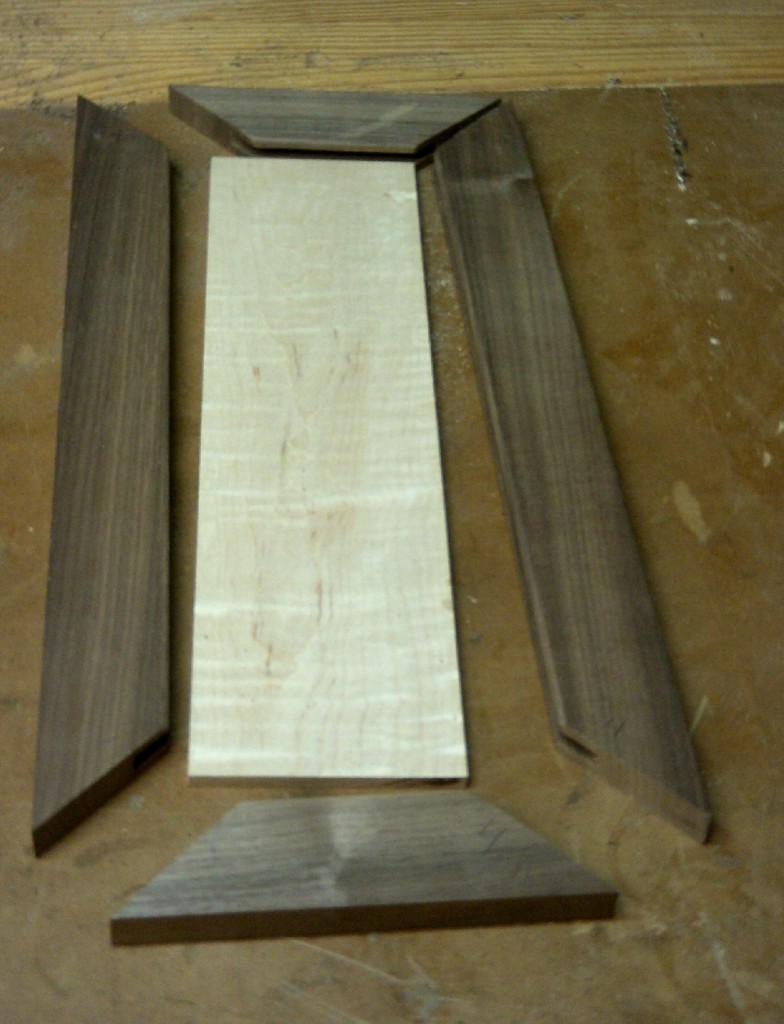
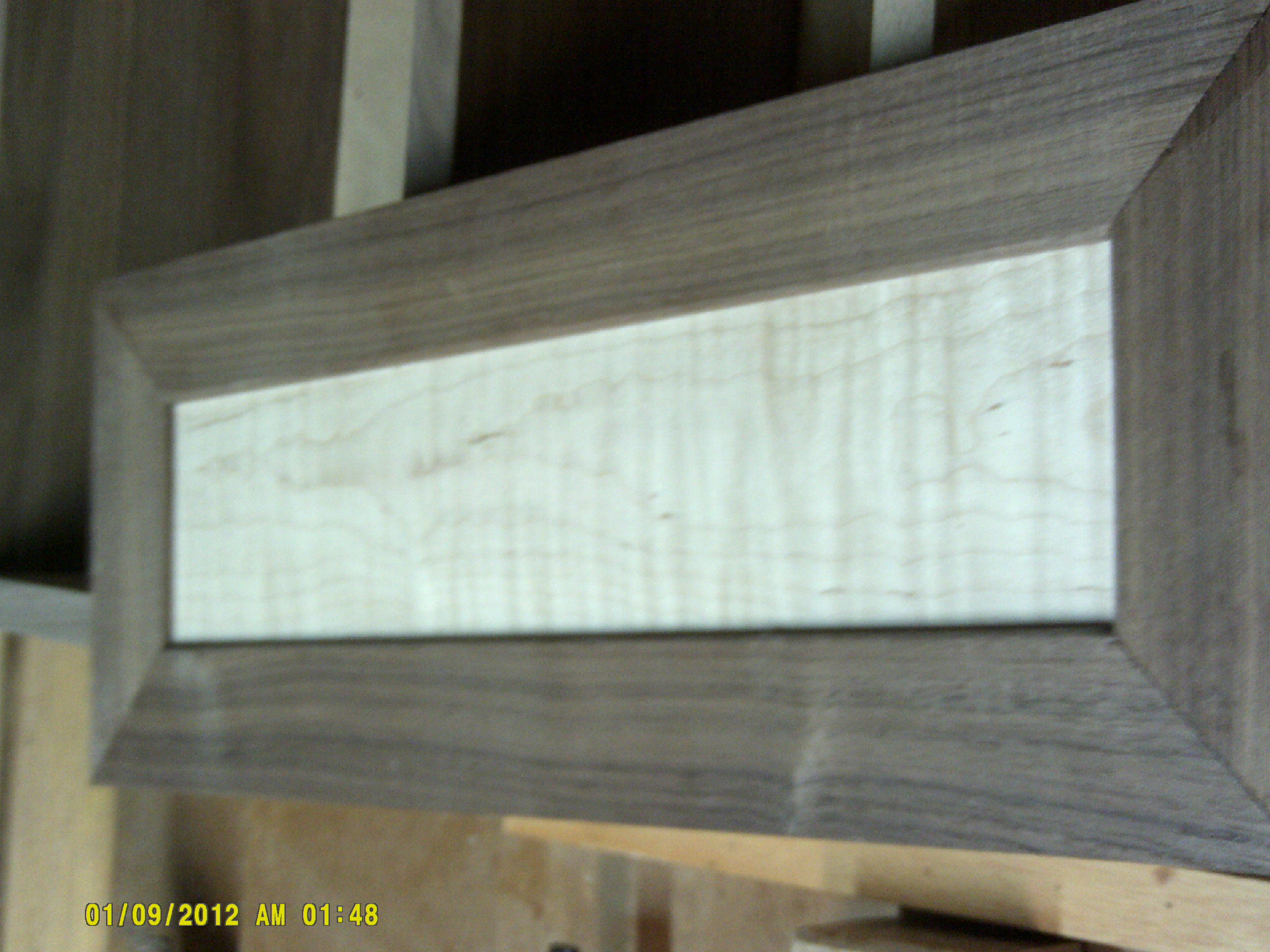
For my doors, I milled a piece of tiger maple for the door panel and milled up the door frame pieces out of walnut. After plowing a groove in the edge of the frame pieces (using my table saw blade and moving the rip fence to center the groove) and mitering them to size, I laid everything out on my bench. It looked pretty good. After I rounded over the inside edges of the panel, I moved to the next step.
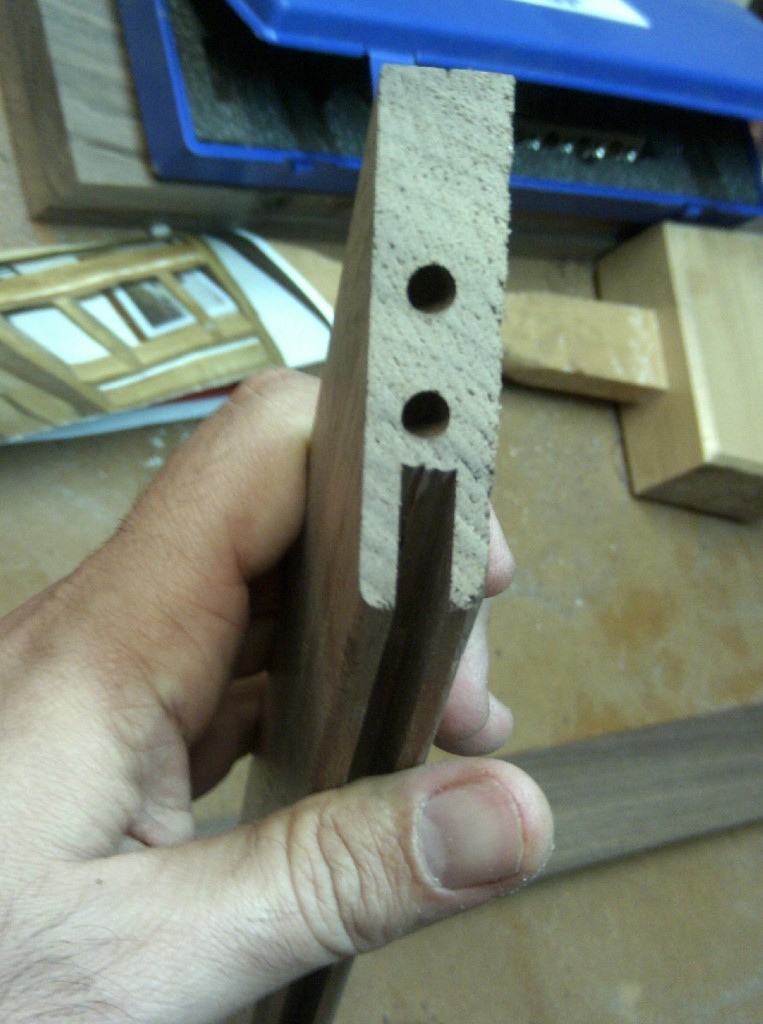
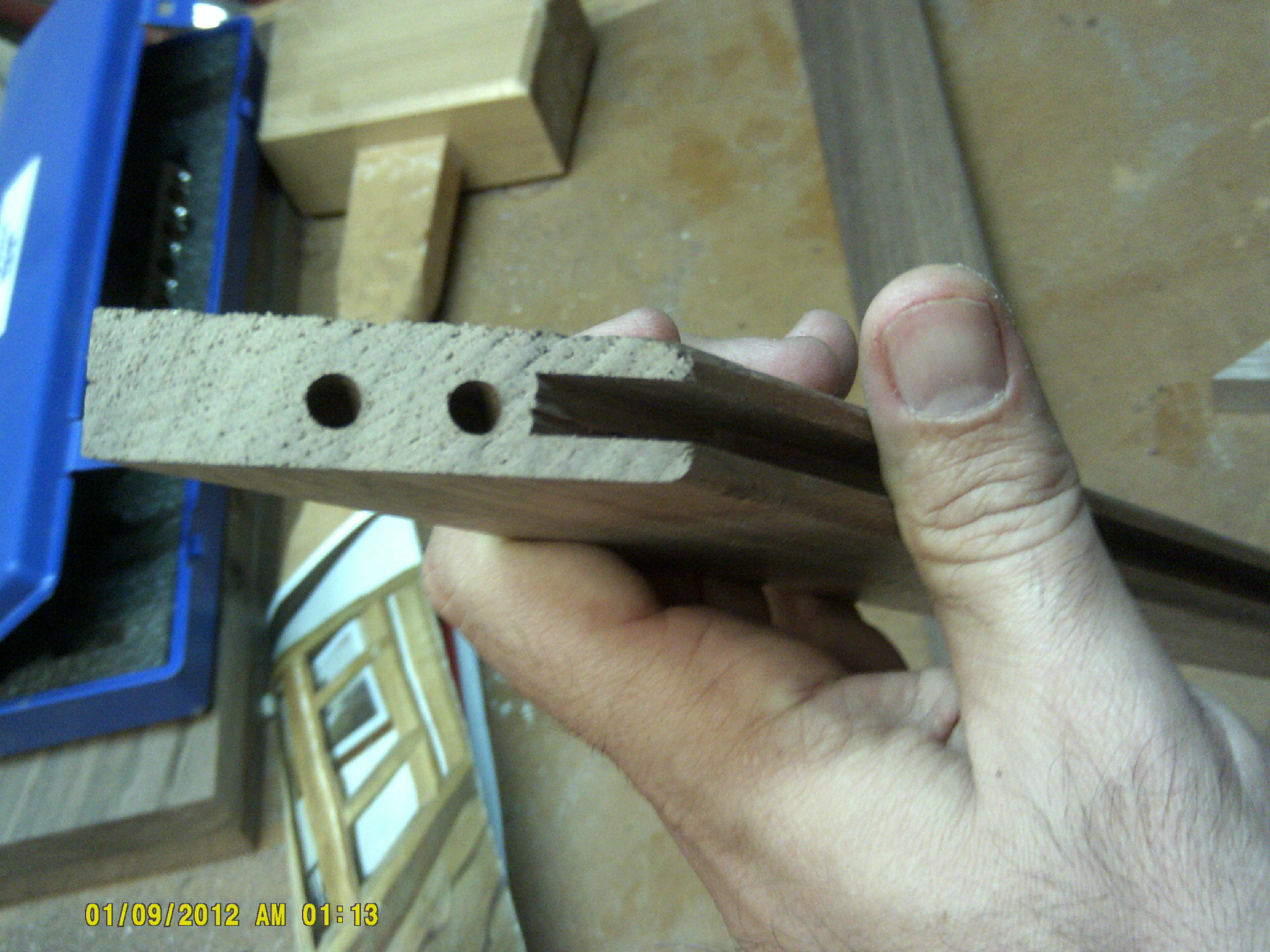
For reinforcement, I went with a pair of dowels in each corner. I could have gone with biscuits, pocket screws, splines or the like, but I have my fancy Joint Genie dowel joint jig, and it took mere minutes to get things lined up.  Notice how I kept the dowel holes away from the outside of the miter, lest I drill all the way through the board. I was going to slather on the glue really well, and I knew the dowels were going to hold really well.

Of course, when you are assembling a frame using dowels, you should join two opposite corners together first, and then bring those two halves together… don’t ask me how I came across this valuable piece of information…
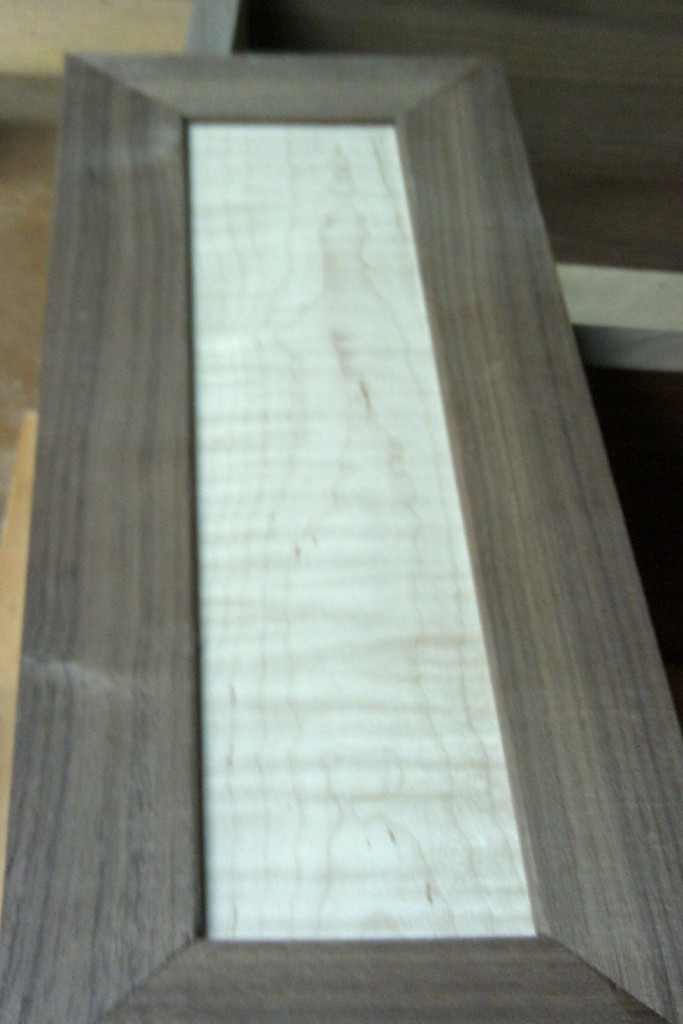
The result? Not too shabby. The door needed some sanding to even things out and get the glue marks off of it, but, all in all, it wasn’t a bad little door to work on.

What is it a door to? Well, you are going to have to stay tuned… I should have the entire project put together this weekend, and you’ll see it this coming Monday…