Color my world

So, you are bored. You use the woods you can find at your local hardwood dealer or home center, and your projects do look great. The joinery is tight. The design is pleasing to the eye. The final piece fits the area you intended perfectly.

The only problem is the wood you chose. You have your old reliable standbys, but you want more. The thought of using stain may have crossed your mind, but that’s not for you. You want wood that just looks different.

Fortunately, there are lots of different kinds of woods out there that can be had, and the variety can be rather amazing. My friends over at Bell Forest Products had prepared a bunch of board samples for a client. Once the client decided on which wood, the guys at Bell were stuck with them. So, they packed them up and shipped them to sunny Florida for a little vacation in Uncle Tom’s (and Uncle Iggy’s) shop.  The selection was impressive…

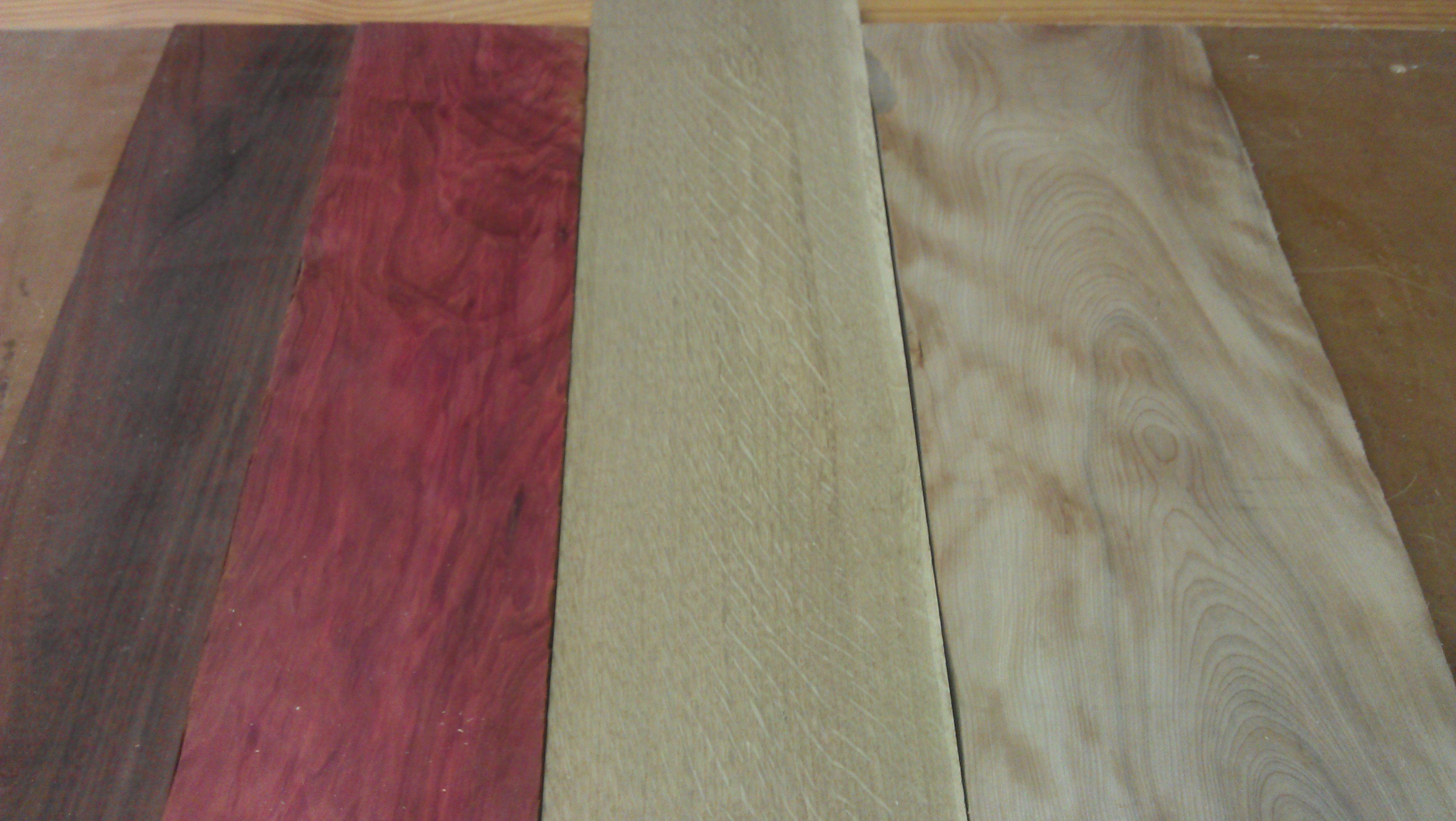
This shot features Bolivian Rosewood, redheart, quartersawn oak and flame birch.

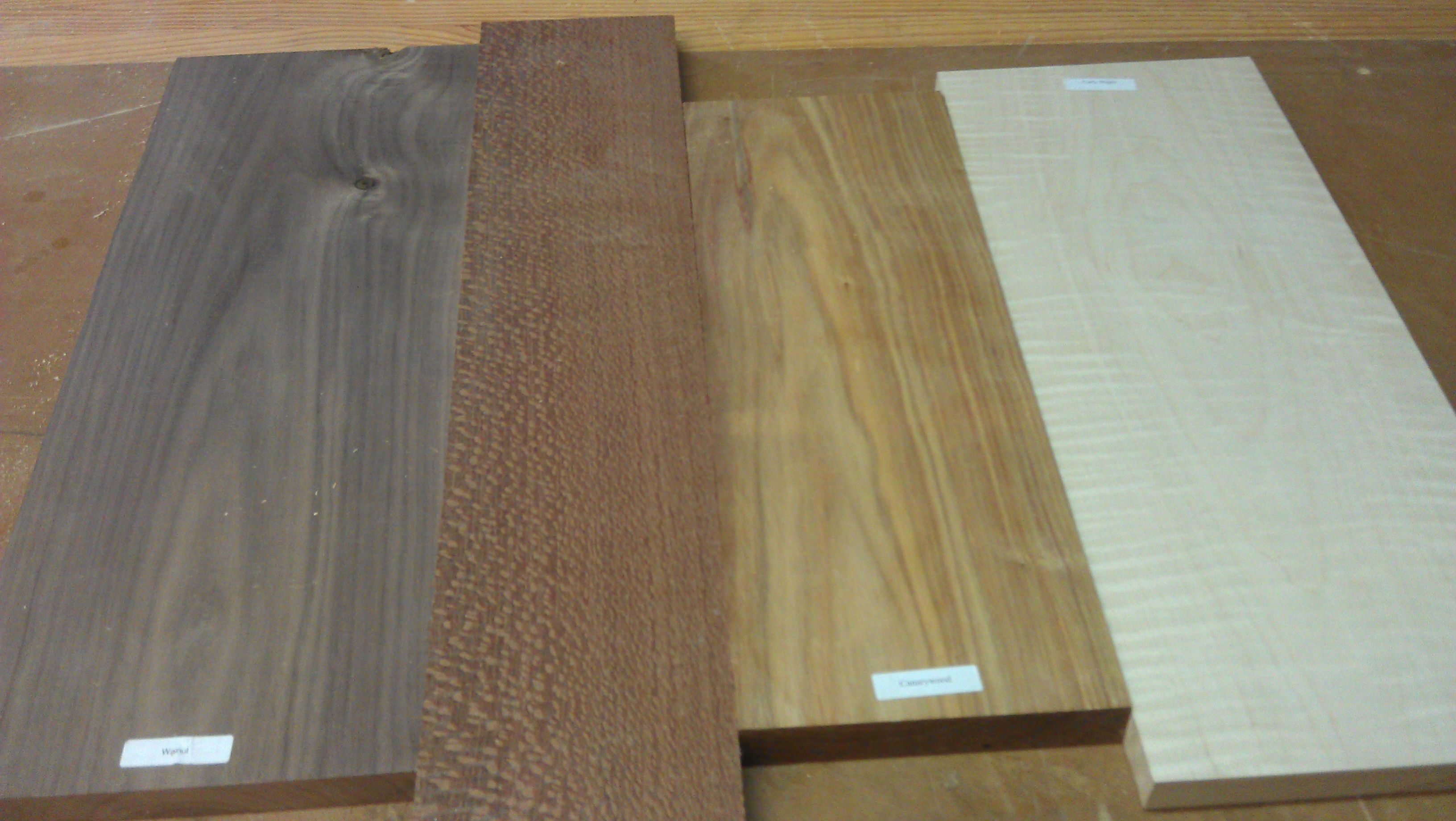
How about this quartet of walnut, leopardwood, canary wood and curly maple?

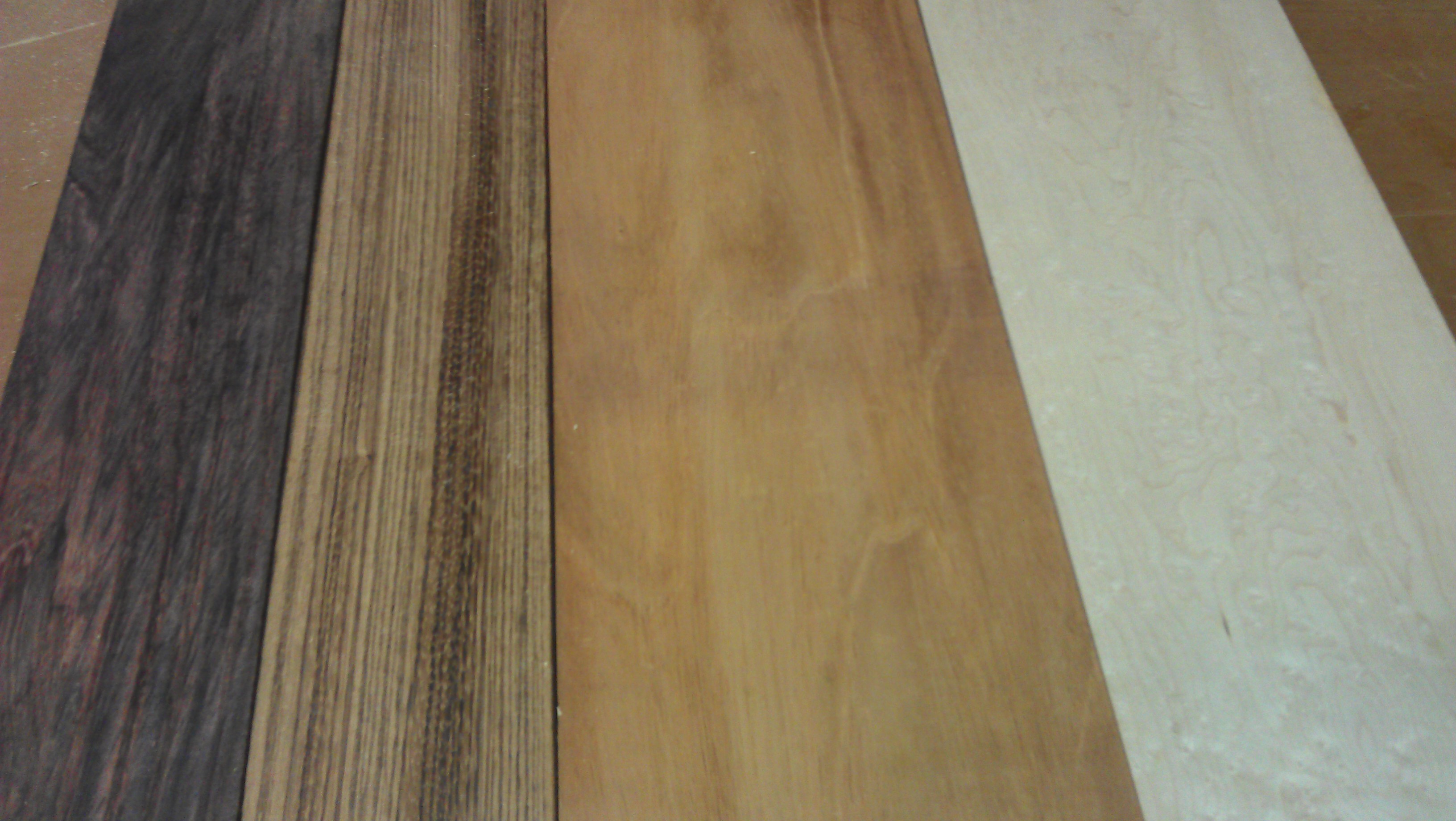
Some really stunning choices here with East Indian rosewood, zebrawood, Honduran mahogany and birdseye maple.

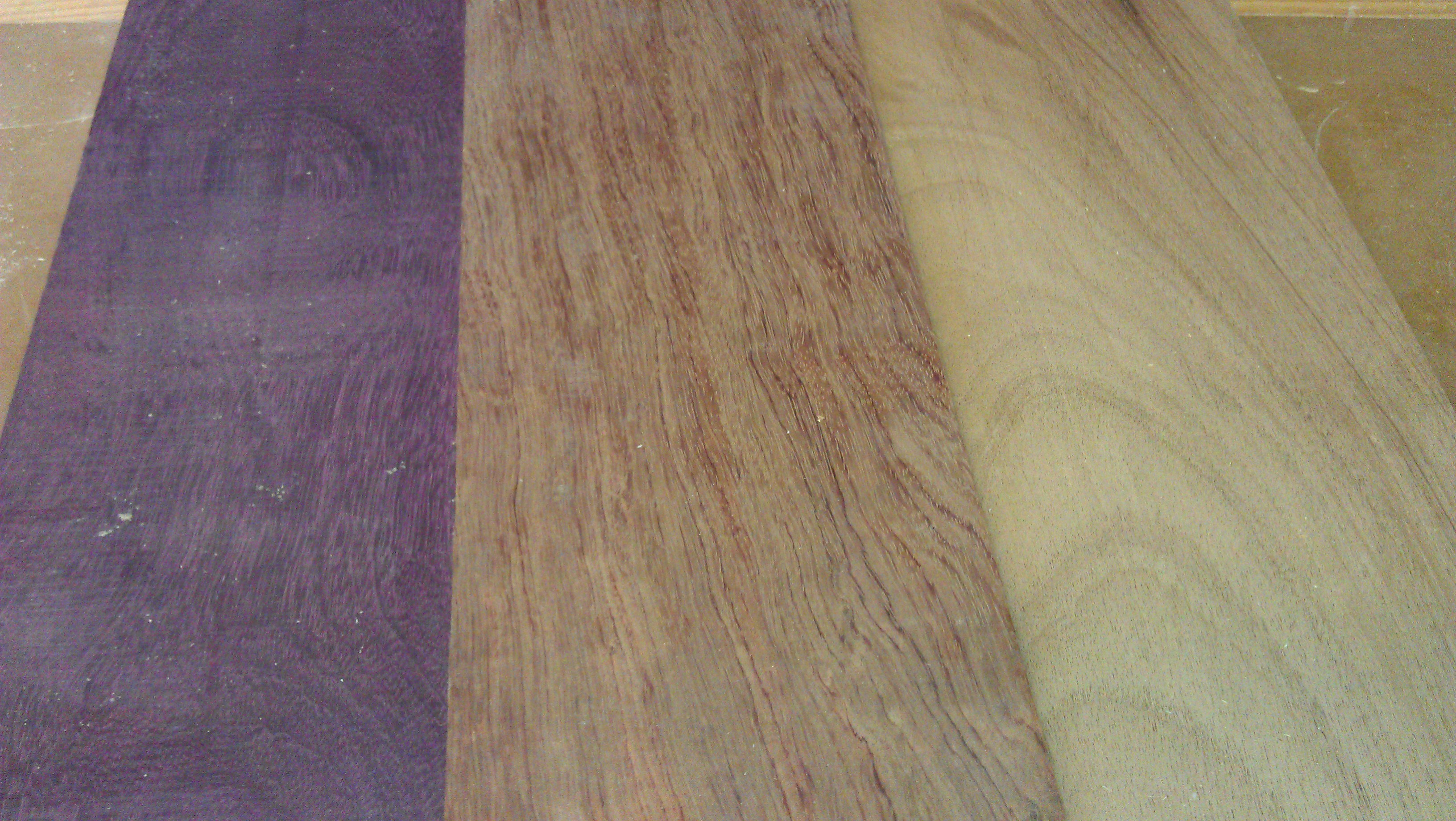
Here’s a nice mix of purpleheart, bubinga and African mahogany.

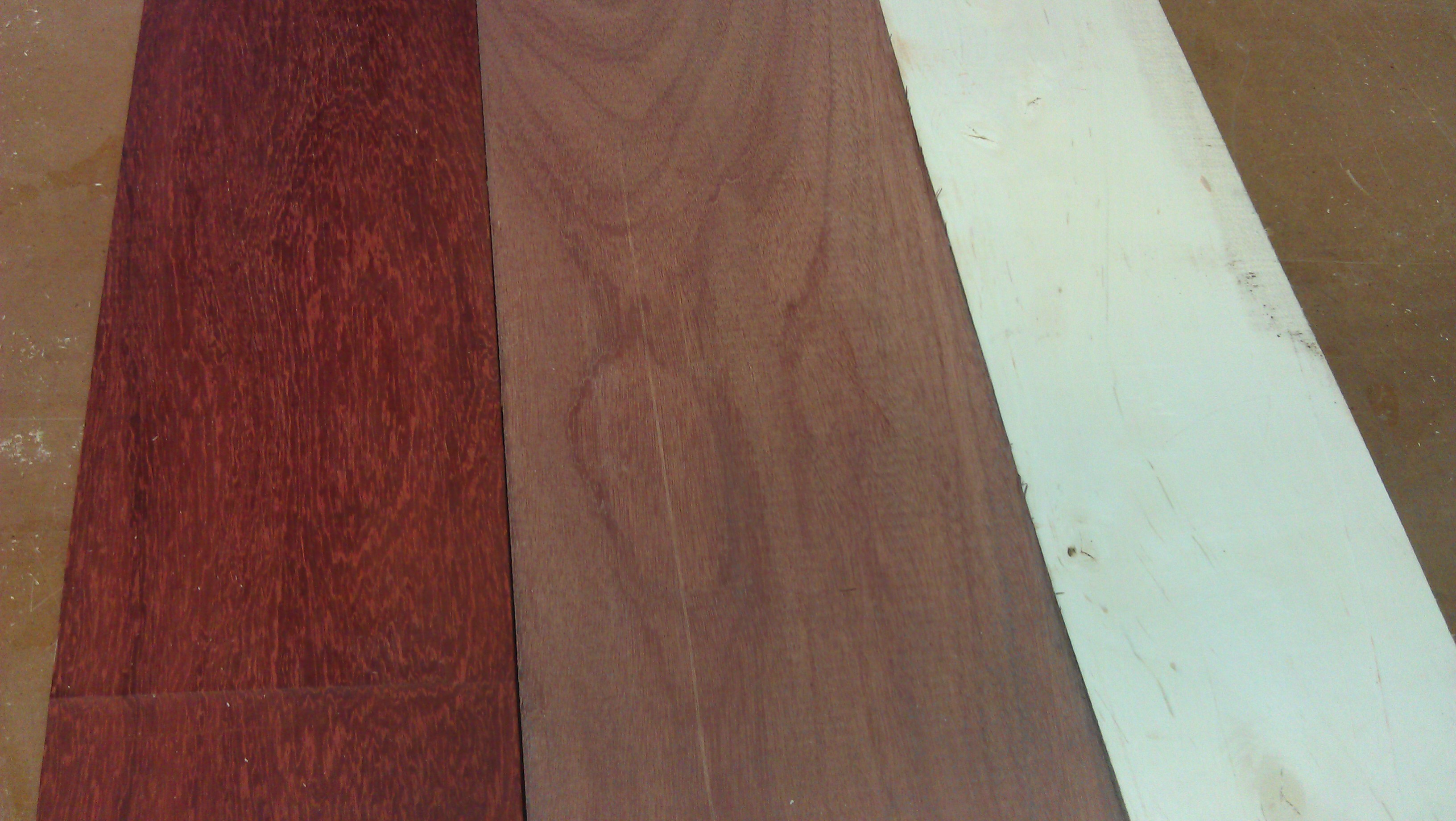
A great spread of colors from padauk, santos mahogany and American holly.

And, could you possibly go wrong with jatoba, bloodwood, goncalo alves, quartersawn maple and chechen?

While some of these woods may be a little on the pricey side for an entire project, a splash of padauk, redheart or chechen can make a maple piece really shine, and a walnut piece with some holly or maple accents can really show some pizazz. It’s all in how you use it…


Stuff I’ve Built: My miter bench

Just a few short weeks ago, I was bemoaning my lack of shop space – or at least, the lack of organization in my shop space. After a few years of just throwing items over the bench and not worrying about them until I dropped something I had to actually find again, I began to lament my lack of organization.
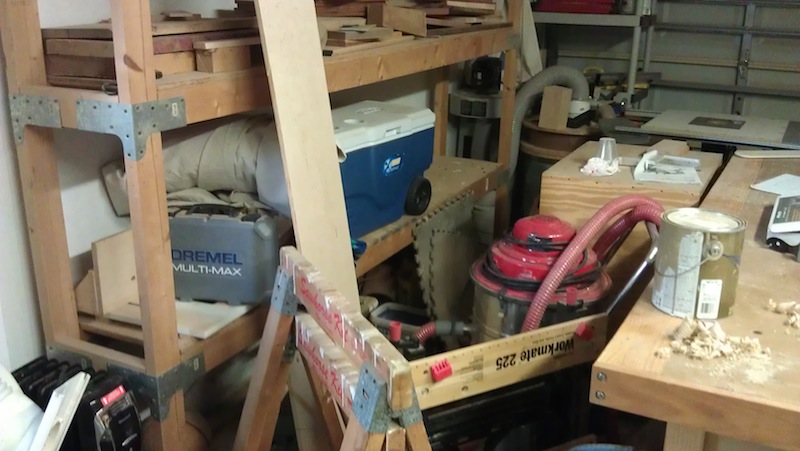
Well, this past week and a half, I got off my butt, into the shop and did something about it. First, I sketched out a design that had to 1) Serve as a miter saw workbench, 2) have ample storage for tools, coolers, beach accoutrements, recycling bins, paint cans and the like and 3) Give me someplace to park the shop vac and roll around drill press table totally out of the way.  Armed with the drawing and a list of the materials I already had on hand – after all, I was cannibalizing the shelving system I had built – I headed off to Home Depot to make magic.

There, I had to pick up a new sheet of 3/4 inch plywood ripped into two two-foot strips, six 2×4 studs, a hand full of Simpson Strong Tie connectors and a Snickers bar. Remember, Snickers satisfies you, right?  Once the shopping trip was done, the fine folks at big orange wrapped the heck out of the lumber on the sport rack on our Jeep Compass. Yeah, that’s normally where my wife’s kayak resides, but I had to make some exceptions.
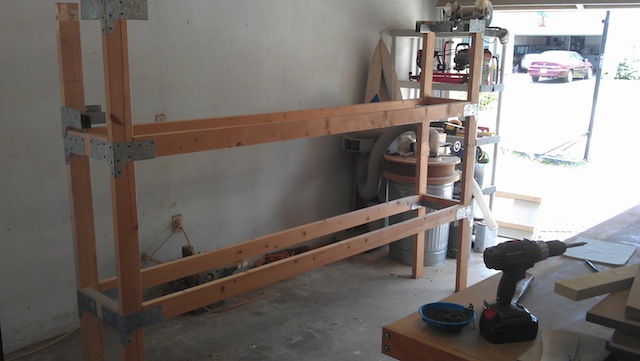
Back at the shop, I took the old shelving system down, saving every screw, every 2×4 and every sheet of old plywood to reuse in my new set up. Yes, it was the green thing for me to do, and it saved a fortune on buying extra materials. I think I may have used 200 plus screws putting the old one together… wow… that was a lot of steel!

With the old shelving unit removed, I was able to finally sweep up all of the sawdust, cobwebs and other nastiness that had accumulated in the area over the years. And paint cans. My goodness, where did all of those old paint cans come from?  There were paint cans bought by the former owner of the house back in 1996 hiding out. Amazing… Who knew we also had a shallow well pump to irrigate our yard?  Wow, the things you find while digging around under there.
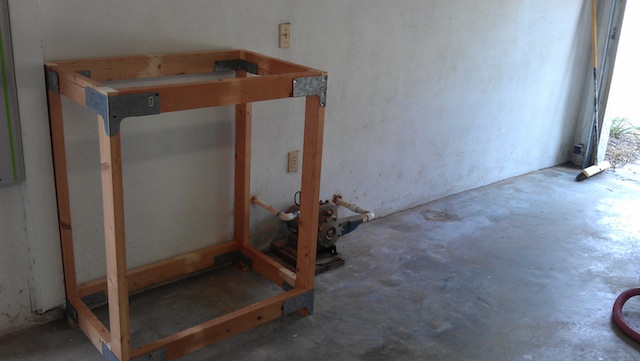
Starting fresh, I built the first module of the system. The strong-ties make assembling utility benches a piece of cake. Before long, I had the skeleton of my new bench system together.  On the far right end, closest to the garage door, there is my dust collection unit, the ‘garage’ to park the shop vac and drill press and a set of shelves for stashing less-frequently used tools.  All the way over to the left, closest to my side entry door, is the air conditioner and heater, my long tools, and the ‘family’ shelf tower that holds coolers, recycling bins and the like.
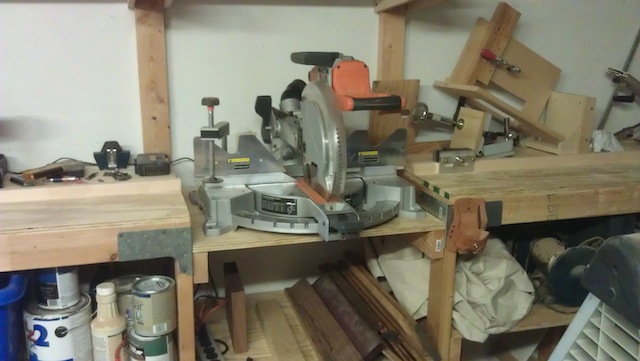
Over the pump, I wanted to put the miter saw station.  I put a shelf about four inches above the top of the pump unit. This is for offcuts I make at the miter saw. For the top deck that the saw was going to sit on, I measured the height of the base and found it – surprisingly – the same height as the width of a 2×4. That was convenient, Ridgid!  I temporarily screwed a pair of 2×4 spacers even with the work surface, and mounted the cleat and 3/4 inch plywood deck to that. Once I removed the spacers, the saw went right down on top, easy peasey lemon sqeezy.
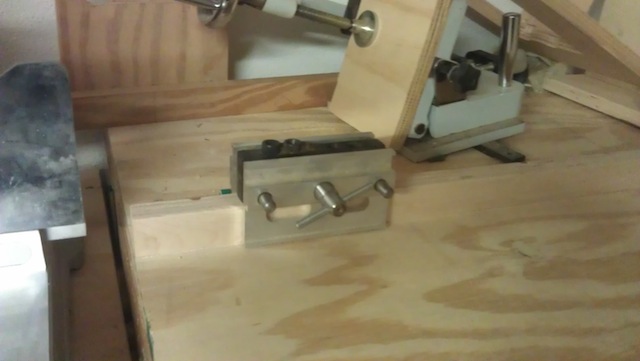
On the top of the work station, I wanted to have a fence and stop so I could cut pieces to identical lengths. I simply ripped some strips of 1/2 inch plywood left over from some other projects, glued and tacked them and then pocket screwed them to the work surface, carefully aligning them with the saw’s surface. I sanded this down to make sure there were no splinter makers on there, and I’m now using my old self-centering doweling jig as a stop. Talk about convenient!

Above the work surface, I built a short lumber rack. I mounted 2×4 uprights to my masonry wall with Tapcon screws, and then build some standards out of 2x4s and 3/4 inch plywood gussets. Those babies are STRONG!  On top, I put my Halloween coffin and other yard decorations, and the next level down has some choice small offcuts.
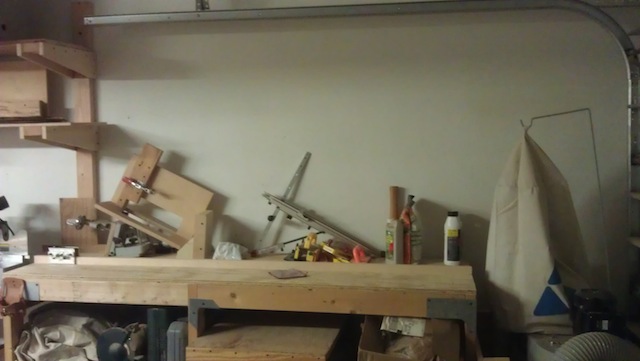
What’s left to do? Well, since the stop rail for the miter saw is forward on the table, I have a full 14 inches of space behind the rail to put in more shelves for more storage. I’ll put those in on the far right side – maybe that would be a good place for some table saw accessories, since it’s not far from the saw itself.  Now, to check out some large plywood offcuts to see which might be appropriate. Hey, that’s going to make more room in my wood storage area that way …

I also have my Delta air cleaner a neighbor gave me. I’ll have to hang a few hooks for that above the saw so it can filter the air and throw some light on the bench.

All in all, I’d say the are behind the bench went from a zero to a hero in about a week’s worth of work.



Quick Poll

Woodworking can be such a solitary thing to do. I mean, you get into the shop, do your business and then return to the family after a fulfilling session.

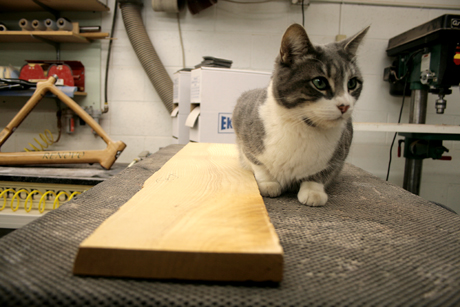
But, there are some woodworkers out there who aren’t alone. No, I’m not talking about disembodied spirits or anything like that. I’m talking about those companions of the four-legged variety. A shop cat or dog can help make the time a little bit more fun (or frustrating, based on the pet’s personality) and can even provide a sounding board for design decisions. “So, Fluffy, what do you think about dovetails here?”

This week, tell us if you have a shop mascot and what the experience is like for you.

Link of the week

Micro Jig Tools

With my last post this Wood Worker’s Safety Week, it’s only fitting that I focus on a company whose purpose is safety… Micro Jig.

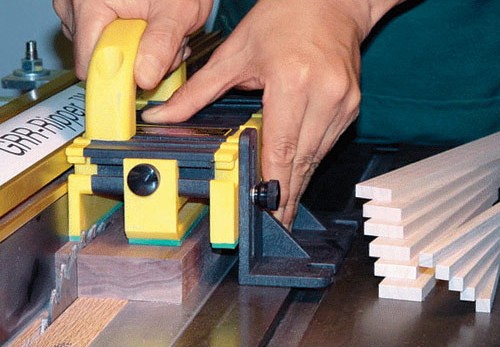
While their offerings include the MJ splitter system (in both plastic and steel core models) and their Zero-Play guide bar system for building jigs, without a doubt, their flagship product is the GRR-Ripper 3-D push block.

This little baby is famed in song and story as what is close to the ultimate push block for work on table saws, router tables and other power tools. It offers excellent control , and even allows the user to push it over the table saw blade, securing the work while allowing the blade to pass through the tunnel formed by the block’s two feet.

Take a look at their offerings, their fully-video information center and their support pages to find out more about their offerings. While not the most glamorous tools, their offerings will definitely help you amp up the safety in your shop.


Safety is job number… what?

How many times do we hear – especially during Wood Workers Safety Week – that safety is job number one? The primo position. Right there on the top of the list.

But, what are jobs number two, three, four and five? How about job number 12? Those are mill, joint, cut joinery, assemble, sand and finish, right?

Not so fast, chief.

True, it’s only fitting and appropriate that before we start working in the shop, we take the time to do the right stuff.  Splitter or riving knife on the table saw? Check. Push sticks handy? You got it. Loose stuff off the floor so you can’t trip on it? Oh yeah.

After that, though, do we continue to put safety on our list? I mean, it’s easy to fall into a pattern when we’re working. We’ll get on a roll and allow offcuts to build up on the table saw top. Or, we’ll maybe forget to grab those safety glasses sitting on the workbench across the room. Maybe that cut we swear up and down is too risky to make while we’re out of the shop doesn’t look too challenging while we’re at the workbench. Or, we’ll work until we are well past tired and want to make that proverbial “One Last Cut.”  You know the one that leads to many injuries.

It’s easy to become lax as we work… making the safety at the top of the list argument an afterthought before we make the boneheaded move that requires us to reach for the first aid kit or – heavens forbid – the phone to dial 9-1-1.

I can’t take credit for this outlook. I’m an advocate of Mike Rowe’s argument that safety is indeed job three… and many other slots on that list. Maybe I didn’t make the point clearly enough, but perhaps Mike can convince you. Check out this link to hear his explanation for yourself.

As we work our way through Wood Workers Safety Week, take a look at your safety practices. Check out your safety gear. And remember, the most important safety device that you own rests between your ears. Use it.


Overlooked safety tips

We’re in Wood Worker’s Safety Week, and I’m sure you are 100% fully compliant on all safety practices. There is a zero percent chance of an accident ever befalling you…

Well, we’d all like to believe that. But, as we know in life, the only things that are 100% certain are death and taxes. Beyond that, it’s a crap shoot. That doesn’t mean that you don’t want to load the dice in your favor, right?  I mean, none of us takes down the box of rat poison and pours it over their breakfast cereal in the morning.  Or walks out into the middle of traffic on a busy road without at least a half-hearted glance to see if cars are oncoming. We don’t light the barbecue grill inside the living room, do we?

In the same way, becoming a little bit safer in the workshop really doesn’t take much thought or effort – or certainly cost. By following a few simple safety tips, you can improve the odds that a freak accident won’t befall you.

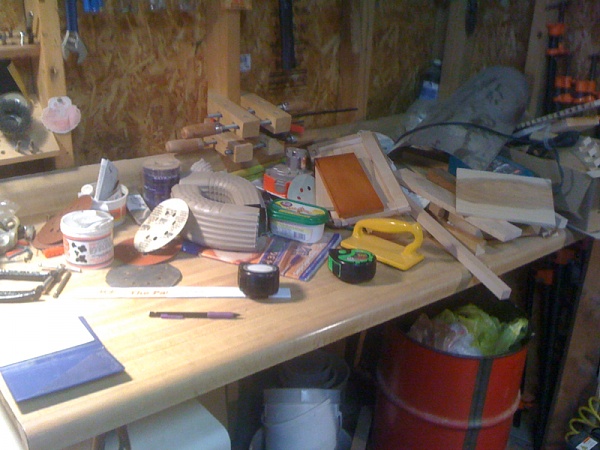
1) Kill clutter.  It never fails – you start working on a project  and the next thing you know, there are extension cords, offcuts and tools all over the place. On the floor. On the bench. Across the shop. They become tripping hazards. Dropping hazards.  I’ve found myself recently becoming lax on cleaning up my messes during a project. There have been times where I have piled up so many tools, clean up could take several days. That’s why I’ve had to institute a plan that at least keeps the mess at bay. My new cell phone has a countdown timer on it. Now, I set the timer for one hour, and when it goes off, I take the time to look at the bench and the tools to see if anything can be cleaned up or put away. Sure, it’s a pain in the rear, but taking a forced break every hour to walk away from the bench and clean up some stuff helps to keep a tidier – and safer – work area.

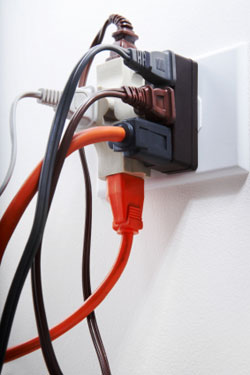
2) Avoid overloads. In order to save a few bucks, I used to use light-gauge outdoor extension cords from the one outlet in my shop and plug in multiple tools. And, for some time, this arrangement worked well for me. That was until one day I smelled this aroma of hot plastic in the shop. What could it have been?  Much to my amazement, the extension cord was uncomfortably hot to the touch. Now, I’m sure the circuit breaker would have kicked in before something would have happened, but it was shortly after that my wife and I had to have a conversation about adding a few shop dedicated circuits to handle the loads I was placing on the tools.

2a) Sure, it cost some money, but there was an added bonus – when I put the tools on two dedicated circuits, if the breaker ever did trip, the lights remained on in the shop. This was a HUGE improvement over what used to happen; the circuit would trip, and the lights would go off with a spinning blade I could no longer see right in front of me…

3) When in doubt, secure your work.  If I’m going to route a set of dovetails, I’ll take the time to carefully clamp the work to my bench. If I’m going to joint a board with my hand planes, I’ll crank down on the board in the vise. But, when I have to make a few simple cuts with a chisel, I typically just lay the board down on the bench surface and go to it. Or, even dumber, I’ve even HELD the board with one hand while using the chisel with the other. That was cool in my eyes, until the day I accidentally laid the sharp edge of a 1 inch chisel across my inner left wrist. You know, where all the veins, arteries, tendons, nerves and ligaments run that operate your hand run. I barely got a scrape from my encounter, but I could have been looking at some major micro surgery to get my left hand working well again.  That was the day I bought a set of Quick Grip trigger clamps, and now I set the piece down on the bench and clamp it into place. Sure, it takes some extra time, but when I think of complaining about that, my mind flashes back to that scary incident.

These three tips are just a starting point. In fact, I’d love to hear more about your safety tips. Remember, Wood Workers Safety Week works when we all share our collective wisdom and help keep everyone happily pursuing the craft.


Quick Poll

Welcome to Wood Workers Safety Week 2012!  Woot!

I know, you have heard EVERYTHING about shop safety, right?  You’ve heard it all, seen it all, tried it all and you can’t stand to see something else about it.  Sure. But, it never hurts to have a refresher to help remind you about how to prevent painful, disfiguring and costly injuries.

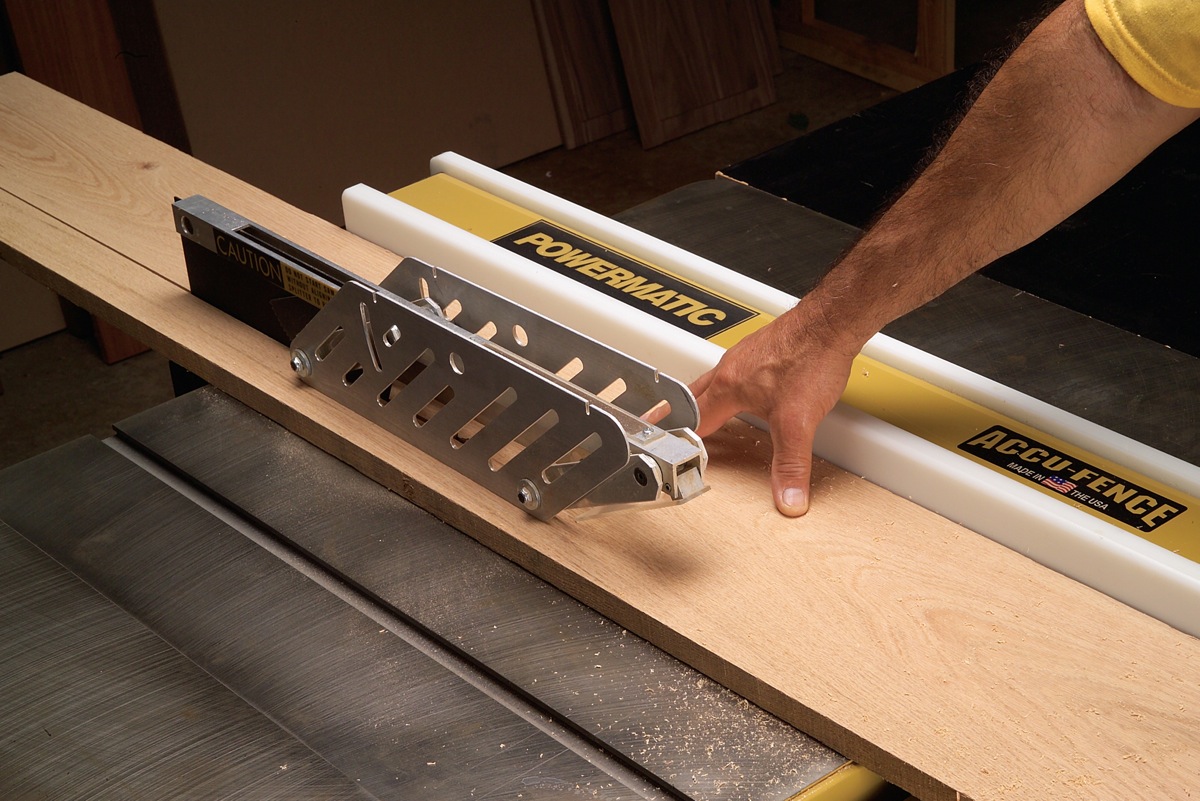
While all tools pose a potential safety risk, the table saw remains the number one culprit in shop injuries. Accidental blade contact and kickback are two of the common ways that people can be injured.

Of course, there are a number of safety devices included in your table saw.  Whether it’s flesh-sensing technology or a simple splitter and blade guard, each of these gadgets works to help prevent mishaps. While they are useful, some woodworkers see them as non-essential add ons that just slow them down.

This week, look at your table saw setup and let us know how much safety equipment you use on your table saw. Is it the whole shebang, or do you get rid of those safety devices?

part of the Wood Talk Online community