Building on last week’s poll…
[poll id=”11″]

Building on last week’s poll…
[poll id=”11″]
 Woodworking master George Nakashima’s influence is still felt in the works he created and at the furniture shop run by the craftsmen who continue his tradition.
After being held in a Japanese Interment camp in Idaho during World War II, George went on to build his reputation and legend. Before his passing in 1990, he received the Third Order of the Sacred Treasure from the Emperor and Government of Japan in recognition of the cultural exchange generated by his work and exhibits.
His work focused on the natural forms and lines in wood, frequently using the waney edge of through-sawn logs as table tops and other important furniture components. Powerful, organic and harmonious are some of the more apt descriptions of his final products.
Today, the talented artisans he trained carry on his work, designing spectacular pieces from the felling of the tree to the final hand-applied finish. Just a look at the gallery of the incredible furniture can serve as an excellent inspiration.
 Every weekday morning, my alarm clock goes off at 6 a.m. After I grab a cup of joe, I head to the living room and turn on TV Land to catch an episode of Star Trek. Yes, that classic, campy 1960’s gem of television goodness. As I sip my coffee, I wonder what adventures await the USS Enterprise as she continues on her mission to explore space.
We know a lot about the universe – namely, it’s a really big place. I mean, HUGE. We’re talking about more space than can normally be found between my ears. Which may be difficult to believe.
If this is the case, why is it that no matter where the crew of the Enterprise heads, they run into unknown planets with populations that have to be in the millions? I mean, come on – they go to an uncharted section of the galaxy, and it’s more crowded than a Starbucks during the morning rush hour.
Fascinating.
 In much the same way, you’d expect that a two car garage measuring 24 feet by 26 feet would be more than adequate to meet all of my woodworking needs and still provide plenty of space for the storage of other family items. Not so.
Recently, my wife and I got into some rather protracted negotiations about space. My two sons are very active little guys, so they have lots of things they have accumulated over the years. Each had more than one bike. A scooter. A wagon. A bucket of toys for the yard. Basketballs, footballs and soccer balls.
You also have to add on the family stuff. Picnic coolers. A tent we never use. Paint cans from previous home remodels.
 It got so bad that I couldn’t get to my band saw, clamp rack or dust collector, and if I wanted to use the table saw, I had to spend about 20 minutes moving bikes and other items to the driveway. We couldn’t walk out of our double-width garage door without tripping over something!
I, as Lt. Commander Spock, would reason logically that all of the woodworking tools that I could use to build projects were collecting dust and cobwebs, wasting away in unaccessible corners. My wife, as Doctor McCoy, argued passionately that our kids were still children, dammit, and they had the right to have their toys wherever they wanted. Unfortunately, we didn’t have a Captain James T. Kirk nearby to break the stalemate with his wisdom, charm and unassailable leadership ability.
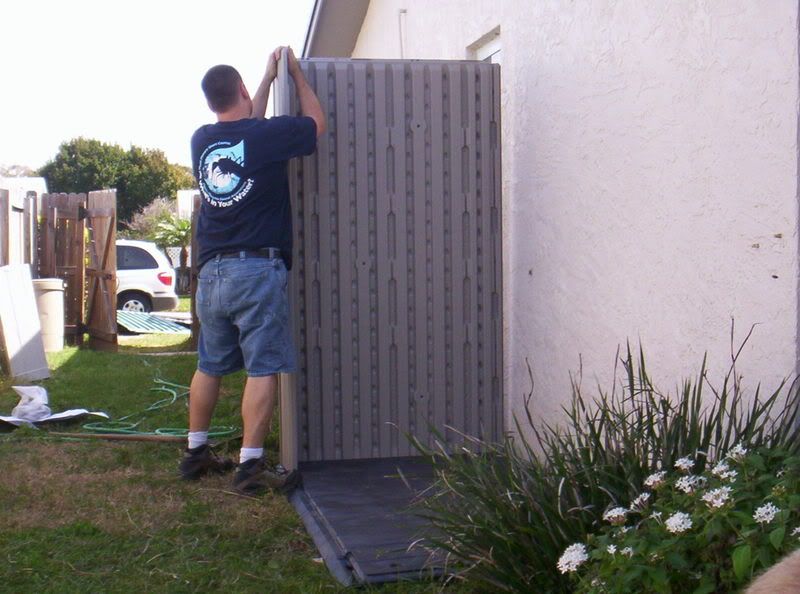
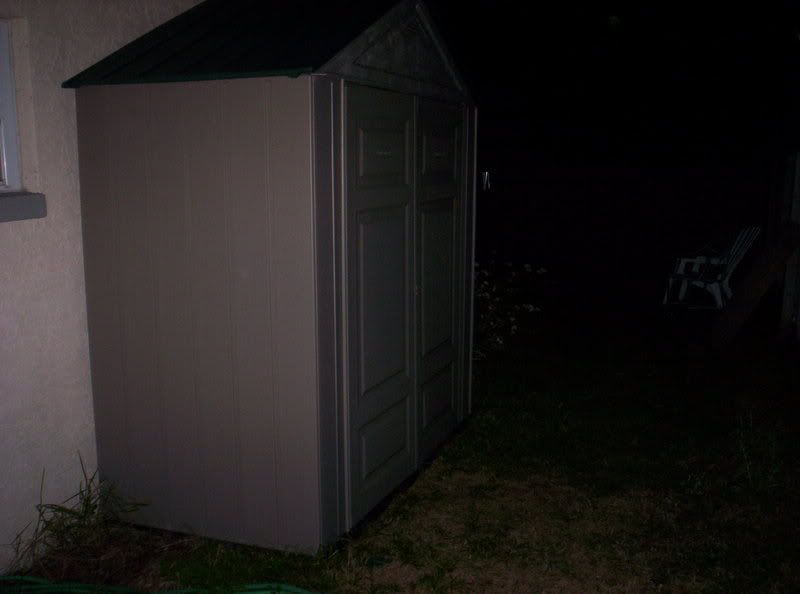
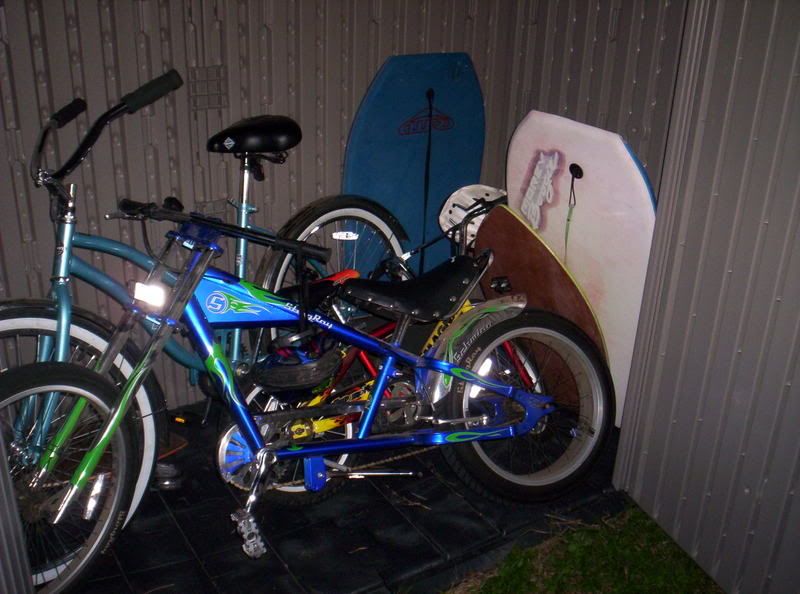 I did the next best thing. I went to the local home improvement center one morning and bought a brand-new storage shed for the side of the house. I didn’t build it. And, at 7 feet wide and 3.5 feet deep, it isn’t the huge, cavernous facility I had envisioned.
At last there is a place to store our stuff out of the path of woodworking progress.
The move, coupled with a controlled purge of items the kids had outgrown (Come on, honey, this doesn’t even FIT the kids anymore!), opened up space that I hadn’t seen in years. Not only is it easier to get around, but the clean up has inspired me to rethink my shop storage practices and plan a few long overdue projects to help beat the clutter.
Peace has returned to our corner of the galaxy. For today, at least.
If you think about retirees in Florida, your thoughts might turn to leisurely rounds of golf, early bird specials and people driving slowly in the left lane.
For some retirees in Sun City Center, just outside of Tampa, Florida, retirement is definitely covered in sawdust. That’s where you’ll find the Sawdust Engineers, a group of woodworking retirees who are making a difference in the local community.
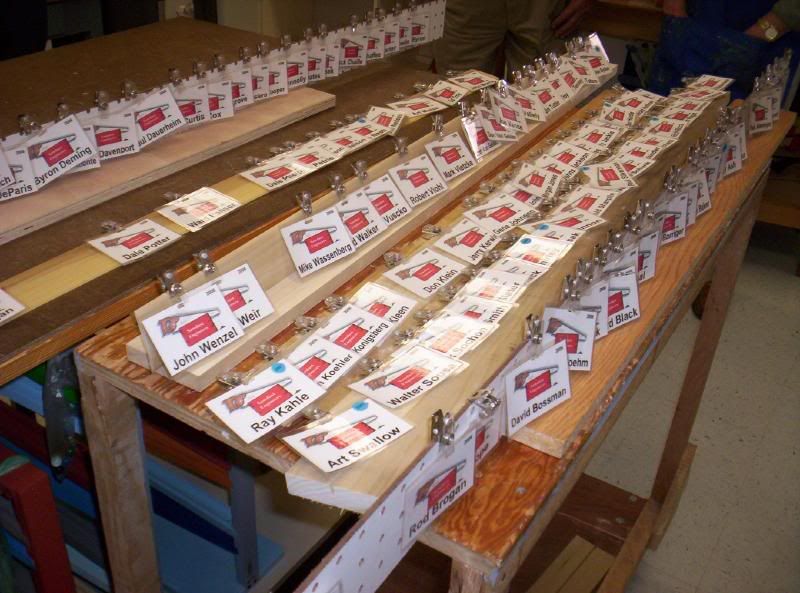 (click on images for larger versions) This tight band of nearly 350 woodworkers help to make this 501(c) 3 charity work. The Sawdust Engineers tackle many charitable projects from their shop. From building math and spelling puzzles for Hillsborough County, Florida school teachers to use in their classes to foot lockers for teens at a local shelter, each of the woodworkers feels pride in the work that they do to help others.
 One of the most interesting projects they are undertaking is the nationwide Personal Energy Transportation (PET) project. Templates for parts of hand-powered wheelchairs hang from the wall, and when members have the opportunity, they cut, sand and drill a few dozen parts for each of the chairs. The parts are sent to assembly facilities and put together. They are then sent overseas to countries in Africa, Asia and Central America where diseases such as polio and hazards like land mines have disabled many residents. “Even though the people getting the PETs may be maimed, they still want to be independent to provide for themselves and their families,” said PET program coordinator Jerry Beavon. “These chairs returns the freedom to them that they thought was lost forever.”
The Sawdust Engineers had their humble beginning back in 1962 with Sun City Center developer Dell Webb. Mr. Webb knew that many of the retirees moving to this sunny spot were cabinetmakers and carpenters during their working year, or spent time in the shop a hobby. Mr. Webb started the tool collection by donating a table saw, drill press and some space in the community center.
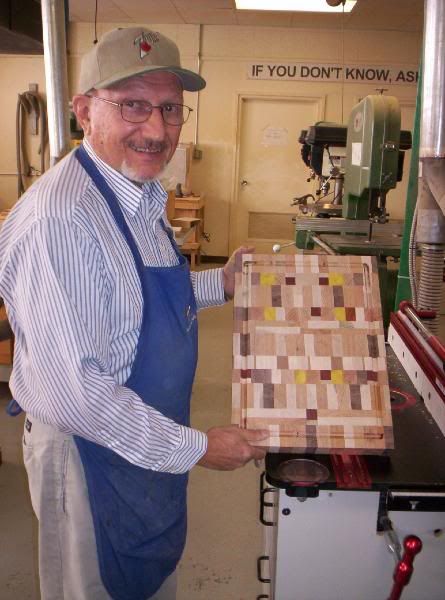 While the original tools are gone, the Sawdust Engineers are not wanting in that category. A large, comfortable shop is stocked with cabinet saws, planers, jointers and the other large shop machinery any good workshop needs. Another room stores the routers, sanders and other hand held power tools to round out the complement.
Most of the tools are donated by members or their families when they can no longer use them. Others are brand new, selected for safety as well as performance. The group recently bought a brand new Saw Stop cabinet saw. “You can’t stop thinking about safety.”
When new members sign up to become Sawdust Engineers, they must take a seven hour safety class – regardless of their level of experience. “Every shop has its own peculiar ways of operating,” said Houck. “It takes some time to get used to each of the machines, no matter how much you know.”
Houk is a typical example of how most members join. A retiree since 1985, he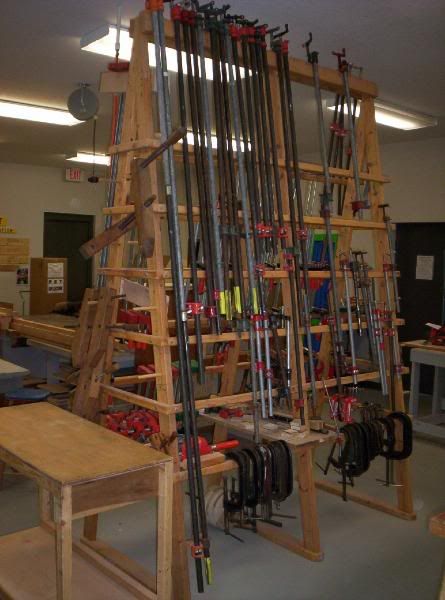 and his wife found their spacious home and yard in Maryland too much to take care of. In 1999, he and his wife came to Sun City Center to find a smaller home and warmer weather to enjoy during the cold winters. While they were touring the community to see if it fit their needs, Houck discovered Sun City Center was the place for him. “Oh, it looked like a great place to move to, but when the agent brought us through the shop, my decision was made right then. I turned to my wife and said, ‘this is the place for me!’”
While the shop does a great deal of charity work, members also have the opportunity to use the facilities to build their own projects. Since the Sawdust Engineers are a charity, members have to abide by the rules – the projects can be for their use or to give as gifts, but the members can’t make a profit from the sale of the items. Needless to say, some of the most popular personal projects include cradles,cribs and toys for grandchildren back north.
The facility contains nearly 5,000 square feet, which is divided between the machine room and a spacious assembly area. There is also an office (which doubles as the group’s reference library), a tool room, a dedicated paint room and a toy display room for area teachers to look for items for their classroom.
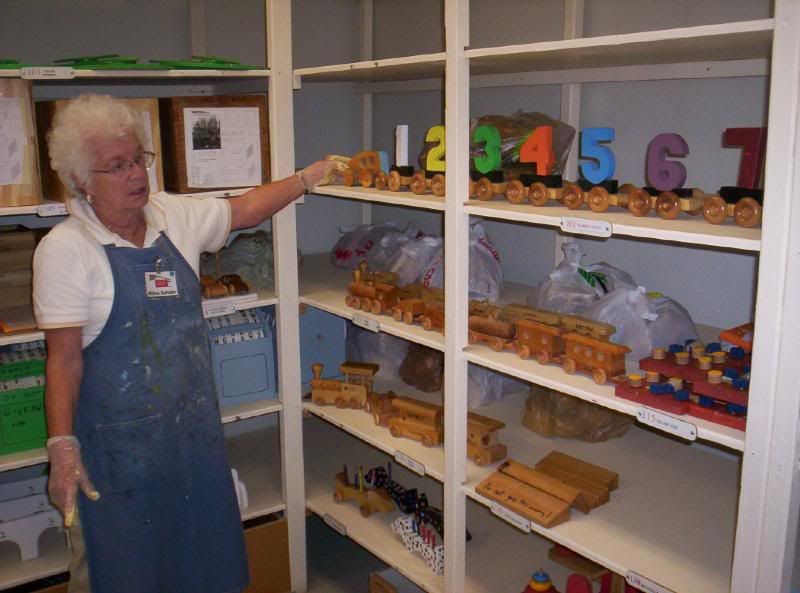 In the paint room, I met Wilma Schafer, the paint coordinator. Hands covered in bright yellow paint, she explained how the painting crew, as some of the ladies in the club are affectionately known, takes great pains to lovingly sand each piece slated for school projects and coat it in non-toxic paint. “You never know when one of the little ones will put this into their mouths.”
Members pay annual dues of $15, and other community organizations and individuals help with donations. Each year, the Sawdust Engineers set up a booth next to the other craft organizations to sell a number of their projects at Sun City Center’s annual Fun Fest.
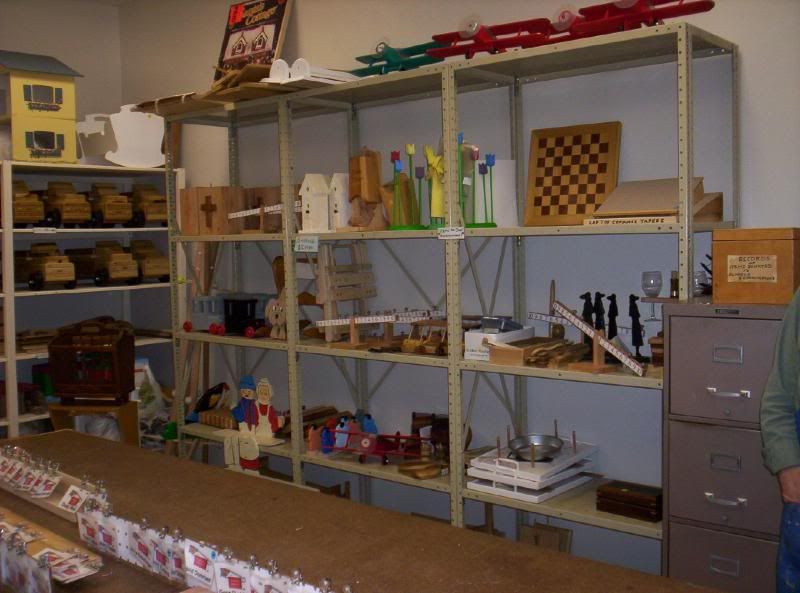 The Sawdust Engineers’ charitable work is well known in Sun City and in the surrounding areas. They get a great deal of their supplies and lumber for their charitable projects donated by local sawyers and hardwood dealers. And, when one of their long time contributors unexpectedly stopped donating, anonymous contributors sent in money so the club could continue turning out projects. “It gave me a very good feeling to see that outpouring of generosity,” said Houck. “I guess we’re doing a pretty good job, and people are recognizing it.”
[poll id=”9″]
 Visiting this site is like taking a trip in a time machine. Learn how Colonial Virgina masters of the craft built furniture – from the rough lumber do the expertly crafted pieces that grace the homes in this painstakingly restored living history museum campus.
In a recreation of Anthony Hay’s cabinet shop (he was one of the original craftsmen at Williamsburg), watch today’s craftsmen explain the cabinetmaking trade to visitors as they produce furniture with the tools and designs of the era. Today the shop also practices the trade of harpsichord making, documented as part of the shops offerings in 1767. This was a unique service from a colonial Virginia shop; harpsichords were typically English imports in the South.
Beyond the wood shop, Colonial Williamsburg is a great place to discover how the colonists in tidewater Virginia lived day-to-day. Definitely worth the trip.
When you want to buy hardwood for your woodworking project, there are a few different routes you can go. There are Internet dealers, home improvement centers and – if you are lucky – you know a buddy with a portable sawmill and access to a lot of trees in your area.
While these are all good options, if you want the greatest selection and the ability to load and go, look for a decent hardwood supplier in your area. How do you find one? Look in your local yellow pages under hardwood supply, visit Wood Finders and start your search for suppliers near your zip code, or look for local cabinetmakers. No doubt, they deal with at least one reputable supplier, and might be convinced to give you their information.
 I recently paid a visit to Weiss Hardwoods in Largo, Florida to see what happens in a well-stocked, full service hardwood supplier’s warehouse. There, I met owner Jeff Weiss in his well-appointed customer idea center. “Here, we show off some of the interesting things people can build – or have built – from our supply.” A sapele bar trimmed topped with a specially-treated leather top gleamed among the floor samples, fireplace mantles and stairway components. It’s not difficult to get more than a few decent ideas there.
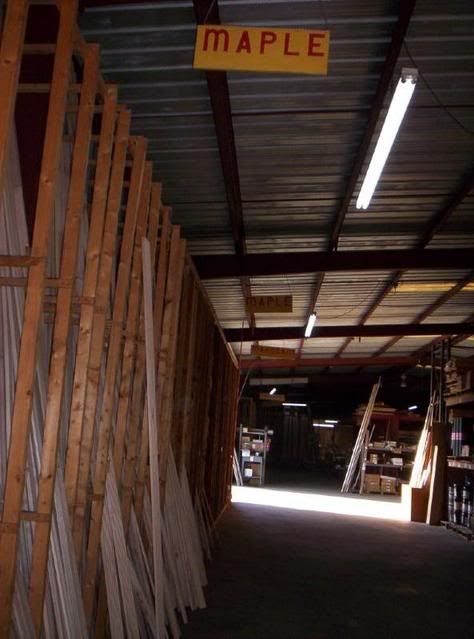 Through a very plain looking door to the right of the service counter is where the fun really begins. The warehouse is abuzz with contractors and employees getting the supplies they need for upcoming projects.
Dozens of tall racks hold common molding profiles in maple, cherry, mahogany, oak and poplar. Some pieces of molding are greater than 20′ long and all clear. Other racks toward the back of the warehouse contain planed dimensional lumber in the same common species. The middle of the massive warehouse holds racks full of premilled staircase supplies and cabinet grade plywood of different species. “We serve a lot of different people here – contractors, homeowners working as their own contractor, hobby woodworkers… the list goes on and on. We try to have enough variety on hand to suit everyone’s needs.”
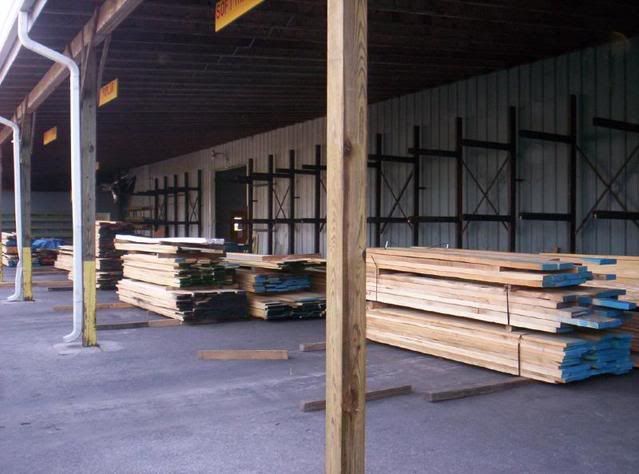 Through two massive garage doors, there is an outside covered lot where the rough timbers are stored. Some planks up to 8/4 and 16′ long are stacked by species. Besides oak, maple and poplar, customers can choose soft maple, hickory, walnut and several other species that you can’t find in your local home center. If you have the tools and like to mill your own, this is the place to look.
And, if you are looking for something a little more exotic for a project, you can get your hands on zebrawood, cocobolo, bubinga, rosewood, ebony and others. These can really give your project the character it deserves.
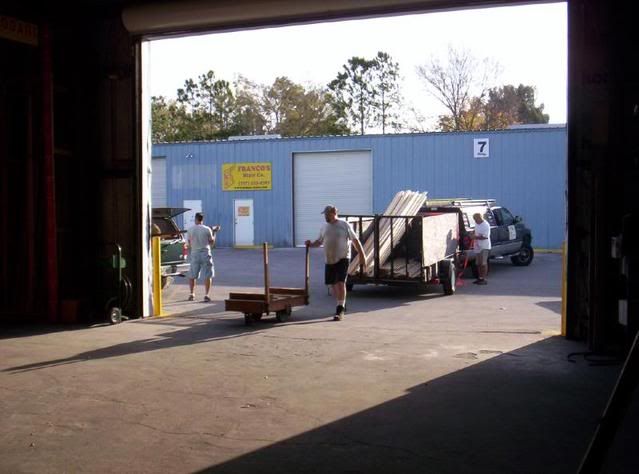 Way in the back of the warehouse is the milling operation. I had a chance to watch Earl Ogden, one of the millwrights, plane some boards down to a customer’s specs. Earl has even skip-planed a few boards to give his customers a chance to see what the final wood grain will look like. “We’re kind of like Burger King here – you can have it your way. We’ll mill exactly to a customer’s specs because that’s the kind of service they want.”
Since these hardwood suppliers do a lot of milling for the trades, you might want to ask to see their shorts – also known as offcuts. These shorter boards can be purchased at a lower cost and are perfect for smaller scale projects like boxes and clocks.
From rough boards to fully milled pieces, a full-service hardwood supplier can meet just about all of your woodworking needs.