What I learned from Toshio Odate

This past weekend at the Woodworking in America conference in Valley Forge, PA, I had the pleasure of sitting in on three very informative and entertaining seminars held by master craftsman Toshio Odate.  His insights helped me get a better understanding of how and why Japanese tools work they way they do.
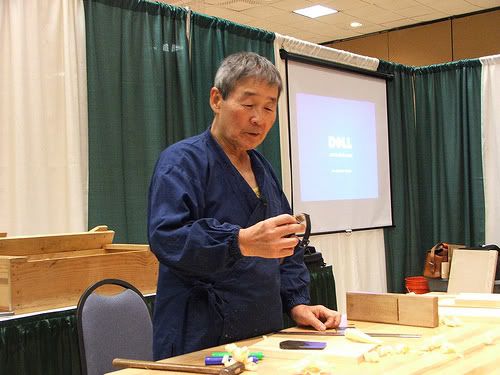
Some of the valuable lessons I was able to learn from Master Odate include:

* He came up through the very demanding apprentice program common for Japanese woodworkers of his era.  His master was tough.  Odate told us about his early days learning how to joint a long board using a traditional planing beam.  The complicated process involves taking a step back with one leg and shifting the weight from the front leg to the back in order to create a long shaving with no hesitation. When he didn’t move his leg properly… whack.  A crack from his master in the offending leg.  Needless to say, it  didn’t take long for him to learn the craft – or learn that master knew best.  These skills are still deeply ingrained in his hands, his eyes and his muscle memory even at 79 years old.

* The Japanese plane has only four working parts (The block, blade, chipbreaker and pin) compared to the 60 plus seen in western style metal planes.  However, the simplicity of the tool doesn’t necessarily make it an easier tool to understand.  In fact, Odate told us several times that there are only four parts you can see… there are 996 more parts that can’t be seen but must work together to get the plane to perform at its best.  These include the woodworker’s senses, the material the block is made from, how the edges of the plane are shaped… it went on and on.  This is why it’s not easy to find a comprehensive ‘’how-to’’ guide that addresses every aspect of Japanese plane craft – ultimately, the woodworker must interact with the tool to make it work properly.

* Japanese plane irons are forged of two different types of steel – a very thin base of very hard steel that is too brittle to stand on its own without cracking and a thick layer of softer, more malleable steel that  couldn’t hold an edge even if it wanted to.  Why mix these dissimilar materials?  Because, the softer steel serves as a shock absorber for the harder steel… and the harder steel is capable of holding an exquisitely sharp edge. The same holds true for Japanese chisels as well…

* But, what about those hollows on the back?  I remember when I was given a set of Japanese chisels and I tried sharpening them for the first time. I wondered what I could have done so wrong to have such a dramatic uneven area on the back side.  It turns out this hollow is there for a very important reason – when you hone, you only have to remove some of the steel behind the bevel and along the sides instead of having to grind away an entire flat area of Rockwell 64 hard steel.

* But, what happens to the hollow after you sharpen the chisels or plane irons several times?  Eventually, the back side of the bevel will fall into the hollow, making the edge useless.  Here’s where the two cutters vary wildly.  The chisel’s hollow gets deeper the further away you get from the bevel.  This way, you can grind the material away to keep the area flat behind the bevel.  On plane irons, however, the hollow is a very shallow and consistent depth.  When enough material is removed to see the bevel’s back fall into the hollow, the woodworker must hold the back side of the bevel against the end grain of a wooden block and tap the beveled face with a plane hammer to push the bevel’s back side forms the new flat. After that, the bevel is resharpened to remove the ever-so-slightly deformed bevel back into shape.  Is this nerve wracking? You bet.  Has Toshio ever cracked the brittle steel while doing this?  You bet.  Twice.  His master was quick to let him know what he had done wrong…

* Why oak for the block?  The Japanese oak used for plane bodies has very elastic properties which allow the chipbreaker and iron to be seated deeply if needed, yet tapped out gently.  Hundreds of times.  Softer woods would just collapse under the pressure of the wedge being driven in, and harder, inflexible woods such as ebony would simply split.  He repeatedly inserted and removed the iron with slight hammer taps, and the plane body willingly took and released pressure.

* Oh, and that oak block should never be finished.  Master Odate told us about a plane maker who would seal the mouth of the plane with tape and pour linseed oil into the blade well. This would soak in for a week and saturate the block. Sounds like a good idea, right?  Well, what happened was that the planes would always be wicking oil out, and they would pick up every single bit of dust, grit and grime. The blocks would become pretty nasty looking, and the company folded a year later.  Just the sweat and oils from the artisan’s hands are enough to impart a rich patina.

* Even the corners and edges of the plane block were important. Most plane makers will chamfer the top and bottom edges of the sides as well as the top of the ‘front’ of the plane.  The top rear edge is always chamfered to allow a relieved surface to tap with the plane hammer in order to exert force in the right direction.  The bottom front and rear edges, however, are always left sharp, especially on smoothing and trying planes.  This sharp edge sweeps sawdust and other grunge off the board so the body can get solid contact with the surface of the board both on the cutting pull stroke and the pushing return stroke. The only exception to this rule is when a plane is being used to ‘touch up’ a cabinet, when an unintentional bump with a sharp corner could damage a previously assembled joint.

* Finally, a plane iron is expected to require five carefully prepared oak blocks during its lifetime.  As the iron wears away, the sole of the plane is carefully scraped – or conditioned – to be absolutely tuned to the needs of the iron.

While the Japanese tools do exactly the same job as their western counterparts, their simplicity gives no clue to the intricacies in the ways they are forged, built, cared for or used.  I  went to Valley Forge hoping to learn more about hand tools, and I wasn’t disappointed. With the passing of Maloof and Krenov this past year, learning directly from a master craftsman from a previous generation is something I will treasure as I keep discovering new things about woodworking.

Special thanks to Lord LQQK for the awesome photos!
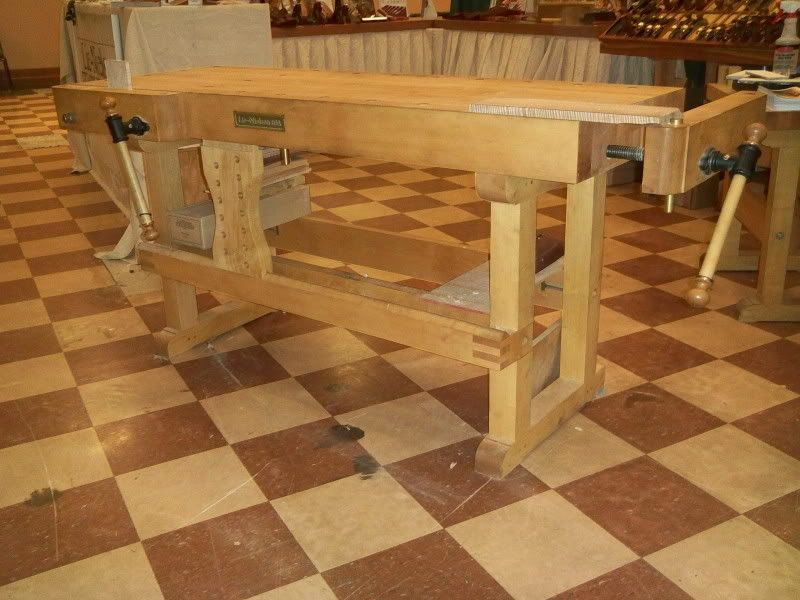
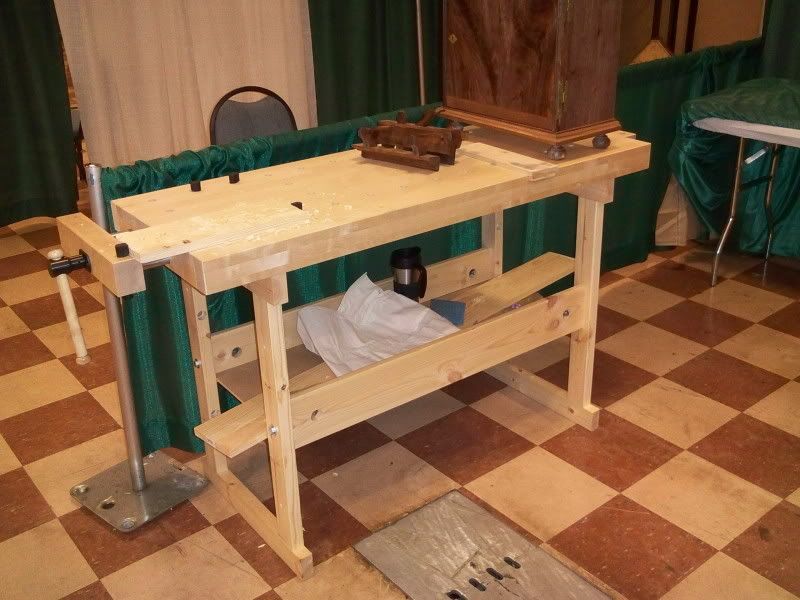
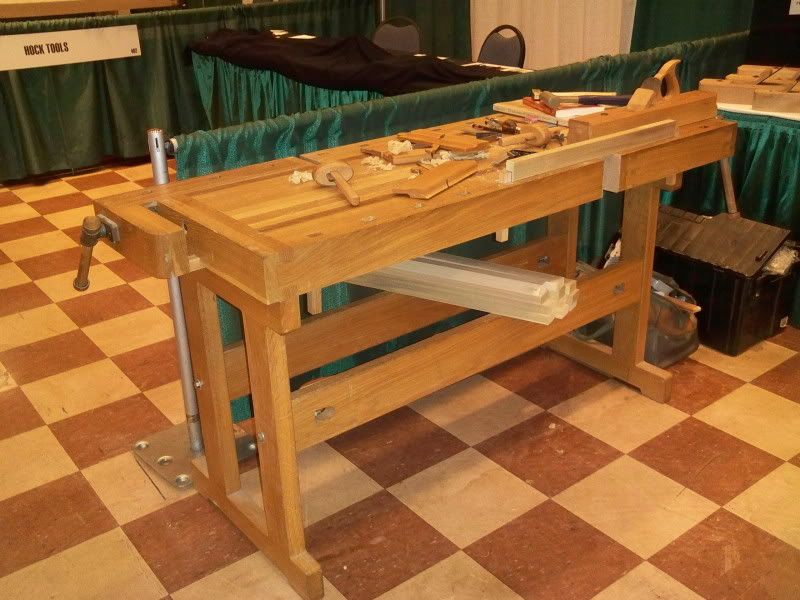
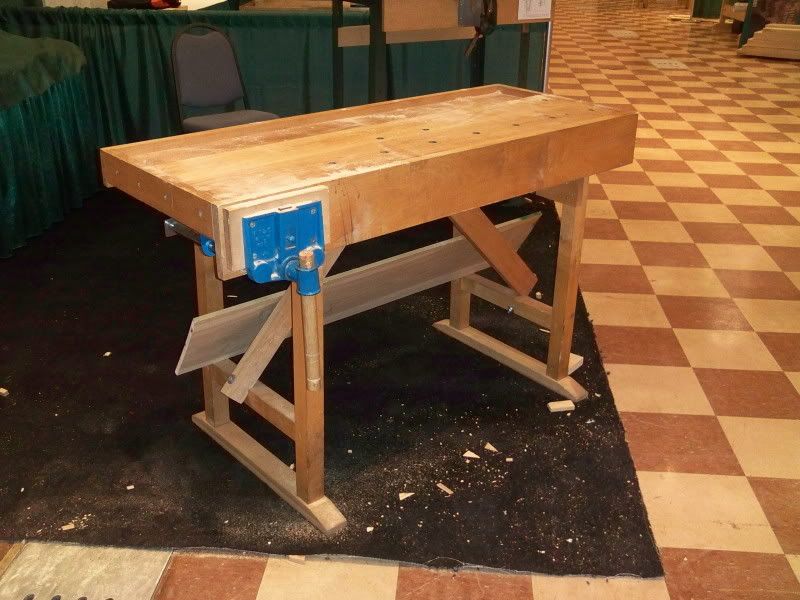
Bench Lust… I mean List!

I just got back from the Woodworking in America hand tool conference, and wow, was that impressive.  The companies making tools, the talented presenters and – most encouraging – the numbers of young woodworkers attending made this past weekend something special.

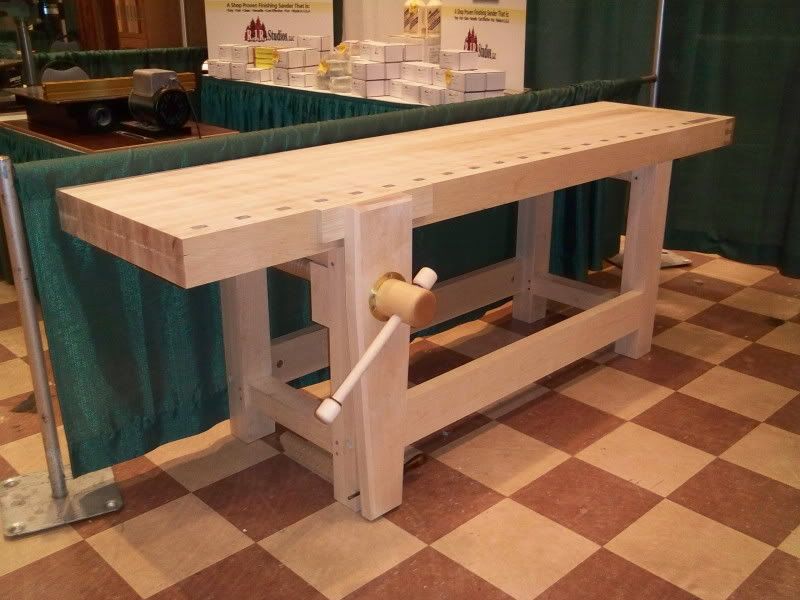
But, what really got me going was a visit to the vendor’s area very early on Saturday morning.  There, I saw an impressive collection of workbenches tool manufacturers were using to display and demonstrate their wares.

If you don’t have a bench, or are looking to replace one… well, I have some inspiration for you.

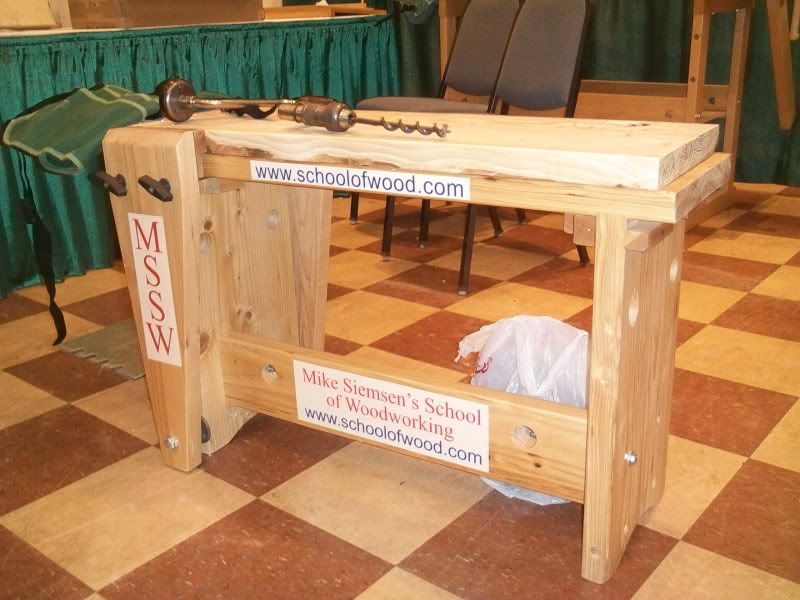
Here are a sampling of the benches out in front… some sweet specimens:

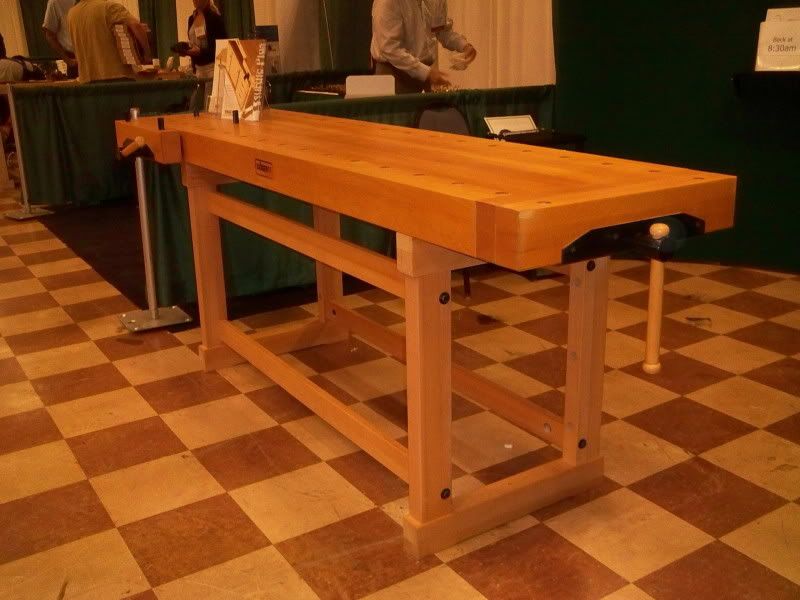
Lake Erie Toolworks' bench
The Lie-Nielsen Workbench
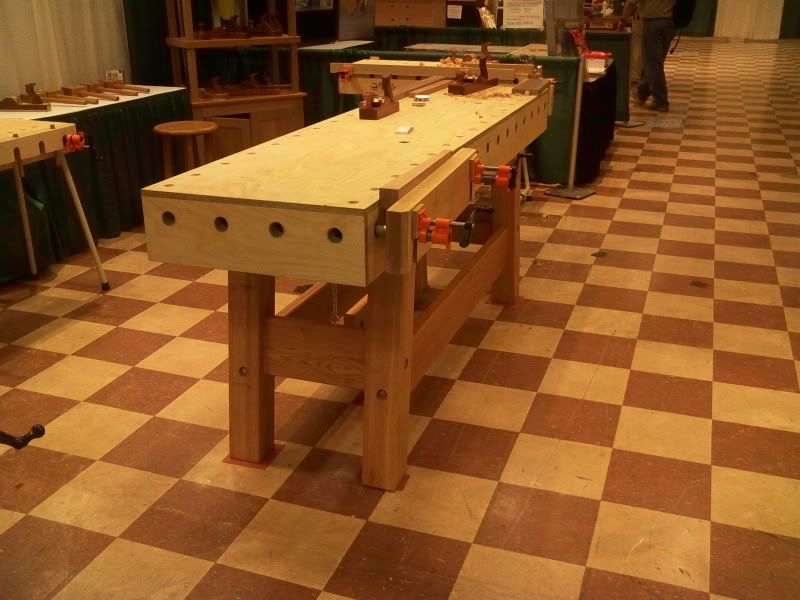
Blue Spruce Tools Bench
Blue Spruce Toolworks Bench
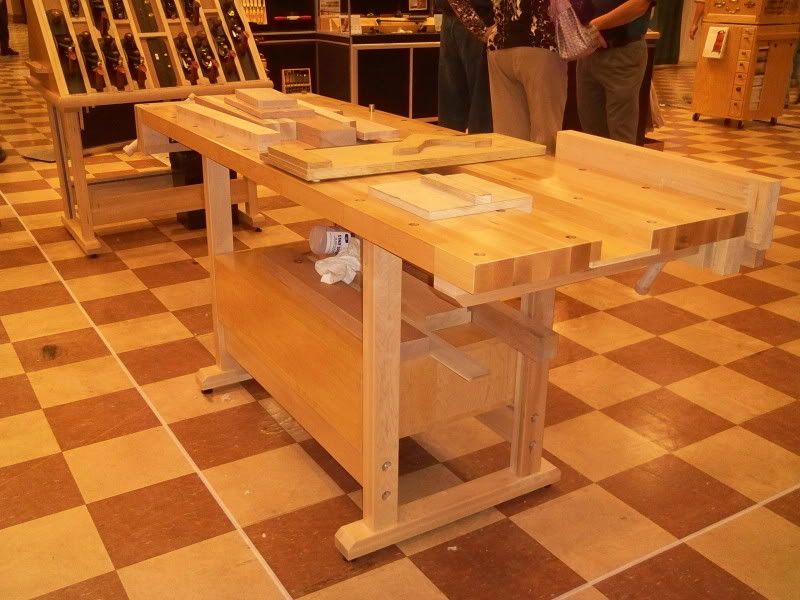
Clark and Williams Plane Bench
Clark and Williams Bench
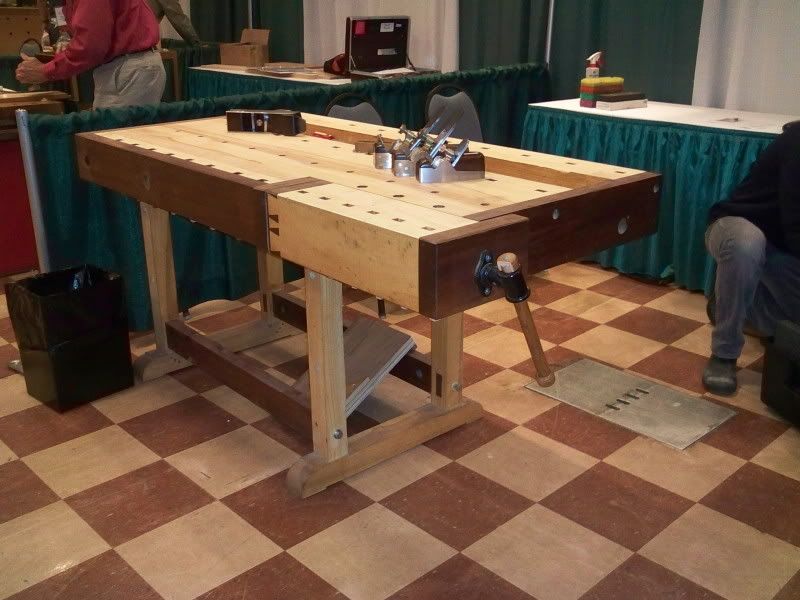
The portable demo bench from Tools for Working Wood
A commerically available Sjoberg bench
An interesting plywood topped bench from Blum Tools
A demo bench from Lee Valley Tools
The Sauer and Steiner bench
A short saw bench
A short saw bench
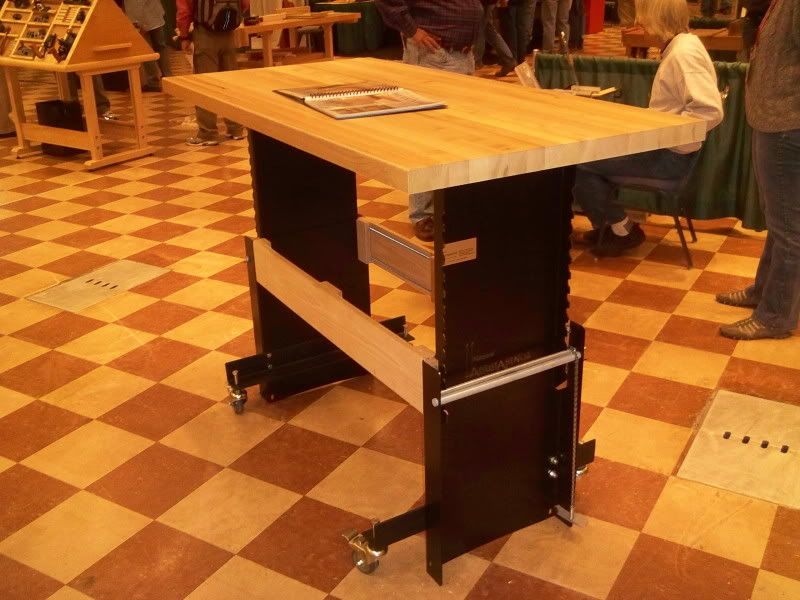
An offering from Adjust-A-Bench
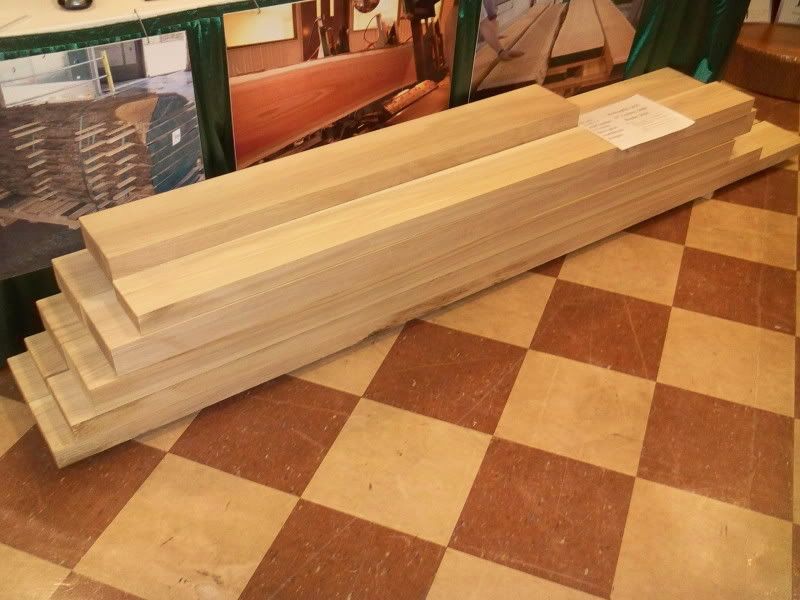
A bench in potentia
A bench in potentia by Horizon Wood
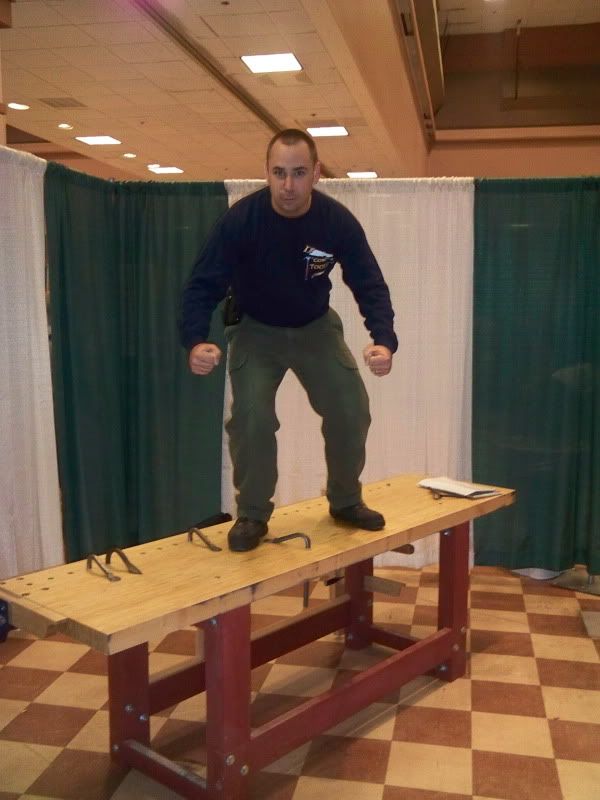
And, one very strong bench built my Megan Fitzpatrick!
And, one very strong bench built my Megan Fitzpatrick of Popular Woodworking

Quick Poll

While some folks claim the table saw is the heart of the shop, the workbench is, in my opinion, where all the action really is.

From setting down that first cup of joe in the morning to survey the shop before you get to work until the final project stands gleaming upon it, it will probably be the location of much planing, cutting, routing, sanding and assembly throughout the course of your build.

While there is very little disagreement about the workbench being the center of action, there are many different workbench situations. Some can double as altars for some minor woodworking religion, while others exist only in the mind.

In today’s poll, how does your workbench  situation look?  If you have multiple work centers/benches in your shop, just address the one you do the most work at.

[poll id=”93″]

Link of the week

The top 10 Influential Woodworkers:  Two years later

A few years ago, Tool Crib.com did a survey of who are the greatest influences on woodworkers. Earlier this year, I did a survey of my own, and listed the results in my Finding Those Roots post.

Tool Crib’s blog manager Garrett French took those results and did a little analysis… and the results are kind of surprising.

What Garrett did was look at the top ten responses from his survey back in 2007 and my recent survey and compare the results.  There were a significant number of differences between the two lists, and the findings may surprise you.  It’s worth a read.

Now, who will do the next survey in 2011, and what will they find?

Coping – and sticking – with doors

Building doors for cabinets and other pieces of furniture can be more complicated that you think. Sure, you are talking about something simple that covers and opening… but, even the most basic door can take many shapes. From a painted piece of MDF on butt hinges to a hand-cut divided light masterpiece inlaid with antique reproduction glass – you can make them as fancy or as plain as you would like.

For the majority of woodworkers, the classic frame and panel door is what’s going to be seen most frequently. Even something as seemingly straightforward as this can involve many different decisions. Do you build the frame with mitered rails and stiles? Haunched through tenons? How about making it look like a frame and panel door by applying molding to a flat panel? The options freeze many beginning woodworkers in their tracks.

However, one of the best options is to build the doors using a cope and stick setup on a shaper or router table. The cutters are either a matched pair of bits (to cut the groove and molding on the inside of the panel and to cut the ‘coped’ joint on the end of the rails that fit into the side stiles). Others allow the woodworker to disassemble and reassemble the bit to cut both profiles. Still others have both profiles on one bit and can be raised or lowered to get the desired results.

The ‘sticking’ bit cuts the profile on the edges and the slot that holds the door’s panel in place. The ‘coping’ part cuts a profile on the ends of the cross members (rails) that perfectly match the stick. They are very easy to use, but they do take some care to get right.

Eagle America’s Retail Store Manager, Miki, pointed out some of the pitfalls woodworkers commonly encounter. “Getting nice 90 degree profiles on the edge of the rails is critical to getting a square door. If you are off by even a little bit, it’s going to be very difficult to get it right.”

That’s one of the reasons why Eagle America and other tool manufacturers offer coping sleds to help cut this critical part of the joint. The sleds slide across the top of the router table and register against a fence or have a runner that slides in a miter slot. Woodworkers can then place the board down and clamp it tight. “It’s critical that the board be secure before trying to rout,” said Miki. “If it moves, you could easily ruin the cut.”

These sleds offer an additional benefit. “Since the board is backed up by the stop, it reduces the likelihood of tear out where the bit exits the cut. Since the bit is cutting into the end grain of the rail, this is a very strong possibility.”

During any woodworking operation, safety is paramount. By using a clamp to hold the word down, woodworkers can keep their hands safely away form the bit and maintain firm control over the sled. “Anything that helps you make cuts more safely enhances the enjoyment of the hobby.”

Does it matter if you cut the cope or stick of the joint first? “Absolutely not,” said Miki. “It’s all a matter of personal preference. However, if you need to make many doors for a project like a set of kitchen cabinets, you might want to run the ‘stick’ part of the joint on the edges of the rails and stiles. You can run dozens of feet of stock this way, then cut what you need to length and cope the ends as you build.”

Eagle’s coping sleds are made with replaceable backing stops that can be replaced if they get dinged up or you use a different bit profile.

Eric, Eagle America’s Product Manager, mentions another important fact about building doors, “Make sure you do not glue the solid wood or plywood panel into place when assembling your doors. Even finished, the wood will want to expand and contract to equalize moisture content. Gluing the panel in place – even by inadvertently having the glue from the frame assembly getting onto the panel, can lead to broken joints in the future.” Eric advised using a product such as door tape or Space Balls to keep the unglued panel from rattling in the frame.

While cope and stick joints are very attractive and easy to cut, some woodworkers feel the joint may not be strong enough for larger, heavier doors. “In that case,” Miki said, “it’s possible to cut a floating tenon to further reinforce the joint. But, for the vast majority of cabinet doors, the cope and stick joint with today’s modern glues will be plenty strong to endure years of use and abuse.”

An attractive joint that makes door making easier? There’s no reason to put off door making now that you know the secrets of the cope and stick joint.

I Was Dyeing To Try This…

When my brothers and I were very young, our family lived upstairs in a two-family house in Ridgefield Park, New Jersey. And, if you were to check our baby albums out, you would notice that all of the upholstered furniture in the house was covered in plastic slip covers.

They were insanely uncomfortable in our un-air conditioned home during the warm summers, but they served their purpose – they kept stains off the furniture.  Remember, kids like to spill stuff.  And, the more brightly colored the substance, the more likely it is to be spilled and leave permanent stains.

This got me to thinking… on those occasions where I do want to change the color of a board, why do I reach for either a wood stain or aniline dye?  Why not try some of those things that will stain carpets, clothing or furniture?

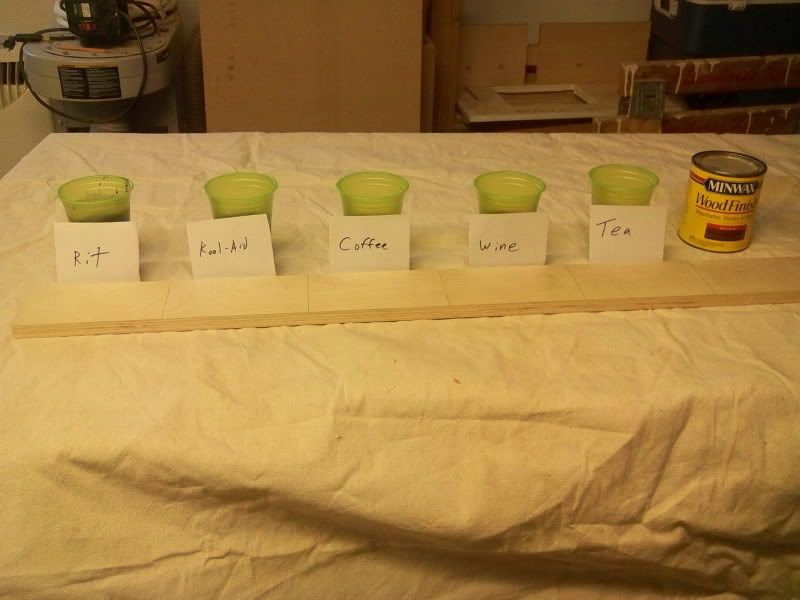
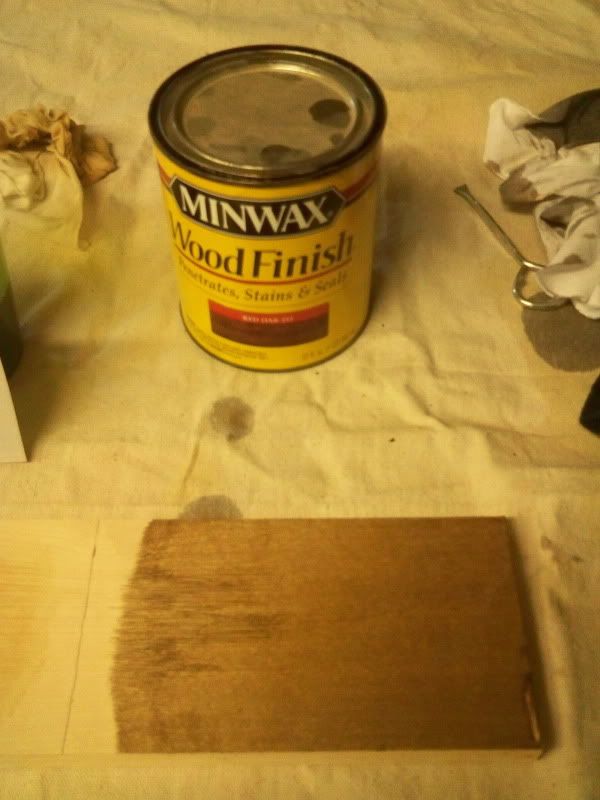
To see how well some of these alternate dyes work, I set up a little experiment.  What stains badly if it comes into contact with household fabrics?  I set up a sample board – a length of birch plywood – and lined up my candidates…

From left to right, I have Rit fabric dye – dark forest green, sugarless Kool-Aid drink mix, strong coffee my wife and I didn’t drink, an ultra cheap-yet-cheerful cabernet sauvignon and a strongly brewed batch of tea. I also used some Minwax red oak oil stain as a control.. showing just what a wood stain is supposed to look at.

What were the results?  Well, here’s what I came up with (Click on the images to see larger photos):

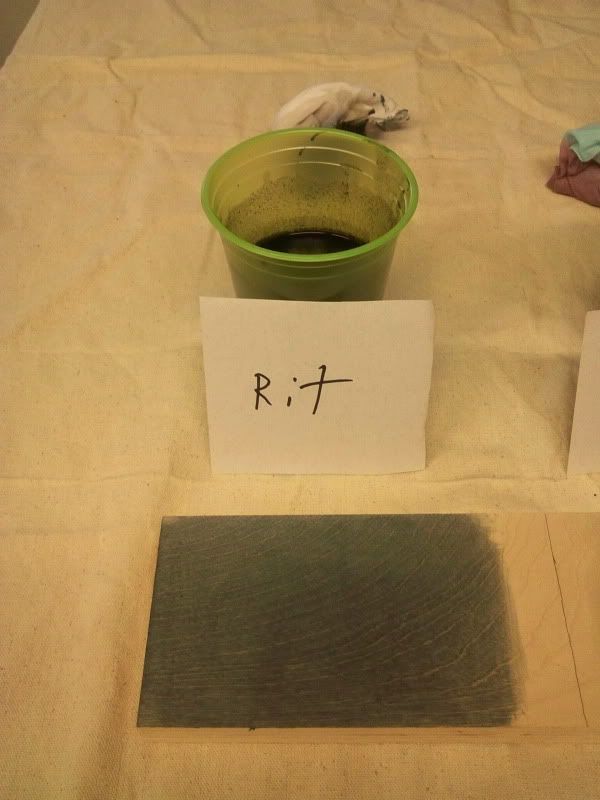
Rit dye ($1.10/package) – I mixed this popular clothing dye at the ‘strong’ ratio of one packet per cup of hot water and let it sit for a while.  It gave a very dark green cast to the board on the first application, and it got even darker on the second application. While the Rit dyes aren’t typically offered in wood-tones, if you are looking to add a splash of vibrant color to a project (say for a child), this ultra-cheap yet effective dye may not be a bad choice.

Kool-Aid (20¢/packet) – I mixed one package of this unsweetened kid’s drink into a cup of water (normal ratio is one packet to two quarts of water) and wiped it on.  This had an interesting effect – where I wiped it on, the color was a sickly purple, but the mix that wicked away on the wood fibers appeared to be a pure blue.  Ultimately, the color was a very unattractive purple and didn’t do it for me.

Coffee (the one pound bag cost $6.00 – we used about 35¢ for this pot) – BoyhowdydidIgettodrinkalotofcoffeetomakethishappen…. After I got over my jitters, I wiped three coats of strong black coffee on the board and I have to say was I ever unimpressed.  Either it wasn’t quite strong enough, I didn’t use enough of it or coffee is a terrible wood stain.  It did impart a very pale tan to the board, but it was very subtle.

Wine ($2.95/bottle – I told you it was cheap) – In vino, veritas.  And, the truth is that the wine proved to be a very interesting dye.  I wanted this to work very well, but the first coat wasn’t impressive.  By the time I got to the third coat, however, things changed.  Cab tends toward the ruby end of the spectrum (versus a shiraz, which is more purple), and the final results were very easy on the eyes.  A very pleasant look that might be suitable for accent pieces for a wine cabinet.

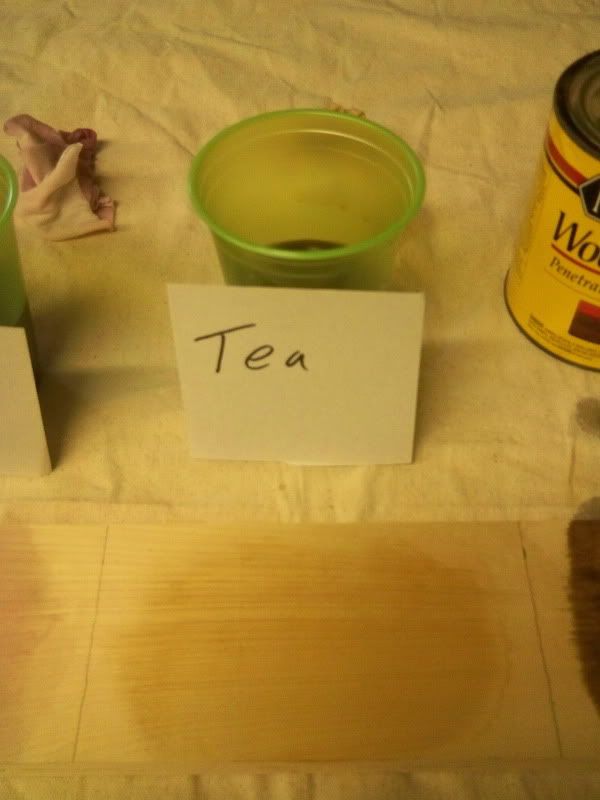
Tea ($1.15 for a box of 24 family size ice tea bags) – With all of the sickness that’s been in our house the past few weeks (colds and flu), we’ve been through a lot of tea bags. I have heard that people have used tea successfully as a dye for lighter woods, so I was looking forward to trying this.  From the first (of three) coats, the tea showed it was superior to coffee and provided a warm patina, much like wood that had been allowed to age for a while after being cut and surfaced.  I would certainly consider using tea for future projects.

As was expected, the commercial Minwax stain provided a deep, rich color to the wood on the first coat with minimal fuss.  Of course, there was the inevitable smell did fill the shop and the stain on the rag did color my fingers, but it was the winner hands down.

What did this test teach me, besides the need to use gloves when staining a project?  I found that some lower cost alternatives to commercial wood dyes and stains are viable options.  They can provide an interesting and unique look to your piece – whether as an accent or to set a tone for the entire project.

Oh, and I learned that all of these different items which have gotten me into trouble all of these years can be used for the power of good, instead of making your mom angry.

Quick Poll

While frameless (European) cabinet construction is growing in popularity, the face frame cabinet is still a popular building method.

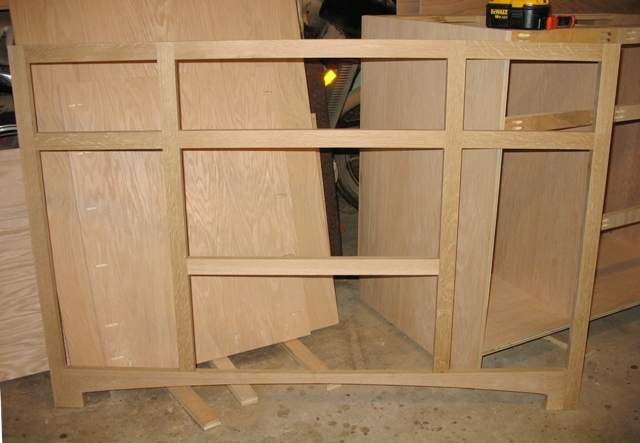
While it does take some extra time and involves extra material, the face frame offers extra strength to the assembly, can be used to square a cabinet, allows an easy way to scribe a cabinet to fit a wall and can be decorative to boot.

There are many methods woodworkers can use to join the elements of the face frame together.  Some are traditional, others are ultra modern.  Some take very little time, others can be quite time consuming.

So, this week, I want to know if you build cabinets with face frames, and just how you join the elements together…

[poll id=”92″]

part of the Wood Talk Online community