Quick Poll

Paper or plastic?  Aisle or window seat? Soup or salad?

When it comes to our everyday lives, there are lots of decisions to make, and there will always be people who will want to debate the merits of each choice.  Some do it with great passion.

In woodworking, there are lots of debates to be had as well about the choice of tools and methods. Some of those debates are brought up time and again… and again… and again.

This week, what do you think is the most overdone ‘debate’ in woodworking?  Is it even on this list, or do you know of others where the proverbial dead horse is beaten?

EDIT:  I’ve added some of the best ones submitted by the readers that I should have had there in the first place!  Thanks, everyone!

[poll id=”146″]

Link of the week

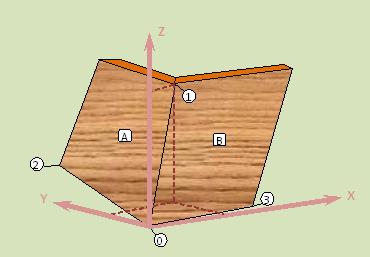
Jansson’s compound miter saw calculator

So many times in woodworking, we make boxes.  Four sided assemblies with 90 degree corners can become drawers, cabinets and so many other projects.

But, what if you want to make something with a little more flair? More sides? More visual interest?

If you want to go that route, well, get ready to be introduced to the wild and wacky world of compound miters. If trigonometry isn’t your strong suit, well, you might be looking for a calculator to do the heavy lifting for you.

This site is a versatile calculator that allows you to plug in your known numbers and come up with angles to create n-sided boxes, n-sided pyramids, general compound miters and other brain-twisting math.  Just plug in the info, set your saw and start cutting…

A collection connection

Woodworking is an awesome craft, hobby, profession and avocation. You can build family heirlooms, make your living area more functional or create a work of art. It’s something that can make your spirits soar or just provide you an opportunity to unwind after a hard day’s work.
But, it should never be something you get hurt doing.

That’s why a lot of research and development money is spent on safety equipment. Safety glasses, hearing protection, guards and jigs are developed and improved each year. And, they protect the users from risks such as eye or hand injuries.

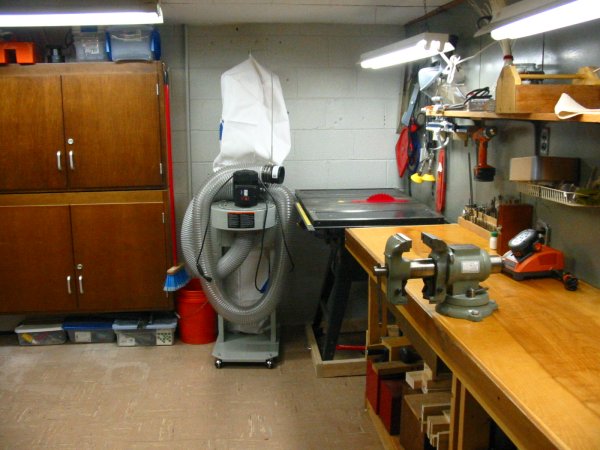
When it comes to safety, another critical component to consider is dust collection. Keeping the dust out of your lungs and nose can prevent a number of problems such as nasal polyps, sinus infections and cancer.
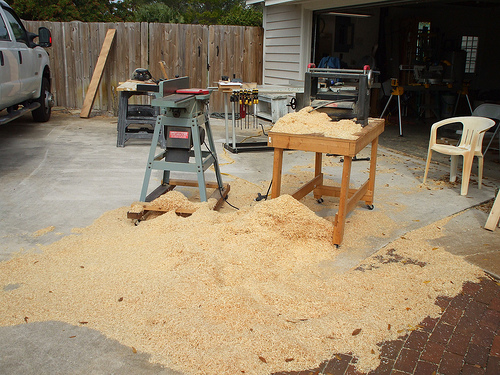
“Besides the health concerns, there are far more practical things to consider,” said Tim Walter of Eagle America. “If you don’t like sweeping up mountains of sawdust, adequate dust collection is for you!”

Tim explained to me that when it comes to dust collection, defense in depth is a key. “Taking care of dust in your shop starts where it’s created with the big stuff and gets finer and finer.”

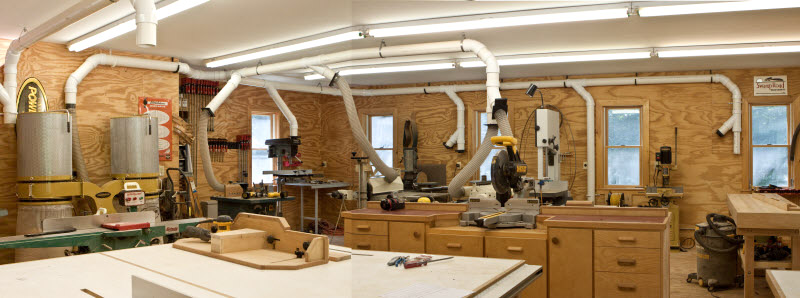
Tim pointed out that the big offenders in the shop need to be addressed first. “A bigger dust collector in your shop can pull in dust from your table saw, jointer, planer, band saw and other tools. You can have a portable hose that you move from tool to tool, or, if you have a powerful enough collector, you can set up a fixed dust collector system with piping in place from tool to tool.”

Some tools – such as cabinet table saws – make dust collection an easy proposition. They already have a dust collection port and handling built in to the design. “There are many other tools such as contractor table saws and router tables that are a lot tougher. That’s why we offer products such as the Dust Cutter which make these tools a lot easier to collect dust from.”
While fixed systems are great for stationary shop tools, those hand-held power tools can generate a blizzard of sawdust that needs to be handled as well. “Ever try collecting the dust from a session of routing into MDF? You’ll drive yourself nuts!” To help with these situations, you can rely on light flexible hoses that can plug into your larger system, or get a point of origin collector. “Any shop vacuum can serve well as a dust collector, but there’s definitely a step up with either a Fein or a Festool collector. They both come with a feature that will turn the collector on when the tool is activated. It makes using the collector a lot easier.” Added bonuses include portability, better filtration than your average shop vacuum and a whole lot less noise. Built in mufflers keep both the Fein and Festool at a more comfortable decibel level.

For the finer dust that gets into the air, filtration systems can help keep the airborne particles at bay. “These are not replacements for a dust collection system, but offer another layer of protection for your lungs.” While most tool manufacturers offer expensive systems that can be hung in the shop, Eagle offers the Demo AirNet. “It’s a very cool system that attaches to a normal fan. It will filter debris out down to five microns, making the air a whole lot easier to breathe.”

Finally, when working it a very dusty environment, there’s nothing quite like a personal air mask. “If you are working in dusty environments for a short time or not too frequently, disposable masks make a lot of sense. If you spend more time in the dust or haven’t yet gotten your dust collection system up to snuff, a respirator with replaceable filters is a sound investment in your health.”

While it may not be as glamorous as a new table saw or the latest router bit collection, dust collection is a sound investment in keeping your shop a safer, cleaner and more productive place.


Show me the monkey!

If you’ve been around the twitosphere, you’ll notice that I have had a number of Tom’s Workbench t-shirts made up.

The front features everyone’s favorite mischievous monkey:

And, on the back, I am PROUD to salute The Wood Whisperer and Bell Forest Products, the two sponsors who helped make these shirts a reality. I can’t say enough about the support they showed me, and how both have helped the online woodworking community throughout the years.

These babies are the real deal – 100% cotton Gildan gray shirts with both the front and back logos in black ink.

Now, I have a limited number of medium, large, extra large and just a few XXLs left.  And, if you would like to wear a little bit of Tom’s Workbench history, I think I can be convinced to part with ’em at $12 each. That includes shipping and handling in the U.S.  And if you don’t call the U.S. home, well, we’ll just have to see how much that shipping runs!

Just send me an e-mail at tom@tomsworkbench.com – including your size –  and we’ll go first-come, first served basis. Hold off on payment until I can confirm I have the right size.  Just be sure to list “Yo! Shop Monkey T-Shirts Here!” as your e-mail subject line. That’s so Iggy doesn’t get too confused, alright?

There is only one problem with these shirts…

They don’t come in monkey sizes!

Oh, well, my simian friend will just have to wait until we see a reprint…

UPDATE:  I’m now out of XXL’s… And, for those who asked, the shirts were printed by an online company called Blue Cotton.  They did a very good job for a decent price… in case you want to print your own shirts!

Species spotlight: tulipwood

When it comes to buying wood, it’s important to know what you are asking for… Some of the names of the woods out there are very similar.

For instance, everyone knows what poplar is, right? It’s that light colored wood with the green or purple streaks in it that is inexpensive, holds profiles very well and makes for some sweet looking painted or stained projects. Sometimes, it’s even referred to as tulip poplar.

And, if you thought that’s the species I was writing about, you’d be wrong.

“Yeah,” said Eric Poirier of Bell Forest Products. “We get that a lot. People call us looking for tulip poplar for some projects, but, wow, are they missing a spectacular wood also known as tulipwood.”

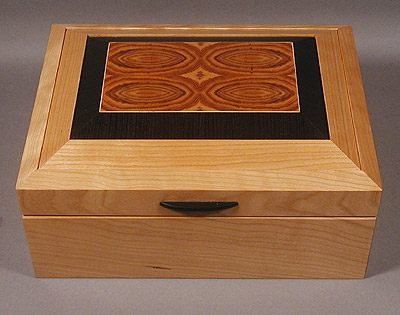
The tulipwood Eric is referring to comes from Brazil, and if you haven’t seen it up close and personal, you are in for a treat. This tulipwood is hard and heavy with a fine texture. Unlike the greens, purples and off-whites of tulip poplar, the sapwood is a solid yellow color, while the heartwood color ranges from a pink to a darker red, with a straw colored background.

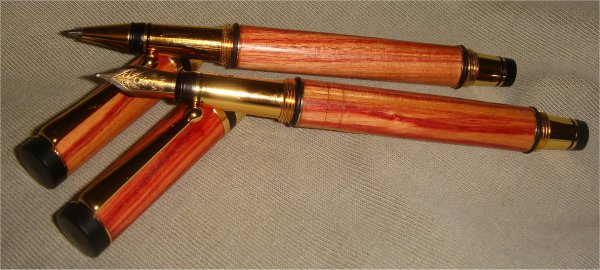
While tulipwood is excellent for furniture, the pieces tend to be smaller due to the tree’s growth habits. “You’d think this would be a problem,” said Eric, “but there are plenty of woodworkers out there who turn beautiful projects from pieces of the stuff. It’s also a very popular choice for knife handles, pens and smaller accent pieces.”

Another surprise about the wood is how well it polishes up. “I’ve seen projects where the woodworker has sanded the piece down to a fine grit and then buffed it with a felt wheel. The finish is something to look at.”

If you are looking for something a little off the beaten path, trying a little tulipwood in your next project may make it look like things are coming up roses.

Quick Poll

Here’s a great philosophical one for today…

Classic wooden joints have been around for millenia. Dovetails and mortise and tenon joints were used by ancient Egyptian woodworkers back in the time of the pharaohs.

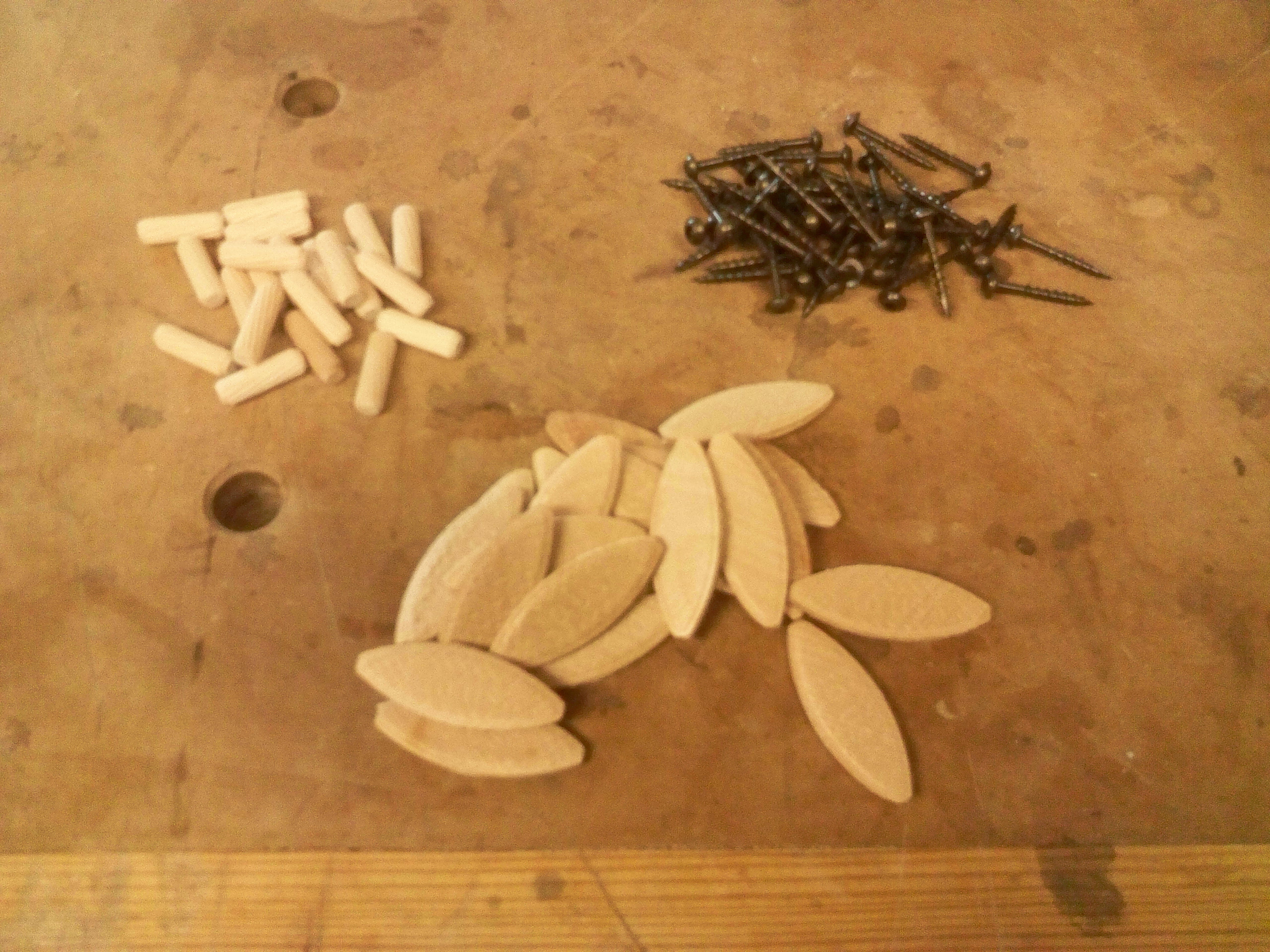
Until recently in the craft, flawlessly executing those joints has been the hallmark of a truly talented woodworker.  But, as time has passed, many new joinery methods have been developed to help shorten the learning curve for new woodworkers. Dowel joints, biscuits, pocket screws, the Festool domino and other joinery methods have allowed woodworkers of many different ability levels to build beautiful furniture without mastering the classic joints.

This week, do you believe that a true craftsperson can use these joinery methods and still be called a ‘true’ woodworker? Does it even matter?

[poll id=”145″]

Link of the week

St. John’s Abbey Woodworking

On Interstate 94 between St. Cloud and Fargo, you will find the small hamlet of Collegeville, Minnesota. This is the home of St. John’s Abbey, and the monks who live there turn out some of the most beautiful furniture from locally grown woods.

The men who live at the Abbey build exquisite furniture – from clocks and chairs to caskets and coffins.

Their woodworking tradition is based on Benedictine principles of spirituality, stability, and stewardship of the land. Local artisans—both monastic and lay —have been designing and crafting practical, durable, and beautiful furniture and architectural details for 150 years.  Definitely worth a look.

part of the Wood Talk Online community