All posts by Tom

I'm the guy who writes the blog...

Link of the week

Tampa Bay area strike team Hurricane Sandy relief

AGAIN?  What gives?

Yes, there was no post this past Wednesday.  Why?

Because I was deployed with a Tampa Bay area strike team to New York City to assist with the relief efforts post Hurricane Sandy. No woodworking here, but lots of tracking relief supplies, inventorying shipments and documenting what has been going on. The days have been grueling – 12 to 15 hour days, but it’s nothing compared to the troubles that storm affected areas have been experiencing.

Today’s link is to the blog I have been doing day by day (yes, another blog for me to work on) giving everyone a look into the workings of the logistics center here in Brooklyn.

Oh, another important thing… this event is no where near done. While contributions of coats, blankets and other material are great, they do create a logistical logjam, since they need to be shipped, sorted, warehoused, packaged and delivered. Contributions to organizations like the American Red Cross allow for items to be sourced from vendors and shipped directly to where they are needed. Thanksgiving is coming up here in the United States… we have a lot to be thankful for, but a lot of folks here in New York are suffering…  Just a thought.


Strength and precision

A quarterback spies an open receiver down the field and throws the ball with tremendous velocity and extreme accuracy to a place where only his guy has the ability to catch it. A sports car that pours power from its highly tuned engine, yet allows the driver to turn a corner as if she’s riding on rails. A gymnast generates an awesome swinging speed, launches herself into the air above the parallel bars with such precision that she merely has to extend her hands to catch the bar, saving her from an terrible fall to the floor.

Raw power is a great thing, but without precision, it can leave things a mess. That’s especially true with it comes to power tools. When you are talking about fractions of an inch meaning the difference between a perfectly fitting joint and one that’s suitable for the scrap heap, being able to put your power in the right place means a lot.

For about the past nine years, when I needed to rout something in a table set up, I would turn to my trusty, second hand Freud FT2000 router I had bought from a friend. And, for years, it did a fair job. Oh, it had the power to spin big bits – cope and stile, panel raisers.. the works.
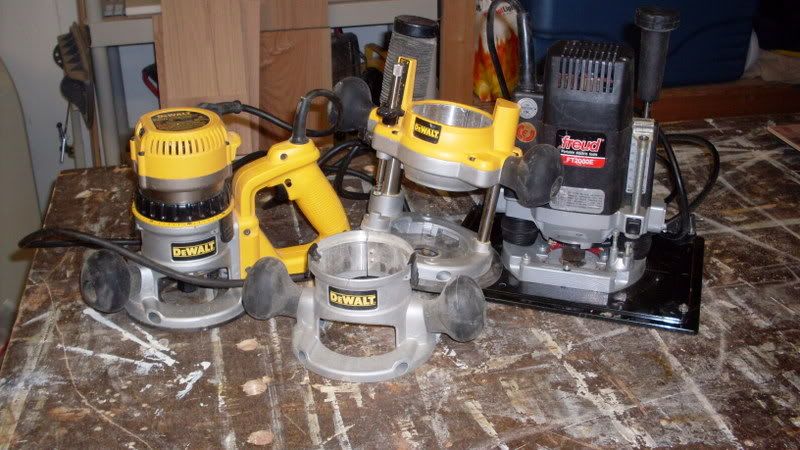
http://i61.photobucket.com/albums/h43/Tampa_Tom/SDC10156.jpg

The biggest problem I had was that there was no above the table adjustment for setting cutting depth on the bit I was working on. In order to get things to the right height, I would have to hold my set up block or bit height gauge over the bit, duck down under the table to grab the adjustment knob (the old router was a plunge model I removed the spring from) and spin it until I got close, then look above the table, trying to spin the knob to get the exact height. Sometimes, I was right on. Other times, well, let’s just say that with the fire pit season closing in here in Florida, there soon won’t be any evidence of my mistakes.

The other pain in the butt with this router set up was that I had to pull the entire router assembly out of the table to change bits. Not a problem if I was using a pattern bit with a bearing, but if I had a fence set up, I had disassemble the entire set up and reset everything from scratch. A total time waster.

All of this changed when David Venditto of Infinity Cutting Tools asked me at lunch one day, “So, what’s your router set up like?” I told him my tale of woe, and before you know it, David asked me to swing by his old Tampa location. He had something for me.

This is quite a something! Infinity is now carrying the fully redesigned Triton 3 1/4 hp plunge router. This is one extreme bit of tooling.

First of all, I was terrified that it would be a brute. The old router I was replacing was very heavy unit that screamed when you turned it on and vibrated the table to no end. The Triton, while loud, is nothing like the old one. It also has very little vibration, spinning the bit with ease.

And, does it ever have power! I was using my cope and stick door set, and the router didn’t bog down once. It poured out the power smoothly and evenly throughout the cut while I made full-depth passes. Rock solid.

The other feature I love about this router are the above the table adjustment features. Sure, you could go with a router and a separate router lift, but when one machine does the deed, that’s just pure gold. This router is set for that kind of operation. First, it’s easy to remove the plunge spring from the unit if you are going to dedicate it to the router table. (I already have two hand-held routers for above the table work, and won’t be needing a third). From there, a handle can drop through a hole in the router plate to adjust the height of the bit from above the table. This makes setting the depth a whole lot easier.

And, another cool feature of this router is that a spindle lock/safety is incorporated into the switch. When the switch is off, a clear plastic shield prevents the switch from being bumped. When it covers the switch, it also locks the spindle on the router, allowing for simple one-tool bit changes above the table. Where has this feature been all of my life?

The unit also features a sealed area around the bit with an integral dust collection port. This, paired with a dust collection fitting on your fence, should be able to keep your work area clean of dust.

I still have yet to totally put the router through its paces, but I can tell you from what I have seen, it has this whole power and precision thing down cold.


Quick Poll

Woodworking requires a certain degree of know-how.

Whether it’s deciding on what kind of wood to use for a project, the best method for joining two boards together or building up a perfect finish, the more you know about the process, the easier it is to complete it successfully.

Today, tell us where you get the majority of your woodworking know how. Do you go online or to the library? Do you ask a knowledgeable friend or relative, or do you figure it out through trial and error?

Link of the week

Lake Erie Toolworks

Yes, I did once feature Lake Erie Toolworks a few years back, but after running into them again at Woodworking in America, I have got to tell you about two new products they have.

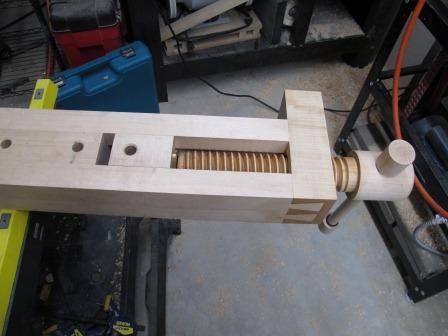
Known for their giant wooden screws that make vise building a piece of cake, they are now offering two new vise kits for your workbench – a wagon vise and a shoulder vise. I had a chance to use both of these vises at the show, and I can tell you they work VERY well. Nice and smooth, with a thread that’s fast enough to release your work quickly, yet provide tremendous amount of leverage and clamping power.

Give their site a look.. I think you will be impressed.

A peek at the weekend at WIA

I’m still on a big time high after coming back from Woodworking in America, the midwest edition. I mean, when you can get folks together and talk woodworking – ALL weekend – I mean, come on!  It’s about as woodwork geeky as you can get!  So, what was it like? Well, lemme show you!

Now, isn’t that great? We got a warm welcome when we got to Covington, Kentucky.
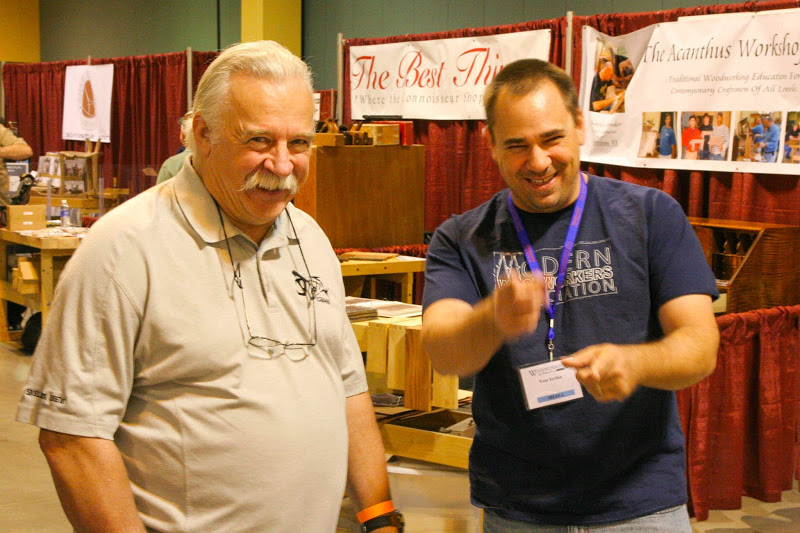
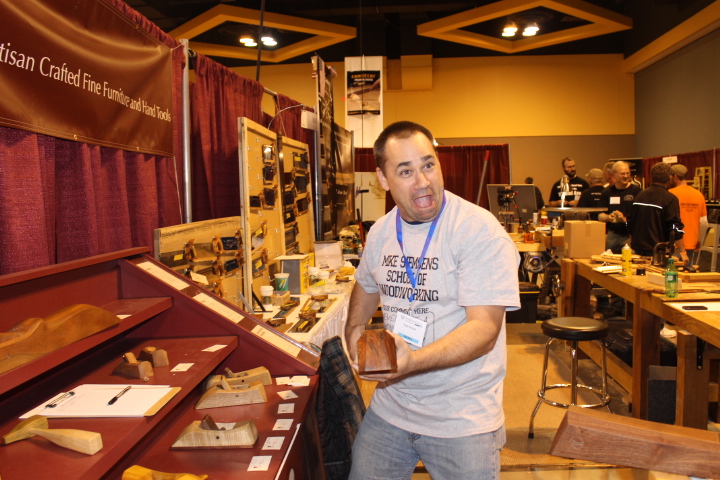
Yukking it up with my good friend Mike Candella on the expo floor
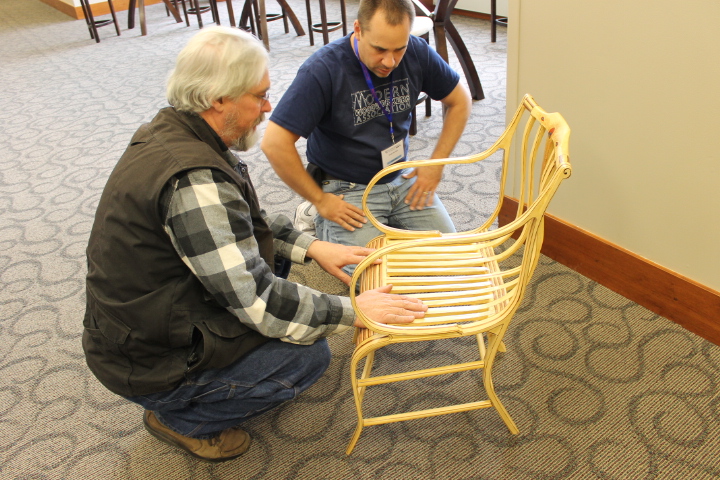
Very talented woodworker Don Williams shows off his awesome bentwood chair. Just stunning.
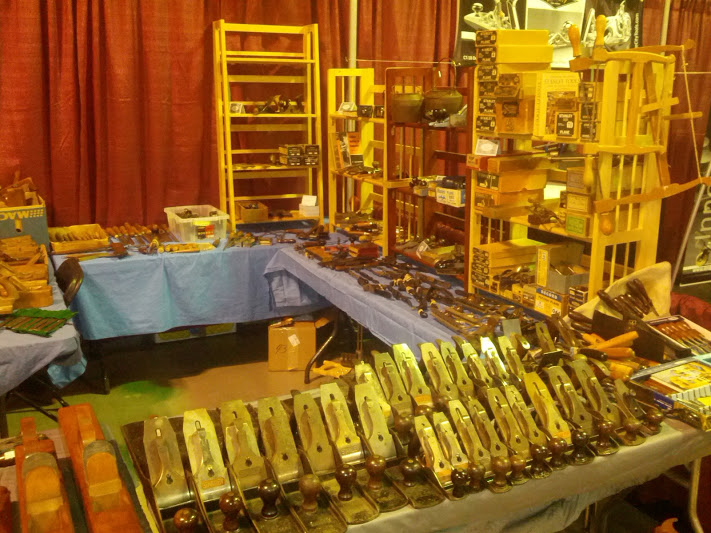
Patrick Leach’s incredible old tool collection
Say ‘ello to my little friend! A HUGE Scott Meek jointer plane
Of course, you need a little lunch over at the White Castle. Of course, I’m tweeting a pic!
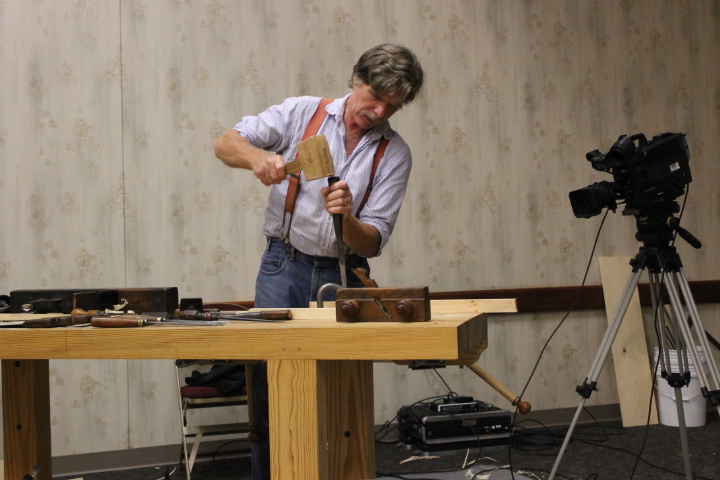
Who wouldn’t want to take a class with Roy Underhill?
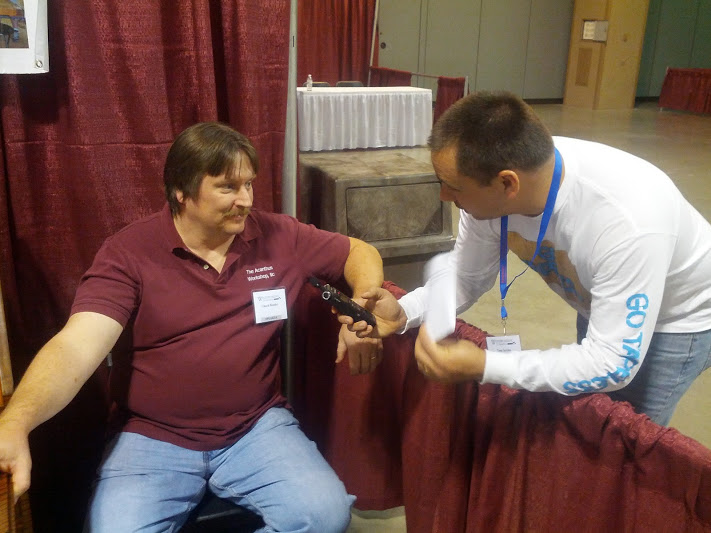
When you get a chance to interview Chuck Bender, you take it!
Let’s hoist a few brews at the Hoffbrauhaus with some great friends!
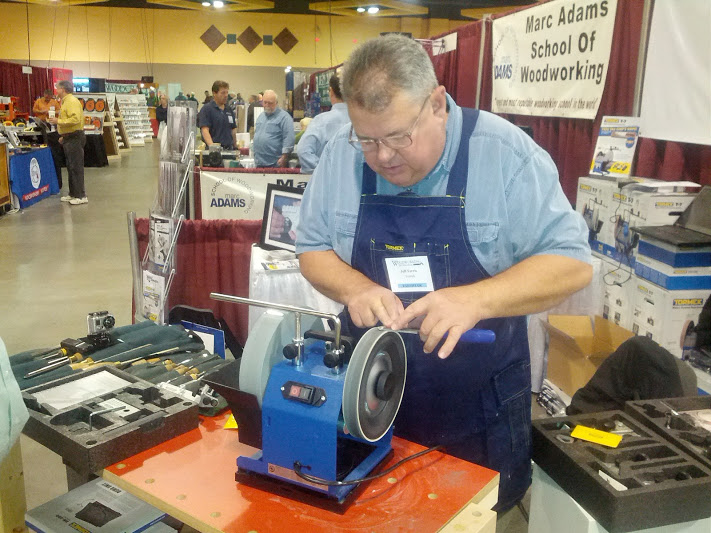
Jeff gave a great hands-on session with the Tormek!
I try to get Frank Klausz to cut my dovetails at the Hand Tool Olympics
Even without Frank’s help, my dovetails didn’t stink as bad as last year’s!
I ran around and played the bench dog fairy… Courtesy of Time Warp Tools!
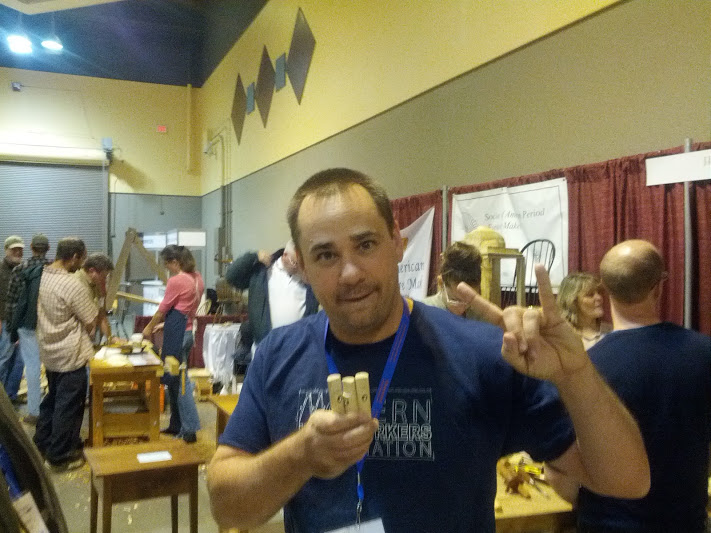
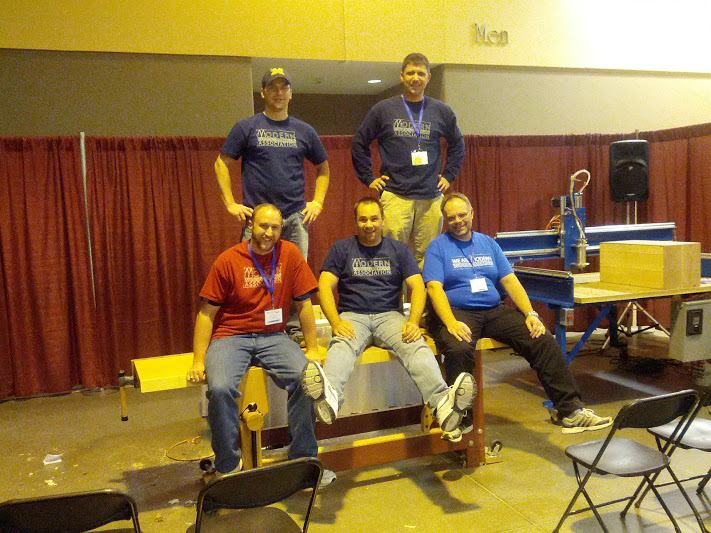
The Modern Woodworkers Association Crew posing on Megan Fitzpatrick’s Gluebo workbench
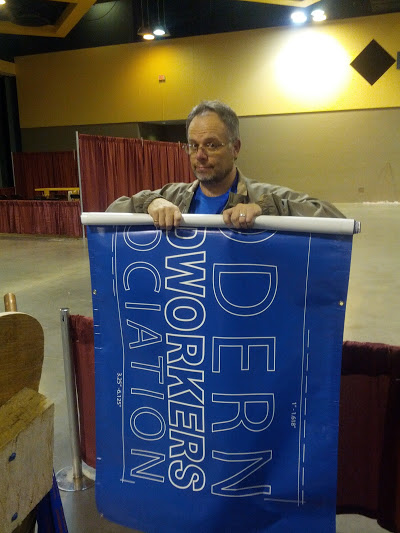
The fun had to end sometime.. Ian MacKay helped roll up the banner

While it was sad to see the show wrap up, I flew back to Florida excited to think about next year.

And, yes, it was fun, but I think there were a few things that could improve the event next year. With two shows – the first one held a month ago in Pasadena, California – it split the WIA audience into three segments – those who attended Pasadena, those who attended Covington and those who didn’t attend either show because everyone wouldn’t be together.  Rumor has it that next year, they will go back to one show… And, I hope to see y’all there!


Wild dovetail tricks!

Now that Woodworking in America is over, there is a mountain of photos, stories and other stuff I have to sort through to bring you a few decent posts. But, I do have to start off  by saying what an awesome weekend it was. Sure, a lot of folks either went to WIA west in Pasadena or stayed home because the whole gang wasn’t there, but hey, we had ourselves a blast!

Now, I saw some impressive stuff while I was there. I got to handle a Scott Meek plane. I got to watch Chris Schwarz build a saw bench in under an hour. I even got to see one of the most impressive chairs  built by Don Williams (That chair in itself is worth an entire post).

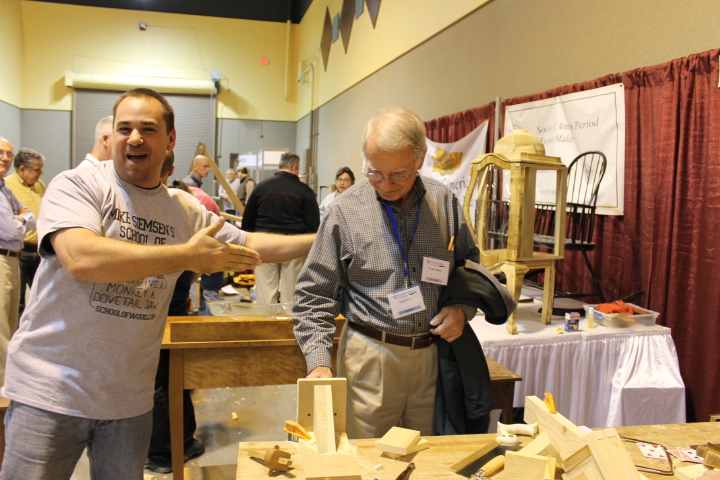
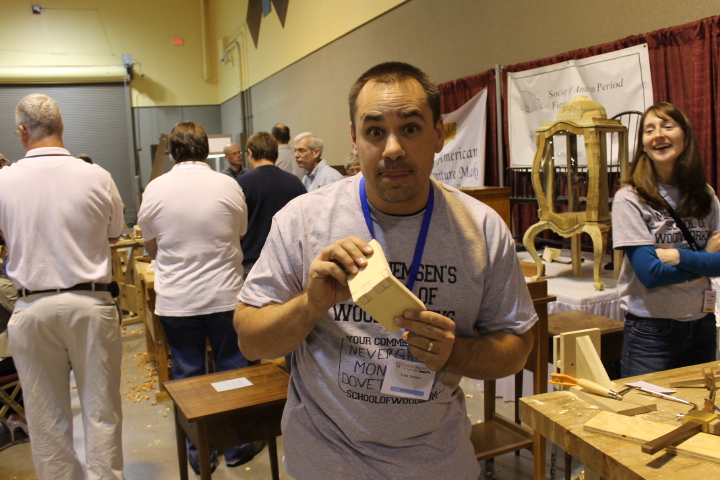
But, what impressed me most was the feat of dovetailing magic performed by Mike Siemsen, the ringleader of the Hand Tool Olympics.

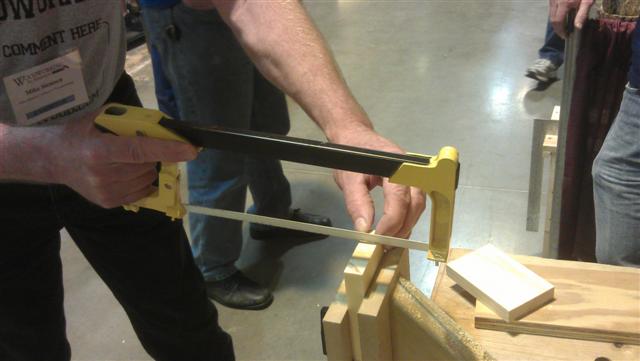
You see, Mike is of the mind that you don’t need a whole bunch of expensive tools to do dovetailing. And, he proved it with this kit. A hacksaw. A screwdriver sharpened to a chisel point. A board with a screw that had a sharpened head as a marking gauge. I think he spent $12 at the local home improvement center for the whole shebang.

Using his cutting gauge, Mike marked out the baselines of the tails and pins on the board. The sharpened screw head sliced cleanly, and before you know it, he had the board in the vise. The hacksaw cut surprisingly straight and quickly, leaving a very thin kerf.

Rather than use a coping saw to cut out the majority of the waste, Mike turned to his chisel – a straight bladed screwdriver.  The model he chose – a $2 plastic handled one – did OK, but Mike was quick to point out that had he gone for the $5 model, the steel would have held a better edge. Oh, well, there’s always next time! And, the best part – his mallet was a piece of 2×4 that he had shaped into a club. Hey, it did the job!

After the tails were cut, Mike went over to the pin board, marked it and followed quickly with his cuts. A chop here, a pare there, and the results were something else to look at!

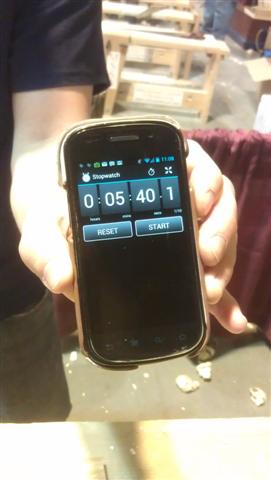
Now, I’m sure you have to be wondering how long it took him. After all, these are not high-priced beauties. I knew it wasn’t taking a long time, but wow, the final time was a real eye-popper. And that was even with me asking Mike to stop a few times so I could have him pose.

So, what’s the moral of the story?  You really don’t need to break the bank to do excellent work. Even the most expensive saws and chisels will only work as well as the operator makes them. So, get out and practice. And, if you have a spare $12 lying around, you might even want try your hand at low-budget dovetailing.


Quick Poll

Think about one thing you do on every project. Sand? Maybe. Cut? Perhaps.

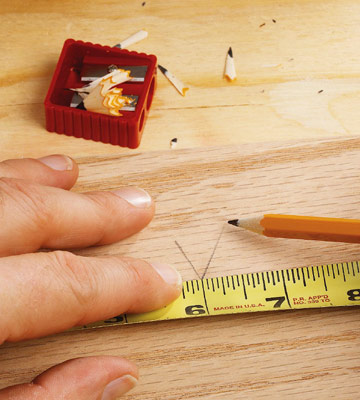
Measure?  FOR SURE! Whether you are using a micrometer, a tape measure or existing cabinet parts for relative dimensioning, you are bound to do some kind of measuring.

Now, here comes the tricky part… there are many scales or units of measurement you can use. The metric system. Conventional measurements such as feet and inches. Heck, some folks even do without any sort of scale and use relative dimensioning.

This week, let us know your preferred system of measuring. Sure, you may use many, but specify the one you are most comfortable with and you turn to the most.