All posts by Tom

I'm the guy who writes the blog...

Quick Poll

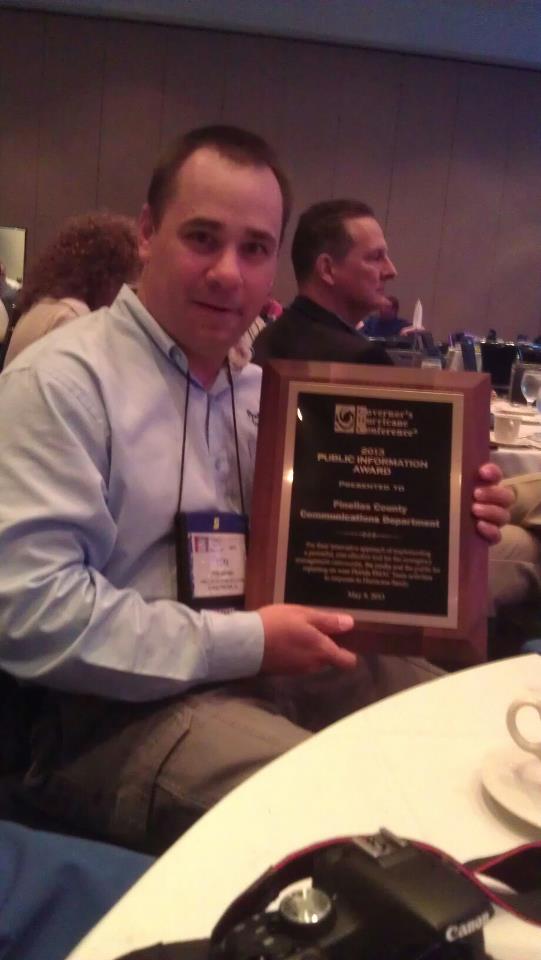
Sorry I missed a post last Friday. I was down at the Governor’s Hurricane Conference doing a little teaching, doing a whole lot of learning, and picking up a piece of hardware…

The Best Public Information Program award of 2013 goes to...

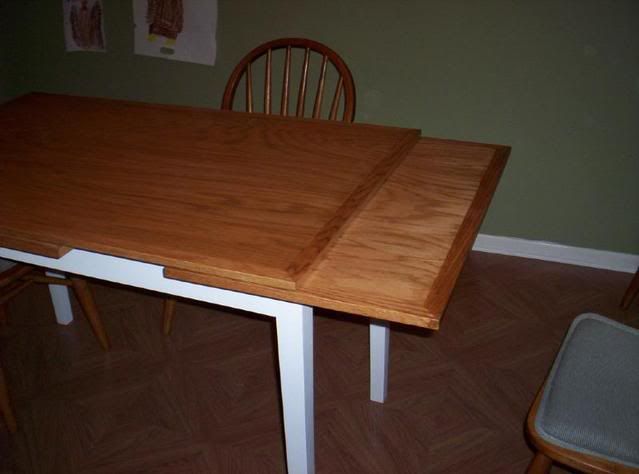
Once I got back home, I realized how much I missed my woodworking. I started looking at the pieces I have built – the banquette, the two entertainment centers, the dining room table, and realized – wow – I do build a lot of pieces where I use paint as a finish. That’s not a terrible thing, since most of my mistakes can be hidden with a whole lot of putty and a an opaque topcoat (wait, did I just say that?).

My drop leaf dining room table with painted base

This week, tell us about the use of paint in your projects.  Do you use it all the time, or is it something you avoid like the plague?


Species Spotlight: Soft maple

When my boys were both born, I was a total wreck. I mean, there is nothing – and I mean nothing – as unbelievable as holding a person less than five minutes old in your arms. It’s a whole transcendental moment, connecting you with the new generation in your arms and the many generations that came before you.

Is this kid my 15 year old?

And, when I told my friends and co-workers about the moment – tears in my eyes –  many of them said the same thing to me. “Tom, you are such a softie.”

I’m pretty sure the meant that in the best way possible, but I’m sure a few of them meant that I was just too darned sentimental.  I mean, come on, people have been having kids for a long time before I did.  Couldn’t I just skip the emotional roller coaster?

And, I’m sure that when you look for hardwood (man, what a transition) – specifically maple – you are looking for the hard, sugar or rock maple for your project. And, many of you might turn up your noses at soft maple.  I spoke to Eric Poirier of Bell Forest Products about that, and he said, “If you did, though, you might be passing on some of the most beautiful wood you  have ever seen, and a great bargain in many cases.”

Unlike the hard maples (Acer Saccarum and Acer Nigrum), the soft maples – Red, Bigleaf and Silver – are a bit softer, and they can frequently sport a slightly coarser end grain texture and can feature more mineral streaks of different colors. But, then again, very lightly colored maples are known for featuring streaks of different colors, so this may not be the best way to identify the species.
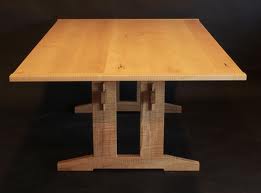
 A beautiful soft maple table

The real test can come in if you get your hands on some ferrous sulfate (check out eBay – you’d be surprised what you can buy on there!) and dilute it a little bit. The chemical will  leave a dark blue spot, while the hard maples will leave a much paler blue/green spot.

Why use soft maple in the first place? The stuff works like a champ.  Because it’s not as hard as its harder cousins, it turns beautifully and works like a dream. Looking for a good alternative to ash and oak for bending? Why not give soft maple a shot? It steam bends very well.

And, the best part is that it usually costs less than the hard maples, making it a great bargain as well.
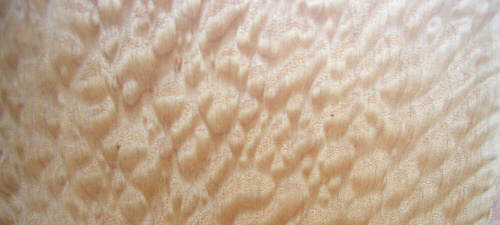
Bigleaf maple with a crazy pattern

It also has some tremendous figure. Bigleaf maples from the west coast frequently show some unbelievable, hypnotic tiger, burl and blisterfigure. And, when finished – wow. It’s enough to impress the heck out of you and just about anyone else who sees the project.

And, as far as you calling it soft?  Well, those may be fighting words. After all, this softie isn’t going to let the soft spot in his heart for soft maple be insulted.

The Safety Agenda

So, no poll yesterday, huh?  Yeah, I spent most of my day driving across the state of Florida to get to the Governor’s Hurricane Conference.  Yes, that’s the big event I go to every year to learn to learn more about how to keep folks safer come this season.

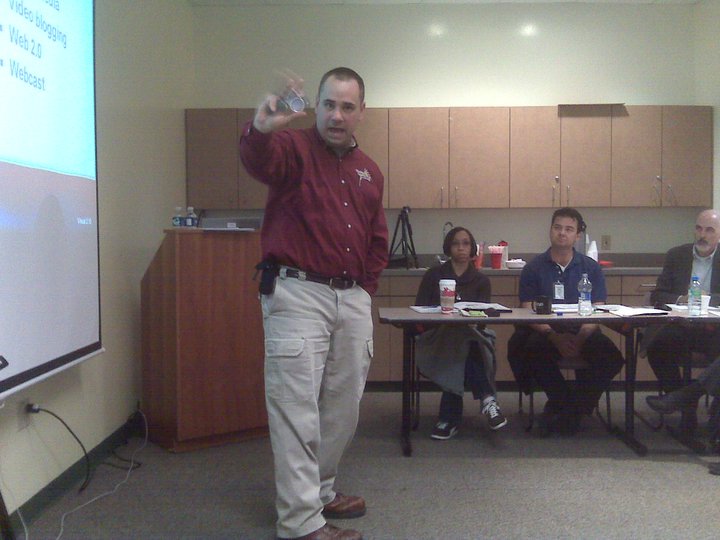
My friend Bob and I are here to teach a few classes on media relations.  Thus, no poll yesterday.

Yup, I'll be instructing again...

However, we will be focusing on the safety agenda for this season. And, when Bob is teaching, I’ll be working on making some notes on how to make my table saw a little safer.  (Hey, Bob’s an exciting teacher and all, but come on, man, he’s no woodworking!)

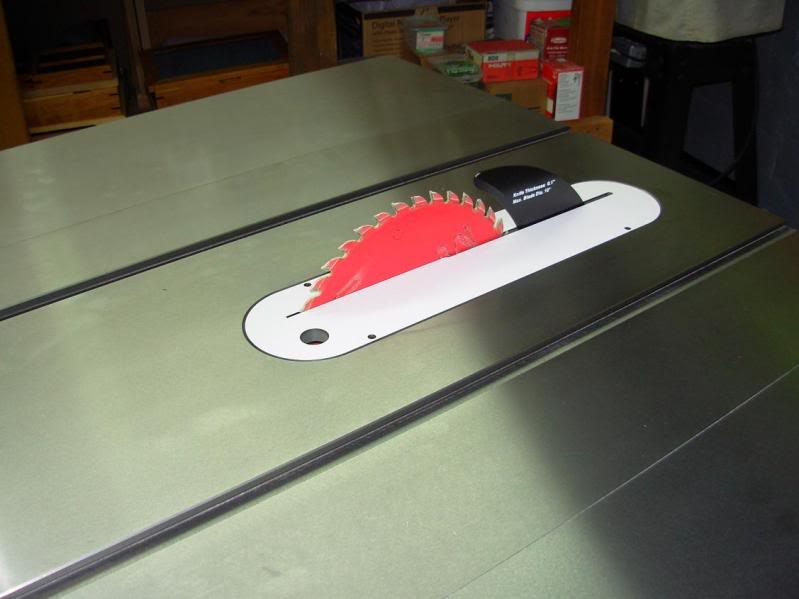
I’ve decided that – of c course – I will be working with my splitter in place for the time being. However, I think the time is coming  for a table saw upgrade.  Something with a lot better dust collection that the open stand contractors saw I’m working with.  And, something with a riving knife.

A riving knife

Those new saws with the riving knives are a real pleasure to use. I’ve seen more than a few saws demonstrated with this nifty feature and they are the bee’s knees.  The knife hovers just a fraction of an inch behind the rear of the saw blade, keeping the board from contacting the rear of the blade where the teeth, rising to the apex of the blade  – can grab the wood to flip it back.

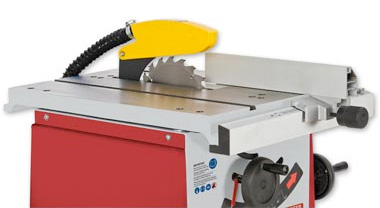
I also found an interesting fact about the Delta Unifence and most European saws – the fence only comes to a point just beyond the front edge of the teeth of the blade. This ‘half fence’ set up helps prevent the pinching of the wood between the rear teeth and the rip fence, virtually eliminating any possibility of kickback.  I think I can do something to that effect with a piece of wood and my trusty fence clamps I use for my dado fence.  Pretty swift.

European saws have half-fences

Plus, wow, I really need some better  dust collection.  Sure, I have one of those Velcro on bags that sits below the fence in the stand, but I usually end up using a shop vac to clean things up after the fact. Almost all new saws come with a dust port that grabs a great portion of what’s generated.  Not only will my workspace be neater, I’ll be a lot safer.  Rhonda won’t be chasing after me with a broom to get me to clean up!

Plus, I’m sure I can get some money for the old saw. I have been treating it well for the past decade, and I’m sure it would be able to find a new home.

Hmm… now, how to get me a new one…

Link of the week

Gunpowder Woodworks

Following a lifelong passion for building things, Mark Hochstein’s interests went from building model airplanes, leatherwork and eventually his first woodworking project – a skateboard – when he was the ripe old age of 12. And, when he joined the military, he rediscovered the passion for building.

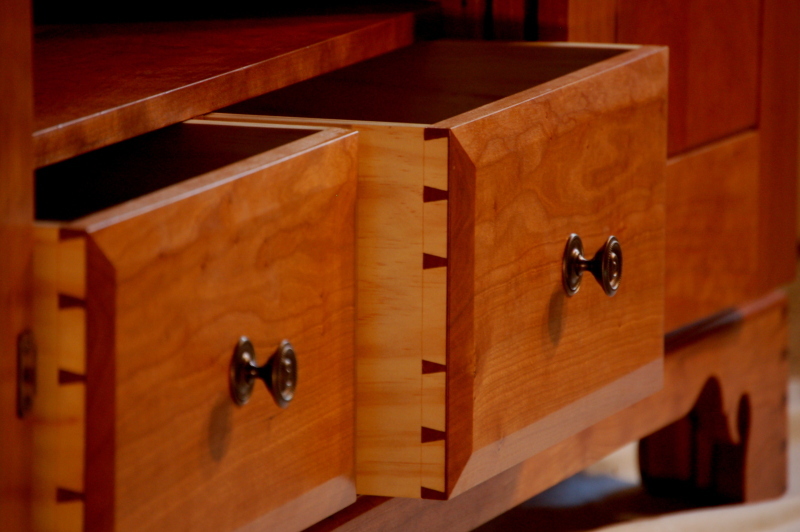
Mark's skill is evident in his joinery

Today, he runs Gunpowder Woodworks, his haven where he builds furniture in his blended tool workshop. The design of his work is classic and refined, with bold lines and skilled joinery. Take a look at his site and you will come to appreciate his skilled design eye and craftsmanship.

How about a hand?

With Woodworkers Safety Day just two days away, it’s important to remember some of the basic rules… A few of the most important include keeping your hands away form the spinny, whirly things and holding work securely while you work on it. Some days, it seems as if you need an extra bullet proof hand…

Woodworking Safety Day

Well, one of the most important tools that can work that way is a vise. When it’s bolted to a sturdy workbench, you can get some serious, accurate work done.  But, what happens when you need to do the work away from that bench?  I mean, it would be backbreaking work to drag your bench to a drill press every time you needed to bore accurate holes.  Wouldn’t it be great to bring the vise to where you need it?

The Bora Vise

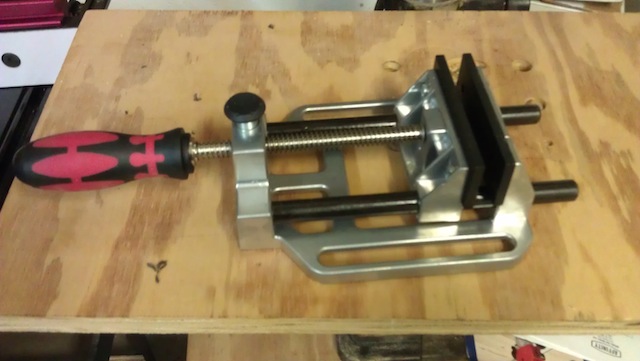
Well, that’s what a portable vise can do for you. And, my friends at Bora Tools are very happy to release their large woodworking vise to the public. This handy little tool can help make your woodworking a lot more safe.  It features a very wide base with holes to bolt to a surface. A padded grip handle to tighten the jaws – with a quick-release button on it – allows you to get a snug grip on your work for sanding, drilling, routing or whatever…

Many people use mechanic’s drill press vises to hold their work for some of these purposes. The only problem is those hard steel jaws are designed to hold metal and can easily dent wood. The Bora vise is designed with cushioned jaws that won’t mar the work.

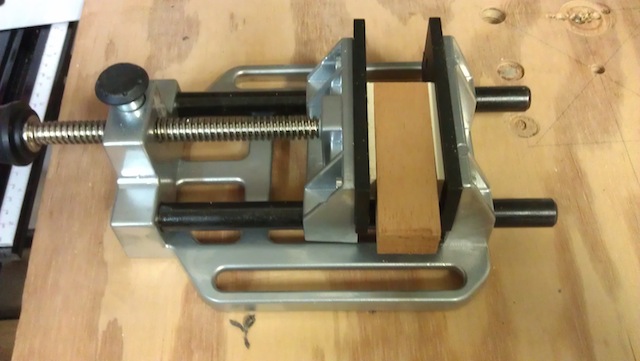
In the past, I have used some type of jury rigged setup to hold work for my drill press. Or, even more stupidly, I would just hold it with one hand and work the press with the other hand. And, yes, I have had the work spin out on me.  To demonstrate how much better this arrangement is, I decided to bore a 1/4″ wide mortise into a very small scrap of wood.  The first thing I had to do was to secure the little scrap into the vise.

The scrap is secure

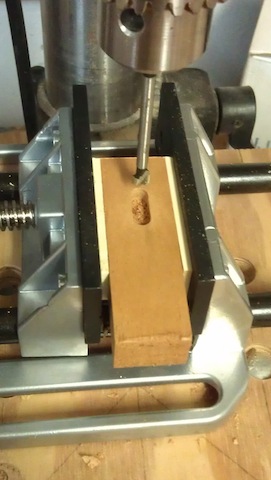
Then, I chucked a 1/4″ forstner bit into the drill press and started chain drilling the mortise.  I bored the outside holes the drilled out the middles.  The work was pleasant, and at all times I had the work under total control. Before long, I had the whole shebang bored out, and all I had to do was cut a wee little tenon to fit inside.

The wee mortise is ready!

As long as I keep this handy tool somewhere I can see it, I’m sure I’ll be using it a whole bunch more.  Great stuff!

Quick Poll

With Woodworkers Safety Day coming up this Wednesday, May 1, it’s the perfect time to take a moment to assess your shop’s safety plans and procedures.  Remember that one moment of inattention can lead to an injury that can leave you sidelined from woodworking for weeks, months, potentially forever.

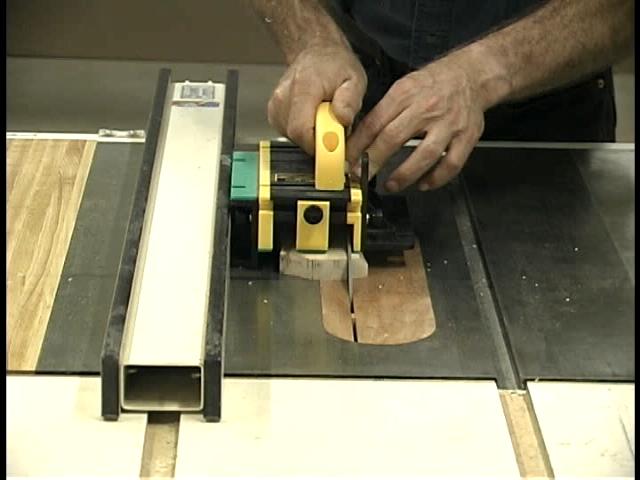
A Grr-ripper push block in action

This week, let’s take a look at devices that give you more control and keep your hands farther away from the blades and bits we work with… push sticks and other devices. Whether cut from a simple piece of scrap plywood or elegantly designed devices such as the GRR-Ripper push blocks, these tools can help keep your fingers out of the danger zone and have you work with more confidence.  Do you use them regularly, or do you just keep them around the shop to make you look more safe?


Link of the week

Gibson Woodworking and Design

In Wednesday’s post, I mentioned that I was working with fellow St. Petersburg Woodcrafters Guild member Andy Gibson to get my old saw sharpened.  I thought it was only fitting to feature his website this week.

Andy Gibson with one of his sweet ukeleles

Andy is a talented young woodworker, skilled in the use of hand tools. But, he’s also more than that.  You should see the ukeleles he builds And, he’s also building his first guitar out of locally-harvested camphor wood. He had to name his instruments as Sideways Eight instruments, because Gibson Guitars was already taken.

Check out his work. I think you are going to be pleased with seeing his skills.