All posts by Tom

I'm the guy who writes the blog...

Link of the week

Tremont Nails

Centuries ago, nails were a very important – and expensive – method to join boards for projects. So valuable, in fact, that old homes were routinely burned down so the old nails could be recovered and used in a new structure.  Why? Because each one had to be forged by hand by a blacksmith.

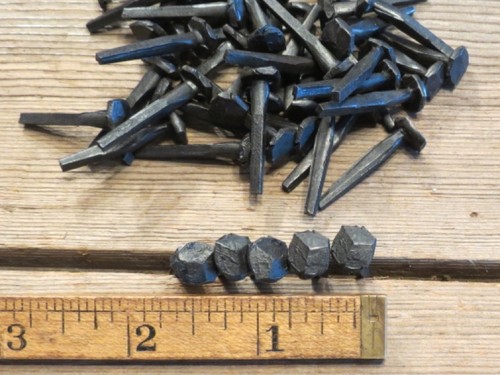
Beautifully forged rose head nails.

Today, nails are cranked out by the millions in factories and sold for dirt cheap. But, those new nails don’t have the charm or period appearance of those classic ones. If you are looking for those kinds of nails, there is a company that can help you with period authentic models.  Tremont nails has been making nails in the traditional method using period nail making machines more than 130 years old.

They have a wide selection of rose head nails, cut nails and other period types that can lend a flair of authenticity to your next project.


auf Wiedersehen

It has been my pleasure over the past six years to welcome many new blogs to the woodworking blogosphere. I have seen many of them come along – some making a big splash, while others have flown under the radar. I have seen some with very short runs, while others keep going on a steady pace.

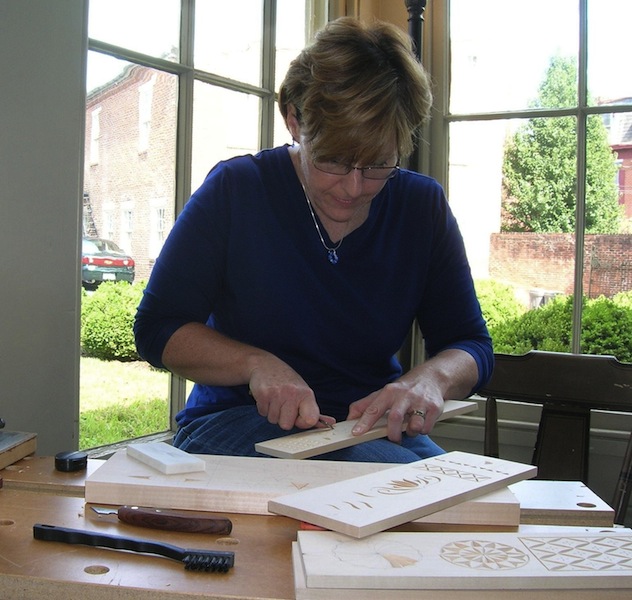
Kari teaching carving

About one month after I started my blog, a very talented woodworker came onto the scene – and she had longevity on the internet.  Talk about expertise. This blogger forged her own plane irons, built her own planes, demonstrated in clear language how to carve and threw herself into the online woodworking community with reckless abandon, much to our benefit.  During the six years of her blog, she has thrown open the doors of her shop to invite us in to see how she does her work. To show us examples of outstanding pieces she saw at different museums and other places she had visited. She showed us where she was going to teach and how she instructed her students. She showed us the definition of determination when learning new techniques. And, she showed us the meaning of patience as morons like me asked countless questions about what she was doing and how I could do the same things in my shop.

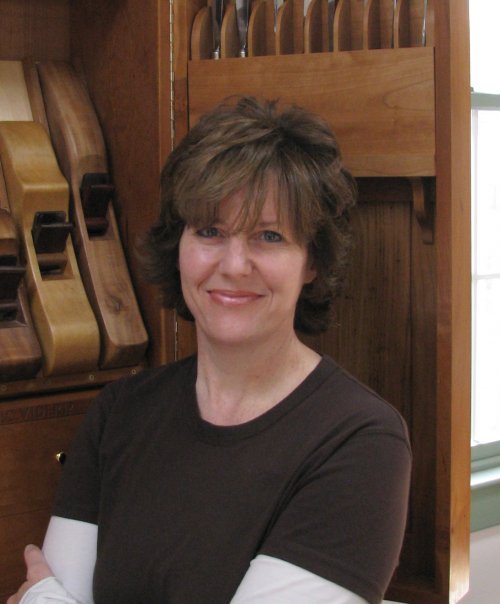
Kari: The early days

By now, you must know I am referring to Kari Hultman of the Village Carpenter. Earlier this week, she announced on her blog that she was making her last post.  It’s totally understandable why she did this. A recent health scare in her family caused her to refocus on the important things in life, and I applaud her for her decision. This also allows her to woodwork on her own schedule without having to worry about ‘feeding the beast’ on a regular basis.

Just another day at the office for Kari

In many ways, Kari is kind of like the Beatles of woodworking. She is leaving the online woodworking world at the top of her game on her own terms and on her own timetable. Each of her recent posts is still a masterpiece of clear communication and awesome woodworking knowledge, and I’m sure she could continue to produce online woodworking content until the cows come home. But, for now, the Village Carpenter door has closed, and I will be waiting to see when a new one opens.

Thanks, Kari!

Does this mean that Kari is giving up woodworking?  Heck no. She’s going to continue working in her cozy Pennsylvania shop, producing more museum-quality pieces. She will still be out there at woodworking conferences, rubbing shoulders with other appreciative woodworkers. And, I’m sure, that one day in the future, she will be contributing again to the online woodworking community.  I can feel it in my bones.

Thus, the title of today’s post.  In German, the farewell of auf Wiedersehn does not mean goodbye, it means ‘until I see you again.’ Kari, here’s to you, until we see each other again in the online woodworking community. Thanks for everything.


A push-stick penthouse

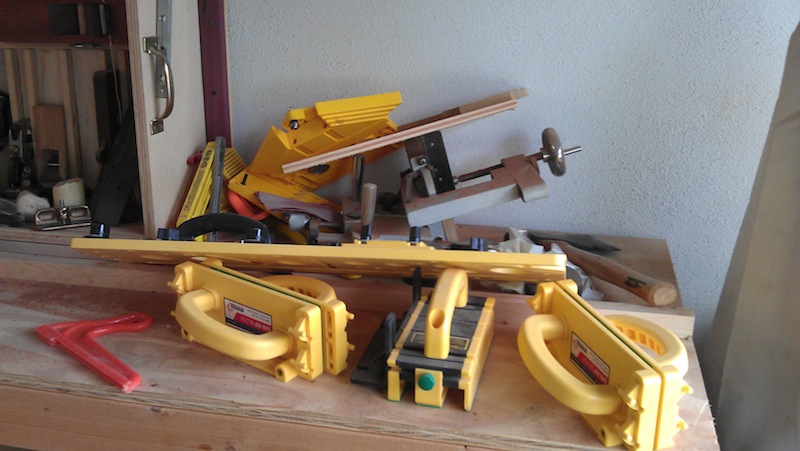
Of course, there were many reasons why my recent kickback accident happened.  I was cutting without using the splitter. I had a temporary lack of focus while I was completing the cut. And, all of the featherboards and push blocks I should have been using were heaped in a pile at the end of my miter saw bench.  Groovy…

The jumble

Yeah, this was an area I had been meaning to get to since I built the miter bench last year. I simply tucked my hand planes in the till over there and kept looking at the void of space where I could have put my table saw organization station, and I swore I would get to it. Well, gosh darnit, now sure is the time!

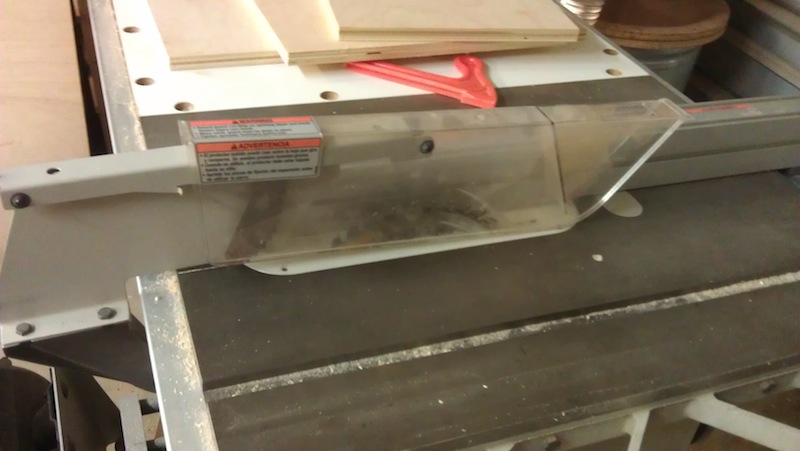
Fortunately, I had some leftover plywood from the banquette project, and thought it would be a good material for the simple shelf system. And, hey, 3/4″ cabinet grade plywood looks cool in a shop. Makes you almost think you are going upscale on your shop furniture! But, before I made any cuts, I was sure to put the splitter and blade guard on the saw. You know, you can never be too careful about this kind of stuff.

Look!  A splitter!

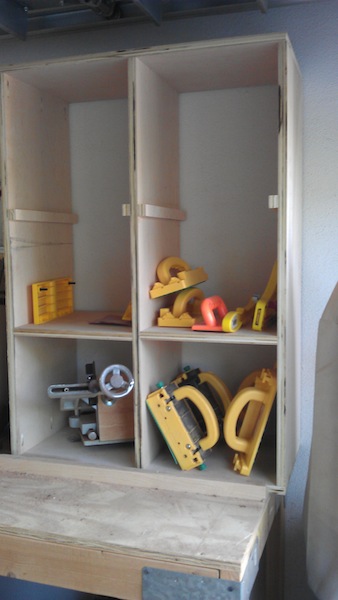
The piece was insanely simple to build – an open cabinet 24 inches wide by 36 inches tall. I broke it into six storage cubbies, each holding different push blocks, hold downs, featherboards and the like. After I put in the last screws to hold the bottom shelves, I tacked in a few cleats for some top shelves to sit on.

It's in place

Yes, I know that I should cut a few shelves to sit up on those upper cleats to complete those babies, but it’s getting late, and I probably shouldn’t be working while I’m too tired… remember, that’s another important safety consideration! But, I think I can rest easier knowing that my table saw safety gear is someplace where I can get to it easily. There. No more excuses!


Quick Poll

Routers are pretty impressive tools. They can cut edge profiles, make moldings, cut joinery… I mean, what can’t they do?

There are times, though, that you discover that in your woodworking, you tend to cut a particular joint a particular way time after time in your projects. And, sometimes, setting up for those cuts can take a tremendous amount of time to get the bit height, fence settings and other tweaks down perfectly to ensure a good setup. Sometimes, it might just be easier to buy an additional router and keep it permanently set up than start over from scratch every time you want to do that operation.

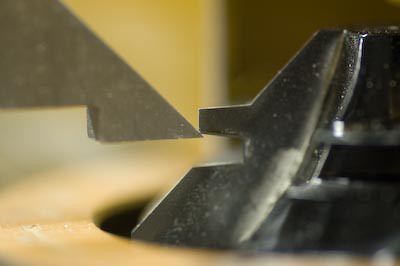
A permanent setup for a lock miter bit would be a good dedicated router station

That leads to this week’s poll.  In your shop, do you have at least one router setup that you keep ready to go all the time?  Maybe it’s a bit set to the right height in a dedicated router table, so it takes only seconds to clamp to a bench and get to work.

By the way, thanks Chris Wong for this poll idea!


Link of the week

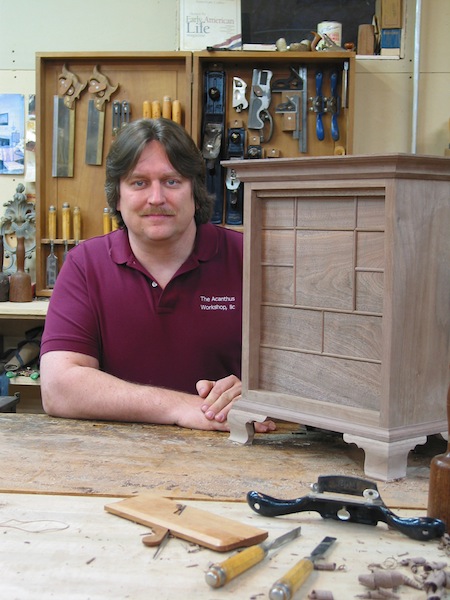
The Acanthus Workshop

  • Chuck Norris doesn’t do push ups. He pushes down, and the world moves away from him.
  • There is no theory of evolution – only a list of species Chuck Norris allows to live.
  • Chuck Norris can cut through a hot knife with butter.

Chuck Bender

And, you’ll never guess who taught Chuck Norris how to cut dovetails.  Why, it was Chuck Bender of the Acanthus Workshop.  All kidding aside (and who the heck am I kidding?), Chuck (Bender) is a magician when it comes to hand cut joinery. From the very simple to the mind-bendingly ornate (Bermuda Dovetails, anyone?), Chuck can do it , and – even better – teach you how to do the very same techniques online or at his school.

But, be careful. Chuck Bender cuts both is pins and tails at the same time…


Tools I use: My dust suckers

Woodworking can be a very messy business. If you use power tools, you will have lots of planer shavings, sawdust and other pulverized wood products spewing out of every one of your machines.  For hand tool folks, you have saw dust, planer shavings and other unwanted wood byproducts in your shop as well.

Hey, it’s a tough life, but someone has to clean it up.

That’s where I tend to get a little creative.  Hey, I have two boys, and I try to get them to clean the shop for me.  I tell them it’s a really cool game they will love.

That hasn’t worked since I think they were eight and five…
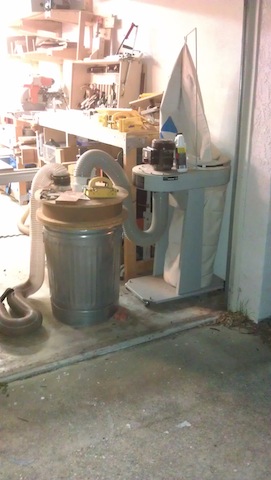
The Delta dust collector

Since then, I have come to rely on a trio of machines to help keep the mess at bay. In addition to keeping the dust off the floor, catching it at the source helps to keep it out of the air – and my lungs.  That’s why I rely on my Delta dust collector. I bought this baby back in 2004, and it has been a real love/hate relationship. When I hook it up to a tool that has a dedicated dust port, this thing is a champ. My new Ridgid planer works great with it, and there are usually just a few bits of planer shavings after I am done.

I also have it going through a shop-built cyclone separator that sits on top of a trash can. This contraption works well, spinning the majority of chips into the can before they get to the collector bag. I think it helps make the collector work more efficiently.

The hate part? When I try to hook a non dust port equipped machine to it (like my table saw), it stinks. The hose is heavy, and it doesn’t generate the suction to clear the dust from the large open area under the saw. Yes, I have seen the involved plans that allow you to build dust collection into your contractor’s saw, but no, I have never had the inclination to build one of them. I’d just rather be building furniture…
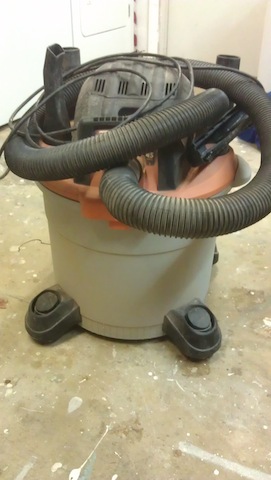
My shop vacuum

For the stuff that gets out of the table saw, I turn to my trusty shop vacuum. This baby sucks up everything, and with a dedicated floor cleaning fitting, it can make the place look relatively spotless in a short amount of time. That makes me happy…  I have also hooked it up to my combo belt/spindle sander, and the nozzle is a nice slip fit onto the port on that tool, making for very clean sanding sessions. It’s one of those tools you wonder how you get along without once you have to…
One Fein collector

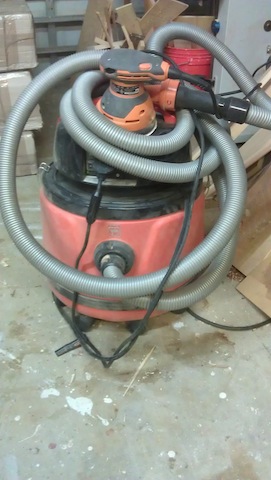
For really specialized dust collection, I turn to my Fein dust collector.  This baby is the bomb. It has an outlet built into it where you can plug the tool. In this case, I have my random orbit sander plugged in to the hose and into the machine.  When you turn the tool on, the power comes from the collector to power the tool, and it also turns on the collector’s motor. As you sand, the sawdust is pulled through the sander into the collector. When you lay off the trigger, the motor for the tool stops, and the collector runs for a few seconds more to ensure all of the dust is sucked into the canister. It also works great with my track saw, providing nearly dust free operation.

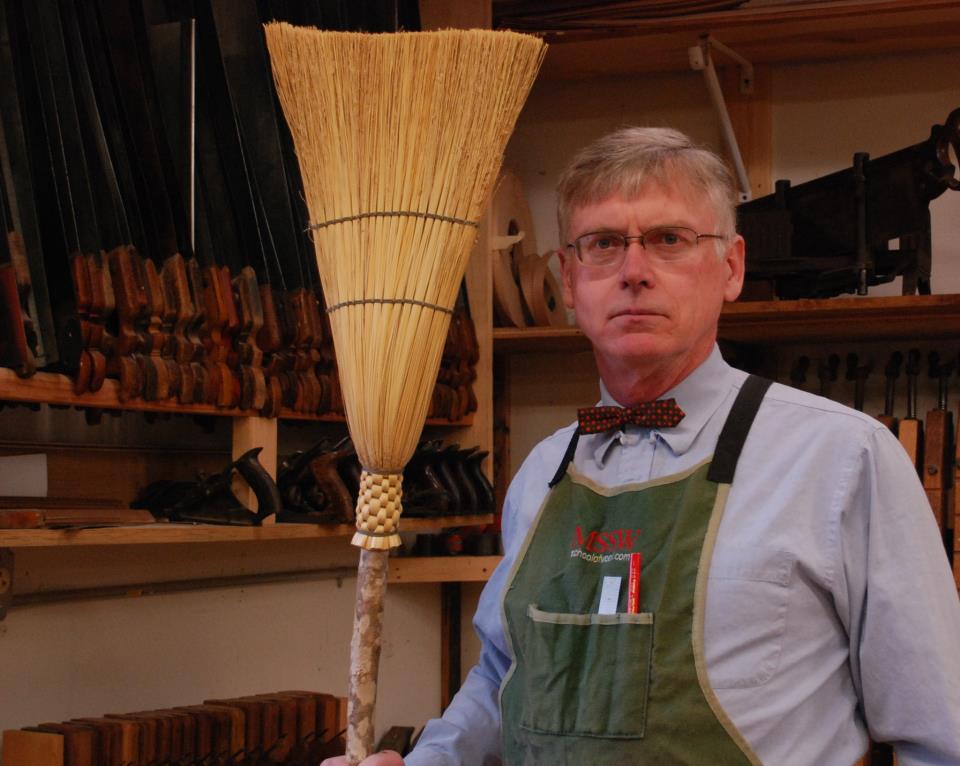
Now, I’m sure that some of you probably have more advanced whole shop systems, while others may be making due with smaller systems. But, one thing is for sure. My friend Mike Siemsen will give me a hard time for not relying on a simpler, more back to basics approach.
Mike Siemsen and his trusty broom

Now, if I can only find an apprentice who wants to use one of these babies…

 

A clean slice

This coming weekend is the St. Petersburg Woodcrafters Guild annual picnic on the shores of beautiful Lake Seminole Park in central Pinellas County. Sure, it’s getting a little warm to be outdoors in Florida this time of the year, but there are still just enough cool breezes – and a cold front nearby – to keep the temperatures tolerable. Besides – it’s an excellent opportunity to get to eat a bunch of great food and hang out with other woodworkers.  Oh, and I get to eat some Publix fried chicken… the local grocery chain makes the best stuff I have ever tasted.  Oh, boy, is it ever good….

Mmmm, Publix fried chicken

One of the activities for the big day will be a carving event. Last year, a few pieces of basswood were handed out with a few carving knives, and everyone at the event got to work. There were some beautiful carvings, and it was easy to quickly see how good some of us were, and how far many of us have to go to do a good job!  But, that’s part of the fun of going to a woodworking picnic, right?

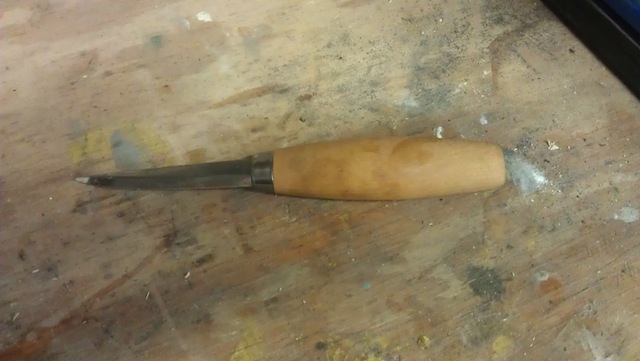
My Sloyd knife

This year, I wanted to bring a knife I use in my shop. This is a Sloyd knife. My neighbor, originally from Sweden, told me that basically it is a craft knife that many Swedish woodworkers start off with as their first tool. It’s great for carving, slicing and other small shop tasks. I got mine a while back from a friend who saw it for sale in a shop up in New Jersey and sent it down to me. For years, it sat in my tool chest, just waiting for the day when I would use it.

As with most blades, it came from the store ground nicely, but needing a honing to really make it special. I have tried sharpening it by hand, but that can be tough on the fingers. The knife jig that came with my Tormek was available as well, but it never was able to get a good purchase on the blade – it was just too small.

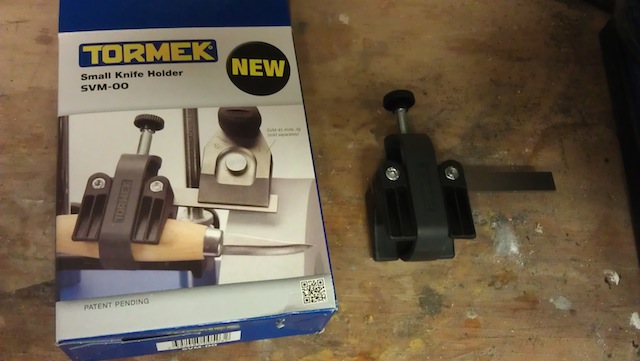
Tormek Small Knife Jig

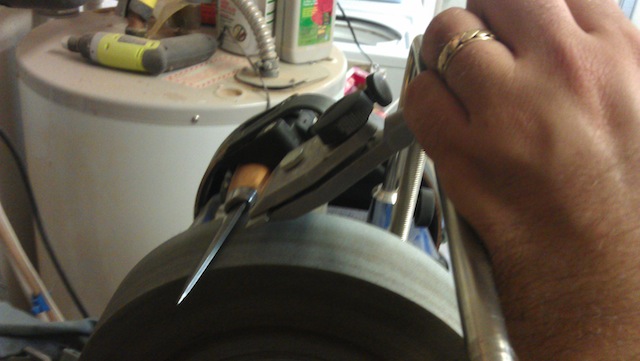
That’s why I was pleased to get the newest jig from Tormek. The new small knife jig is a clever piece of tooling that had me honing in very little time. It basically consists of two parts – a cross bar of metal that gets clamped into the jaws of the jig’s knife blade, and a plastic clamp that works by grabbing the handle of the knife.

First, I set the cross bar of the jig into the jaws of the knife jig blade. It’s critical that you get this crosspiece aligned parallel with those jaws. This makes the next step a whole lot easier. Fortunately, if you flush up the front of that crossbar with the front edges of the jig, you are in the butter zone.

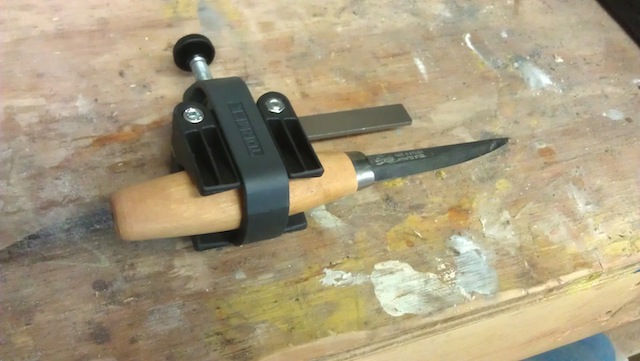
The jig set up

The next step is to clamp the knife handle into the plastic clamp. There is a screw clamp knob on the back of the jig that allows this to grab knife handles of many different shapes and sizes. Since the Sloyd knife I am using has a wonderfully contoured grip, it took a little finessing to find the sweet spot to clamp it in place. But, once it was there, the blade was parallel with the rest of the set up and it was ready to go onto the sharpener.

The jig set up and working

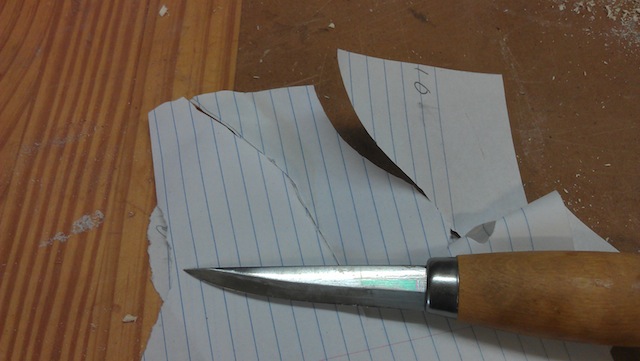
It was a simple matter to run the blade over the sharpening wheel on the first side, then flip everything over and move to the second. Since this is a dual bevel took – not a single like a chisel or plane iron – I had to make sure I had everything geared toward a 30 degree measurement – two 15 degree sides – to ensure everything came out well.  After the initial grind on the rough setup, I used the grading stone to make the wheel smooth and proceed to the honing.  After that,  a quick spin on the leather stropping wheel, and this baby was ready to cut.

Ninja Slice!

Yeah, a clean slice through a piece of paper is a very good indication that I nailed it. With my new sharp knife, I’m looking forward to trying my hand at carving – or fending off other ravenous picnic goers who get too close to my fried chicken!