All posts by Tom

I'm the guy who writes the blog...

Urban search and rescue

The Tampa Bay area where I call home is the 19th largest metropolitan statistical area in the United States. Its subtropical environment allows for a wide and diverse population of plant and animal species to call the area home. And, since the last time the area took a direct landfalling hurricane was 1921, the plants – especially the trees –  in the area have had a long time to grow and mature.

And, when it’s time for those old trees to be removed, their usual fate is to be ground up and used as mulch in some flower bed.

But, that’s not always the case. Enter Viable Lumber. This organization, led by local woodworker Pete Richardson, is working to change the way urban trees are looked at and give them a far different fate.

It all started at Pete’s home, when an overhanging limb from a live oak – known half-jokingly as the ‘limb of death’ – had to be taken down.  The size of that limb was impressive, and, when the arborist told Pete that it was going to ultimately end up as mulch, Pete told him to leave it be. With a chainsaw mill, Pete was able to slab that massive limb and put the wood to use.

Today, Pete and a cadre of dedicated volunteers are working as a cooperative locating trees that are being cut down and rescuing the gorgeous wood contained within.

On Monday, he invited me to join the crew at a home in Tarpon Springs as they cut up a huge red eucalyptus growing in the yard.  When I pulled up, the crew was already hard at work with an enormous Wood Mizer band mill slicing the logs into huge chunks. The crew on hand represented a wide cross section of people from the woodworking field. Cabinetmakers, wood turners, and woodworkers of all kinds were represented, and everyone was eagerly waiting to see just how colorful the wood was going to be.

Steve Parker, the owner of the Wood Mizer mill, directed the action. The boards were hustled off to be stacked and their ends sealed with Anchor Seal to prevent checking.  Some of the pieces were being sawn for some specific uses. For instance, one of the volunteers turns special trophy baseball bats out of exotic woods for college and professional baseball players. There was a stack of the wood sawn to the specific dimensions needed for the task.

Sure, when dealing with urban lumber there’s always the chance that the saw will hit a nail, bolt or other metal object inside the board, ruining the blade.  That eventuality is planned for in advance,with the crew figuring they will ruin at least one or two blades per tree. “We have the spares on hand. If we go through the tree and don’t break a blade – that’s a bonus!”

Even the scrap pile wasn’t going to go for waste, as many of the volunteers were coveting the choice pieces for small turnings, platters and other small but special items. “After we cut up a tree, there’s rarely anything left but the sawdust. Most of it is selected for small projects, and what doesn’t draw interest from woodworkers goes into fireplaces. There is little waste.”
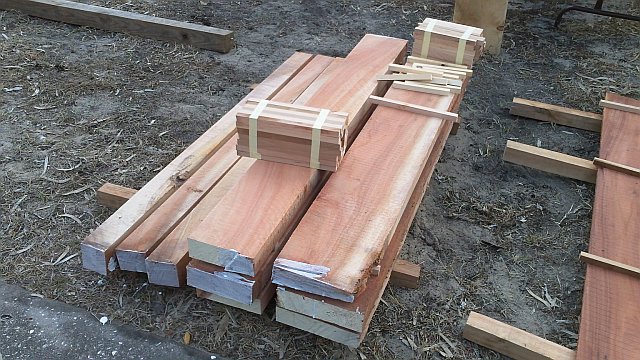
Right now, Viable Lumber is testing the – err – viability of the model.  Pete is getting the word out to local arborists, city maintenance crews and the power company to let them know about the service they provide. Most of the trees are hauled to a location where they can be cut at a more leisurely pace, larger trees will need to be slabbed on site. “Another thing we need to think about is our inventory. We’ve held off on marketing for the past few years in order to build an inventory of boards. Obviously, if someone came in and wanted to buy a significant supply of boards to mill flooring, we’d like to give them a few options and have enough to satisfy their order.”

Knowing this isn’t the only urban forestry and lumber operation in the country, Pete has been in touch with similar companies and organizations around the country. “I have people working for me as wood mules… they take some of our stuff to they are visiting, and bring back stuff when they return.” Pete smiled. “That would be another good story for your blog!”

Maybe it will…
An unexpected family project

I love my home. Built in 1980, it’s your average Florida ranch. Three bedrooms, two baths, a separate living and family room and a two car shop – err – I mean garage.

Sure, there are parts of the house that I’m not crazy about, but I can deal with. Our dining room is kind of in an awkward place – the pass through from the front to the back part of the house – but we’re coping with that.

But, the real deficiency lies in our kitchen.  Don’t get me wrong, I love our kitchen. It’s an open, airy space in the middle of the house. Perfect for entertaining, because you can see everything. During a party, it’s the gathering spot. There’s plenty of counter space for food prep, small appliances and the like. And, since we replaced the counter tops, it’s looked very good.

The problem lies in our kitchen cabinets. As you would expect from a house of this vintage in Florida, they are laminate particleboard. We had them refaced back in 1998 with new thermofoil doors.  They look good and are still in decent shape. But the storage is awful. Abysmal. Let’s face it, it stinks.

They consist of large boxes that appear to have been built in place when the home was built. There is the sink bank of cabinets… not bad with the sink and dishwasher. The oven stack is OK, with a relatively unusable cabinet at top, but three VERY useful drawers below the hot box.

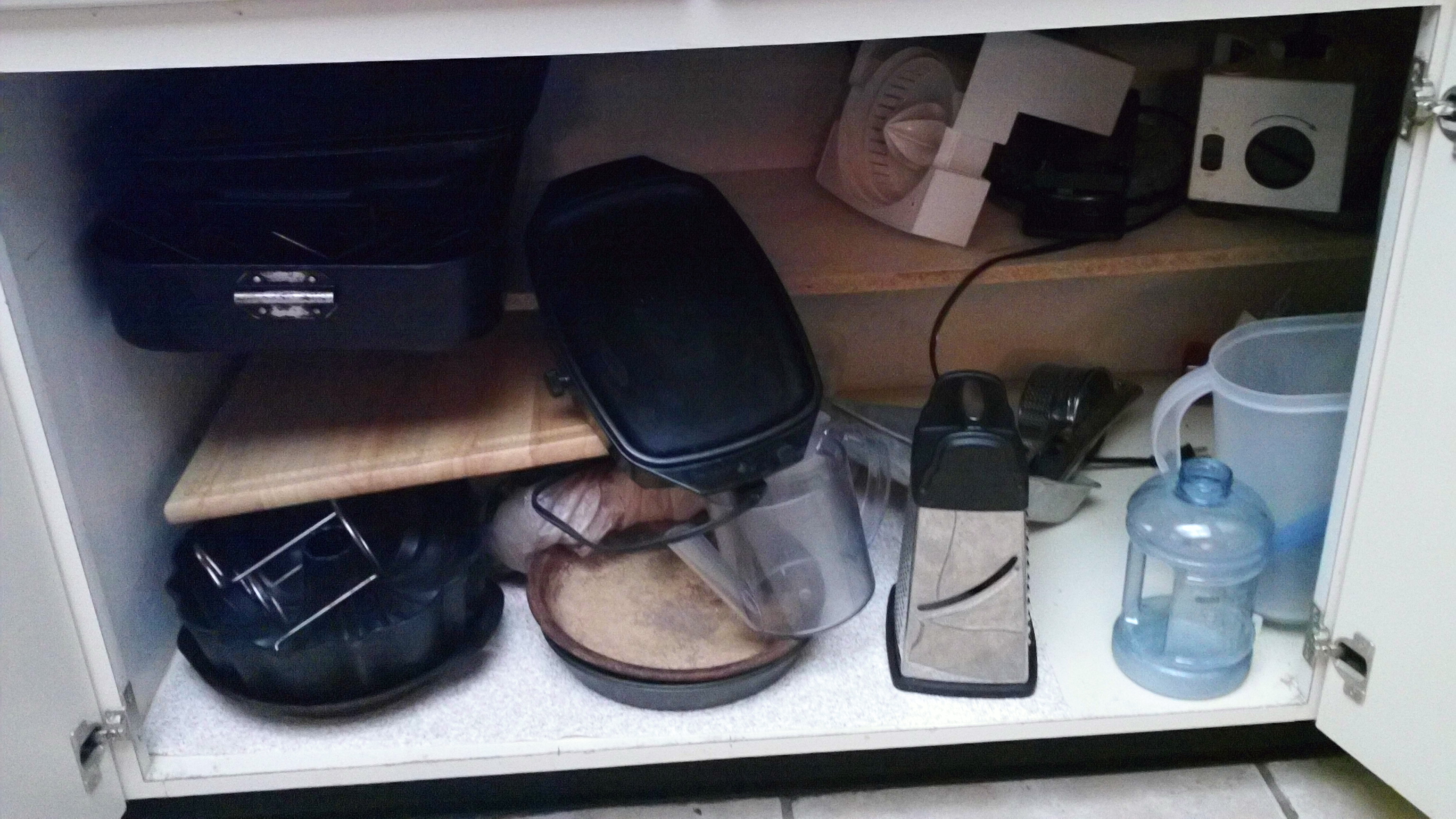
The areas of concern are under the stove and under the peninsula. The stove side has three doors. The door closest to the sink area is a small one, and the two doors under the stove open to an area with plain Jane storage and a short, useless shelf. A similar area exists under the peninsula area – two doors opening to a worthless storage area.

I had attempted years ago to make the area under the peninsula more useful by building a pull out tray. It helped, but I built it wider than a single door, which means that both doors have to be opened to gain access. Plus, there’s no upper rolling shelf, which means we’re back to shoving stuff in there hoping it won’t fall…

Well, there’s the rub. My wife and I are both very busy people, and we don’t have the time to pull everything out and  reorganize after washing the dishes – carefully restacking everything into a stable, compact form.  Plus, we’re asking the kids to do more chores around the house… and they don’t always get the point that they need to be careful in restacking.

Well, today – a week after we broke a Corian bowl – there was another one of those slip-bang-clatter louder-than-it-should-be wife-screams-in-surprise moments when all the baking pans spilled out over the floor.  All metal today… nothing fragile. Exeept my nerves…

“THAT’S IT!” I exclaimed. “I’m going to the home improvement center and building pull out shelves!”

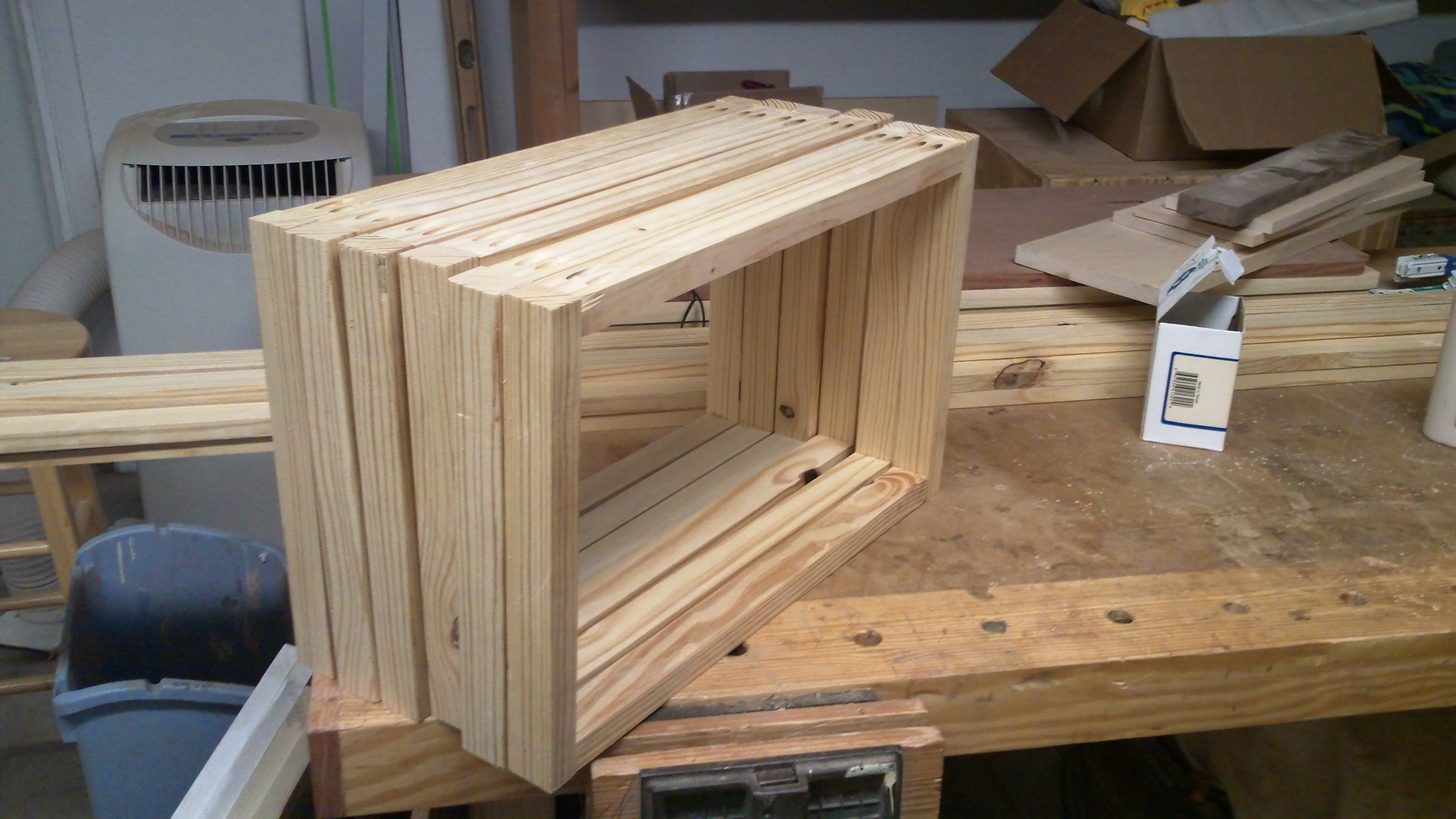
I took some brief measurements and sketched my idea out onto a piece of paper. Then, I was into the van over to the Home Depot to buy a sheet of plywood, a 2 x 8 southern yellow pine board and eight pairs of 20 inch cabinet slides.  This afternoon, I ripped the 2 x 8 into all of the pieces I needed for the frames and supports. I’m building this with pocket screws and glue – no fancy joinery here. My goal is to get these eight pull out trays built and in place before I go back to work on January 3.

It’s not what I planned on doing this break – however – the cost of replacing our kitchen equipment is getting steeper and steeper. I’m hoping to show you a few step by step pictures… but today, I have an appointment to go see something special that involves woodworking.

Look for an interesting article on Wednesday…

Until then, hey, I have a date with my Kreg jig to do a little work…

5:30 p.m. EST update

Yeah, boy!  Take that 1980 Florida home  designer…

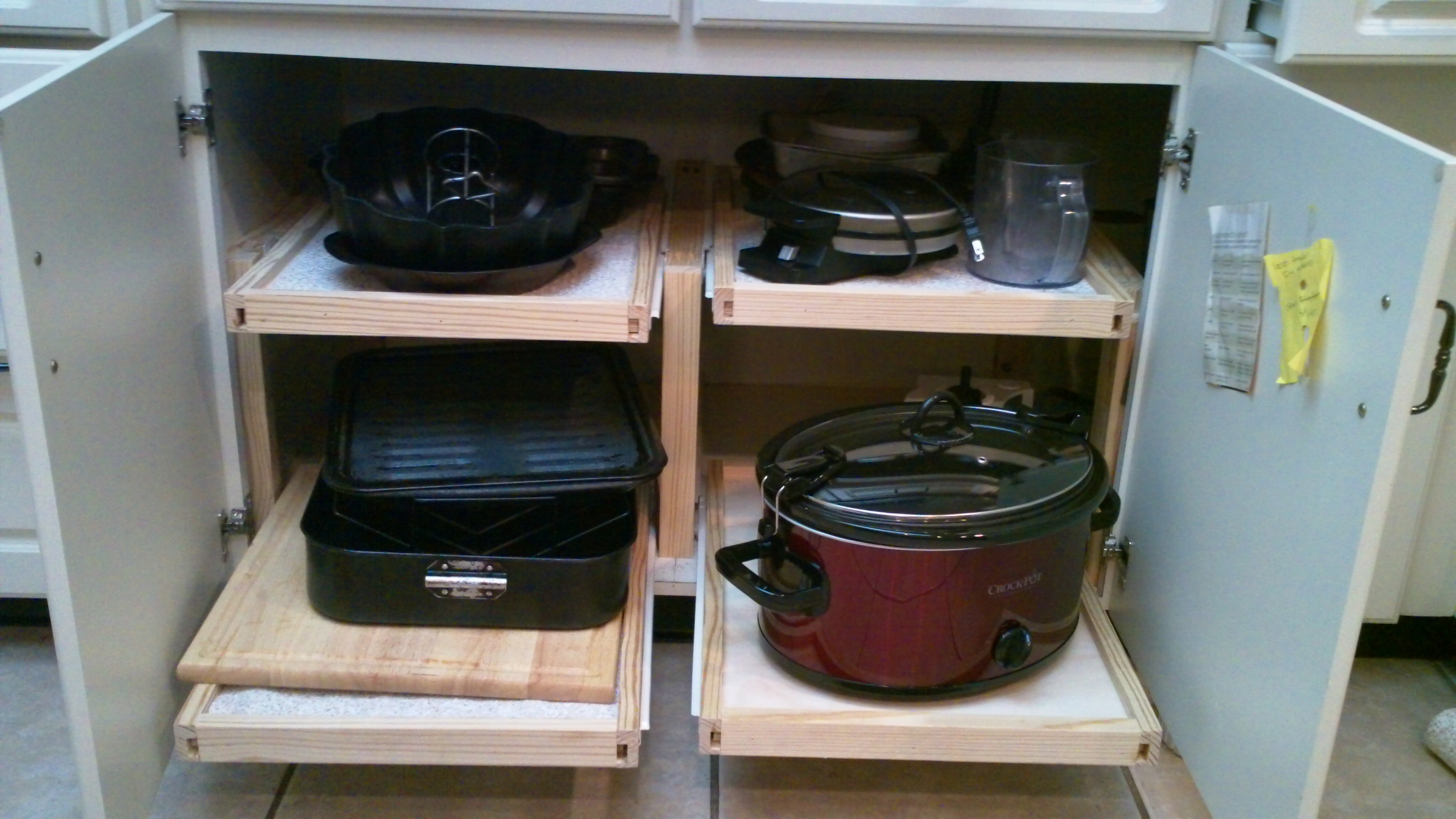
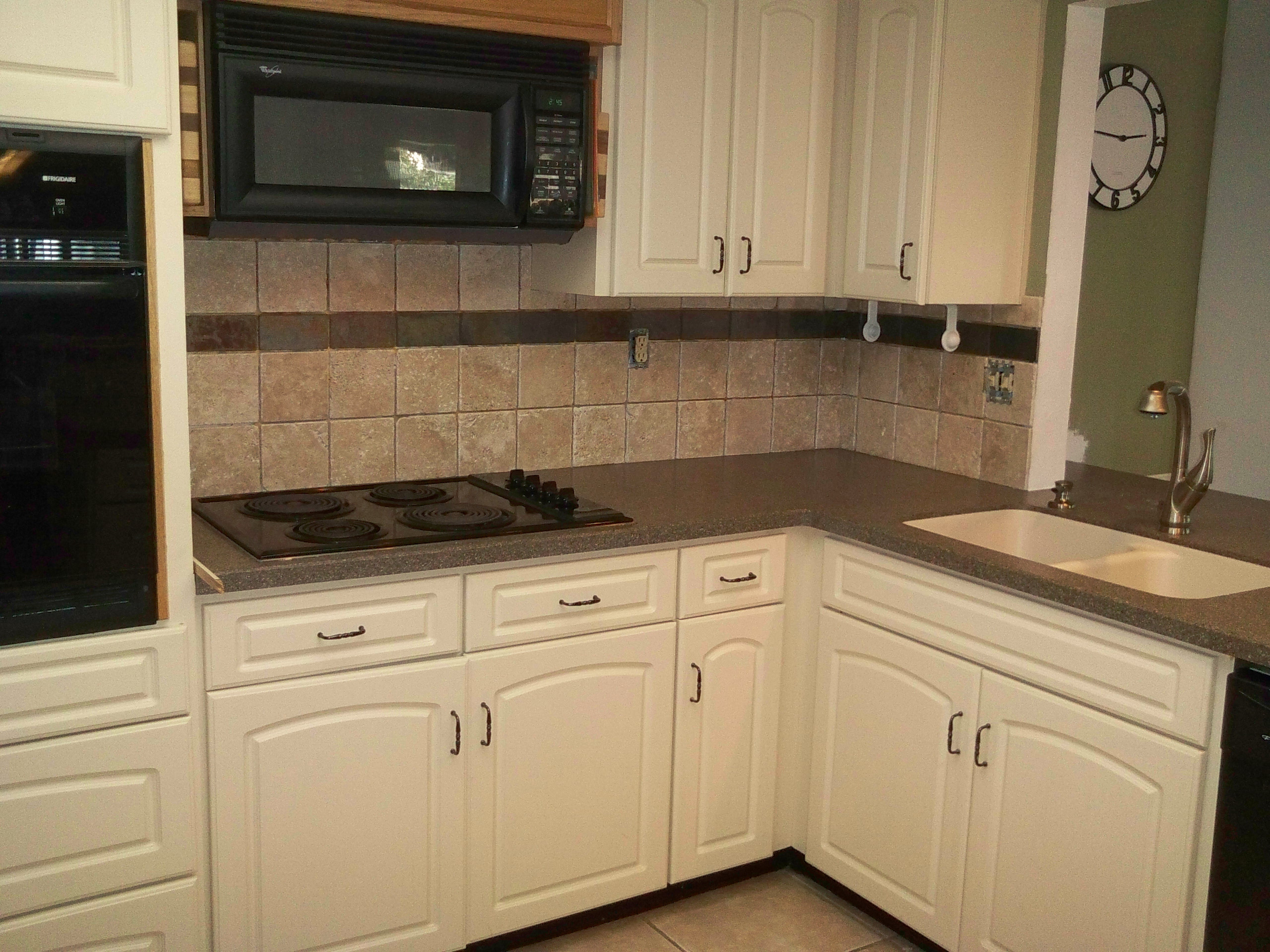
Gimme a day off from work, access to the shop and I’m off to the races… Here’s a shot from under the stove – the results of one day’s work. But, now, it’s time to take my patient wife out for dinner…

More work tomorrow…

Quick Poll

The Jolly Old Elf is sacked out… bushed… spent…

But, if you didn’t have to circle the world in 24 hours and remember who was on the naughty and nice lists, you may have had some energy yesterday to get into the shop and do a little work.  Maybe try out a few of those goodies the big fella left under your tree.

So, did you get any shop time yesterday?

[poll id=”152″]

Tools I use: my new shop heater

Call the Chamber of Commerce, the Convention and Visitor’s Bureau and the resort marketing folks along Florida’s Gulf coast. I have just guaranteed that our weather for the rest of the winter will be beautiful, sunny and warm.

That’s because I just bought a shop heater.

Yes, here in Florida.

So far, this December here in the Tampa Bay area is running as one of the ten coldest since records started being kept in 1890. Sure, just like this past January and February, we’re not talking frigid with ice, but the shop is just too cold to work in comfortably. And, if I’m not comfortable, there’s less of a likelihood that I’m going out to the shop to do any work, and when I do, my mind is focused on staying warm rather than ensuring I am using proper safety procedures.

As I had mentioned in an article I wrote this past January, there are several different kinds of heaters out there to choose from. Knowing I just needed a heater to chase the chill for a few months, I opted for something from the portable electric space heater category.

On my first attempt to buy one (when a cold snap hit the area earlier this month which took our daytime temperatures only into the 50s and overnight temperatures below freezing), every single portable heater had been purchased from the shelves of the local Home Depot, Wal Mart, Target, Lowe’s, K-Mart and other mega retail locations. I guess I was a little late to the party…

Knowing it would be tough to find a heater locally, I dropped back to my alternate plan – Amazon.com. Internet shopping is the greatest thing since sliced bread. Since Jiffy Pop. Since Slim Whitman. From the comfort of my living room, I was able to search the offerings online and make a purchase.

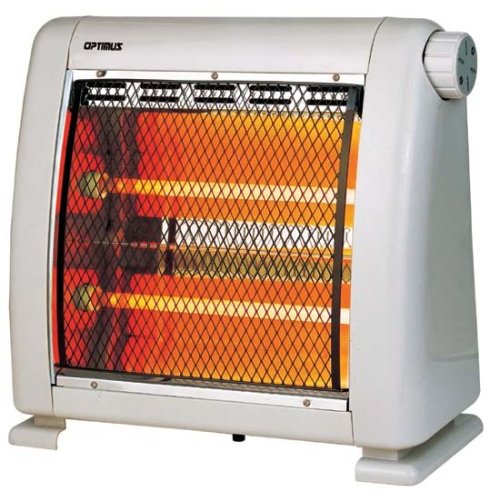
Breaking from my decision last January, I opted for a quartz radiant heater. My thought was that if I could get a focused beam of heat on me at the bench, it would heat me up faster than waiting for the whole shop to warm up. I bought a portable floor model and waited – through the coldest days this season – for it to arrive. And, when it did, it looked cool. It had all the safety fixtures, I could pop it up on my front work cabinet and point it at me at the bench. So far, so good….

Well, I didn’t get the right model. The radiant heat feature was great in the cool shop – when I was standing right on top of it with my hands less than one foot from the glowing elements. Beyond that… well… there was little relief. The model I bought also had a great safety feature built in – every five minutes, regardless of what the ambient temperature was, the safety heat overload switch would cut the unit off. There was only one way to get it to restart – that was to unplug it, wait ten minutes, then plug it in and start it up again. Since it only shot its heat into the shop to warm whatever it fell on, once it went off, the shop just got cold and miserable. It went back into the box and I started the return process on Amazon – which is incredibly convenient.

This past weekend, with the skies gray and spitting drizzle and a high temperature in the mid 50s, I started my search again. I was willing to try one more time at the local retailers, looking for the model I had originally decided on – an oil-filled electric radiator model.

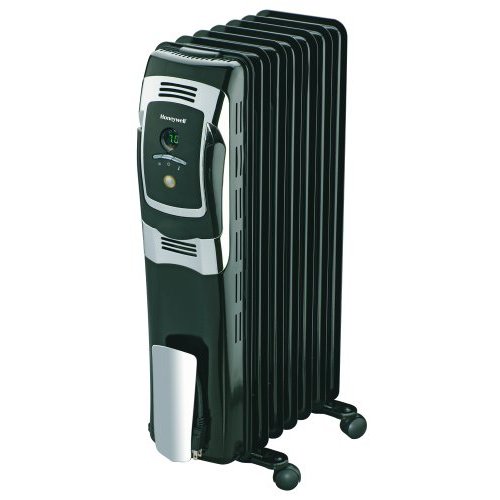
No at Home Depot. No at Lowe’s. None at K-Mart. None at WalMart. Then, in Target, I saw it. One of the last three portable heaters on the shelf. It’s a Honeywell oil-filled radiator model portable space heater. I hustled it into my cart and didn’t take my eyes off it for fear that someone might snatch it from the cart. A cool $60 later, I had the unit in my car, headed back to the shop.

Set up was very easy, involving attaching the unit’s casters so it could be wheeled around and kept off the floor. The control panel is pretty sweet. First and foremost, it had all of the safety features you would want – a tip-over sensor, a thermal overload and a boatload of warning stickers. It has a timer, so I can set how long I want the heater to stay on, a thermostat so I can set a comfortable temperature and a heater ‘force’ setting – full blast or economy mode. I plugged it in and set the temperature to 68 degrees. Why not?

One thing about a heater like this – it does take some time to warm up. The heating element is encased in the radiator body, and it has to warm the mass of the oil inside and the metal of the unit before it can start pumping the heat out. I held my hand over the heater and wondered why it was taking so long.

I started working anyway, figuring I would check the unit in a little bit. I got involved in cutting a breadboard edge for a table I’m working on and let myself get into the woodworking.

Within half an hour, I found myself pushing my sleeves up and thinking, “Man, this must be hard work. I’m nearly breaking a sweat.” That’s when I remembered to check the unit. It was working beautifully! It was hot to the touch, but not enough to burn you. The heat it threw was awesome… it was a gentle heat that filled the space. I was warm by the bench, at the table saw. Everywhere. I also felt a lot more comfortable with the heating elements not being exposed in my dust generating shop. I clicked the heater back to the energy saving mode and spent the rest of the afternoon out there, comfortable and enjoying my shop time as I watched the gentle cold rain fall through my shop window.

Am I some kind of wimpy Florida guy now? Sure. You bet. But, if this heater makes my shop time – my hobby – more enjoyable, well, that was a sound investment of my money and a very welcome addition to my shop.

Product review: the Magswitch

So, a few weeks ago, I got an e-mail from Ralph Bagnall, the Consulting Woodworker, asking if I could review a set of tools. Hey, I’m always up for a challenge, so I said sure.

After a few days, I had forgotten all about the exchange. That’s when my wife called me at work to tell me that I had received a big box, and that I had to move it myself. It was heavy.

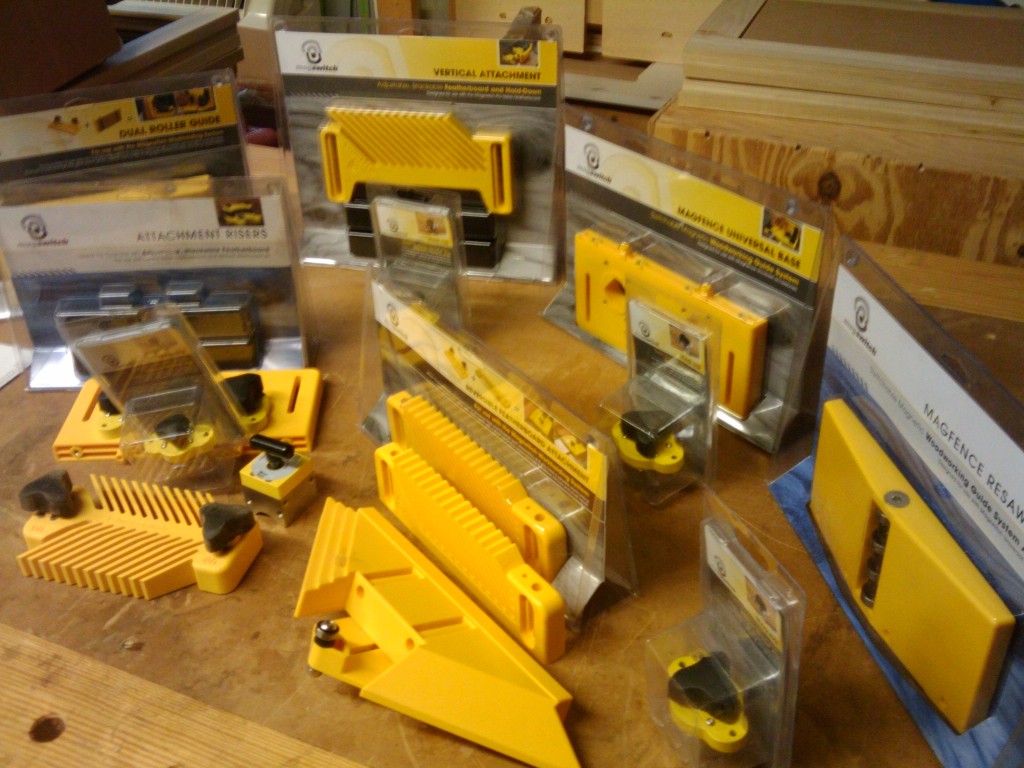
When I opened the box, I was stunned.  I had gotten a master set of the the Magswitch magnetic hold down jigs, and I was amazed at just how much came with it. My first impression was that this was the Swiss Army Knife of woodworking jigs.

The Magswitch system is based around a powerful magnet that you can switch on and off with the turn of a knob. Turn the knob to off, and you can pick the magnet up with little effort.  Turn it to on, and I can drag my table saw (while up on its casters) around the shop.Originally designed for the welding and metal working community, it was only a quick leap to apply the technology for woodworkers who routinely work with cast iron and steel tools.  While the magnets themselves are very useful, it’s the family of jigs that have been built around them that makes this system so flexible.

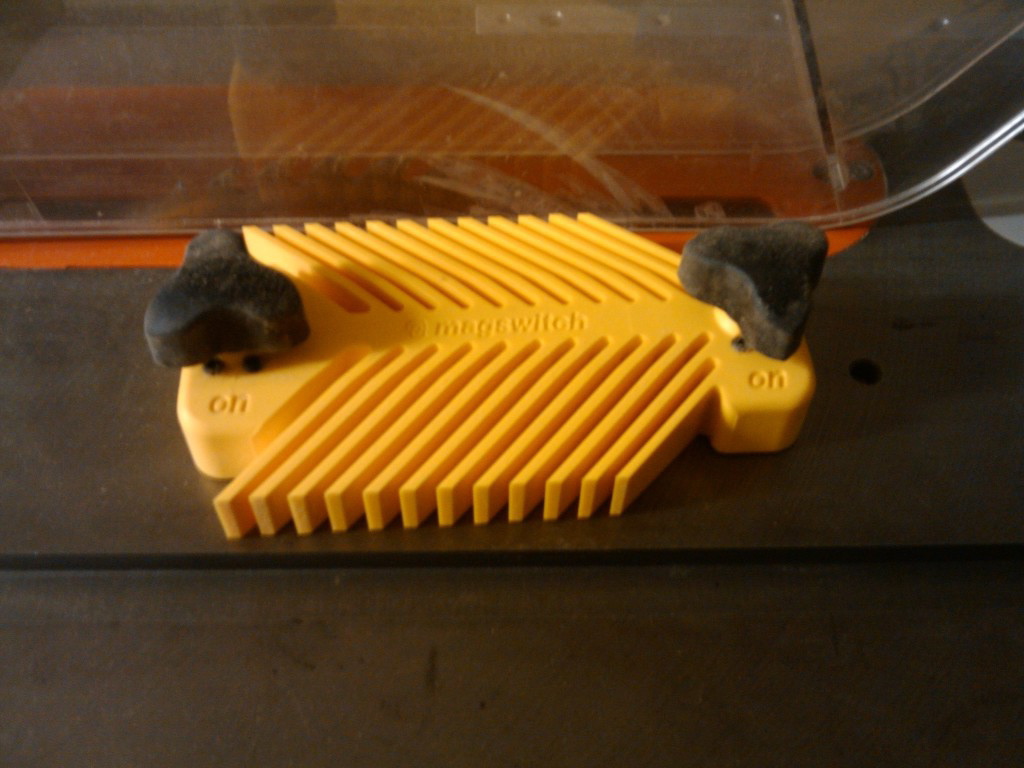
For those getting into the system to begin, you might want to go with the dual feather board. It has the two magnets built in to the fixture, and it can be easily deployed wherever it’s appropriate for your cut. Yes, you are free from being stuck with using the miter slot, so imagine using a feather board to help control a wide piece on your table saw top.

For the rest of the fixtures, you will be using the standard universal base. This plastic yellow device holds the two Magswitch units, and each of the specialized fixtures is then screwed to the base.  And, what a selection of specialized fixtures.  There are feather boards.  And risers that allow you to stack two feather boards on top of each other for controlling tall pieces or for holding work down and in to the fence.  There is a thin strip ripping jig so you can rip consistent thin strips at your table saw on the outside of the blade, not against the rip fence, which could burn the cut pieces or throw them back at you.  There are high roller hold ins. There are resaw fences you can use on your band saw.  It’s very impressive stuff.

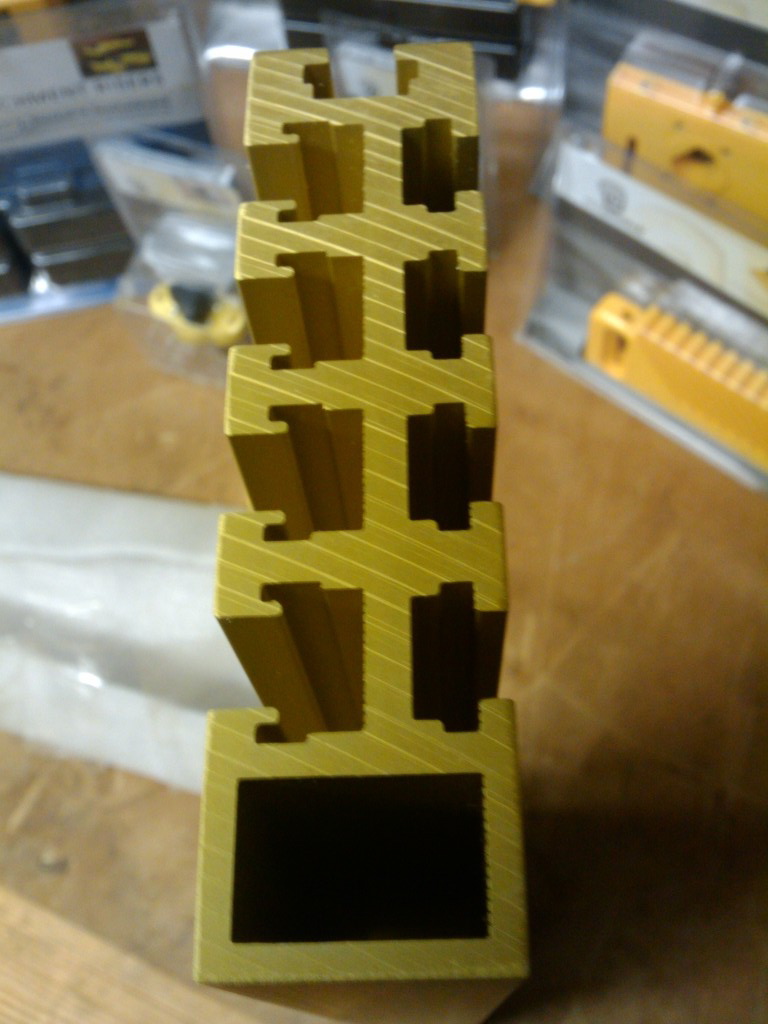
Of course, you may have realized the one weakness of the kit… if you have an aluminum topped table saw or a non-ferrous router table, you are out of luck. As I was thinking this was the case, I got another package… the Universal Track tool.  This heavy duty aluminum fence is lined on both sides with with hardware holding tracks so you can use the attachments in different locations.  Pretty slick. Just use the included hardware, slide the bolt heads into the beefy tracks and blammo – extra use.

The one thing I would strongly recommend is picking up a box to store the system parts in, and maybe invest in a box of gallon-sized freezer bags to store each accessory and its related hardware in when you aren’t using them.  There are a lot of screws, allen wrenches and other goodies you will have to keep track of – this will help keep the parts together. Also, I know no one likes to keep users manuals, but I would definitely hold on to the individual instruction sheets that come with the attachments.  There truly is a bewildering array of uses for these tools, and you’ll want to refresh your memory as to how they work before you put them to use.

It’s a very interesting system for sure, and if it helps me work safer and more accurately, well, that’s a double bonus!

Magswitch jigs can also be found at many woodworking stores.

Quick Poll

WOW!  It’s the end of the last weekend until Christmas!  Iggy and I are rushing to get the shop ready for Santa’s visit.

We’re putting away all the tools, picking up the extension cords so Santa won’t trip walking through the shop and sweeping up a barrel of sawdust in case one of Rudolph’s friends has a little ‘accident’ while at the house.  The stress is murder on Comet’s stomach this time of the year…

So, what about you?

[poll id=”151″]