All posts by Tom

I'm the guy who writes the blog...

Quick Poll

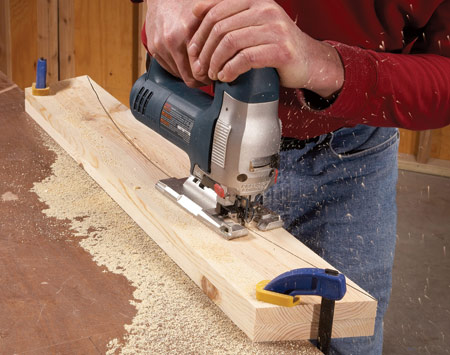
They are often the first power saw a home owner will buy. They can cut curves and straight lines. It can cut through wood, metal, plexiglass and other materials. With the right blade and proper techniques, they can make very smooth cuts, or with the wrong blade… it will make a  mess of your project.

The jigsaw or saber saw is one of those tools most woodworkers either love or don’t… it can be a problem solver or its own problem altogether.   What are your thoughts about the humble jigsaw?

Link of the week

Bear Mountain Boat Shop

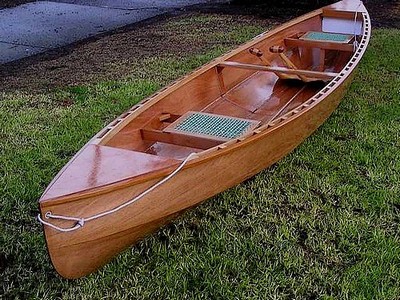
Wooden canoes are traditional, stylish and can make a day on the lake a great adventure.

Did you ever wonder how they are built… or even if you could try your own hand at building one?

The Bear Mountain Canoe Boat Shop is a great resource for prospective canoe builders. Videos, plans and and technique articles help guide you through the design, planning and building phases. There are plenty of styles to choose from, so you can find a model suitable for adventure or leisurely cruises.

Canoes not your style?  They have plans for kayaks and small boats as well.

An interesting site for the outdoor enthusiast in your life…

###


Species Spotlight: Cherry

There are lots of ways to know that summer is approaching. The Florida heat gets cranking. Local reporters call for hurricane stories. And, suddenly, the boys and Rhonda have a lot more time around the house.

The surest way for me to know that summer is coming can be found in the produce section of my supermarket. That’s where I can find the summer fruit. The peaches, nectarines and plums are delicious, but my favorite are the cherries. I can snorf those little red fruits down all day. They are a little tart, but oh, so sweet. I have to frequently battle the kids for a chance at the cherry bowl.

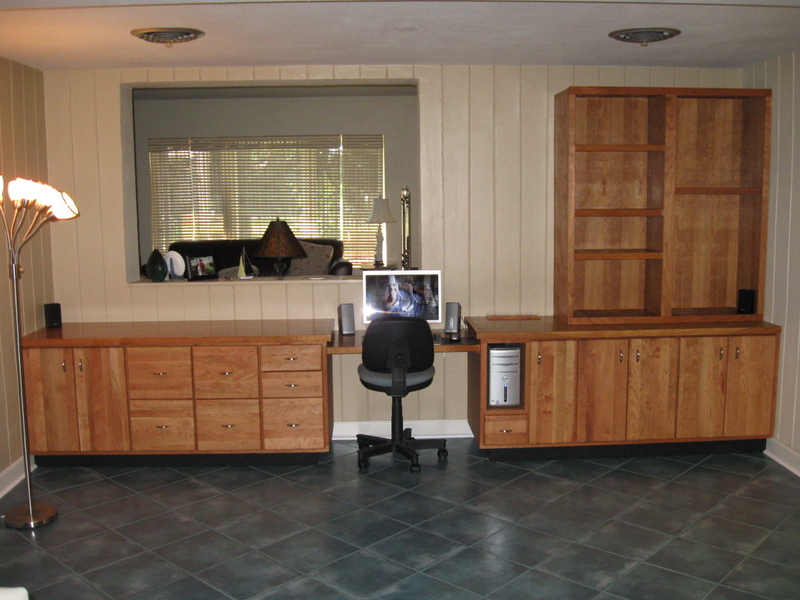
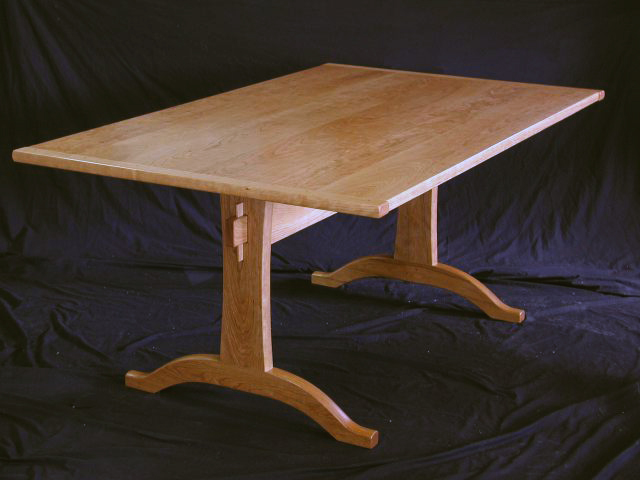
But, that’s only one way I love cherry. “Cherry is a classic for fine woodworking,” said Eric Poirier of Bell Forest Products. “It works very well, makes great looking furniture and has a very handsome color. There’s a very good reason why it’s popular.”

American cherry trees grow throughout the east and midwest United States, primarily in Pennsylvania, West Virginia, Virginia and New York. The trees can grow from 60 to 80 feet tall. Cherry heartwood is a beautiful red to reddish-brown with very pale sapwood. “The one surprise for many woodworkers is that the heartwood becomes darker when exposed to sunlight. So, say you build a book shelf, you’ll be surprised to see that when you move the shelf, the wood behind the shelf is lighter. It can be very pronounced.”

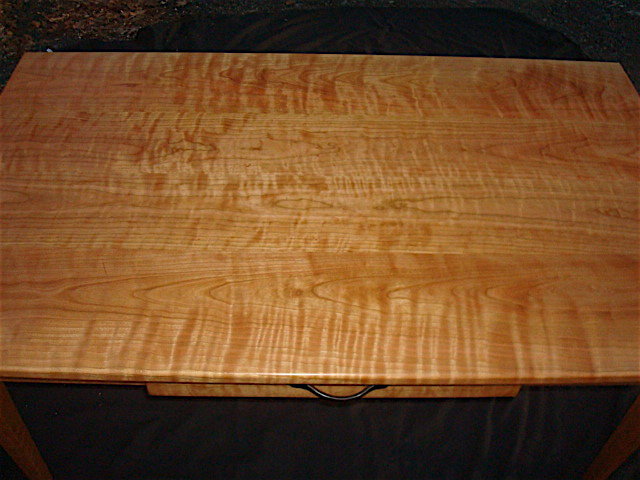
Cherry can also show some curly figure. “It’s not as common as curly maple, but when you find a piece of figured cherry, wow. You are in for a real treat.”

Bring cherry to your workbench, and you discover that its workability is legendary. “What kind of joinery do you want to cut? Hand cut dovetails? Machine cut mortise and tenon? Biscuits and dowels? Cherry’s going to give you very sweet results no matter how you choose to go.” It’s a great choice for chairs, tables, cabinetry, chests and many other pieces. It’s a classic for Shaker style projects, as many Shaker communities were established in areas where cherry was plentiful.

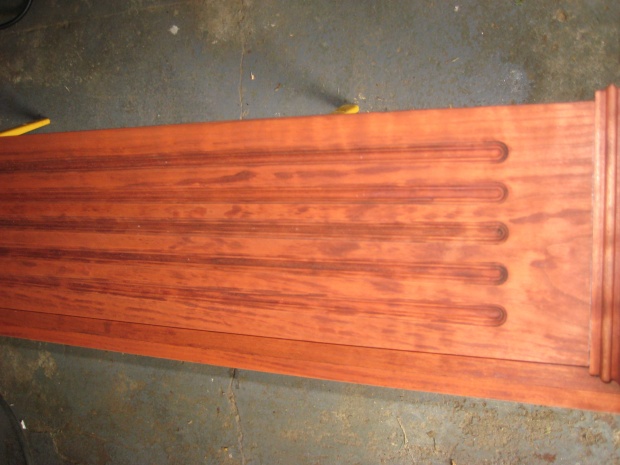
And, when it comes to finishing, cherry gives great results whether you plane, scrape or sand. “You may find some small gum pockets in the wood, but they won’t leak resin like pine will. Those add visual interest to the piece if you choose to include them.” The one place you might be surprised in the finishing. Cherry tends to have a wavy grain structure, which can lead to blotchy finishing. The best way to prevent a blotchy finish is to apply a 1# cut of dewaxed shellac, sanding it thoroughly with 320 grit paper once dry. From there, you can apply the finish as normal. This prevents the uneven absorption, giving a much better look.

Cherry is readily available and is moderately priced, but projects built with it look like a million bucks. “If you are looking for a great wood for your next project, you can do a whole lot worse than cherry. Treat yourself to this sweet looking wood.”


“I can’t do anything with it.”

Accountants have their time of the year just before tax day.  Wedding planners work their butts off on Saturdays in June. The post offices and other shipping companies have their times during the holiday rush.

This is my time of the year at work.  Hurricane season begins June 1, and I field a bunch of phone calls.  From the media looking for story ideas.  From other public information officers looking to share information before we head into the season. From groups around the county looking for a speaker to talk about hurricane preparedness.

It’s a busy job, but someone has to do it.

That’s why I wasn’t too surprised a few weeks ago when my desk phone rang. It wasn’t a number I recognized, but that’s par for the course this time of the year.

I introduced myself, and the lady on the other end of the phone asked if I was THE Tom Iovino.  I know there are others out there, but I think I’m the only one on the west coast of Florida.  “You are the woodworker, right?”

Now, that was an odd one for me. I never get calls about my woodworking at my day job. I like to keep it that way – as does my boss.

“I am,” I responded. At that point, she started talking about her father who recently passed away.  He had some furniture in his home, and she was asking if I could take it, break it up and use it to build other projects.

“You’ll have to come today to pick it up,” she said. “We are closing on the place tomorrow and it has to be vacated. I can’t do anything with this.”

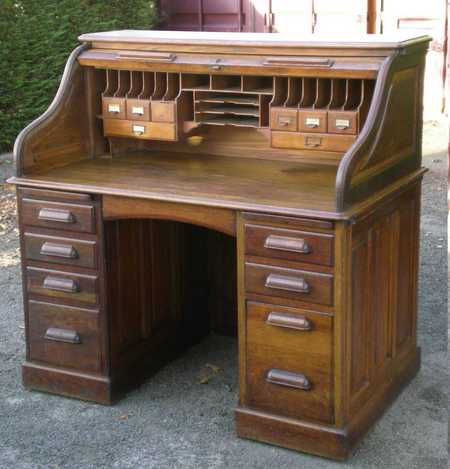
I asked a few more questions. It was a desk and a clothes dresser. She believed he had purchased the pieces back in the 1940s.   It was also very high quality, either made of some kind of oak or mahogany. She couldn’t tell. All the drawers were dovetailed. The pieces were solid. Her dad had used the desk to run his personal accounts.

I’m not one to pass on free wood. If someone were offering me a few sweet timbers, I’d leap at the opportunity to snatch them up. And, the temptation to get someone with a truck, run up to this place and hoist some sweet timbers-to-be back to my shop was very difficult to overcome.

But, then, a completely different thought entered my mind. Somewhere back in the piece’s time line, a skilled craftsman searched through a stack of boards to find the right ones to build these pieces. They were milled, cut to size and carefully laid out. Since through dovetail joint jigs weren’t around before the 1970s, there was probably a good bit of hand work to make those dovetails on the drawers. Planing and sanding. The careful application of a finish.

I couldn’t bring myself to break apart well-built and well-used pieces of furniture to build other projects. I guess it’s a reverence for the skill of the person who built the project in the first place.  Or the vision in my mind’s eye of the former owner sitting over it, late at night, tracking his family’s finances, doing his tax returns or writing a heartfelt letter to a loved one.

The furniture – in essence – was worth well more than just the sum of its parts.

After she finally explained the situation with me, I told her no, I couldn’t possibly do that to a piece of quality furniture. I did, however, tell her to call the local Salvation Army office to arrange a pick up of the dresser. At least that would give the piece a little bit more time to find a suitable home.

As for the desk, I searched for the numbers of the three nearest public schools and read them off to her. I told her about how my wife was working on a beat up, rickety desk  until one of the school’s administrator changed schools, leaving his more capable desk for her to use. I told this lady that one of these schools would love to get a sweet piece of furniture to replace an outdated desk in a teacher’s classroom. She promised that she would call to arrange some kind of pickup for a deserving teacher.

I hung up the phone feeling as if I had provided at least a stay of execution for two well-crafted pieces of furniture.  At the end of the day, I felt that was something she could do with the pieces.


Quick Poll

When it comes to some tools… the majority of us have just one.  One table saw. One thickness planer.

And, then there are routers.

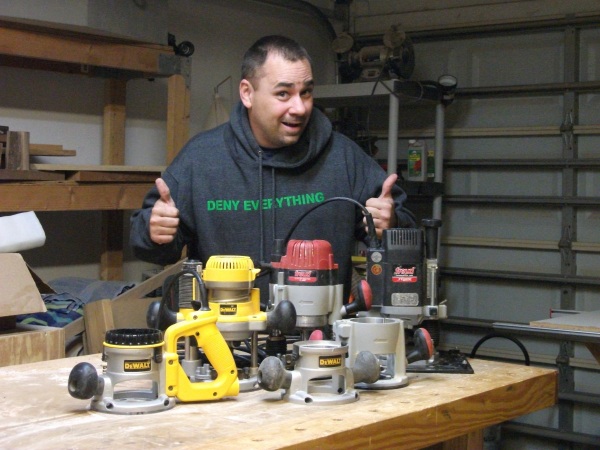
There are lots of reasons why woodworkers like to own them in multiples. You can get multiple setups for different operations. You can mount one in a table and use the other hand held. Different sizes to tackle different tasks.

Today, let us know how many routers you have in your collection. Count ’em all… small trim routers, big table mounted beasts… the works.

It’s OK, you are among friends… and you don’t have to give your name.  So we can’t rat you out.


Link of the week

Compwood Products

So, you want to build a project with bent pieces.  Does that mean that you have to slice a board down to make bent laminations? Maybe. How about building a steam box to soften wood for bending around a form? You could do that.

But, what about taking wood straight from a package and bending it immediately with no special tools or tedious preparation? If that sounds like a better idea, you might want to give Compwood a try.

Treated with an interesting compression process at the factory, hardwood boards such as walnut, cherry, ash and maple come shipped to you in plastic to maintain a higher moisture level. From there, you can bend the wood by hand and clamp it in place and let the piece dry. That’s it.

While the wood is more expensive (about three times the board foot cost of regular wood), the convenience can save a lot of time in the shop.


The shop Hurricane Ike visited – part two

When last we left Kyle Barton, he had just relocated to Dallas to help run his company’s operations in preparation for the potential impact of Hurricane Ike.

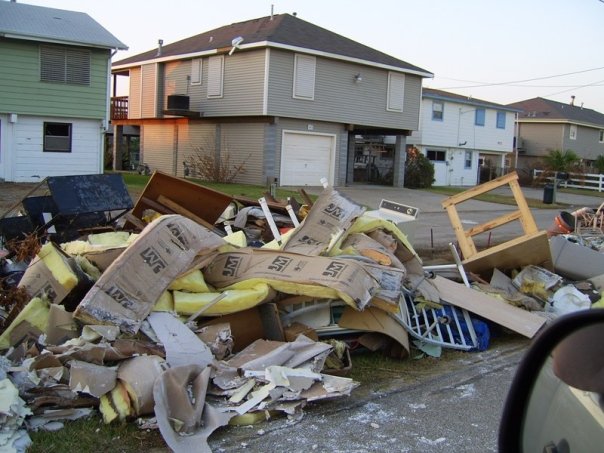
After roaring through the Greater Antilles, Ike grew tremendously in size, becoming one of the largest storms ever recorded in the Atlantic basin. While this increase in size translated into lower wind speeds in the hurricane, the area the storm covered increased dramatically.  So, while the storm was blowing at Category 2 on the Saffir-Simpson intensity scale, the impact was far greater than anyone had expected. When the storm was nearly 300 miles away from Florida’s west coast – moving due west away from the Tampa Bay area – we still had storm surge from the massive system.  Ike didn’t pull any punches when it made it to the Galveston/Houston area, eventually becoming the third costliest hurricane in American history – behind 2005’s Katrina and 1992’s Andrew.
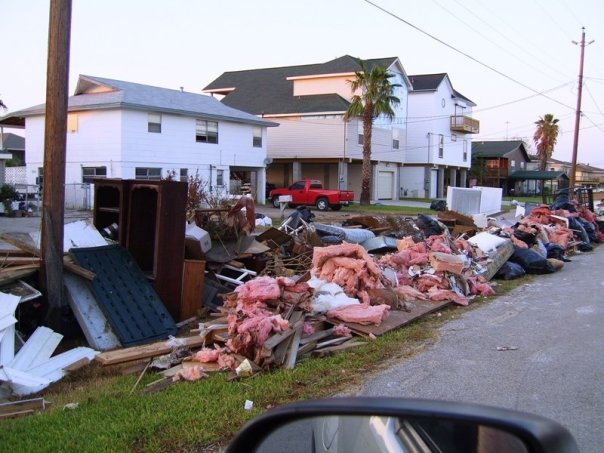
“The morning after landfall I picked up the USA Today left in front of the door at the La Quinta we were staying at. The front page showed a picture taken from an overpass on I-45 looking south toward Galveston. The highway was littered with boats and all sorts of debris, and there in the picture was the off ramp that went to my community – Bayou Vista. My first thought, was not for my shop but for my house. I had no idea what kind of shape it was in.”

Kyle later saw pictures of his community taken from neighbors who had foolishly stayed behind to ride out the storm.  All of the homes in Bayou Vista had flooding of at least six feet in their ground levels. While he could see the damage, it took nearly a week to get clearance to return to his home. “My Shop and downstairs storage area was a real mess. The OSB walls I had just put up were warped and growing a funky mold in places, the floor was covered in a slippery black mud, all the doors were swelled shut, and everything that was left downstairs was all jumbled together.”
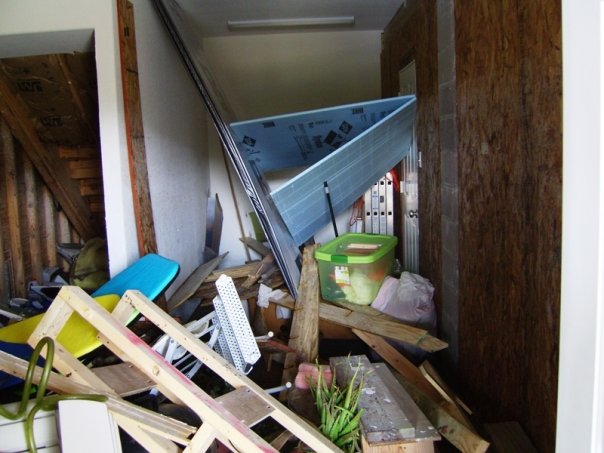
“One funny thing was that I had left a roll of paper towels on my bench. The roll was still there; dry just like I left it. But the bench it was on had moved from the back of my shop to the front. So I knew the water had “gently” risen up to about six feet and then gently drained back away.”

Kyle had his hands full over the next months stripping his entry foyer and shop back to the studs, dealing with debris clearance, working through the insurance process and getting things back to normal. Since insurance was not going to cover his Jet planer/jointer, he set about restoring that tool by himself.
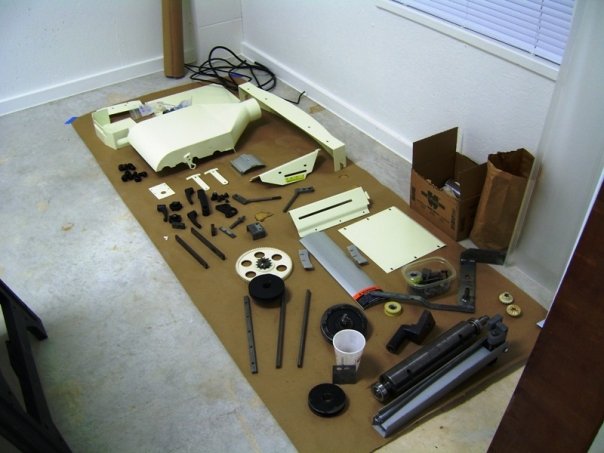
Initially, he had used a product called CorrosionX, which helped to keep the rust to a minimum.  “All the cast iron was covered in surface rust. It only has one tiny subsurface pit on the out feed table. I completely disassembled the entire thing into its 383 parts – don’t ask me how I know – then I soaked all the parts in Evapo-Rust. I went through 4 gallons of the stuff.  I then replaced the motor, switch, cables, belts, and all the bearings. All in all it cost about $500, but it runs like a champ, has zero snipe, and there’s nothing I don’t know about that machine.”

Kyle bought other tools to replace the ones lost in the flood, and he was also able to  rearrange some storage areas in his old basement to make the shop a little larger. Today, his shop is a comfortable place to get some woodworking done. “The shop now is bigger, brighter and more functional. Except for a finishing room, I have all the space I need or want.”

Knowing that disaster recovery for a workshop – whether from a hurricane, tornado, fire, flood or other hazard – is possible, I wanted to leave the last few paragraphs for Kyle to share the lessons he learned with each of you.

“The biggest and corniest piece of advice is ‘Be Prepared.’ But also know what the worst-case could be and allow for it. That is where my preparations were lacking. Every year at the start of Hurricane Season, I call three local movers and confirm the cost and lead time they need to pack-up and move my heavy machinery to a secure storage facility. I visit a couple of storage facilities and confirm availability, space and costs. And I also check out box truck/trailer rentals in case I have to move everything myself. All of my heavy machinery is on wheels and I have bought a Harbor Freight Shop Crane to assist me in moving things and evacuating.”
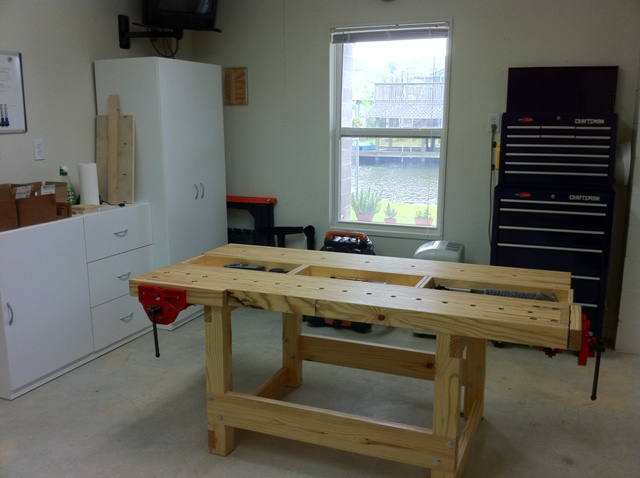
“Next, check your insurance policies and know what is covered – and what is not covered –  for all types of disasters. You may be able to buy supplemental insurance to cover claims your current policies do not. In my case, I still can’t get coverage for my downstairs shop. But anything I can get upstairs – small power tools, hand tools, and the like – will be covered. Also document and photograph all your tools and kept that inventory in more than one location. In the cloud via Dropbox or other similar service is highly recommended.”

“Finally, know that if you do lose everything, you can recover and make your new shop better than the one that was lost.”

Remember, the Atlantic Hurricane Season runs from June 1 through November 30. The time to prepare is now.