All posts by Tom

I'm the guy who writes the blog...

Don’t get your feathers ruffled

At my day job, I have given hundreds of hurricane and disaster preparedness talks. Big groups. Small groups. Companies, churches, neighborhood association meetings … you name it, I’ve gone there and spoken. For me, it’s all old hat now.

But, that hasn’t always been the case. When I first started out, I was told by my boss at the time that I needed to not run my talks free-form. Instead, I was encouraged to build a PowerPoint presentation, rehearse my material based on cues from what was on screen and NEVER deviate.

For my first few talks, this worked well. I never forgot a single point. I always put the emphasis on the key message I wanted to convey. I went from success to success, clutching tightly to the security blanket of my canned presentation.

Then, well, it had to happen. I went one place to talk, and blammo – no outlet was convenient for me to set up my projector and laptop, and I didn’t have access to an extension cord. Boy, did that ruffle my feathers.

The same thing happens when we are in the workshop. When we have our table saw tuned up and ready to make a cut, we become comfortable using the equipment. But, if you need to cut something on edge or try something a little out of our comfort range, it’s easy to get flustered – and worried – by the operation.
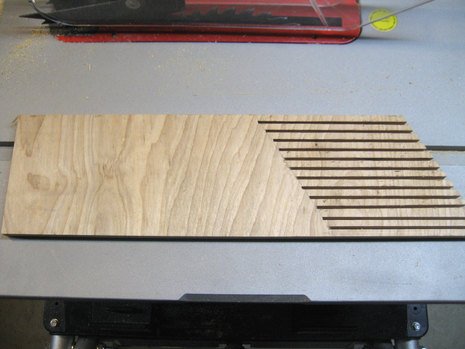
“That’s where feather boards come in,” said Dan Walter of Eagle America. “These simple jigs give you much more control – and confidence – over your operation.”

Feather boards are very useful jigs that help hold your work down to the table or against your fence to ensure a more accurate cut. And, they also can help prevent kickback, improving safety.

“The classic way to make a feather board is to fish a piece of scrap out of your wood stash, cut a series of parallel angled fingers and clamp it down to your saw,” said Dan. “And, you know, there is nothing wrong with that. It’s a cheap, practical shop solution.”

But, Dan also told me that commercial feather boards offer more versatility, are more durable and don’t take valuable shop time to make. Eagle America carries an extensive line of feather boards – each of which has special features.
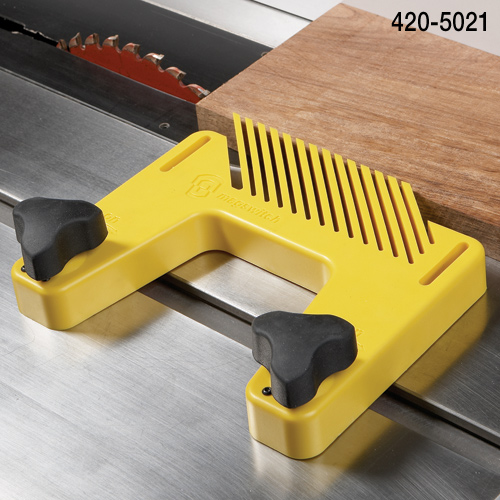
“If you need feather boards for your cast iron topped table, band saw or other ferrous metal work surface, the Magswitch featherboards offer incredible convenience and flexibility.” Using a special magnet users can switch on and off, these feather boards can mount anywhere on the table, independent of the miter gauge slot.
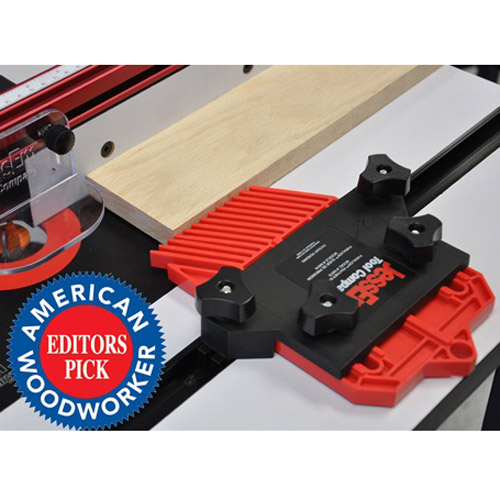
Jessem’s Paralign models allow users to align them parallel to the work piece while they are clamped in the table. “In router tables, this is a very handy feature that allows you to skip all of the trial-and-error fidgeting to get the set up right.”

Milescraft’s dual slide motion feather boards feature large ergonomic handles for tightening them in place. “What a boon for people who may have limited hand strength. The ability to set these into place and know they will be rock solid helps ensure accuracy in cuts.”
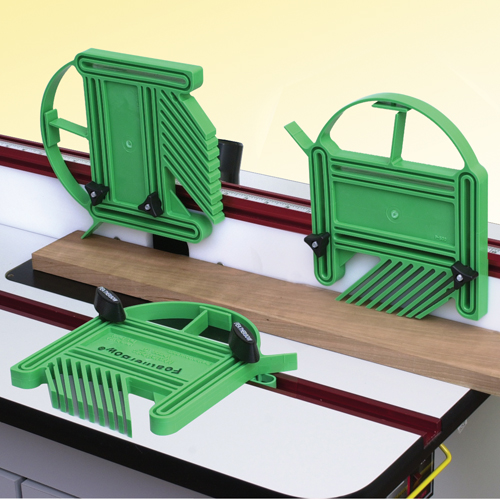
Feather Bow’s offerings feature a traditional looking feather board finger design on one side and an innovative bow hold down on the other. Shaped somewhat like the leaf spring in a car, this focuses the pressure exactly where you need it without applying it across the entire length of the fingers. “These babies work very well on router or shaper tables where it’s critical to get proper bit or cutter contact to ensure a flawless shaping job.”
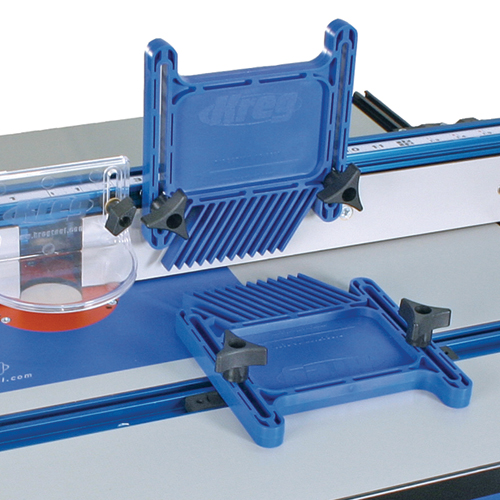
And, Kreg’s True Flex models not function as either a feather board or a stop block. “Their locking system also relies on a wedge to get a solid lock in a miter slot. That’s going to help ensure nothing slips when you are pushing the board past the blade or cutter.”

Dan also pointed out that many of these commercial feather boards can also be stacked together to give you control when resawing, cutting raised panels on a table saw or other functions. “I’m always surprised when a company comes out with a new and innovative feature on such an old power tool standby. There are some creative minds at work!”

My speech in front of that group sure threw me for a loop. But, it also taught me to look beyond just that one tool in my public speaking toolbox. Today, when I go out to talk, I know that I can adjust my presentation style to meet the needs of the specific group I’m addressing.

And, it allows me to stop obsessing over what could go wrong during the talks and start enjoying my time off in the shop a whole lot more.
 

On the horns of a dilemma

OK, so I’m getting ready to build this bookshelf project for a co-worker of mine, but I’m having a big time internal debate with myself. The design is fine, and the client is excited to get started on the project.

But, I am torn.  You see, I have been giving the joinery on the frames a lot of thought. You see, each side is going to be a four-sided frame that will be 18 inches wide at the bottom tapering to 12 inches at the top. There will be four pieces on each of the sides – a 90 degree back upright, two rails and an angled front stretcher. Each shelf unit will have two frames, and there are two bookshelf units in this build, making a total of 16 joints.

What I’m having trouble deciding is how to join these joints. I am trying to choose between a mortise and tenon joint and a dowel joint.

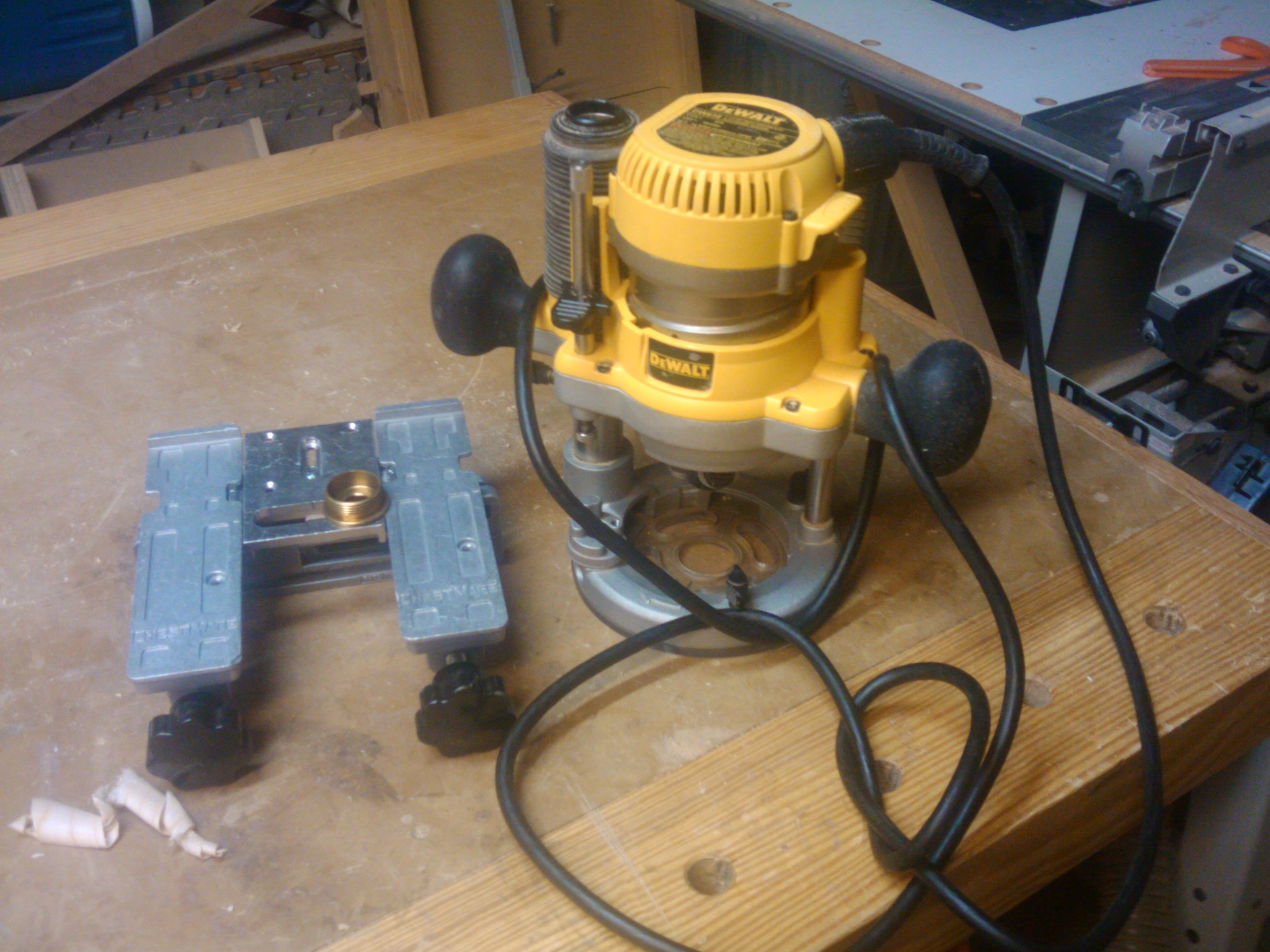
In this corner, there’s the mortise and tenon team. My plan – if I choose to go this route, is to cut mortises into the cross rails at the top and the bottom of the piece. I have a Prazi Chestmate jig with the special mortising template inserted, and I would need to use a plunge router with a 5/8″ guide bushing and a 3/8″ up spiral bit to plow the mortises. I would also need to cut tenons on both ends of the uprights – 90 degree tenons on both ends of the back rails and angled tenons on both ends of the front rails.  Probably using the nibbling technique on my table saw. I would cut them a little thick and plane them to final size with a shoulder plane to sneak up on the perfect fit.

Working in favor of the mortise and tenon is the tradition of the joint.  It’s a stout joint for this kind of application, giving lots of glue area. Against? Well, it’s a bit more complicated to do this kind of joint especially with the angled tenon to fit into the mortise. There’s also a bit of fussing to get the size of the tenon perfect – I have (on more occasions than I care to count) cut the tenon too thick to start, and then pushed it to too thin.  Grrr…..

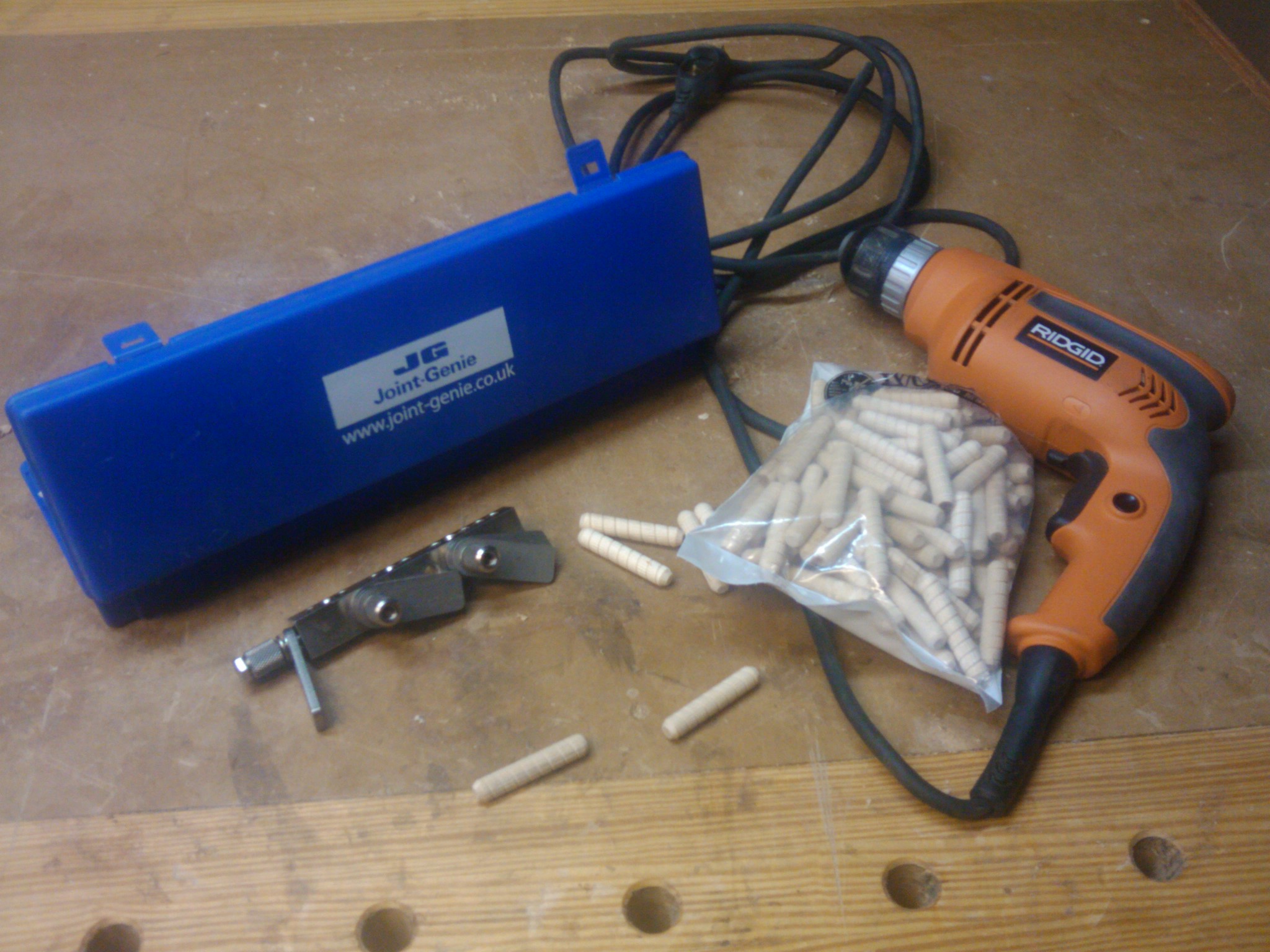
In this corner is the dowel team. Here I would use my corded drill and my Joint Genie doweling jig to precisely drill for three 3/8 inch, 2 inch long spiral dowels per joint.  Bippity, boppity boo, and I’m done with all 16 joints in probably less than an hour.  Using this method, I could ignore the angles – drilling at 90 degrees to the edge of the top and bottom rails and 90 degrees to the mating surface of the uprights. The 3/8″ dowels would be the same width of the tenon I was planning on cutting.  It’s another traditional joint that I have seen used for some heavy-duty joinery by Norm Abram and James Krenov.

The downside of dowels I have heard time and again is that they aren’t a heavy-duty kind of joint. There have been some Wile E. Coyote-type tests done to demonstrate the strength of dowel joints vs. that of mortise and tenon joints.  The testers used strain meters, bathroom scales and other high-end technical tools to measure the failure point of each joinery method.  And, their results  – expressed in foot-pounds, newton-meters or some other measurement scale – show results that are all over the place.  Heck, the earliest I have seen this debate was back in an October 1979 edition of Popular Science, where they basically claimed that the two joints are at a dead heat.

While I’m making up my mind, I’d be interested in hearing what your thoughts are on the topic…


Quick Poll

Happy Father’s Day to the dads out there!

Now, first of all – a salute to us guys out there:

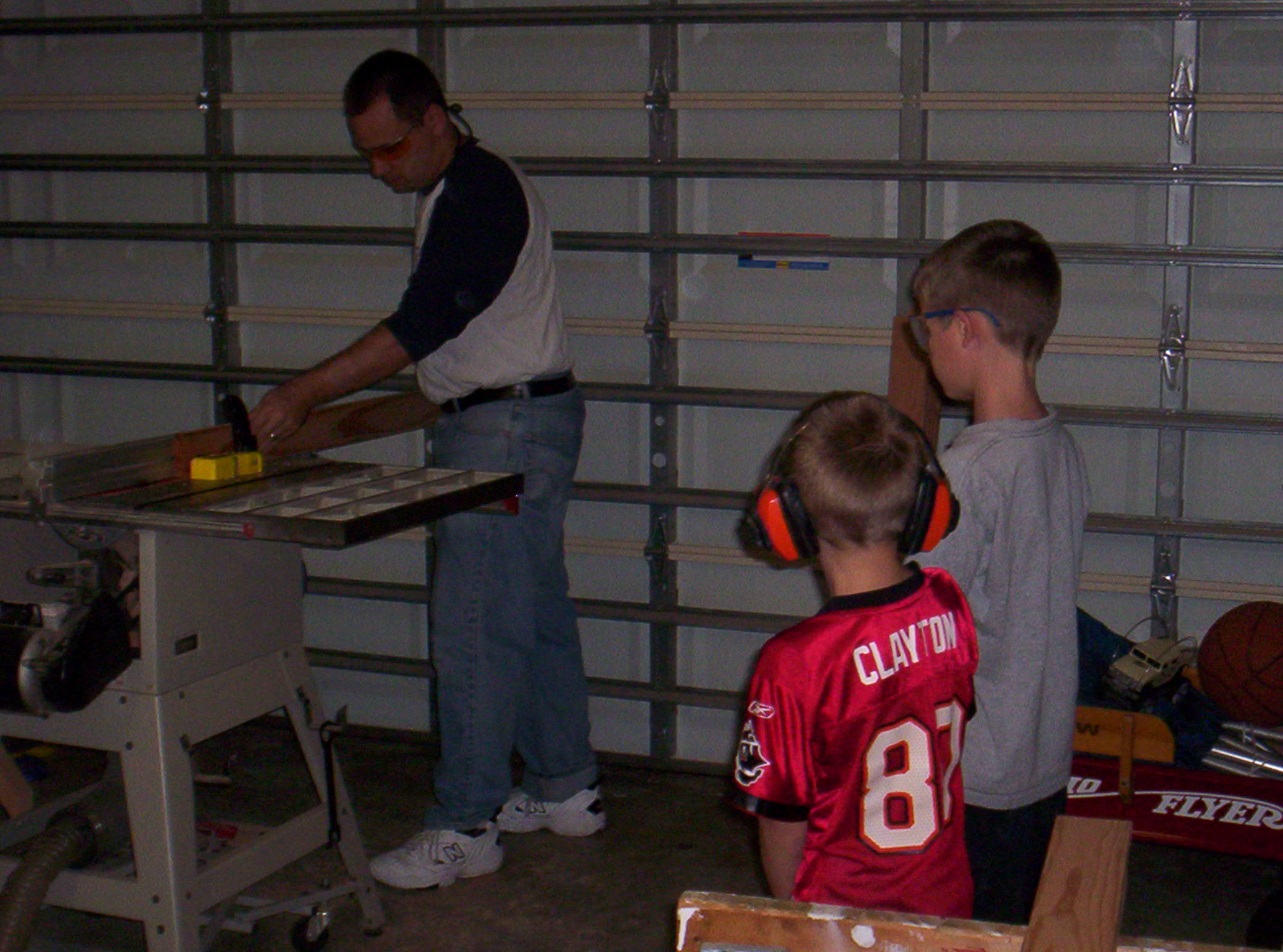
Now, for the matter at hand – spending time with your kids (Or someone else’s kid – maybe nieces, nephews, grandkids… the works) in the shop can be a great way to pique a kid’s interest in woodworking, and a great way to create some memories that will last a lifetime.

This week, tell us how frequently you let the kids work with you in your shop?  Is it an everyday kind of thing, or is it a rare treat?


Link of the week

Construction Kids

Parents are busy trying to figure how to keep their little ones occupied for summer break. Some may keep their kids home, allowing them a lot of free play time. But many others will be sending their kids to camps. Many of those kids will go to bible camps, dance camps, sports camps, adventure camps or some other summer adventure.  But, wouldn’t it be cool to send your kids off to – construction camp?


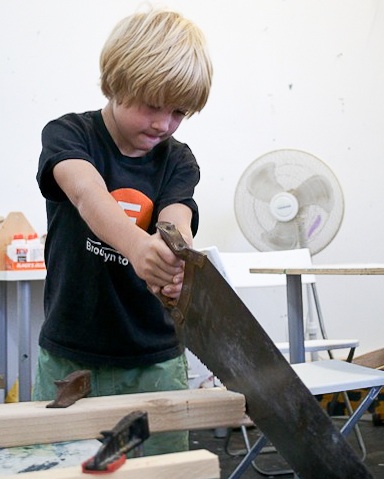
That’s just what some lucky kids in Brooklyn will be doing this summer at Construction Kids. This woodworking school is set up to let budding builders get some hands-on experience with saws, drills and other important woodworking tools as they build projects of appropriate difficulty for their age. Not only can kids participate in summer camps, they can also take woodworking classes throughout the year and even have construction birthday parties.  Where were these things when I was growing up?

The site links to the class schedule, some of the cutest pictures you have ever seen and news coverage of the operation.

A full-sized map

I like to watch comedians perform. Going to a comedy club is – well – a barrel of laughs for me. If I can’t go, I’ll tune in to Comedy Central for my funny fix.  Each comedian approaches the material from his or her  own point of view and with his or her own quirky observations. From the full-force in-your-rapid fire delivery (think Gilbert Gottfried or Sam Kinison) to a more laid back, mellow approach that throws you off guard (Bob Newhart or  Steven Wright), there’s someone out there who can leave you doubled over in laughter.

I still remember one of the stand up routines Steven Wright did.  He would just deliver deadpan lines, one after another, each a little more offbeat than the last.

I’ve been doing a lot of abstract painting lately, extremely abstract. No brush, no paint, no canvas, I just think about it.

Right now I’m having amnesia and deja vu at the same time. I think I’ve forgotten this before.

And, one of my favorites from the show…

I have a map of the United States… Actual size. It says, “Scale: 1 mile = 1 mile.” I spent last summer folding it. I also have a full-size map of the world. I hardly ever unroll it. People ask me where I live, and I say, “E6”.

It was so funny because it was just so absurd. And, later as I was in the shop thinking about the bit, a thought hit me…is there ever a time when a full-sized map would be useful?

I didn’t really need to look any further than my shop for the answer.  I am getting ready to start on a new project – a ladder-step looking bookshelf made of some cool looking cherry from my friends at Bell Forest Products – and I have yet to cut my first board. In fact, the piece right now hasn’t seen anything more than a drawing I made on a sheet of 11 x 17 graph paper.

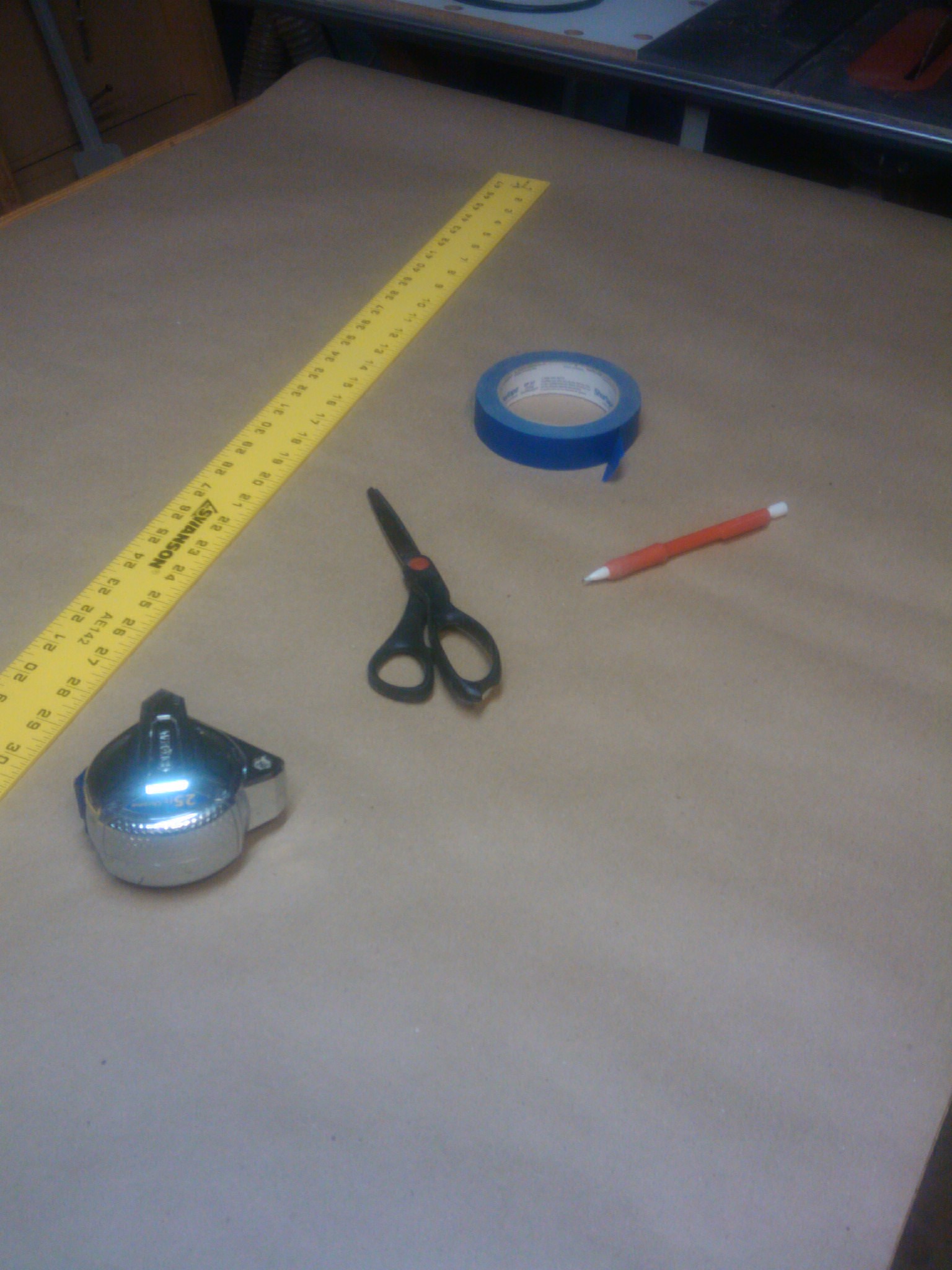
So, I took the drawing into the shop with a roll of brown builder’s paper, some drawing tools and a cool glass of iced tea.

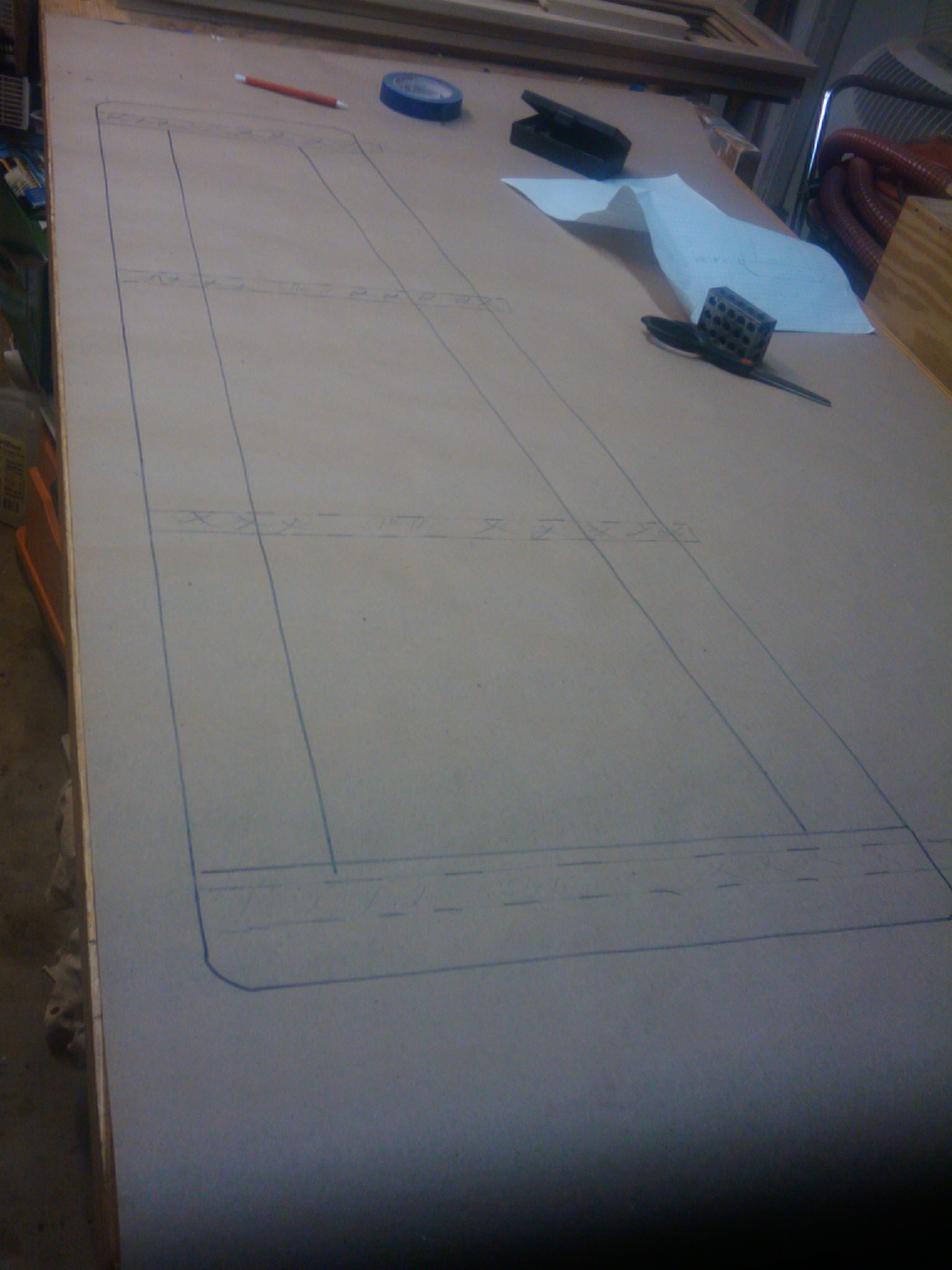
Using a pencil, a ruler, and a 48 inch rule (can’t call that a yard stick, right?) I marked out the critical measurements.  Length of the bottom and top boards, height and depth of the piece and the locations of the shelves. After I marked them, I connected the dots.  There. A full-size rendering of the bookshelf sides. That simple.

Why on Earth would I do something like this?  Well, there are plenty of reasons. As I cut each of the pieces for the bookshelf, I can hold them up to the drawing and compare sizes.  I can use my sliding bevel to get accurate angles for the sloped front leg.  And, it finally gives me a look at just how deep this bookshelf is going to be. I’m glad I did this, because I think 18 inches at the bottom of the shelf is just a tad too deep. I may be able to talk to the client and ask her about reducing the width two inches for a slimmer appearance.

I’m hoping by doing this step, I can prevent giving each of you more material for your own stand up routines!


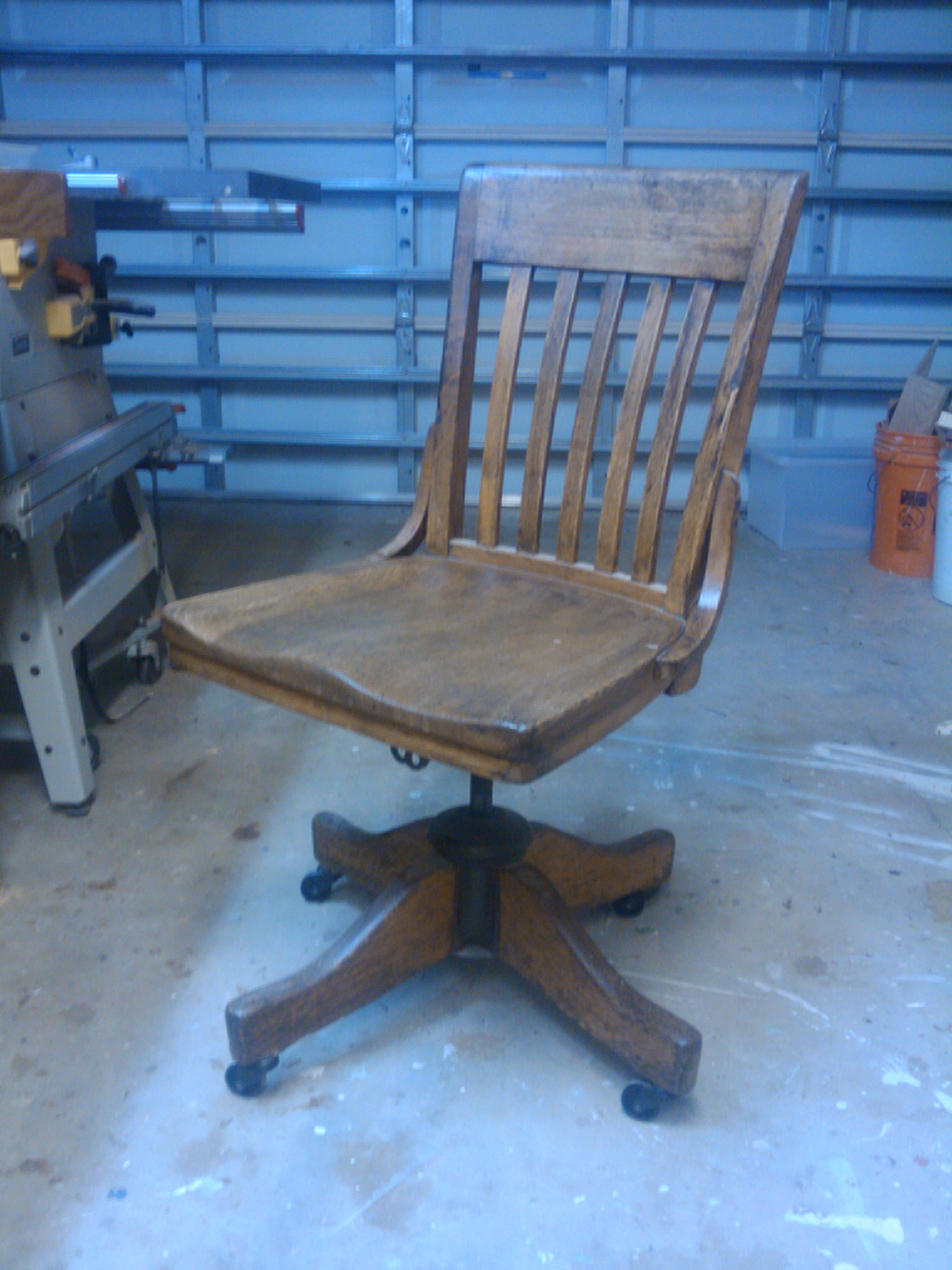
My grandfather’s chair

What can I say about my maternal grandfather John Schwab that won’t make me tear up?  I loved the guy. I still do. He was one of the first heroes in my life.

He was a very unassuming guy who lived in in Fairview, New Jersey, just across the Hudson River from midtown Manhattan.  He ran a dairy. The big treat for us was to sleep over at our grandparent’s house, wake up early and go to the dairy to ‘work’ with him.  My older brother would get up early and ride in with him, doing some deliveries.  My grandmother would drive my younger brother and me in later, once the sun was up and we had a chance to eat breakfast. My grandfather would do most of the work, selling milk and cream to people who walked into the dairy. We would either help him taste chocolate milk or ice cream.

Bottles from his dairy

The other great memory I had of the dairy was watching him do his books. He would sit at a big desk on this stout wooden oak chair and count the money, occasionally stopping to give each of us a piece of Bazooka gum and read us the comics that came along with the pieces. He had a huge pile of old silver coins under his desk calendar – he was keeping them to give to each of us in the future.

My grandfather passed away in 1986 – the start of my senior year of high school. His loss was very difficult for me, as we were both very close. As my senior year went on and my grandmother was going through his property, I was given three very special things of his.  The first was his watch.  The only one he ever wore. The one I learned to tell time by looking at.  The second was one of his Schwab’s Dairy delivery jackets.  An Ike-style jacket with the dairy’s name embroidered on the back. The third was his oak desk chair from the dairy.

I very ham-handedly attempted to refinish the chair back in the summer of 1987 before I went off to college, and brought it with me.  I did my homework sitting on it, and it moved with me from Maryland to Florida. It was the chair we used at our computer desk for years, until one of the original rubber wheels delaminated on it, preventing it from rolling.  I put the chair out in the garage and vowed that one day I was going to repair it.  But, it sat out there, collecting dust for more than two years.

This weekend, I finally was motivated enough to head to the local home improvement store to buy a set of new wheels.  While I had the chair up on my bench, I started to notice some things about the old chair that I had never truly seen before…

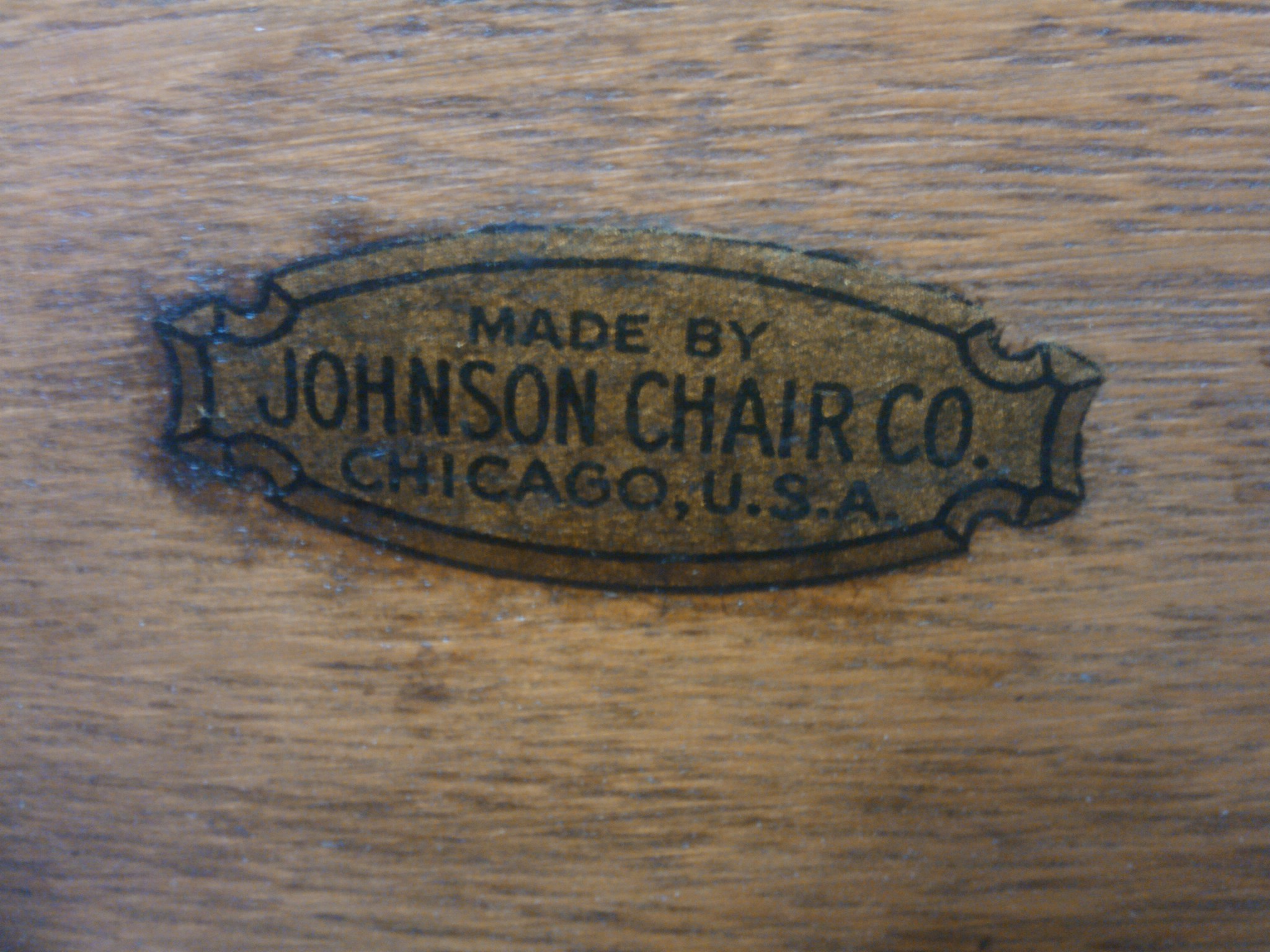
It’s a very austere looking desk chair that has seen a tremendous amount of service. The piece is plain, yet graceful in its simplicity. On the back rail is a maker’s mark – the Johnson Chair Company of Chicago. From what I have been able to learn, the Johnson Chair Company built Mission-style chairs from the 1890s through the 1930s.

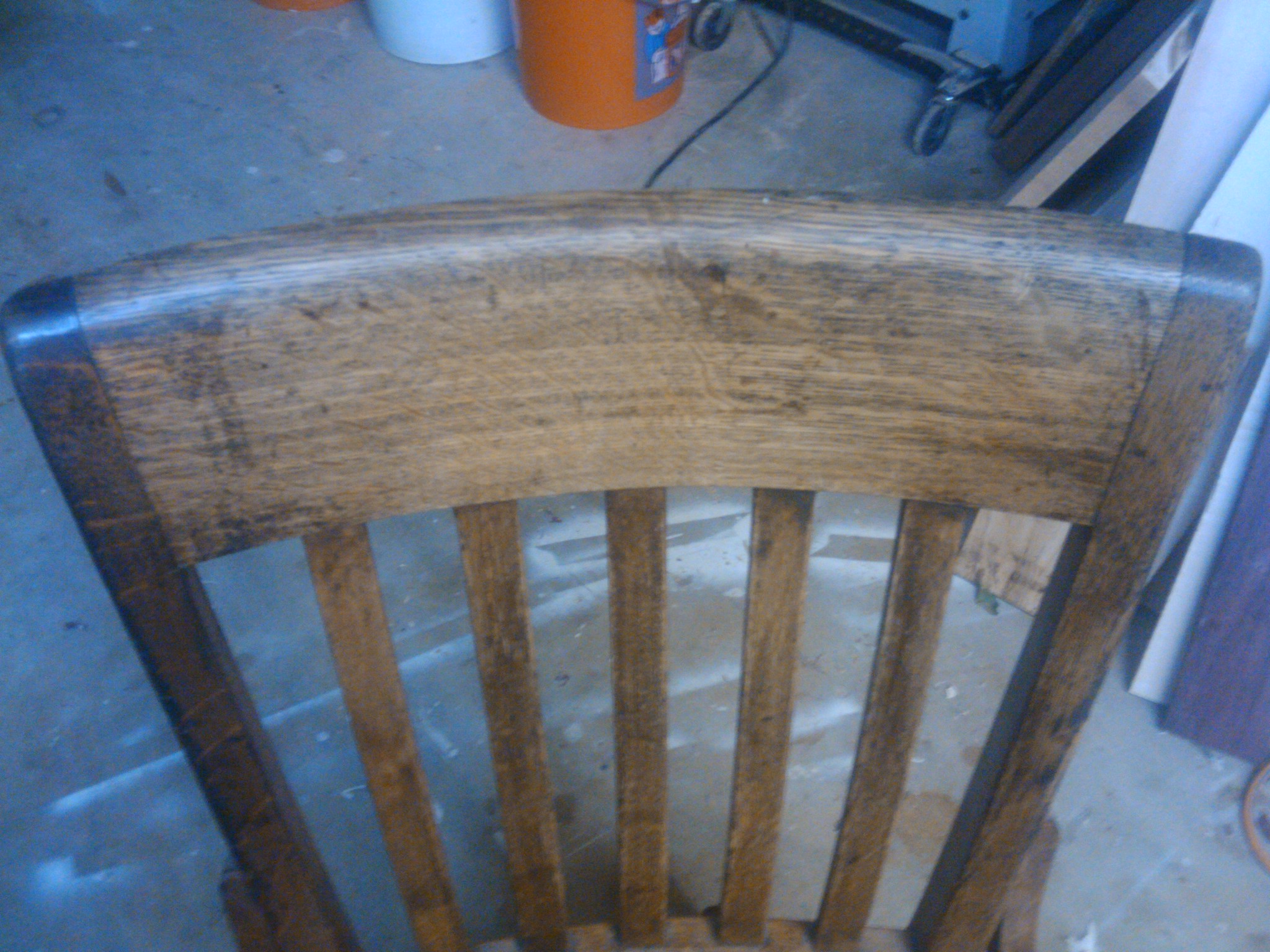
The chair has a beautifully sculpted seat that’s very comfortable to sit in. It also has two large side rails with five gently bent splat pieces that rise from the seat to the curved crest rail. There are two bent pieces that help to anchor the side rails to the seat. One of them has a split on it and lost its glued plug.

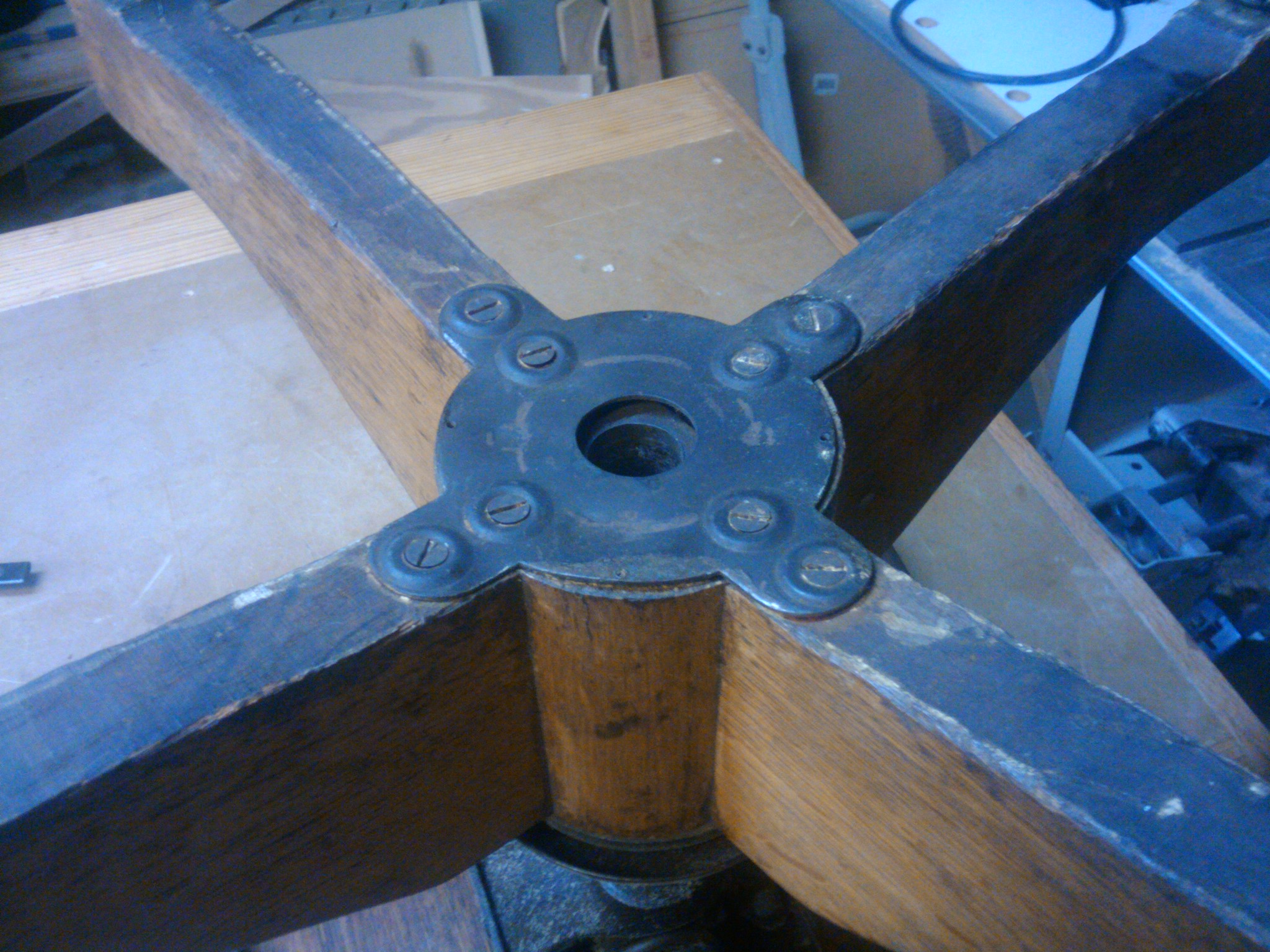
The undercarriage of the chair is very interesting.  When I had the piece flipped up on my bench, I could see how the legs were attached to the central column of the chair. The four legs radiate out from a cast iron base, which is threaded through to allow the height adjusting rod to screw up or down, allowing he user to set the height of the chair exactly where they want.  The action is smooth, and requires a little work to operate. But, once it’s set, it holds the adjustment very well.  The legs themselves are joined through a massive mending plate on the bottom of the chair, with beefy screws holding to the iron inner workings and each leg. The space between each of the legs is filled with a thin piece of bent oak, which slips into a pair of kerfs cut into the base of the legs. One of these is missing on the chair, but the three others are in very good shape.

The seat adjustment control determines how easily you can rock the seat backward. It consists of a hefty iron handle that screws into the workings of the adjustment device.  Screw the handle in, and a coiled spring in the back gets stretched, making it more difficult to rock backward on the chair. I had never noticed how massive the control was until I had it up on the bench.

Once I fixed the broken wheel on the caster, I wiped all of the cast iron pieced down to clean them, and then wiped them again with a silicone lubricant to allow easy movement of the pieces. I also took the opportunity to carefully clean all of the dust off the piece and vacuumed the thing spotless.  After I wheeled it into the house, I made a decision. Something this important to me doesn’t belong out in the shop or at the home office… I am going to bring it to my desk at work and replace my 12 year old chair that’s getting more uncomfortable by the day.

And, when I’m sitting on the same chair my grandfather worked at, I’ll get inspiration to work harder to be more like him….


Quick Poll

Unless you have been living under a rock for the past few days, you may have heard that Marc (The Wood Whisperer) and Nicole (The Lady of Leet) Spagnuolo are expecting their first child sometime in late December. Congratulations, Marc and Nicole!  That’s a big step  in your lives.

This got me thinking – how much did the arrival of children in your home affect your shop time?  Did the big event have a major or just a minor impact on your shop time?  Do you even have kids, or did you start woodworking well after they were grown?