All posts by Tom

I'm the guy who writes the blog...

We’re doing this for the heroes

There are a lot of very talented woodworking bloggers out there. OK, maybe not me, but folks like Kari Hultman, Robert Pridgen, Dan Bean, Dyami Plotke and dozens of others are out there cranking out impressive woodworking know-how that hundreds of woodworkers look at, study and then go into their shops and apply the inspiration at their benches.

But, what about the woodworkers who can’t get into their shops? For them, the content we provide is a vital lifeline back to their shops – perhaps thousands of miles away.

Case in point – meet David Wert, a Staff Sergeant in the United States Army. He has been in active duty for 15 years now and stationed in Fort Riley, Kansas. He is married to an amazing woman and has two little girls. He has really gotten into woodworking in the last couple years, and has a background in woodworking for most of his life. David’s Grandfather is the one who got him started when he was just a kid.  Check out some of David’s work at his RusticJoy Woodworking Facebook page.

Now, he’s three months into a one-year deployment in Afghanistan. Away from his family, friends and shop, following his favorite blogs has been a vital lifeline back to civilization. “ I work anywhere for 12 to 20 hours a day and sometimes it’s just sitting waiting for something to happen. It helps pass the time when I can sit and read what’s going on back in the real world having to do with woodworking. I really like reading all the blogs from you, Shannon Rogers from the Renaissance Woodworker, Marc from The Wood Whisperer and many others that I get a chance to read. I have learned a lot form all the blogs and other web content I have been able to get my hands on.”

When it comes to what he enjoys seeing the most, David has lots of favorites. “I love to read about projects that everyone is working on. Right now I am enjoying Matt’s “Walls of shelves” podcast he is doing. I am limited on what I can do on the Internet over here so I set my computer to play the video and a few hours later it is ready for me to push play. Rob Bois is another one that I really like to watch. He does a great job with the videos he does. I have learned a lot from all the guys on the Internet that I get to watch or read about.”

And, I just had to ask David – what does it mean knowing that we are back here in the States doing the woodworking thing and posting it online? “ I am in awe of the guys that are able to pump out content like they do. I go back and look at all that Matt has put out on Matt’s Basement Workshop and you would think that is his full time job. I just hope to one day contribute to the woodworking community like the guys I follow out there do.”

Any last words, David? “I consider every one of you guys my teachers I follow you all very closely and I want to thank each and every one of you out there that put content out there for the world to see.”

David, I don’t want to go too far out on a limb here, but I think I speak for all of the woodworking bloggers out there when I say thank you for what you are doing, and we look forward to seeing what comes out of your shop when you return home safely to your family.

Happy Independence Day.

 

Quick Poll

With tomorrow being Independence Day in the United States, I’ve noticed some things happening in my neighborhood.  Fireworks which are illegal in my county explode all night. American flags replace the little ‘summer fun’ banners that hang from flag poles. And, decorative cut out yard decorations start to grace the front lawns my my neighbors’ yards. Something like this:

You got it – a sheet of plywood, a jigsaw, some paint and a way to have them stand in the ground and bingo, you have a yard decoration. And it’s not just Independence Day when these appear – there are reindeer for Christmas, Cupids for Valentine’s Day, rabbits for Easter… the works.

This week, let us know if you have ever built a wooden yard ornament for any holiday, or if  the idea of building them turns you off.


Link of the week

Hennessy House Wood Flag Poles

While the vast majority of flag poles installed at homes and at businesses are either metal or fiberglass, there are still companies out there making classic wooden models to fly your flag from.

One of the most notable is Hennessy House Wooden Flagpoles, which makes their models in the traditional method using western Douglas fir, and their standard models come with several coats of clear exterior lacquer or a gloss white paint and all of the installation and flag hardware. They even show how their flagpoles are made – an interesting tutorial.

If you are looking to install a flag pole in your yard, Hennessy gives you a good reason to consider going with a traditional wooden model.

Tools I use: My biscuit jointer

What the heck is up at the workbench?  First, it’s dowels, then I’m talking about biscuits?  Where are the hand cut  mortise and tenons?  The expertly executed blind half-lap London-pattern dovetails?

OK, everybody, take a step back and inhale deeply, count to ten and then exhale slowly repeating, “Serenity Now.”  I still love my hand tools and cutting classic joints, and my biscuit jointer is relegated to a few limited but very important tasks.

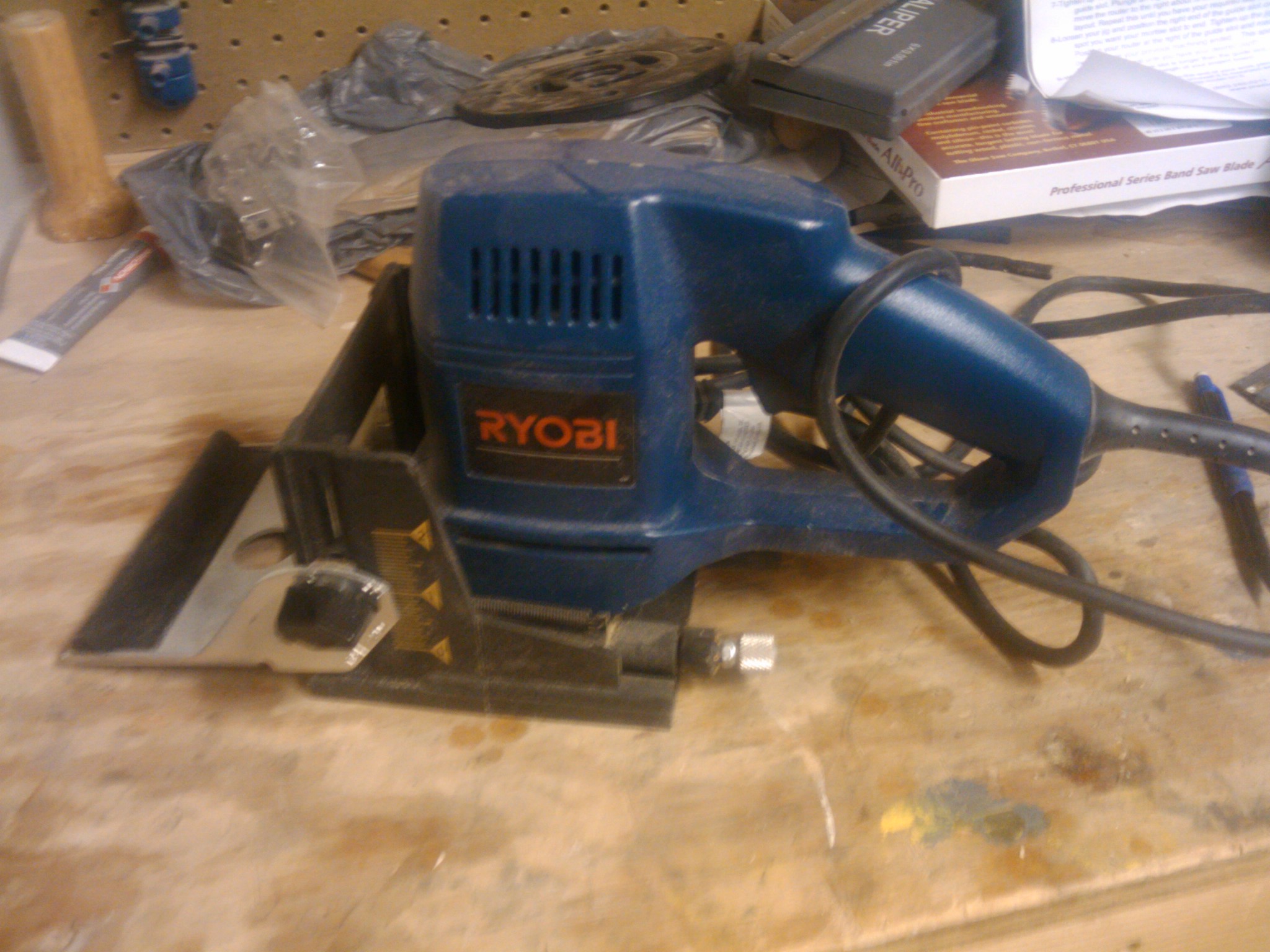
First, lemme tell you about my biscuit jointer.  It is a Ryobi model that I picked up at Home Depot many moons ago – I believe sometime about 2000 or 2001. You see, Norm used one in just about every project he built, and that convinced me that if I was ever going to build woodworking projects, I was going to need one of my own.  I chose this model because it was dirt cheap – for $99, it was a steal. And, I used it for a lot of tasks when I started out.

Did it get good ratings in the woodworking mags?  Nope.  Has it served me well?  You bet.

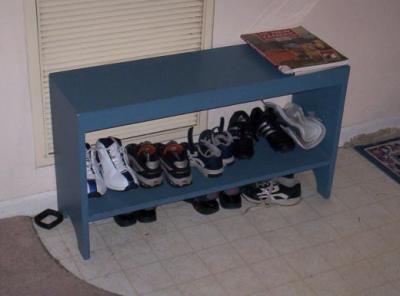
I would attach shelves in bookcases with it. I would build cabinet boxes with it. I built this sweet little shoe bench that sits by the front door that allows us a place to stash the shoes when we come in and gives us a place to sit and put them on before we leave. I built it back in 2002, and it has held up for the past nine years with nary a complaint, and it’s still as rock-solid as the day I built it.

As my skills developed, my reliance on the biscuit jointer started to wane. I learned how to cut dadoes and rabbets.  I got my Kreg pocket hole jig setup. I started using more and more mortise and tenon joints.

Today, my biscuit jointer comes out from time to time to help reinforce miters, attach solid wood edges to plywood panels and it makes an appearance when I do panel glue ups.  Did I mention that I have issues when I glue up panels?

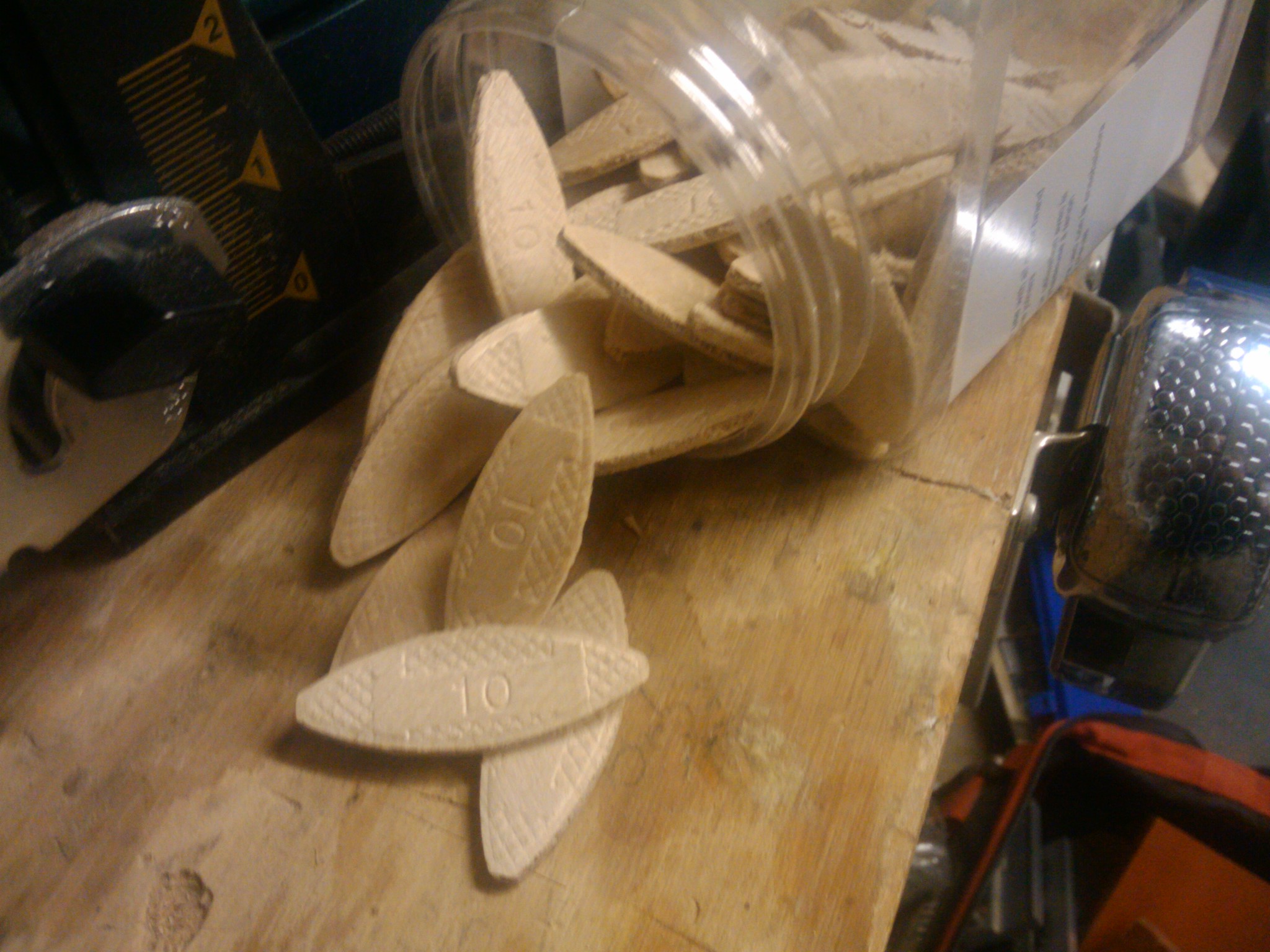
Now that I am entering the next phase of the project assembly – creating the actual shelves that will hold the books and span the distance between the two frames – I’ll be using the biscuit jointer to help keep my shelves on an even plane when I glue up the shelf boards. I had to stop to check my supply of biscuits and yes, I have enough to do the shelves.

All I need now is some quality shop time with my old friend and a stack of boards, and we’ll take another big step together toward project completion.


Gotta start moving

So, last week, I was on the horns of a dilemma. Debating on a joinery method for a set of bookshelves I’m building for a client.

And, I found myself in an all-too-familiar situation.  Paralysis by analysis.

Your comments to me were great.  Insightful. Profound. I should choose the joinery method that challenges me the most… I should choose a method that could last a thousand years.  And, as I frequently do, my mind started to race.  How could I cut a great joint that I had never done before… one that could impress my woodworking friends and the client?

And, before I knew it, it was five days later, and I hadn’t done squat to get this project done. And, then the client asked,” So, how’s the project going?”

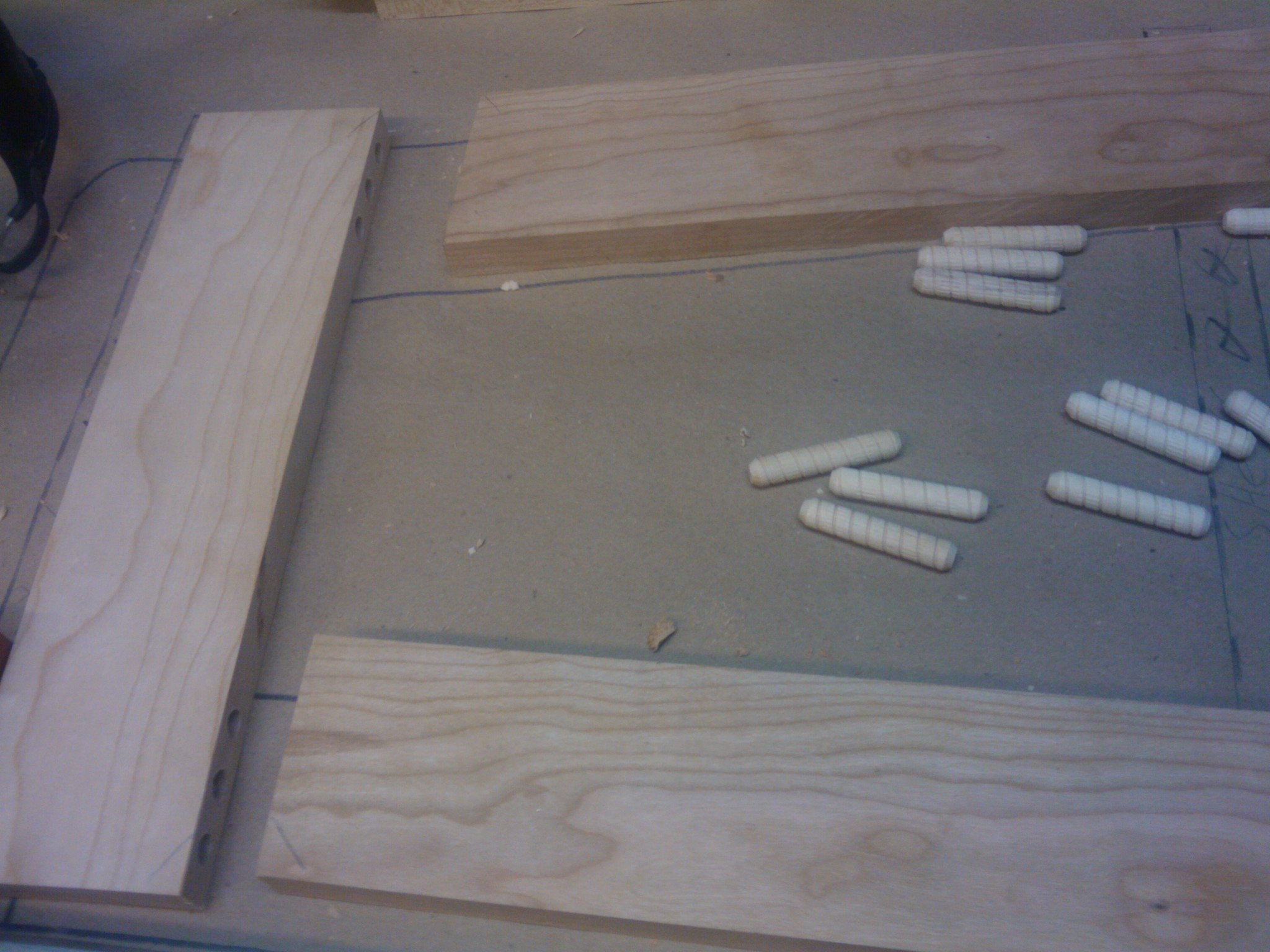
Gulp. OK, then! I broke free from my navel gazing and decided on dowels to join the corners of the frames.. Fortunately, I had already drawn the piece out in full scale on paper, so cutting milling the pieces out and cutting to size was a piece of cake.  Well, I did really take my time to ensure I had the angles down on the front rail.  That did take some time. But, hey, I want this piece to be right.

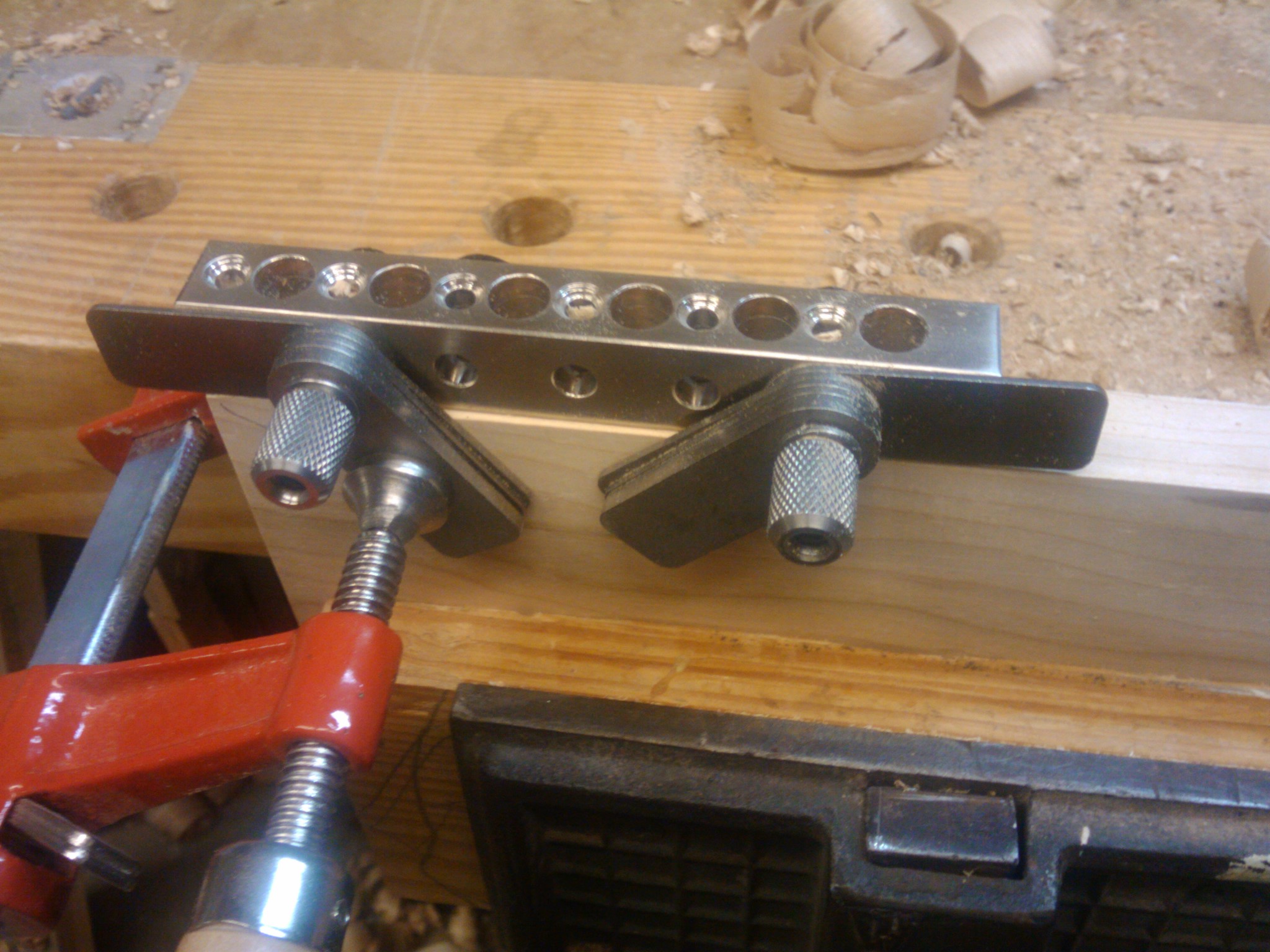
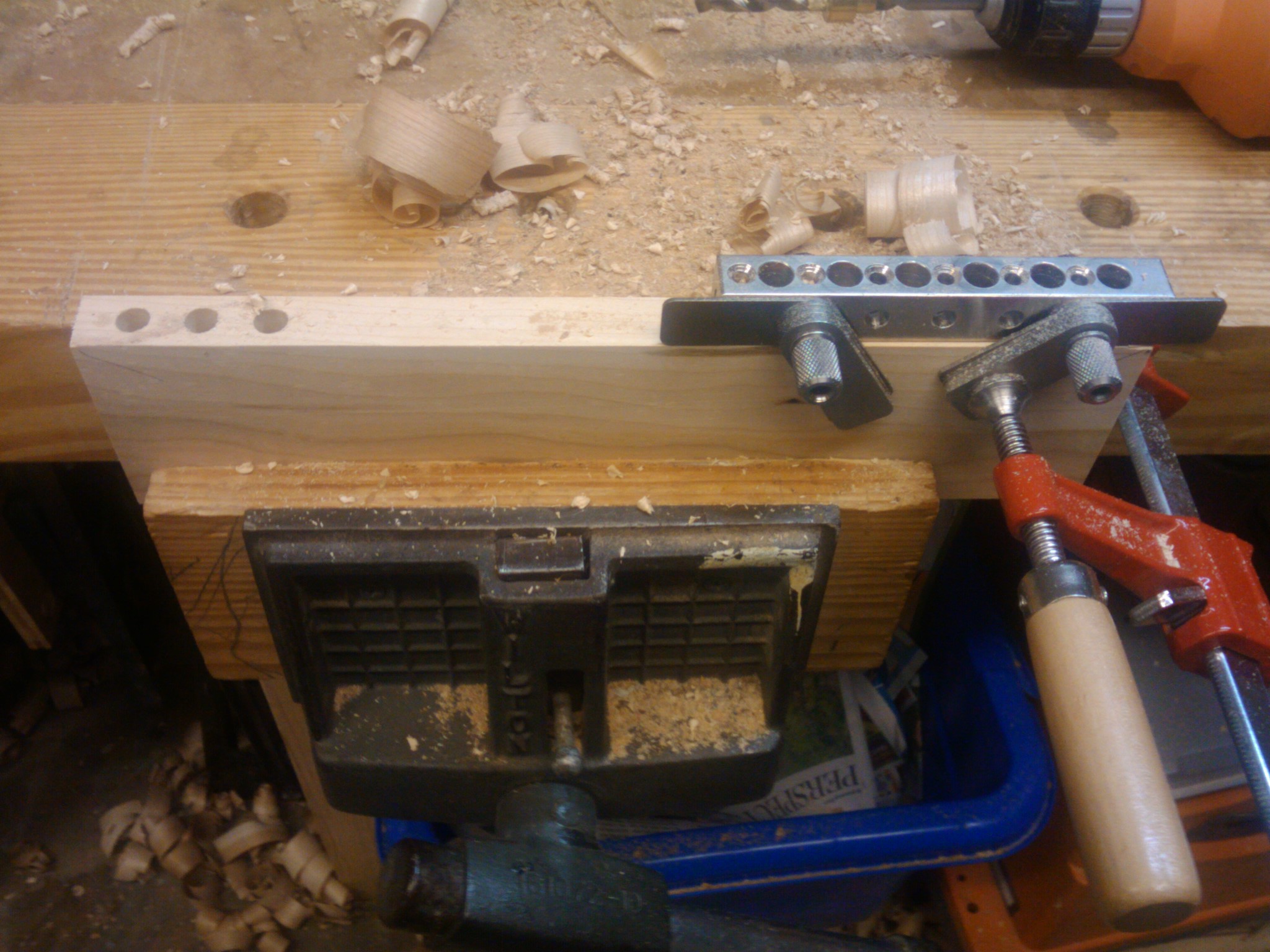
Doweling with my Joint Genie is just as easy as I remembered.  The jig is a solid steel block with accurately spaced holes where you can drill a series of dowel holes in the wood so everything matches up perfectly when you go to assemble. The jig has spacer leafs on it, which allowed me to adjust the location of the jig to get the piece roughly centered. No, this isn’t a self-centering jig, so you will have to reference from adjoining faces of a board.  Remember this, or you may not like the results.  At all.

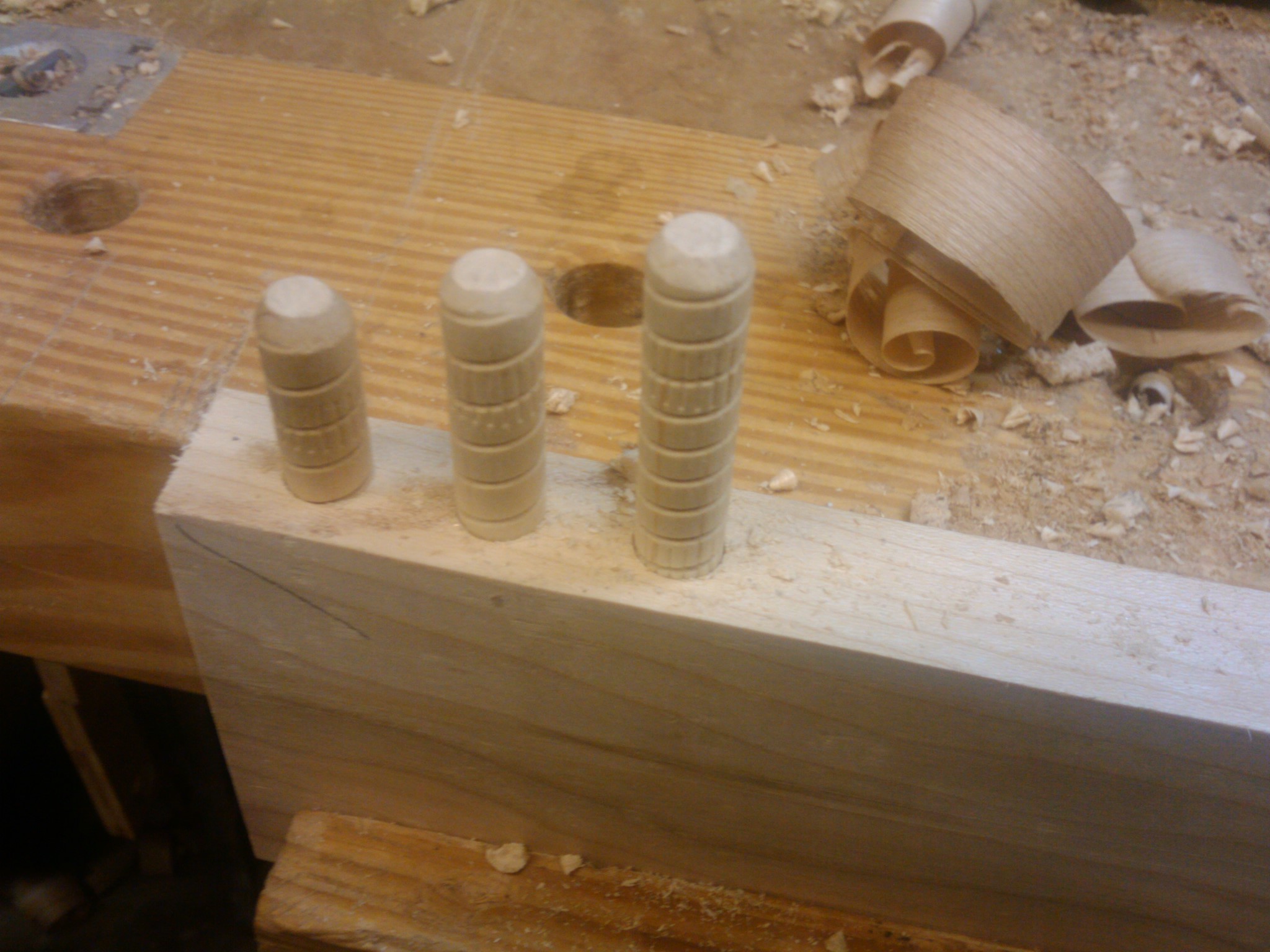
Three holes, drilled just over an inch deep into each mating face, and I was ready to slide over to the next location to cut the next joint. Each three-dowel joint held the three spiral dowels snugly in place, ready for glue and the mating piece.

Now, when you are assembling any joints, it pays to not be a block head. If you have the top and bottom pieces ‘capturing’ the front and back uprights, you can’t glue the back one in place, clamp it up and then try to squeeze it in there after the fact…  Don’t ask me how I know this…  But, a little work with some glue,  a mallet and a clamp or three, each of the side pieces glued up nicely and will be drying overnight.

The funny thing is that after this, the rest of the work is very straightforward.  Sand down the sides, cut the shelf dadoes, assemble sand and finish. I’m definitely going to have to pick out a few nights after work this week to push this one along… and stop thinking about it!


Quick Poll

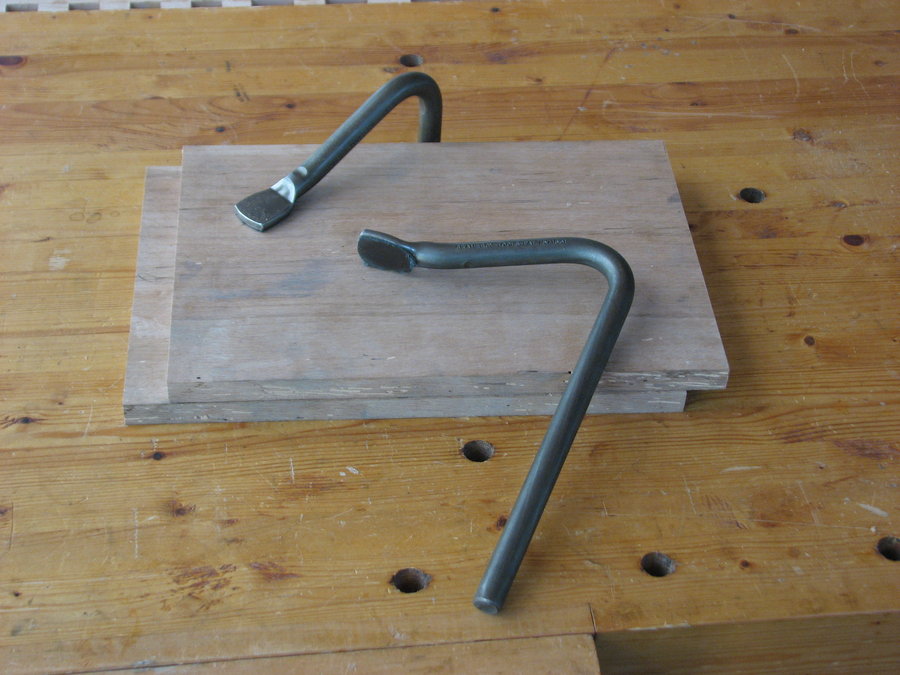
When it comes to woodworking, properly securing wood while working on it can make your work safer and more accurate than having it flop around on the bench.

There are many ways to secure your work.  You can use a vise and bench dogs, some wedges, planing stops or clamps, but the classic tool are hold downs – heavy duty iron or steel rods with a bend in them that are hammered down into a bench dog hole and provide tremendous holding force.

This week, do you use hold fasts to hold your work at your bench?  If not, tell us how you do it.

Link of the week

Wood Magazine’s table saw tenoning jig review

If you want to cut a tenon, you could do the task with a backed hand saw, a dado stack or even a router bit.  And all of those ways are perfectly acceptable.  But, hey, you have a table saw (Well, most of us do, anyway) – why not consider a commercial tenoning jig?

Sure, you could build your own from scrap wood, but these babies are heavy, accurate and have a very quick clamping capacity.

This article by Wood Magazine shows you the ins and outs of the jig, how to set it up accurately and the best way to employ it in your own shop.  If you are considering taking the plunge, this article is a good place to get some pointers.