All posts by Tom

I'm the guy who writes the blog...

Species Spotlight: Olivewood

In case you were wondering, I am an Italian American. And, I’m from northern New Jersey, just outside of New York City. So, I can say that I lived in one of the premiere centers of Italian cuisine in the United States.

Pizza. Strombolis. Calzones. Zeppole. Man, that stuff is awesome. And, it’s tough to find food like I used to have up in Jersey. (However, if you find yourself in the Tampa Bay area, Sardo’s Pizza on Ulmerton Road in Largo is a welcome taste of home.)

Since this is the case, I often find myself cooking at home. The recipes that my mom and my grandmothers used to cook. I make my own gravy (no, it’s not tomato sauce… it’s GRAVY). I make my own lasagna. Meatballs. Braciola. Cutlets. The works. Heck, I even make my own pasta when the mood strikes me.

While many of these dishes are different, they all seem to have a few basic ingredients in common. Garlic. Tomatoes. And, most important of all – olive oil.
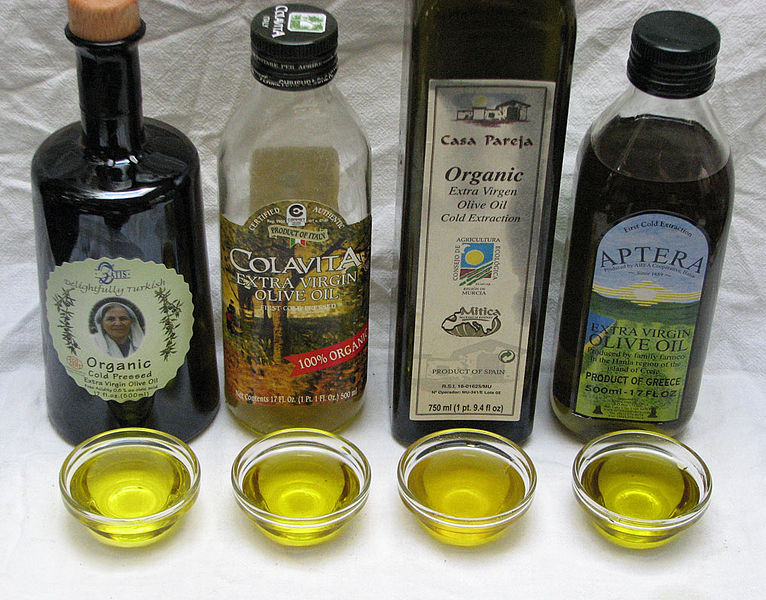
Ahh, olive oil. That magical substance that tastes so darned good… and it’s good for you. It’s high in monounsaturated fats… good ones that don’t clog up the arteries. It was harvested from olives in the Mediterranean basin as far back as 5,000 years ago and helped build empires.

“Oh, I’m a big olive oil fan,” said Eric Poirier of Bell Forest Products. “It’s great on a salad or some fresh Italian bread. But, if you love the oil, you are going to love the wood for your projects.” The wood of the olive tree (related to ash trees) has a greenish brown tint and a very distinct and attractive grain pattern. The wood is exceptionally strong and hard (sharing that trait with its cousin ash), and works very well. It can take an excellent polish, which makes it a natural for pens and other small turned items.
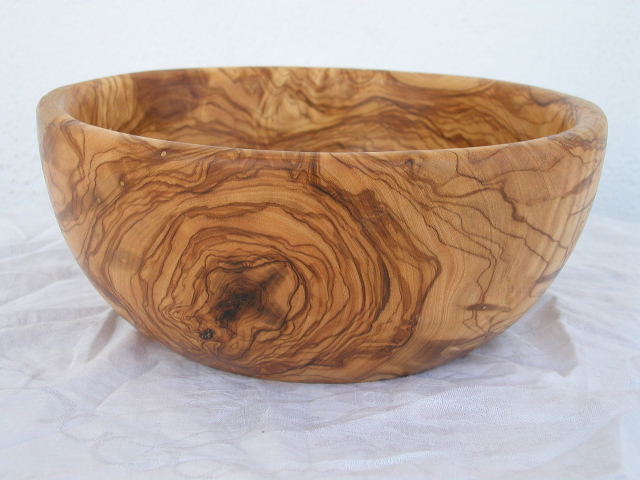
Since the trees are pruned primarily for harvesting their valuable fruit, they typically won’t grow very tall.  This means, of course, that you are very rarely going to find long boards, so if you are looking for a small project, hey, olive may be your wood.

While it’s easy to see why olive is a great wood to work with, it’s the smell that sets it apart. “It has a very sweet, heady scent when you cut into it,“ said Eric. “You just might wish they made an olivewood scented aftershave.”
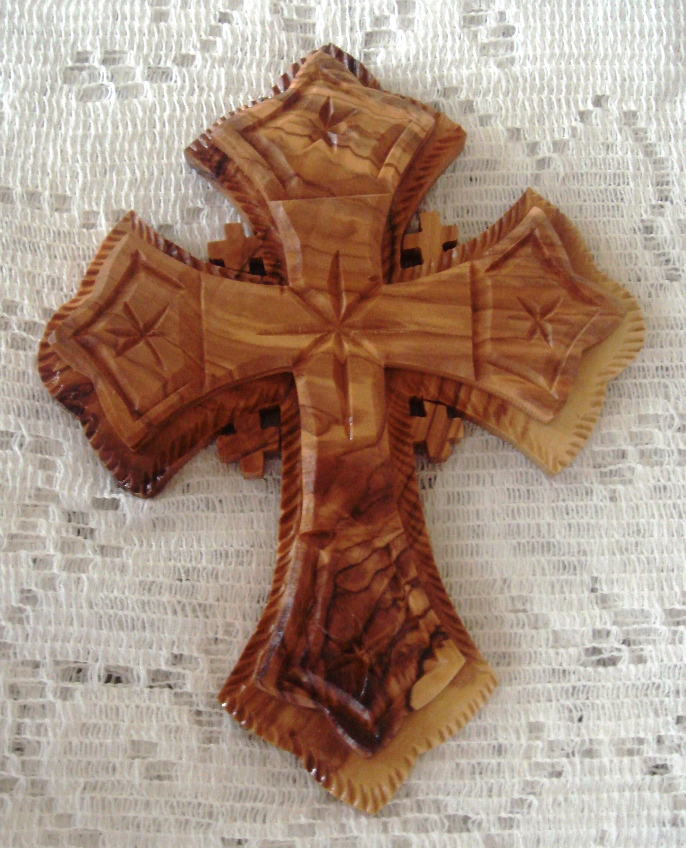
Since olive trees grow well in the Mediterranean basin, people have known about them for a very long time. This includes the holy lands mentioned in the Bible, Torah and Koran. “Because of this, olivewood is a very popular choice for items with a religious theme.”

Many countries have strict regulations on the harvest of olive trees. However, enough trees are culled to provide hardwood for woodworkers to do their thing.


So, while you are sitting and thinking about how you can incorporate some olivewood into your next woodworking project, slice up a ripe tomato and some fresh mozzarella cheese, hit that with a little salt and pepper, add a few fresh basil leaves and drizzle that with some high quality extra virgin olive oil. It may not help you figure out what to build, but oh, it tastes so good….
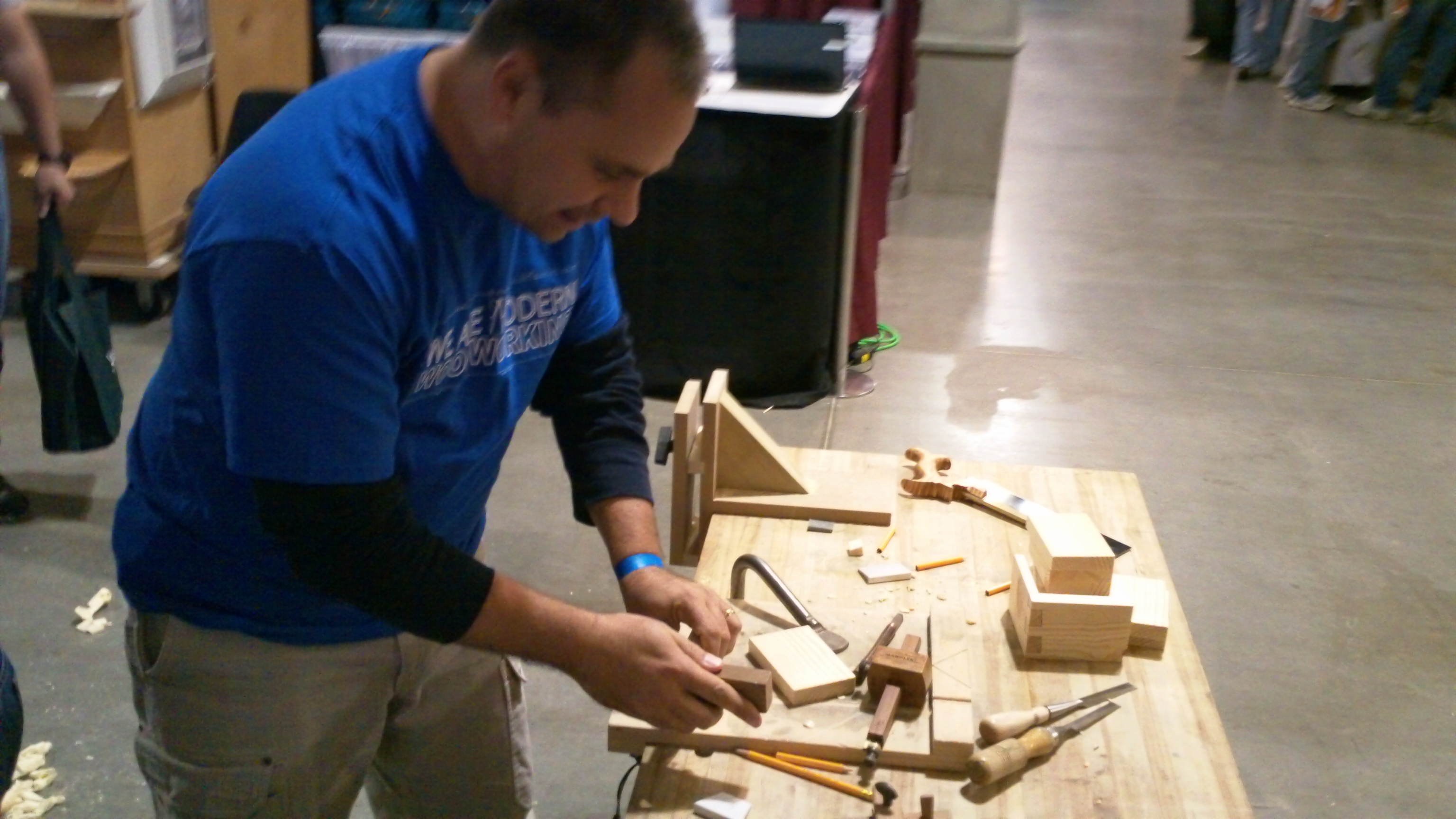
 

When dovetails cry

I have to pay all due respect to Nick Brown of the Digital Woodworker. He’s the guy who took lots of photos of the happenings this past weekend at Woodworking in America, he came up with the title of this post and he is one hell of a great guy.

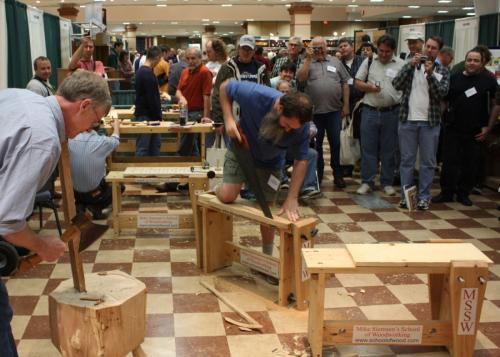
So, we were there at the Hand Tool Olympics – a great place and opportunity to strut your stuff and show everyone how well you can handle yourself under pressure. Yes, there are plenty of hecklers out at the event trying to throw you off your game. (OK, not for everyone who participated in the events – Mike Siemsen and the volunteers who were helping at the events were very eager to offer help to newer woodworkers who had never done these tasks before.  Everyone at that booth was exceptionally helpful when someone asked for help.)

I had done OK on the boring with the bit and brace. Fairly well on the ripping and crosscutting. Not so bad on the edge planing and tenon cutting. But, the one I really wanted to succeed on was the dovetailing. Oh, how I wanted to do well on the dovetailing. Desperately. Recently in my shop I had been having a lot of success cutting straighter and more easily with my hand saws. Both with my Japanese and western saws. I finally got so that I wasn’t squeezing the handles with a death grip, letting the saw do the work.

As I set up at the workbench, I had some seriously impressive tools to work with. A Lie-Nielsen dovetail saw. Something that looked like a Blue Spruce chisel. A nice Marples marking gauge. A sweet titanium Knew Concepts fret saw. Just about everything that anyone with half a bit of talent might want to use to be able to crank out gorgeous dovetails all day long. Saw in hand, tail board in clamp, I counted down and started getting to work.

I’m going to let you guys in on a little secret now. I like to talk. A lot. So, as I moved to the next step in the challenge, I would look up from the bench with my best carnival barker voice and start yapping up the event. I got so boisterous, I was told to ‘put a sock in it’ by one of the nearby vendors. Eh, who cares? I was having a blast.

The tail board went very well. I was able to get things cut nicely with the saw… my arm relaxed. Heck, I MIGHT even put on a good showing. Unlike the previous three years…

Well, that’s where things went south in a hurry. Let’s just say marking pins is not my strong suit. Wait… that’s too generous. Let’s say – instead – that I completely stink at marking pins. It’s a tragedy of epic proportions.

So, when it came time to cut the pins, then remove the waste, then pare to the lines… well… things were bad. VERY bad…

I mean… I mean… I MEAN… calling it a train wreck would be an affront to train wrecks across the world. These things were just so bad, well, I had to smile. After all, if I established the worst case scenario… how could anyone do worse?

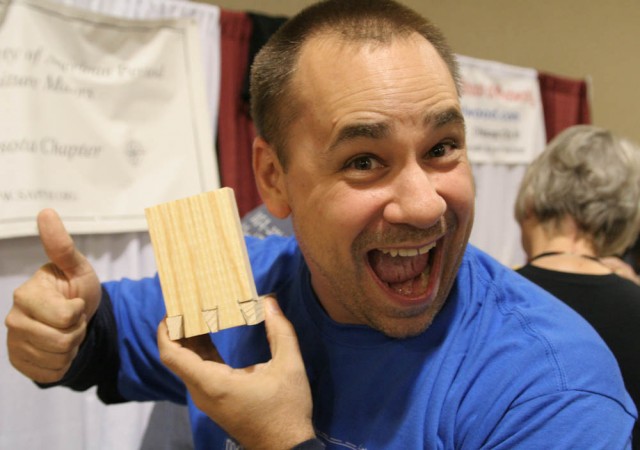
I was proud of my lousy attempt. I showed those crappy dovetails to Ron Hock. His wife Linda laughed so hard, she took pictures to share with the recipients of the Hock newsletter. Tomas Lie-Niesen got a peek. As did Kari Hultman. And, all of the heckling bloggers got their turn to beat the crap out of me as well.

Heck, I went to David Keller of Keller Dovetail Jigs and showed him. “Thank you for inventing the through dovetail jig,” I said. He took these abominations of dovetails in his hands… examined them… handed them back to me and said, “You are welcome, Tom.”

What did I learn from my crappy dovetail experience? Plenty.

We all mess up… and the only way to fix things is to set time aside to practice.

The joy of woodworking is the thrill of getting better at tasks so we can use these elements to build great projects.

And, when things go horribly wrong, well, a quick walk down the street to the local Hoffbrauhaus for a few libations with woodworking friends is priceless. Oh, and be sure to dance on the benches. That means a lot, too!


Quick Poll

Well, I’m back here at home in Florida after a whirlwind weekend of woodworking (I love the alliteration) at the Woodworking in America conference. And, the folks who were there LOVE their dovetails!

This makes me have to ask… how do you cut dovetails in your shop? Power? By hand? Or by some other mystical method?

Oh, and do I ever have a doozie of a dovetail post for you tomorrow!


Link of the week

This Old House’s page on Files and Rasps

So, you have cut some nice scrollwork and you need to smooth out the curves. Perhaps you are cutting a new handle for a saw or chisel and you really need to refine the shape. Maybe you are looking for an easy way to round over some edges on a project, but you are afraid to break out the router.

Never fear – rasps and chisels are here!

This page, run by the folks at This Old House, serves as a primer for how to use these useful, yet often overlooked tools. Here, you will learn about the bewildering array of rasps and files, learn how to use them properly and how to care for them. Of course, once you grasp the basics, an Internet search will lead you to much more specific information on how to make the most of your new tools.

Breaking free from solitude

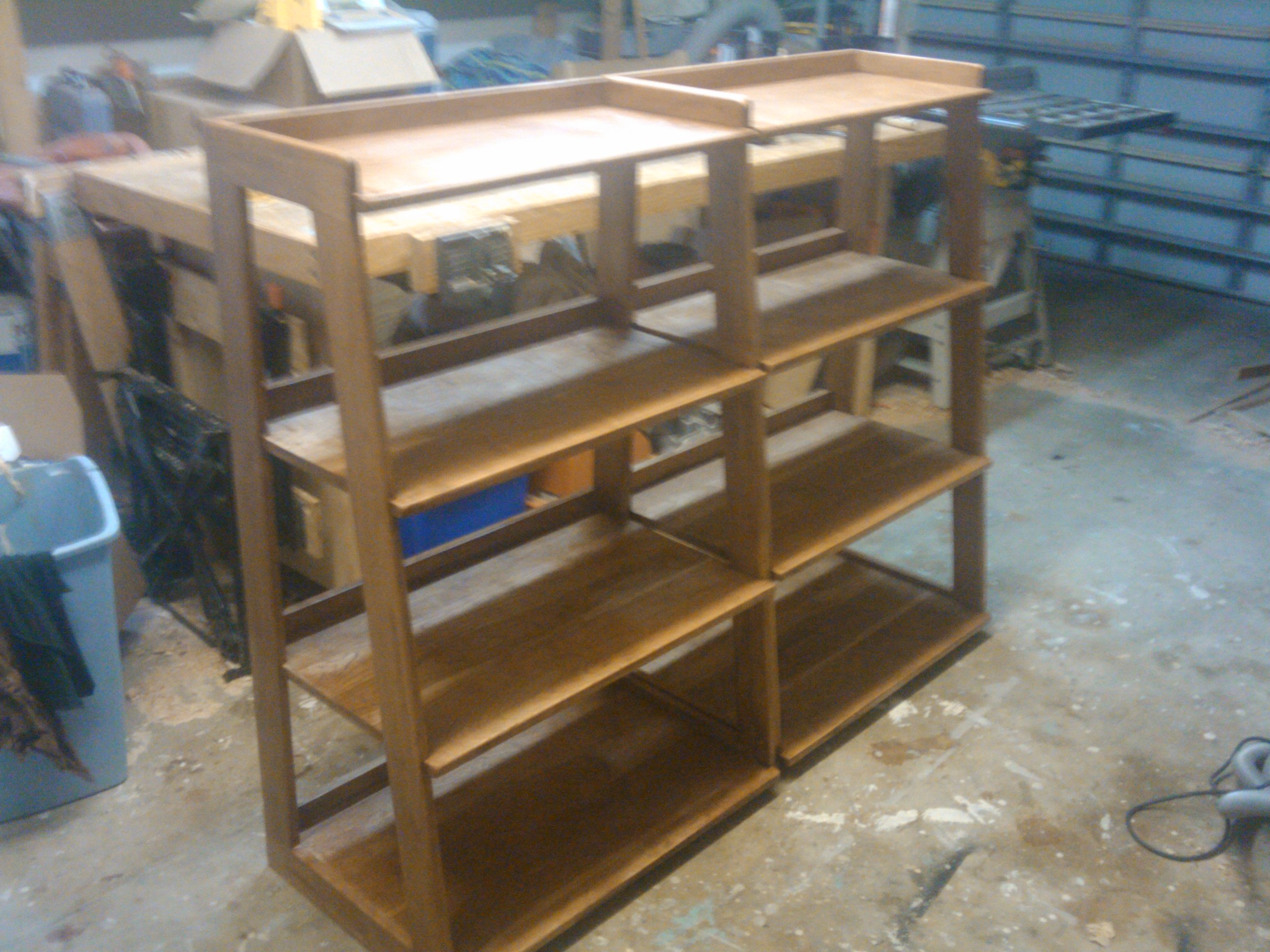
I was just out in the shop applying another coat of poly on the stairstepped bookcases when it hit me.

Woodworking, for the most part, is a solitary hobby. Sure, if you work in a commercial woodworking shop, there are folks there, and if you go to a woodworking school, there are folks there as well. And, if you are blessed to have family members who share your interest in the craft… well… good for you!

But, more often than not, we are at our benches plying our craft. Planing boards. Cutting joints. Messing up, then hiding the evidence.

It’s not like golf, where you get at least a foursome together to hit the links. Plus, there are lots of tournaments to go to.

Fishing? It’s always best to drink a few beers with friends while you drown a few worms.

Running? I think there may be a 5K race every single temperate weekend within a 50 mile radius of your home.

But, woodworking can be a lonely pastime, even for those of us who are very active in the Internet woodworking community. No matter how many tweets, Facebook status updates or Google+ postings, we’re still out there in our shops plugging away all by ourselves.

That’s why I relish the opportunity to get together with other woodworkers. Every spring, the Woodworking Show comes to the Tampa Fairgrounds, and I always get a kick out of attending that. But, the Woodworking Show travels around the country, so I don’t see too many folks from outside the state of Florida when the show gets there. Florida woodworkers are awesome, but we share so many of the same challenges. For instance, there are only so many gosh-my-shop-is-sweltering-in-July stories you can swap before everyone nods their head in agreement.

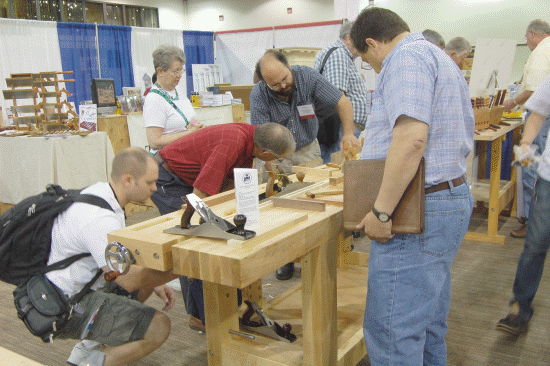
That’s why I look forward to the Woodworking in America conference each year. This year’s event is taking place in Covington, Kentucky, and it draws woodworkers from around the country.   As with the Woodworking Shows, there will be a vast array of woodworking tool manufacturers and dealers. Some slated to be in attendance include Lee Valley, Lie Nielsen, Benchcrafted… the works!

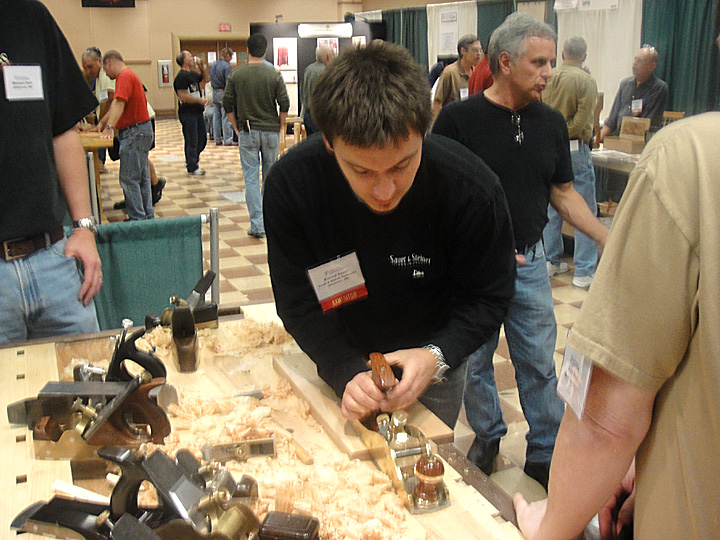
And, these aren’t just booths staffed by a disinterested temp employee – no sir. You have a question about a replacement iron for your classic hand plane? Just ask Ron Hock what you need to look for. He’ll be there. Joel Moscowitz from Tools for Working Wood can talk your ear off about hand saw sharpening.  Maybe Konrad Sauer can talk you into giving one of his hand planes a spin.

The thing I enjoy the most – of course – is the camaraderie with the other woodworkers and their experiences from around the country. Just think – Matt Gradwhol is coming all the way from Seattle to attend, and I’m coming up from the Tampa Bay area. You would be hard pressed to find two areas much farther apart in the continental United States, but we’ll be rubbing shoulders (and nibbling on Nuncake, I hope) there. The woodworkers come from big cities and small hamlets across the country. They come with expertise in power and hand tools. They come with all levels of experience and areas of specialty.

Oh,  yes, they come.

And we get to kick back and talk sawdust, eat good food and enjoy each others’ company. .

I plan on being in the marketplace on Friday and Saturday, helping Mike Siemsen with the Hand Tool Olympics and participating as well. I’ll be interviewing many of the folks there for future articles. I’ll be dropping my card off at a few booths – hopefully landing a few more sponsors for the old blog.

And, when I get back to my shop, I’ll be re energized and ready to build some more!


Stain on my brain

So, the end of the line is coming for the step ladder bookshelf project. Finishing. The part of the project that scares me. Because, well, I usually mess things up in this phase.

Deep breath, Tom. Take it easy and relax. It can’t be all that bad.

Wait a second. I’m going to use stain.

Aaaaaaaaaaaaaaaaaaaaaaaaaagh!

Yup, this is the first time in a long time (like perhaps a decade) that I’ve used stain in a project. The cherry I was using was such a mix of sapwood and heartwood, I just had to go and use some stain to – as Norm says – unify the look of the piece.

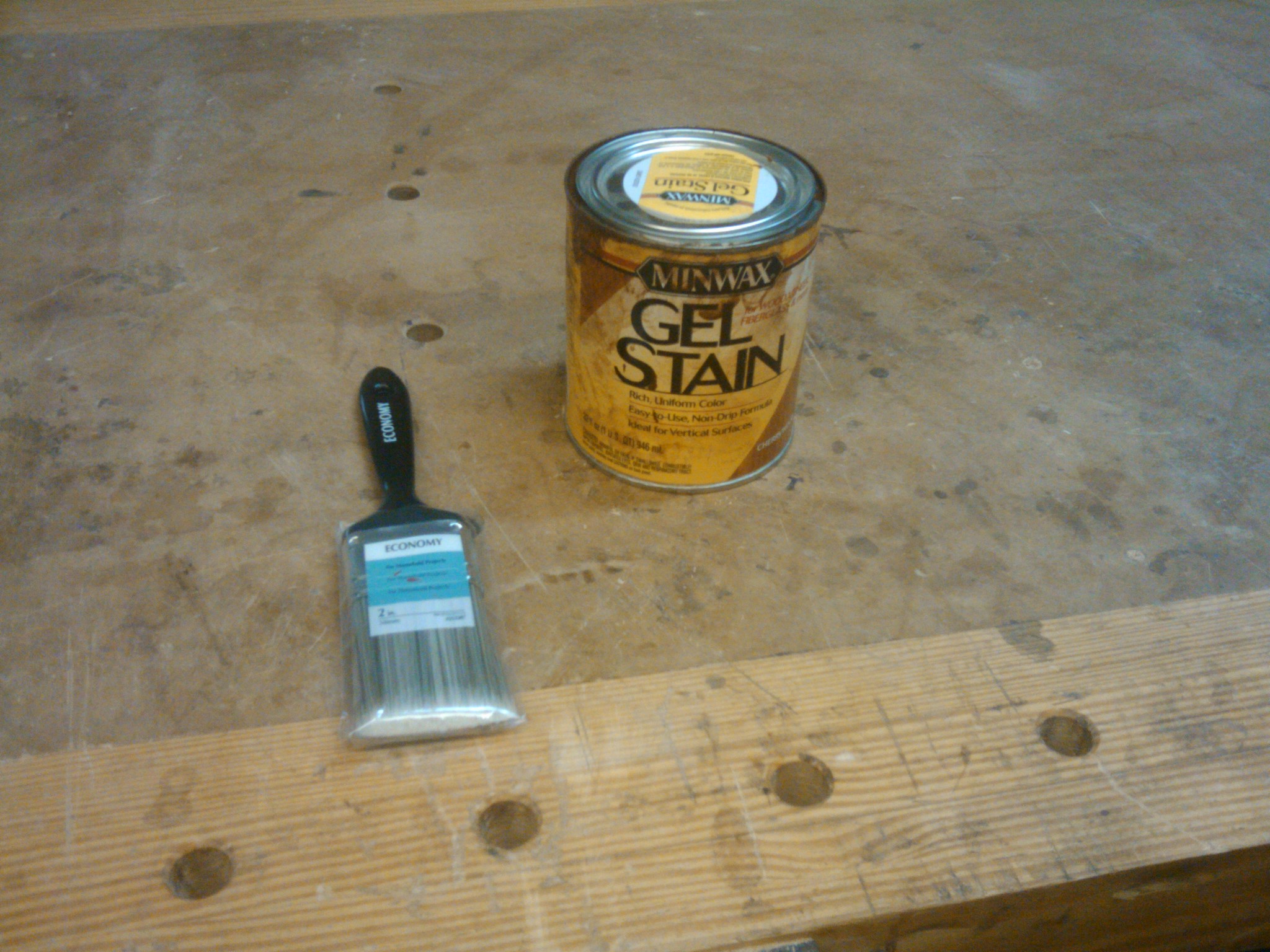
The only choice for cherry that made sense was to use a gel stain. Minwax’s cherrywood, to be exact. Since cherry is so blotch prone, gel stain absorbs slowly, preventing the inevitable nasty stain job. That is, of course, if the user applies it right. Gulp.

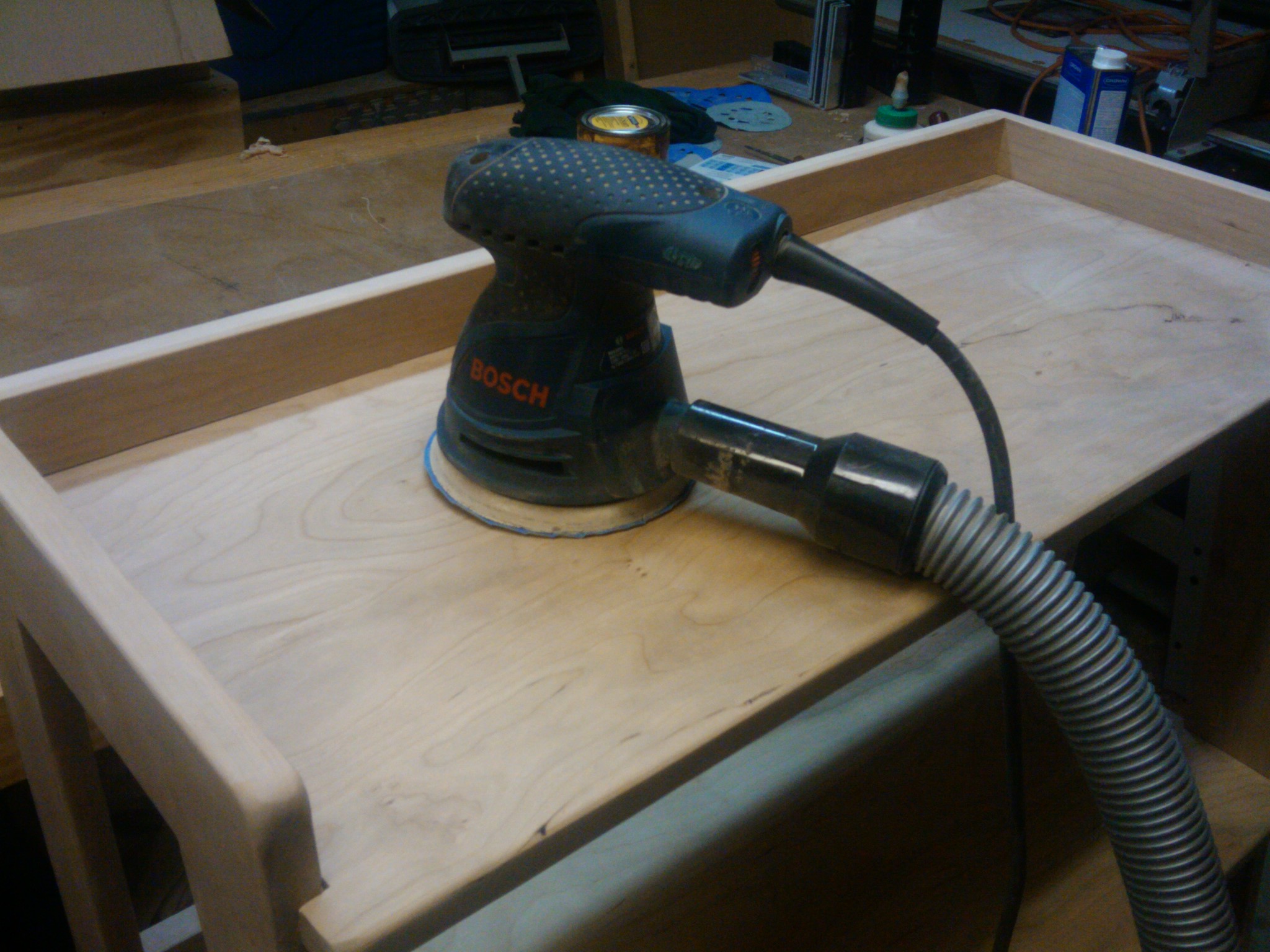
So, I had to sand. And, with my random orbit sander, I was able to sand through 180 grit with relative ease. I’m still amazed how quickly an thorough sanding can take a project with imperfections and really perfect it. Of course it takes time, but hey, that’s the way stuff goes.

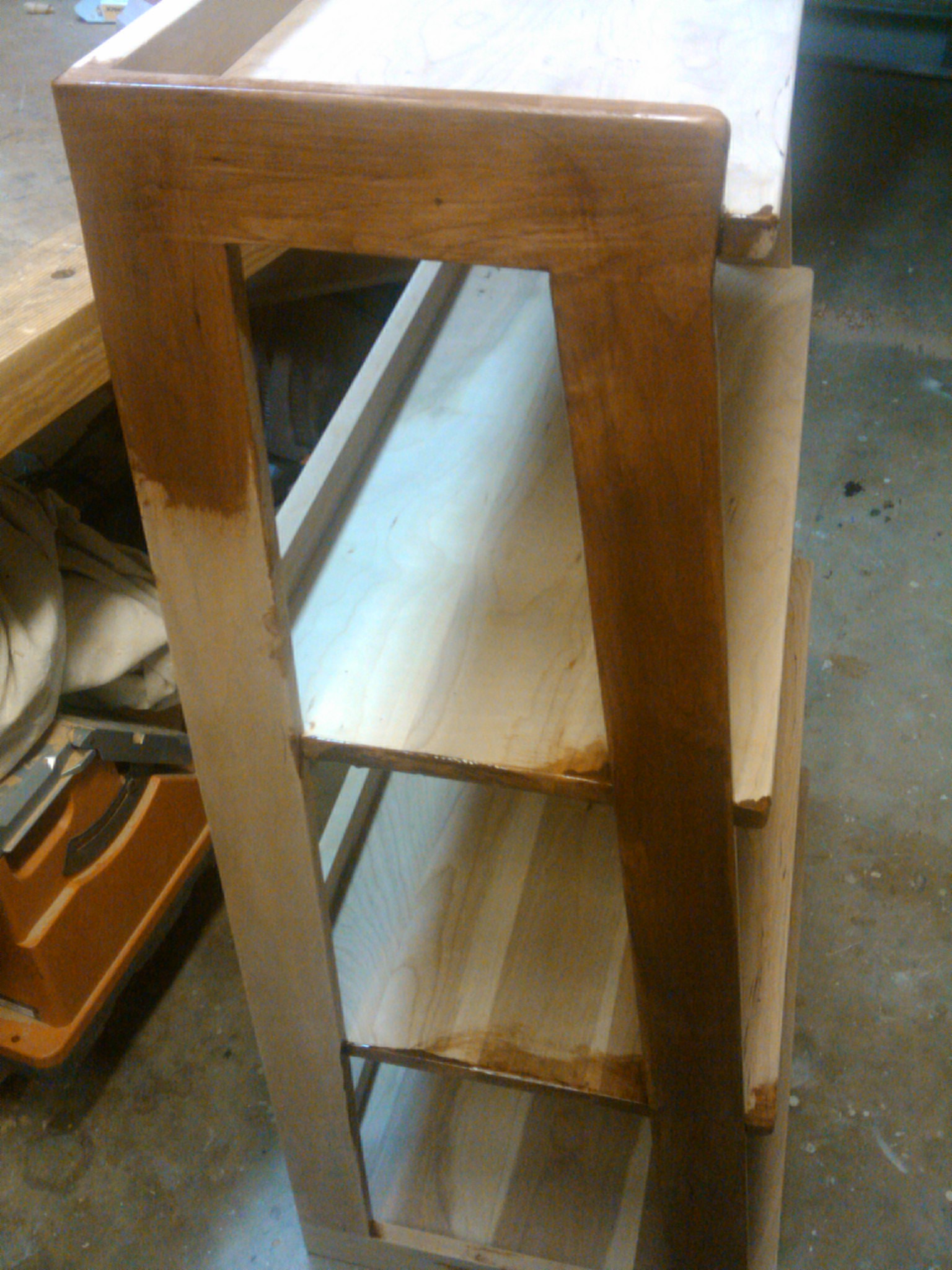
Next up, I brushed off the dust and cracked the can of stain. It was some wild looking stuff.. kinda clotty. I stirred it up, dipped a cheap brush into the mix and started applying it to the project. Unlike the thin stuff you normally use,  you really have to move the stain around with your brush. I worked it into the corners and across the flats, keeping it as best I could to one plane at a time. This way, I hoped to prevent issues with lap marks.

Now, since gel stain is thicker than the thin stains, it also presents a challenge when wiping off the excess. Even when I followed the can directions to wipe off the excess within three minutes, the stuff on the board was already tacky and tough to wipe off. To help get around this, I dampened the wiping cloth with some mineral spirits, which took off the gummy surface residue without affecting the nice color I had gotten on the surface of the boards.

The results – not too bad. Remember that stain accentuates whatever sanding scratches you leave on the surface, so there were some areas that I had to resand. Oh, well. That’s the way it goes.

Now, I’m going to have to let it dry at least 24 hours before I can start applying a wipe-on poly to get a protective surface for the project.

And, I’m going to have to build that surface over the next few days, because I’m headed to Cincinnati for Woodworking in America 2011 this coming Thursday. More on that in Wednesday’s post…


Quick Poll

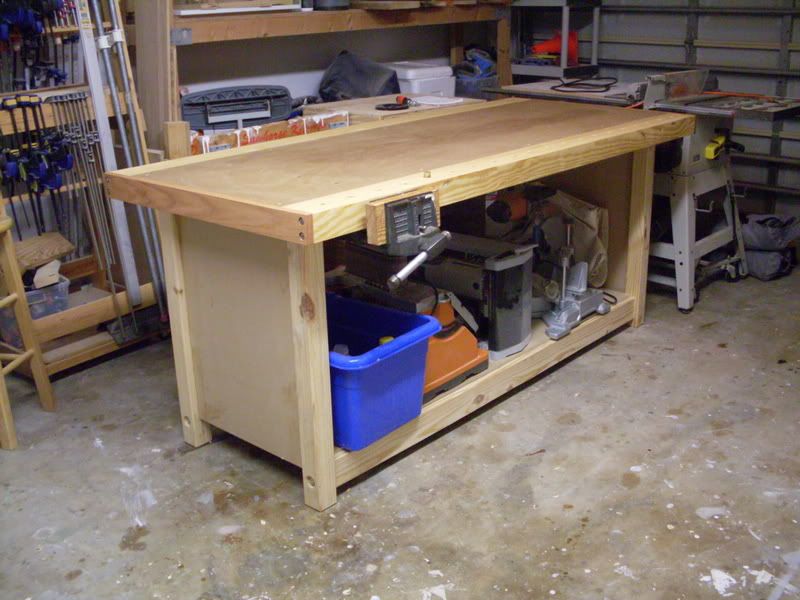
They are the first places we head to when we get to our shops. Whether it holds that first cup of joe in the morning, a delicate  piece that needs to be fitted into a project or a massive piece that needs some joinery cut into it, your bench is the center of your workshop.

And, as that central hub in your shop, your workbench can play into just how much enjoyment you get from being in the shop. In some cases, the bench is a real pleasure to use. In others.., well…

This week, let us know just how happy you are with the bench in your shop. Is it the pinnacle of woodworking enjoyment, or does it make you want to turn it into kindling?