A lighthearted interview

I’m a pretty laid-back kinda woodworker. I like to yuk it up as well. And, I’m usually the guy who does the interviewing of other woodworkers.

But, when Chris Landy at the Lighthearted Woodworker asked me to weigh in on some questions, hey, I was game! Chris has started a new feature on his blog called 12 Lighthearted Questions … where he sends over a dozen funny, irreverent and just darned unusual questions to other woodworkers to gain some insight into their lives, woodworking practices and other ‘things’.

What made this easier for me was that I wasn’t the first victim – err – I mean volunteer (yeah, that’s it) for this column.  Kari Hultman of the Village Carpenter got the Lighthearted treatment a few weeks ago, and I had absolutely no idea she waited in line two and a half hours to get Norm Abrams’ autograph! Her? A hand tool woodworker to the core?  🙂

What about me? When you read my interview, you might be surprised to see what gets me out of the shop, what tool I could never give away (because it’s just so darned bad) and just why my oldest son Dominic may have to see a therapist later in life.

Thanks, Chris. That was a lot of fun! I’m looking forward to finding out more about some other woodworkers… so I’ll have leverage on them when we meet up at the next woodworking event.


Quick Poll

Sorry that today’s poll may be a little boring … but I do have a question about a tool that’s found frequently in woodworking shops.

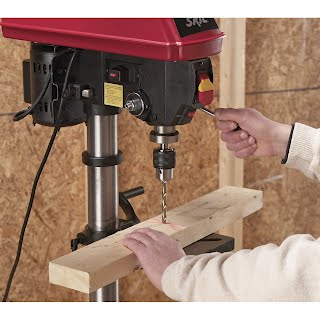
While they may have started as essential machinist’s tools, drill presses have become a workshop staple. Hey, if you need a hole bored straight into a piece of wood, there’s no more accurate way to get the job done. Drill presses also have scores of other uses. Want to bore holes on an angle into a piece of wood? Set the table angle and bore away. Chuck a sanding sleeve in there and you have a spindle sander. You can get a mortising attachment to make it a multi-tasker.

But, then there are the drill presses that sit for a long time collecting dust. I know someone who has no fewer than six drill presses, because other woodworkers give him theirs when they discover they don’t get any use.

Today’s question – just how essential are drill presses in a woodworking shop?  Critical pieces of machinery, or a total waste of time?


Link of the week

Joe Woodworker’s guide to using veneer tape

Veneering can open your woodworking to exciting new possibilities. Imagine a wildly swirling walnut burl door panel on your next cabinet project?  How about a gracefully veneered mantle clock featuring crotch grain? If you can imagine it, you can do it.

While it’s great to be able to cover your project with one complete sheet of veneer, sometimes, you will need to join two sheets to cover a large project. Or, maybe you want to cut your veneer sheets into smaller pieces and combine them into a fancy book matched or star burst pattern. If you need to do this, your secret weapon is veneer tape.

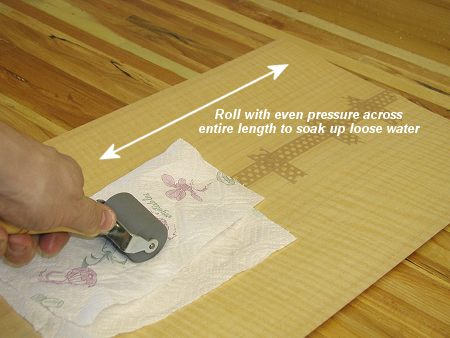
This tape activates with moisture (kind of like a postage stamp) and helps to hold the sheets of veneer together until it can be adhered to a substrate.  As the tape dries, it shrinks ever so slightly, ensuring that seam is as tight as possible.  Joe Goreleski share these tips – and many others – on this information-packed page.  Definitely a good read for up and coming veneer users.

Dovetails with a Leigh R9 jig

Ahhh, dovetails. How can you go wrong with such a classic joint?

Oh, wait, never mind… My efforts to hand cut them have met with disaster, ridicule and – at last count – no fewer than 14 petition drives to get me to quit woodworking entirely.

So, when I need that tried-and-true joint in my work, I turn to the router and a jig. As I had written Monday, I’m a project kind of woodworker… not a process guy. I do pay close attention to how I woodwork, but I’m not about to take weeks during a project to hand-cut dovetails when I can blast ’em out on a jig.
For years, my go-to jig has been my Keller Journeyman. I love the heck out of it – and have abused the heck out of it as well. I’ve lifted the router out of the cut too many times, tearing up the phenolic body terribly.
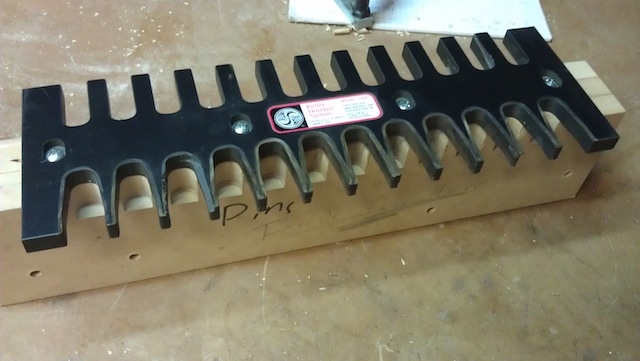
My Kehoe jig is awesome, giving me great dovetail splines. Sometimes, though, they do look a little out of place on a more traditional piece, so I need another option.
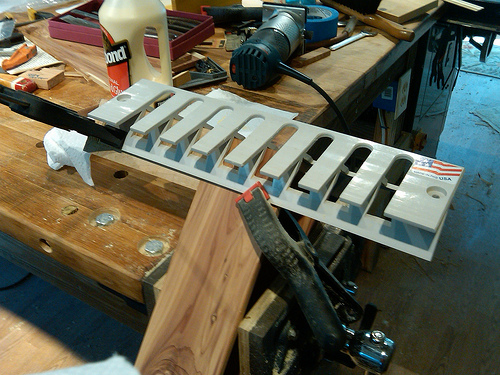
That’s when David Venditto of Infinity Cutting Tools asked me if I wanted to try the new Leigh R9 jig. Always game for a challenge, I took him up on the offer. And, I have to say I was thoroughly impressed.
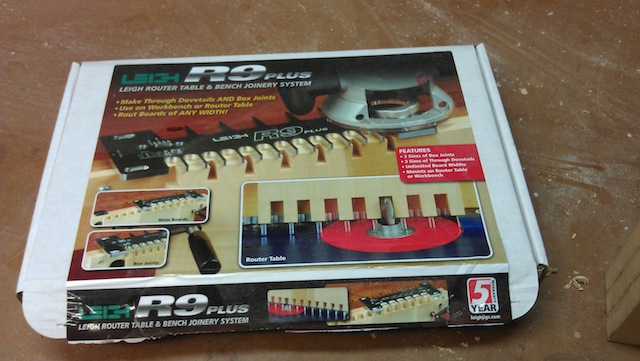
The jig comes flat packed with everything you need to get it working, except for the wood needed to create a beam for the jig to ride on. Accuracy when building this beam is critical. My beam has a piece of construction 2 x 6 southern yellow pine backing and an MDF two-part face. The bottom part is a permanent fixture to the piece, while the top part of the fence is a sacrificial fence for the router bit to ride into, preventing tear out.
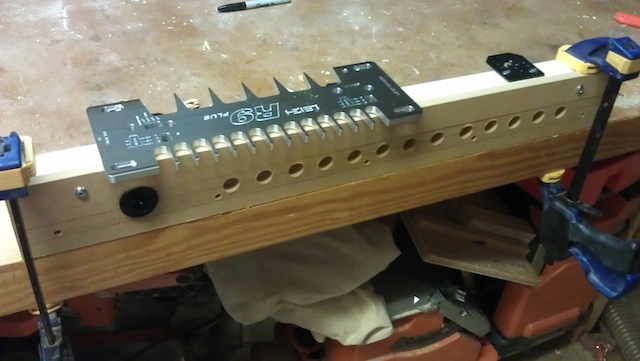
The hardware with the kit is top-notch. It even comes with a pair of clamps you can use to secure your workpiece in place as you rout. The plate that guides the router is made of a heavy-duty aluminum etched with the necessary markings on top. It took a little time studying the manual to get an idea of what everything was used for, but, once I read up on it, things when smoothly.

Instead of a router bearing, the jig uses an eccentric guide bushing that allows you to really fine-tune the fit of your pins and tails. Those adjustments are in the order of thousandths of an inch… critical measurements when it comes to cutting this tightly-fitting joints.

Not only does the jig allow you to cut dovetails, it also comes completely equipped to cut box joints as well. All of the proper bits are included. Very handy stuff.

The manual is really where this baby shines. Leigh has spent a lot of time carefully laying out a well-written, fully-illustrated guide that will show you step-by-step how to assemble and cut with the jig. Believe me, if an ‘accuracy challenged’ guy like me can work with it, anyone can!

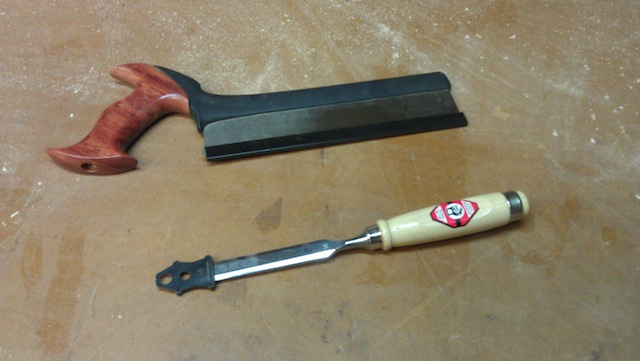
While I have always shied away from very expensive dovetailing jigs (some of Leigh’s offerings can really stretch the woodworking budget a lot farther than it can go), the R9 is a solid offering from Leigh that is available at a reasonable price point. And, given the cost of quality dovetail saws and chisels these days, you might just find it more economical to cut your dovetails this way instead of the old school method.

 

Which pro do you know?

Make no bones about it… woodworkers love woodworking. A simple bookshelf. A dining table that a family would gather around. A complex chair with challenging joinery.

Just as every shop is different and every project is different, what motivates every woodworker is unique. Yes, there are as many stories about how woodworkers got their starts as there are woodworkers. And there are all different kinds of woodworkers. Cabinetmakers. Turners. Chair builders. Luthiers. The works.

Ultimately, though, you can break woodworkers into two broad groups. Those who enjoy the product of woodworking, and those who enjoy the process.

I think the vast majority of woodworkers start off as product woodworkers.  The first move into woodworking is usually to satisfy a need for a piece of furniture. I wanted to build a blanket chest for my wife. I’ve spoken with woodworkers who started off with a side table. A picture frame. Something to make their spouse happy. A special gift for a child.

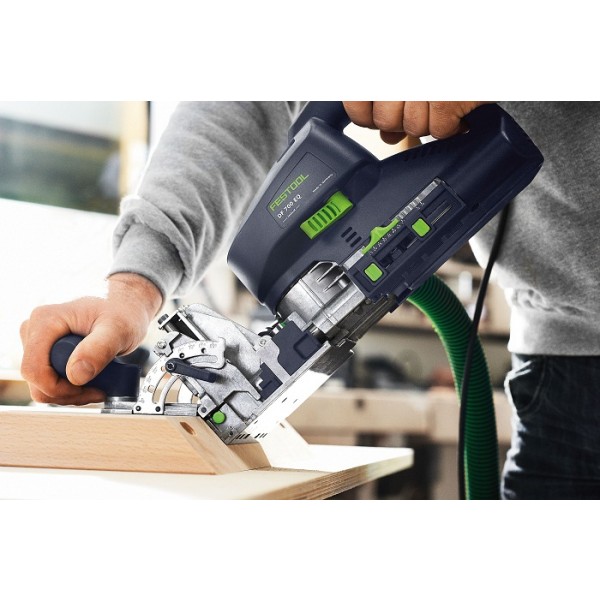
You’ll typically find product woodworkers using non-traditional ways of making joints. Dominos. Biscuits. Dowels. Router-jig cut dovetails. Believe me, there’s nothing wrong at all with this type of woodworking. This does not mean that we want to build cheaply or anything less than brutishly strong. It’s just that we see the steps involved in the process as milestones to pass on the journey toward completion.

Heck, I know I’m still a project-based woodworker, and I’m totally cool with that. For me, the big charge comes from moving that project into place at the end of the build and listening to the sounds of delight from the recipients.

Process based woodworkers, on the other hand, find that the journey is the most enjoyable part of woodworking.  You can find process woodworkers reveling in the thought of enjoying the challenge of traditional methods. Want to make a board four-square?  Hand planes are the way to go.  Hand cut dovetails?  Even on utility cabinetry?  If it was good enough for the masters, it’s good enough for them. Mortises by the dozen cut with hyper-sharp mortising chisels?  You bet.

Process woodworkers tend to fall into the rhythm of the most mundane tasks. Hone a plane iron to razor sharpness? While it’s not the most enjoyable task in the shop, they’ll tackle it willingly. Build a hand-rubbed finish on a completed piece?  You betcha.

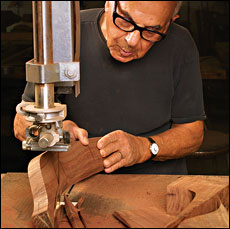
That doesn’t mean that process woodworkers are exclusively hand tool woodworkers.  Sam Maloof was definitely a process woodworker who was one with his bandsaw. You can add Michael Fortune to that list as well.

Process woodworkers tend to evolve into their role. I don’t normally run into woodworkers who started out saying, “Gosh, darnit, I always wanted to cut three dozen dovetails by hand.” But, once they see the amount of skill required to do accomplish feats such as these, the time put in working like this is seen as a wise investment.

Oh, and at the end, they get a beautiful piece of furniture.

Why make this observation? I dunno…  But, I am sure I’m gonna get a few comments on this one!


Quick Poll

People love to classify things.  Speak to a biologist and you’ll learn a boatload of Latin in when talking about an animal’s classification.  Chemists classify the elements as metals, non-metals, noble gasses…  the list continues.

Pastry chefs will classify ingredients as wet goods or dry goods, and it’s not as easy as it seems. Sugar is considered to be a wet ingredient.

When it comes to woodworkers, we also tend to classify ourselves into categories based on our abilities and knowledge of the craft.

This week, I’m looking to see how you classify yourself as a woodworker at this moment.  Don’t be bashful – be as honest as possible.  Remember, no one has to know you you voted.

Well, you’ll know….

Link of the week

The segmented turner

If you turn pieces on your lathe, you know that you can make some gorgeous looking pieces from a single piece of wood. But, if you want to add more visual interest while using up smaller pieces of wood, you should check out segmented turnings.

By gluing up these smaller bits of wood, you can create pieces with tremendous visual interest. The process is quite simple to accomplish, but it takes some care to get the smaller pieces lined up and arranged properly so the final piece is just as you planned it to be.

This site serves as an excellent jumping-off point, offering segmented turning tips, plans and links to other sites featuring more segmented turning advice. Why not take it for a spin yourself?

part of the Wood Talk Online community