Link of the week

Build a Tansu Chest

As I have probably mentioned, I live in Florida. This means I have no basement, which eliminates a ton of potential storage area at my house. That’s why most of my projects incorporate storage in them – it’s just too important to not miss an opportunity to add more.

Tansu plan

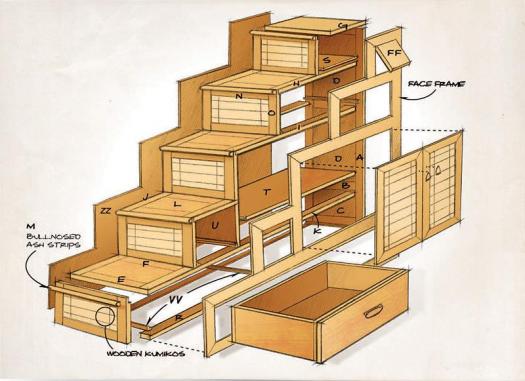
Today’s plan is one that just doesn’t provide storage – it does so with style. The Canadian Home Workshop magazine has an awesome plan for a traditional stepped Tansu chest (also known as a kaidan tansu) using gorgeous maple. Not only does it provide tons of storage, it does so with some serious elegance.

Link of the week

Scott Shuttleman Phillips

This article, which appeared in Woodworker’s Journal magazine, features an aerospace employee who worked on the Space Shuttle program for nearly 30 years. And, what does this have to do with woodworking?

Scott's unbelievable work

Would you believe me if I told you that Scott built a wooden shuttle replica for EACH of the missions the fleet of space shuttles flew?  Using domestics and exotics, Scott’s work isn’t a series of replicas – it’s more of an artistic representation of each of the missions, made with care and wood grown all around the world.

As a self-confessed space nerd, this is the kind of stuff that just trips my trigger. Let’s light this candle!

Stuff I’ve built: The shine box

So, at work, my bosses asked me to dress up a little bit more, which means no more work boots for me – unless, of course, I’m working on conditions like these:

Heavy weather

This now means that I’m going to be wearing more dress shoes. With dress shoes comes the inevitable chore of shining those dress shoes. Now, my dad served in the Marine Corps, and he is a whiz at shining shoes. He keeps his kit in an old Griffin Shinemaster box. It’s a classic.
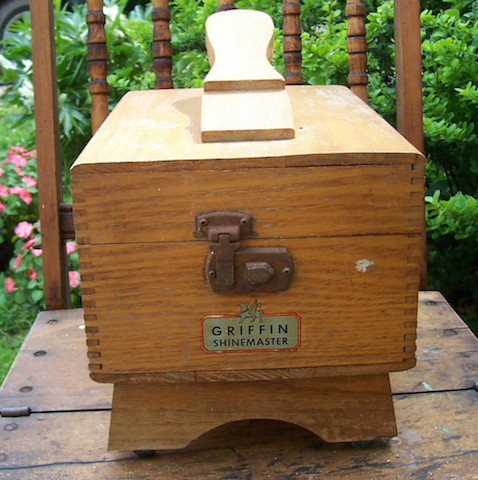
Griffin Shinemaster

While it’s a neat, self contained design, a different shine kit caught my attention – the Esquire Footman Deluxe. (Dang, I need a hobby).
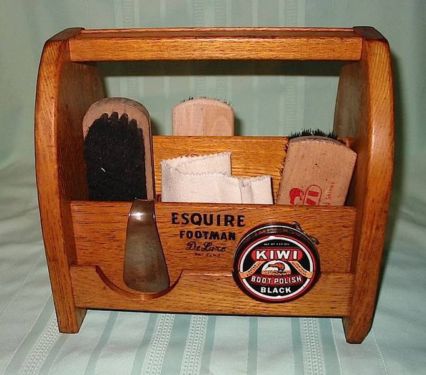
Esquire Footman

There’s something about this design that I really like. For instance, I can get at the items in the kit mid-shine with the open design, instead of having to take all the stuff out and lay the items on the floor, or ask the shoe shinee (is that a real term?) to move his or her foot to get that forgotten item.

Fortunately, there are TONS of these babies for sale on eBay, and the sellers all provide measurements, so I knew the kit would have to come in at about 11 inches from end to end, stand about 10 inches tall and be about 7 inches across. I had a board of some unknown wood (maybe one of you species types can help me out) that had been in my shop for the better part of ten years. Once I planed it down, it was the right width and looked handsome.
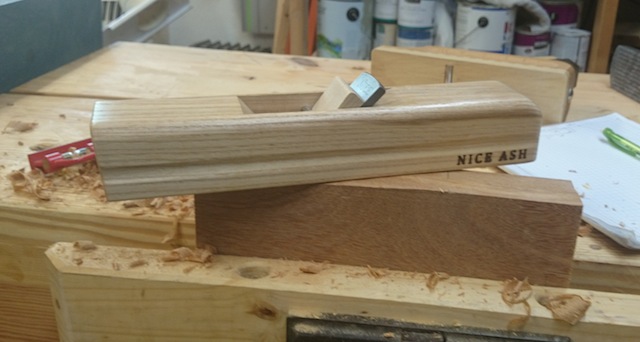
Plane down the edge

I started by cutting the two end pieces, and shaping a taper on the bottom halves of the boards, This is a very minor design feature, but I think it makes the piece look a little more graceful. I could have tried to taper in on the band saw or table saw, but a hand plane did the job in no time flat.
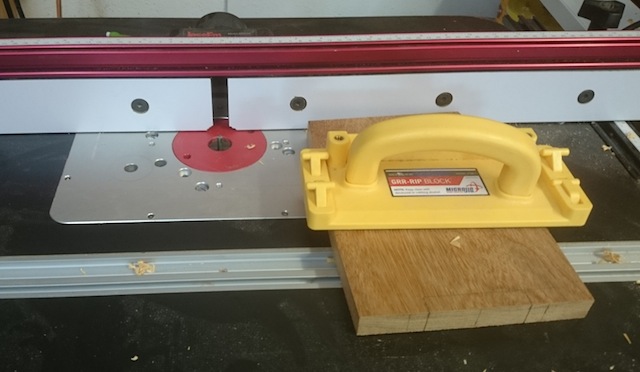
Getting groovy

After that, I used a 1/4″ router bit to rout a series of grooves into each of the side pieces. Since my plan was to capture the 1/2″ thick dividers in these grooves with 1/4″ tabs, I knew I had to make mirror images of each side so they would fit into the grooves. It took some mental gymnastics, but the grooves came out looking pretty sweet, with just a minimum amount of chisel work to make things perfect. And, yes, I did bevel the edges of the piece before I grooved it to ensure that the grooves would parallel the outside of the box profile.
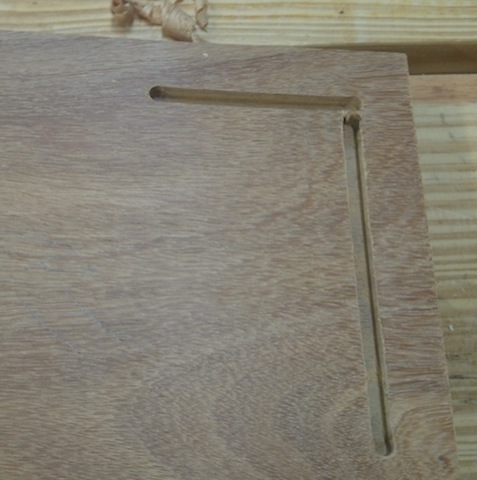
Now, that's pretty groovy

Some quick work with a rasp helped curve the top of the box sides, making it look a little more elegant.
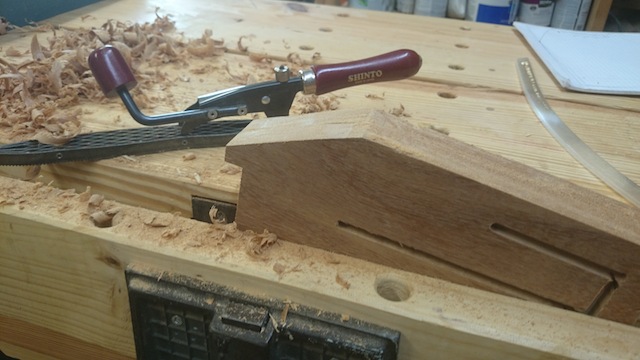
Feeling raspy

From there, I marked out where I wanted the top handle/step to live. I kept that piece at 3 inches wide to allow for a secure step, so I mated the two end pieces together and notched out the 3 inch wide by half inch deep recess for the board to sit in.
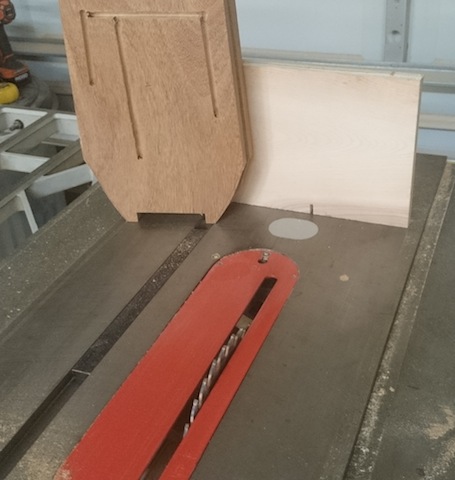
Make the notch

Once I did this, I cut the top piece to size, and made a rabbet on the end, ensuring the 3/4″ thick top piece could fit snugly into the 1/2″ deep notch, making a great fit that registered against the side of the box.
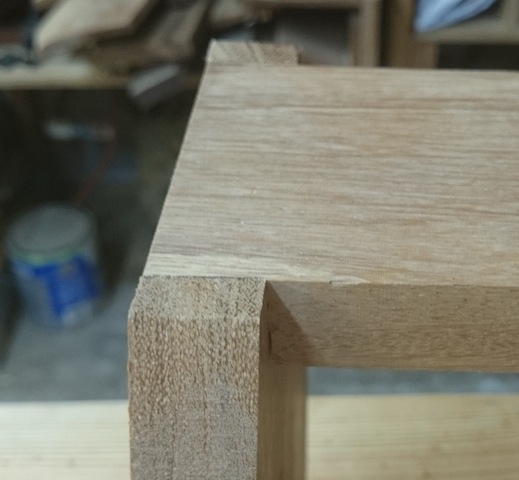
Snug in the notch

From there, I milled down the side pieces to 1/2″ thick, then using a rabbeting bit in my router table, gave each piece a 1/4″ thick by 1/4″ long ‘tab’ that would fit into the grooves.
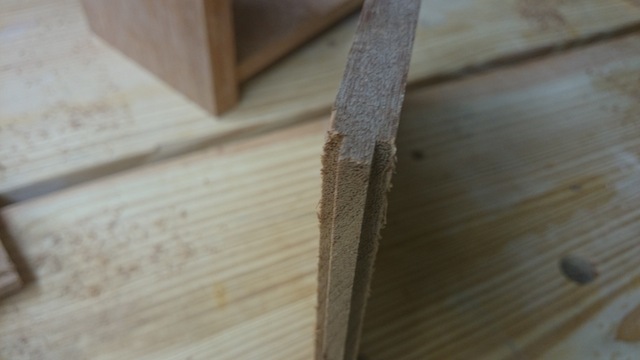
Don't stick your tongue out at me!

I knew that only the bottom board would be glued in place, as it wouldn’t have a cross-grain situation. The dividers that break the piece into compartments just float freely. Assembly took a little bit of time to get everything into its respective groove, but it worked out great. I just took my time, glued the bottom board, slid the bottom and dividers in, then tapped the handle/foot rest into place, and clamped everything up.
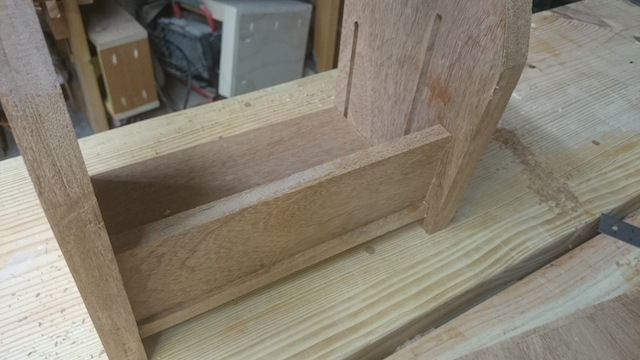
Assembly detaisAfter the glue dried, I sanded everything down, then opted for several coats of lacquer for the finish. First, because it’s an easy, quick finish to apply that gives great results. But, also because it’s a spray, which can get down into the assembled compartments, saving me the work of having to reach in there with a rag or brush.
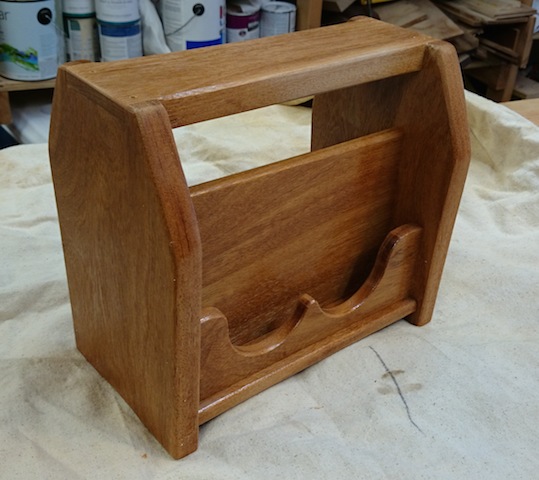
Assembled and lacquered

I really dig the front compartment with the cutouts that holds the cans of wax. The large compartment is easy to reach for the brush, applicators and shine rag. It’s solid as a rock, and just the right size for me to stash in the closet for when I need it. And, the beauty of it all – this truly was a one-weekend project, with the work being done in about four hours.
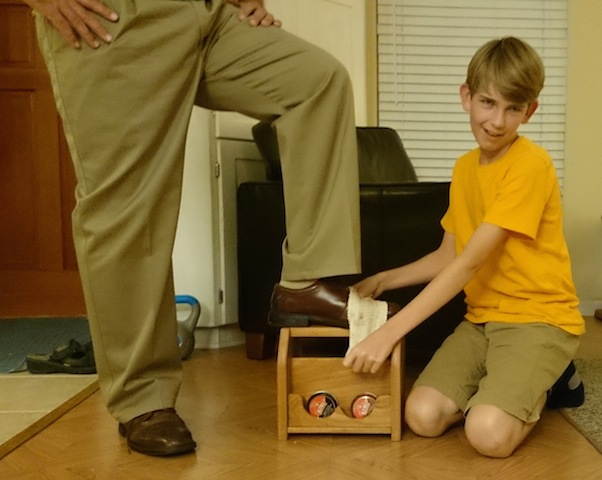
Nice shine, Steve

How well does it work? Well, I may need to make another one soon to give my son Steven, so he can start building his college fund. Hey, son, I have a nickel with your name on it!

Old fashioned cutting edge

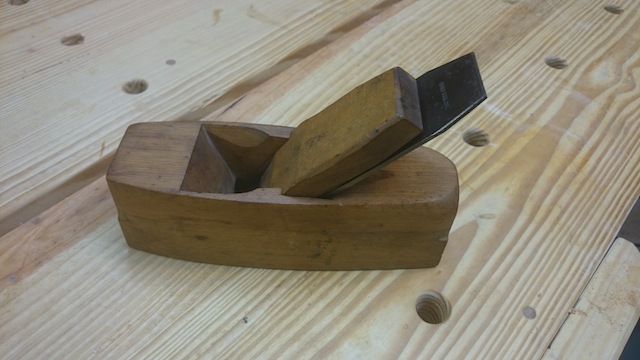
I have a few old hand planes that were given to me by friends. A few of them serve as desk ornaments at my office, while others are in bins, waiting for me to refurbish them. This is one that I had in the refurbish bin – an old Ohio Tools coffin smoother. I just love the way these old planes look, and I wondered if I could make this one work.

The old planeSo, I knew I had to break it down to get to the pieces I had to tend to… basically, the iron so I could sharpen it.

The plane broken down

Using a small warrington hammer, I tapped everything apart.  There was the wedge, the iron, the chipbreaker and the body. They are all in very good shape, with no cracks in the body and plenty of steel to work with with the iron. The plane looked nice, but there was one problem…

Super dull

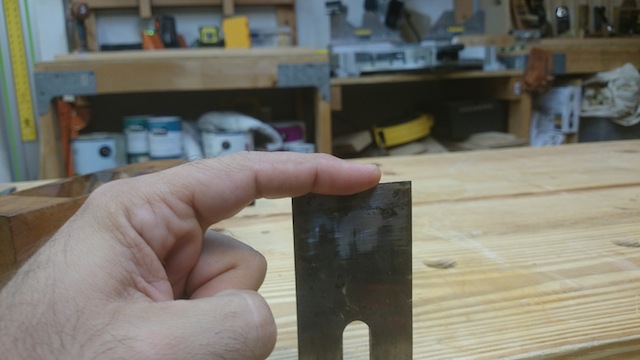
The iron was as dull as a butter knife. I mean, I could press my finger onto the edge of it, and there was absolutely no chance of me hurting myself.

Flatten out the back

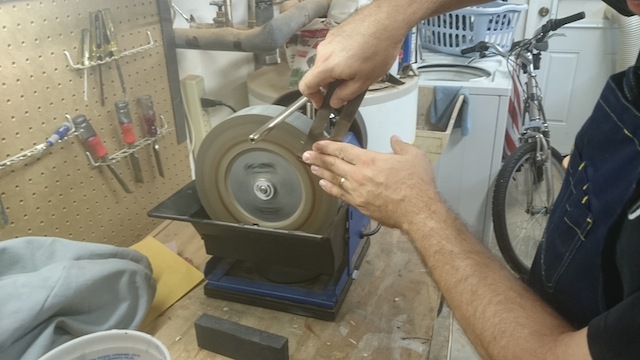
So, I broke out my Tormek and got to work on it. The first thing I had to do was to flatten the back of the iron. Concentrating mostly on the last inch of the bottom, I held the plane iron’s back to the side of the wheel. Unlike high-speed grinders with narrow wheels, this is perfectly safe. The water in the reservoir keeps the blade cool, and the nearly two and a half inch thick wheel has plenty of mass to allow you to really flatten things out.

Confirm the angle

From there, I had to make sure I had the angle right. This iron was ground to 30 degrees, which I confirmed using my angle gauge.  After that, it was easy to grind the bevel coarse, then fine, then hone it on the leather wheel. I put the plane back together, gently seating the wedge in place with a few taps of the hammer.

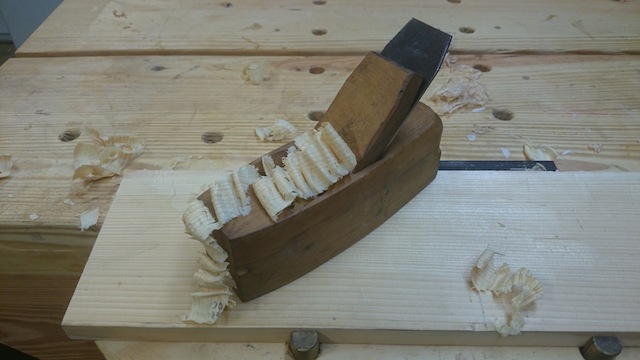
Shavings!

Sure, it took a little fussing (remember, you aren’t using a depth adjustment knob, but taps with a hammer), but I was able to get this baby making some sweet shavings in short order.

I’m not sure how old the plane is, but I hope it will continue to work for me for years to come.

Link of the week

Anne of All Trades

Up in her workshop near Seattle, Anne Bohnett has set herself up quite the operation. From farming to auto maintenance – from raising animals to running a primarily hand tool woodworking shop, she is indeed Anne of All Trades.

Anne Briggs in her shopNot only does Anne do some awesome woodworking, she also restores old tools and offers a hand tool rehabilitation service. Check out what items she has for sale in her shop, and I think you’ll find out that indeed – she truly is an Anne of All Trades.

Stuff I’ve built: The work trestle table

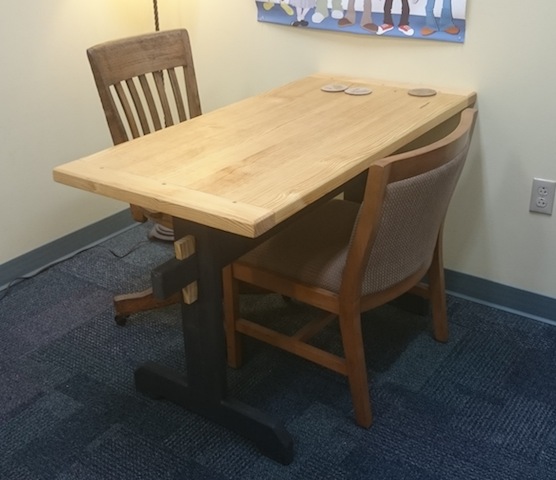
Wow, I have to be feeling better. The table I needed for work started out just a few short weeks ago as a 2 x 12, and now it’s home in my office, ready for me to conduct meetings, spread out and do some serious work.

The table in my office

This project was definitely a thought exercise for me. Could I build a project out of a simple piece of southern yellow pine construction lumber that I would like to use in my office, and had I accumulated the right tools and skills to build a classic trestle table?

From the first moments of picking out the board at the Lowe’s near my house, I knew I was going to be in for a treat. The 16 foot long 2 x 12 I chose was loaded with quarter sawn, nearly blemish free pieces that would easily become a top. While southern yellow pine is tough stuff, it still cuts great and planes very well as well.

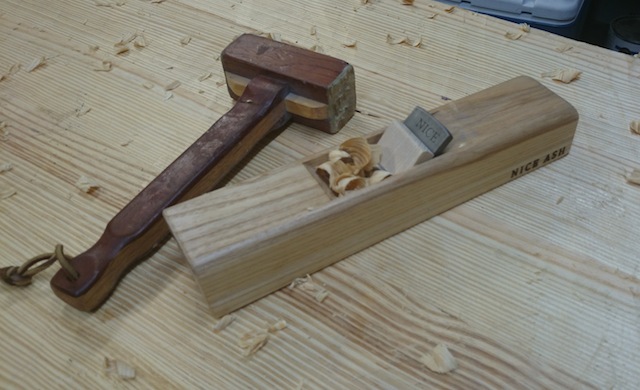
That's a Nice Ash plane!

This project gave me some great freedom to design a classic looking piece using some tools – such as my scrub planes and Mortise Pal – that I usually never break out. I think the results look pretty darned decent.

The angled mortise

I also was able to convince myself that I could cut the angled through mortise that could hold the wedge to secure the base for this piece. Sure, I had my doubts, but a little patience and some sharp chisels go a long way toward accomplishing goals that seem out of your grasp.

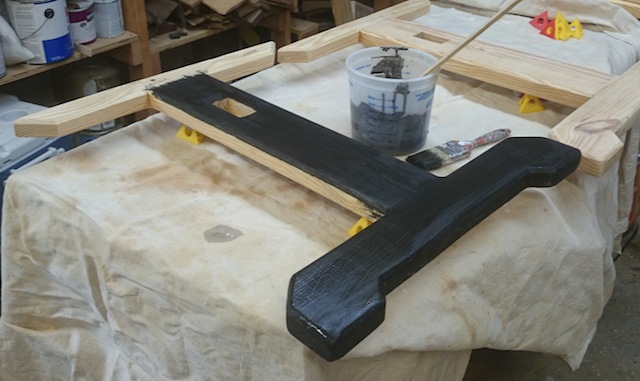
Applying the milk paint

For the finish on the base, I went with some pitch black Old Fashioned Milk Paint to give it a classic look. I topped the paint with a coat of paste wax to prevent too much wear, but I figured now if the paint does start to wear off in strategic locations, it will only make the piece look that much more sweet.

The top took a coat of shellac, followed by a sanding with some 320 grit sandpaper. After that, I hit it with four coats of my wipe on finish blend. After that, I wiped on two coats of thinned poly just to give the table a little bit more protection from spills.

The table just before it left my shop

Now, it’s at home in my office, giving me a place to sit and contemplate my next project.

It’s all about that base

I am really starting to get old. At last weekend’s Woodworking in America, I told someone that I was Apollo era technology, and I had to stop to explain what I meant. Oy.

And, at work, I am the oldest of the public information officers. By a pretty good margin. One of my colleagues was born after I graduated college… grumble grumble grumble…

Meghan Trainor

But, every so often I ‘get’ a modern reference. For instance, I recently heard about this person named Meghan Trainor who wrote a song about my favorite musical instrument, the bass. What that has to do with the way she is dressed (and, she never picks up a bass guitar, which I also find puzzling), I’m not quite sure, but hey, I’ll go with it.

Just as with the music video, a trestle table is all about that base. After all, it’s all about that base, or there’s no table. So, I set out, to get my table base started so I could bring this sucker back to the office.

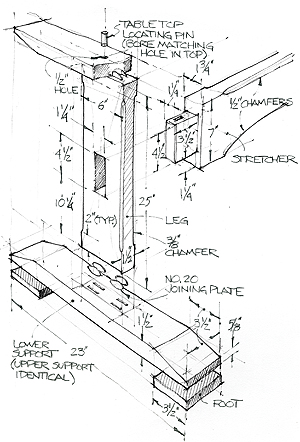
A trestle table drawn out

Unlike many modern iterations of the trestle table, I really wanted this one to be able to be broken down and moved. Sure, I have my corner office now, but you never know when someone might want to move me, and I’ll have to pack up the table to make the shift. So, no permanent joinery on the table base.

To make this happen, I started by attaching a pair of battens to the bottom side of the table. These battens will work together with the breadboard ends to keep the top flat. I spaced them so they would hold the tops of the trestles tightly, eliminating the need to screw the trestles to the table top.

The battens attached to the table

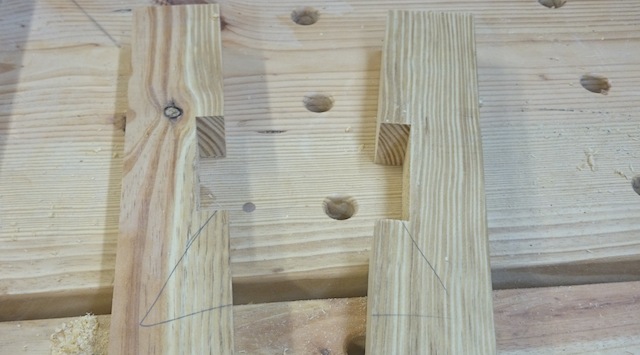
Oh, and how about those trestles?  I cut a pair of pieces for the two tops, some larger pieces for the bottoms and some straight boards for the uprights. Before I did any joinery, I ripped the two uprights in half, then notched for what would be the through mortise to hold the stretcher. With those cut, I just glued the legs back together, and voila, you have a nice, square through mortise.

Two halves make a whole mortise

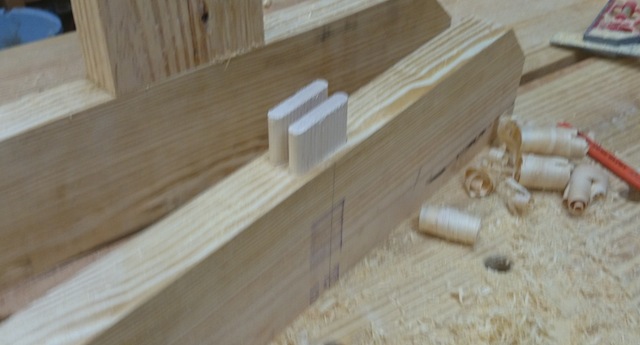
To attach the tops and bottoms, I finally broke out the Mortise Pal and got to work. I routed twin mortises for the feet and tops of the trestles, then mirrored those on the tops and bottoms of the uprights, then glued them into place. That’s a fast joint that’s just not going to go anywhere.

The mortise pal was here

The stretcher was very easy to cut – I marked out the height of the mortise from the table onto the ends of the stretcher and marked out the length between the inside faces of the two uprights, then just notched those over at the Laguna bandsaw. Easy as pie.

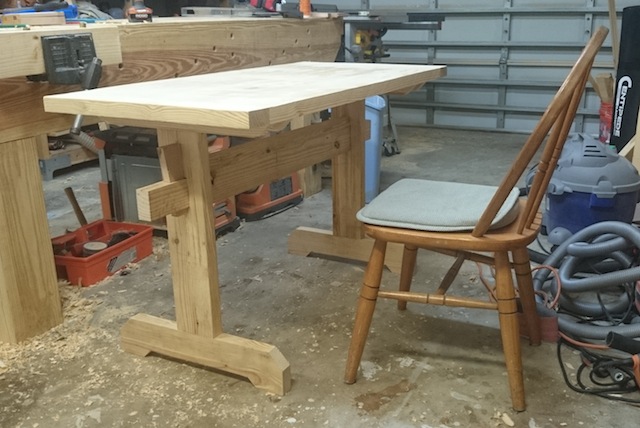
The table, ready for finish

I hogged out for the through mortises on the trestle stretcher ends on the drill press, then chiseled a 10 degree angle on the outside face. I then cut a pair of wedges with an outside slope of 10 degrees. Those babies snug in nicely, and when tapped home, there is absolutely no wiggle on the table base.

Now, just a little bit of sanding and finishing, and I think this one will be ready to go!

part of the Wood Talk Online community