Get a Grip

A workbench or solid work table is a joy to use in a workshop. Being able to plunk a heavy board down on that work surface and cut, plane, drill, rout or do any other kind of work on it breeds confidence in even the novice woodworker. Adding a vise to a workbench only helps expand its usefulness. Whether a fast-acting metal model or a traditional wooden face vise you craft by hand, it’s the icing on the cake.

A bench and a vise are an excellent combination, but it you stop there, you aren’t using all of your bench’s potential. In fact, there are some common time-tested devices and strategies that can help complete your bench and make your woodworking more enjoyable.

The hole truth

Dog Holes in a workbenchLook at just about any workbench, and you’ll find holes it its top. No, those aren’t the handiwork of an eager drill operator with bad aim – they are called dog holes. These holes open an incredible array of opportunities to the woodworker through using some simple tools – dogs and hold downs. More on those tools in a minute…

In traditional workbenches, dog holes are square. They aren’t typically chiseled that way, they are built into the workbench top as it is being constructed by running dadoes across the boards before they are glued up. They are always directly in line with a vise – either a front or an end version, and are slightly angled back toward the bench’s tail vise so as the work is clamped in, the dogs don’t get pushed back beyond 90 degrees, which would make it easier for the work to slip.

If you didn’t build dog holes into your bench, you still have an opportunity to add them. By drilling holes into your bench, you can create round dog holes that can serve just as well. The typical diameter for these round holes is ¾”, and since they can be retrofitted, you can place them just about anywhere on your bench, but, it’s best to plan to line them up with your vises just as with the square versions. Just remember to drill the holes perfectly perpendicular or your dogs may have issues. You can use a plunge router with a ¾” bit to start the holes or build a jig that will allow you to drill them. I’ve used forstner and spade bits to drill holes in the past, but auger bits work beautifully for this task.

Your faithful companions

Bench DogsBench dogs have been found on the workbenches for generations of craftsmen, and can serve many purposes in today’s modern shop. They are equally at ease for securing boards to the workbench for traditional chores such as hand planing or more modern work such as routing mortises or edges.

The dogs can be made of metal, wood or even plastic, and have some means to prevent them from sliding through the dog hole onto the floor below. Wooden or metal springs can be used, or the top can be made larger than the hole.

They can be used by themselves as a stop to plane against or – even better – in conjunction with a vise to hold a board. In fact, many metal vises come equipped with an integral dog that can be raised to clamp work above the vise jaws.

Two dogs by themselves can be used to clamp work in place. Simply put two dogs far apart enough to allow the work to sit between them and use opposing wedges to lock the work in place.

Companies such as Veritas have made dogs even more useful through innovation. The Wonder Dog (or Wonder Pup – a shorter and smaller version) is a round metal dog with a threaded cross piece that passes through the dog body. By placing one of these dogs in a dog hole, you can create your own vise setup.

Hold that work!
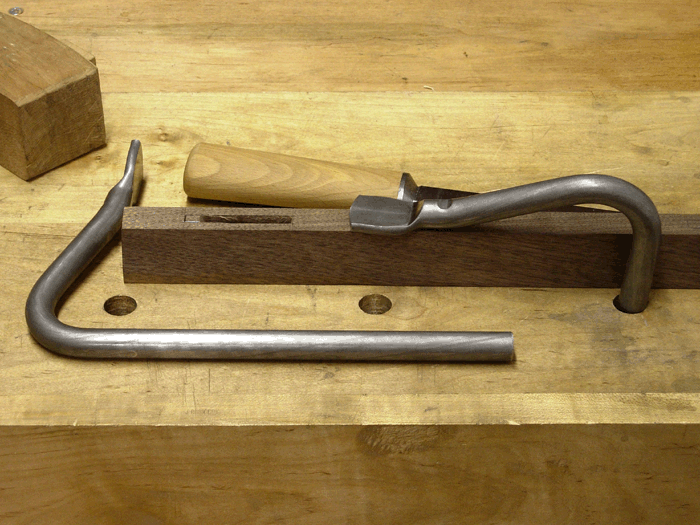
HoldfastsVises and dogs are great for securing work that needs to be supported for uninterrupted work to take place on the face or edge of a piece. However, if your are doing something like chiseling for hand cut dovetails, you will need a way to secure the work that allows you to move the work as you progress. That’s where hold downs come in, and they are a time saver.

The traditional hold downs are called holdfasts. They are made from forged iron and are very simple to use. By inserting the long shaft into the dog hole, setting the holdfasts’ pad down on the work and giving the top a good whack, it will lock down on the work. When you need to release the grip, tapping the back with a mallet will unseat the holdfast, getting it ready to work again.

More modern holdfasts made of plastic or metal improve upon this devise by offering threaded fittings to make adjusting them easier. Some of these newer models, however, require the shaft to penetrate to the bottom of the bench in order to secure them. This may limit the thickness of the work you can clamp down.
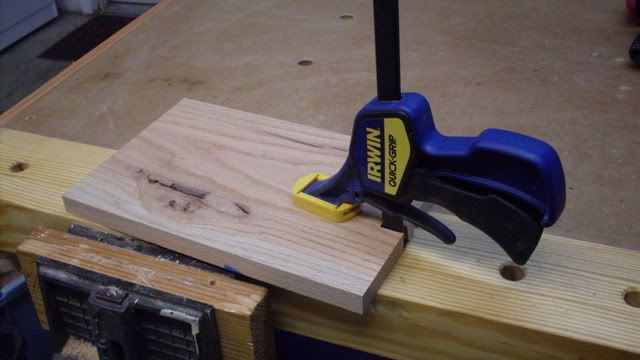
Quick Grip Hold DownsIf you have a trigger clamp (Irwin’s Quick Grips type) where the head can be removed to turn the clamp into a spreader, you have a hold down just waiting to happen. I have found that by removing the head, inserting the bar through the dog hole and reattaching it below the bench, I now have a very handy hold down. The trigger gives me very good control, and it’s easy to release when I need to shift the work. For larger pieces, you may want to use two of these clamps to further ensure that the work doesn’t shift. Plus, you have now made these useful clamps even more versatile.

While dogs and hold downs are simple tools, they can make your bench a more versatile and useful asset in your shop. And, they can do so for a fraction of the cost of sophisticated new vises or rebuilding your bench from scratch.

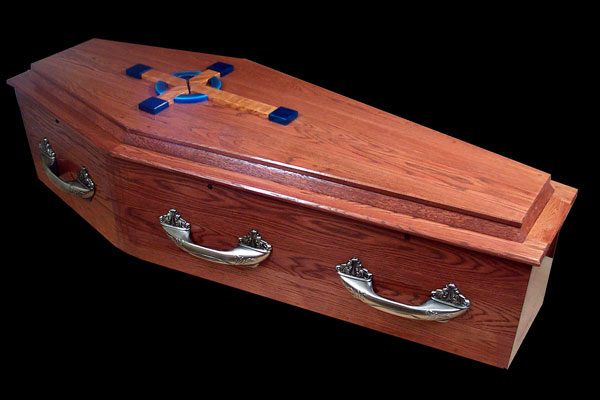
Woodworking Spotlight – Roy ‘Bud’ Davis

When a new child is born, many woodworkers will go out of their way to craft a cradle to hold the newborn. It’s seen as an honor and a privilege to build the first place where a new person can rest his or her head.

But, what happens at the end of that life? Building a coffin or urn to hold the remains of a beloved family member is no less of an honor or a privilege. And, just as with cradles, the woodworker’s imagination and sense of design can play a tremendous part in shaping that coffin.

Roy “Bud” Davis is a woodworker who truly takes this to heart. At his company, Bert & Bud’s Vintage Coffins, Roy builds classic, artistic and some way out there coffins for his pre-need customers.

For Roy, working with his hands is a family trait. “I come from several generations of people who worked with their hands. “My mother was an expert seamstress and also decorated wedding cakes and birthday cakes that rivaled those done by upscale professionals. Her father caned chairs and she had two brothers, one a master carpenter and the other a master cabinetmaker. On my father’s side, his father was a carpenter and his grandfather was a blacksmith. And believe it or not, my dad’s stepfather was an undertaker. But I can’t claim that I learned anything about woodworking from any of them.”

Roy’s first woodworking experience came in 1962 when he decided to build a cabinet to hold his hi-fi stereo components. While this was quite an accomplishment, he waited 30 years to get back into the craft. That’s when he started building half-scale coffins to commemorate the lives of lost family members. “While working on those commemorative coffins, I thought it would be a great idea to build my own coffin as a work of art and that led me to think, ‘well, why shouldn’t everybody’s coffin be a work of art?'”

Roy has yet to build his own coffin, but that hasn’t stopped him from building others. In fact, he started building classic ‘toe pincher’ coffins to sell to Civil War reenactors. “So far, I have sold only one to a reenactor,” he said, “but I have had a lot of clients who have ordered these for their own use.” And, no, Roy properly pointed out that the ‘toe pincher’ form isn’t just a European convention – it was the most popular style of coffins in the United States from colonial times into the Civil War.

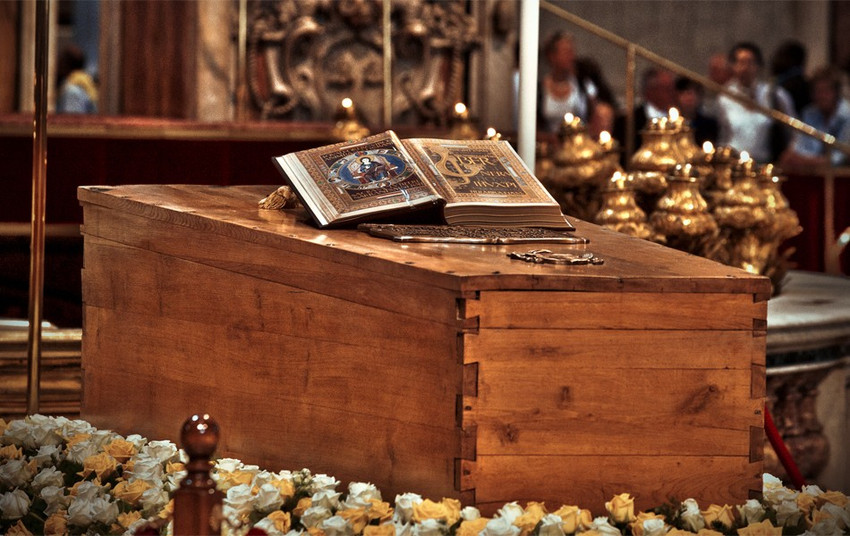
Another event which has affected Roy’s business was the passing of Pope John Paul II in 2005. People around the world were moved by the solemn ceremony, and woodworkers were amazed by the austere coffin the Pope was carried in. “Who could pass up the opportunity to work on a piece with such simple but strong design?” In recent years, reproductions of the Pontiff’s coffin have accounted for about half of his sales.

While these time-honored designs have been a mainstay for Roy, some of his clients have requested interesting and unique designs. “I’ve done a beer bottle coffin for Maxim magazine that was offered as a prize in a nationwide contest; a steamboat coffin for a feature-length film for the Public Broadcasting system (it’s now owned by an actual Mississippi riverboat captain) a dollhouse coffin and a window seat coffin. I never want to shy away from a design or construction challenge.”

This bold design process also spills over into the cremation urns Roy builds. One design that truly stands out is a piece shaped like a martini glass. “It was made for the mother of a friend of mine. He and I had several conversations about her; he sent me photographs of her in her prime years and told me how she had been a prominent party hostess in Washington, DC in the 1940s and ‘50s. And, she loved martinis. That’s how the process usually goes for all of my urns and for the coffins, too.”

Many woodworkers might be anxious about building a coffin for themselves or their loved ones because they may not believe that they have the necessary skills to build such a specialized piece of woodworking. “A coffin is really just a big box. The joints have to be tight, construction must be sturdy, but the coffin should also look light and graceful.”

While Roy will build a coffin for any customer, the one thing he cannot do is provide coffins on very short notice. “If someone’s relative died suddenly, I wouldn’t be able to help them. I keep no coffins or urns in stock. A kit coffin or plain toe-pincher coffin takes 7 to 10 days to build. Some of the fancier ones can take a couple of months. I build the coffins one at a time in order of when the deposit checks come in. So some customers have to wait until I finish the orders ahead of them. Most often they only have to wait 2 or 3 weeks.”

To help address this pre-need requirement, Roy has built several coffins which can double as window seats, table bases or book shelves. A new model, built from the same style box as the Pope John Paul II replica, serves as a tall clock until needed needed for its intended purpose.

While some people may see this as a macabre practice, Roy considers it to be an honor to be part of the grieving and life memorial process for a family member. “A man described the funeral of his mother who was buried in one of my plain pine toe-pinchers. They filled her coffin half-full of aromatic red cedar shavings, placed her on them and covered her with a blanket made of her Irish clan tartan. Her grandsons carried her on their shoulders while a piper piped her to the grave. It’s very rewarding to play a small yet significant part in a beautiful ceremony like that.”

Quick Poll

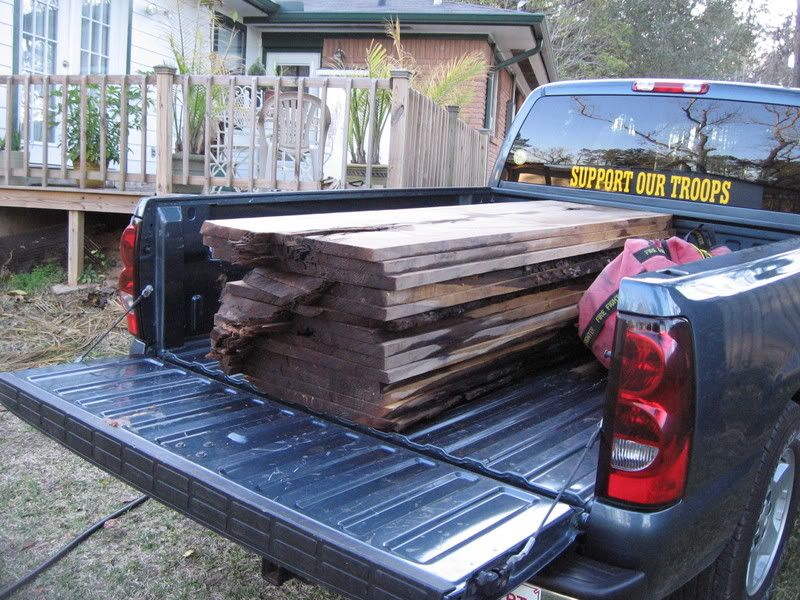
truck full of walnutSome of the tales are legendary. “My two neighbors and I found out about this rare tree that was being cut into boards and we JUST HAD to have it.  So, we loaded up the trailer and started a cross-country trek…”

Other woodworkers look locally, buying their wood from sawyers who cut trees that grew minutes from their homes.

Either way, when it comes to wood, we can be kinda crazy.  That’s why this week, I want to know just how  far you have ever traveled to pick up a load of hardwood (or choice softwood, for that matter) lumber.   Remember, I’m only looking for the farthest you have ever traveled – not how far you would be willing to travel if the right board came along.

[poll id=’63’]

Link of the week

The Windsor Institute

Mike Dunbar instructs chair buildingOne thing I have never built in my decade as a woodworker is a chair.  Sure, I’ve built lots of stuff in my shop, but the challenge of chair building has always stopped me cold in my tracks.

However, the day I decide to build one, most likely it will be a Windsor chair.  Those beautiful hand-crafted babies take us back centuries when all fine furniture was built with exceptional care and skill.

At the Windsor Institute in Hampton, New Hampshire, Michael and Sue Dunbar instruct the traditional crafting methods of these simple yet ornate chairs.  From the selection of the woods to the seat shaping right down to the final fitting of the back spindles and  crest rails, students learn the ins and outs of classical chair construction in several different forms.

Classes are offered throughout the year and space in these classes is limted to 18 students to ensure enough hands-on instruction can be offered.

Inspiration in obvious places

A nice set of kitchen cabinetsMaybe I’m a different kind of woodworker, but I really do enjoy the challenge of making doors and drawers.  Those are typically the pieces of a project that cause woodworkers the most angst.

Sure, building a large cabinet or series of cabinets is the fun part.  You get to do the giant case work and, once it’s moved into place and installed, you get an idea of how the project will look.  Heck, you can even begin moving stuff into the cabinets once you are done installing and get to the doors and drawers whenever… maybe years from now.

I guess I got my love of doors from seeing just how they can change the overall look of a piece.  Any set of cabinets without its doors and drawers looks just about the same as any other set of cabinets.  But, add some flat slab doors, raised arched panels, flat panel Shaker models or glass panel doors and the entire look of the piece changes from utilitarian to works of art.

Unfortunately for me, I got myself into a rut.  You see, I fell into the trap a lot of other woodworkers fall into – once I bought a nice set of matched cope and stick joints to build doors with, everything started to look the same.  Every door had the same profiles, and it was getting redundant.  What I needed was a readily available source of inspiration to shake me from the ho-hum everyday doors I  was building.

Then it hit me like a sack of bricks.  I got into my car and drove over to my local Lowes and Home Depot.  There, in the kitchen cabinet section was all the inspiration I needed.

Kitchen remodeling is a very lucrative business.  Sure, right now very few people have the available cash to do that kind of work, but the real estate market is even worse than the remodeling market.  Until the real estate market rebounds and people feel confident in going out to purchase a new home, they are far more likely to redo that ugly 1970’s vintage kitchen to make it more functional and easier on the eyes.  It doesn’t hurt that it makes sound economic sense to remodel the kitchen, since the return on the investment can usually be recouped at the sale of the property.

Just some kitchen cabinet door stylesIn that kitchen remodeling section, big time manufacturers such as Kraft Maid and Thomasville have catalogs of their kitchen offerings.  Since these companies spend a tremendous amount of money to market their products, their sales literature is loaded with full-color, glossy images of their installed kitchens in show homes.  Talk about a treasure trove of ideas for the average woodworker!

Their door and drawer options are shown in different species and finish options, which can really help you envision what the final piece looks like.  And the varieties of styles – WOW!  Sure, some would require a large tooling investment, but others (such as doors with mitered rails and stiles, Mission style doors, etc.) can be built with an average collection of router bits and a decent table saw available in most shops.

As a bonus, most of the catalogs offers useful suggestions on how to properly set up a kitchen to ensure it is efficient, ideas on how to address problem storage areas and recommendations on how to incorporate cabinets in other areas such as bathrooms and walk in closets.  Not a bad resource for the beginning cabinetmaker to get their hands on.

Do these catalogs offer step-by-step guides on how to cut these profiles and joints?  No.  The companies don’t want to give away all of their secrets – after all, they want you to buy!  But, it’s not a bad idea to poke your head in at your local home center to pick up a few catalogs and put them to good use.

Giving Kids a Fresh Start

It’s been said that our youth are the greatest resource to build a strong tomorrow.  Just look into the bright, shining faces of a class of first graders and think what miracles of technology they will play a part in creating.

Unfortunately, for far too many of our young people, their futures look grim.  Raised in areas of the country where positive adult role models are hard to find, at risk youth can easily find trouble, which can rob them of the promise of their futures.  Instead of looking to their adult years with the promise of education and success, many may face prison as the lure of easy money through criminal activities steers them off course.

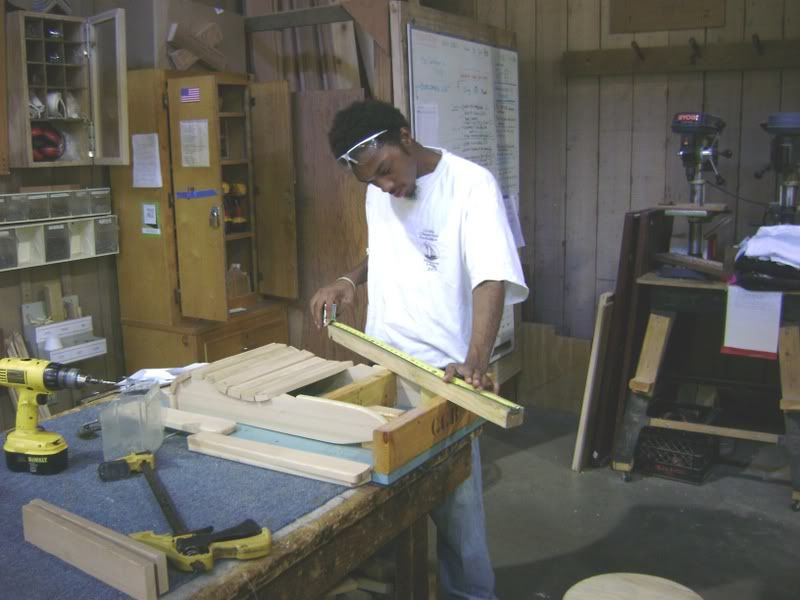
Cherrod measuringThat’s where programs such as Living Classrooms Foundation’s Fresh Start can help get these kids back on track.  Living Classrooms, a Baltimore-Washington, D.C. based non-profit organization, helps youth achieve their potential by providing education and job training, using urban, natural, and maritime resources. The Foundation’s Fresh Start Program teaches carpentry and woodworking skills to serve as a springboard into improved academic skills, employability skills and sense of purpose and direction.

The program was founded in 1989 in cooperation with the Maryland State Department of Juvenile Justice.  Rather than arresting these youthful offenders, holding them in jail and retuning them right back to the same streets where they got in trouble in the first place Living Classrooms Foundation provided the space, tools, materials and – most importantly – the instructors to get the job done right.

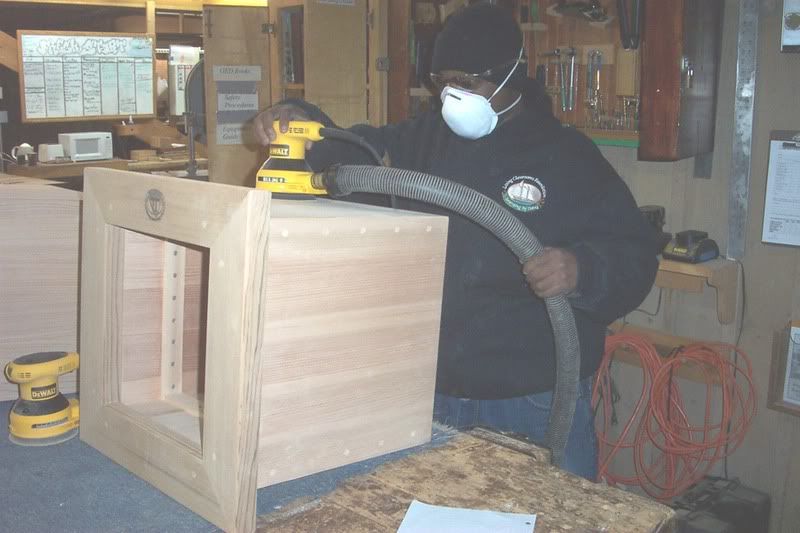
Nick SandingAccording to Stephanie Region, Fresh Start’s Director, those staff instructors are the key to the program.  “The experience of our staff has traditionally varied over the years – we have had ex-military men as instructors from the Coast Guard and Marines, as well as artists and experienced woodworkers.  Currently our staff consists of men and women with art backgrounds and woodworking expertise, as well as experience in teaching and youth development.”  Region was quick to point out that the program doesn’t seek to merely supervise kids in a wood shop.  “It’s all about engagement with each student.  We empower them by putting them in charge of their success.  It’s tough for them at the beginning of the program, but they take to it quickly.  It’s always amazing to see these transformations.”
Members of Fresh Start are referred by Maryland’s Department of Juvenile Services, and the training is rigorous.  The entire program takes ten months to complete, and exists in five stages.

•        Toolbox – In the first module, students build their own toolbox out of white pine, using only hand tools.  They become acclimated to the program and are introduced to the soft skills needed to succeed in the world of work.

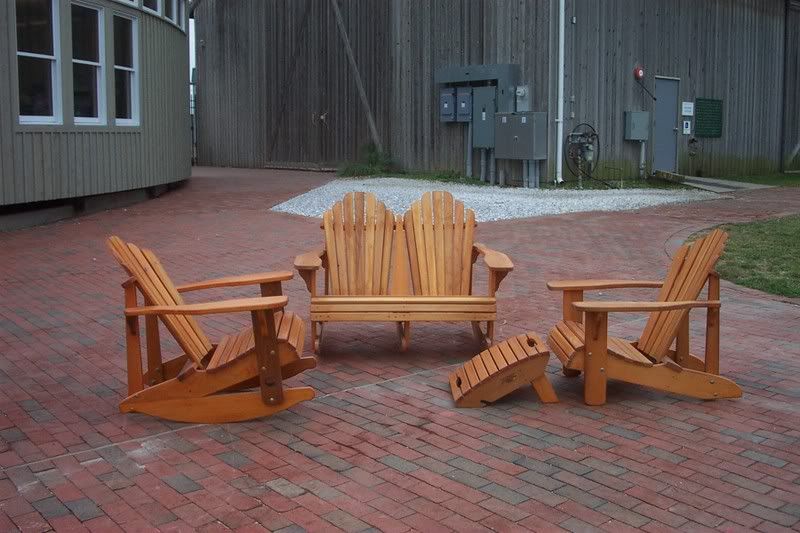
•        Production – Students are trained in the safe use of stationary power tools.  They produce a line of outdoor furniture as part of a student-run business.

•        BOAT Building – Students are introduced to the business side of production.  They learn the basics of economics, marketing, and customer service.  Students also learn advanced computer skills such as website creation and maintenance, Microsoft Excel and PowerPoint.

• Work Study – This module focuses on part-time employment.  Students also complete activities preparing them for independent living and positive citizenship.

•        Internship – This module consists of full-time employment.  Students keep this job through graduation and beyond.

Beautiful patio furniture build by Fresh Start studentsWhat happens after completion of the ten month program?  According to Region, “Fresh Start provides three years of aftercare and tracks data and statistics for all graduates during that period.  A testament to the relationship built between Fresh Start staff and our students is the fact that our graduates – even students that didn’t graduate for various reasons – keep in contact with us well beyond three years.”

The Fresh Start Program’s statistics are exceptional, with 75% – 82% of graduates still employed or continuing their education at the end of the three year period, and fewer than 13% of the graduates finding their way back into the justice system.  It’s not just citizenship and carpentry skills that are taught, either. Reading, math and writing scores also show an average of a grade and a half improvement at the end of the ten month program.

The results have been so impressive, in fact, that in December 2007, Living Classrooms Foundation received a $1.6 million grant from the U.S. Department of Labor to replicate Fresh Start in two new locations.  In July 2008, Fresh Start opened a new site in East Baltimore and another in Washington D.C., and the new students keep on coming.

The bond between the program and its graduates remains very strong.  Stephanie cites that even graduates of the original 1989 class will drop in to say ‘hi’ or call looking for old instructors.   “More recent graduates will call to invite us to their weddings or housewarming parties when they move into their first apartment. That’s what it’s all about – establishing positive relationships that foster patterns of success and improved interpersonal relations. For many students, Fresh Start is the first place where anyone really believed in them – and the first time they believed in themselves. They never forget that and we don’t either.”

The Fresh Start Program gratefully accepts donations of tools to help keep the shop running.  Of course, given limited budget and transportation resources, Fresh Start asks that any donations be for small tools that can be mailed, or that arrangements be made to deliver larger tools in good working order.

part of the Wood Talk Online community