Stuff I’ve built: Carolina’s hope chest

April, 2010

(Yes, I am aware that there are very few close-up photos of this project.  I was rushing to get this finished and given in time for this past Sunday and it totally slipped my mind.  However, I asked my niece to snap a few photos to add to the article… coming soon!)

Regardless of where you go in the world, you are likely to find ‘coming of age’ ceremonies for kids reaching their mid-teens.  Confirmation in Roman Catholic churches, Bar or Bat Mitvahs in the Jewish faith and the Quinceañera found in Latin American cultures.  Debutante balls. Getting your driver’s license. All of these ceremonies show the community that the child has now reached an age where he or she can start taking charge of his or her own life.

In most western cultures, we celebrate a Sweet 16th party for girls.  This tradition goes back to the bad old days, when life expectancy was only a sobering 45 or 50 years.  When a young lady reached that milestone, she was considered eligible to be courted for marriage in order to  start a family while she was still young and healthy.

To help get the young lady ready for marriage, the family would start to build her trousseau or dowry – the items she would bring with her into the union. Cooking pots and pans, serving dishes, linens and other daily items were typically included, as well as any small favors given to her while she was younger – perhaps a treasured blanket made by a grandmother or something else with meaning.
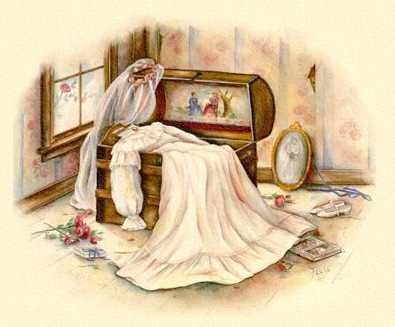
In order to safeguard these items, many times a hope chest or dowry chest would be built.  This way, the items could be collected and stored until the big day, when it would be loaded onto the horse and buggy for the trip to the couple’s new home.

Starting in the 1950s, with the arrival of registering for bridal gifts at local department stores, the tradition faded into memory in many families . But, of course, as a woodworker, I can’t let such a tradition go silently.

Since I don’t have a daughter of my own, I feel a close tie to the four nieces in my family.  Carolina, the eldest, recently celebrated her 16th birthday.  Since I knew she was going to be busy with parties involving her friends, and she was going to be joining us for Easter dinner this past Sunday, I figured I could be a little late with her present – a hope chest.
Many thanks to the folks at Wood Magazine for providing the plans for this blanket chest in the November 2009 edition, and I can’t say enough about Eric Poirier and the folks at Bell Forest Products who contributed the gorgeous tiger maple for this project.

The body is glued up (now you know why I was posting so much about panel glue ups this past week!) tiger maple with variably-spaced dovetails cut on my Keller jig.  The top has battens across the middle glued right at the center and screwed in to allow it to expand and contract while still remaining flat.

Figuring the maple might look a little too stark without any contrast, I glued a strip of walnut down the middle of the top and also used walnut for the base molding. Since I also messed up the miters on the base molding (I know, don’t dwell on the accidents!), I rounded the mitered molded top over with a rasp and sandpaper.

We had been leaving clues for Carolina all week. The sound of the table saw on her phone mail.  A few hints on Facebook.  But, she didn’t have any idea what was coming.  We ate Easter brunch together with many of our family members, but didn’t let on what was in the trunk.

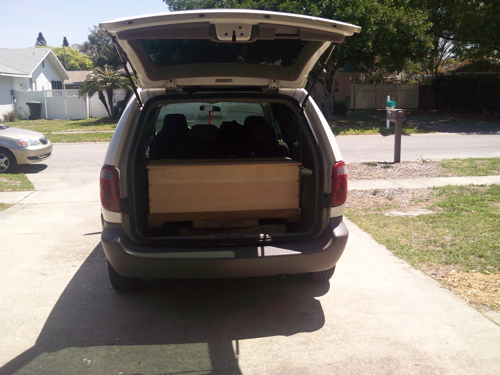
After we left the restaurant, we all proceeded to the back of the minivan for the big reveal.  I told Carolina that I had gotten her a new set of jumper cables to keep in her trunk as a present for getting her driver’s license.  She didn’t fall for it.

As I was opening the tailgate of the van, a thought ran across my mind.  Would a girl born in the age of text messages, the Internet and other modern conveniences even like something as old fashioned as a hope chest?  When I lifted the canvas drop cloth that was hiding the chest from view, I got my answer.
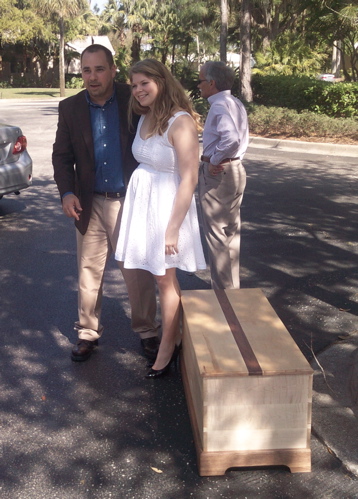
She loved it.

Do I want her to go out and get married now?  Nah, she’s still too young.  But, knowing that the hope chest I built will be part of her life from here on out is a pretty amazing thing.  Maybe something she will share with her daughter or granddaughter when she reaches her sweet 16.

Now, only three more nieces to go!
Changing dovetail width with a fixed jig

I use a Keller dovetail jig for the majority of my dovetailing on projects. It’s easy to set up and makes cutting very quick.  However, the one knock on a fixed spacing jig like that is that it gives only one look to a project.

Not so.

There is a very easy way to change the spacing that doesn’t take much in the way of fiddling and gives very good results.

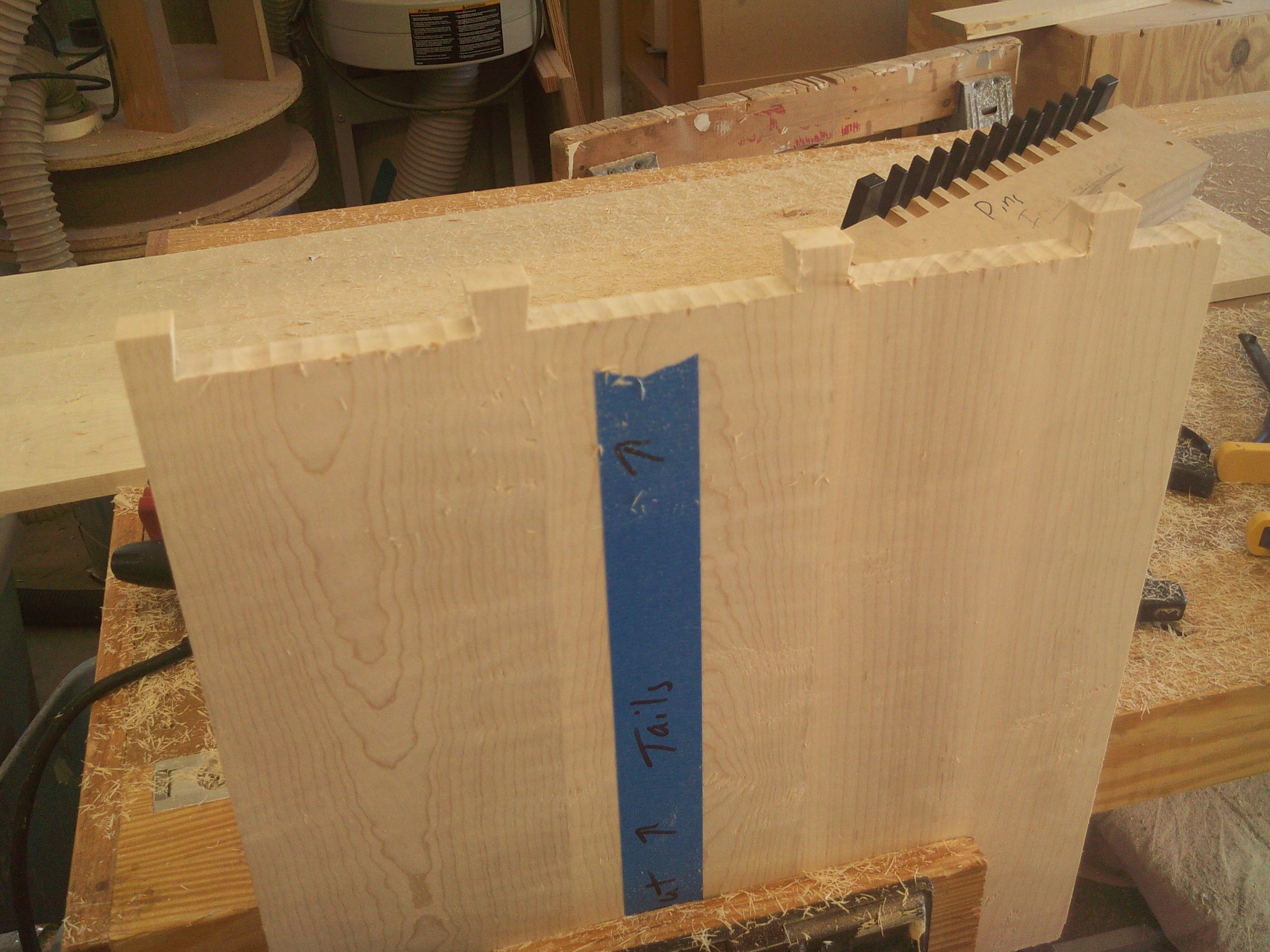
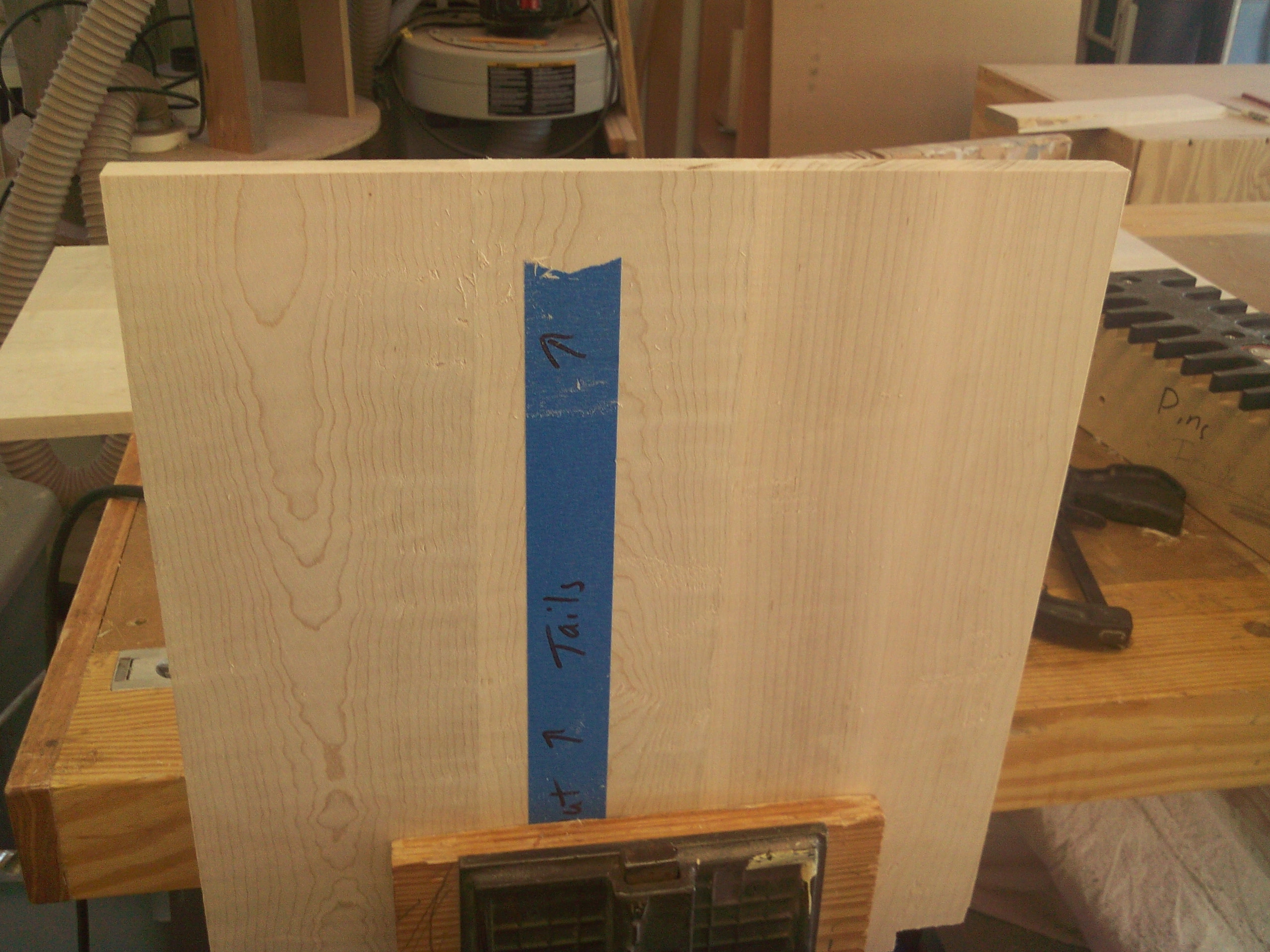
First, you have to make sure you have the piece clamped appropriately in a vise.  Determine which pieces will get the tails and which will get the pins.  In this case, you are looking at the outside of the tail board oriented face out  with the top facing left.

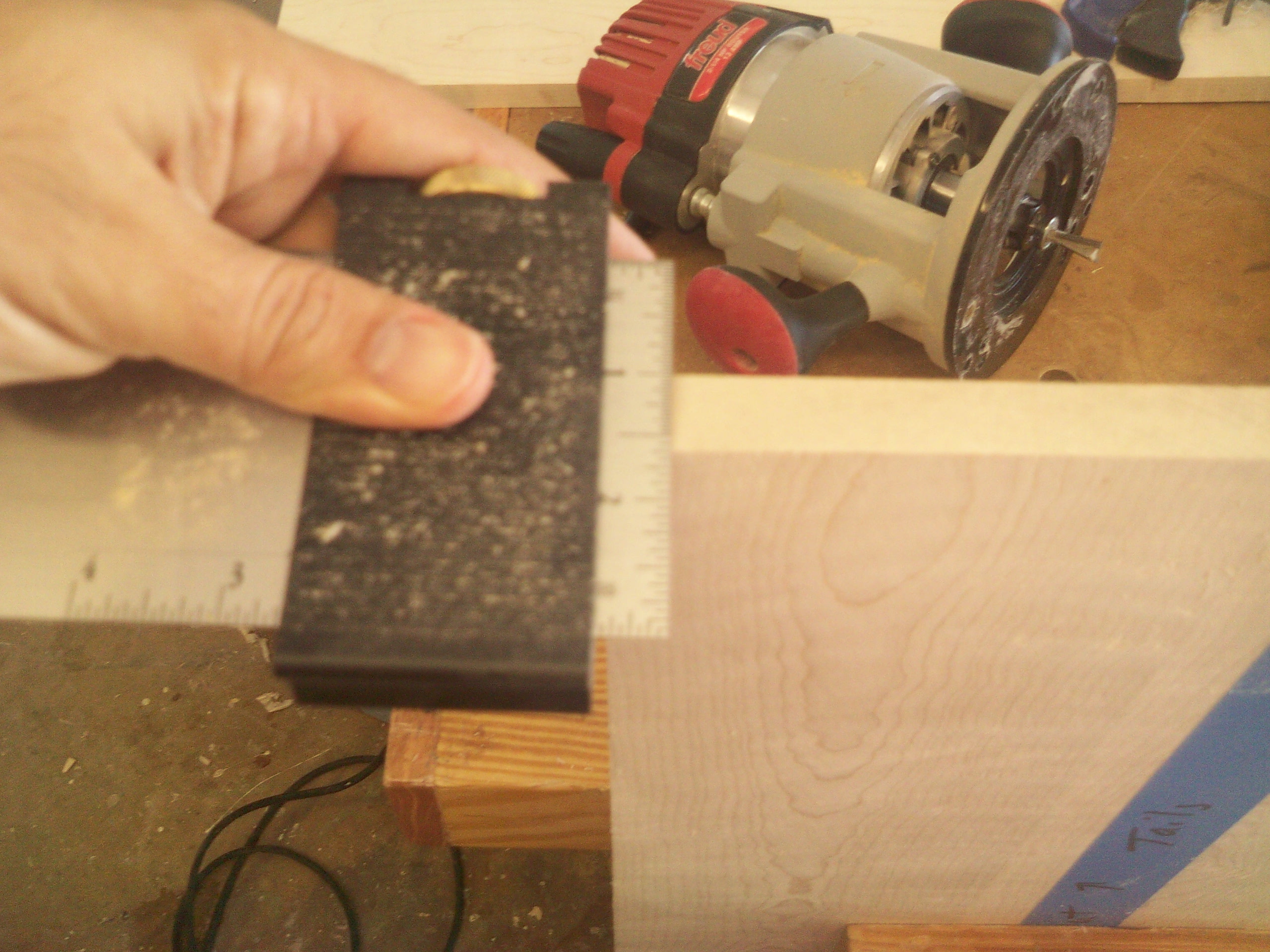
Here I am marking in 1/2″ from the edge of the board as a starting point for the guide.

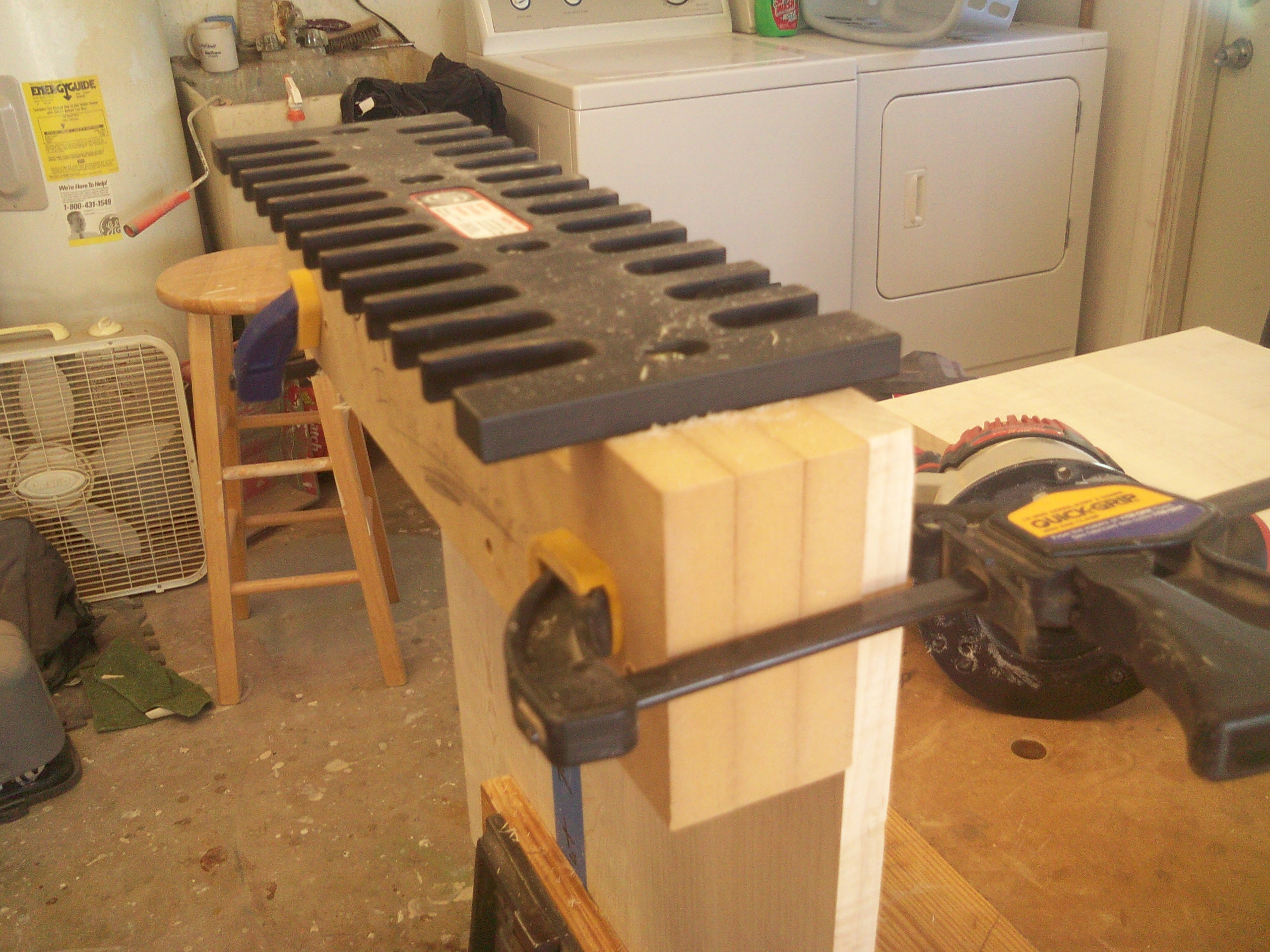
With the jig in place, I use the dovetail bit to cut in every slot, creating an entire run of pins.

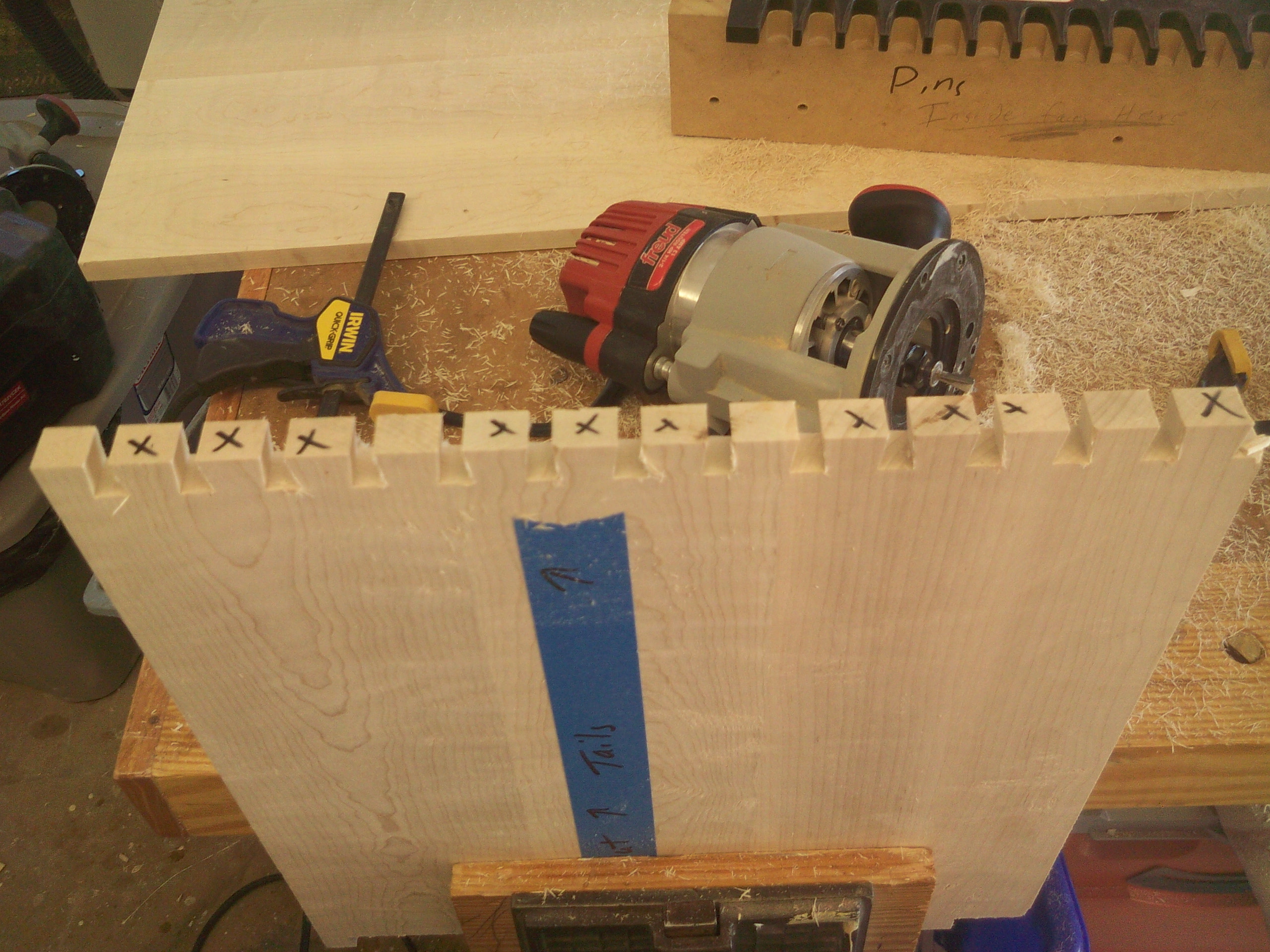
From there, I mark out the tails I want to remove. This is where I can set up my spacing and get a good idea of what the joint will look like.

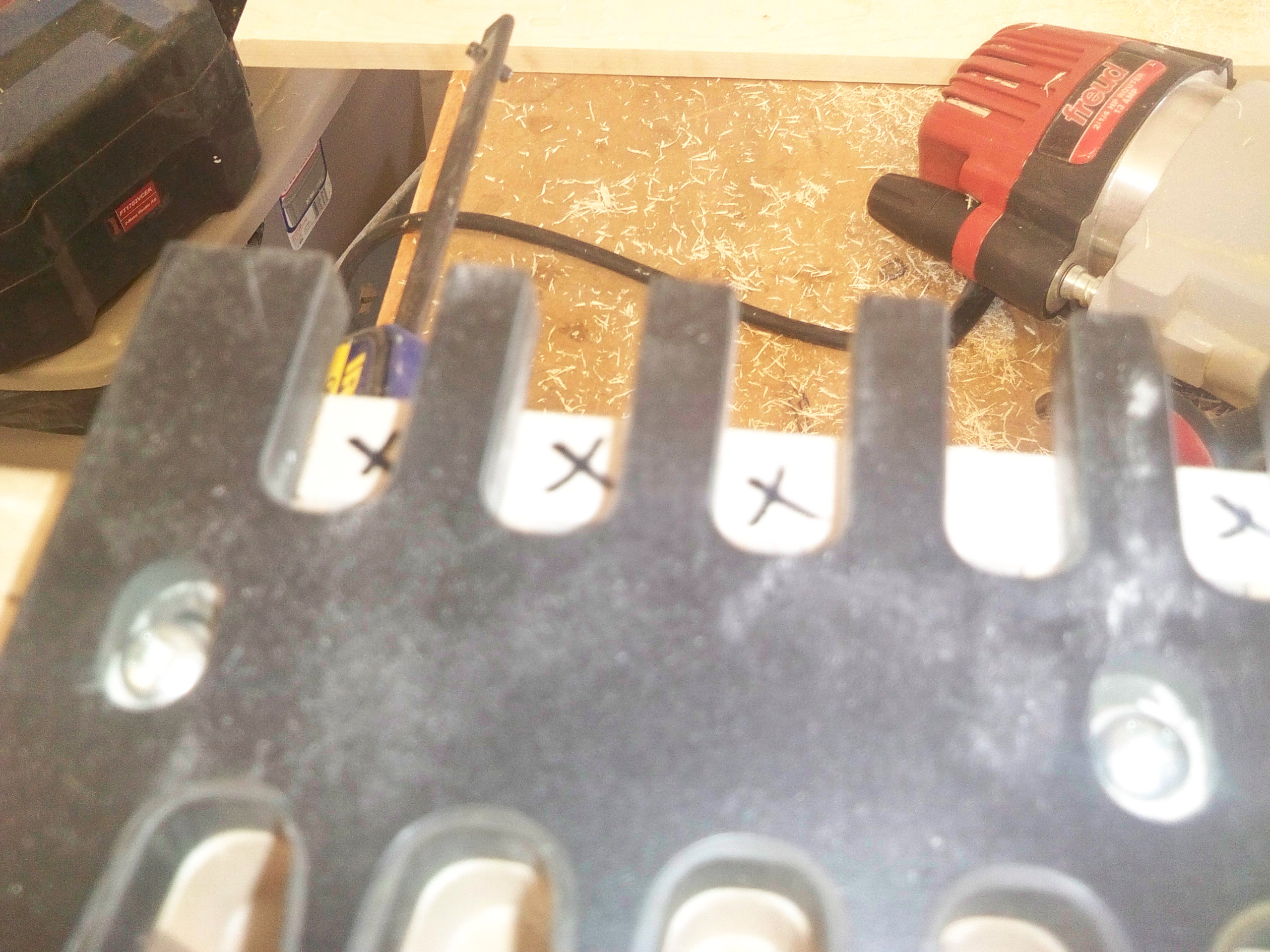
Next, I place the comb of the jig over the tails I want to remove and clamp it in place.  I then use the dovetail bit to remove the xed out tails to open the pattern.

The results are pretty sweet… nice, crisp tails ready to scribe onto the pin board.

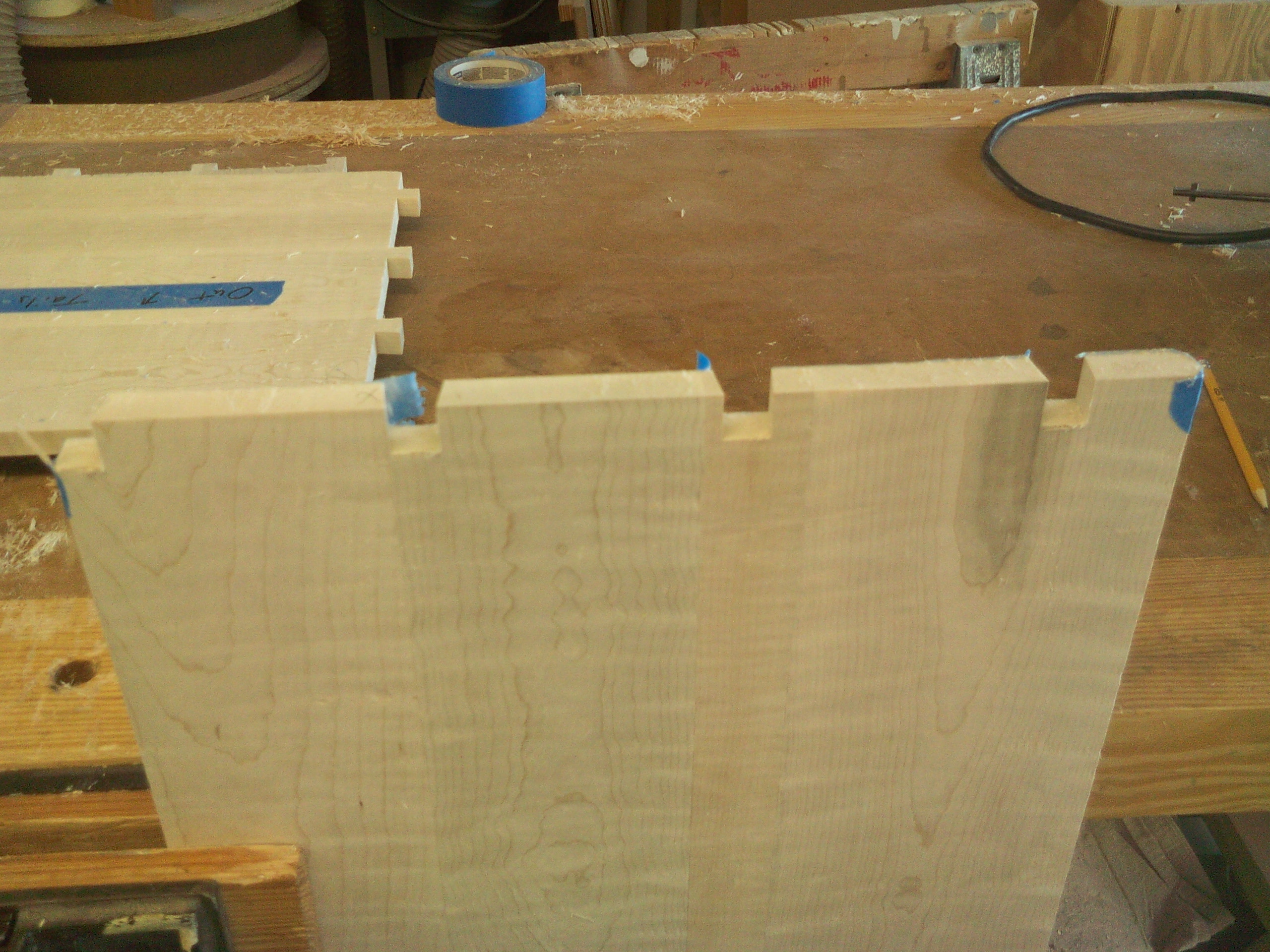
By carefully marking out which pins need to be routed, you can have them lined up accurately and just cut the pin sockets you need.  Here’s the pin board ready to go.

Now, what project is all of this stuff for?  Sorry… you’ll have to wait a little bit longer to see!

Quick Poll

There are some times I could spend every waking minute of every day in the shop. Then, there’s this little thing called life that gets in the way.

Family illnesses.  Work assignments. Raising kids.  Or, simply burnout…

So, this week, let us know how long your longest hiatus from woodworking was.  Now, of course, I am referring to time away from the shop AFTER you started woodworking… so, if you started woodworking at age 30, I don’t want to know about those first 30 years, OK?

[poll id=”118″]

Link of the week

How to carve a wooden spoon

Whether decorative or functional, wooden spoons are a great thing to have around the kitchen.

This site, run by the Spoon Lady, shows the step by step process from stock selection to choosing the right tools to create a beautiful piece of work.  It’s a great way to use those choice pieces of stock for functional tools or to present a gifts.

Monkey Business: panel glue ups

Hey, everyone, Iggy the Shop Monkey here, and I want to finally give you some useful information on this blog. Sure, it took two and a half years to get to this point, but, hey, there’s a first time for everything…

I have no idea what Tom is up to these days.  He’s having trouble gluing up panels and then he starts monkeying around with some red, sparkly new fangled instrument.  Is this guy committed to woodworking or isn’t he?  Shesh, no wonder his glue ups look like the stuff I throw at people who bother me…

OK, here’s how any primate worth his fur glues up a panel without any issues.  Tom, pay attention, please….

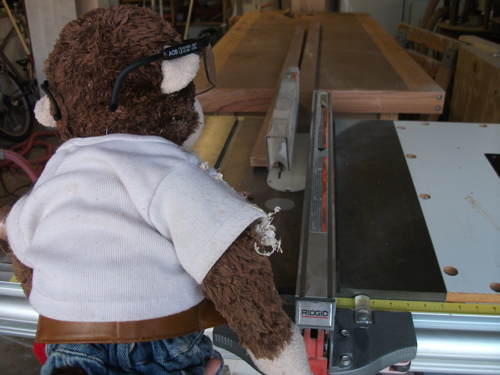
First thing first – the big guy did plane up some pieces of wood for another glue up.  He got one side pretty good, but the other one was terrible.  I mean, what was he thinking?  So, I got on his silly little table saw and ripped the other edge nice and straight.  At least he left the table saw tuned up.  Good human.

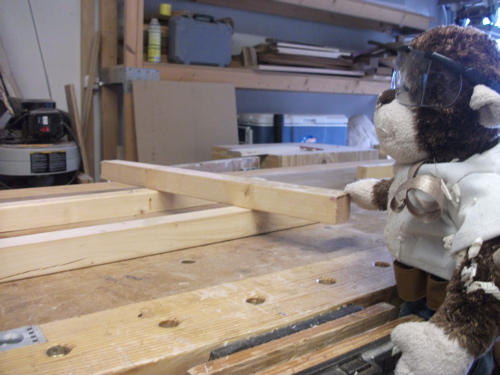
Next, I took out my secret weapon.  Clamping cauls. I had made these babies up a while ago and bring them out when I need a good glue up.  Why don’t I share them with Tom?  He’d probably think I was playing Jenga.

I clamped the cauls above and below the panel after I smeared glue on the edges.  Then, here’s the key point that Tom just keeps forgetting.  All of those fancy clamps he has – well he needs to use them.  He keeps them hanging on his special clamp rack just collecting dust and bragging about them… but, he really needs to put them to use and clamp the silly panel together while the glue dries.  With the clamps spread too far apart, the goof is enjoying his slip and grip clamping technique. My way… it’s gonna be a nice, flat panel when all is said and done…

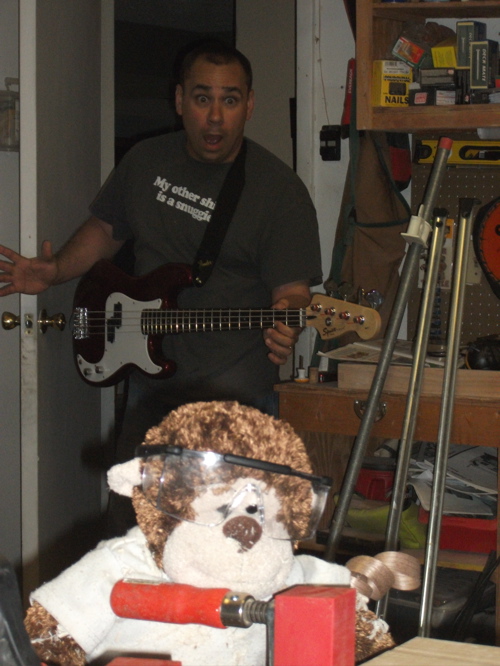
Oh, nice way to show up for the shop session, Tom.  Yes, tailless wonder, I glued the panels together for the special project you are building… now, be a good shop assistant and get me some bananas before you go and fool around with that bass guitar.

I can’t believe I share 99% of my DNA with this guy…

That’s groovy…

This past weekend, I took a new step forward in my hobbies.

What was it?  A new set of chisels?  A new table saw?  Instruction on a new technique?

Nah, but it is wood related.

I picked up a bass guitar.

Now, why would I take good money and spend it on something not woodworking related?  Call it a dream.  Call it a lark. Call it a mid-life crisis.  Whatever…

Let me tell you right now that I have never picked up an instrument before in my life.  Never.  Nada.  I dabbled with the thought of playing the trumpet back in grade school as part of the band, but never went for it.

I figured the bass over the guitar for a few reasons.  First, there are fewer strings.  That’s gotta be a good thing. The bass is considered a more ‘laid back’ instrument. I hear there are fewer bassists than guitarists, so if I ever want to play in a band, I might be a hotter commodity.  And, after hearing the digitally-remastered Beatles albums released last year, the bass grooves laid down by Paul McCartney really got me jamming.

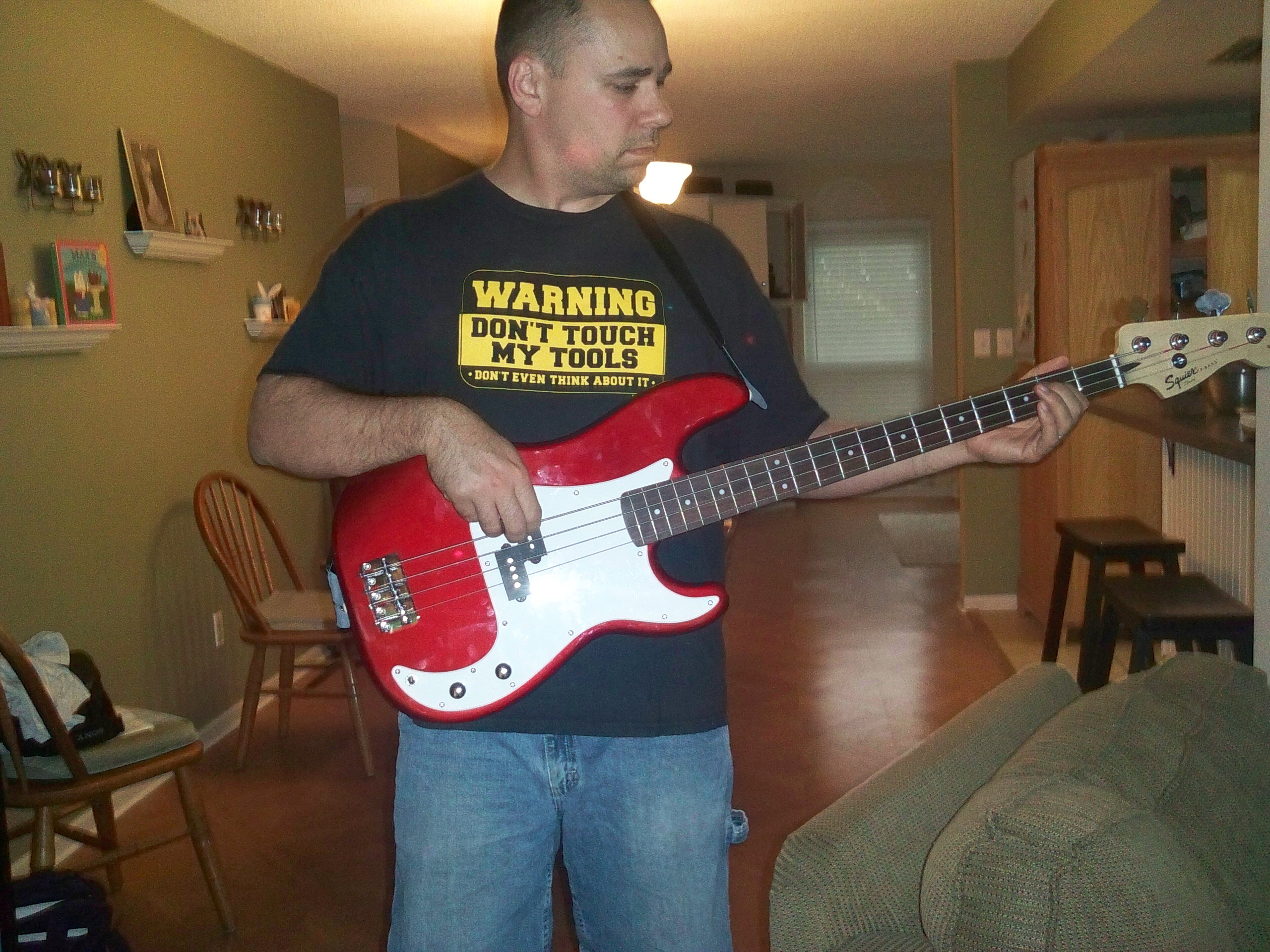
So, this past Friday night, I got the money, I got the nerve and I took my youngest son with me to pick this up – a Fender Affinity Series Squier Precision bass. The body is made out of some kind of wood painted a deep, metallic red with a white plastic pick guard. The neck is made out of some light wood with a darker wood fret board and a strip of darker wood down the back of the neck. This provides a guide for my thumb to rest on while I play the notes.

The whole thing came as a kit.  Guitar, amplifier, tuner, cables.. the works. I unpacked the stuff from the box, assembled it per the instructions and proceeded to make nothing but noise.

Yes, that’s what most people who pick up any instrument do the first time they touch it.  After an hour or so, my wife told me to kill the amp and give it a rest. Man, that was rough.  I put the bass down in disgust.  I was NEVER going to learn how to do this.

That’s when it hit me. Eleven years ago, I didn’t know the first thing about woodworking.  Nada. Zip. Zilch. People told me I was nuts.  Too expensive.  I would never learn how to do it.  I would save time, money and frustration by just buying the furniture and calling it quits.

I’m so glad I didn’t.  Today, I can do it.  Practice, determination and time in the shop have made me a least a little more comfortable when it comes to woodworking.  That’s what I want to do with the bass… get better.

Now, for all you folks gathering at my garage door looking for the big woodworking tool sell-off or donation, you are outta luck.  I’m not planning on giving up my woodworking.  However, on those late nights when it’s just too hot to work in the shop, I’ll be putting some time in on the bass.

At least until my wife tells me to turn the volume down on the amp.

P.S. – Anyone know a good technique for learning the bass?  🙂

Quick Poll

There are few things that every woodworker has in common.  A love of wood.  A need to build…

And – given enough time – we all shuffle off this mortal coil.

Of course, while the woodworker may pass on, their tools continue to live on.  This week, have you ever purchased a tool from a deceased woodworker through classified ads, garage sales or more formal estate sales, or is the thought of using someone else’s tools just a little too creepy for you?

[poll id=”117″]

part of the Wood Talk Online community