Quick Poll

Using veneer in a project is a time-honored way to bring some interesting and unique looks to a project.

It also involves a little bit of know-how and some specialized tools to make it turn out right.

This week, let us know if you have ever used veneer in a project…

[poll id=”122″]

Link of the week

ProjectGuitar.com

Since I picked up the bass, I have been looking for plans on how to build my own guitar..

Ya know, just in case I want to do it myself.

ProjectGuitar.com is a great site offering links to resources necessary to build your own guitar, plans and a project gallery that will get the creative juices flowing.  A great link for the budding luthier.

Kehoe-ly smokes!

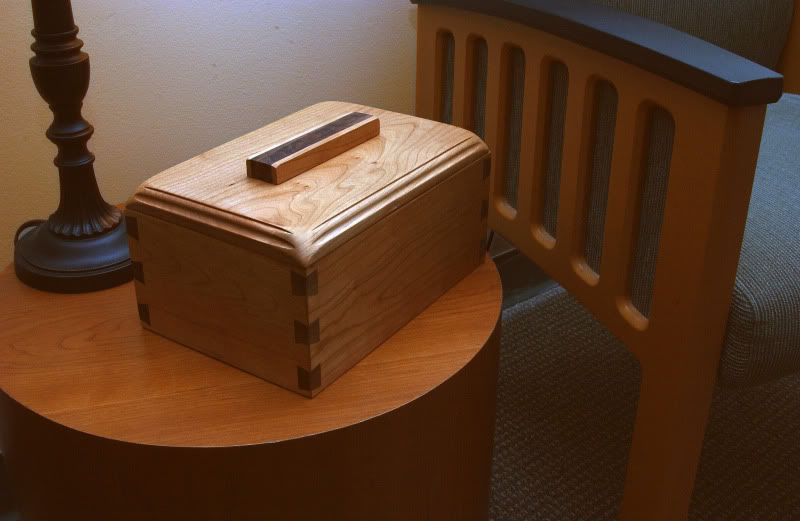
A few years ago, I wrote a review of the Kehoe jig on my website. It was an interesting and very decorative way of making ‘dovetails’ (actually dovetail splines) for boxes, chests and other 90 degree corners. Since then, I have used it on more than a few projects – each one coming out looking good with very tight joinery.

In fact, on more than one occasion, I thought I was doing something wrong because the process went so smoothly.
Here I was thinking that I would use that jig time and time again for years to come.

But, boy, was I wrong. That’s because the folks at Kehoe have recently made some significant improvements to the jig, and are offering more options.

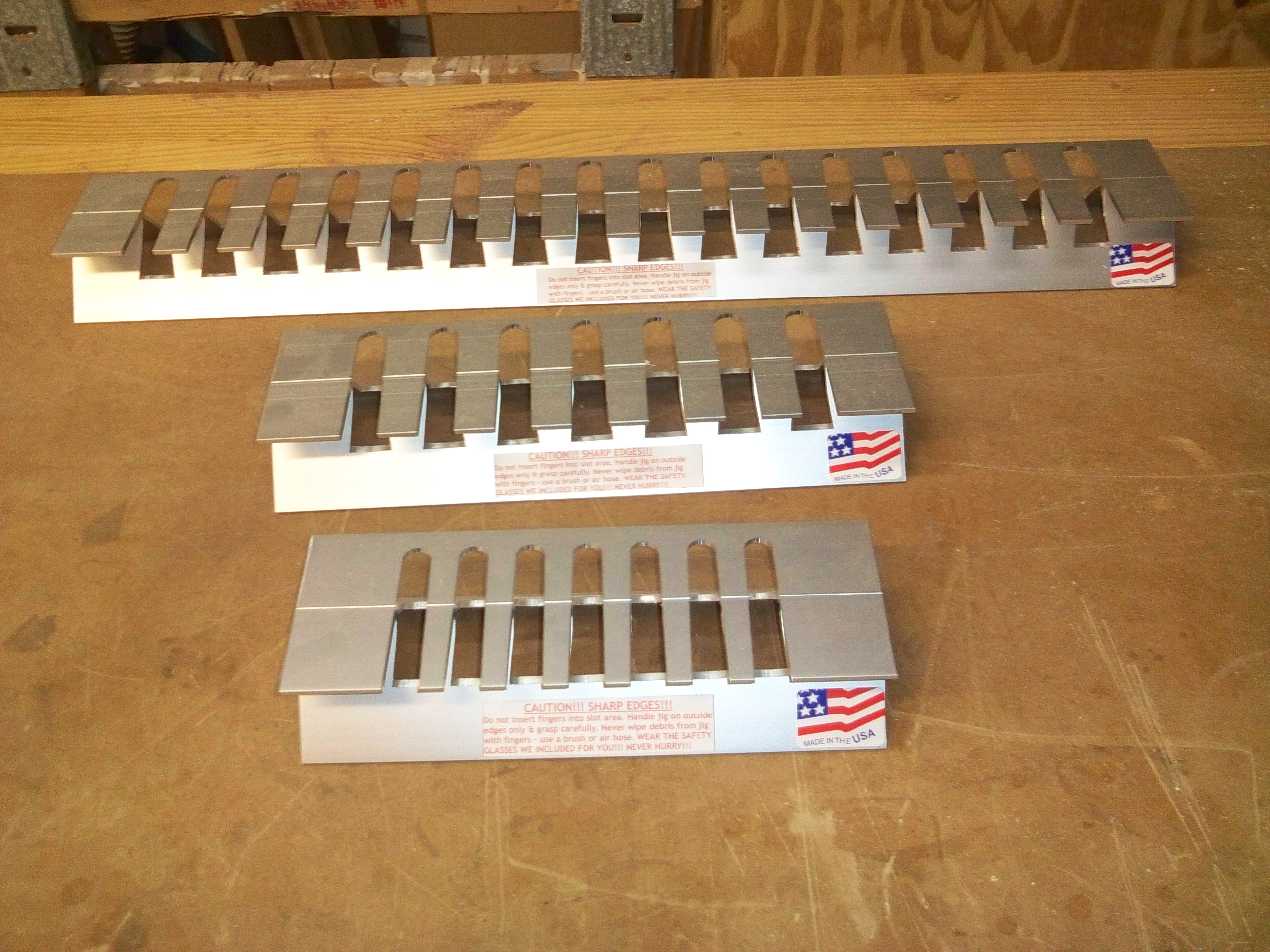
I got a call from Kevin Jaynes who said that the company was going from the old vinyl extrusion for their jig to all aluminum models. The new material – 1/8″ thick aluminum – allows a significant improvement in accuracy – and they just look so much better.

A great deal of care was also given to the selection of materials and manufacturing process during the redesign process. “Everything about these jigs is American – from the ore to milling. We went out of our way to make sure that everything was from the States.”
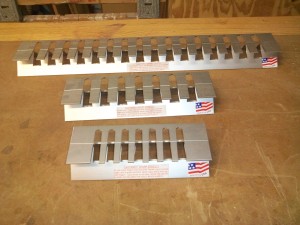
Instead of the former one-size fits all approach, Kehoe now offers three models to choose from. The smallest of them is the K-8, which works best for humidors, memory boxes and other small-scale projects. “This is the only jig that doesn’t offer the ‘standard’ size slots for routing. This one works well with almost any size router bit and a 1/2” outside diameter router bushing. This is best with 1/4” collet dovetail bits.” Kehoe also sells a smaller bit with a 1/2″ bearing that rides on the smaller K-8 jig.

The K-12 is a direct replacement for the old vinyl model. The slots fit the bits that the company provides in their kits; two 1/2” dovetail bits. One comes with a 1/2” bearing and one with a 5/8” bearing. “The 5/8″ bearing bit is the same one we sold with the original vinyl jig. So, if you have a setup for the older jig, you are good to go with the new model.”

The big surprise is the K-24 jig. It has the same groove size as the K-12, however, it is twice as long and is ideal for larger chests and other pieces of large-scale furniture. “While it’s easy to use the K-12 for larger projects, the K-24 gives you the opportunity to cut joinery without having to move the jig. It’s a great way to save time during the building process.”
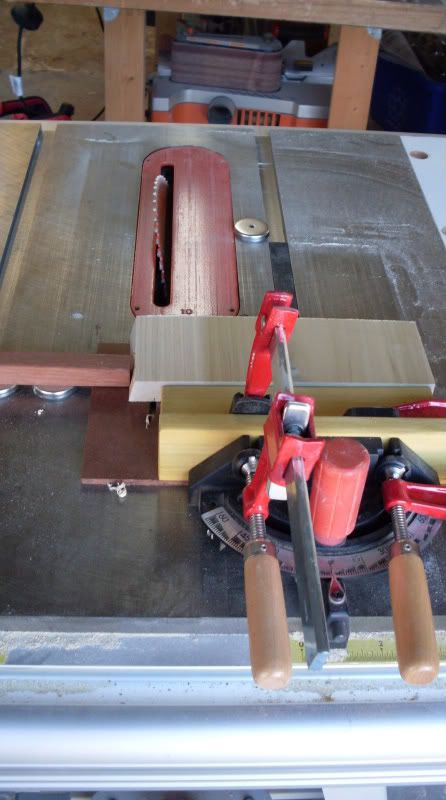
While the jigs are new, the other components of the jig package, including the spline maker, haven’t changed and are as still as simple as ever to use. Kevin also wants us to know he sells quite a few miter saw spline makers especially to European customers. A surprising number of woodworkers do not have a table saw – he says around 7% of his sales are to customers who do not have one. If this describes your set up, you can still use this jig by requesting the miter saw spline-maker free of charge.

While the new jigs do allow a lot of creativity in your projects, the same level of imagination wasn’t used in naming the product. “Sure, all of the names of the new models may sound like former Soviet Navy submarines, but the results are something to behold!”

Tom’s Workbench Readers: Kehoe is offering a special deal on their new jigs for you.  Click here for the details. Funny, I always thought the first special named after me would be a pizza with the works on it…

Great Jigs: The Vertical Router Push Shoe

There are some really awesome router bits you can use on a router table.  Panel raising bits.  Cope and stick bits.  Lock miter bits.

While these are pretty awesome, some require a risky kind of maneuver in order to use them correctly. Those are the bits that involve pushing the workpiece on edge across the bit.  Vertical panel raisers and lock miter bits come to mind as two types requiring this move.

While some woodworkers may feel comfortable pushing the wood past the bit in this manner, it has always scared me senseless.  I have to coordinate holding the board down to the table and tight to the fence without having it wobble, which would ruin the cut.  Then, how do you prevent massive tear out?

After trying to push a board past a bit like this, I had to make things easier on myself.  I spoke briefly with Jim Heavey at Wood Magazine and, with a little inspiration, came up with this design.

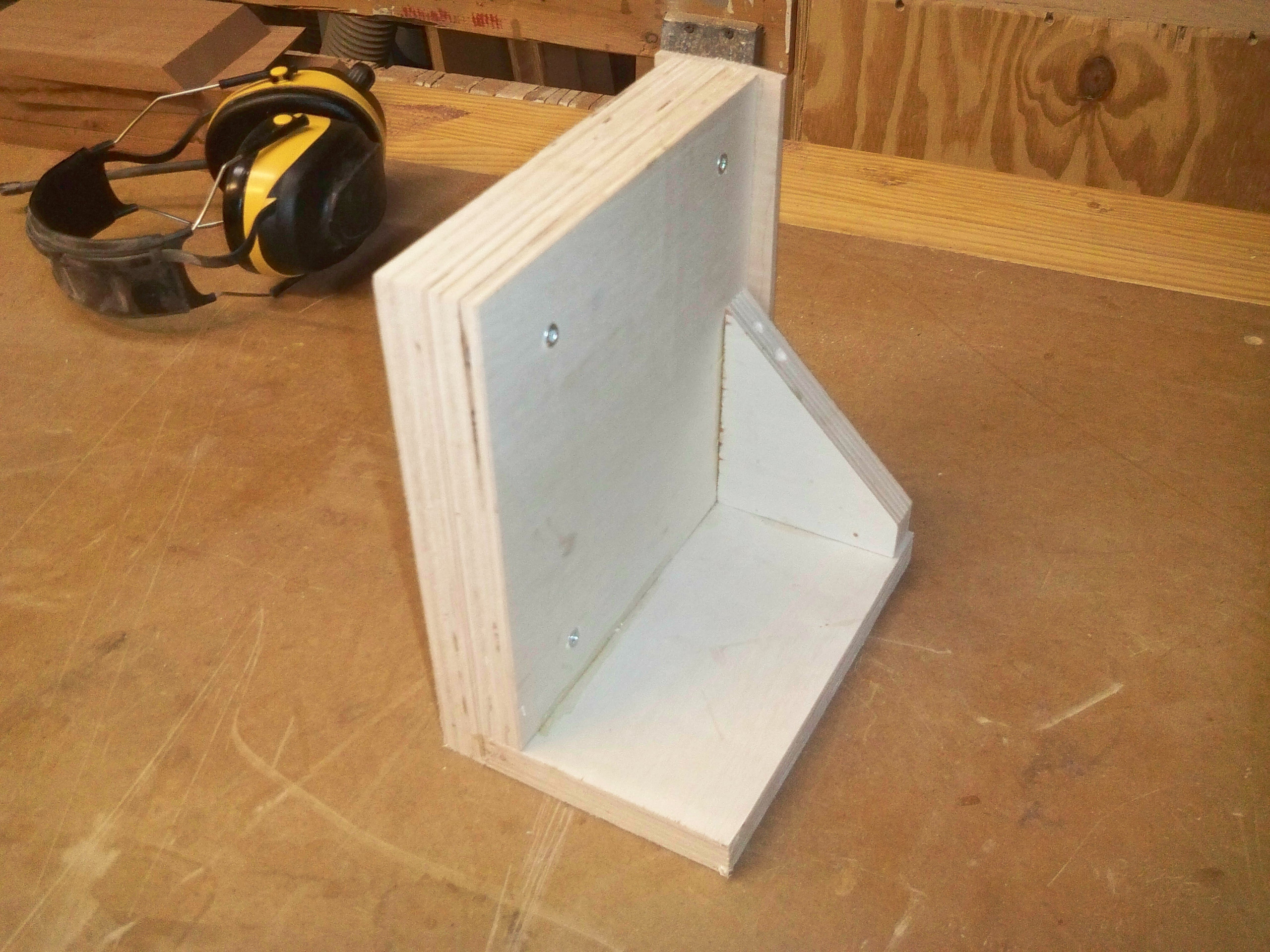
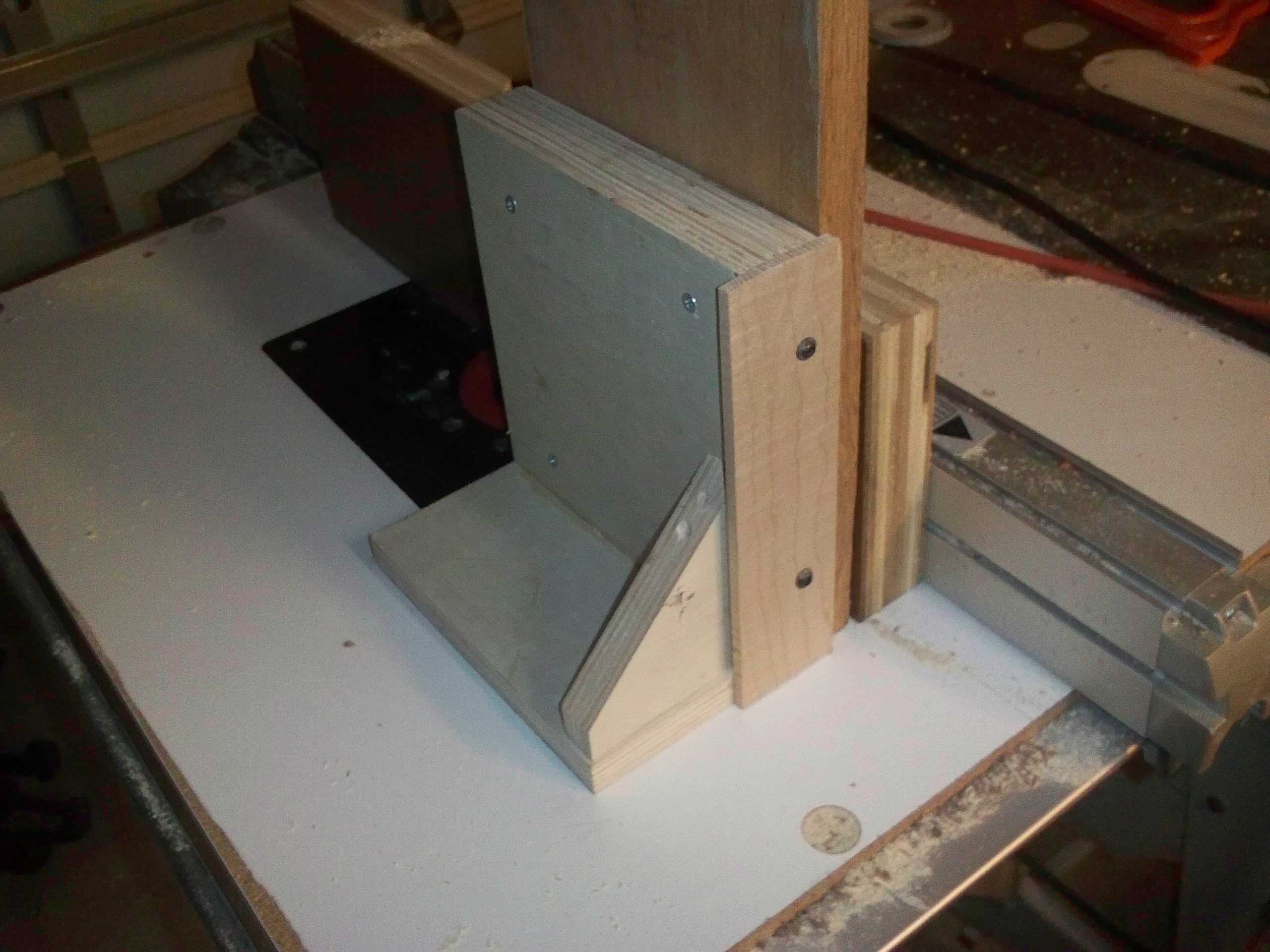
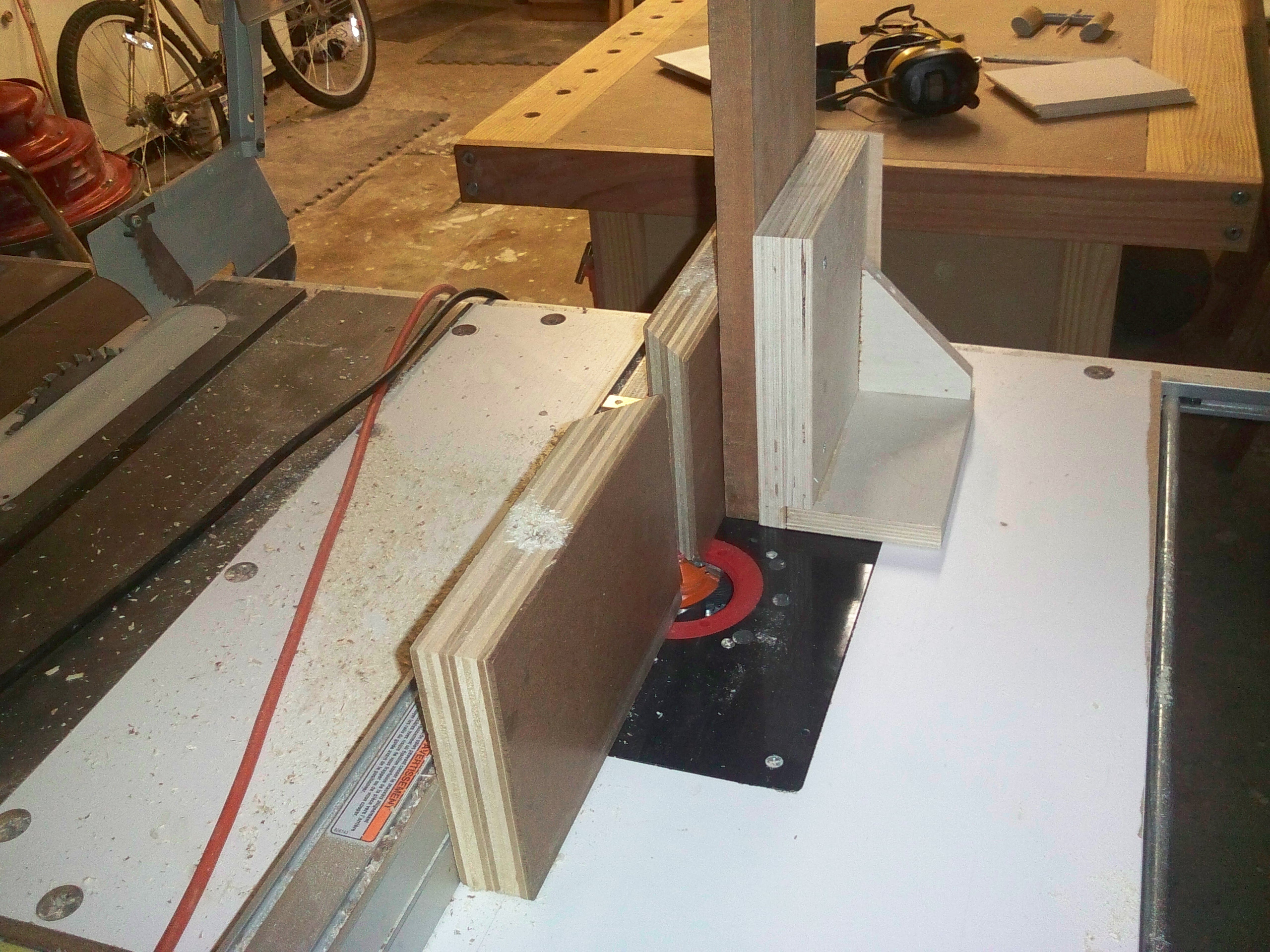
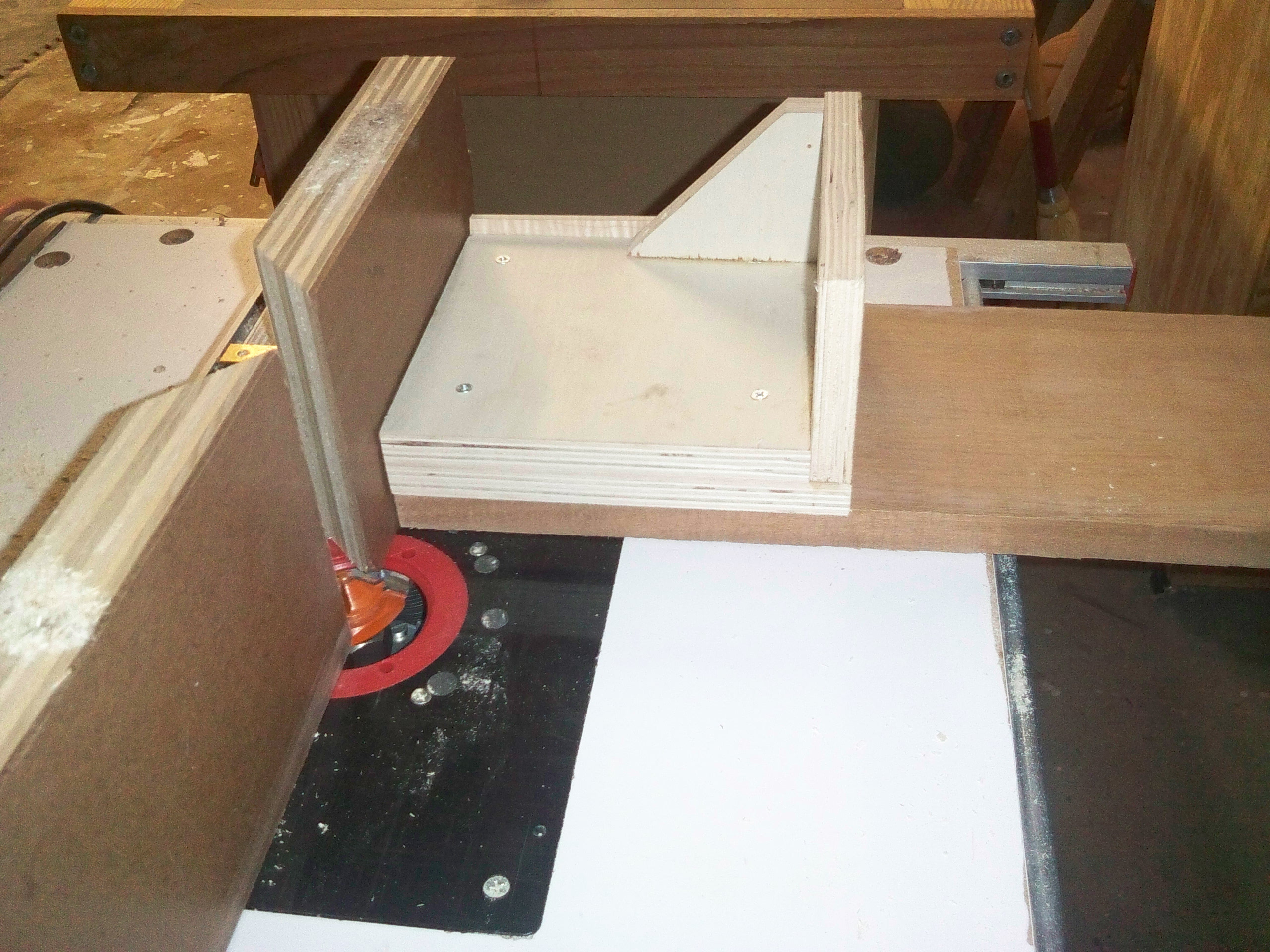
VERY easy to build.  The upright is two pieces of 3/4″ scrap plywood.  One is 8″ tall by 8″ wide, the other one is 8 3/4″ tall by 8″ wide.  When glued and screwed together, I created a rabbet for a piece of 8″ long by 5″ wide that rides flat along the table.  I put a gusset to hold the assembly at 90 degrees and to serve as a handle.

The trailing edge is a piece of maple that was planed down to 1/4″ for another project.  That was screwed to the back edge of the assembly with a 1/4″ overhang to serve as a push cleat. Don’t use glue here… just in case the cleat gets chewed up and needs to be replaced.

I used it by placing my board against the router fence and sliding the push shoe until is captured the board against the fence.  Now, instead of concentrating on three things at once, all I had to do was push the piece through the router bit.  No panic, no fear and because the cleat was supporting the back edge of the piece… no tear out.  Very easy stuff.

By ensuring the cleat was as tall as the top of the push shoe, I could also use it as a horizontal push shoe for the mating piece as well.

Believe me.. anything that makes your work safer and more accurate is something worth looking into.  And, when it is that easy to build… all the better!

Quick poll

Last week’s poll about miter slots grabbed quite a bit of attention.  People have a lot of opinions about miter slots on their router tables!

This week’s poll is a follow up to last week.  A lot of people weighed in on their miter slots AND how frequently they use them.

So, this week, if you have a router table with a miter slot, how frequently do you use it?

[poll id=”121″]

Link of the week

Will’s Medieval Woodworking

G’Day, M’Lords and Ladies.  Ye olde carpenters of days long ago built of wood great creations of craft and skille late unseen by mere mortals.

Master William McNaughton, hailing of the Barony of Thor’s Mountain in the Kingdom of Meredes, creates ye olde woodworke of character luxurious, befitting the countenance of a king.  See ye the tooles and methodes by which craftsmen  of the days of yore plied their vocations. A must reade for ye who long for a more rustick yet refined style of woodworke.

Tools I use: My striking tools

OK, folks, you may want to hit play on this video while you read the article…

When people think about woodworking, the image of driving nails typically comes to mind.  While driving nails does happen in woodworking shops, there are many more tasks for which a hammer or a hammer like tool is appropriate.

So, for your viewing pleasure, here are the tools I use for hammering-type tasks.

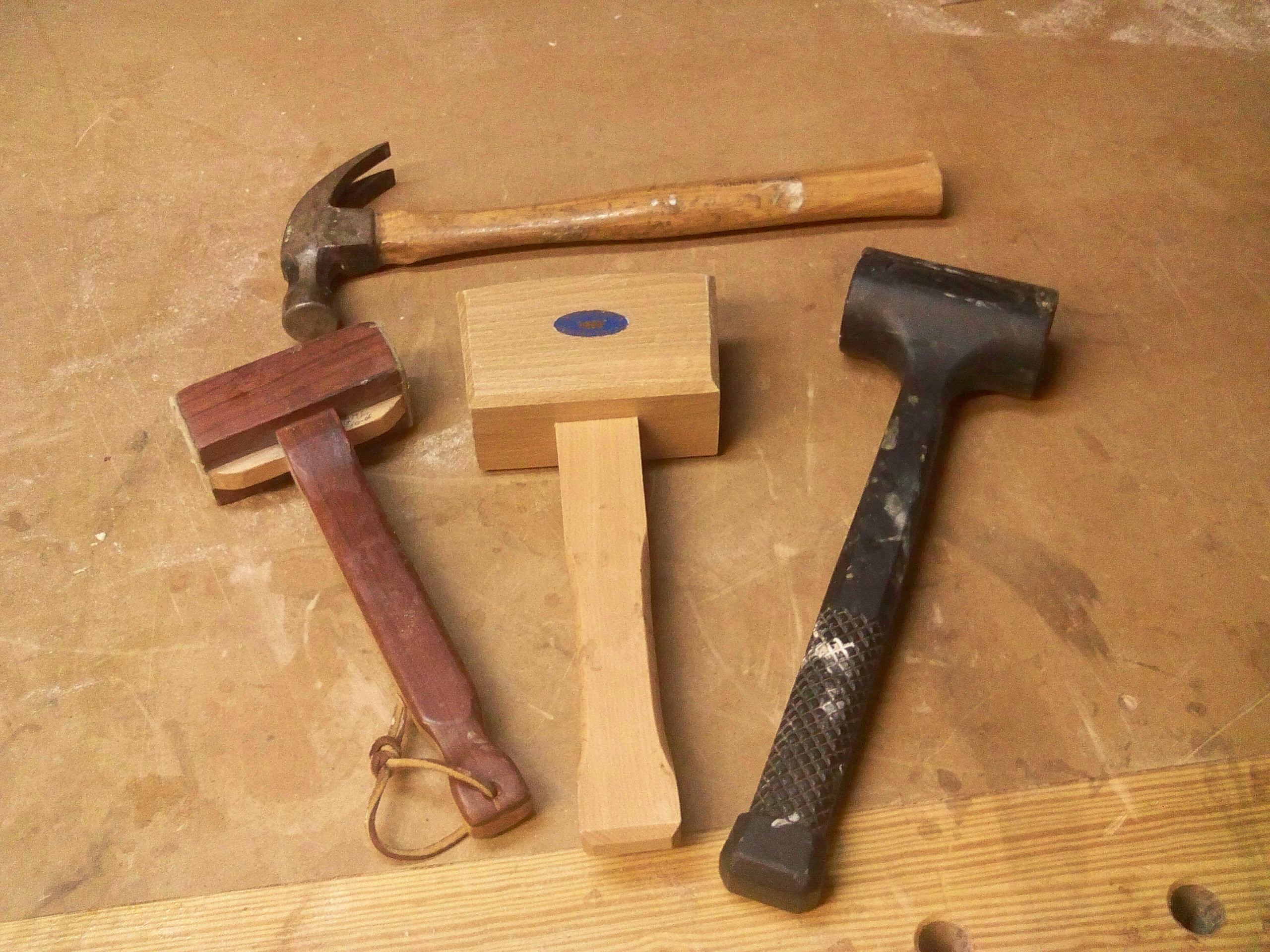
On the top is my 16 ounce claw hammer.  I think it was the first tool I had ever purchased back in 1987 to drive nails into the wall to hang some pictures in my apartment.  It’s not a bad little hammer, and I have yet really need to replace it.

I bought the  first mallet on the bottom left from a fellow woodworker on the Woodworker’s Website Association.  It’s a beautiful specimen, built of an exotic wood (I can’t remember which) and maple.  The faces are glued on leather, which soften the impact on pieces I am trying to assemble.  The head is also filled with bird shot, making it more of a dead blow mallet.  Great for assembly of pieces.  I keep this mallet on hand at all times.  Very useful.

The one in the middle is a Crown carpenter’s mallet.  A heavy chunk of beech, this is a great mallet for driving chisels and adjusting irons in my wooden planes.  I also love the large striking face… it’s hard to miss what you are swinging at.  It was very inexpensive and if anything happened to it, I would definitely buy a new one.

At the end  is a cheap dead-blow mallet.  I used to use this mallet for just about everything, but today I use it for snugging down bench hold fasts, driving wedges and other odd jobs.  It’s also great for sealing cans of finish after I pour out what I need to finish a project.

Sure, it’s not a large collection.  However, now that I have a few ‘hammers’, I guess I should start hammering in the mornin’ and in the evenin’….

part of the Wood Talk Online community