My grandfather’s chair

What can I say about my maternal grandfather John Schwab that won’t make me tear up?  I loved the guy. I still do. He was one of the first heroes in my life.

He was a very unassuming guy who lived in in Fairview, New Jersey, just across the Hudson River from midtown Manhattan.  He ran a dairy. The big treat for us was to sleep over at our grandparent’s house, wake up early and go to the dairy to ‘work’ with him.  My older brother would get up early and ride in with him, doing some deliveries.  My grandmother would drive my younger brother and me in later, once the sun was up and we had a chance to eat breakfast. My grandfather would do most of the work, selling milk and cream to people who walked into the dairy. We would either help him taste chocolate milk or ice cream.

Bottles from his dairy

The other great memory I had of the dairy was watching him do his books. He would sit at a big desk on this stout wooden oak chair and count the money, occasionally stopping to give each of us a piece of Bazooka gum and read us the comics that came along with the pieces. He had a huge pile of old silver coins under his desk calendar – he was keeping them to give to each of us in the future.

My grandfather passed away in 1986 – the start of my senior year of high school. His loss was very difficult for me, as we were both very close. As my senior year went on and my grandmother was going through his property, I was given three very special things of his.  The first was his watch.  The only one he ever wore. The one I learned to tell time by looking at.  The second was one of his Schwab’s Dairy delivery jackets.  An Ike-style jacket with the dairy’s name embroidered on the back. The third was his oak desk chair from the dairy.

I very ham-handedly attempted to refinish the chair back in the summer of 1987 before I went off to college, and brought it with me.  I did my homework sitting on it, and it moved with me from Maryland to Florida. It was the chair we used at our computer desk for years, until one of the original rubber wheels delaminated on it, preventing it from rolling.  I put the chair out in the garage and vowed that one day I was going to repair it.  But, it sat out there, collecting dust for more than two years.

This weekend, I finally was motivated enough to head to the local home improvement store to buy a set of new wheels.  While I had the chair up on my bench, I started to notice some things about the old chair that I had never truly seen before…
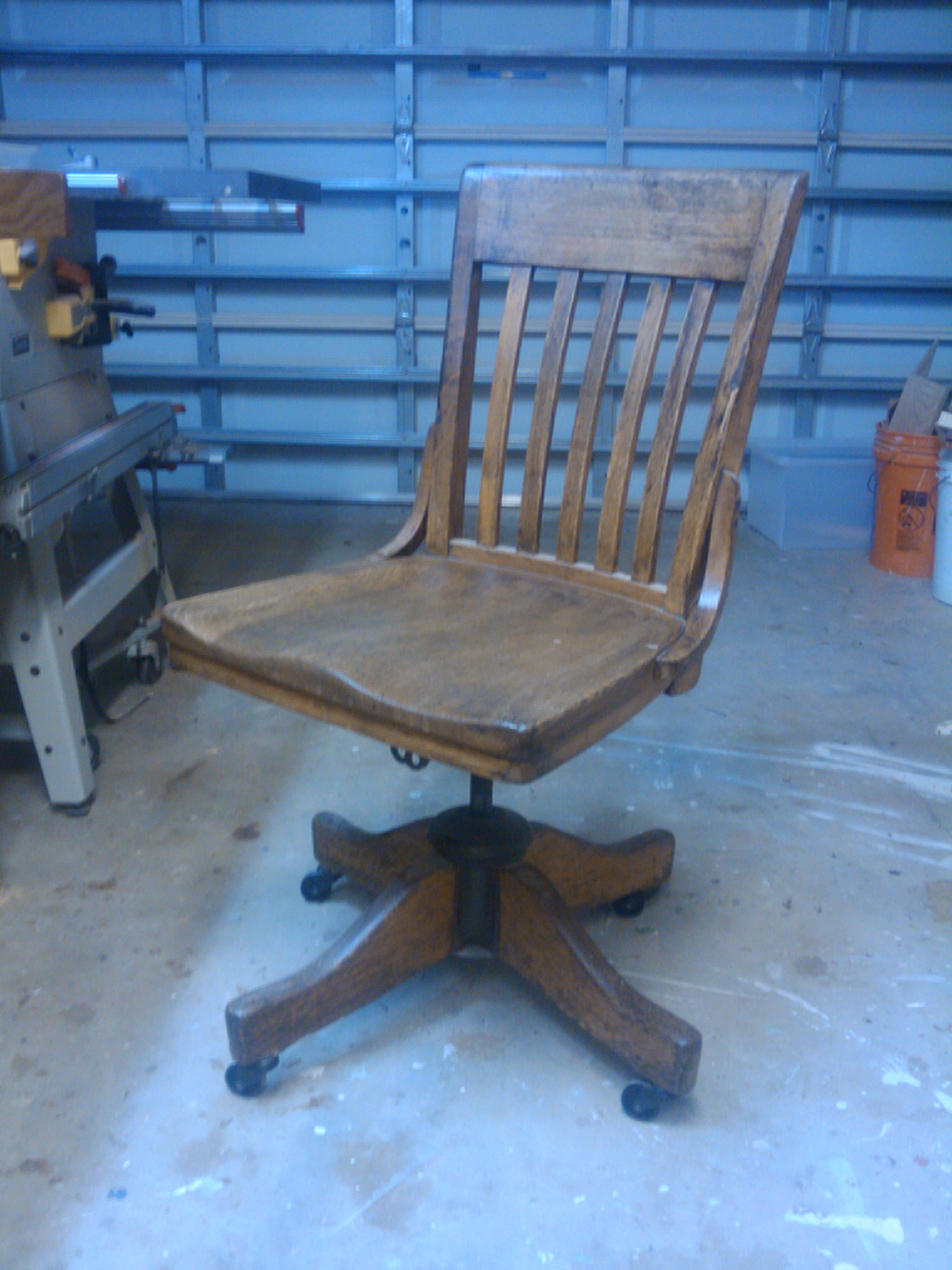
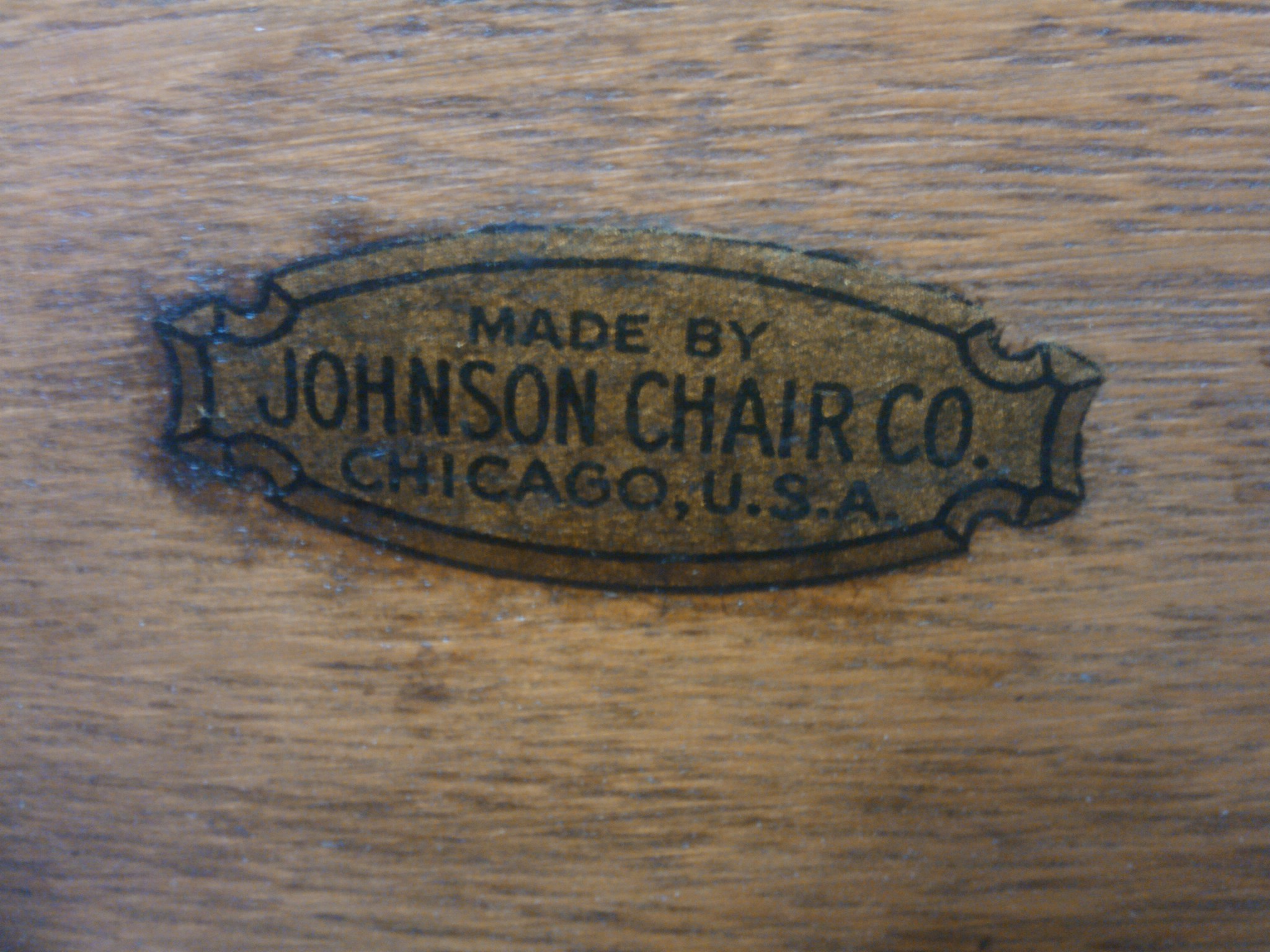
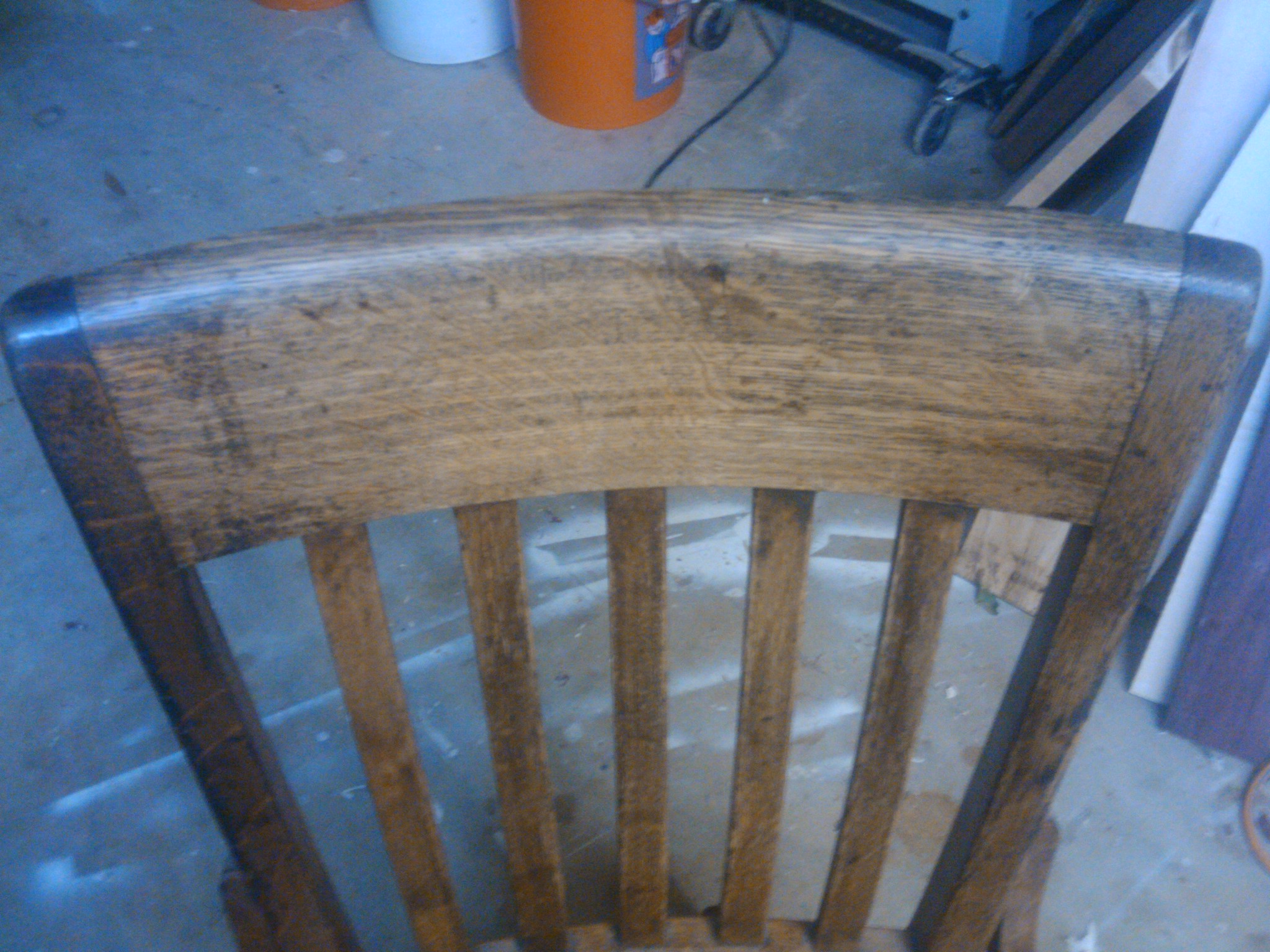
It’s a very austere looking desk chair that has seen a tremendous amount of service. The piece is plain, yet graceful in its simplicity. On the back rail is a maker’s mark – the Johnson Chair Company of Chicago. From what I have been able to learn, the Johnson Chair Company built Mission-style chairs from the 1890s through the 1930s.
The chair has a beautifully sculpted seat that’s very comfortable to sit in. It also has two large side rails with five gently bent splat pieces that rise from the seat to the curved crest rail. There are two bent pieces that help to anchor the side rails to the seat. One of them has a split on it and lost its glued plug.
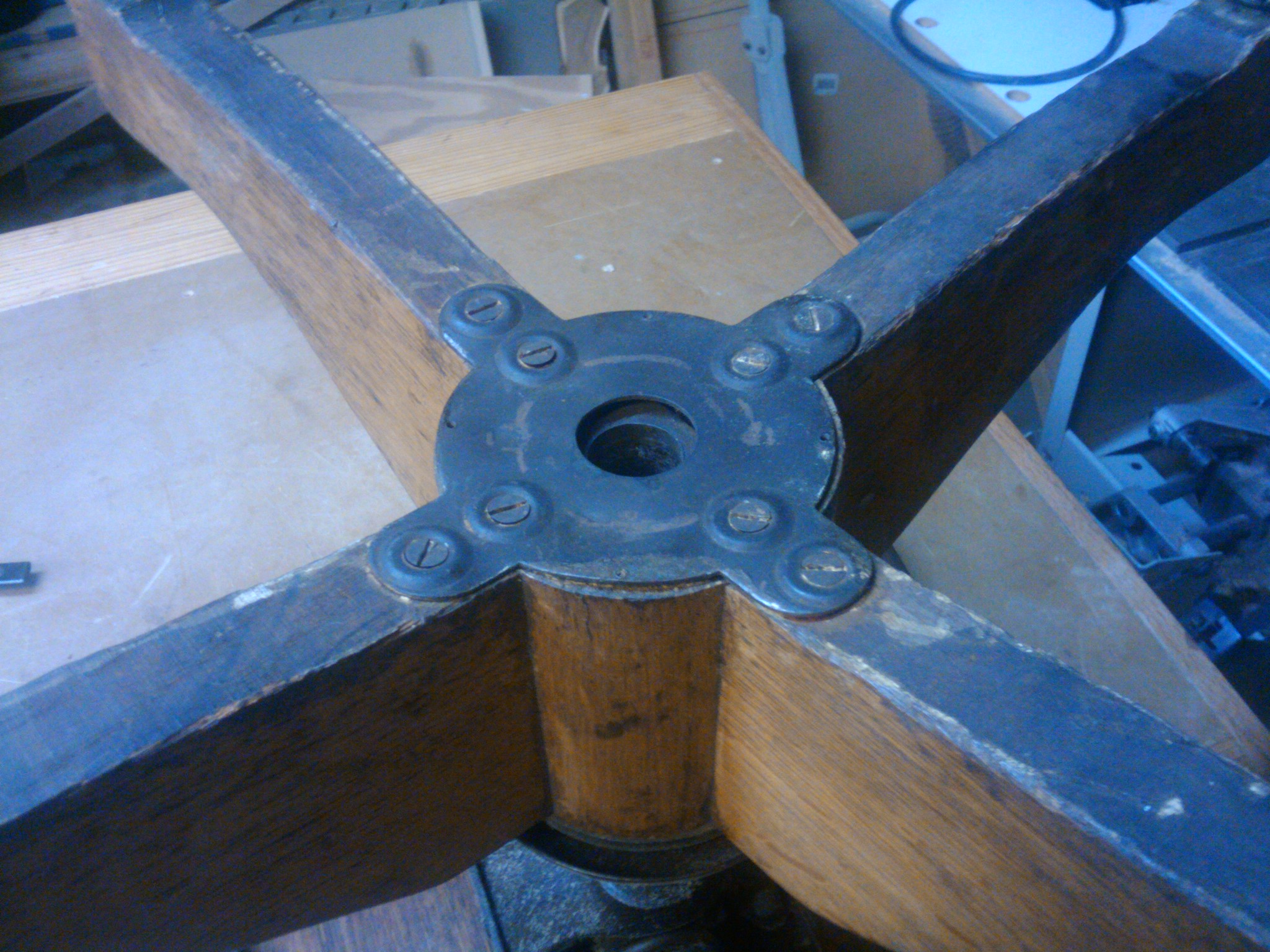
The undercarriage of the chair is very interesting.  When I had the piece flipped up on my bench, I could see how the legs were attached to the central column of the chair. The four legs radiate out from a cast iron base, which is threaded through to allow the height adjusting rod to screw up or down, allowing he user to set the height of the chair exactly where they want.  The action is smooth, and requires a little work to operate. But, once it’s set, it holds the adjustment very well.  The legs themselves are joined through a massive mending plate on the bottom of the chair, with beefy screws holding to the iron inner workings and each leg. The space between each of the legs is filled with a thin piece of bent oak, which slips into a pair of kerfs cut into the base of the legs. One of these is missing on the chair, but the three others are in very good shape.
The seat adjustment control determines how easily you can rock the seat backward. It consists of a hefty iron handle that screws into the workings of the adjustment device.  Screw the handle in, and a coiled spring in the back gets stretched, making it more difficult to rock backward on the chair. I had never noticed how massive the control was until I had it up on the bench.

Once I fixed the broken wheel on the caster, I wiped all of the cast iron pieced down to clean them, and then wiped them again with a silicone lubricant to allow easy movement of the pieces. I also took the opportunity to carefully clean all of the dust off the piece and vacuumed the thing spotless.  After I wheeled it into the house, I made a decision. Something this important to me doesn’t belong out in the shop or at the home office… I am going to bring it to my desk at work and replace my 12 year old chair that’s getting more uncomfortable by the day.

And, when I’m sitting on the same chair my grandfather worked at, I’ll get inspiration to work harder to be more like him….

 

Quick Poll

Unless you have been living under a rock for the past few days, you may have heard that Marc (The Wood Whisperer) and Nicole (The Lady of Leet) Spagnuolo are expecting their first child sometime in late December. Congratulations, Marc and Nicole!  That’s a big step  in your lives.

This got me thinking – how much did the arrival of children in your home affect your shop time?  Did the big event have a major or just a minor impact on your shop time?  Do you even have kids, or did you start woodworking well after they were grown?


Link of the week

eGuitarPlans

With Les Paul’s 92nd birthday yesterday, and Google’s tribute to this guitar pioneer, it’s only fitting that I link to a site that gives you the know how to build your own electric guitar.

This site is pretty darned amazing.  Not only are there plans for sale for some pretty sweet looking guitars (They cost only $6 each… quite the bargain for detailed plans), there are also links where you can buy pickups, view podcasts on the building process and even buy completed guitars if you would rather just rock out.

I think Les would be proud.

Stuff I’ve built: The microwave shelves

I often wonder why two things that go together often don’t match up.

A few years ago, a hot dog manufacturer proudly announced that their dogs now came in a bun-length size. Color me curious, but as far as I could tell during my 42 years of life, hot dog buns have pretty much been a standard length.  I’m just wondering why dog manufacturers took so long to adopt this new size?  That will make you go ‘hmmm’ at your next cookout for sure.

Another place I have seen this involves the width of a range hood vs. that of an over-the-range microwave.  When my wife and I moved  into our house, we had a pretty standard issue contractor grade range hood in a lovely shade of avocado above our range.  It was disgusting, and we needed to have it ‘taken care of’.  So, I took a can of high-temperature black paint and – heeding the advice of Mick Jagger – I painted it black.

That was great until we noticed that our microwave oven was taking up space in our efficient kitchen. Why not combine the best of both worlds – get an over the range microwave that also functioned as a range hood?  So, about five years ago, I vowed that we would do that.

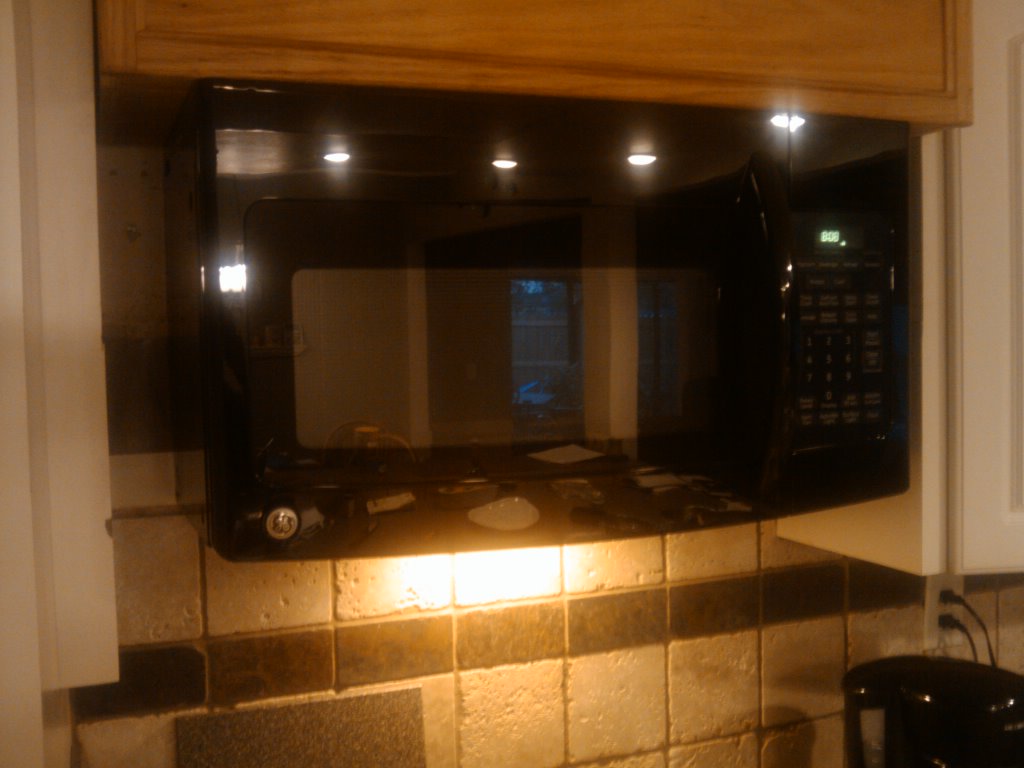
Well, imagine my surprise when I discovered that the cabinet above our range was too low to install a microwave into.  Bummer.  So, my friend down the street and I got ambitious, cut the cabinet free and created a huge void above the range top.  I had to build a simple ‘filler’ cabinet above the range to drop the unit lower than the ceiling and to hide the electrical connections and venting.

When we went to install the new unit, my stomach sank. You see, over-the-range microwaves are about 30 inches wide, but range hoods are 36 inches. What was I going to do?

Back at the home improvement center, they wanted to sell me a ‘filler kit’ – basically a few filler panels to close the unused space in.  But, that didn’t seem right.  After all, we have a number of cutting boards we need to store, and all they do is clutter up the cooktop. So, I thought for a while and came up with this insanely simple yet useful idea.

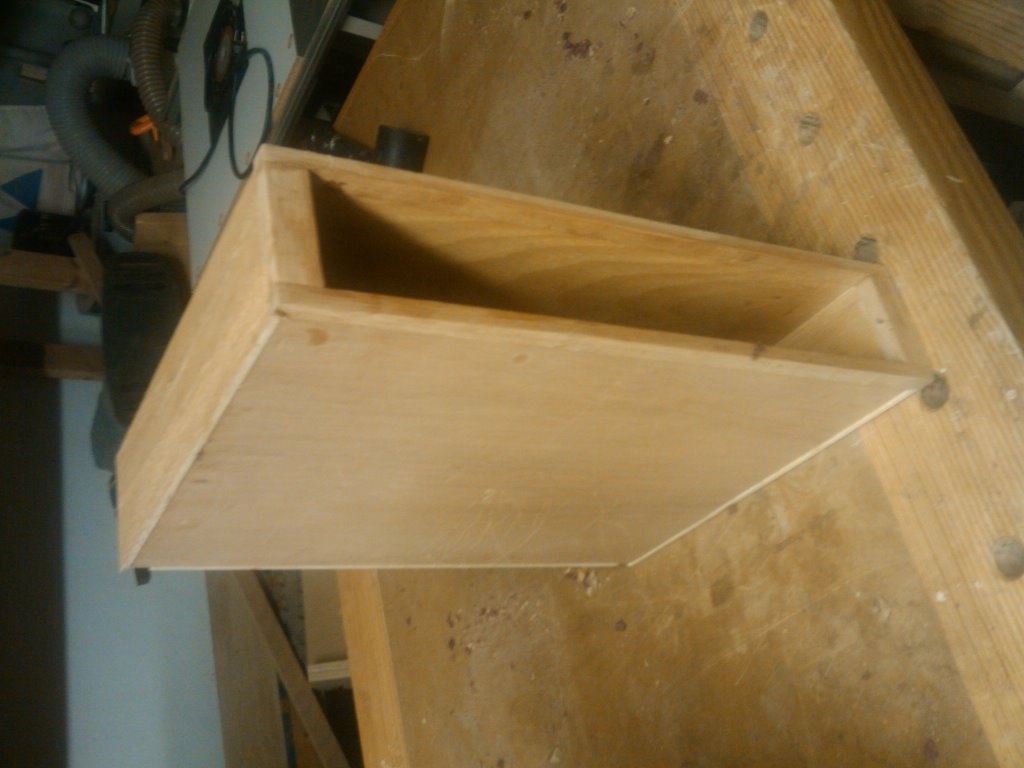
Basically, what I created were two slip bookshelves out of some scrap red oak plywood. They were very simple to build – the tops, bottoms and backs were strips of 3/4″ plywood  cut to width and rabbeted to accept the side panels.  Those were made of some 1/4″ ply which was glued and stapled into place.  They fit snugly into the opening and are screwed into the bottom of the filler cabinet with a pair of pocket hole pan head screws.

In place, they provide a convenient area to stash the cutting boards and keep them off the counter top. They were very easy to build and – I think – provide a convenient place to stash the cutting boards until they are needed.

Why am I writing about them now?  Well, after five years of popcorn, reheating and way too many door slams, we had to replace the microwave.  The new model is a sturdier, brawnier one which – I hope – will be able to handle the force of the two growing lads in my house as they enter their teen years and eat us out of house and home.


Book Review: Sand Shading

There are lots of ways you can make a project look good when finishing. You can stain, dye or oil the piece to give it depth or shimmer.

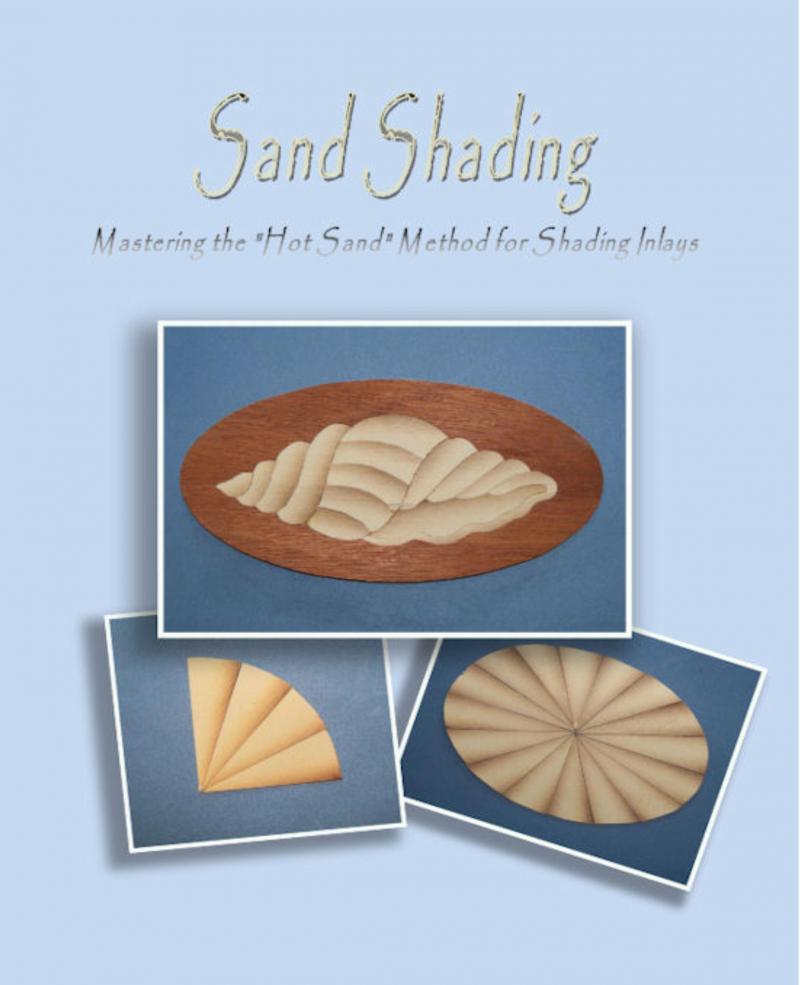
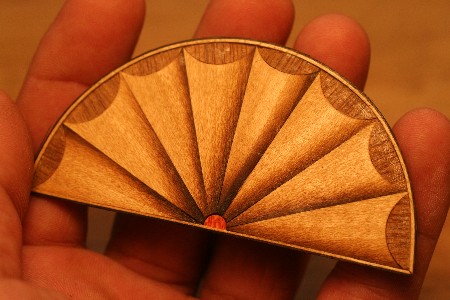
But, there’s a classic technique that uses veneer, sand and heat to add depth to inlays.  Woodworker Ralph Bagnall has written his first book on the subject of sand shading, entitled Sand Shading: Mastering the hot sand method for shading inlays.  It offers very simple step by step instructions on the process that should encourage even the beginner to try their hand.

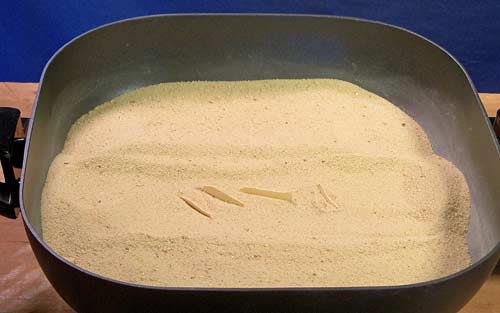
Ralph lays out the process in clear, easy to follow steps. The first piece of ‘specialized’ equipment used to be a ubiquitous piece of kitchen cookware – an electric skillet.  By using the heat control on this appliance, you can get accurate temperature control in the sand, which gives you control over the shade you impart to your inlay pieces.  Ralph observed that while you can buy a new one of these skillets for about $30 in a local mega-mart, you can probably score one at a thrift store or yard sale for uber-cheap.

The next specialized component is sand… but not just any sand. You want to pick up sand with the finest grit possible to ensure a more even shading on the inlay pieces. Ralph suggests leveling sand, used to level patio pavers.  His suggestion to thoroughly dry the sand using the electric skillet is one of those a-ha tips that you expect from a well-conceived book about a challenging technique.

As you might imagine, the shading is achieved by burying the inlay material in the sand and scorching it slightly. During each step of the process, Ralph shows the tips and tricks for shading simple fan inlay pieces all the way to fancier shell designs.  He also goes into the material selection process, showing which species of wood works the best (Ralph loves holly for this), the best way to assemble the inlay for installation into the final piece and how to get creative in designing your own projects.

Ralph’s book brings to light in great detail this classic but seemingly lost technique. Given the clear step-by-step instructions and common equipment and materials, this is going to become one very popular read.

Congratulations to Douglas Bordner who won a copy of Ralph’s book! Thanks everyone for participating!

Now, here comes the fun part.  Ralph has offered me the opportunity for one of my readers to get a free copy of his book for his or her very own.  So, let’s break out a classic game played by radio stations. Send me an e-mail at tom@tomsworkbench.com with the answer to this question:

What was the first project I built  that I ever used veneer on, and what was the species of veneer I used?

I’ll take all the correct answers I receive until 8 p.m. Eastern time today and have one of my sons randomly select from the correct answers submitted.  Good luck!


Quick Poll

When it comes to woodworking, it seems as if we are always in some part of the project building process.  Whether just starting to develop plans and gather materials to buffing out a glowing finish and moving it to it’s place of honor, there are definitely places along the path where we find ourselves.

So, why not share with us what ‘state’ your projects are in?  Right now as you sit to read this poll.  If you need to, poke your head out into your shop and come back to answer… we’ll be waiting!


Link of the week

Ancient Kauri Kingdom

So, you would love to get your hands on some old-growth lumber to work with.  Ya know, stuff found at the bottom of a lake from an old sawmill operation.  That’s cool and all, but what about wood that predates the Roman Empire, ancient Egypt or the cave paintings found in France?

An Apollo guitar made with ancient Kauri wood – http://www.apolloguitars.ca

In New Zealand, huge forests of Kauri trees toppled over as water levels rose, softening the earth around the root balls. As these trees fell, they became buried in the bogs, preserving their wood for millennia. Some of the trees fell over as recently as 3,000 years ago, but the ancient ones being recovered toppled over nearly 45,000 years ago.

These trees are dug up and slabbed into some of the most amazing wood you have ever seen.  This site is the front door to Ancient Kauri Kingdom, an industry leader in the harvest, processing and handling of this treasure from the past. Yes, you can work with it just like any other wood. There’s plenty of information on the site about how the logs are found, how they are processed and how you can purchase some pieces for a special project of your own.

part of the Wood Talk Online community