Category Archives: Shop Talk

A place for everything…

Organization is not my strong suit.

Navigating my desk at work is an adventure.  I’m getting better, but I routinely  find some important note from a few months ago  – say – about a task I had to do back in March.  Not a good thing, especially when my boss was really counting on that task being accomplished by – say – the second week of July.

The shop?  It’s not much better.  I am really having trouble finding a good home for everything I have amassed over the past dozen years.

At least in my shop I have one area that stays pretty well organized – my rolling tool chest.  I picked it up during a sweet holiday deal at Lowe’s and call it black beauty. Actually, it’s two stackable units – a four drawer base and a three drawer mid section – topped by my old tool box.
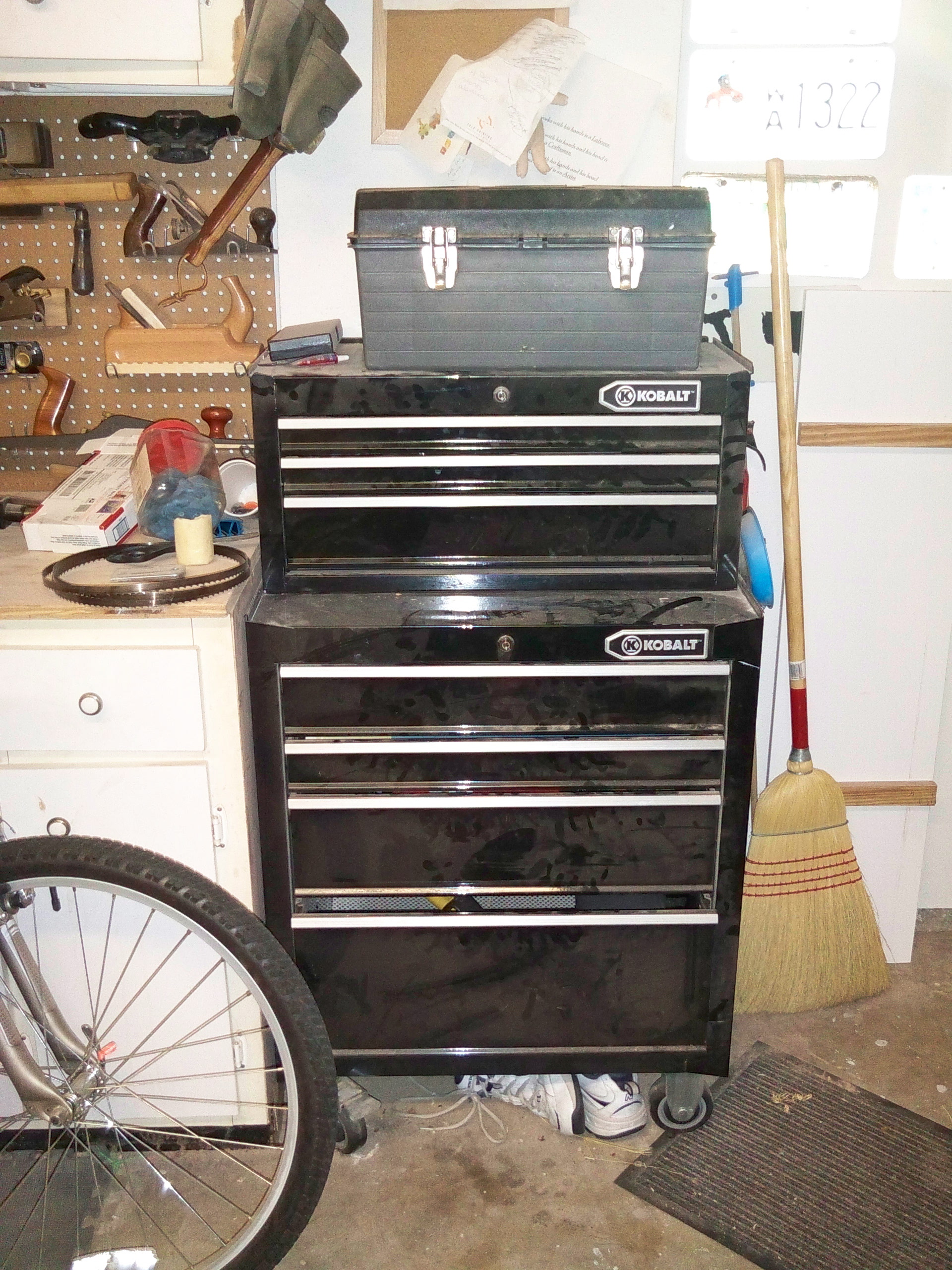
I know what you are thinking… and, yes, you are right.  A glossy black surface in a wood shop?  You betcha. My wife and I used to wipe it down every so often when the dust would accumulate, but now, we just let it get covered and clean it when the layer of sawdust is thick enough to support agriculture.
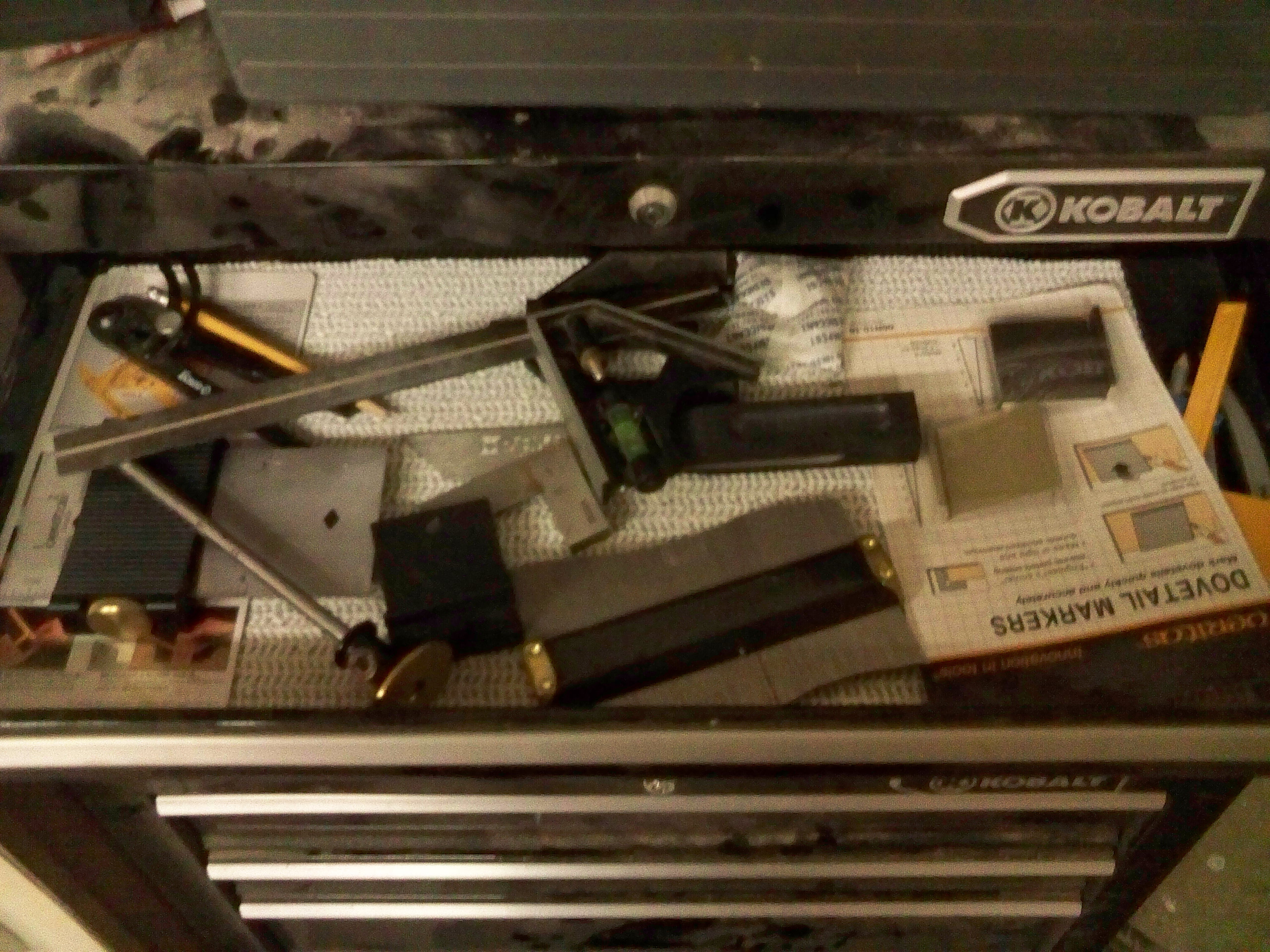
This rolling chest has been a godsend when it comes to holding on to easy to misplace items.  The top two drawers hold all of my fine measuring tools.  Squares, striking knives, calipers… the works.  It’s nice to know that when I have to measure something precisely, I just have to look into two drawers instead of through boxes of other items to find what I need.

The bottom drawer of the mid section holds my scraping and shaping supplies.  Rasps, files, scrapers and all of the items that go along with them are stored here in one place.  So, when my scrapers no longer do what they are supposed to do, all of the items I need to sharpen are in one place.
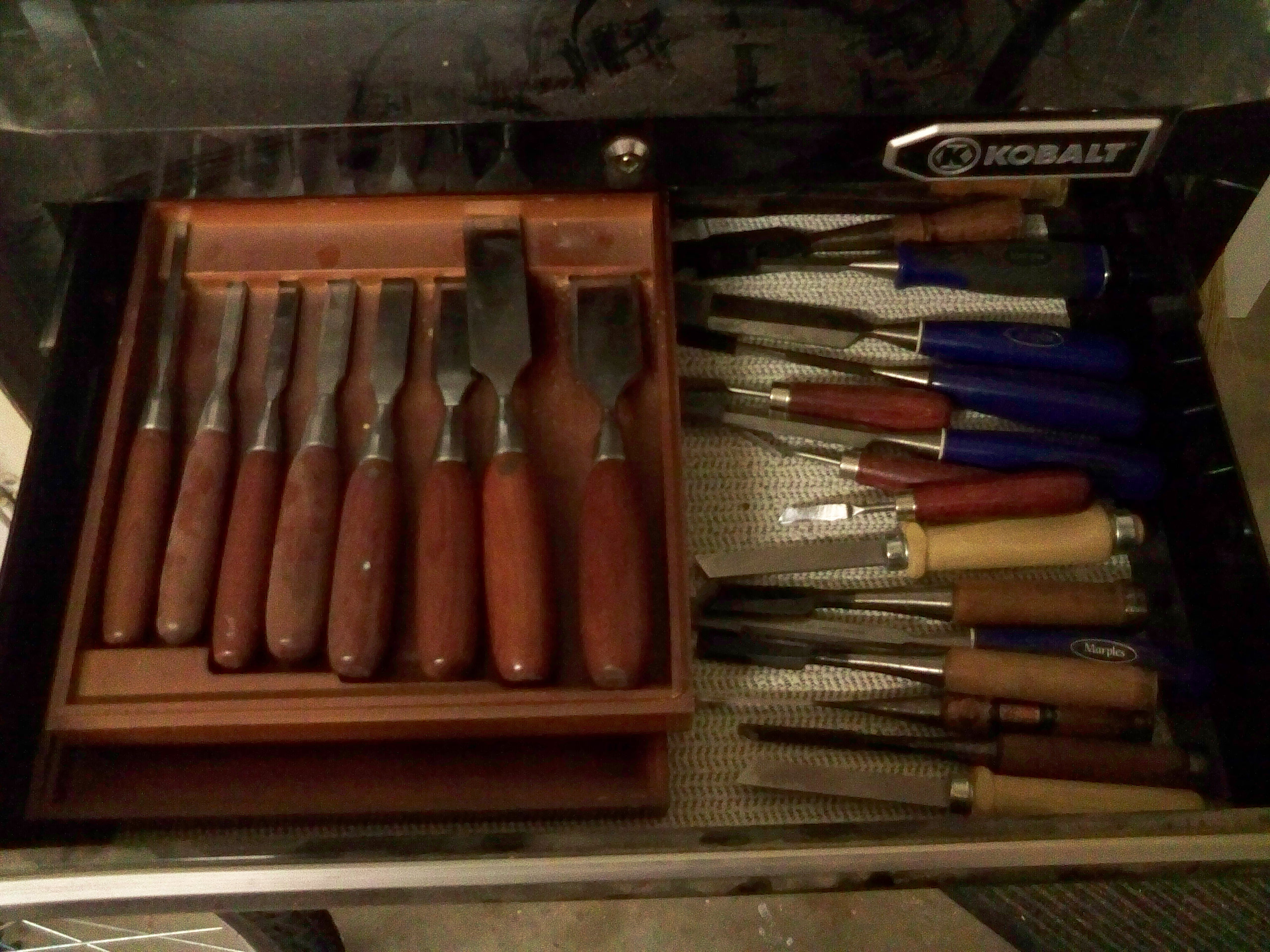
Below that in the top of the base cabinet are my chisels.  Yes, I have recently become a collector of chisels.  I have to admit it as part of my 12-step program.  From the Marples Blue Chips I started with to the set of WoodRiver beauties I traded a drill press mortiser for to the ultra sweet Japanese chisels used by my neighbor’s father, they’re in there.  Keeping them in the drawer protects the tips and makes a handy place to find them.
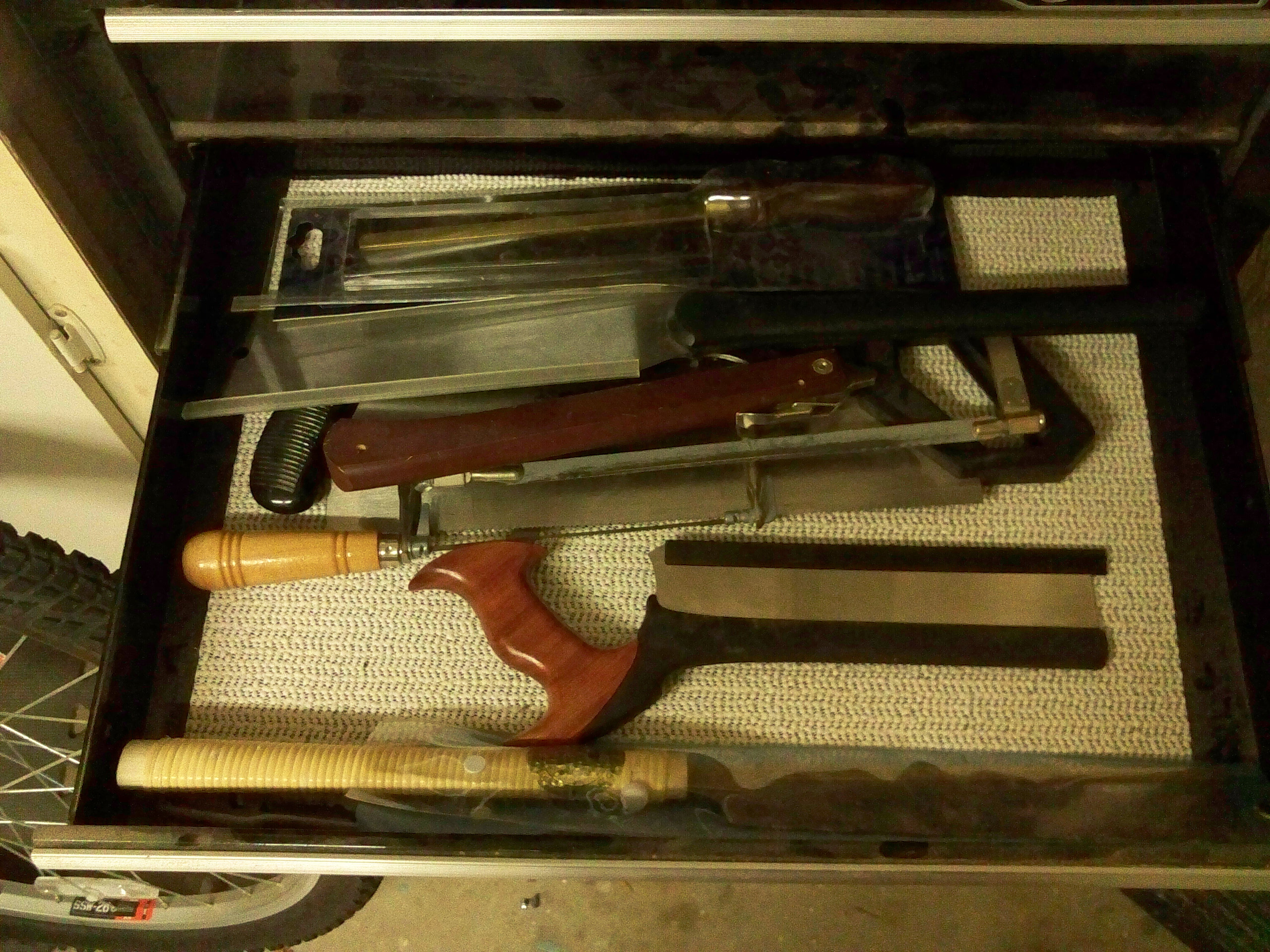
Below that is where I store my fine cutting saws.  One day, I’ll build a proper saw till to display these babies and keep them closer to the bench, but, for now, they are protected from bumps and broken teeth in this drawer.  It does take a little digging around here to find them when I do need them, but I’m good with that.  For now.
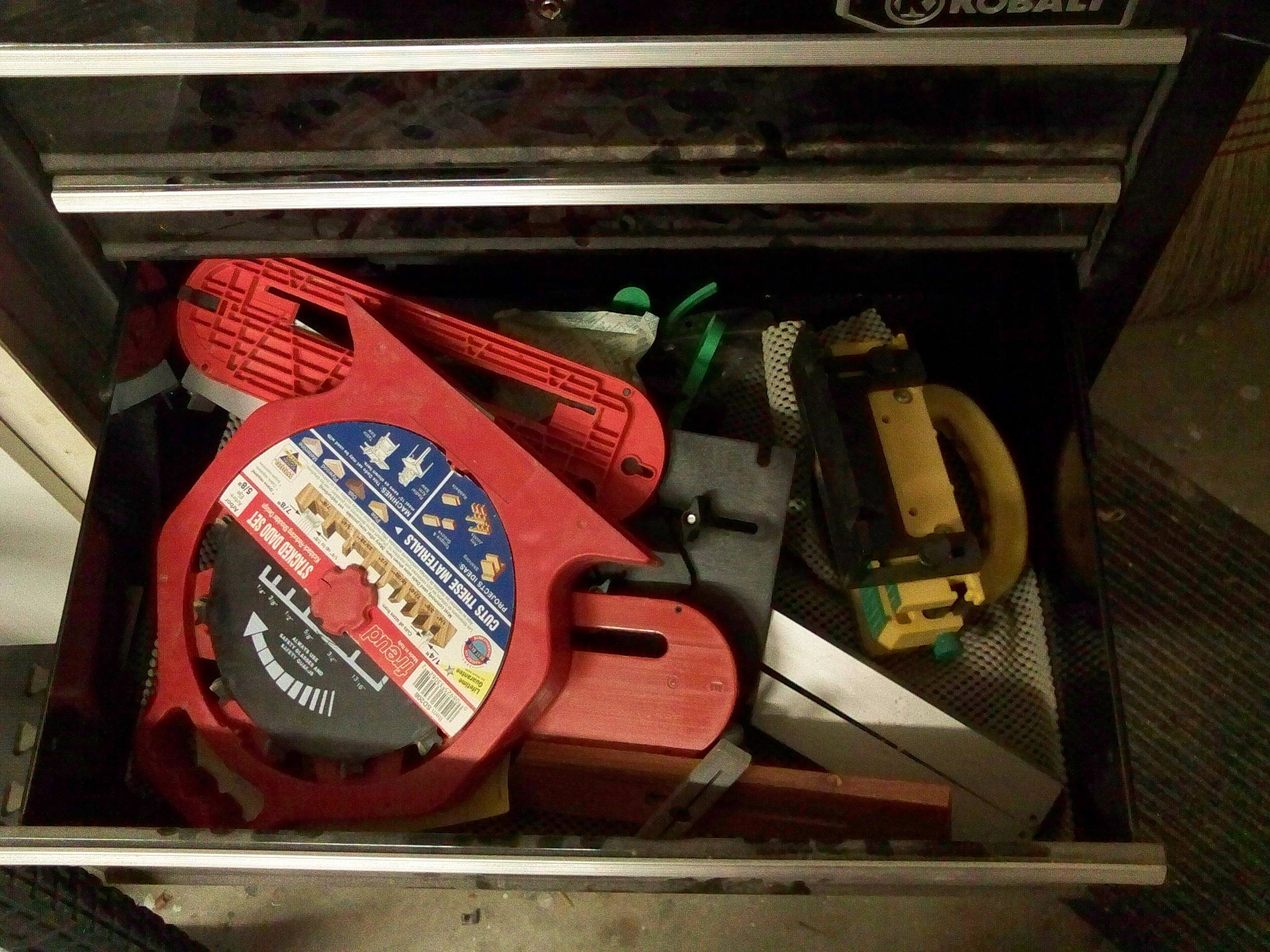
One level down, and we’re in the realm of the table saw.  No, this storage drawer is nowhere near the saw itself, but I have discovered that table saws require more accessories than my children did when they were very young and it took us half an hour to collect everything for a trip to the supermarket.  Dado blades, push sticks, featherboards … again, this is a great place to stash the stuff when I don’t need it.

And, finally, there’s the – uhhh – miscellaneous drawer.  My hammers and mallets are there along with my laser level, cold chisel, pry bar… well, everything I chuck in there.  OK, it’s not so organized.  There, I can’t give up all of my bad habits.

Some folks have told me that by storing my tools in enclosed drawers is a waste of time.  That perhaps I would be better off keeping them out where I can see them and find them easier would be a better idea.

Uhhh, no.  This way, at least, I keep my searching down to a minimum – for me.  That allows me more time to do what I really enjoy… building.

Pushing the envelope

Sure, there are lots of vocations that claim to be the ‘oldest profession’ on Earth, but I’d have to wager that woodworker would vie for the title.  Think about it.. even if our distant hunter-gatherer relatives were just using a stick to fend off angry saber-toothed tigers, that would have to qualify as some kind of woodworking.

From there, you had the whole shelter/tool/roasting stick/furniture evolution where woodworking came into its own.  And, all along its development, and number of innovations have taken place.  The development of the mortise and tenon. The development of the dovetail. The discovery that the gooey mess that lac bugs secreted would make a nice furniture finish.

Since there has been so much development throughout the centuries, you might think that it would be difficult to see true innovation in woodworking.

That would be the case if you never opened your eyes. There are many companies out there developing new products or processes that make woodworking a more enjoyable pastime.

One of the companies consistently out in front is Kreg Tools.  From the development of the first practical pocket hole jig to the precision after-market fences and other cabinet-making tools, the engineers at Kreg have truly pushed the envelope.

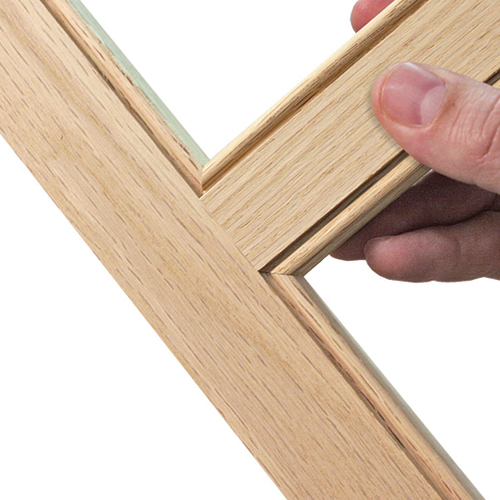
“We’re always amazed at just how clever the folks are at Kreg,” said Tim Walter of Eagle America.  “I mean, the beaded face frame set up they produced last year was a real stroke of genius, cutting a tremendous amount of time necessary to perform that task.”

Eagle America is a proud retailer of Kreg tools, offering a wide variety of products. “If you are starting your shop from scratch, you can pick up a sweet router table, pocket hole jig – even a whole pocket hole system. And, if you are just looking to upgrade, you can add a precision fence to your band saw or a new miter gauge for your table saw.”  Tim even pointed out that if you are simply restocking pocket screws after building a previous project, you can do that at Eagle as well.

“The Kreg tools can also break you free from your shop. Many are portable, allowing you to work right on site.  The new deck jig concealed fastening system can get you out on a sunny weekend to help you build that deck you have been putting off for a while.”

To sweeten the deal, Eagle America is also offering a $20 gift card for all Kreg purchases over $149.  “In this economy, every little bit helps.  We’re glad we can do something to help make your woodworking easier and more enjoyable.”

I’m so happy…

Did I tell you how much I missed being in my shop?

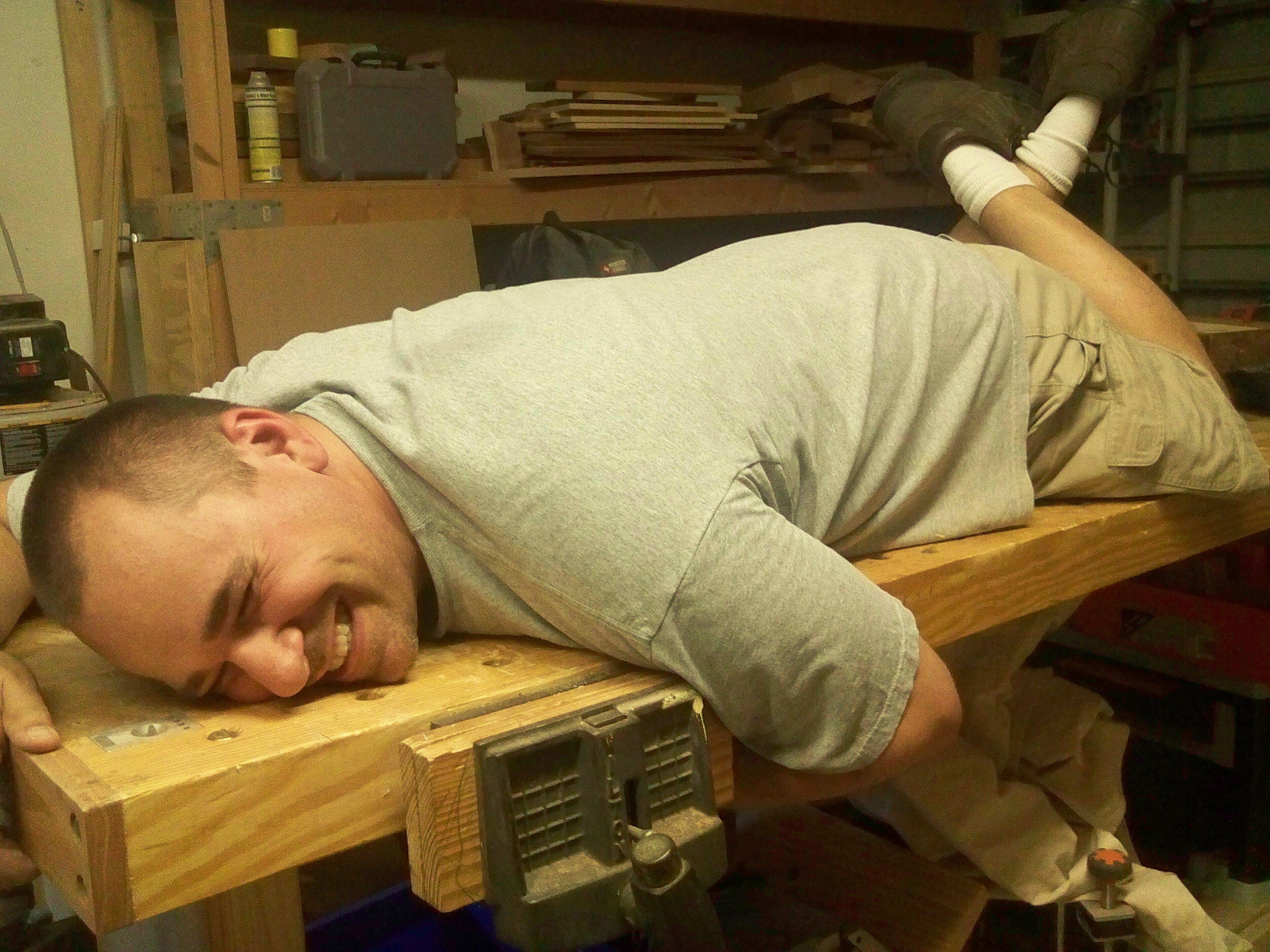
Does this picture tell you how happy I was to get back into it?

After weeks of yard work, stitches, hurricane conferences and all sorts of other ‘issues’, I finally got some shop time yesterday.  First, I had to  get to the bench to clean it up.  Things such as string trimmer spools, extension cords, hedge trimmer manuals (the one that instructed me NOT to put my fingers near the moving blades was fun to read) have this nasty habit of piling up on the bench if I don’t take care of them.  Heck, I even had a plastic tub full of Easter decorations that still had to get put back in the attic.

While cleaning wasn’t what I had in mind, it did get me into the shop and back into the woodworking mindset. As the stuff was put away, more space became available for woodworking.  Which is exactly what I need.

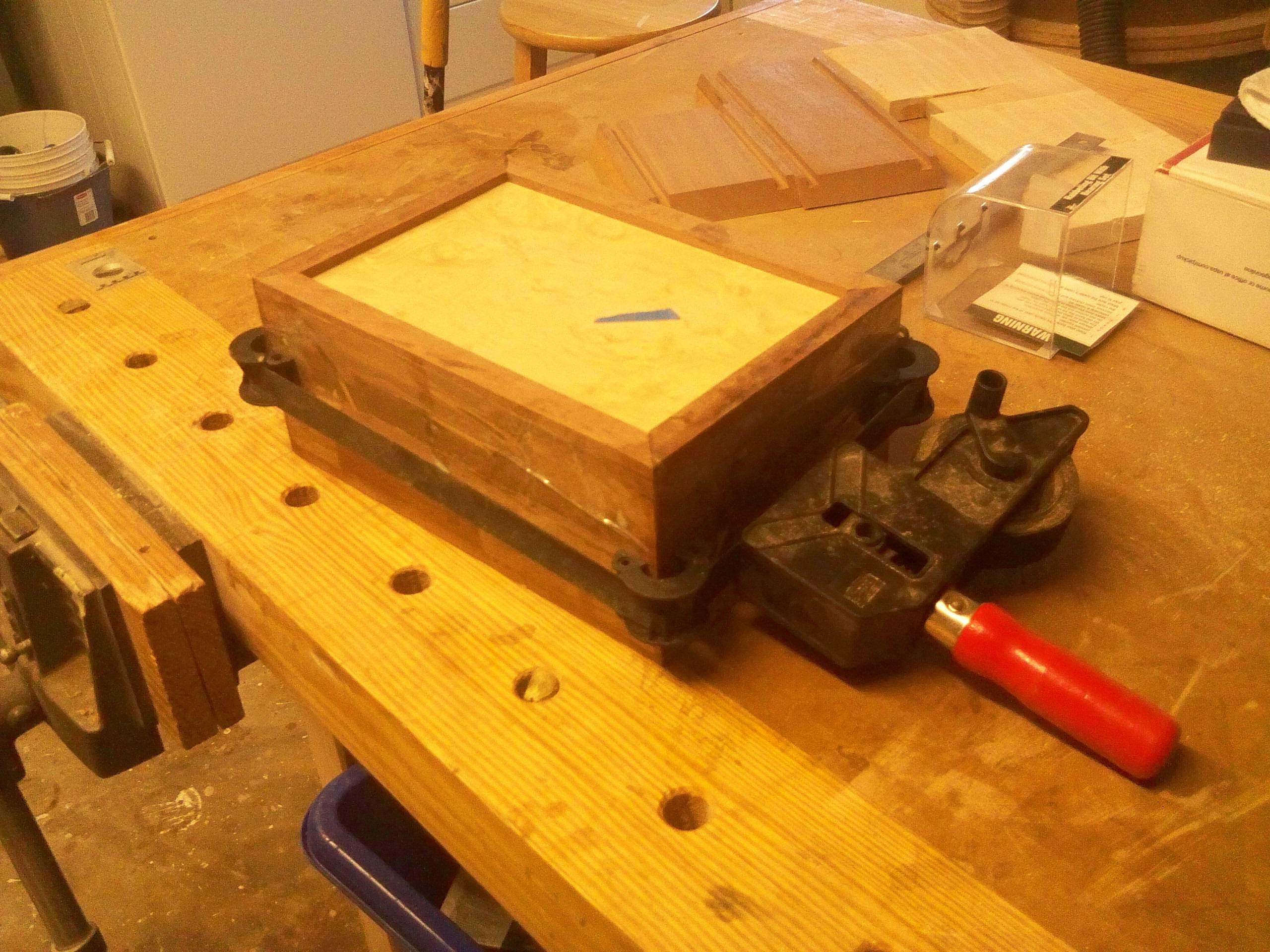
Soon after, I had found the things I was looking for.  The four sides of the box I was working on.  The veneered elm panel. The measurements I had jotted down for the box.  It was almost like I had never left the shop.

I cut the veneered panels to fit the top and bottom and rabbeted the panel edges to fit the grooves I had machined back in April. The fit beautifully… better than I had imagined.  And, it glued up nice and tight.

Now, I still have some more work to do on the box.. cutting some dovetail splines for the corners, cutting the lid free, sanding and finishing.. but, for now, it’s good to be back!

Here’s your cue

I’ve noticed over the years that people don’t want ordinary.  Pedestrian.  Plain.

Think about it.  Most people decorate their homes.  They paint walls, buy furniture and hang artwork that helps define the space they live in.  People customize their cars, adding pinstripes, special audio components and custom driving lights.

The same holds true when it comes to hobbies.  Woodworkers are always looking to add some ‘signature’ tools to their collections.  Anglers will custom build a rod and reel to meet their individual tastes.

And people who play pool will often look to eventually have a custom pool cue.

There are some sweet looking pool cues out there that go way beyond the ultra-cheapie starter you may have picked up or the heavily abused house cue at a pool hall. Those custom models feature gorgeous wood inlays, bands and other features that make your cue stand out from the crowd.

Of course, a custom cue carries with it a hefty price.  Most custom models start about $300 and can go into several thousands of dollars based on the features offered and the care of the maker.

But, if you are a woodworker and you want a custom cue, there’s nothing quite like building your own.  “By creating your own masterpiece, you can demonstrate your woodworking skills… even if your pool shooting skills aren’t up to snuff,” said Eric Poirier of Bell Forest Products. “We can certainly help you get off on the right foot when you are ready to build your own.”

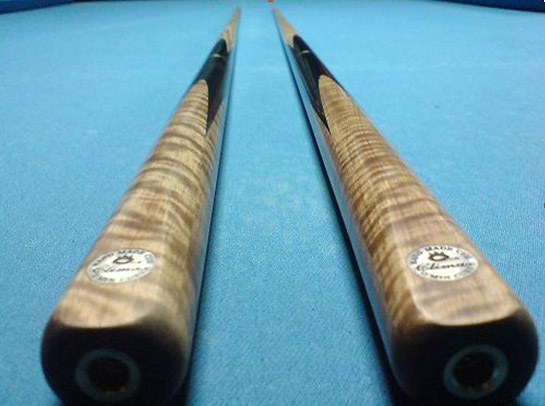
For the past year or so, Bell Forest Products has been offering some very cool pool cue blanks for sale that just might inspire you to get into the shop.  They offer a line of full-spliced blanks made by master cuemaker Mark Bear. What makes them so special?  Bear makes his cue blanks with two different species of wood cut carefully to meet up a several ‘points’.  These long splice joints allow the wood to be held together by just glue, not the dowels and other joinery methods used in half-splice models.  The result?  Billiard players consistently rate the full spliced cues as easier to play with a superior feel.

These blanks are also made of some gorgeous combinations of wood. “We routinely carry cues featuring figured maples, bocote, purpleheart, bubinga and other exotic woods we sell.  The beauty of these contrasting and complimentary woods is pretty amazing.”

Since Bell started offering the cue blanks, business has been brisk. “We go to a large cuemaker convention to show off our offerings.  We get a lot of traffic at our booth from people who want to know just how we make such beautiful blanks.”

“Besides,” Eric continued, “many of our customers who build their own cues tell us that when they show up to play, they get plenty of compliments from the people they play against.  Not only does the cue demonstrate their artistic ability, but they say that using what they built gives them more confidence when they play.”

Nice shot!

Pretty as a picture

My oldest son recently turned 12. Yes, it’s the last year for a while in my house without a teenager. I had better enjoy it while I can.

While thinking back about his birth, I can’t help but wonder if he wasn’t the most documented child on the planet. You see, when he was born, he was my parents’ first grandchild.

Ain't he just the cutest?

When they came to visit those first few months, the shutters were snapping like crazy. My son getting fed. My son getting changed. My son being rocked to sleep. My son getting bathed. It took a few weeks after family visits for my eyesight to return to normal after staring at that darned flash…

Back in those olden days, pictures were taken on this ancient medium called film. And, when you took the pictures, you had to take them to a photo processor to be developed. And, well, for an event like the birth of a child, you had BOXES of photos to sort through. And warehouse.

And display…

Of course, you could go into hock buying dozens of frames to display the choice photos of important moments, but why not add to the presentation by building your own picture frames?

With Mother’s Day, Father’s Day, graduations, wedding season and so many other meaningful events happening in late spring and early summer, there are many opportunities to build custom picture frames to present as gifts to commemorate special moments.

“Picture frames are insanely easy to build,” said Tim Walter of Eagle America. “They involve just a small amount of wood, but showcase your woodworking skills like very few other projects can.”

The material the frames are made out of can alter the look from basic to fancy. “Some interestingly grained wood is eye catching for flat pieces. We also offer a number of router bits that create interesting profiles and shadow lines. Our 5-piece framing router bit set offers you endless profiles when used in combination with one another or when just using a single bit at varying depths in your router table.” Tim also pointed out that these bits, when used on a workpiece glued up of contrasting boards can produce dramatic effects as the different colors and grain patterns are exposed during the routing process.

Once you have created the pieces of the frame, it’s then time to join. At its simplest, a picture frame is four pieces of wood joined to form a square or rectangle. “Just like you used your creativity to create the profile of your frame, you can put it to work here when you put your frame together. There are dozens of ways for you to securely assemble your custom made frames, some of which include biscuits, lap joints and splined miters. Whatever works for you…”

A rabbet on the back side of the frame is also a great way to retain the items that are included in a securely-mounted photograph. “A piece of glass in front protects the image from fingerprints and dust. A mat is optional, but can really jazz up the look. Then, you’ll have the photo and a secure backing to hold it all together. A stepped rabbet bit is an interesting option for you to make these cuts in fewer steps.”

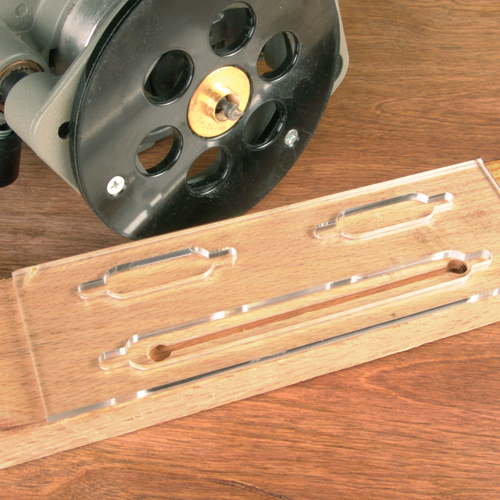
Eagle America is also offering a bonus kit of tools that can help make building the frames a little easier. “Clamping those miters could be tricky, so we’re throwing in a Self Squaring Picture Frame Clamp. You have to also hang the frame as well, so we’re also adding a keyhole bit and keyhole template to make that process a little easier. We have some other goodies in the kit as well…”

My son has gotten to the age where his baby pictures are starting to become embarrassing. I think it’s kinda cute now, but I’m sure it will start to wear on me soon. No matter how old he gets, he’ll always be my little boy.

And, I’ll have the photographs to prove it!

It’s a responsibility

Make a list of the things that a woodworker needs to do his or her craft.  What would you put on it?

Tools would be up there. A place to work would be nice. A way to support and secure your work wouldn’t be bad.  Maybe a few measuring devices…

Oh, and you need wood. Depending on the size of the project, sometimes, lots of it.

Maybe hard, durable woods like maple or hickory.  Maybe woods that work well for carving like mahogany or basswood.  Sometimes, you need inexpensive stuff that works well, like southern yellow pine or red oak.  Veneers. Plywood.

Even the ubiquitous 2×4 whitewood stud to make push sticks and other shop jigs.

Wood is used in a wide variety of applications.  There’s furniture making and construction for sure, but it’s also used in papermaking, chemical products – even food production.  But, for many years around the world, trees were cut down with little thought to the impact on the existing forests.

In many western European countries, going at stands of trees with the axe was vital. Countries such as England plowed through their native forests harvesting timber for ship building, dwellings, bridges and other structures. It became an implied duty for the wealthy landowner to sow a handful of acorns on his property to help ensure there would be enough native wood to keep the Royal Navy afloat.

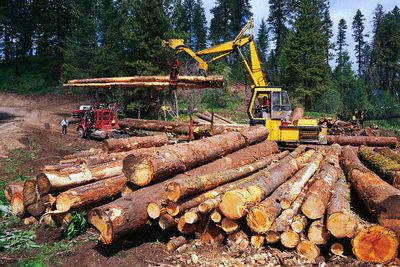
Then, the colonization of the Americas happened. Settlers were stunned by the incredible number of trees to be found everywhere on the continents. It’s been said that a squirrel could cross from the Atlantic Ocean to the Mississippi River by hopping from tree branch to tree branch, never having to set foot on the ground. Soon, axes were hard at work, harvesting lumber for domestic – and exported – uses.  Millions of acres were also cleared to make room for the farms to feed the burgeoning population.

Click on image to enlarge

Fast forward to the early 20th century.  Many of those lush forests were now nothing but an empty landscape, devoid of anything but the occasional ragged stump left over from the clear cutting operation.

Fortunately before all of the virgin old-growth forests were lost forever, government and industry sought ways to slow or reverse this alarming trend. “Without wood, there’s no woodworking.  Period,” said Eric Poirier of Bell Forest Products. “That’s why it’s extremely important to everyone involved that responsible forestry practices are followed as we keep moving into the 21st Century.”

To that end, responsible lumber merchants are active partners in combating the illegal harvesting of domestic and imported hardwoods. “Wood is one of the most important renewable resources, but only if it’s harvested responsibly.”

How do retailers ensure their supply meets stringent responsible standards? “We only deal with lumber wholesalers and log dealers who actively combat illegal logging.” Eric was very candid about the company’s policies. “We make sure our suppliers have policies in place regarding planned felling, minimum tree diameters and felling rotations to ensure regrowth of the affected area.  When we as retailers – and our customers – demand these practices, the wholesalers and loggers listen.”

How can a woodworker know if their lumber retailer works with responsible loggers?  “Ask lots of questions when you go to your supplier. In today’s world of environmental consciousness, many retailers are touting their practices on their websites or at their stores.  If they don’t – ask.”

One area of specific concern for many woodworkers is the questionable logging practices of developing countries. “Some of the world’s most beautiful wood comes from South America and Africa. Unfortunately, some of those species we love so dearly – ebony and rosewood – were logged extensively and today are very rare.”  To help preserve these important trees, organizations such as the Forest Stewardship Council were created.  This international body’s mission is to slow the overharvesting taking place around the world, with a specific focus on tropical woods.  Founded in 1993, the organization has seen some success in trying to slow the overharvesting.  But, much remains to be done in order to preserve these resources.

After all, it’s not just today’s woodworkers who can be impacted by our actions. “I have two young children.  When they get older – and should they want to woodwork – it’s up to all of us to take our responsibility seriously so they can supply us for generations to come.”

Time to tune

Music is cool. I keep my iPod strapped to my arm most every day, listening as I go about my business.  If I’m writing at work, it’s classical. On the bike?  Something with a driving tempo to help me keep my pace. And then there is my favorite.. anything with a kickin’ bass groove.

Regardless of the style of music, there’s one thing that all musicians have in common: They know that their instruments are worthless for making music if they are out of tune. Even if you don’t have a musically-trained ear, when a piano hits a note that’s not quite right, you will notice that something’s out of whack.  Same thing with a guitar, a violin – whatever.

That’s why before a performance you can watch band members spending time in a sound check, tuning up their instruments to give the right sound during the show. Pluck the string, tune the string, pluck it again until it’s just right.

Unless you are woodworking in front of a camera or a group of woodworking students, there’s a very good chance that you will be performing for an audience of just yourself. But, the same principles apply.

Tuning your tools is a critical part of the building process. Not only do well-tuned tools perform better – they are also safer to work with. They give superior results for the project you are working so hard to complete.

But, where to begin? For power tools, the best bet is to crack open the owner’s manual or a book or website dealing with your brand of tool. This will give you the know-how on how to tackle this task.

In many cases – especially for your power tools, just getting all of its internal parts clean and free of sawdust is a critical first step.  All of the sensitive gears, tool blade and bit holders and sensitive electric windings perform much better when not jammed up with crud.

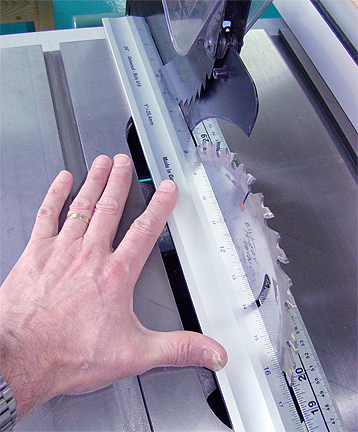
Alignment is another critical part of this tuning up process.  Lining your rip saw parallel with the miter slots and blade on your table saw gives superior results and helps to reduce the likelihood you will see a kickback.  Getting those band saw wheels coplanar will increase the life of your band saw blade and how well it tracks. A few moments doing these tasks can save lots of time and trouble later.

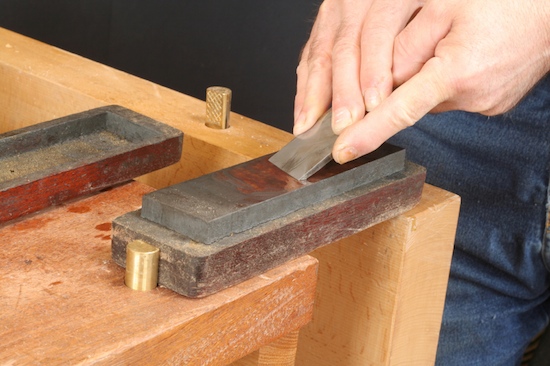
And, when it comes to bits and blades, you can’t beat clean and sharp. Get the gunk off your table saw blades and router bits. Plane irons, chisels and hand saws, properly honed to a razor sharp edge, make hand work a breeze.

Does this take time away from woodworking?  You bet. You won’t be able to jump headlong into building.  But, just as with any musician, if you don’t take the time to tune your instruments, your work could very easily hit a sour note.