Category Archives: Tools

Big honkin’ rabbet bits

My family loves to watch movies. We subscribe to Netflix and get the movies sent to us, or we’ll watch them on the kids’ Play Station. Man, that’s a convenient way to watch movies!

And, while we love to watch movies, getting out to them can be a real trick. I think most of our local theaters now offer easy financing at the snack counter. When they don’t post the price of the popcorn-and-soda snack deals, well – as they say – if you have to ask the price, you probably can’t afford it anyway.

So, when we go out to see a movie, we have to choose our selections carefully. And, there was a stretch back in 2005 when the only good movies out were animated. Hoodwinked was a great one. So was one of the Shrek franchise films. But, the one that we liked the most was Wallace and Gromit and the curse of the Ware-Rabbit. Now, it sounds kinda hokey, but if you haven’t seen it, it’s definitely worth a watch.

I don’t want to give away the entire plot, but it does involve a giant veggie-stealing rabbit and the hijinks that go along with putting an end to the terror plaguing the contestants in the annual Giant Vegetable competition.

Sometimes in woodworking, we need to look to rabbits as well. Or, is that rabbets? A quality rabbeting bit can be a big time player in your arsenal.
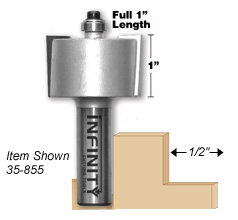
Me, I’m happy to have a big rabbeting bit I picked up from Infinity tools. This baby is a real brute. It has a half-inch shank and a two-inch diameter slug of metal with a full one-inch depth of cut.

Why such a massive bit? Options, my friend. With the rabbeting bearing kit, you can take this massive bit from an 11/16” cut all the way down to a flush trim. Of course, for a very deep rabbet, you’d want to do that in steps as to not get all kinds of tear out. For that, you may want to lower the bit to the proper depth over a few passes, as opposed to changing the size of the bearings.

The one-inch cutting surface is pretty cool as well, making flush cutting easier. And, if you want identical parts for a project, template routing makes it easier to get the accuracy you want.

The thick carbide tips lean forward (positive shear angle) so you get fine wood shavings. Yes, you get shavings, not dust or chips with this bit.
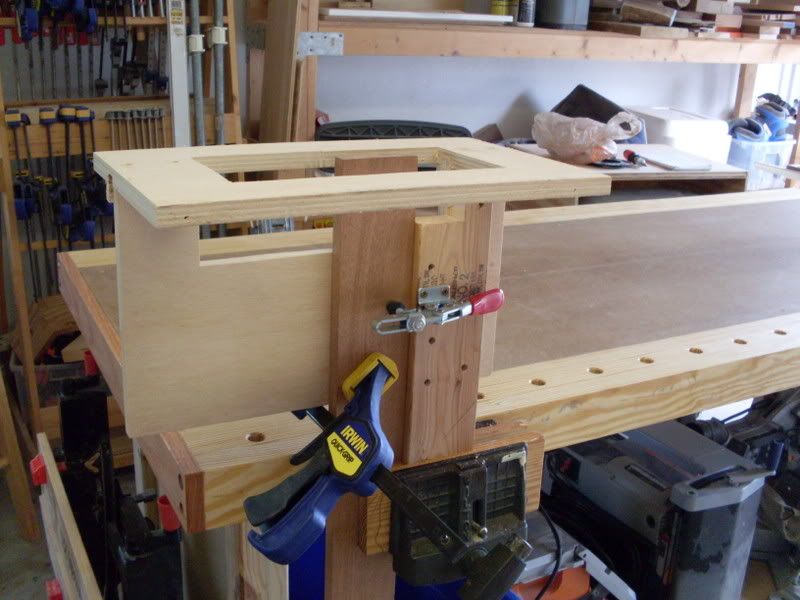
I have found mine to be useful for rabbeting the backs of cabinets to allow for a back to be mounted. And, when paired with a router based tenon cutting jig, you can make mortise and tenon projects easily.

Those are just a few uses for a quality rabbeting bit, and I’m sure once you get some experience using one, you’ll be able to pull a few woodworking rabbits out of your own hat.

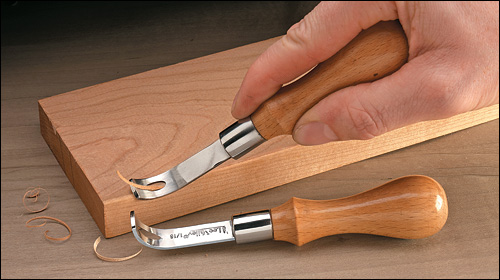
 

Tools I use: My cornering tools

When I was looking for a car to replace my old minivan last year, someone at my office suggested that I check out Car and Driver magazine to see what they had to say about my choices. After all, it’s a great resource for all things automotive.

Unfortunately, they also have a bunch of articles and reviews about powerful sports cars. Before long, I was drooling over the muscular exotic beauties. Their sleek styling. Their tremendous power to weight ratios. Their ability to sit in the corners and ride them like they are on rails.

When I did purchase my new car, it wasn’t anything like I had fantasized about and my dreams were thwarted again.

That doesn’t mean that I don’t get to handle the corners. In fact, I have a fast, nimble set of tools that allows me to ride right on the edge of my projects and leave me breathless.  They are my Lee Valley cornering tools.

These little babies are very handy.  Before I had them, I used to do a number of different things to round over the edges of my projects. I would sometimes break out the random orbit sander and do the deed that way. The problem with this method was that I could round some areas more than others – it was difficult to control. Or, I could use hand-held sandpaper, which was great. But, it could take some time to get everything rounded over, and I was back to the troubles I had with the random orbit sander – I could have uneven round overs.

When I really wanted to get everything identical, I would break out my router. But, that was a little bit of a pain in the butt to get everything set up, break out all of my safety gear and dust collection. And, if the piece was small, it was tough to balance the router on it, and I might have to shift to the table-based router. This seemed like overkill.

These babies didn’t cost too much (about $25 for the set) and have tools to create a 1/16″ and a 1/8″ round over. The 1/16″ model is great for just breaking the edge of your projects.  If you want to go for the larger radius, the recommendation is to start with the smaller model then move to the larger.

Their unique look may make you wonder how they are used, but they couldn’t be any easier. There is a groove on the bottom of the curve that registers right on the edge of the board.  These tools cut on both the pull and push strokes, but after getting a few sharp splinters shoved into the tips of my fingers while pushing, I’d recommend that you stick to the pull. A few quick strokes and your edge is perfectly rounded over.

These tools not only cut with the grain, but – when kept sharp – can cut across the grain as well.  As with any other work across end grain, it’s best to work from both sides to the middle to prevent any blow-out on the tool’s exit.

You should also work to read the grain direction of the board you are working on. The cuts are silky-smooth when you pull with the grain, but the tool can raise an ugly splinter when pulling against the grain. Always start with the smaller tool and light passes, adjusting your direction based on performance.

Sure, these cornering tools are specialty tools, but after one try with them, your heart will be pounding as you watch them handle the corners.


The plane(r) truth

I have to confess… I love milling lumber. It’s so cool to peel off a layer of rough wood to see what lies beneath. But I have grown tired of my Delta planer. It’s OK, and it has served me well for years, but its performance has been – how shall I put it – lousy.

It seems to work very well with straight-grained, thick hardwoods. It can plane those all day, leaving a bit of a divot at the rear, but better than satisfactory everywhere else. But, get that wood thin or figured and it’s Katie bar the door. I’ve seen rough board surfaces turn into moonscapes of tear out and snipe marks everywhere. Just awful.

There are plenty of tricks out there about how to reduce this nastiness. Build an extension board. Check. Take very light passes. Check. Moisten the top of the board before planing. Check. Push it through on an angle. Check. And, none of these tips worked. At all.

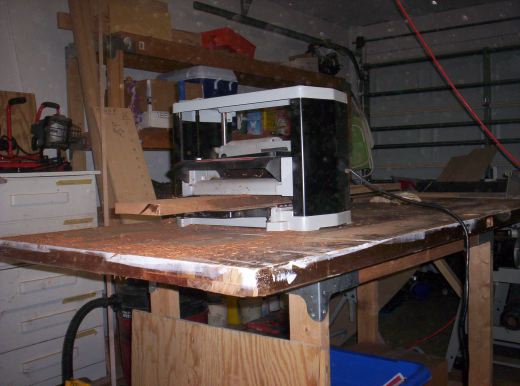
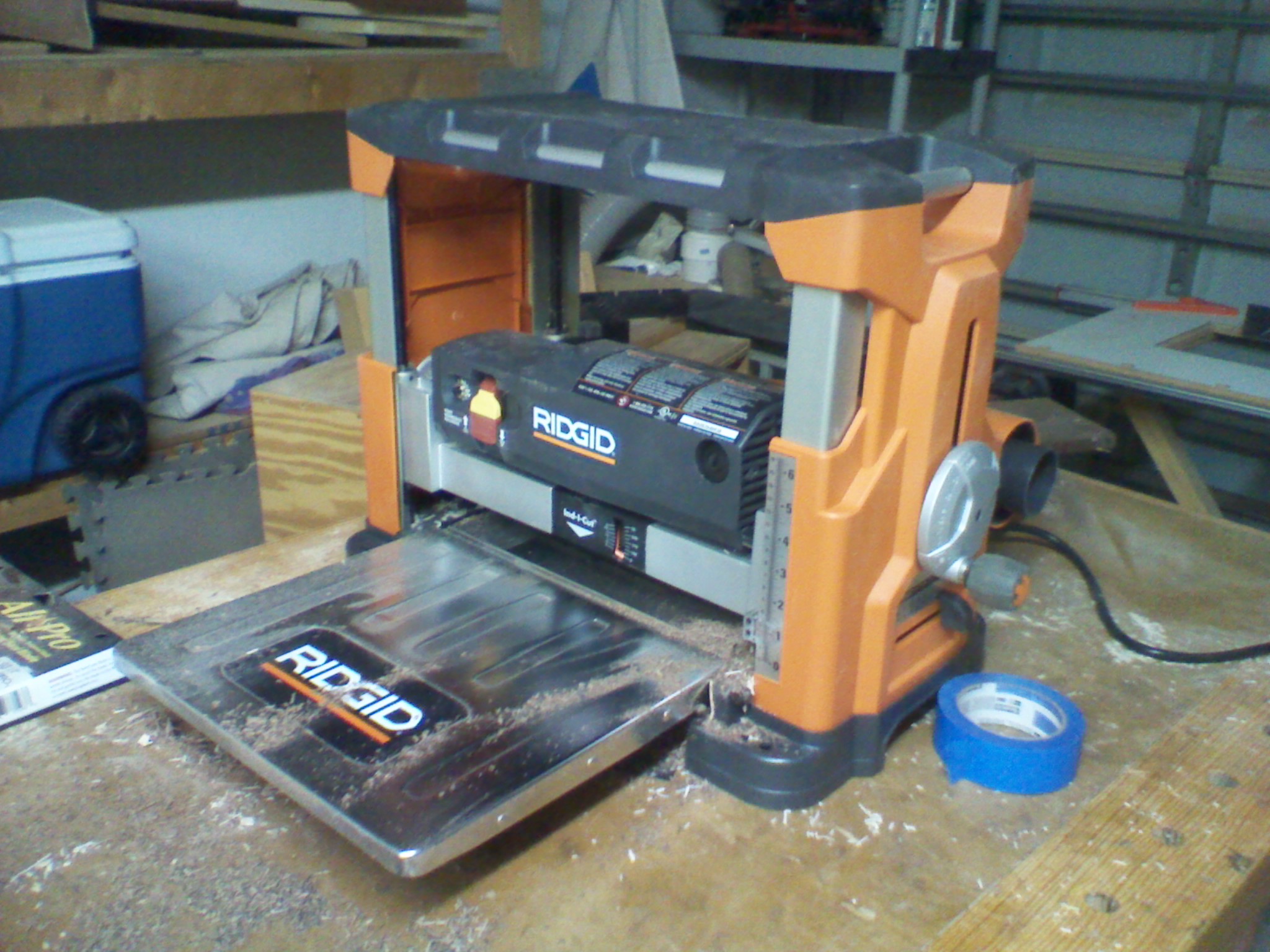
So, last night, when I got home from work, I decided the time was right to take the plunge. I grabbed up all the Home Depot gift cards I got for the holidays and trucked on down the road to big orange. There, I bought the latest and greatest Ridgid planer – the model  R4330 thickness planer.

Why this model? Well, first of all, I’ve had a lot of success with Ridgid tools – my spindle sander, miter saw and table saw are all nice and orange. This model also has a three blade cutterhead – and, from what I read, that gives a better result than the two blade cutters.  It has the Indicut control, which shows me when the cutterhead assembly contacts the board and how much material I’m taking off. Plus, I can’t get enough of the built-in dust collection. I hate shoveling the shavings after I plane boards with my Delta – they get everywhere.

I had fun loading it into my Corolla, and I hauled it to the shop with some help from my son Dominic. The assembly was very easy, consisting of putting together the dust collection shroud and the height adjustment handle. The fit and finish of the tool was very nice, and I loved the features such as on board tool storage for assembly and blade changes as well as a convenient cord wrap.

Sure, I should have read all of the directions carefully before I began, but DUDE, I needed to try it out!  So, I plugged it in and took some curly maple I had resawn and attempted to plane on the Delta (Boy, was that a bad idea). I figured that the pieces may already be a total loss, so what was there to lose?

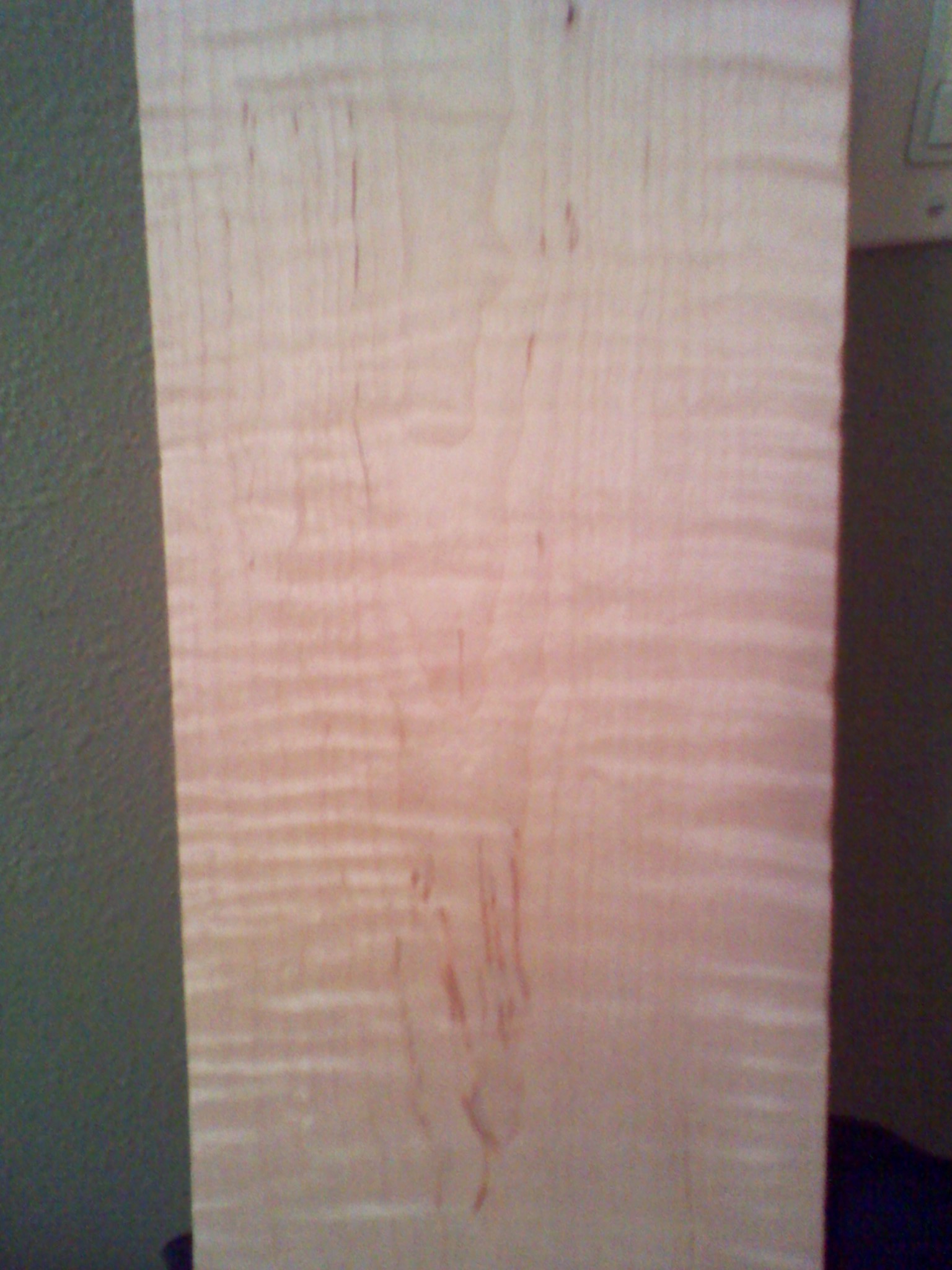
I set the cutterhead to where it just kissed the board’s top and turned the motor on. I carefully fed the board through, and it slid right under the knives. OK, maybe a little lower next time. And, I could hear the knives just graze the board’s rough top. Another pass, and more knife contact.  Soon, I was removing the ugliness of the previous night’s attempt, and things were looking good. And, I mean REALLY good.

So good, in fact, that I believe that sanding these curly maple panels would ruin the very nice surface I put on them!  I didn’t think it was possible to get this kind of smoothness straight from the planer, but wow, I was totally impressed. And, yes, that board is 1/4″ thick… with that kind of smooth surface on it.  Unreal.

The planer does fold up into roughly the same sized footprint of the Delta, so stowage shouldn’t be an issue.  With this new planer, I think I can get over my phobias and start looking forward to getting more use out of the tool.


It belongs to you now

So, yesterday morning, was I ever surprised when Santa Claus came down our chimney and left me a new Pioneer car stereo. Sweet!

This now allows me to play my iPod on the system – heck, it charges the stupid thing, and I can control it from the stereo system faceplate. Or, if I’m feeling lazy in my compact car – use the silly remote control.

While I was sitting in my driveway installing this contraption (no, I had never installed a car stereo before.. this was gong to be fun), I read the directions very carefully to ensure I didn’t have to pull the center console apart a second time (I did). And, while trying to secure the four 10 mm bolts back into the deep recesses which secured the stereo mount, one fell off the socket and fell down behind the center console.  Damnit!  The instructions warned me several times to use magnets to capture the nut and keep it from doing this very thing.

I got the other three installed and was entering my second half hour of fishing for a bolt that I couldn’t see, when it hit me. Why the heck was I looking for it?  I grabbed the mount and shook it. It was rock solid. It didn’t shake. It didn’t shimmy. Nada. I made the command decision to just close up the interior panels I had to remove and get the car back into workable condition.

Why so cavalier?  Well, with me, when I buy a car, I tend to drive the sucker until it falls apart. We got rid of our 2001 Dodge Caravan earlier this year when the odometer clicked over 150,000 miles and the vehicle was preparing to wheeze its last. The Corolla the stereo is in is already five years old, and will probably be handed down to my oldest son when it’s time to go to college in four years.

So, who is ever going to notice this one missing screw?

I bring this up because I do obsess. I obsess about the condition of my tools. I like to leave them as close to the way I purchased them, not making any changes that could identify them as my own. Why on earth do I do this? I have no idea. Maybe it’s because I like to fool myself into thinking the tool is brand spankin’ new. Maybe it’s because I think should the absolute worst happen to me that my wife will be able to see my tools for what they cost me when I bought them.  Maybe it’s because I think I’ll ruin them if I modify them to work better for me.

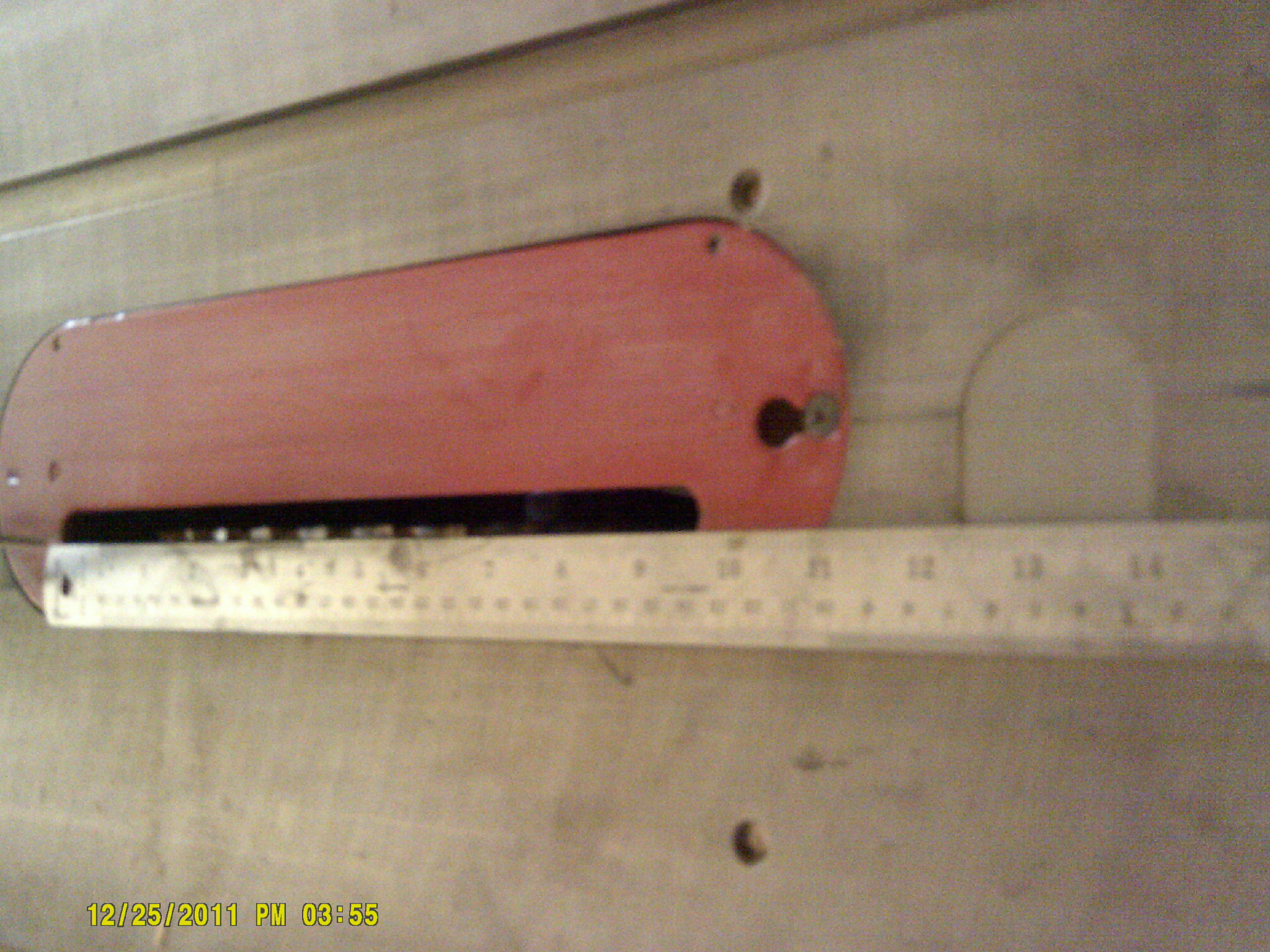
I remember once when Jim Heavey was teaching a class at a Woodworking Show here in Tampa. He suggested that – perhaps – it would be easier for woodworkers to do a certain task if they scribed the exact mark on the top where the left side of the carbide teeth of a table saw blade would begin to cut. For some attendees, this was a nearly blasphemous statement.  How COULD Jim even suggest that someone defile the surface of his saw by doing something so permanent?

Well, Jim made it clear that when the time came to resell the saw, there was going to be a significant amount of depreciation – regardless of how much money was spent or how much time was lavished on its upkeep. And, that it was very proper – thank you very much – to customize your saw to meet your needs.

Many of you may have gotten tools under the tree yesterday. If you did, good for you! Now, get out there. Work with them. And, if they need to be modified to suit your needs… do so judiciously.

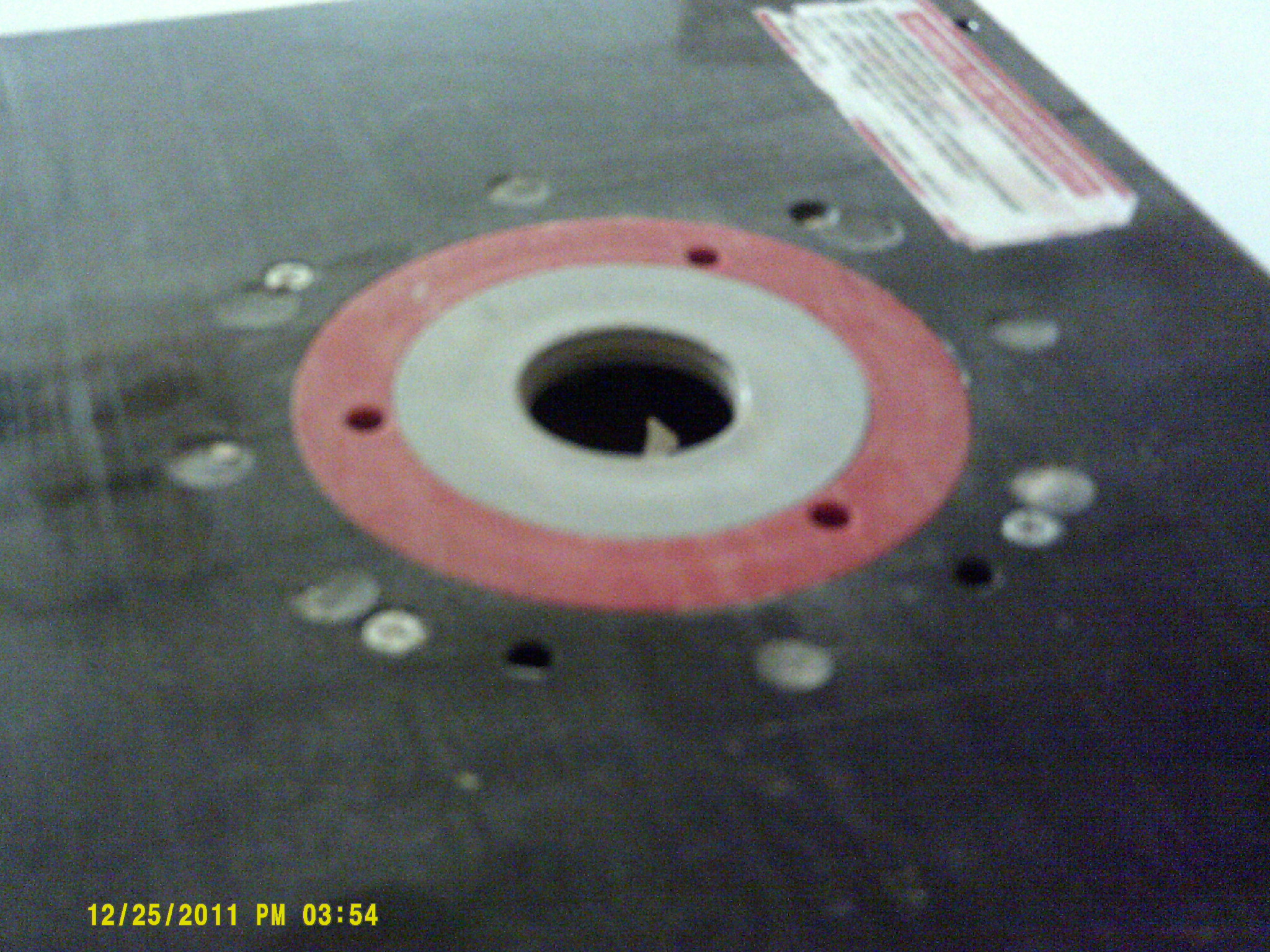
This week, I have to finish a set of pantry doors. I have this Rousseau router plate that holds my Freud FT2000 router. I picked it up about eight years ago.  Those little insert rings have never quite fit right – they have always been too tight. I have been holding off doing anything about this because – you guessed it – I didn’t feel right about ‘customizing’ the plate to meet my needs.

That ends today. If I’m going to get good results on my cope and stick joinery, I’m gonna need a very flat table. So, out comes the 220 grit paper and I’ll be shaving the rings down to size to make them fit.

The sounds of a happy client who got perfectly milled doors? I’m sure that will be music to my ears!


An early present?

Today’s post was a little late, eh? I’m actually about ready  to go to bed.

The reason why I am so late is that I had my ‘maiden voyage’ (as the nurse put it) into one of the routine rites of getting older… Let’s just say it involved a liquid diet, some medication and a touch of  anesthesia.

I was kinda woozy for most of the day, but I was good enough to take a visit from a neighbor on the other side of the block. He’s a fellow woodworker – actually, more of a tinkerer. He and his wife have moved quite a few times in the past few years, and he was getting tired of hauling everything from house to house. He asked me if I was interested in getting one of his old tools.

Free tool?  Of course!

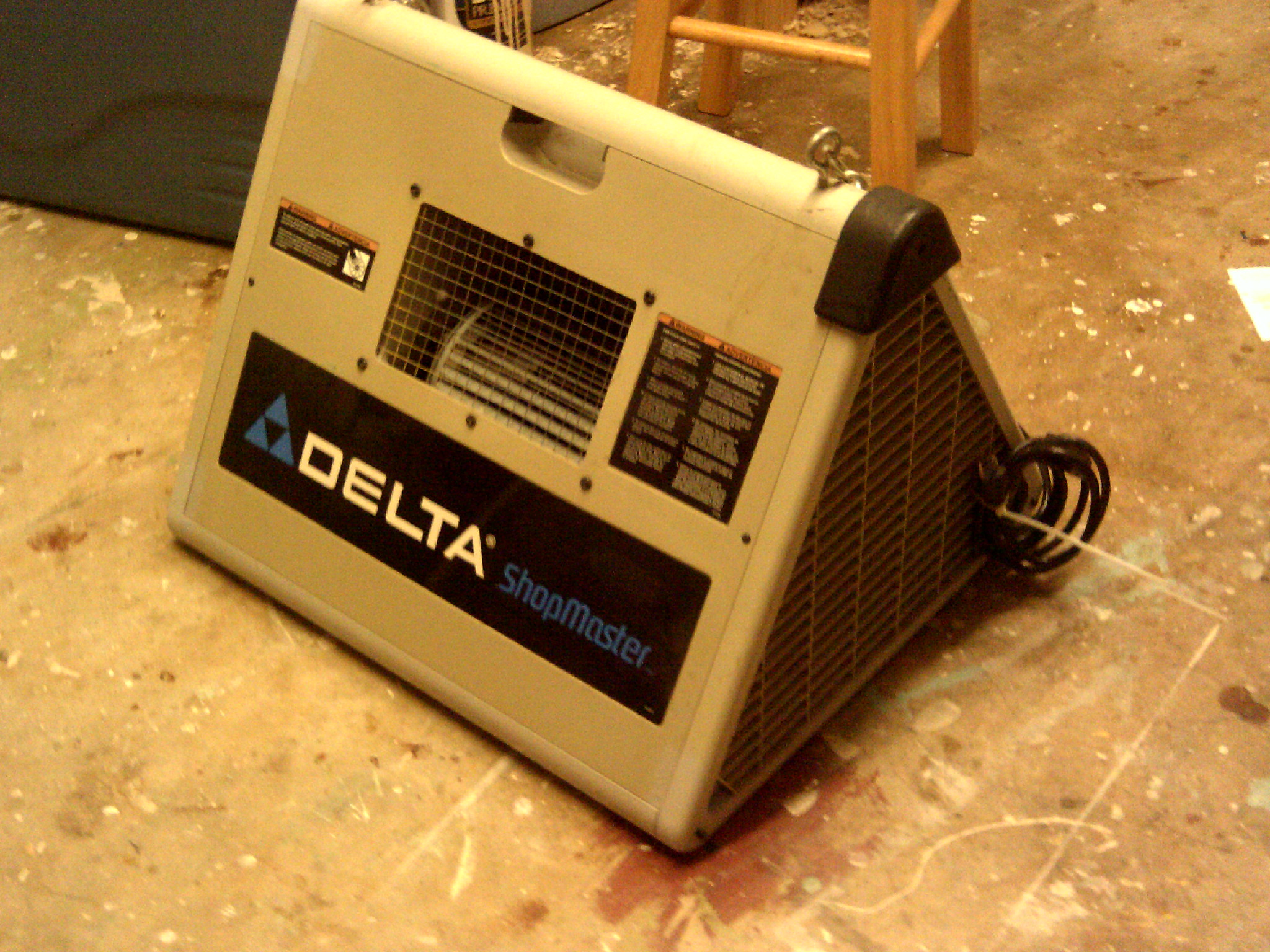
It’s a Delta Shopmaster AP100 dust filter. According to the specs, it can pull 450 cfm of air through the filter, capturing the fine stuff that gets airborne. This isn’t the kind of tool that I would buy for myself, but, judging from the dust on my tools and shelves, I’d say I could probably use it.

It’s in pretty decent condition, with a few dings and bangs. But, I plugged it in and it drew a lot of air.  Fairly quiet unit as well.

The added bonus is that is has a light on the bottom.  Actually, a pair of florescent lights run on a pull chain. Maybe not bright enough for me to move to the bench, but, hey, I have a good place for it near my air conditioner.

Not what I had planned on writing today, but, hey, it’s always good to welcome some new tools!

Now, for a something completely different – if you are member of the Wood Whisperer’s Guild, check out the profile Marc Spagnuolo did on my workbench. It’s kinda interesting.. and I discovered that when I take pictures in my shop, I need to clean up!

Not a guild member? What the heck are you waiting for?  Marc runs one hell of a show there on the Guild, and your membership lets you in on some exciting members-only content. With the holidays RIGHT UPON US – maybe it could be that last minute gift that pays dividends all year!


How big do you want it?

I still remember when my brother-in-law purchased his first table saw. A Skil benchtop model that he used the heck out of. I was in awe of his saw, coveting it jealously, because I didn’t have one of my own at the time.

While he was showing me all of the neat features (Height adjustment? Blade angle adjustment? Rip fence? Someone pinch me!), he lamented one important thing – he couldn’t find a ten inch diameter dado blade to go with his ten inch saw. This really seemed to bother him.

It got me wondering… why the heck doesn’t anyone offer a ten-inch dado blade for hobby woodworkers? Come on, I want to use all the saw I bought, right?

“Well, it’s not quite like that,” said David Venditto of Infinity Cutting Tools. “Your saw can handle up to a ten inch blade, but dado blades are a completely different animal. Yes, they both do cut, but it’s all about the weight.”

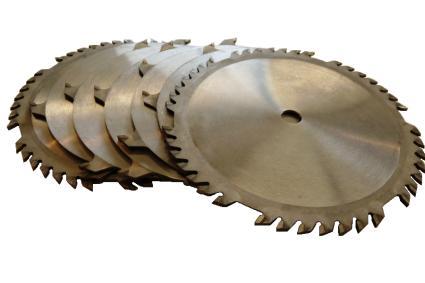
David explained to me that a regular crosscut, rip or combination blade for a saw is a single circular plate with teeth cut in it, carbide pieces added to those teeth and a hole precisely bored in the center to ride on the saw’s shaft. That one blade has a limited amount of heft to it, and that’s what the saw manufacturer designs the tool to use. “The weight differential between a single ten-inch blade between models isn’t that great. So if you are using one of our blades or one that came with the saw originally, the saw won’t really care.”

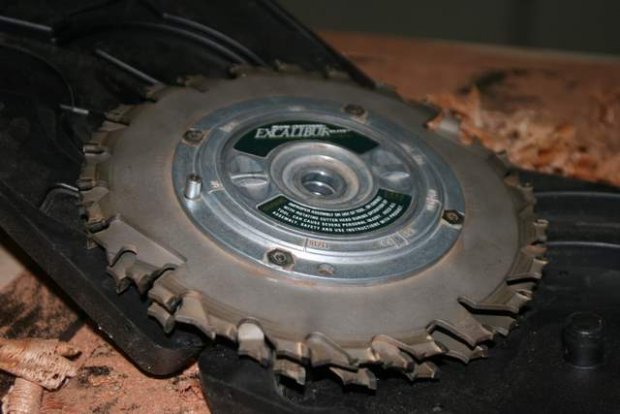
This all changes when you move to a dado blade. In order to cut the larger groove, you have to expand the cutting area of the blade. In order to accomplish this, there are two approaches. Wobble dado blades use an eccentric hub which can be dialed to size. The blade flutters as it cuts the material, doing the dado in one pass. “Sure, you can go this way to cut dadoes. It’s a technology that has been used for years, and it works fairly well, if you don’t mind rounded bottoms of your grooves.”

The other technology which is used is to stack a number of blades together on the saw’s arbor to achieve the desired width of cut. “Stacked dadoes give better results than wobble units, but it comes with a significant increase in weight. That’s where we as blade manufacturers have to downsize the blades to help the saw compensate.”

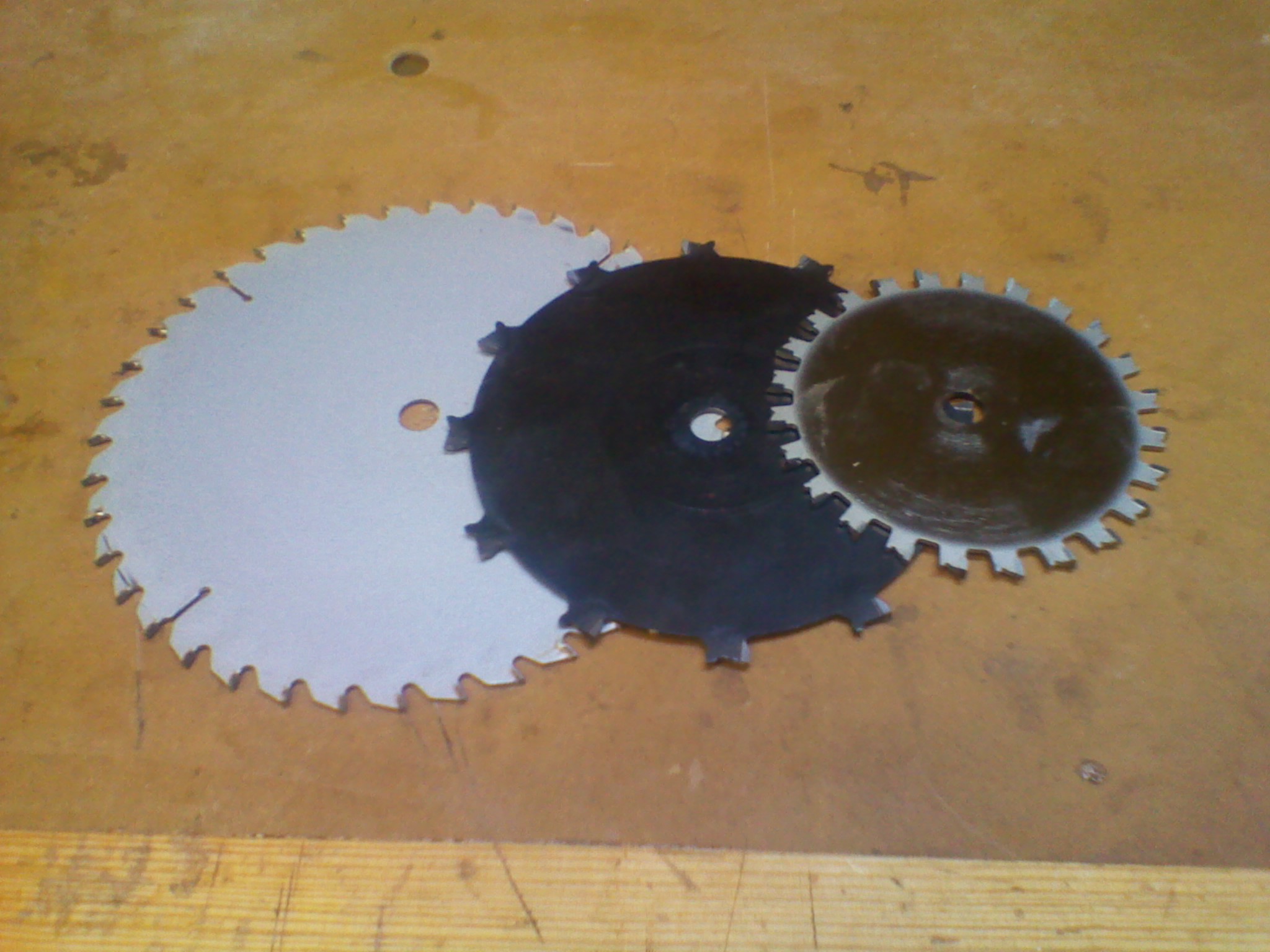
A ten, eight and six inch blade for comparison

That’s why most manufacturers offer eight inch dado stack sets. The two extra inches of reduced diameter makes the stack considerably lighter than it would be with a ten inch diameter. “To give you an idea of weight differences, our 8” Dadonator stacked set (with 24 tooth outside blades and full-body 6-tooth chippers) weighs in at 10 lbs, the 6” Dadonator Jr. set (with the same blade and chipper design) weighs a full 4 lbs. less. The Jr. is clearly the best choice for anyone using less than a 5 H.P. cabinet style table saw. In all of the years I’ve been making saw blades, I’ve never heard one person complain about not being able to cut a three and a half inch deep groove in a board. But, they all seem to love the flat bottom cut they get.”

Stacked dado blades have the two outside blades which – when used alone – can cut a ¼” groove with no problem. To further widen the cut, chippers with a reduced number of teeth are stacked between the two outer blades until the desired width is reached. “With our Infinity Dadonator line, we make the only blade sets with six teeth on the chippers – where many other manufacturers may use as few as two. The 6” Dadonator Jr. is the only dado set on the market to feature outside blades with 24 teeth and chipper blades with 6 teeth. Those extra teeth help ensure your cut is crisp in solid wood or plywood. That does mean that our sets are going to be heavier than other dado sets you can buy.”

David’s answer for those who want to use his dado sets on a smaller saw? “There’s nothing wrong with looking at our six inch dado set. With that, you can still cut grooves as deep as one and a quarter inches, which is more than adequate for most joinery tasks while not straining your saw’s motor to keep up with the demands placed on it.” David was also quick to point out that the 6” dado set also costs less than its bigger cousin. “If you are in the market for a new dado stack and you don’t have a beefy cabinet saw, the six inch blade represents a heck of a value without sacrificing performance.”


A boring conversation

My cable service offers more than one thousand channels. I have four movie megaplexes in a 20 minute drive from my house. The Internet can bring me thousands of movies on demand.

So, you can understand why I don’t like to be bored. I have plenty of opportunity to make sure that I never get that way.  Woodworking also helps me stay out of that dreaded state or boredom.

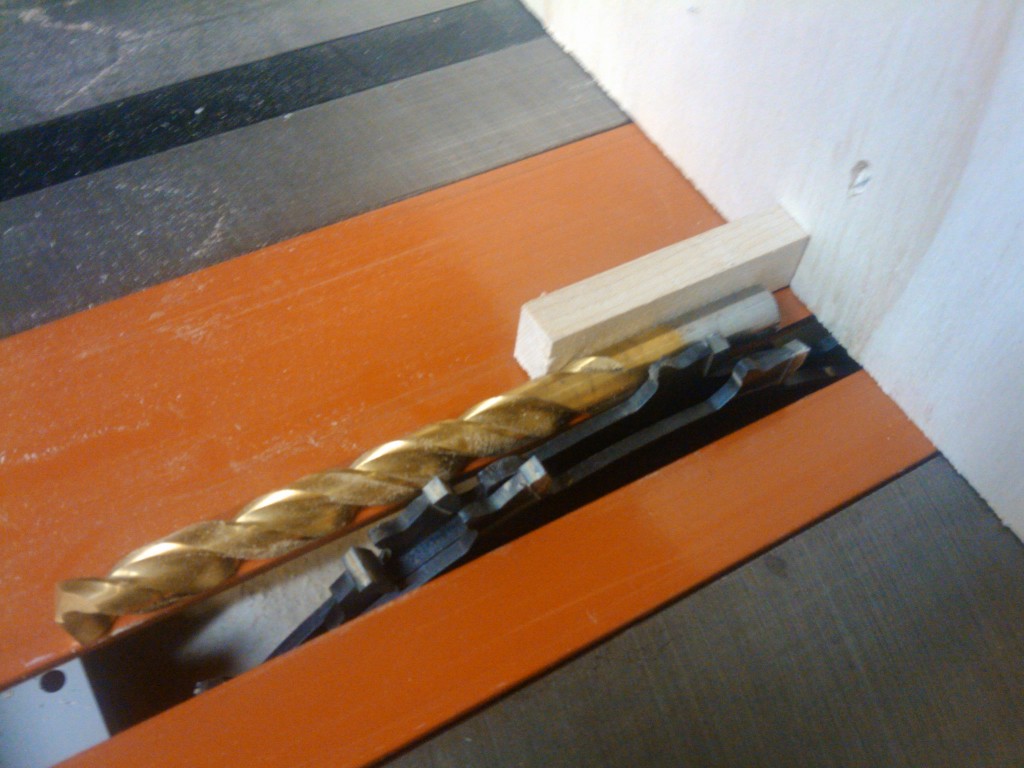
That’s why I can’t understand why talking about drills and what they do is called boring. It’s anything but. Whether in a drill press or a hand-held unit, there are dozens of things you can do with the right selection of bits.

Just as with the router, drilling tools are nothing but fancy paperweights without bits. The bits come in a bewildering array of sizes and shapes to do a great number of tasks. Don’t be misled by looking at the selections in the local home improvement center.  There, you will typically see your basic twist drill bits which do an OK job on wood and metal. But, if you haven’t tried bits specifically for fine woodworking, well, let me be the first to welcome to you a brave new world!

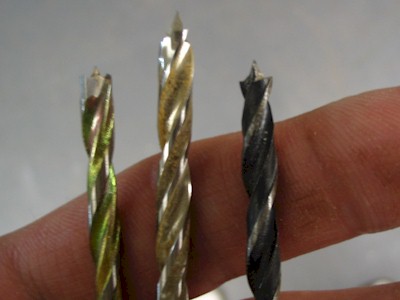
When it comes to drilling smaller diameter holes in wood, it’s hard to beat the brad point. They look very similar to the regular twist bits, but have a sharp brad point at the business end with two cutting spurs at the outside diameter. These two features allow you to start your drilling without the fear of the bit wandering. And, with the cutting spurs, the hole is very clean. If  you are the kind of woodworker who likes to drill your mortises, these are two very important traits you want in your drill bits.

For larger holes, there’s another specialty bit that you should consider – the Forstner bit. These bits feature straight shanks with a larger sized cutting head at the bottom. Forstners excel at cutting smooth, straight holes with flat bottoms.  But, not the only thing you get with them. Since the bit is large and the rim of the bit does the cutting, you can bore on an angle, or just use part of the bit to drill an arc. And, if you are looking to mount something like a clock insert, it’s as simple as chucking the right sized bit and drilling until you get the proper depth. Since the cuts are so clean, there’s little – if any – clean up required.

You can also pick up a forstner bit extender, which allows the user to drill deeper into the work. You may not use it every day, but when you need that extra little bit of reach, well, it’s a very handy attachment.

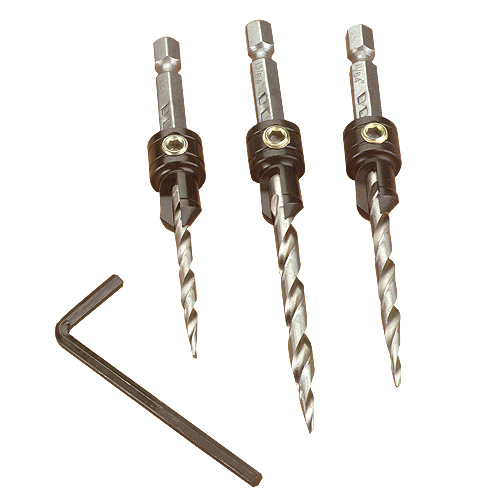
There are also  a number of other specialty bits available. For instance, for most countersinks, the drill bits are tapered.  It seems like a small thing, but if you are using traditional tapered wood screws, a tapered bit is going to give you excellent thread contact for the entire length of the screw.  More thread contact means better holding power.

From there, well, where can you go?  Plug cutters? Tenon cutters? Hole saws? Spade bits?  Hey, let’s talk about them later.  I’ll need something to do the next time I get bored!