Category Archives: Experiences

Thankful for what I have – and what I can do

Raising kids today can be quite a challenge.  I want my two sons to grow up as generous young men, not thinking solely about themselves.  The holiday season always poses the toughest challenge of the year.  My wife and I have had to work hard to ensure that the holidays are not just about Me! Me! Me!, but about the spirit of giving to those who are less fortunate than we are.

For instance, at my office, we have a holiday bike drive that provides new bikes to kids who are receiving social services.  All through the year, my co-workers and I throw our pocket change into a container to add to the effort.  It’s an effective and painless way to give to the cause, and in years past, we there have been times we have managed to collect more than $250 that way.  I have encouraged my sons this time of the year to collect the pennies languishing in the bottom of their desk drawers and contribute them to the drive, and they have done so willingly.
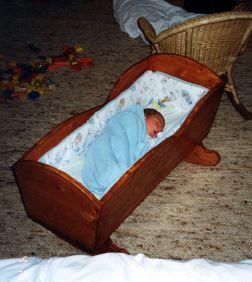
The only shot I have of my son's cradle - 2001

Another, more heartfelt way we have given back started a few years ago as a way to clear space in our house.  I had built a cradle for my youngest son just before he was born.  It was just a plain pine model screwed together.  At the time, I thought it was the epitome of craftsmanship…

But, as my skills progressed, I soon realized that it was nothing but a simple screwed together pine cradle.  Since I was sure that I could do better when my grandchildren arrive in a few decades, I loaded the cradle into the back of our van early one morning and left it by the front door of a local pregnancy crisis center.  We attached a note:

Dear Folks:

Please be sure this cradle is given to a young mother who may not be able to afford to give her new child something nice this holiday.

Santa

I needed my sons to be there to see what generosity means this time of the year.  An anonymous donation of something special  may have meant the world to a frightened young lady.  My boys learned a lot that day, and I could see that they were getting the message that it’s great to give to others without praise or reward.

Since then, I’ve made it a point to donate other hand crafted things to that center…either more cradles or a simple rocking horse built from a plan I use.  I always drop them off with the same note.

This year, I am planning on doing more of the same. I have gotten a lot of encouragement  from my friends at Wood Magazine. They provided me with a plan to build their classic  Heirloom Cradle.  No, I decided against building the storage box…  I’m just tackling the cradle to keep things simpler in the hectic holiday season.

Thanks also goes out to the folks at Bell Forest Products, who donated the maple and walnut for the contrasting wedges I will be using to build this piece.  Thanks, guys.

Through the building process, I’ll try to remember to post in-progress pictures (I am terrible about remembering this step, aren’t I?) to document the building, and I hope to be able to drop this cradle off to the nearby center sometime before mid-December.

While I have always been a Secret Santa, this year, I thought that it would be a good idea to share this experience with my woodworking friends.  I’m sure that in your hometowns, there must be other similar facilities which serve those going through tough times.  I’m hoping that – if you are so moved – you might consider building a cradle of your own and dropping it off – anonymously.

I don’t want to have to post this, but I believe it’s important that I do. I understand that teen pregnancy or pregnancy outside of marriage can be a hot-button issue.  Just so you know, I won’t be accepting or posting any political manifestos about the topic.  However, might I suggest that if what is written here does evoke strong feelings, perhaps you might want to consider channeling your energies to building something you find more palatable, like a rocking horse for kids getting medical treatment at a nearby children’s hospital.

I know that one day my two sons will grow up, become young men, move away and eventually raise families of their own.  I just hope that the lessons my wife and I are teaching are something that stick with them, and that they pass them on to their children.

I have so much to be thankful for this year.  My wish for you is that  the holiday season brings each of you nothing but health, happiness and peace.

Happy Thanksgiving to all of you, my friends…

Be a happy elf…

This past weekend proved to be one of the most productive I have ever experienced in the shop.  There’s nothing quite like getting holiday gifts built for loved ones.  You know they will appreciate the gesture and proudly exhibit the item you build for years to come.  Yes, as an elf at the North Pole, I was totally stoked!

Send your own ElfYourself eCards

Unfortunately, once word gets around that you are a skilled woodworker… well… the jig is up.  Requests start to come in.  “Oh, you don’t have to buy me anything… something from the shop would be awesome!”

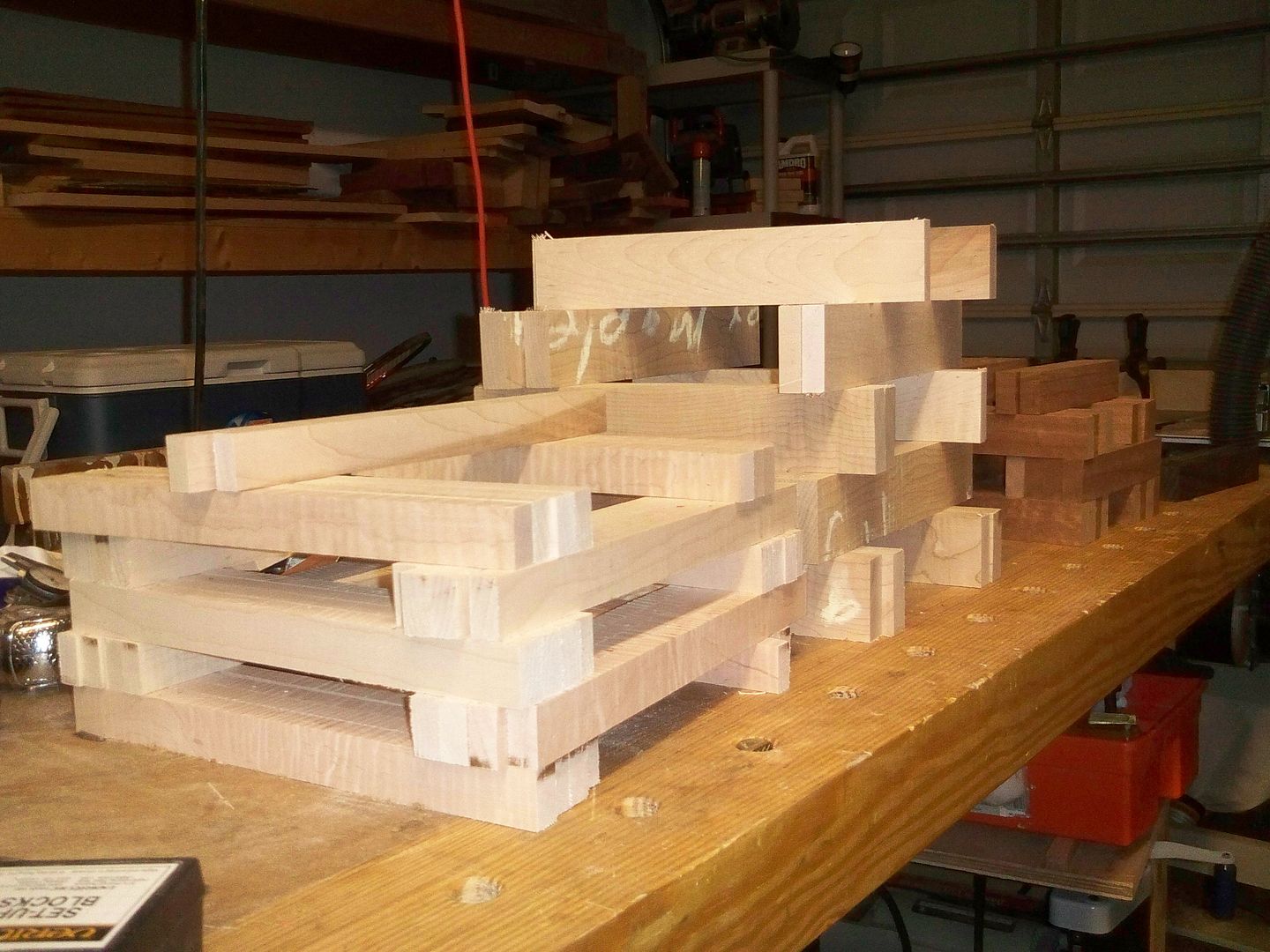
This year, I have now moved up to building ten copies of a project I found in the pages of Wood Magazine.  I can’t show you what they look like all put together, because I don’t want to ruin the surprise for the recipients.

However, I can take you behind the scenes into Santa’s workshop to show you how those elves are busting butt to meet the production deadlines.

Let’s just say that power tools are the workhorses for these projects.  I could easily do the work with hand tools and bang out high quality pieces, but for accuracy, speed and repetition, power’s got it hands down.

OK, some quick math….  since I’m working on a factor of ten, the number of pieces I had to cut includes:

  • 40 uprights
  • 40 rails
  • 40 long rests
  • 20 feet

For joinery for these pieces, I then had to  cut:

  • 80 mortises
  • 80 tenons
  • 80 notches

Needless to say, all of these joinery cuts have to be very precise, since they should all be interchangeable between different assemblies.  I relied heavily on stops, jigs and sleds to get the right set ups for each operation.  Sure, it took some time to get set up to a high degree of accuracy, but once I was there, things sped along.

After about seven hours in the shop over two days this weekend, I managed to have all of the pieces cut to size, all of the joinery cut and the central frames glued up.  From here, there’s more shaping to do on other elements and the final assembly.  Perfecting the sanding will follow, and then the entire project will be capped off by a lovely finish.

I’m hoping that all of the pieces which have to ship to the family will be ready to fly by Thanksgiving week, and then I can get the shop back for a few fun projects that are coming along afterward.

Right now, however, Santa’s little elf has had it…  he’s beat and could use a nap to recover from a long stint in the shop.  Visions of sugar plums – and hitting the shipping deadlines – are dancing in his head for sure.

“…Who will pick up the flag?”

One of my favorite movies of all time is Edward Zwick’s 1989 work Glory.  It is the retelling of the story of the 54th Massachusetts Regiment during the US Civil War.  The 54th was the first all black regiment to take the field in battle, and they proved themselves brave warriors as they attempted – and failed – to take Fort Wagner which guarded the city of Charleston, South Carolina.

One of the most poignant moments in the film was when Col. Robert Shaw (Played by Matthew Broderick) stood by the flag bearer at the head of the column of soldiers just before the climactic battle and asked, “Should this man fall, who will pick up the flag?”

Why was this so important?  Sure, the flag is the symbol of a nation, and as such, it shouldn’t touch the ground as a sign of respect.  But, that’s not the main reason why Shaw asked for a volunteer.

Back in the days before field radios and instant satellite communications, it was a difficult job commanding men in battle.  So, the commanders for different units had to rely on two tools.  The first was the bugle’s call.  By having a bugler sound a different tune, the soldiers on the field were able to tell if they had to retreat or advance.  The second – and probably even more  important – tool the commanders used was the standard bearer.  By hoisting the unit’s colors high in the air, the soldiers were able to tell where their unit was headed, and if they were still in formation during the attack. That flag guided their movements and helped them stay on track.

Knowing that importance, opposing forces were quick to locate the standard bearer and gun him down.  By doing this, they could easily thrown their opponents into disarray, possibly turning the tide in battle. Being the standard bearer was a very dangerous occupation.

2009 has been a tough year for woodworkers.  We have seen the passing of two woodworking legends, and the end of an era on television.

Sam Maloof was a truly inspired genius when it came to the craft.  From his California workshop, Sam let his vision guide his work for more than 60 years.  Even until his final days, Sam’s skill and  love for wood poured out into the creations he planned and assembled.  Primarily known for the sinuous curves of his rocking chairs, his designs graced the White House as both presidents Jimmy Carter and Ronald Regan each owned one.  He was described by the Smithsonian Institution as “America’s most renowned contemporary furniture craftsman” and People magazine dubbed him “The Hemingway of Hardwood.” But his business card always said “woodworker.” “I like the word,” he told a Los Angeles Times reporter, his eyes brightening behind large, owl-eyed glass frames. “It’s an honest word.”

A few months later, we bid farewell to James Krenov. This Siberian-born woodworker started woodworking back in the mid 1920’s, when an airplane dropped supplies for his town in his family’s new  new Alaskan home.  In this package, he found a jack knife and began carving toys for himself and other children.  As the handmade aesthetic had nearly died out in the 1950’s, James was one of the standard bearers for a return to the honest, well-built projects turned out by talented woodworkers today.  His seminal 1976 work A Cabinetmaker’s Notebook helped to light the fire and bring woodworking back to the fore.  It remains one of his most popular works.  He helped establish the woodworking program at the College of the Redwoods, which instructed a new generation of notable woodworkers.

While not a death, last week’s announcement that the New Yankee Workshop will cease production proved to be the talk of woodworking forums across the Internet.  Norm Abram and Russ Morash broke ground the first time in 1979 with This Old House, and in again when they launched the New Yankee Workshop in 1988.  Sure, there were the questions.. who would watch one guy build furniture in his shop for half an hour?  Apparently, lots of folks.  Norm’s easy-going attitude and communication ability gave woodworkers the inside look at how furniture is made.  Always dressed in his plaid with tool belt strapped around his waist, Norm exhorted woodworkers to get out and build safely.  There is little doubt that many woodworkers today got their start in the craft while sitting in their easy chair watching the show.

We now enter into a new era in woodworking.  Many of the old masters who brought the craft out of the sterile 1950’s are getting up there in age.  Sam Maloof, James Krenov, George Nakashima, Tage Frid… they are passing on, leaving memories and their written – and spoken – words for future generations to learn from.  Speculation is that the 21-year run of the New Yankee Workshop was halted by the current economic conditions and a lack of sponsorship money.

These two men and this one show carried the banner for woodworkers, showing them that yes, you can do this and yes, you will improve if you stick with it and invest the time to work at it.

Who now will pick up  the flag?

After reacting to the shock of the two passings and show cancellation, the next post typically asked the most logical next question – who will take their places?

Of course the answer is no one… Krenov and Maloof were pioneers and visionaries.  Their styles are as famous and imitated as those from the Shakers and the Arts and Crafts movement.  The New Yankee Workshop broke ground and laid the path for televised craftsmen such as David Marks and Scott Phillips.

However, the same question also has a logical answer – it’s right under your nose.  The computer you are working on right now is a doorway to the rich online woodworking world.  Woodworking blogs, written by many gifted craftsmen and women, have sprung up across the net.  This is where the next woodworking standard bearer will be discovered.

In many ways, the Internet is far superior to TV programming.  For instance:

  • The cost to get started in blogging and podcasting is insanely cheap.. when compared to the cost of equipping a full-blown TV production set.
  • You can dial in your interests precisely. If you love the router, you will find websites that deal with that tool.  Turning?  Yep. Hand tools?  You betcha.
  • The content is available 24 hours a day.  You can subscribe to the RSS feeds from several different sites and review the new content as it is posted.  This beats watching the same TiVo’d show over and over for a week until the next program comes along.
  • And, most importantly, regardless of the economic conditions, web woodworking contributors can continue to post, where TV programming needs the infusion of cash to keep the show on the air.

With the changes in technology, the arrival of High-Def visual programming has arrived. Today’s powerful computers and high-bandwidth Internet connections make the fast and easy access of programming a piece of cake. And, as woodworking web contributors continue to target their audiences and hone their video and audio production skills, the quality of the programming will only rise.

Maloof and Krenov carried the banner through some of the roughest times for woodworkers, and their contributions will never be forgotten.  And, even though the New Yankee Workshop will no longer be producing new shows, the 21 year long body of work will exist in perpetuity on DVD’s and through the ‘measured drahhings.’

But, you have to remember that while these losses seem major, there are hundreds – thousands of woodworkers out there  who are willing to step to the front and answer the question by saying, “I will.”

Bench Lust… I mean List!

I just got back from the Woodworking in America hand tool conference, and wow, was that impressive.  The companies making tools, the talented presenters and – most encouraging – the numbers of young woodworkers attending made this past weekend something special.

But, what really got me going was a visit to the vendor’s area very early on Saturday morning.  There, I saw an impressive collection of workbenches tool manufacturers were using to display and demonstrate their wares.

If you don’t have a bench, or are looking to replace one… well, I have some inspiration for you.

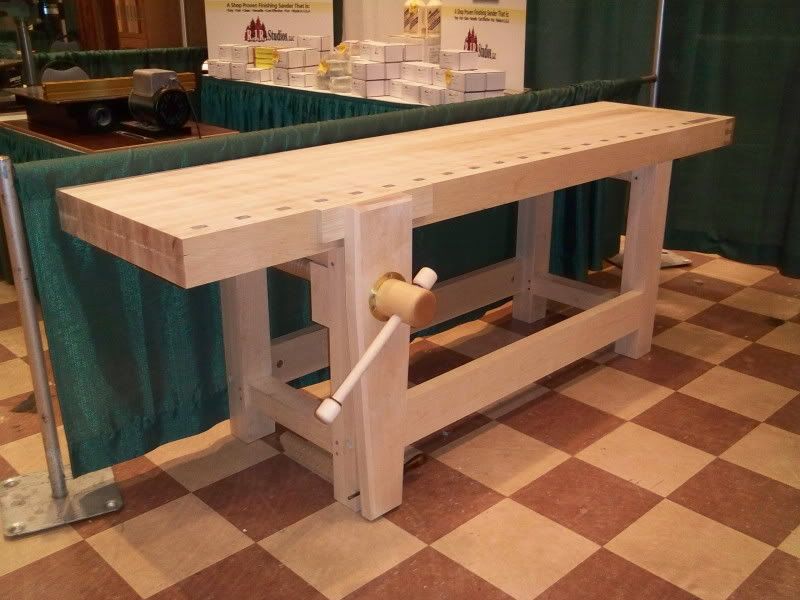
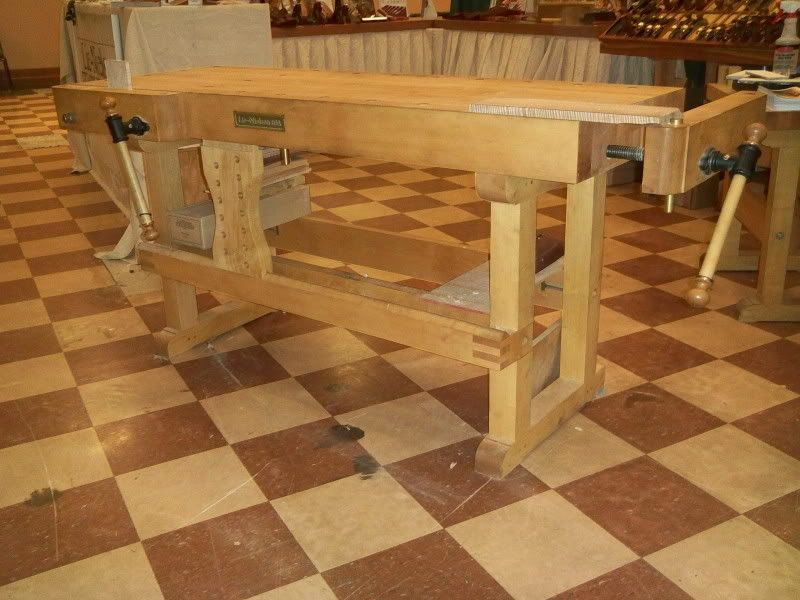
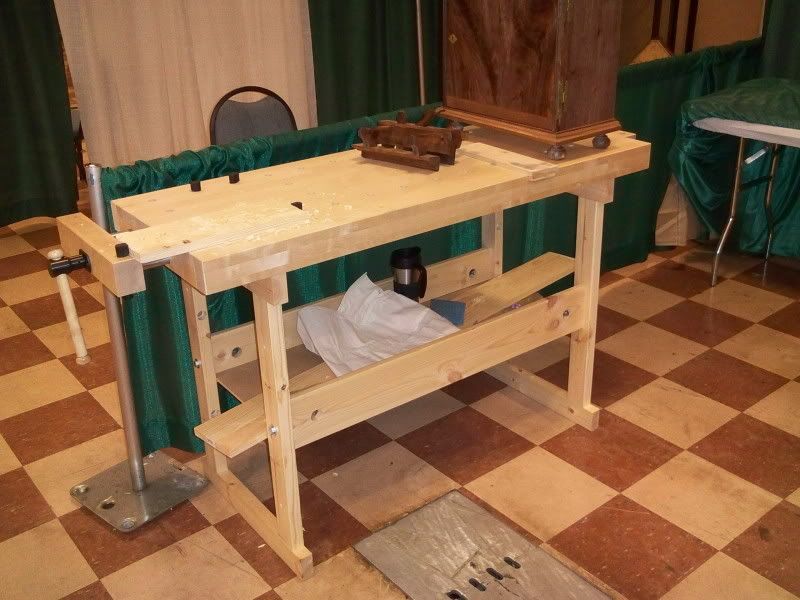
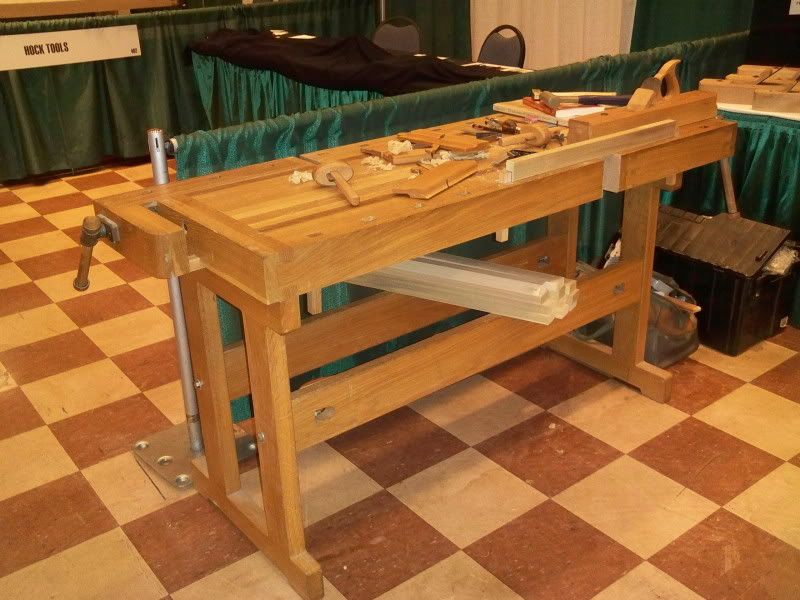
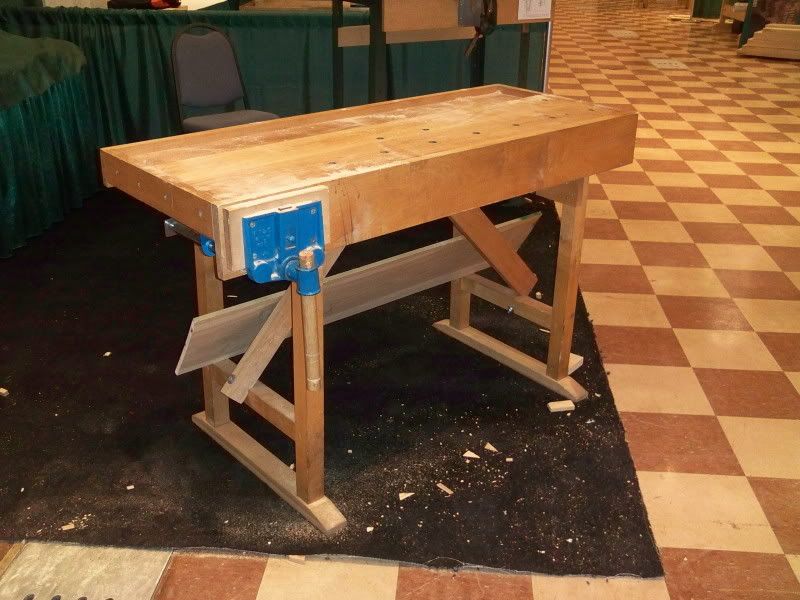
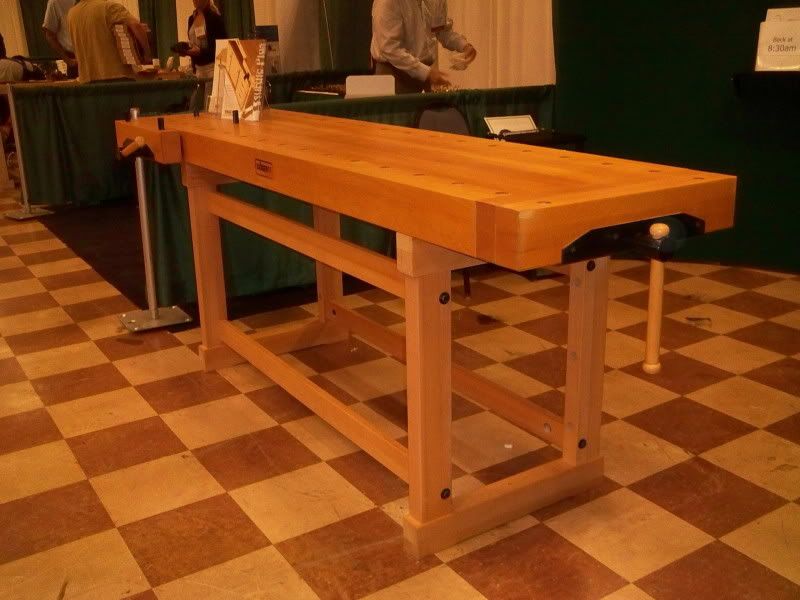
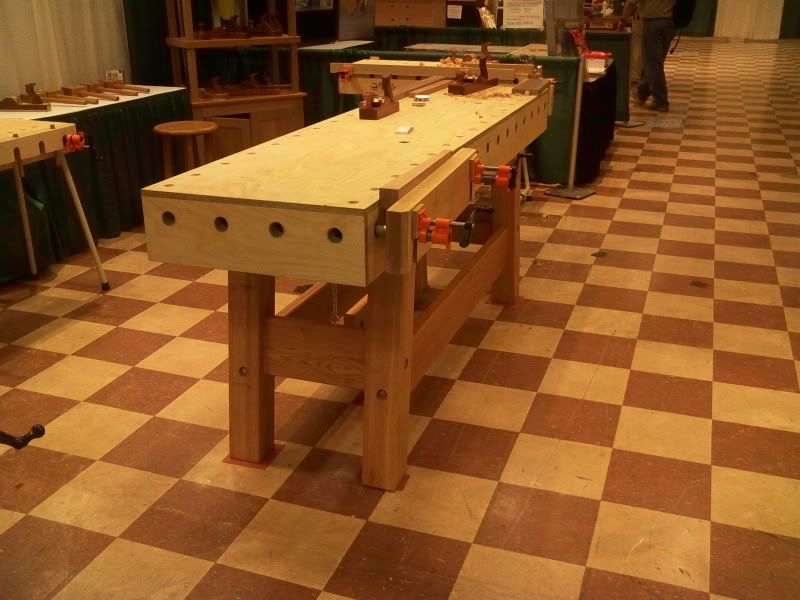
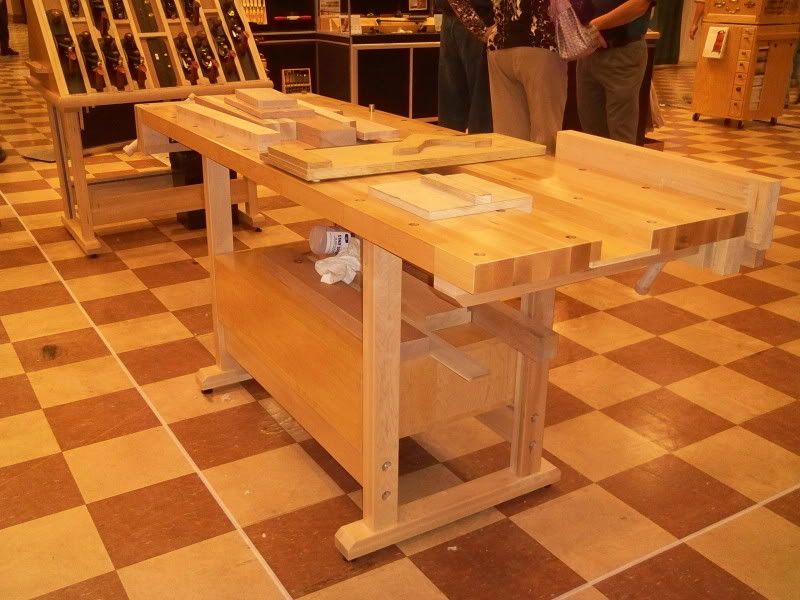
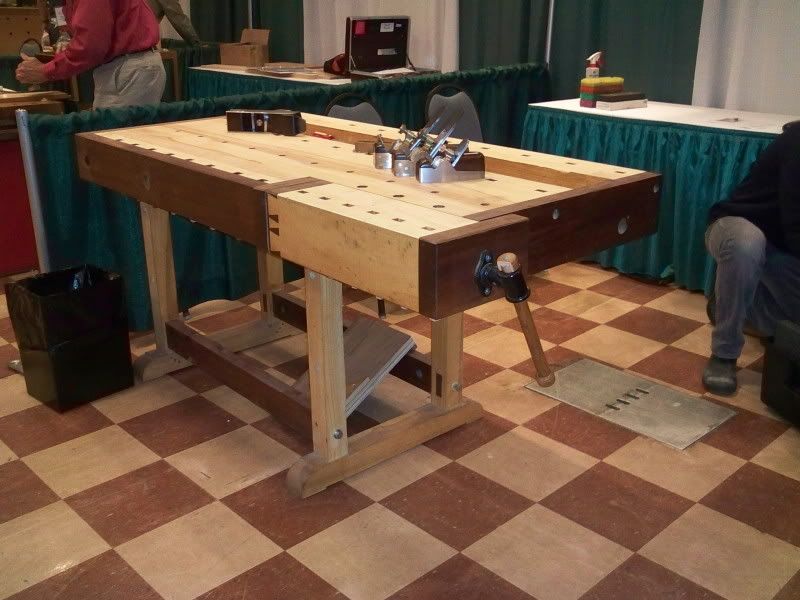
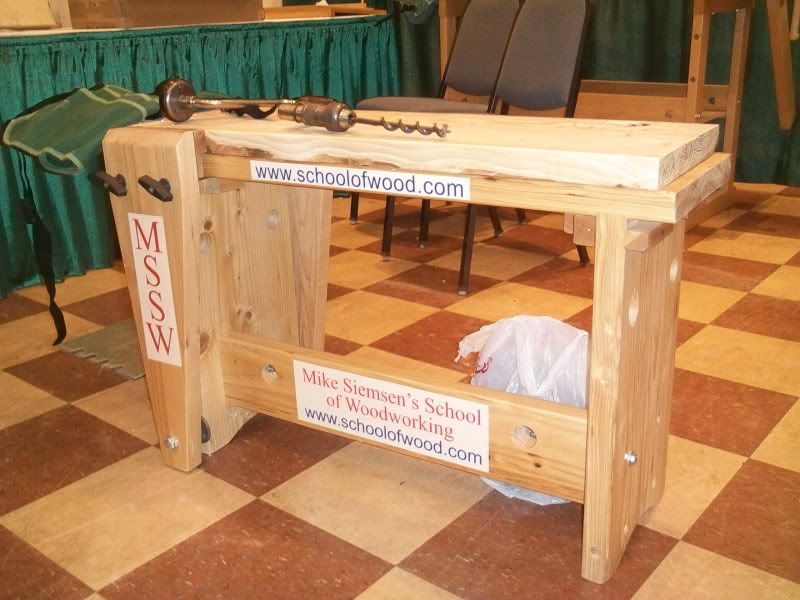
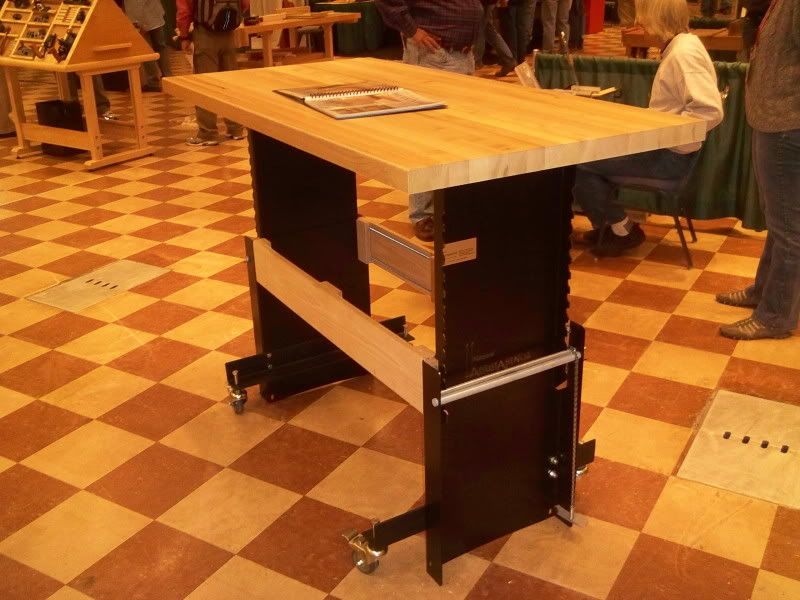
Here are a sampling of the benches out in front… some sweet specimens:

Lake Erie Toolworks' bench
The Lie-Nielsen Workbench
Blue Spruce Tools Bench
Blue Spruce Toolworks Bench
Clark and Williams Plane Bench
Clark and Williams Bench
The portable demo bench from Tools for Working Wood
A commerically available Sjoberg bench
An interesting plywood topped bench from Blum Tools
A demo bench from Lee Valley Tools
The Sauer and Steiner bench
A short saw bench
A short saw bench
An offering from Adjust-A-Bench
A bench in potentia
A bench in potentia by Horizon Wood
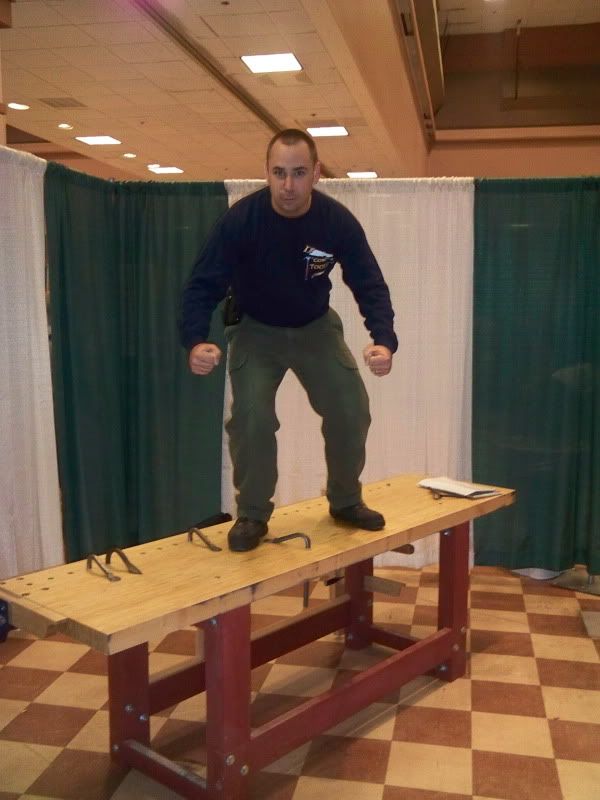
And, one very strong bench built my Megan Fitzpatrick!
And, one very strong bench built my Megan Fitzpatrick of Popular Woodworking

A furniture theme park

I live in Florida.. home of white sandy beaches, unique opportunities to enjoy exotic wild lands and no shortage of theme parks.  You’d think there would be enough destinations to keep my family entertained and occupied on a long holiday weekend…

But, there was one place we hadn’t been yet… And I was excited to go.  This past May, the international furniture giant Ikea opened a massive showroom in Tampa. We also needed a new dresser for my youngest son to stash his clothes in.  Sure, I offered to build it, but my wife convinced me that we should at least go over to take a look at what they had to offer. We headed over this past Saturday to take in the experience.

The first thing that struck me most was the size of the building. Gargantuan.  It looked like you could easily get lost in there.. and I braced myself to take the plunge.  As I walked through the bank of automatic entrance doors, I have to admit that my emotions were mixed. Part of me was excited to see what ideas were there for me to copy in my projects…

The other part felt as if this Swedish chain store was flinging a gauntlet down at me, the home woodworker.  After all, how could I compete with the clean Scandinavian lines and cheap prices by building  at my shop?  I felt compelled to find every fault I could and point it out to my wife to show my superiority in all things wood.

As we got to the top of the escalator, I was pleasantly surprised. The first sets of furniture arrangements in the showroom were impressive. Tasteful. They looked good.

As we took the leisurely stroll through the showroom, the range of furniture offered was very impressive.  Living rooms with clever storage pieces and comfortable chairs and sofas.

Bathrooms that were stylish, yet full of intelligent design features.

Bedrooms that maximized every inch of storage space.

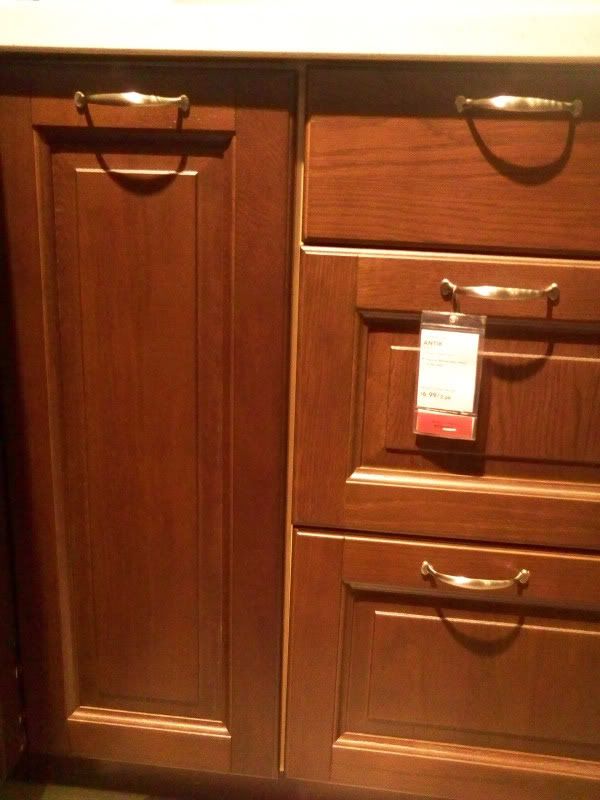
And kitchens like you wouldn’t believe.  No, they didn’t offer dovetailed drawer boxes, but they did have soft close drawers and doors, huge sliding pantries that pulled out revealing dozens of linear feet of storage and all of the amenities you would expect to find in a high-end kitchen.

There was a choice of styles of finishes offered on most furniture.  From traditional frame and panel doors to sleek, sexy modern European finishes, you certainly could modify your kitchen designs to fit your tastes… within reason.

That’s sort of where the Ikea aesthetic started to break down for me.  After a while, I noticed that the choices in finishes started to repeat themselves. You had white, light wood, medium wood and dark wood tones.

There were also some minor imperfections that began to stand out.  For instance, on one of their kitchen designs, the doors had a dark finish on them, but the cabinet insides had a light finish on them.  When the doors were closed, thin lines of light finished wood grain were peeking out from behind the dark doors, ruining the effect.
And, the molding options were limited to one style – a very narrow bull nosed piece across the top. Yes, that is part of the Scandinavian aesthetic, but it’s something that ultimately  limits the look of the pieces. Not every kitchen is going to look complete with such an austere molding detail.

Then, there is the material.  The company keeps costs down by relying solely upon particleboard in their casework pieces.  Granted, it’s not like the ultra cheap particleboard found on the ready to assemble furniture at the local mega mart, but it’s particleboard nonetheless. While the furniture may stand up to use in wet places such as bathrooms and kitchens, there’s a good chance that it may not.  After a few years, the possibility does exists that those sweet looking cabinets might swell if they face an errant water leak – something that good quality cabinet grade ply isn’t going to do.

As I sat in the Ikea cafe eating a plate of Swedish meatballs (It was a heck of a deal for lunch), I began to think about my shopping trip.  Even though there were some shortcomings in the design, the stuff did look to be very high quality.  I found myself less on the defensive and feeling more like there is a place in the universe for custom made furniture and the offerings found in Ikea.  I  can pick and choose what projects I want to build and custom make them out in the shop.

As my wife and I pushed the shopping cart with the flat-packed-dresser-in-a-box we bought for my son out to the van, I was at peace with my decision.  The four drawer dresser cost me only $99, went together in about an hour and a half and does its job admirably.  I doubt that I could build something similar in the same amount of time for about the same price.

Besides, that gave me more time to get into the shop and get working on the projects I have to get done on my honey-do list.

Like any good amusement park, Ikea did have its ups and downs and was quite a bit of fun. But, hey, who wants to live in an amusement park?

It starts with the word fun…

Ask people how they define the word ‘recreation’, and you are bound to get wildly differing answers.

For my wife, recreation means taking a folding chair and a sun umbrella down to the beach with a cooler full of cold water and a murder mystery.  She can spend hours just laying back and relaxing.

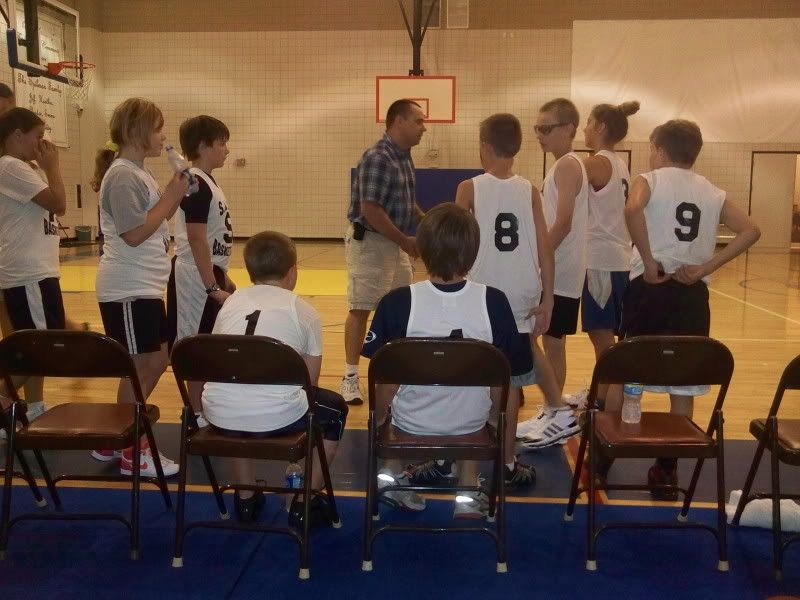
For me, well, I steer more toward the active. Case in point, I am currently coaching my son’s youth recreational basketball team.

Before I started woodworking eleven years ago, the local rec league was desperate for people to coach, so I stepped in to offer my services. That’s the last time I had coached, and our team did pretty well.  Now, with my son in the 11 – 12 age group and the hurricane speaking tasks slowing down for the season, I stepped up again to take the reins.

My ten-person roster is full of kids of differing motivations, skill sets and levels of experience.  My job is to whip them into a unified team.  But how?

I have been watching some of the other coaches in the league to see how they do their work.  I’ve seen coaches who just want to scrimmage during their practices, playing half their team against the other half.  Then, I’ve seen coaches focus intently on setting up designed plays.  Their players have to remember a bewildering number of play names and learn exactly what they have to do in each situation.

While both approaches have their merit, I have decided to focus heavily on the fundamental steps of playing the game.  After all, I could teach them set plays, but if they understand how to move without the ball, play solid defense and rebound correctly, they can use these skills later on down the road should they continue playing.

In much the same way, I have received a number of e-mails since I started working on Tom’s Workbench from woodworkers just starting out the craft.  “Tom, I’m looking to learn how to cut dovetails.  Can you tell me how to get started?”  “I’ve been trying to build a mission style lowboy for my wife.  I’m not sure how  to begin.”  “My finishing is just awful.  Where am I going wrong?”

I’m not going to claim that I am a woodworking expert – that I have all of the answers for every single problem or question.  In fact, there are still MANY different things that I need to learn myself, and there are still dozens – if not hundreds – of aspects of woodworking I have yet to even touch on.  I’ve only been doing this as a hobby for a little more than a decade.  There’s still much to learn.

One thing I have learned, however, is the method I am approaching my basketball coaching translates very well to working in the shop.  By taking the time to learn the proper fundamentals of different aspects of woodworking, you can more easily master the advanced techniques.

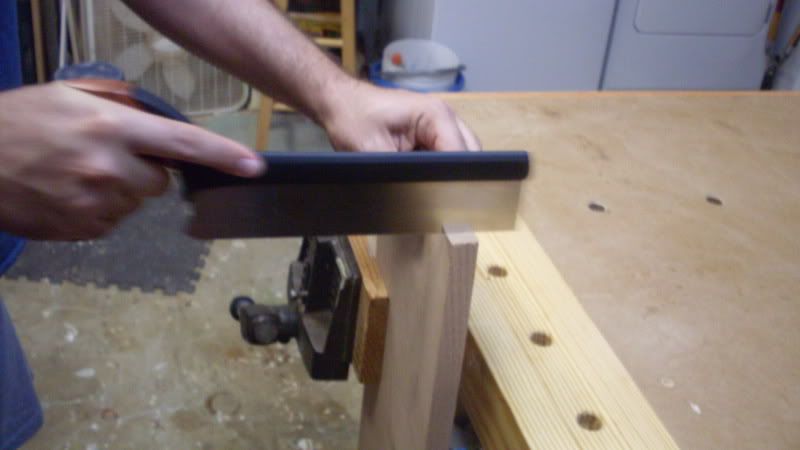
Think about it for a moment.  What do hand cutting tenons and dovetails have in common?  Besides the fact that it involves using a saw and not plugging in a tool, the main skills you must master are marking an accurate line and cutting exactly to it.  Yes, seriously.  That’s exactly what is required to make the joints sound.

So, how do you get that kind of experience?  The answer lies in the punchline to a classic joke tied to New York City.  A young lady gets into a taxi cab and asks the driver, “How do I get to Carnegie Hall?”  The cabbie looks over his shoulder and cracks back, “Practice, kid.”

To get that kind of practice, you should line up a few practice boards of some inexpensive material – poplar, alder, red oak or the like.  Mark a depth line and grab your saw.  See how many dead perpendicular lines you can cut across the width of the board.  When you fill one board’s width, cut that end off and start over.  Look at the results.  Focus on your grip and the flow of motion in your arm.  Look at the results and evaluate your progress.

Do this five or ten minutes every time you go into your shop, and you will hone those skills to the point where cutting advanced joinery will be a piece of cake.

The same can be done  for any number of other essential woodworking skills.  Learning how to use your planes.  Learning how to sharpen your blades. Learning how to properly work a router. Making high quality rip cuts.

Will it be fun?  Maybe not.  After all, our shop time is precious, and we want to spend all of that available time building projects.  But, just as the kids on my team may want to play like LeBron James or Michael Jordan and shoot the lights out, they have to start by learning to do the essential skills properly.  Once the are competent with those basics, the other stuff will start to come more naturally…

After that, hey, the sky is truly the limit.

Is it failure… or opportunity?

My days back as a student at the University of Maryland were some I will never forget. Moving away from home for the first time.  Getting along in a large campus and being exposed to many new people holding diverse viewpoints.  And, a class schedule and structure that was very different than it was back in high school.

Basically, college was set up so you attended each of your classes about three hours total a week.  Sounds easy, right?

Well, that was all of the CLASS work you got… the homework, however, took many hours to accomplish.  And, if you didn’t keep up, you were lost in the weeds.

That’s exactly what happened to me the first semester of my Sophomore year.  Inexperience got the better of me.  I thought I had this college thing down pat.  I took a blow-off class everyone told me I could ace even if I didn’t show up.  And, as expected, I blew it off.

That class ended up being the only F I ever got in my entire academic career.   I had failed what is considered one of the easiest classes on campus.  And I was not happy with myself.

Why is it that some woodworkers will look equally hard at their failures? Could it be that they made their goof up on a prize piece of highly figured wood?  Is it that there is only so much time available for woodworking, and that time spend making mistakes is considered time wasted?  Or, is it that they expect that they will never make a mistake – ever?

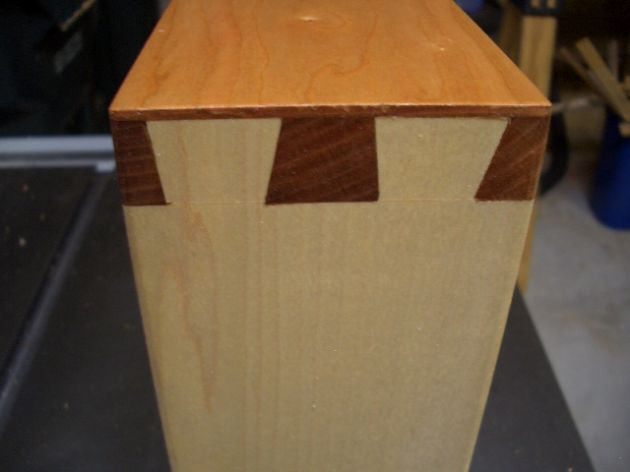
Certain skills in woodworking require a tremendous amount of practice and skill to execute properly.  One woodworker I know learned how to cut beautiful hand-cut dovetails on his own.  Sure, he watched the videos and read the books.  But, he gained the experience by setting up a stack of scrap wood blanks and cutting one or two sample dovetails a few times each week.

His first attempts looked as if they had been chewed by deranged beavers – gappy and uneven.  But, as he progressed over months of practice, he started to notice where he was making his mistakes.  Maybe he was not holding the saw properly.  Maybe he didn’t have his chisel perfectly perpendicular to the bench.  Maybe he wasn’t marking the cut lines properly.  Whatever the problem, he identified it and figured out a way to correct the issue.

Today, his dovetails are clean, tight and pretty as a picture.

Other woodworkers may be experiencing a fear of failure. Last weekend’s quick poll asked if you had ever bent wood for a project.  Nearly half of those who voted said they never have, but always wanted to.  For those who voted that way, why not?  Hey, I messed up my first attempt at bent lamination.  It’s in my scrap bucket right now, cut into multi-layered pieces waiting for the weather to cool down so it can be burnt in my fire pit.  Instead of saying, “I can’t do this,” I went back to the saw and planer and cut more strips to be laminated into bent pieces.  The results the second time around were much better… and now I’m working on the rest of the project.

What happened after I got that F?  I could have given up and felt sorry for myself, quit college and figured out what my next step was going to be.  Instead, I learned a very valuable lesson about life.  I sat down one afternoon and gave the direction of my college academic career a very stern looking over.  Was I committed to this or not?

I took the report card with the F on it and taped it to the surface of my desk where it stayed through the rest of my Sophomore, Junior and Senior years. Every time I sat down to do homework, I reminded myself what I had done, where I had failed and how I needed to correct my situation.  I studied harder, went to every class and sat in front. I budgeted my time carefully and made sure that I had my studies done before I knocked off for a cold one at the end of the day.

When I went to the mailbox to get my next report card, I just about fainted.  Four A’s and one B.  My best semester ever. I had taken my mistake, learned from it and became a much better student for it.

As woodworkers, I hope each of you takes the mistakes you make and learn from them.  Understand why things went bad, and seek out ways to improve your work.

I remember once reading the signature line of a fellow woodworker on one of the forums I follow – “It’s OK to make mistakes, but it’s to your credit if you don’t make the same ones over and over again.”

So, go make your mistakes boldly.  Learn from them.  You’ll be a much better woodworker for it.