All posts by Tom

I'm the guy who writes the blog...

Link of the week

Making wooden bowls

They can hold fruit, salad, bread or flowers. They can serve as the centerpiece of a fancy table, or be a very utilitarian service piece for your kitchen.

Wooden bowls are certainly something to behold, and they can be easy to make with the right tools. This site run by Ed Keenan shows his gorgeous wooden bowls that are for sale, but also walks readers through the step-by-step process of how these babies are made, just in case you would like to try your hand at making one.

With the holidays coming up in a few months, it’s time to start thinking about what you might be building, and wooden bowls may just be the ticket.

Species Spotlight: Canarywood

Sufferin’ Succotash!  Growing up, I didn’t know much about canaries, but I did know who the most famous of all was – Tweety Bird.No, he wasn’t as cool as Bugs Bunny… not as off the wall as Daffy Duck… and not as abused as Wile E. Coyote.

I mean, he was kind of a boring character. He just hung out in his cage, pampered by that nice little old lady. But, he had a bit of a mean streak in him. I loved how he made his arch nemesis – Sylvester the Cat – look like a total goof. While Sylvester often hatched these crazy, overly complicated plans, Tweety was able to easily parry his efforts, leaving Sylvester flat on his face or being chased by that big bulldog that lived out in the doghouse in the yard.

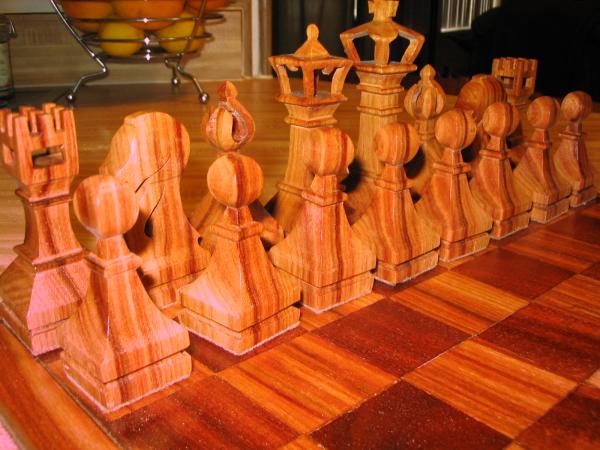
That’s why I find today’s species spotlight so intriguing. Canarywood sounds like it would be this bright yellow, plain looking, mild-mannered wood. But, you would be wrong.

Canarywood grows in South America, primarily in the tropical dry forests of Bolivia and Brazil. The trees grow very tall – nearly 100 feet tall – and very thin – maybe 5 feet in diameter. The wood from the tree is mostly yellow, as you might expect. However, it can also be found closer to an orange hue, with frequent streaks of light to dark red color.

The wood is very strong and has a fine grain texture, and is about as hard as hickory. It is not prone to splintering, and it works easily with both hand and power tools. It planes, scrapes and sands very well, and finishes smoothly with no issues for finish adhesion.

While it is a very showy wood, it is also sturdy enough for structural components such as table and chair legs. It can also hold crisp detail on carvings and other formed profiles, so, it’s equally at home on smaller, more decorative projects.

Canarywood is not yet a threatened species, however, overharvesting can be a danger in the wild with this showy wood. “That’s why we work very closely with our suppliers in South America to ensure we’re getting sustainably grown lumber for our customers,” said Eric Poirier of Bell Forest Products. “A species of wood this beautiful has to be preserved for future generations of woodworkers. Be sure to ask your supplier if they are getting their supply from properly managed plantations. It’s the right thing to do.”

I tawt I taw a pretty wood!


I see that new saw

My shop has a comfortable mix of  homeowner and ‘prosumer’ tools. There are some nifty routers, a set of sweet hand tools and a table saw that has been a good performer for me for nearly a decade now.  And, while I have had the basics, I’ve noticed recently that I am ready to do some upgrading. For instance, this past winter I upgraded my old entry-level Delta thickness planer with a more capable model from Ridgid. I upgraded my chisels. I upgraded my drill press by bringing it someplace where I can use it!
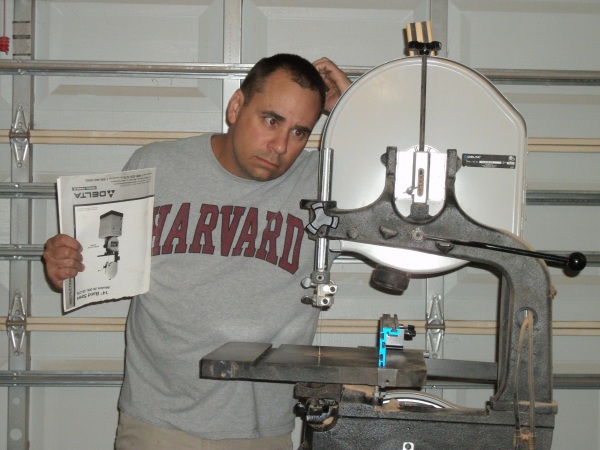
Another place I really wanted to upgrade was my band saw. That Delta was OK, but the six inch resaw capacity was just too little, and the blade tended to wander all over the place.  I would tweak and adjust and all that other goodness, but it still took a long time to make resaw cuts and the results were often lackluster.

That’s why a few weeks ago I contacted the folks at Laguna Tools about entering into an advertising agreement with the site. When they looked at what I have been doing for the past five years – but they still said ‘yes’ – I could barely contain my excitement.  Especially since it involved a new band saw.
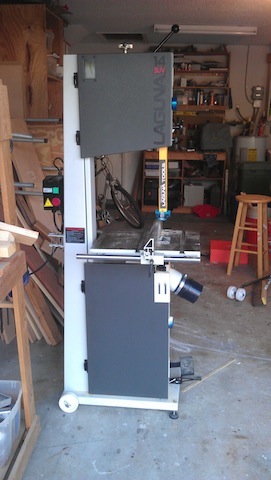
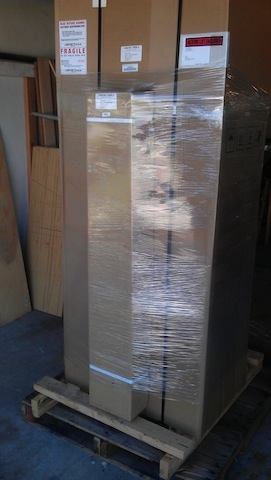
Yup, I’m the proud owner of a new 14 x 14 SUV Band Saw. The folks at the shipping company dropped it off last Wednesday at the house.  He had a really big truck, and it took a pallet jack to get the moving skid from the truck to my garage.  Good thing, because this saw weighs a cool 375 pounds.

I don’t normally deal with big industrial tools that arrive on the backs of trucks, so it took me some time to figure out how to even unpack this sucker. Laguna had built an internal plywood frame around the saw and encased that with cardboard, with the saw bolted to a skid to prevent it from toppling over. I was able to unpack the saw and open each of the elements, and, surprisingly, the saw went together very easily.
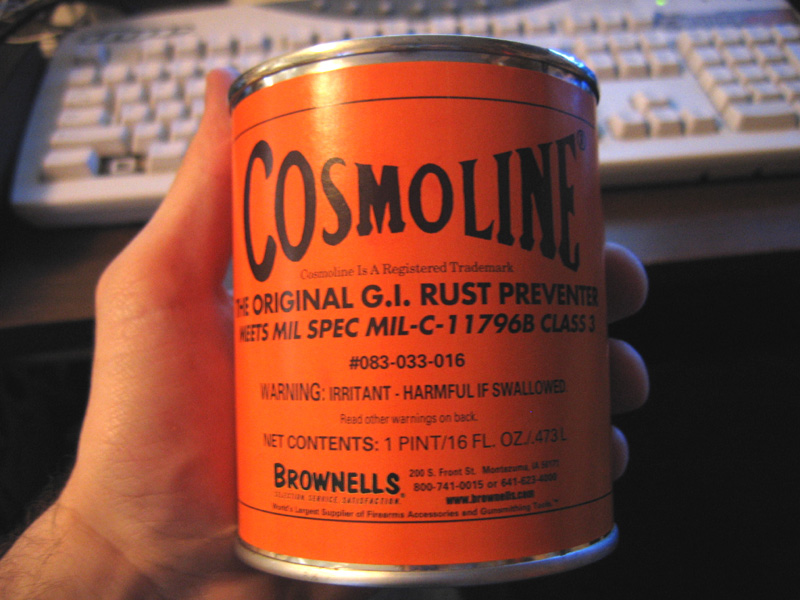
But first, I want to say this about Cosmoline – the brown, grease-like substance that gets smeared on the bare metal parts of machinery before it gets shipped… It’s a pain to get off, but it keeps the metal completely rust-free. Just take your time, use mineral spirits, WD-40, a bunch of rags and an old toothbrush, and you can get it all off in pretty short order.

The motor – a beefy 3 hp Leeson – mounts to the side of the saw cabinet. This time, I was very careful to ensure that the belt was tightened properly so I got maximum efficiency from the saw.  I also had to run a 220 line from the power panel to the saw location – it was an extra cost, but the motor is a beast.  That should make resawing a breeze.

Next up was the table and rip fence. The table is another heavy duty component, featuring integrated cast iron trunions in the bottom. The table is very heavy, so I’m glad they included a gas piston to help with adjusting the angle of the table – very clever little design feature that will save me a lot of issues later.  The stock rip fence slides onto a round bar on the table, locking securely. It has the ability to be used as a high fence or a low fence, depending on its orientation… a very clever idea.
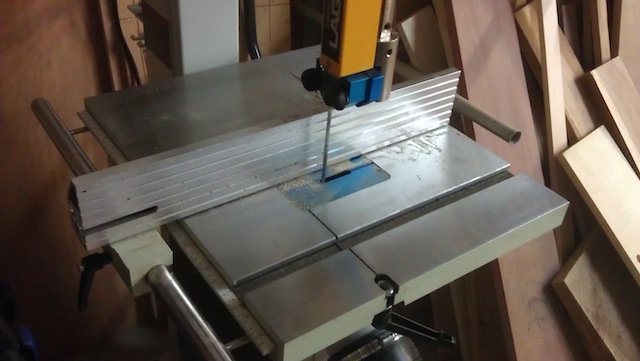
One knock I have heard about the table on this saw was that it is kind of low to the floor. I must admit, it is lower than some other band saws I have used, but it’s really about the height of my table saw table, so it’s OK with me.

The mobility kit appears to be a one-size-fits-all item for all of their band saws, so it seems like a bit of overkill on the 14 inch model. However, it is uber-robust and rolls smoothly across the floor.
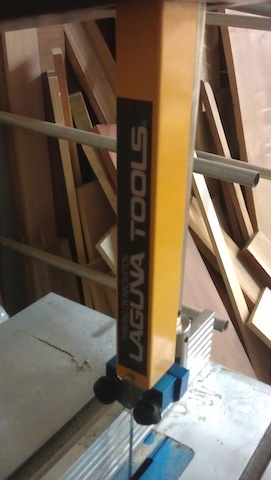
The blade guard and guide system is surprisingly elegant, and has already won praise in the market. Using two pairs of ceramic guides on the top and the bottom guides, there’s plenty of support for the blade, which should make my cutting a lot more accurate. The bottom guards are easily accessible, unlike the old Delta’s, meaning I will actually use them on this saw.

Changing blades does involve removing the upper and lower blade guards, which seem like a pain in the rear when you first do it. But, once you realize that they will protect you totally if a blade breaks, the extra step is no longer an issue.

The saw does use massive 120- inch blades, so I’m going to have to think ahead when I need new blades or blades of a different size. You can’t just mosey into the local woodworking store and find these babies just anywhere.
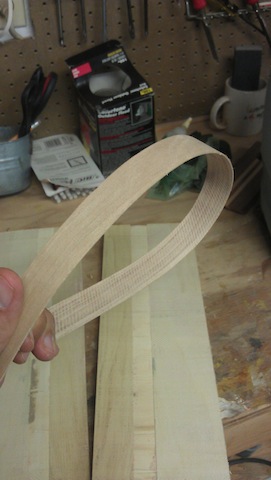
Once I got the saw set up, I decided I would make a quick test cut. After two evenings of putting the saw together, I was eager to make some sawdust. I put on the 1/4″ blade and figured I would do two tests.  For the first one, I set the rip fence about a 1/4″ from the blade, took a straight milled piece of wood out of my lumber pile and ran it against the fence. Without any tweaking or drift adjustment, the saw cut a straight slice right off the end of the board. No wander. A consistent thickness along the entire length. WOAH!  I’ve never seen a saw do that…  Oh, and the saw cut very quickly. The old saw took some time to make it down the length of a board – this one didn’t bog or slow down while I fed the board at a very speedy clip.   I can see some bent lamination projects in my future.
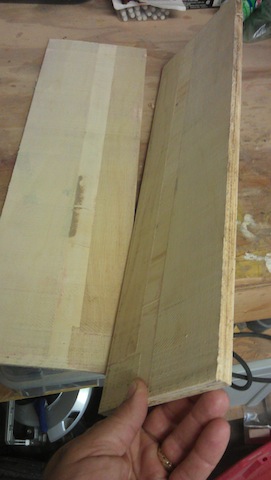
The next test I did was to grab a piece of 1/2″ plywood and raise the blade guard to make a resaw cut. The piece was about six inches wide, and I wanted to see what kind of control I would have with it. I eyeballed one ply line and made that my target. Again, with the 1/4″ blade, the cut was smooth, accurate and aggressive, splitting the same ply down the board the entire foot and a half length. And, the cut was VERY smooth – no gouges as the blade wandered.  Now THIS is cutting!

What can I do with this saw? I don’t know yet, but I’m looking forward to doing a whole lot more work with a band saw.

Quick Poll

Most woodworking shops evolve over time. You buy that starter tool that you can afford, but realize you outgrow. Or, technology improves and you want to upgrade your tool. Maybe you even change your woodworking style, and you need a particular tool less and need new equipment to achieve your new goals.

That’s cool. Given enough time, everyone does it.  But, the bigger question comes in – what do you do with the old tools – the ones you replace?  Do you give them away to deserving causes or woodworkers? List them for sale? Just chuck ’em?

This week, let us know!  Oh, and I realize that maybe you do everything on this list, but I’d like for you to select the one that you prefer to do.


Link of the Week

Wikipedia’s entry on Cosmoline

It’s a thick, nasty looking, sticky concoction that appears to be a cross between axle grease and earwax. Historical arms collectors have to clean it off of and out of the bore of their weapons. The military slathers it all over their vehicles before they ship them to servicemen and women around the world. And, yes, even woodworkers have to clear the gunk off their power tools before they can put them to use.

It’s known as Cosmoline, and while cleaning it out of your power tools can be a sticky, gummy mess, it certainly does a great job preventing rust from forming on bare metal parts. This entry at Wikipedia notes the substance’s history, and even goes into some detail about how to clean it off treated surfaces.  Something you may not do every day, but it’s worth filing away for when your dream tool arrives at your shop!

Tom’s Workbench Invasion: Heading to the finish

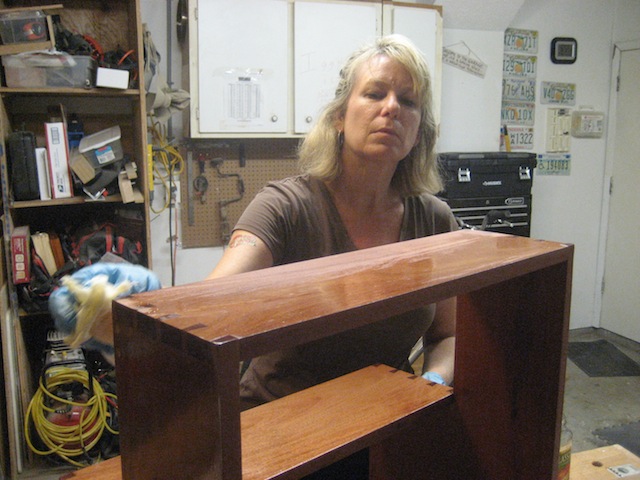
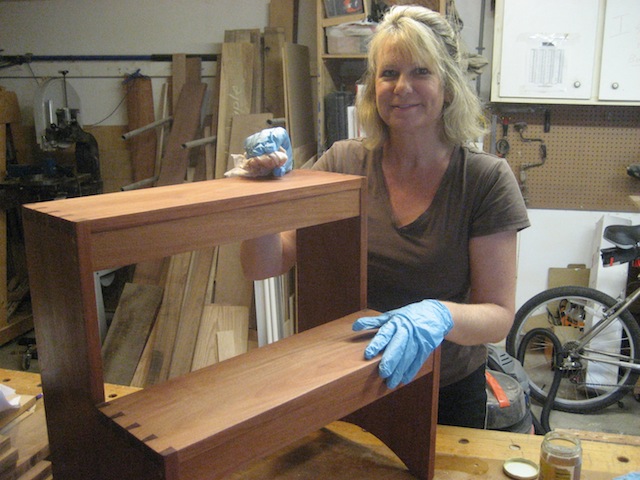
Who left the shop door unlocked? It looks like Rhonda got back into the shop – again – to finish the step stool.  Since she was there, I had to press her into service writing another blog post.  Hopefully, you are going to enjoy this!

What with school starting and all, it took a little longer to get back in the shop than I had planned. But when I did get in there and shut the door to the house, I enjoyed it. The peace, the solitude, the task at hand all captured my attention. Besides, not even the most robust yells including, “Mom! I dropped something!” can be heard over the sander. Awesome.

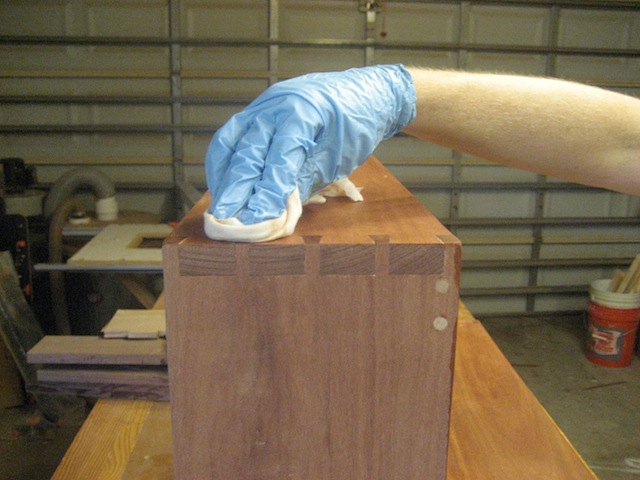
* The first step was to go back to the step stool and re-sand. This seemed excessive to me, because I thought we were done, but Tom is the expert and if he says “sand”, you gotta sand. Actually, the real reason was that once assembled, joints must be smoothed and glue removed to get the most pleasing and professional product.

I started by using 120 grit sandpaper. This, in fact, achieved the amazing “like butta” texture Tom wanted. Since people will someday step on it as they ascend to the cozy bed in their bare feet, it makes sense to avoid all ouchy splinters and sharp edges.

* Second step: Finish the surfaces. After wiping down with a damp cloth, I put a “spit coat” of thin shellac on the step stool to seal the wood. I don’t know why they call it a “spit coat,” but I suspect it’s a guy thing. On the “gridiron,” a “spit coat” would fit right in.

* Third step: Sand again. This time I used a 400 grit sandpaper. I could NOT believe, and I’m being completely serious here, just how magically smooth that made the surface. You could literally sleep on the wood. It was just like a pillow… but harder.

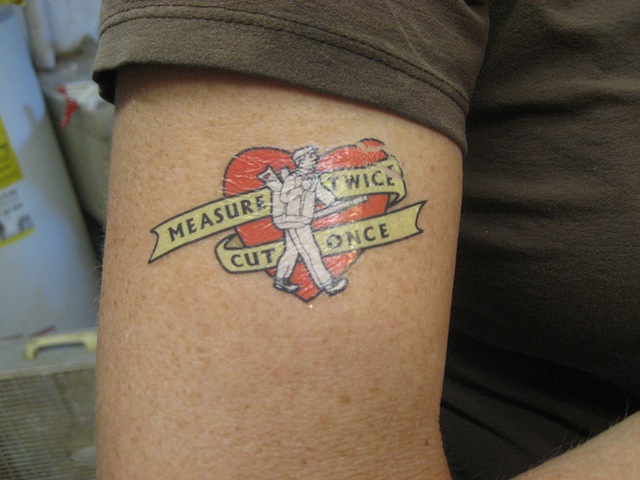
Pause here. Sometimes I find that things get tedious around the 3rd or 4th step. I didn’t want to lose interest in this project, though. The end product might suffer. Therefore, I sought a tattoo for inspiration. (Duh!) Tom was mixing the solution used in the 4th step while I made sure NOTHING would interfere with the proper application of my “measure twice, cut once” tattoo.

* Fourth step: This was the “beauty” step. Wiping varnish all over the wood surfaces, including underneath the steps and the bottoms of the step stool’s legs, was a pleasure. I saw it turn into a piece of furniture that I would want to keep for years. The varnish was a concoction of boiled linseed oil, varnish, and paint thinner.

* Fifth step: Dry. (The time goes by faster if you have an addiction to “RHONJ” or “The Voice.” If you don’t know, don’t ask.)

* Sixth step: Paste wax over all surfaces finished off this project. I have to say that even though I had lots of help, I will be very proud to show the step stool to my mother –in-law. She will LOVE it. And so will her guests. Hmmm… maybe I should book a reservation in that guest room.

OK. So… what’s next??????