All posts by Tom

I'm the guy who writes the blog...

Link of the week

Apollo Guitars

One of the things Canada is known for is its beautiful timber from the boundless forests found across the country. Surrounded by all of that prime lumber, you knew someone was going to be building sweet guitars.

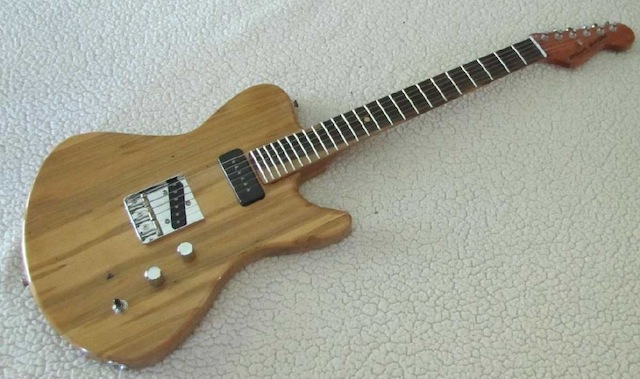
A beautiful model made by Apollo Guitars

Enter John Kingma from Apollo Guitars. In his modest 625 square foot shop, he crafts custom solid body guitars from many species you wouldn’t expect to see used for bodies – things like Kauri and Pine. While each guitar starts from a general sketch, the bodies, necks and other wooden parts are crafted by hand, and his finishes are as close to natural as possible. And, John makes no bones about it – his guitars are not showpieces to be viewed – they are designed to be played… hard…

Most of his orders are commissions, but he does have one guitar for sale right now – a beautiful hackberry and ambrosia maple beauty that he built for himself, but hasn’t found the time to play it. It’s the one featured in the photo in this post… just in case you knew someone who was interested.

Bridging the divide

This was an interesting topic that was brought up at the last meeting of the St. Petersburg Woodcrafters Guild.

Pete Richardson, who owns the Viable Lumber company, was working up at the Florida Woodturning Symposium, which took place at the end of January in Lake Yale, Florida. As he walked around the floor of the show, he couldn’t help but notice – there sure are a lot of older woodworkers out there. In fact, Pete said he was one of the youngest people there – by decades.
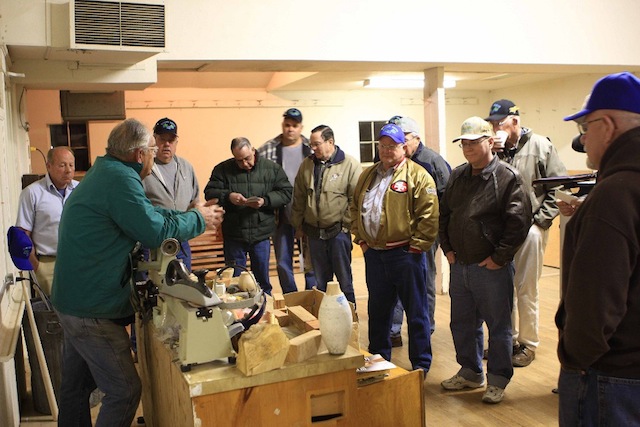
A typical guild meetingHe brought this up at our meeting, which is frequently attended by many well-experienced gentlemen. And, he made a point which has been echoed many times in many different forums – woodworking guilds and events tend to draw a lot of the more experienced woodworkers, and very few youngsters.

Flashback to last October in Covington, Kentucky. I was at Woodworking in America, and I couldn’t help but notice the large number of younger woodworkers in the room. Guys – and gals – in their 20s and 30s were attending classes, shopping for tools and bragging about projects they had built in their shops, and had been able to share online with their many friends from around the country – and the world. There was vibrancy. There was energy. There is a youth movement afoot that would rather spend a Friday morning watching someone like Roy Underhill turn a poplar log into a beautifully-hewn beam then do anything else.
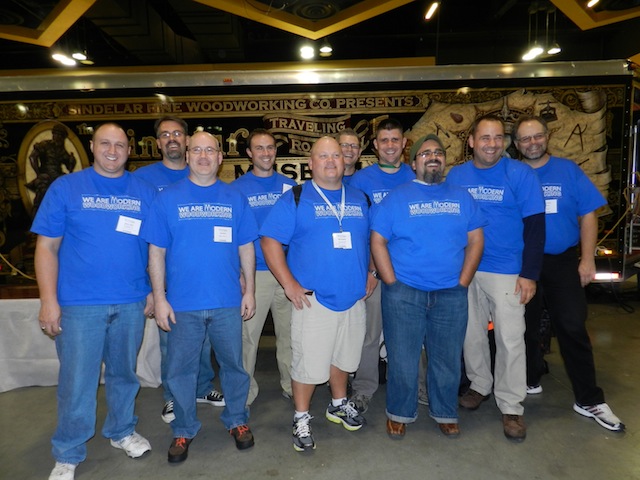
Younger woodworkersAnd, many of them said the same thing. I would go to my local woodworking guild, but only old people go there.

This, my friends, is trouble with a capital ‘T’. And, here’s why.

Well, here we dive into how computers changed things. Back in the day (yes, I can say this), I took shop class. It was a rite of passage that every young man – and woman, in my middle school – had to endure. We trucked out into class, learned how the tools worked, different kinds of wood, how to design and eventually how to put those bits of knowledge together to build a final product. It was a shared, social experience as we all discovered who stunk the joint up, and who would go on to be pretty handy with his or her hands.
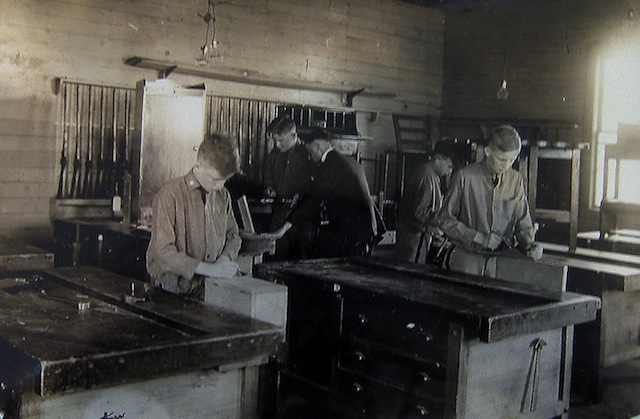
At one point, everyone had to take shopSure, people went on to be accountants, car salespeople, executives and the like, but there were lots of folks who went into their basements and garages and turned out nice looking pieces of woodwork. And, since it was a social event, it only made sense for folks to get together to show off what they were doing, but more importantly, to share knowledge. “Here’s a book I finished, if you want to read it.” “Here’s how I built that bookshelf.” This was networking without computers, and the people who attended amassed a tremendous amount of group knowledge.

Computers are for many the only hands-on learningAfter the rise of computers in education, many schools – my middle school included – converted their wood shops to computer labs because they saw how the change of technology was going to require people skilled in this new way of doing things. The hands-on experience faded, and the gap between the parents and their children widened over the years.

But, the desire to build – and to share information – never went away. Instead, many people turned online to share their experiences and ask questions. This created new virtual communities where you could get advice from woodworkers in the United Kingdom, Japan and Mexico as easily as heading down to the local guild meeting.

The problem is that there are almost two different islands out there. On one hand, the older woodworkers, who have a tremendous amount of experience and knowledge keep meeting with each other, following the model that has worked for them for years.  And, younger woodworkers who are learning and sharing are doing the same thing online. With this set up, the knowledge and expertise that the older set has will be lost as they pass on, and the newer woodworkers will have to discover methods of work that are well known, but must be rediscovered on their own.

Pete Richardson’s modest proposal was for both sides to take the initiative and make the necessary moves to put both communities in touch.  The mission we gave to our members as we left the meeting was to go out and invite someone younger to come to the next guild meeting. If they can’t make the next one, keep inviting until they relent and come to see what’s going on.

For the younger woodworkers, the challenge is to find out more about the local guild or club in your area and attend an upcoming meeting. Show up. Shake hands. Volunteer to take some leadership role. And ask lots of questions. You might be surprised how a new charge of excitement into the next guild meetings might make them the place to come for woodworking know-how.
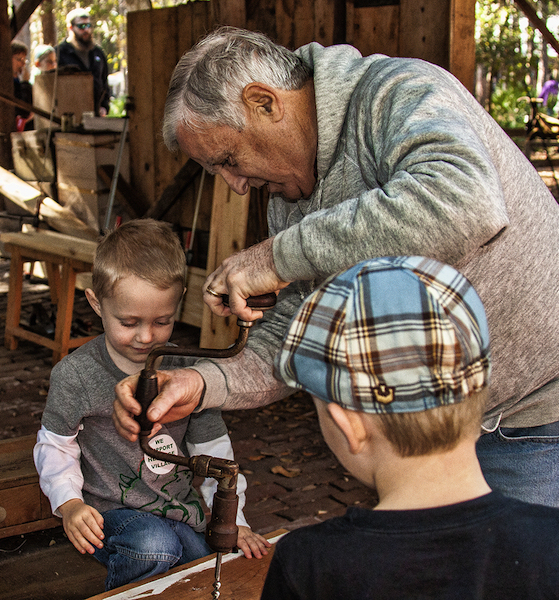
Bridging the generationsAt that point, the divide will be bridged, and who knows what great things may come of that.

 

Pretty pink princess pencils

I have two sons. Which means, when it comes to Christmas, birthday or other gifts, we tend to lean more toward Nerf guns, Legos and action figures. So, I missed the Barbies. The Easy Bake ovens. And, I missed the princess gifts.

Girls playing princessWhile it’s kind of sad, I know I would have been lost in the weeds trying to do the princess thing. Oh, sure I would have eventually done well shopping for my daughter, but it would have taken a lot of practice to get good at it.

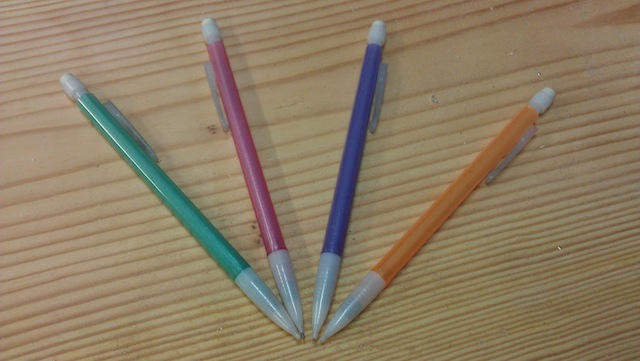
Ooooh... PrettySo, you might wonder why I have these on my workbench. Let me start off by telling you that these are mechanical pencils, and they are indispensable. I much rather prefer mechanical pencils to wooden models for a few very important reasons.

First, if the lead breaks on a mechanical pencil, you simply have to push the button on the eraser to advance a new length of lead to jump right back to work, instead of looking for a pencil sharpener to get to the point.

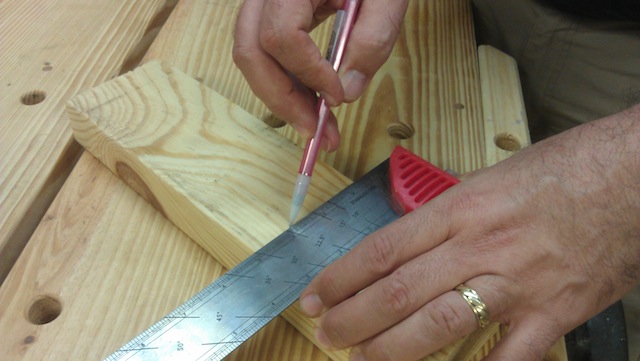
Marking with a pencilAnother great feature of mechanical pencils is that since the lead is the same diameter from the point to the end, the line stays the same width along the entirety of the mark. Try doing that with a sharpened wooden pencil, and you are going to end up with a fine line where you start and a much wider line the more you mark.

When I buy my mechanical pencils, I always buy them in big packages, usually at the start of the school year when the supply is plentiful and the prices are low. It also doesn’t hurt that during that time of the year, Florida exempts school purchases from sales tax, making the deal a little sweeter.

But, why the pretty sparkly aqua, pink, purple and orange princess colors?

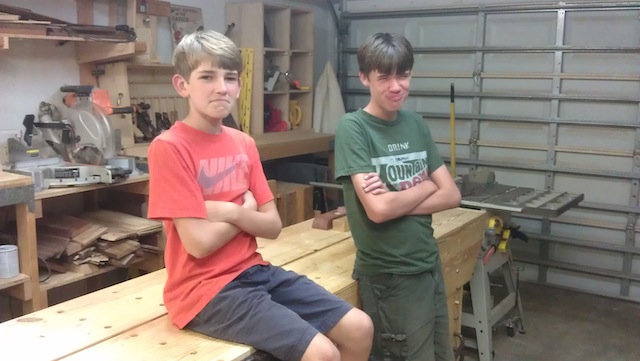
Now now boysDo these guys look like they would be caught dead in school using a pretty princess pencil? This way, I can pretty much guarantee that my mechanical pencils will stay in my shop, and not be spirited of into backpacks to never be seen again.


Quick Poll

Wood is beautiful. That’s why we work with it.

But, there are those times when we want to make our projects even more beautiful. We can do that with design, blending species – or by doing an inlay.

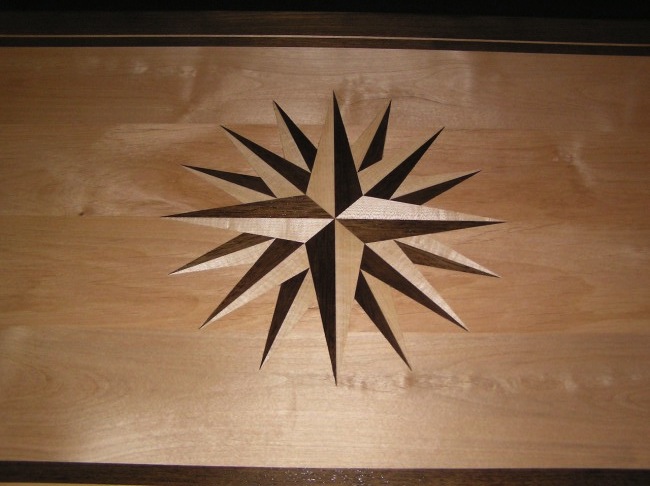
A gorgeous inlay done by Marc SpagnuoloInlays can be very simple or uber complicated, with multiple species intertwined in decorative designs.

Today, let us know if you have ever done an inlay on your projects, and what you thought about the process.


Link of the week

Gränsfors Bruk Axes

One of the first woodworking tools ever created was the axe. And, for tens of thousands of years, stone, copper, bronze, iron and steel axes have felled trees, cut beams and even put decorative carvings on woodwork.

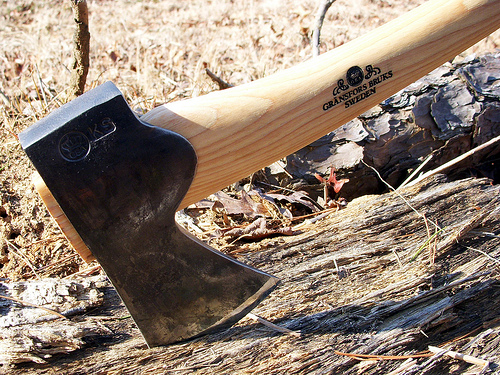
That's one sweet axeOne of the companies still making awesome axes is Gränsfors Bruk. This Swedish firm has been making these tools since 1902 out of high-quality steel and flexible yet tough hickory handles. Based on classic models, they offer sizes from small hatchets to large double-bitted models.

If you are looking to get your hands on a quality axe, this may be a good site to check out.


Species Spotlight: Cocobolo

Theobroma Cacao. Food of the gods.

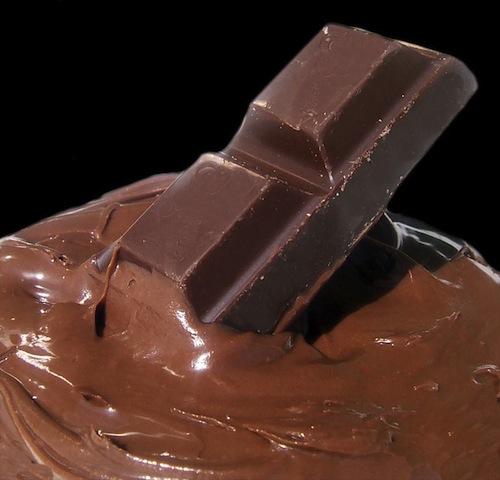
ChocolateYes, that’s what the scientific name for cocoa is – and it couldn’t be a more appropriate name. Native to Central America, the Aztecs fell in love with cocoa at first taste. The conquistadors who went on to discover the new world – and lay waste to the native cultures – were just as intrigued, and brought cocoa back to Europe where it eventually was processed and made into chocolate.

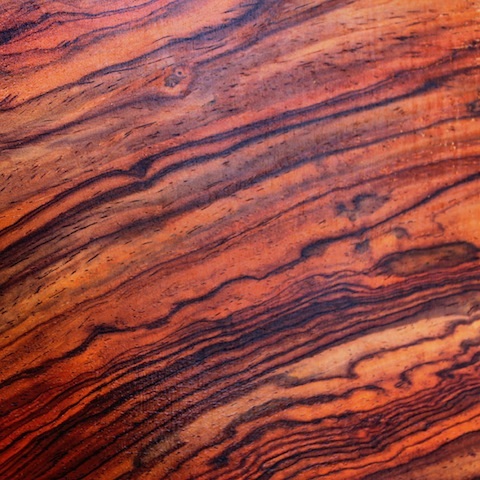
cocobolo - up closeToday’s species spotlight isn’t on this plant, but instead it is on a dark reddish brown Central American wood that looks just about as delicious as chocolate.

Cocobolo grows primarily along the Pacific coast of Central America, from Panama to southwestern Mexico. The trees can grow from 50 to 60 feet tall with a diameter of about 24 inches.

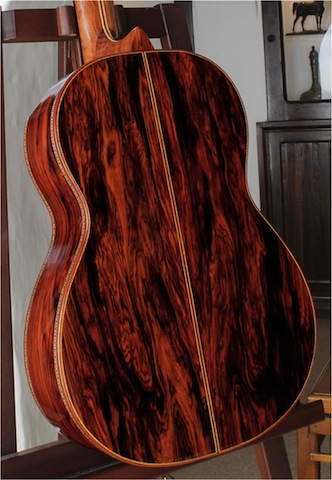
The heartwood is a gorgeous, dark brown red with an irregular grain, which can sometimes be interlocked. Cocobolo is also a very stable wood which rarely checks or moves while drying. It works very well, taking crisp details and finishing to a high polish. The wood is also very hard and dense, which makes it an excellent tonewood for musical instruments.

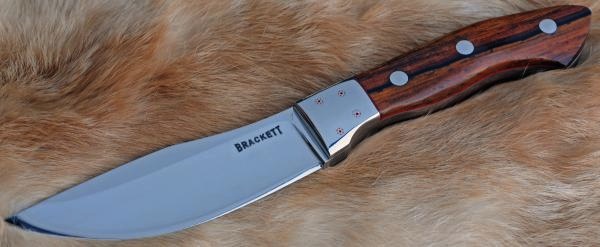
cocobolo guitar backCocobolo also shines as an accent wood for high end projects, such as knife scales, furniture inlays, pool cues and the like. When paired with a contrasting wood, it can really make a striking appearance.

As with many tropical woods, cocobolo is an oily wood, which can create issues while gluing. Wiping the mating surfaces with acetone before applying glue can help improve your success.

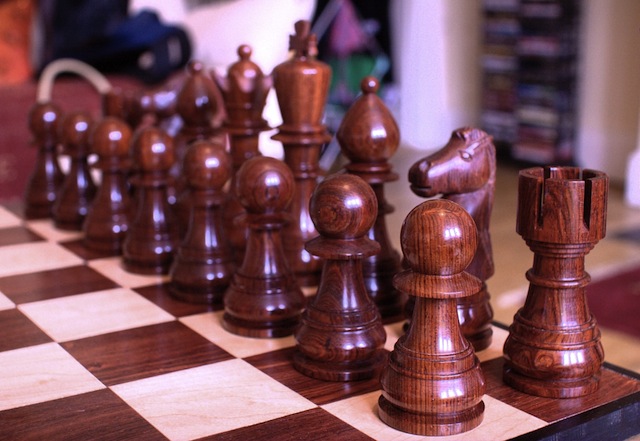
Cocobolo chess piecesThe oil can also make for trouble when it comes to applying finishes. So, you can go one of two routes. You can burnish the final project by sanding down to a very high grit. The finer the grit, the more lustrous the finish will be. Another option would be to use a sealcoat of shellac, which will isolate the oils from the finish layers you want to lay down.

Also, that oil can cause rashes or other allergic reactions, so be sure to use good dust collection, a particle mask and preferably long sleeves while working with it.

A cocobolo handled knifeAs you might imagine, with its limited growing area and striking beauty, cocobolo has been overharvested in the past, leaving the species as threatened. That’s why it is important to check with your supplier to ensure the trees come from managed areas and responsibly harvested.

So, the next time you want to put some tasty details on your woodworking projects, you just might to check out cocobolo, which could easily be named the wood of the gods…


Hold it down

I have used my Kreg pocket hole jig for the past six or seven years with a great deal of satisfaction. It was the K3 model, and I have used it to build a lot of projects around the house.

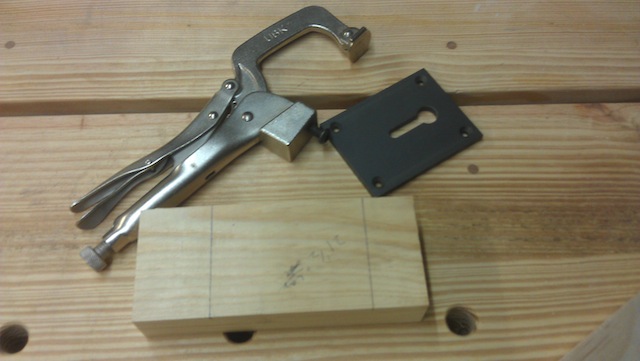
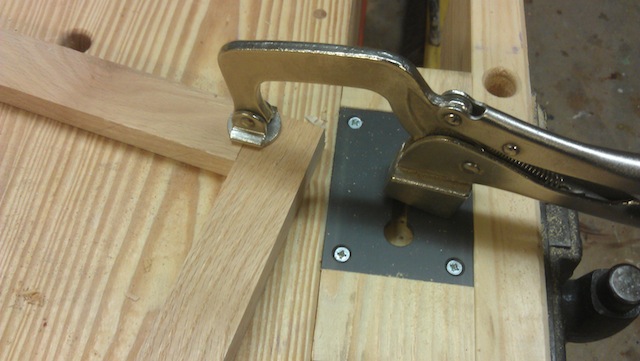
Pieces partsBut, there were these items that came with the kit that I wasn’t sure what to do with. They were a steel plate with a keyhole slot in the middle and four countersunk screw holes on the corners. There is also a clamp that came with it, with a bolt that obviously engaged the plate that could be used to hold work pieces down to a table.

But, I wasn’t about to mortise this into my new workbench. Not on your life.

I had to come up with some way to use this. One Saturday, I saw an episode of the American Woodshop featuring Scott Phillips and the idea hit me. I could do what he did!

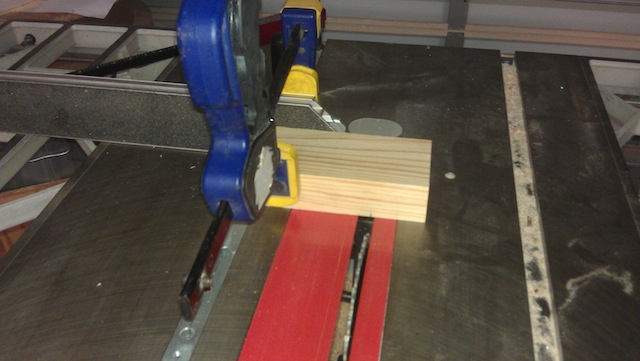
Ready to dadoFirst, I needed a block of wood. I had a nice piece of Southern Yellow Pine left over from the workbench build, so I was able to cut it to the size I needed and marked out the width of the plate and set it up to dado out a little material to help hold the plate in place.

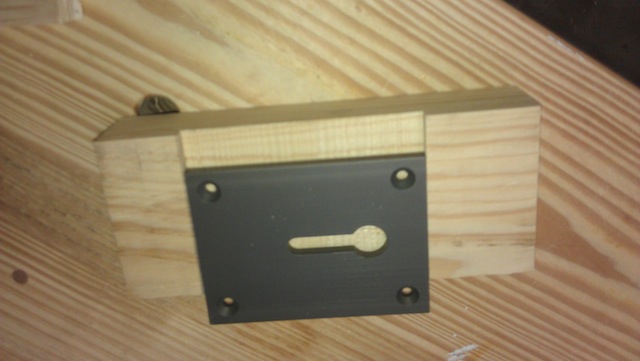
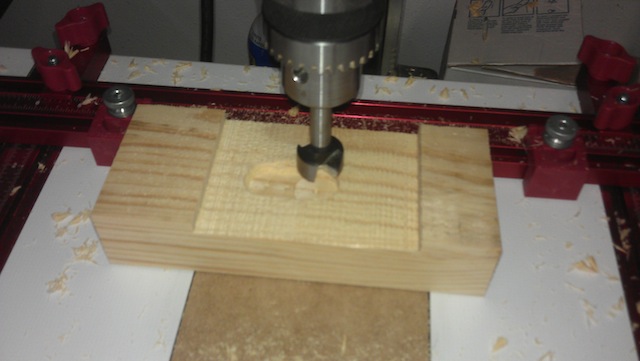
A nice fitThere, a nice fit.  Now, for the next step, I had to head over to the drill press. After all, I had to remove the material just beneath the keyhole slot to allow room for the bolt on the clamp to drop below the surface of the plate. That was easy work with a forstner bit.

The forstner bitOnce that was done, I screwed the plate into place, using four high-quality wood screws to ensure a good purchase in the wood.

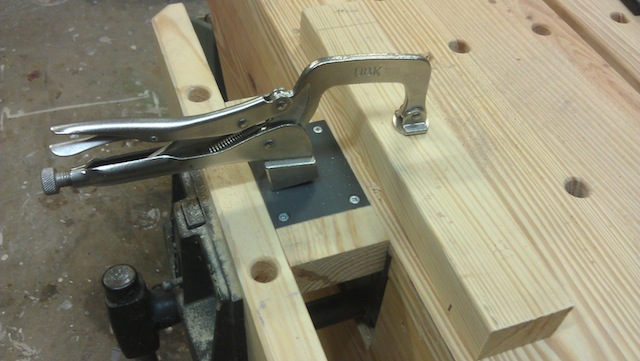
Clamped and ready to go To use this clamp setup, it’s an easy matter of clamping the block with the plate on it into the jaws of my vise, slip the bolt on the clamp into the keyhole slot and then secure the work down to the bench.

Face Frames

Sure, it works as a great hold down, but it works even better as a large face clamp for when I assemble face frames with pocket screws.

After using this set up in the shop for a few days, I do have to ask myself why I didn’t think of that!